Blue Skies & Butterflies

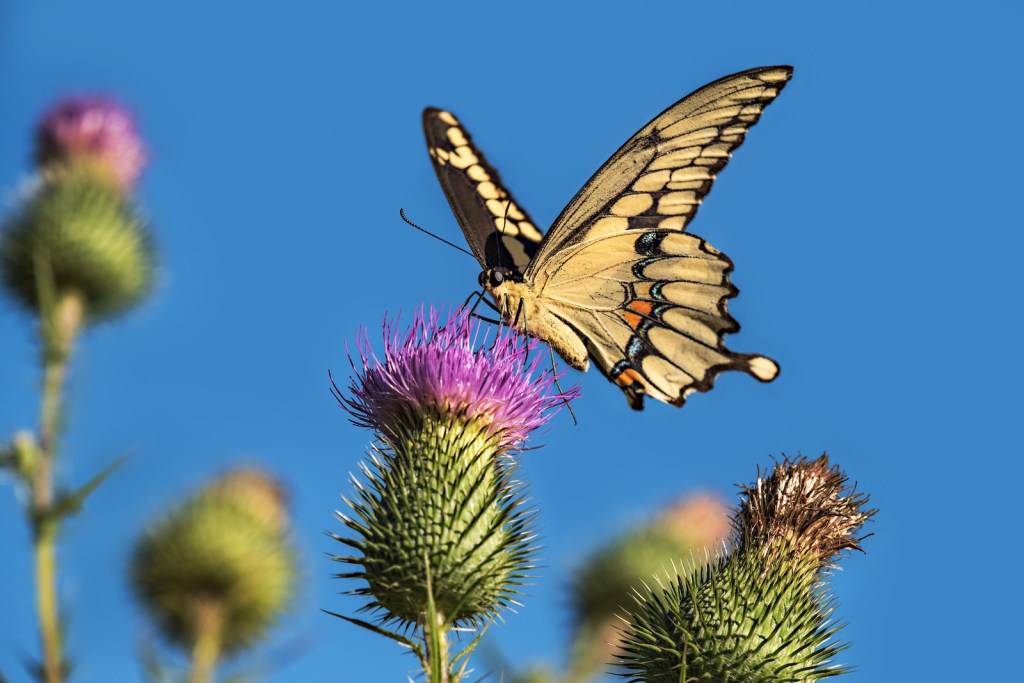
Blue Skies and Butterflies by Jacqueline Verdun

The Ann Arbor Observer has a classic feature titled The Biggest Butterfly: Seeking Giant Swallowtails that says in part:

The aptly named giant swallowtail is the biggest butterfly in Michigan. Form your two index fingers into pointers and touch them to each other: if you take a large glove size, the butterfly’s maximum wingspan is approximately the length of both fingers put together. The field guides say around six inches.

The giant swallowtail’s coloration is as spectacular as its size. From the top, its wings look dark brown to black, with yellow dot ribboning and a yellow eye-shaped spot on the end of each wing. When the wings are raised, the bottom is revealed to be a subtle cream interrupted by wavy blue and rust bands.

This species spends its Michigan winter in the pupa stage and emerges in two broods each summer, the first in May through June, the second in July through early September.

Jacqueline took this gorgeous photo a decade ago on August 20, 2014. You can check out another shot she took of this butterfly right here & see more in her Macro Insects etc gallery.

Support Michigan in Pictures with Patreon

Frog saunas will make it easier to be a frog!

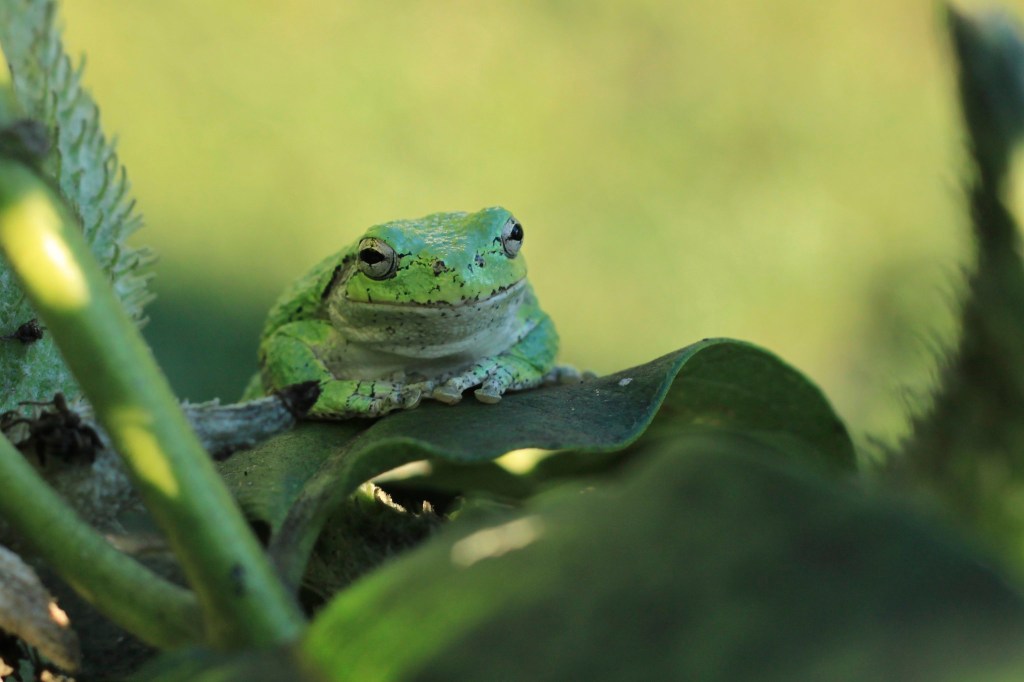
It ain’t easy… by Steven Karsten

Here is an excellent update about the fungus that has been devastating frog populations since long before I shared this photo & news of chytridiomycosis back in 2011! Earth.com reports that on a new way to save frogs in Michigan & worldwide from the chytrid fungal infection. The fungus driven 90 frog species to extinction or presumed extinction in the wild and reduced the number of another 124 species by over 90%. Dr. Anthony Waddle of Macquarie University‘s Applied BioSciences (Australia) explains:

“In the 25 years since chytrid was identified as a major cause of the global collapse of amphibian populations, our results are the first to provide a simple, inexpensive and widely applicable strategy to buffer frogs against this disease,” said Dr. Waddle.

The researchers developed artificial ‘hotspot’ shelters using readily available materials like bricks and PVC greenhouses. These structures create warm environments where frogs can raise their body temperature to levels that are uncomfortable for the chytrid fungus.

“In these simple little hotspots, frogs can go and heat up their bodies to a temperature that destroys the infections,” explained Dr. Waddle. It’s like a natural antibiotic treatment, but instead of popping pills, the frogs just need to bask in their personal saunas.

The results were remarkable. When frogs shifted to these hotspot shelters, chytrid infections were reduced significantly. This simple intervention could have far-reaching benefits for amphibian conservation efforts worldwide.

Lots more at Earth.com, and since Michigan’s 13 species of frogs & toads are not immune, fingers (and flippers) crossed that this works!!

Though Steven titled this It ain’t easy… he wrote actually, on this day, it seemed pretty easy being green. This guy was eating fly after fly as I snapped away. Must’ve had 5-6 flies in about as many minutes. He looked like lack of food was not an issue.

See more of his photos on Flickr & more frogs on Michigan in Pictures!

Support Michigan in Pictures with Patreon

How you can help bees in Michigan

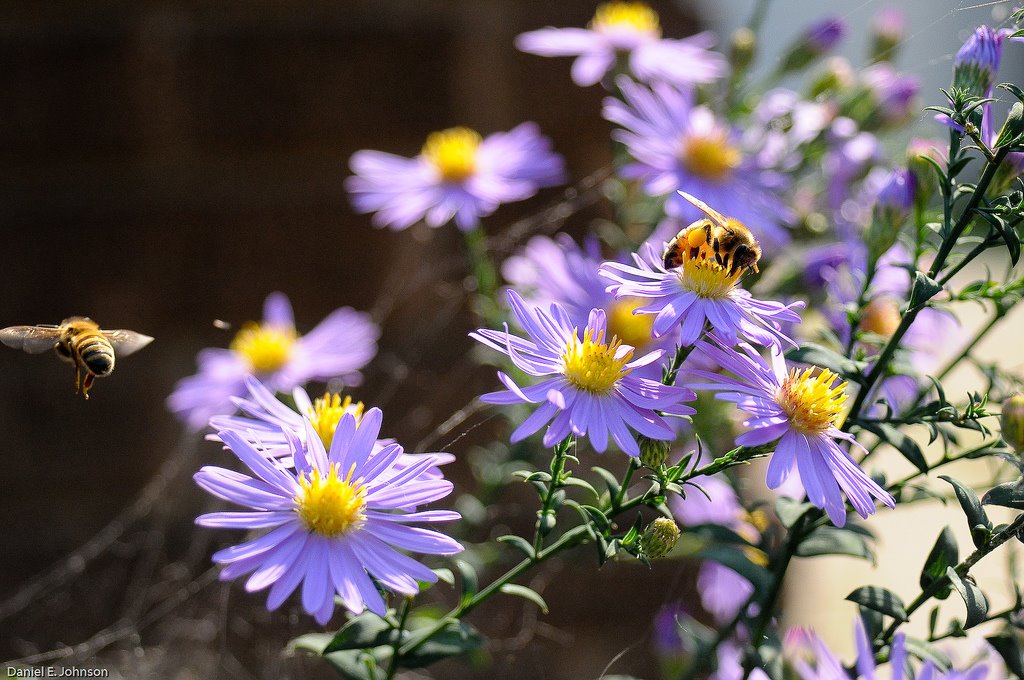
Around the Bend by Daniel E. Johnson

Around the Bend by Daniel E. Johnson

I shared this photo on August 7, 2017 with the good news that the number of Michigan honeybee colonies was on the rise, reversing steep declines due to colony collapse disorder. Michigan and the world are for sure not out of the woods with Colony Collapse Disorder (CCD) that causes the majority of worker bees in a colony disappear and leave behind a queen, food & a few nurse bees to care the queen & larvae. While reported cases of CCD have declined significantly, beekeepers nationwide reported losing HALF of their colonies in the year ending last April.

Because we still have work to do, I’m happy to share ways that we can help keep flowers blooming & crops growing right here in Michigan. MSU Extension answers the question Should Michiganders keep bees by saying that unless you have the resources to keep your hive healthy, it’s better to focus on helping bees by planting flowers and flowering trees that are good sources of nectar and pollen from the spring through the fall. I’m also really happy that St. Joseph has announced its commitment to become a Bee City USA!

Dig into Daniel’s photos on his Flickr!

Support Michigan in Pictures with Patreon

Michigan Merganser Mania

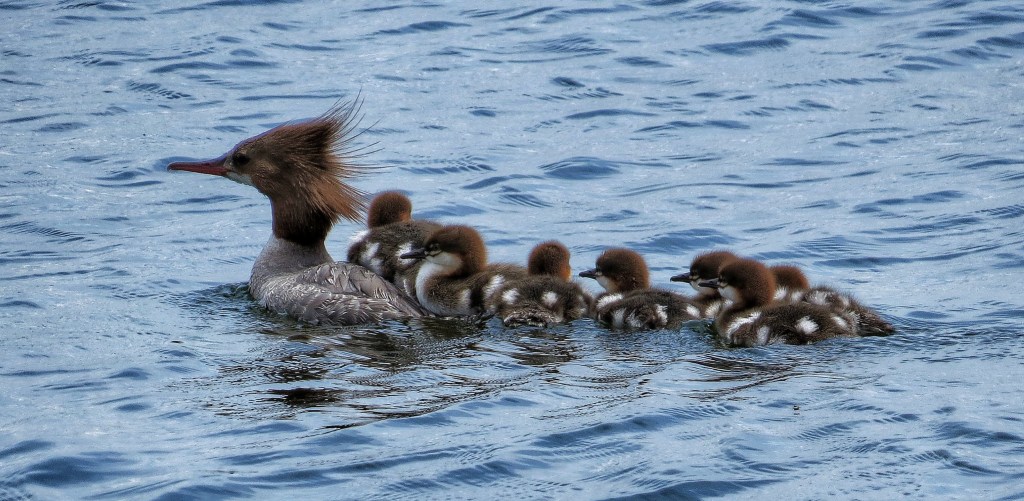
Female Common Merganser and 7 young by Mike Carey

All About Birds says that Common Merganser are large, long-bodied ducks with thin, pointed wings. Their bills are straight and narrow, unlike the wide, flat bill of a “typical” duck, and the females have shaggy crests on the backs of their heads. Although these ducks look pretty punk & cool, the Tip of the Mitt Watershed Council reminds us that Merganser ducks are the main culprit in the spread of swimmers itch:

Swimmer’s itch (cercarial dermatitis) is a skin irritation caused by a larval form of certain flatworms from the family Schistosomatidae. Schistosome flatworms are parasites with complex life cycles usually involving certain species of snails and waterfowl. Upon hatching, free swimming Schistosomatidae larvae seek out an intermediary host, usually snails, to continue the life cycle. The larvae, known as cercariae, are only 1/32 of an inch long and generally invisible to the naked eye. Since humans are not the proper host, the larvae soon die upon mistakenly burrowing into the skin. The resulting skin condition and itching sensation is caused by an immune response to the dead larvae under the skin and symptoms vary by person. In many Michigan lakes, the common merganser duck is the primary or sole vertebrate host.

I am for sure NOT calling for the killing of mergansers, but as someone who has spent a lot of time on lakes with swimmers itch, I encourage you to practice safe swimming where you see these ducks:

  1. Don’t swim first thing in the morning
  2. Swim offshore and away from downwind areas
  3. Rinse your body with clean water and towel off thoroughly after swimming!

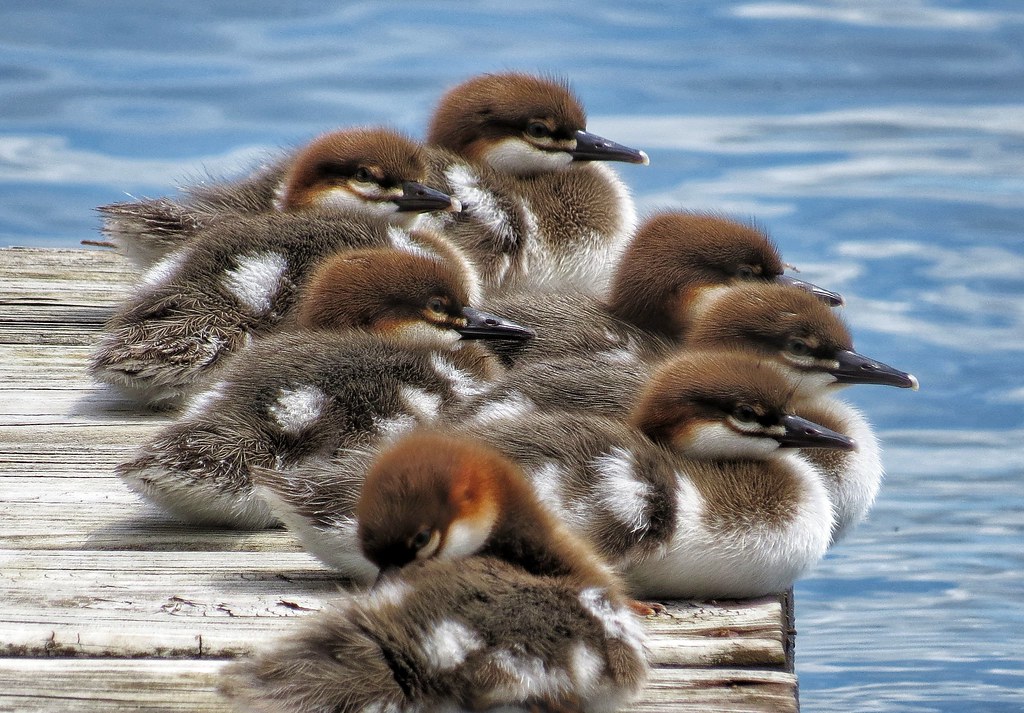
Mike took these on Bear Lake a couple weeks ago. See more in his Bear Lake 2024 gallery on Flickr.

More duckies on Michigan in Pictures!

Young Common Mergansers resting on dock by Mike Carey

Support Michigan in Pictures with Patreon

The Great Flip Flop Caper of 2024

Recovered Flip Flops by Tahquamenon Falls State Park

Recovered Flip Flops by Tahquamenon Falls State Park

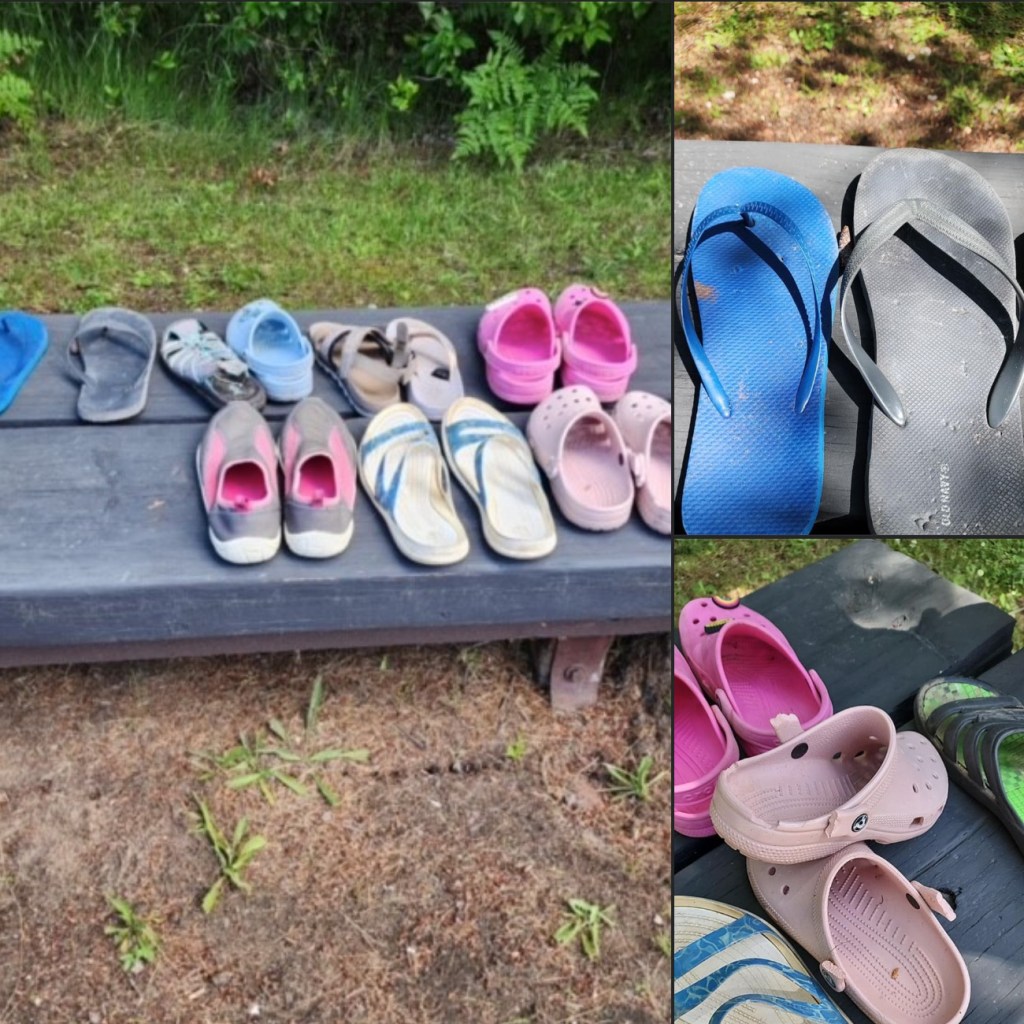
Tahquamenon Falls State Park shared yesterday that there has been a thief taking flip flops and crocs from campers at their Rivermouth Campground:

It was discovered today that there are multiple thieves, and they have four legs and are adorable. All of the shoes shown were found outside a fox den. If you look closely, you can see teeth marks in the flip flops and straps have been chewed off the light pink crocs. Heads up if you are camping this summer at the Rivermouth, you’ll want to keep your shoes inside your camper 🦊

So if you do camp at Tahquamenon Falls State Park (and you very much should) keep an eye out for the Flip Fox Gang! Much more Tahquamenon Falls & more Michigan foxes on Michigan in Pictures.

Support Michigan in Pictures with Patreon

Getting ready for the 4th of July

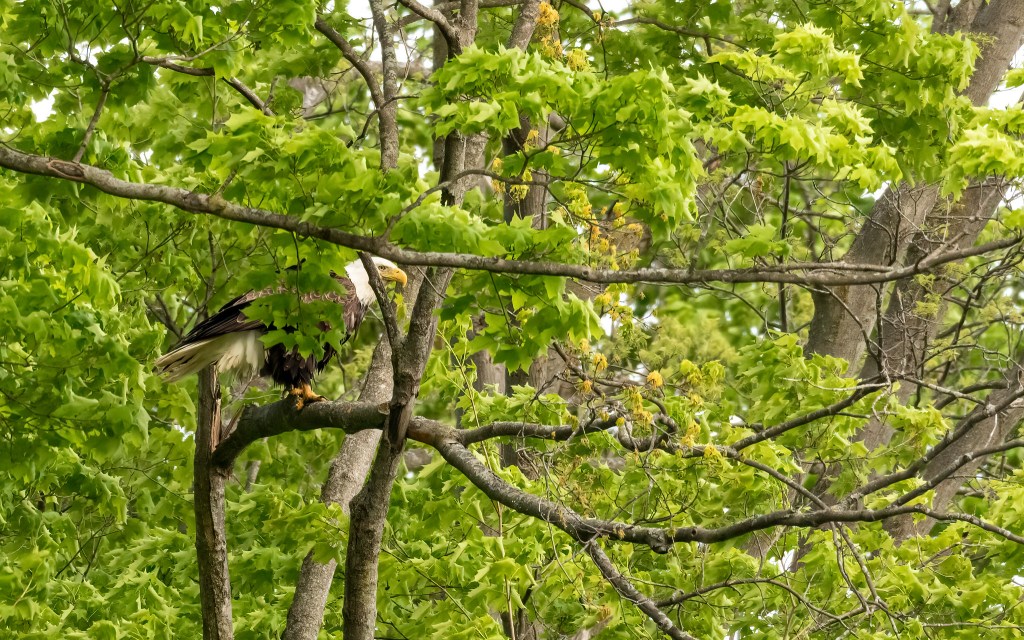
Amongst the Trees by Kevin Povenz

Amongst the Trees by Kevin Povenz

This year the Fourth of July falls on a Thursday, meaning many of us will get a 4-day weekend. I hope you all get a chance to enjoy the holiday!!

Kevin shared this super cool bald eagle shot taken last year in the Ravines of Grand Ledge. whoops it’s the Ravines of Ottawa County!! Check out his massive Birds of Prey gallery on Flickr for more!

Support Michigan in Pictures with Patreon

The Dwarf Lake Iris is a Great Lakes original!

Sisters Three by Michael Seabrook

The National Forest Service shares that Michigan’s state wildflower, the Dwarf Lake Iris (Iris lacustris), grows nowhere else but in the Great Lakes region & mostly within Michigan:

The vivid blue, showy flowers (about two inches in height) of Dwarf lake iris are truly exquisite. This miniature iris, honored as the state flower of Michigan, blooms from mid May to early June.

Dwarf lake iris is called a Great Lakes endemic due to its very limited range. It inhabits the northern shores of Lakes Huron and Michigan within Michigan, Wisconsin (Door Co.), and Ontario, Canada (Manitoulin Island, and the Bruce Peninsula). Dwarf lake iris formerly ranged as far south as Milwaukee, Wisconsin, but has never collected on Lake Superior shoreline.

The Latin species name lacustris translates to “of lakes”, which does not speak to the immense size of these two huge inland “seas”. Confined almost exclusively to thin soil over limestone, rich gravel or bedrock, or moist sands and gravels, it can persist in full sunlight on moist sites. This miniature iris is most successful, however, under the light, dappled shade of white cedar. It flowers best in semi-open habitats such as the long and narrow strips of land bordering the high-water line, or large flat expanses behind open dunes. It may also inhabitant old beach ridges of the former shores of these two Great Lakes. The changing water levels of lakes Michigan and Huron serve to create new habitat.

Thomas Nuttall, renowned naturalist and explorer, first found this species in 1810. The type locality, or location where he first found Dwarf lake iris, was Mackinac Island in northern Lake Michigan.

Michael took this photo back in 2013. More in his Michigan Wildflowers gallery on Flickr!

Support Michigan in Pictures with Patreon

Piping Plover Protection

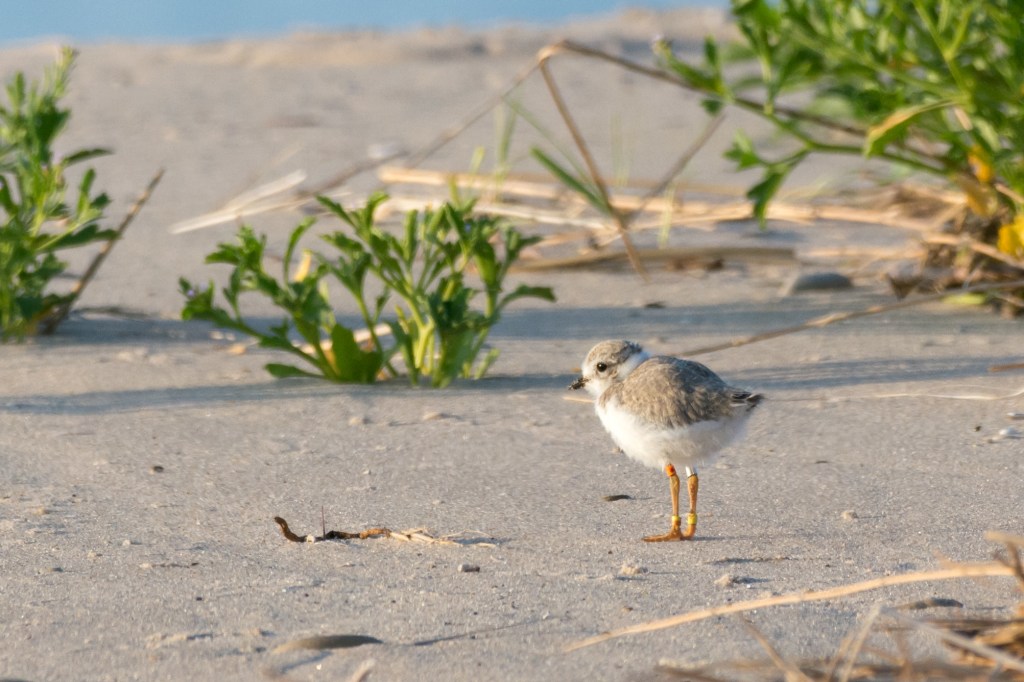
Piping Plover Chick by Bill VanderMolen

If you’re on the Lake Michigan shore this weekend, there’s a chance you may see one of these small shorebirds scurrying along the water’s edge with some unique legwear. The Sleeping Bear Dunes National Lakeshore page on piping plovers begins:

The Piping Plover (Charadrius melodus) is an endangered shorebird. They are sand-colored on the back and white below. During the breeding season adults have a black forehead band between the eyes and a single black band around the neck. (Its larger relative the Killdeer is commonly seen at parks, playgrounds, and golf courses, and has two dark bands around the neck.) Piping Plovers nest only on beaches and prefer beaches with cobble. There are three small populations: one in the Great Plains, one on the Atlantic Coast, and the one here in the Great Lakes. They winter together on the Gulf Coast but travel to the separate areas during the breeding season.

…The greatest concentration of piping plovers in the Great Lakes occurs at Sleeping Bear Dunes National Lakeshore. The areas around the nests are roped off during the breeding season to protect the birds from disturbances that would cause them to abandon their nests. Also, plover eggs and small chicks are very well camouflaged. Well-meaning plover watchers could easily step on them if allowed in the nesting area.

…As part of the piping plover monitoring and recovery efforts, each bird is banded with colored bands that identify it. Color bands allow researchers and park staff to keep track of longevity, faithfulness to nest sites and mates, and genetics, among other things.

Lots more including pictures on the Park website.

Bill took this back in July of 2018. See his latest on Instagram!

Support Michigan in Pictures with Patreon

Turtles get ready for their closeup

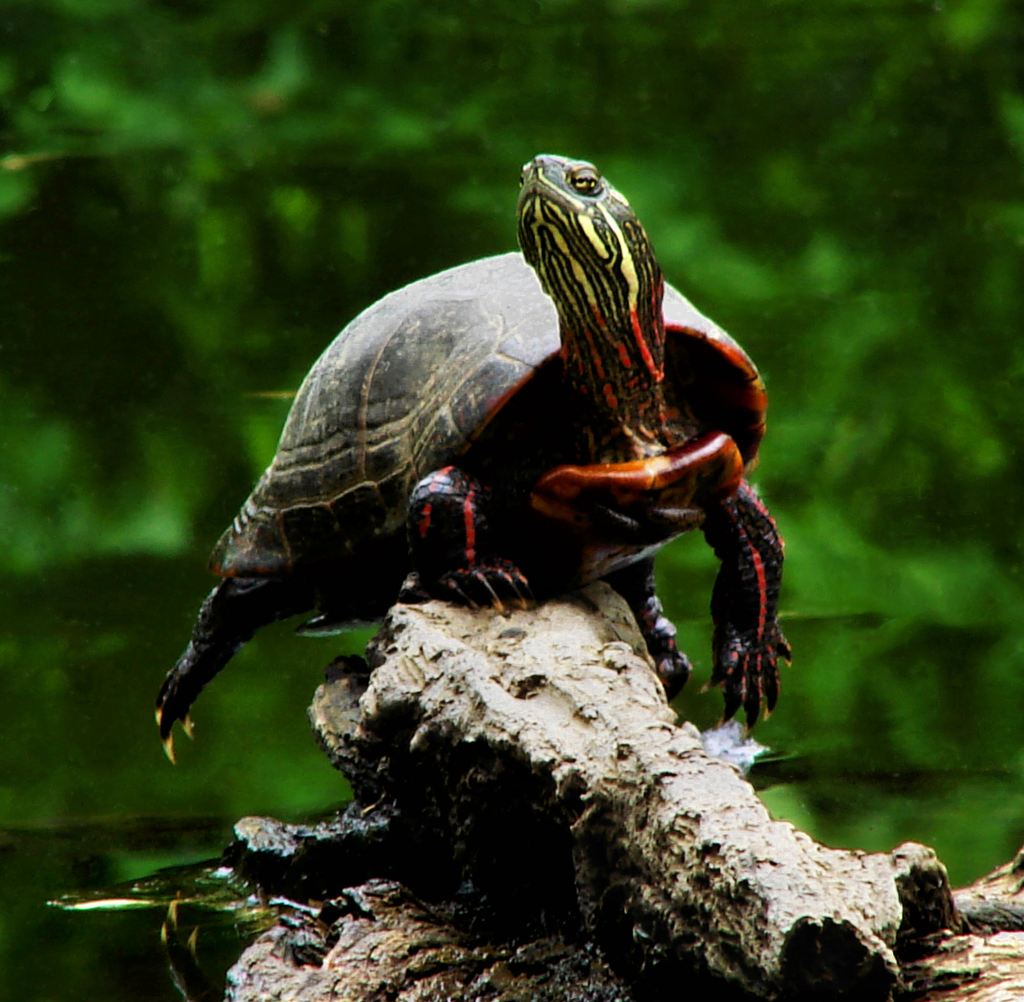
I’m Posing for the Camera by R.Miller96

From Waterfall Wednesdays to the Michigan Duckie Project to every flavor of rainbows, one of the things that keeps Michpics fun for me are my little photographic obsessions. Way back in 2011, I shared this photo on what became the all time most popular post on Michigan in Pictures: Know Your Michigan Turtles.

World Turtle Day (May 23) is just a week away so it felt like a perfect time to bring back this photogenic painted turtle for an encore! See more in R Miller’s water gallery on Flickr.

Support Michigan in Pictures with Patreon

You know who needs a Happy Earth Day?

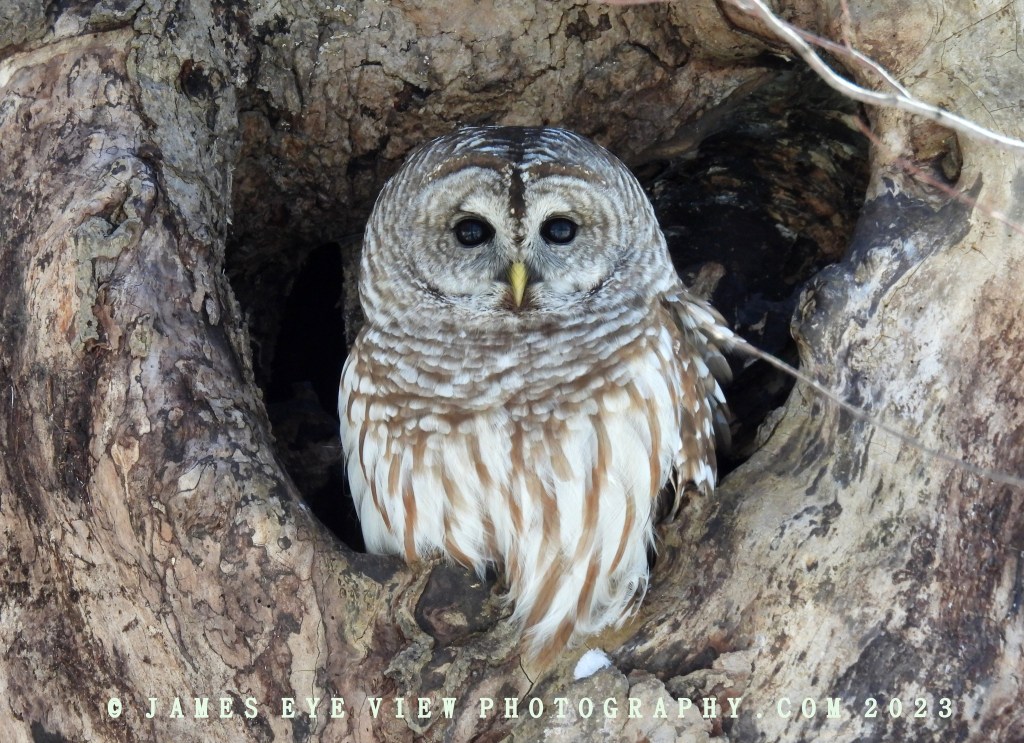
Happy Earth Day by James Eye View Photography

via Leelanau.com

Who needs a happy Earth Day? All of us really. 2023 was the warmest year since global records began nearly 200 years ago. The global temperature beat the previous high from 2016 & the 10 warmest years have ALL been from the last 10 years. If you know anything at all about math, 10 out of 10 is 100% and we are 100% in trouble because we seem unable as a species to process what actual danger is when it is this big. There’s probably nothing I can say if you don’t believe in science, so here is a link to a story about Earth Day’s Michigan roots & here is EarthDay.org where they are trying to raise awareness about microplastics, which many scientists believe are behind the explosion of Alzheimers.

James is an Empire-based photographer who shared this barred owl – based in parts unknown – along with some other great pics to wish everyone a happy Earth Day! See more by clicking the picture & on his website.