Glow in the Dark Michigan: the Railroad Worm

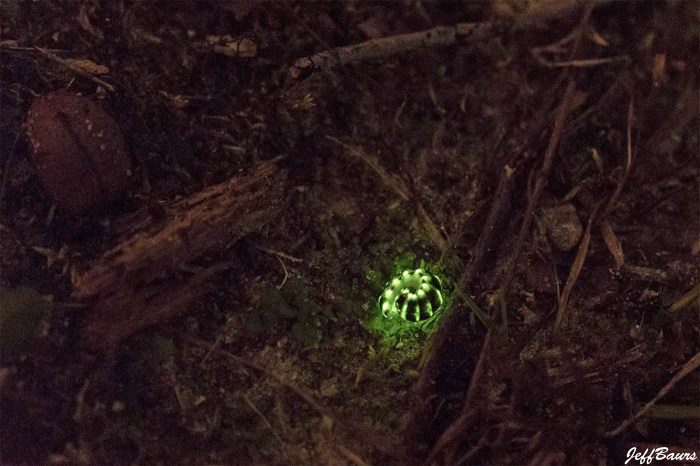
Railroad Worm by Jeff Baurs

Railroad Worm by Jeff Baurs

You may remember Jeff from the bioluminescent oyster mushrooms I shared last October. In any case, he’s back with another glowing critter he photographed last week, a railroad worm! The University of Florida Entomology & Nematology Department shares some information about these glow worms:

The family Phengodidae are uncommonly encountered beetles that have bioluminescent females that appear to be larvaiform (or larger versions of the immature stage.) These adult females are able to produce light from paired photic organs located on each body segment (one glowing spot on each side) and sometimes also from luminous bands that extend across the dorsal surface of the body between each body segment. Because these glowing spots along the females body resemble the windows of train cars internally illuminated in the night, they are often referred to as “railroad-worms.”

…Even though females appear to hide in their burrows during the day, they can often be detected on the surface of the ground by their glowing, immediately following a summer rain. Even though the females are bioluminescent, the females light emission does not appear to be the cue that the males use to locate their mates.

Be sure to follow Jeff on Facebook or Instagram for more including this shot of a railroad worm AND glowing oyster mushrooms!

Support Michigan in Pictures with Patreon

Fresh Cut

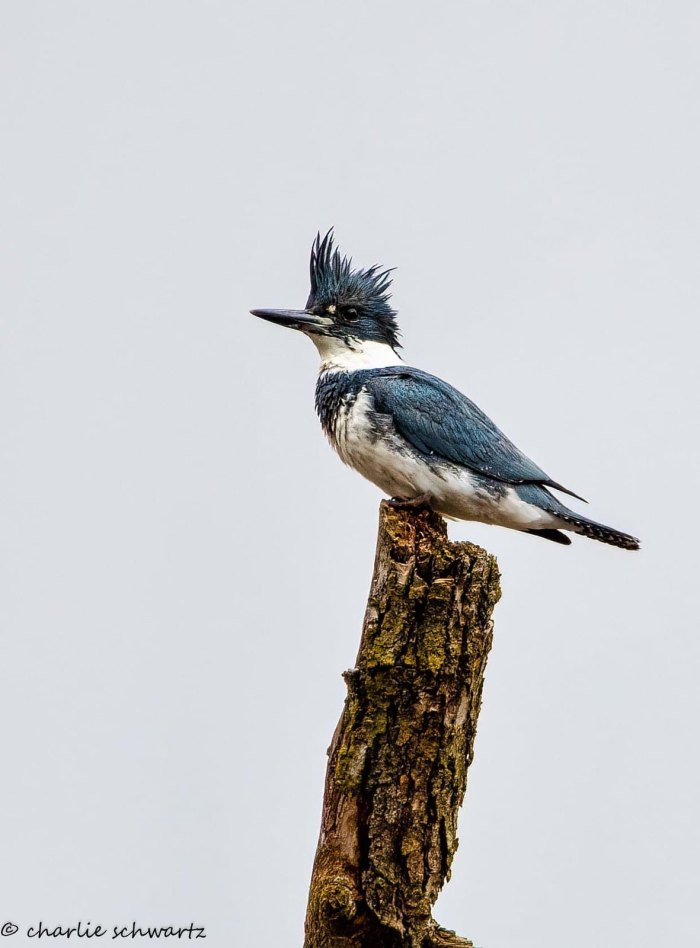
Male Belted Kingfisher by cncphotos

Male Belted Kingfisher by Charlie Schwartz

A great shot of a male belted kingfisher from last week. Definitely gonna ask him who his barber is. 😉

See more in Charlie’s Birds gallery on Flickr.

Support Michigan in Pictures with Patreon

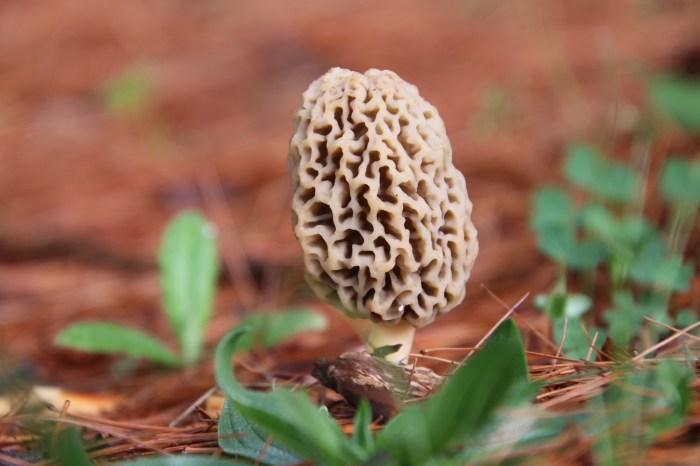
2022 Michigan Morel Season is Here!

Mushrooms on Pine View Golf Course by Corey Seeman

Mushrooms on Pine View Golf Course by Corey Seeman

My Michigan morel mushroom groups are starting to light up with mushroom finds so it’s a good time to remind folks that May is morel month in Michigan!

The actual fruiting period can be anywhere from late April until mid-June depending on where you are in the Mitten & what species you are hunting. Contrary to common belief, morels are not confined to the northern part of the state – some of the best picking (such as the photo today) can be found in southern Michigan.

MOREL HUNTING TIPS

  • Make your first several mushroom hunts, whether for morels or other edible mushroom species, with someone who knows mushrooms.
  • Buy or download a mushroom guide. A good guidebook is “The Mushroom Hunter’s Field Guide” by Alexander H. Smith, recognized as America’s foremost authority on mushroom identification, and Nancy Smith Weber. There also is a very good mushroom identification booklet available on the U.S. Department of Agriculture website.
  • Be prepared to cover a lot of ground and to experience disappointments when searching for morels. Some spots yield mushrooms year after year, while others skip several seasons between crops.
  • Don’t expect to find morels easily if you are new to the pastime. Because they blend into their background of last fall’s leaves and dead grass, they are hard to see even if you are looking right at them. Your “eye” for morels will sharpen with practice, and you will need to retrain it every spring.
  • Most important of all – know what you are eating! You will need to know the difference between a “true” morel and the “false morels,” such as beefsteak mushrooms, which are poisonous. (See morel identification information.)
  • For more information on morel mushroom hunting in Michigan, visit Pure Michigan or Midwest American Mycological Information.
  • And finally, the Morel tag on Michigan in Pictures is chock full of great advice. Happy hunting!!

Corey took this on May 4th in Ypsilanti last year. Head over to his Flickr for his latest!

Support Michigan in Pictures with Patreon

Construction Zone: Great Blue Heron Edition

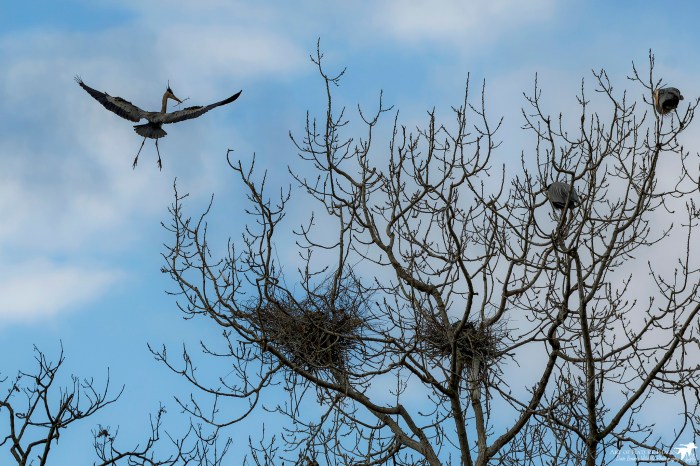
Construction Zone by David Bowers

Construction Zone by David Bowers

The roads aren’t the only place you’ll find construction projects in Michigan these days!

David got this cool shot of a heron returning to the rookery with a stick for the nest a couple days ago. See more in his Great Blue Herons gallery on Flickr & check out more pics on his Facebook.

More Great Blue Herons, rookeries & nests on Michigan in Pictures.

Support Michigan in Pictures with Patreon

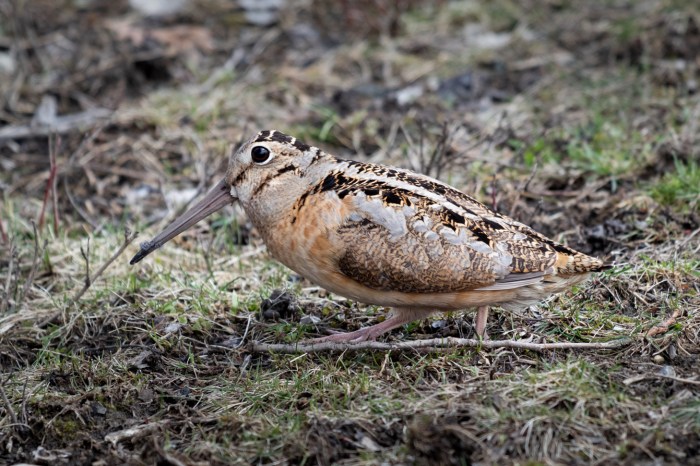
Timberdoodle, Labrador twister, Night partridge, or Bog sucker? The American Woodcock gets no respect

Woodcock by Bruce Bertz

Woodcock by Bruce Bertz

The Michigan Department of Natural Resources Landowner Guide shares some great information about the American Woodcock (Scolopax minor):

Michigan serves as an important breeding ground for woodcock … Numbers in Michigan and other Midwestern states increased dramatically after many old growth forests were cut during the 100-year period from about 1830 to 1930. The last woodcock population peak occurred in the 1950’s. During the past 30 years, woodcock numbers have seen a steady decline. Since 1968, the number of singing males in spring has declined an average of 1.3 percent per year. Since 1985, the loss is even greater, an average of 2.8 percent per year. Hunting the birds seems to have little impact on overall numbers in the breeding population. Most experts agree that habitat loss and degradation are key reasons for the decline.

Although some people confuse woodcock with their close cousin, the snipe, the birds are separate species that belong to the sandpiper family. Unlike others in its family, woodcock prefer uplands. Woodcock are forest birds known for their erratic flight patterns and unusual spring displays by the males.

A Senecan myth says God made the woodcock from the leftover parts of other birds. Large eyes are located along the sides of the bird’s head, allowing it to see in all directions, including directly behind. A long, thin bill that averages nearly three inches in length permits woodcock to probe in soft earth for worms, slugs and other invertebrates. Nostrils lie high against the skull so the woodcock can feed and breathe at the same time. Its ears are located beneath the eyes. Woodcock stand about eight inches tall, appear to bob when they walk, and weigh about a half-pound each.

Woodcock need young-growth forests with openings for reproduction; especially in the upper Midwest where the forests are growing older. This process of natural succession is a key reason for habitat degradation, but prime cover is also lost to roads, houses, croplands, and other human developments.

Head over to the DNR to learn how interested landowners can help by creating or improving Woodcock habitat on their property & learn more about the woodcock and its derogatory names on All About Birds.

See more in Bruce’s Michigan Parks 2022 gallery on Flickr.

Support Michigan in Pictures with Patreon

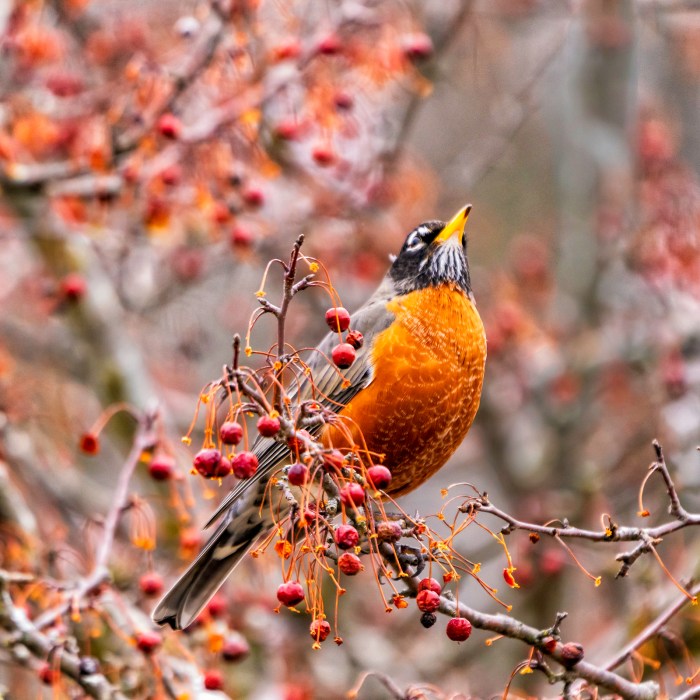
Bring on the Spring!

Robin by Charles Bonham

Robin by Charles Bonham

I saw a robin yesterday & have decided that Spring would be a very good idea. Who’s with me?

I know this guy Charles caught at Kensington Metropark the other day is! Head over to Charles’s Flickr for more including a few more great bird shots!

More birds & more Spring on Michigan in Pictures.

Support Michigan in Pictures with Patreon

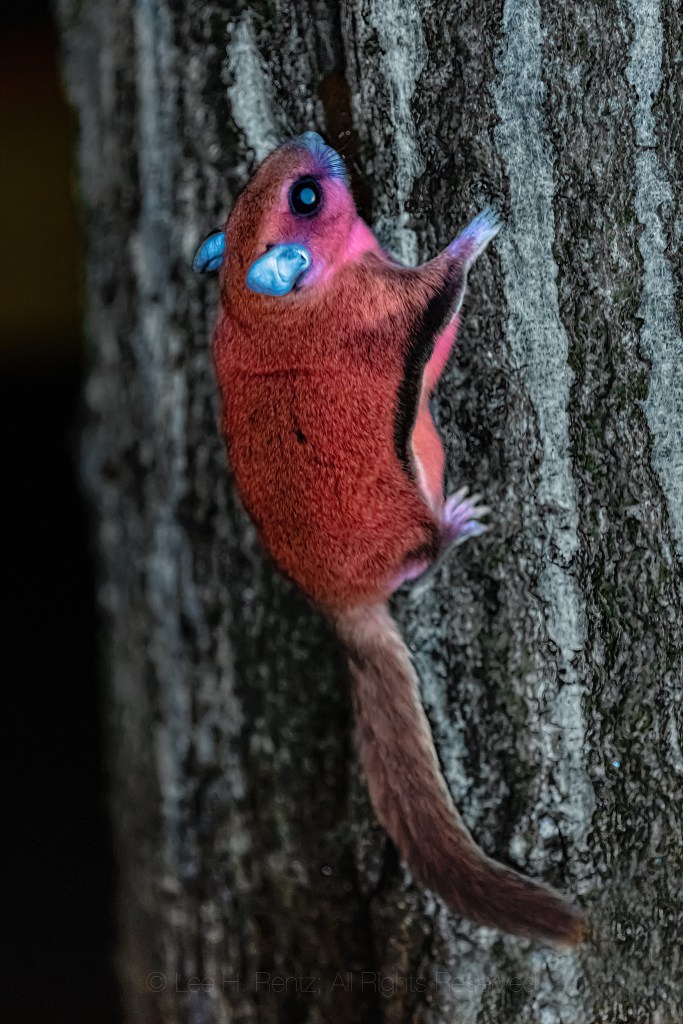
Glowing Flying Squirrels are actually a thing!

Southern Flying Squirrel Showing Biofluorescene by Lee Rentz

Southern Flying Squirrel Showing Biofluorescene by Lee Rentz

Lee’s incredibly cool shot of a southern flying squirrel exhibiting biofluorescence when illuminated by a UV light source led me to this fascinating 2019 New York Times article on the discovery of ultraviolet fluorescence in squirrels:

One spring night in Wisconsin, John Martin, a biologist, was in his backyard with an ultraviolet flashlight. Suddenly, a hot-pink squirrel flew by.

It was a southern flying squirrel, a small, furry creature most active at dawn and dusk. Under most circumstances, it has a warm brown color. But in the beam of Dr. Martin’s flashlight, it sported a gaudy Day-Glo hue closer to something you might see in a nightclub or a Jazzercise class circa 1988.

“He told his colleagues at Northland College, but of course, everyone was pretty skeptical,” said Allison Kohler, a graduate student at Texas A&M University.

Dr. Martin asked Ms. Kohler, then a student at Northland, to look into it. After examining more than 100 specimens of flying squirrels across two museum collections and spotting five more squirrels under UV light in the wild, the researchers and their colleagues reported surprising results last week in the Journal of Mammalogy: The pink is real.

…What the flying squirrels get out of it is still a mystery. Confirming that the squirrels are even capable of seeing in ultraviolet wavelengths will require additional study, Ms. Kohler said.

The researchers have some hypotheses concerning what’s behind the squirrels’ Day-Glo displays. Ultraviolet rays are abundant during the dawn and dusk periods when the squirrels are moving around. So it is reasonable to expect that the fluorescence is visible to other organisms even when there are no biologists with UV flashlights in the vicinity.

The vivid pink color might have evolved to confuse the owls who prey on the squirrels. Those birds of prey fluoresce in precisely the same hue themselves; a flying squirrel may look, superficially at least, like a flying owl.

Or, if it’s confirmed that the squirrels see UV, the color might have something to do with mating or signaling to other flying squirrels.

“It could also just be not ecologically significant to the species,” Ms. Kohler said, noting that future work will delve into the question. “It could just be a cool color that they happen to produce.”

Head over to Lee’s Flickr for more shots of this squirrel & a friend!!

PS: Can I interest you in glow in the dark mushrooms?

Support Michigan in Pictures with Patreon

Make Isle Royale your office in 2022!

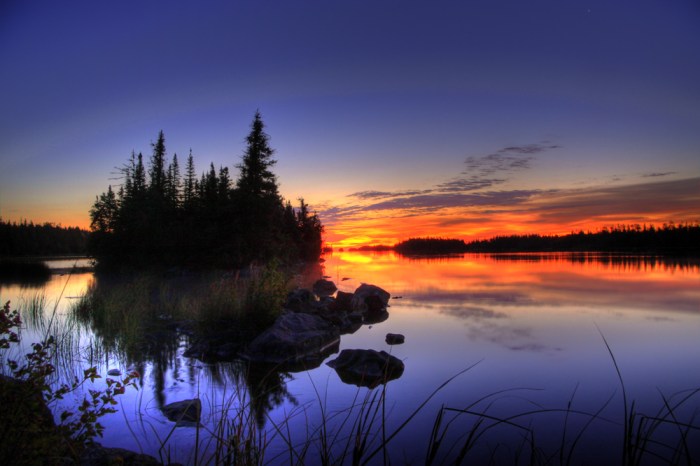
Tobin Harbor Sunrise by Carl TerHaar

Tobin Harbor Sunrise by Carl TerHaar

How would you like to wake up to this view?? Well, if you are a college student, the Isle Royale Wolf-Moose Research Project is seeking volunteers to assist with data collection for the 2022 summer field season. Students studying natural resources, conservation, ecology, or related fields will gain valuable field work experience working with distinguished researchers in Isle Royale National Park in the longest continuous study of any predator-prey system in the world. 

The opportunity is for 4-5 weeks between early-May and mid-June, and requires students to have documented experience backpacking & camping for extended periods of time in remote settings, proficiency with orienteering, and  the ability to get along with others in backcountry settings for 10-day periods of time are all critical. Get the full rundown of qualifications, activities & more on their website at IsleRoyaleWolf.org.

Carl is definitely Michigan in Pictures’s Isle Royale Bureau Chief! His photos feature prominently in our posts about Isle Royale & his photo of a Bull Moose Faceoff is one of the most popular photos of all time on Michigan in Pictures. He  took this way back in the summer of 2009, and you can see hundreds more in his Isle Royale National Park gallery on Flickr. For sure head over to his Mackinaw Scenics website to view & purchase his work!

Support Michigan in Pictures with Patreon

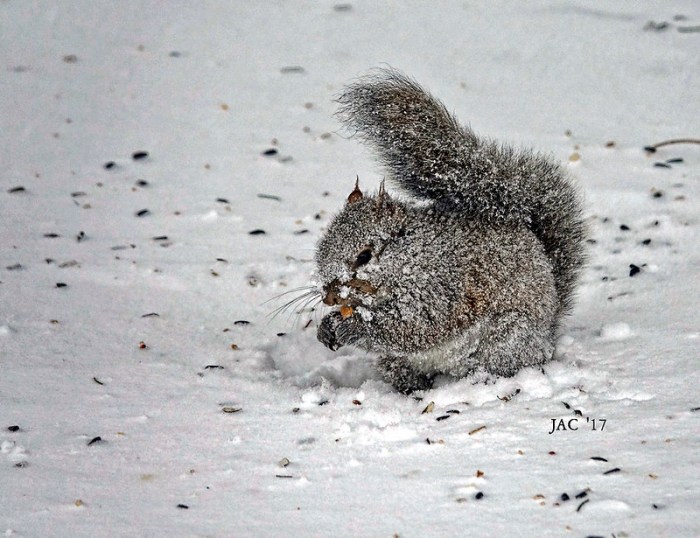
So Cold

So Cold by Julie

So Cold by Julie

With Michigan is plunging back into the deep freeze this weekend I think we can all identify with this little guy. 

Julie took this back in 2017. See much more in her massive Winter gallery on Flickr.

Stay warm folks!!

Support Michigan in Pictures with Patreon

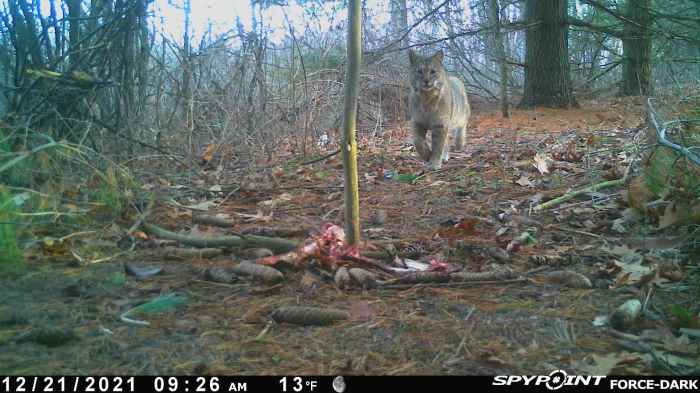
Bobcat Bingo!

Bobcat by Paulv21

Bobcat by Paulv21

Bobcats are one of the most elusive animals in Michigan. Last winter I was “lucky” enough to have two of them race in front of me while driving. I say “lucky” because even though they were able to run in front of my car from a starting point almost next to me, I was able to slow enough to see them close up. The thing that surprised me most in addition to their speed was how muscular they are – seriously ripped!

Paul captured this bobcat last week with his trail cam which I think is in the UP is from Loomis near Clare, but as The Leader shares, bobcats are found all across Michigan, even in cities! See lots more shots in his 2020 Trail Camera gallery on Flickr.

More about bobcats aka Lynx rufus on Michigan in Pictures.

Support Michigan in Pictures with Patreon