Fallpaper

Untitled, photo by jacalynsnana.

Every day about 50 people wander over to Michigan in Pictures looking for “fall backgrounds” and “fall wallpaper”. The Google sends them to our Michigan fall … and the Michigan Fall Wallpaper Series page, which is a good place to go as the flames of autumn begin to lick at the leaves.

See more fall photos from jacalynsnana has more in her Autumn in Michigan set and at her autumn tag.

Sunset on the Two-Hearted River

Sunset on the Two-Hearted River

Sunset on the Two-Hearted River, photo by Vision Three Images – Michael Koole.

This photo is part of Michael’s Beach & Water Things and other sorta natural stuff set (slideshow). The Two-Hearted River was the setting for Hemingway’s short story, Big Two-Hearted River. An excerpt…

He stepped into the stream. It was a shock. His trousers clung tight to his legs. His shoes felt the gravel. The water was a rising cold shock.

Rushing, the current sucked against his legs. Where he stepped in, the water was over his knees. He waded with the current. The gravel slipped under his shoes. He looked down at the swirl of water below each leg and tipped up the bottle to get a grasshopper. The first grasshopper gave a jump in the neck of the bottle and went out into the water. He was sucked under in the whirl by Nick’s right leg and came to the surface a little way down stream. He floated rapidly, kicking. In a quick circle, breaking the smooth surface of the water, he disappeared. A trout had taken him.

Another hopper poked his face out of the bottle. His antennas wavered. He was getting his front legs out of the bottle to jump. Nick took him by the head and held him while he threaded the slim hook under his chin, down through his thorax and into the last segments of his abdomen. The grasshopper took hold of the hook with his front feet, spitting tobacco juice on it. Nick dropped him into the water.

Holding the rod in his right hand he let out line against the pull of the grasshopper in the current. He stripped off line from the reel with his left hand and let it run free. He could see the hopper in the little waves of the current. It went out of sight.

There was a tug on the line. Nick pulled against the taut line. It was his first strike. Holding the now living rod across the current, he hauled in the line with his left hand. The rod bent in jerks, the trout pulling against the current. Nick knew it was a small one. He lifted the rod straight up in the air. It bowed with the pull.

He saw the trout in the water jerking with his head and body against the shifting tangent of the line in the stream.

Nick took the line in his left hand and pulled the trout, thumping tiredly against the current, to the surface. His back was mottled the clear, water-over-gravel color, his side flashing in the sun. The rod under his right arm, Nick stooped, dipping his right hand into the current. He held the trout, never still, with his moist right hand, while he unhooked the barb from his mouth, then dropped him back into the stream.

He hung unsteadily in the current, then settled to the bottom beside a stone. Nick reached down his hand to touch him, his arm to the elbow under water. The trout was steady in the moving stream resting on the gravel, beside a stone. As Nick’s fingers touched him, touched his smooth, cool, underwater feeling, he was gone, gone in a shadow across the bottom of the stream.

Read the full story.

a little closer … to hornets, yellowjackets & wasps

a little closer

a little closer, photo by gerrybuckel.

Gerry was watching these wasps at work and got a little closer to the nest to take this photo, but had to back off as they got closer too!

I thought Gerry was wrong to refer to these “bees” as wasps, but in digging a little deeper, I realized that I was the one in error.

Wikipedia has a lot to say about yellowjackets & hornets. One good thing to know is not to mess with a nest as wasps aren’t limited to a single sting!

Hornets, like many social wasps, can mobilize the entire nest to sting in defense: this is highly dangerous to humans. The hornet alarm pheromone is used to raise alarm of nest attack, and to identify prey, for example bees. It is not advisable to kill a hornet anywhere near a nest, as the distress signal can trigger the entire nest to attack. Materials that come in contact with pheromone, such as clothes, skin, dead prey or hornets, must be removed from the vicinity of the hornets nest. Perfumes, and other volatile chemicals can be falsely identified as pheromone by the hornets and trigger attack.

My bee guy told me that you can neutralize hornet & yellowjacket venom with “Shout” – I have no idea whether or not that is true!

I still can’t tell what particular breed these wasps are, but the most common breed in our region is now the German yellowjacket. The Yellowjacket & Hornets through a Lens at bugguide.net might hold the answer!

Michigan Orange

Untitled, photo by Blondieyooper.

Usually you have to wait a month or so to see orange like this in Michigan.

Be sure to check it out bigger. This one too!

In fact, if it’s raining where you are, why not settle back and wander through April’s Negaunee photos (slideshow).

Daisy, closer than you can imagine

untitled, photo by Brooke Pennington.

Brooke Pennington apparently has macro lenses on loan from the Zeiss Advanced Optical Research Laboratory or something.

The only way to fully appreciate this photo is to click through to Brooke’s slideshow.

(be sure to click back to the photo of the grasshopper too!!)

The Wood Turtle in Michigan

Turtle by LuckyGus

Turtle, photo by LuckyGus

Updated September 30, 2008: LuckyGus captured this photo on the Betsie Valley Trail in Benzie County. Below you can read about TurtleGate ’08, which was touched off when I misidentified this turtle as a common snapping turtle. My Ranger Rick Top Terrapin Tagger badge has been repossessed and sources tell me that a number of zoologists are “keeping an eye on me”.

The Michigan DNR’s page on the wood turtle (which should have helped me identify it) says that:

As its scientific name, Glyptemys insculpta, implies, the shell of the wood turtle is one of the most ornate of the turtles in Michigan. A noticeable keel running down the back of the carapace and the pointed edges of the scutes along the back edge add to its sculpted appearance. The yellow on the underparts of its neck, legs, and stomach, plus the highly visible deep circular growth rings of the scutes on the brownish carapace help with identification. The adult carapace length is 6.3 to 9.4 inches (16 to 24 cm)

Wood turtles live in rivers with sandy-bottomed streams and rivers. They spend most of their time in the river from September to May, but in summer can be found foraging in woods, swamps, and meadows in the upland areas edging the stream or river. Logs or banks near water and sunny woodland openings are often utilized for basking.

These turtles are omnivores eating a variety of plants and animals and carrion found in and along the river. Wood turtles employ a unique technique to hunt earthworms. Using either an alternating foot stomp, or by lifting and dropping its shell on the ground, they create vibrations in the ground. These vibrations will cause earthworms to surface where they are quickly snatched for a meal. Anglers seeking bait can employ a similar technique. A stick stuck in the ground and wiggled back and forth to create vibrations will cause earthworms to leave the ground.

Michigan’s wood turtle population has declined in recent years and it’s considered rare in the northern Lower and Upper Peninsulas. More about wood turtles can be found at Wikipedia’s Wood Turtle entry, woodturtle.com and from the MSU Museum’s “critter guy”, James Harding who notes that They may not be taken from the wild or possessed without a scientific collector’s permit issued by the DNR.

You can also check out What’s Up With the Wood Turtle? from MyNorth.com for a look at fieldwork being done in Northern Michigan on the wood turtle.

(from July 2008) TurtleGate Update: A Nation in Slow, but Very Real Peril

I have finally gotten back to this to find out if I am indeed a dirty, no-good turtle mis-indentifying so-and-so or merely guilty of the litany of other things that I may or may not be guilty of per the comments. From the Michigan DNR Turtle page I was able to learn:

  • The eastern box turtle appears to not look like this turtle at all.
  • The wood turtle appears to have a black face, but this photo looks sort of similar.
  • However this snapping turtle’s shell looks very similar.
  • I am forced to conclude that I don’t know the answer.
  • I’ll end with a shout-out to a herpetologist or other expert to set me straight.

The Opossum Family Road Trip

close up

close up, photo by gerrybuckel.

Well, the weekend is here and all around Michigan folks are packing their families into cars for a family getaway. This photo is dedicated to any who are tempted to lose their temper or otherwise complain about their lot.

Gerry has a few more photos of the possum family at her “animals” tag.

Have a great weekend people!

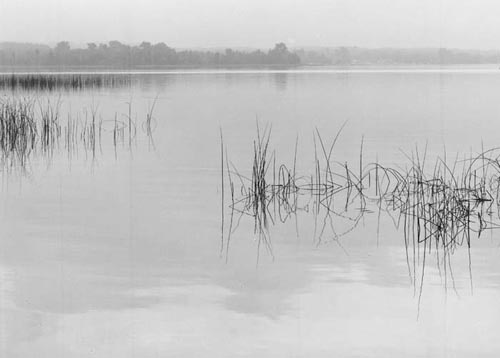
Reeds, Crooked Lake from the Waters of Michigan

Reeds, Crooked Lake photo by David Lubbers

Reeds, Crooked Lake, photo by David Lubbers

Michigan environmental writer Dave Dempsey has long been someone I admire. His biography of Michigan Governor William G. Milliken is a book that everyone who loves Michigan should read. For years I’ve had a gorgeous black & white photo of the Manitou Passage by David Lubbers hanging in my office.

I was therefore pretty darn excited when Dave told me about his new book, The Waters of Michigan.

It’s a rich and thoughtful journey through Michigan’s rivers, lakes and other manifestations of water with words and photos, and today I am honored to have some more photos from the book and an excerpt titled Water and Michigan’s Destiny on Absolute Michigan.

I hope you get a chance to read it.

A Michigan Osprey Pair at Wildwing Lake

Osprey Pair at Wildwing Lake 1

Osprey Pair at Wildwing Lake 1, photo by C.A. Mullhaupt.

C.A. Mullhaupt took this incredible photo (view it bigger) of a pair of osprey at Wildwing Lake in Kensington Metropark near Milford, Michigan.

The Michigan DNR’s Osprey (Pandion haliaetus) page says:

The “fish hawk” (length of 22-25 inches, wingspan of 4.5-6 feet) is brown above and white below, and flies with a distinct bend in its wing at the “wrist.” Their feet are equipped with spiny scales and long talons that give them a firm grip on slippery fish, their only prey. Ospreys usually select tall trees in marshes along streams, lakes or man made floodings. They will adapt to artificial nesting platforms. This help from humans, along with the restriction of certain harmful pesticides, has helped ospreys recover from the drastic population reductions seen in the 1950s and ’60s…

The Department of Natural Resources requests help from wildlife observers to report any sightings of osprey in southern Michigan, particularly in the Maple River area (north of St. Johns,) and in southeast Michigan (Oakland, Wayne, Macomb and Livingston counties.)

Osprey Watch of Southeast Michigan (OWSEM) is a non-profit volunteer organization based at Kensington Metropark. Their goal are to help the Michigan DNR in their efforts to restore the osprey to Southern Michigan and to educate the public about this very special raptor. On their very extensive web site they have a cool osprey sighting map, lots of reports and photos and there’s even information about osprey hacking.

You can learn more about the osprey from Wikipedia’s osprey entry and the get photos, calls and other info from
Pandion haliaetus (osprey) at the University of Michigan Animal Diversity Web

heart clothesline

heart clothesline

heart clothesline, photo by monitorpop.

Wikipedia says that Dicentra spectabilis is a perennial flower that is also known as Venus’s car, bleeding heart, Dutchman’s trousers, or lyre flower. They also come in white.

Mike has a lot more cool photos of flowers (slideshow) and more photography at monitorpop.com.