Morel Mushroom Star

Morel Mushroom Star

Morel Mushroom Star, photo by Odalaigh.

Chad writes that he found these beautiful morels while hiking with his wife. He has more morel photos, but somehow neglected to mention WHERE he found them … here’s hoping you find some tasty things to do when out and about in Michigan this weekend!

Here’s more morel goodness from Michigan in Pictures and also Absolute Michigan keyword morel!

Garter Snake

Garter Snake by Alanna St. Laurent Photography

Garter Snake, photo by Alanna St. Laurent Photography

The Michigan DNR’s page on the Eastern Garter Snake (Thamnophis sirtalis) says that the Eastern Garter is Michigan’s most common snake, inhabiting both peninsulas and even urban areas. Wikipedia notes that they are often mistakenly called garden snakes or gardener snakes and the UM Animal Diversity Web entry for garter snakes adds more info and lots of photos and says that although there are very rare cases of allergic reaction from bites from people handling garter snakes, these reptiles deserve their reputation as a harmless and beneficial low-level predator. Be warned if you handle them that their main defense is a stinky secretion!

This picture is part of a cool set of photos from the Bald Mountain Recreation Area (slideshow). Alanna also commented that she thinks snakes are cool. If you do too, you’ll probably enjoy the Snakes of Michigan page from Snaketamers. It lists Michigan’s 18 species of native snakes (with photos). You can also check out the listing of Michigan’s Snakes from the DNR.

Kirtland’s Warbler and the Kirtland’s Warbler Festival

Kirtlands Warbler (Dendroica kirtlandii)

Kirtlands Warbler (Dendroica kirtlandii), photo by birdman06.

The photographer notes that Kirtland’s Warbler is the rarest warbler in the US. It’s part of his cool set of photos of Songbirds and birds like Songbirds (slideshow).

The Michigan DNR’s page on Kirtlands Warbler (Dendroica kirtlandii) begins:

The endangered Kirtland’s warbler is one of the rarest members of the wood warbler (Parulidae) family. It is a bird of unusual interest for many reasons. It nests in just a few counties in Michigan’s northern Lower and Upper peninsulas, in Wisconsin and the province of Ontario and, currently, nowhere else on Earth. Its nests generally are concealed in mixed vegetation of grasses and shrubs below the living branches of five to 20 year old jack pine (Pinus banksiana) forests.

Click through to read about how the bird was named in honor of Ohio physician, teacher, horticulturist and naturalist Dr. Jared P. Kirtland, that it wasn’t until 1903 that Norman A. Wood discovered the first nest in Oscoda County in northern lower Michigan and much more about this truly rare bird. You can read more and see some pictures at Dendroica kirtlandii (Kirtland’s warbler) from the Animal Diversity Web at U-M and Wikipedia’s Kirtlands warbler entry. There’s even a Kirtland’s Warbler Audubon Society in Comins, Michigan that is a chapter of the Michigan Audubon Society and keeps track of all things warbly.

It’s maybe unsurprising then that there is an annual Kirtland’s Warbler Festival held every May on the campus of Kirtland Community College in Roscommon. The festival is billed as a celebration of nature and takes place next weekend (May 17, 2008). It features field trips to see Kirtland’s warblers, presentations about these and other rare or endangered Michigan species (piping plovers, osprey, eagles, turtles) and birding in general, plenty of activities for kids and a concert by the Great Lakes Myth Society

In addition to a ton more information about the festival and the feathered feature, the festival site features a Kirtland’s warbler video where you can hear the bird’s song.

Fiddlehead Forest

Fiddlehead Fern Forest by otisourcat

Fiddlehead Fern Forest, photo by otisourcat

While morels get the most love at this time of year, fiddleheads are another tasty treat that’s popping up in the woods of Michigan. Wikipedia of course has a fiddlehead entry, Michigan-based food grower Earthy Delights has better info. They say:

A Fiddlehead is a fern so young and new that it hasn’t yet “unfurled” and opened its leaves. The end is still curled in a tight spiral, ready to unroll as the sun warms it and it gathers strength and size. This spiral shape reminds many people of the end of a violin, hence the name “Fiddlehead.”

Early Spring signals the arrival of “Fiddlehead season,” when aficionados begin combing the riverbanks and forest floor.

The flavor? It has been described as similar to green beans with a hint of artichoke. But descriptions do not begin to capture the flavor. You must try them to know the wonderful flavor and delightful crunch of Fiddleheads.

Earthy actually grows and ships fiddleheads, and they have several recipes including Sauteed Fiddlehead Ferns with Parsley and Garlic, Steamed Fiddleheads With Wild Leek Greens and (my favorite) Spring Wild Harvest Ragout With Fiddlehead Greens & Morels.

otisourcat took this photo at the Muskegon State Park and got this tasty shot as well!

Textures

THU-Textures-23-Edit

THU-Textures-23-Edit, photo by jakphoto.

Be sure to check it out large and on black

The meaning of spring

Untitled, photo by Brooke Pennington.

…at least that’s what I’m thinking.

Native American Maple Sugaring: One Drip at a Time

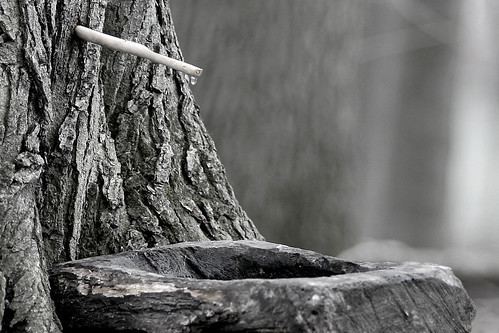
One Drip at a Time

One Drip at a Time, photo by Graphic Knight.

Eric took this photo of an American Indian demonstration on how maple trees were tapped for collecting the sap to make maple syrup at the Kensington Metropark Farm Learning Center. He also has a couple photos of them boiling the say to make maple syrup.

It’s said that there was a time when the sap of the maple tree was as thick and sweet as honey. More practical tales are told of how Nanahboozhoo taught the making of maple sugar:

Then Nanahboozhoo gave the Indians a bucket made of Birch bark, and a stone tapping-gouge with which to make holes in the tree-trunks; and he shaped for them some Cedar spiles or little spouts, to put in the holes, and through which the sap might run from the trees into buckets. He told them, too, that they must build great fireplaces in the woods near the Maple groves, and when the buckets were full of sap, they must pour it into their kettles, and boil it down. And the amount of Sugar they might boil each Spring would depend on the number of Cedar spiles and Birch bark buckets they made during the Winter.

You can learn about a traditional Native American sugarbush from NativeTech and take a look inside the book Ininatig’s Gift of Sugar: Traditional Native Sugarmaking.

Also be sure to check out The Cycle of Sweetness: From Sap to Maple Syrup on Michigan in Pictures for more photos of this fascinating process.

Michigan conservationist Genevieve Gillette

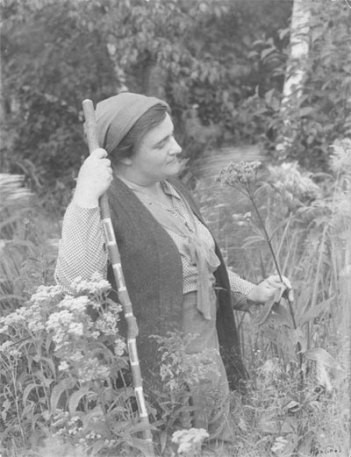
Michigan conservationist Genevieve Gillette

Genevieve Gillette, photo courtesy Archives of Michigan

In honor of Women’s History Month, the Archives of Michigan is highlighting conservationist Genevieve Gillette, one of the prime movers in the creation of Michigan’s State Park system. Gillette was born in 1898 and in 1920 she became the first woman to earn a degree in Landscape Architecture from the Michigan Agricultural College. Over the course of her lifetime, the number of Michigan state parks increased from one to ninety-six.

She was instrumental in creating P.J. Hoffmaster State Park near Muskegon, and the park includes the E. Genevieve Gillette Nature Center (Michigan’s Sand Dune Interpretive Center). Gillette was one of the inaugural inductees of the Michigan Walk of Fame in 2006 and is also in the Michigan Women’s Hall of Fame. Also see Emma Genevieve Gillette in Wikipedia.

Is this a Paddle, Raft, Plump, Team, Brace or Dopping of Ducks?

Swarm!

Swarm!, photo by OtisDude.

OtisDude writes:

I was shooting some duck pictures today when all the sudden something startled all the ducks. Calm to chaos in less than a second. I managed to snap off 4-5 pics before I got a little panicked and got out of the way.

We’ve all heard of the many Inuit names for snow. In case anyone was wondering, ducks are pretty much the same. There’s quite a collection of names for a group of ducks including a paddling of ducks or a raft of ducks (when floating along), a plump or team of ducks (in flight overhead), a brace of ducks (post hunting I believe) or a dopping of ducks (when diving). More ducks on Michigan in Pictures.

None of these seemed quite right but fortunately there’s also a flush of ducks, which I’m going to assume covers exactly this scenario.

Trumpeter Swan and the Birds of Michigan

trumpeter swan

trumpeter swan, photo by tobibritsch.

On the Michigan DNR’s page on the trumpeter swan, says that at 25-35 pounds when fully grown, the trumpeter swan is the world’s largest waterfowl with a wingspan of nearly 8′ and that:

Historically, trumpeter swans were most likely abundant throughout the Great Lakes region, even in the southern Michigan marshlands. On his travels along the Detroit River in 1701, Cadillac compared the abundance of swans to lilies among the rushes. However, with the settlement of America, the populations of trumpeters plummeted. Beginning in the late 1800s, European settlers cleared the land, draining and filling important marsh habitat, and market hunters took swans for their fine down and quills. By 1933, only 66 trumpeter swans remained in the continental United States, mainly in remote parts of the Rocky Mountains and Alaska. Nearly 100 years passed before trumpeter swans were seen again in the Michigan wilds.

In the 1980s Michigan began a swan reintroduction program as part of the North American Restoration Plan. While the program has been a success and dramatically increased the number of nesting pairs, there are some who question whether these birds did in fact historically nest in Michigan. Nuthatch at the excellent Michigan blog bootstrap analysis presents the case in with great links in swans, take 2. It’s something that merits consideration as swans are pretty rough on aquatic habitats!

For more on these birds, check out The Trumpeter Swan Society. Also, the UM Animal Diversity Web Cygnus buccinator (trumpeter swan) listing has some photos but unfortunately no sounds. Wikipedia’s Trumpeter Swan entry also includes creative commons photos of trumpeter swans for use and download.

The photographer has a cool set of waterbird photos (slideshow) and this photo is in the Birds of Michigan group on Flickr. It’s for sharing photos of birds found anywhere in the State of Michigan and they say that if you cannot identify the bird, post it to the group and likely someone there can!