Daisy, closer than you can imagine

untitled, photo by Brooke Pennington.

Brooke Pennington apparently has macro lenses on loan from the Zeiss Advanced Optical Research Laboratory or something.

The only way to fully appreciate this photo is to click through to Brooke’s slideshow.

(be sure to click back to the photo of the grasshopper too!!)

The Wood Turtle in Michigan

Turtle by LuckyGus

Turtle, photo by LuckyGus

Updated September 30, 2008: LuckyGus captured this photo on the Betsie Valley Trail in Benzie County. Below you can read about TurtleGate ’08, which was touched off when I misidentified this turtle as a common snapping turtle. My Ranger Rick Top Terrapin Tagger badge has been repossessed and sources tell me that a number of zoologists are “keeping an eye on me”.

The Michigan DNR’s page on the wood turtle (which should have helped me identify it) says that:

As its scientific name, Glyptemys insculpta, implies, the shell of the wood turtle is one of the most ornate of the turtles in Michigan. A noticeable keel running down the back of the carapace and the pointed edges of the scutes along the back edge add to its sculpted appearance. The yellow on the underparts of its neck, legs, and stomach, plus the highly visible deep circular growth rings of the scutes on the brownish carapace help with identification. The adult carapace length is 6.3 to 9.4 inches (16 to 24 cm)

Wood turtles live in rivers with sandy-bottomed streams and rivers. They spend most of their time in the river from September to May, but in summer can be found foraging in woods, swamps, and meadows in the upland areas edging the stream or river. Logs or banks near water and sunny woodland openings are often utilized for basking.

These turtles are omnivores eating a variety of plants and animals and carrion found in and along the river. Wood turtles employ a unique technique to hunt earthworms. Using either an alternating foot stomp, or by lifting and dropping its shell on the ground, they create vibrations in the ground. These vibrations will cause earthworms to surface where they are quickly snatched for a meal. Anglers seeking bait can employ a similar technique. A stick stuck in the ground and wiggled back and forth to create vibrations will cause earthworms to leave the ground.

Michigan’s wood turtle population has declined in recent years and it’s considered rare in the northern Lower and Upper Peninsulas. More about wood turtles can be found at Wikipedia’s Wood Turtle entry, woodturtle.com and from the MSU Museum’s “critter guy”, James Harding who notes that They may not be taken from the wild or possessed without a scientific collector’s permit issued by the DNR.

You can also check out What’s Up With the Wood Turtle? from MyNorth.com for a look at fieldwork being done in Northern Michigan on the wood turtle.

(from July 2008) TurtleGate Update: A Nation in Slow, but Very Real Peril

I have finally gotten back to this to find out if I am indeed a dirty, no-good turtle mis-indentifying so-and-so or merely guilty of the litany of other things that I may or may not be guilty of per the comments. From the Michigan DNR Turtle page I was able to learn:

  • The eastern box turtle appears to not look like this turtle at all.
  • The wood turtle appears to have a black face, but this photo looks sort of similar.
  • However this snapping turtle’s shell looks very similar.
  • I am forced to conclude that I don’t know the answer.
  • I’ll end with a shout-out to a herpetologist or other expert to set me straight.

The Opossum Family Road Trip

close up

close up, photo by gerrybuckel.

Well, the weekend is here and all around Michigan folks are packing their families into cars for a family getaway. This photo is dedicated to any who are tempted to lose their temper or otherwise complain about their lot.

Gerry has a few more photos of the possum family at her “animals” tag.

Have a great weekend people!

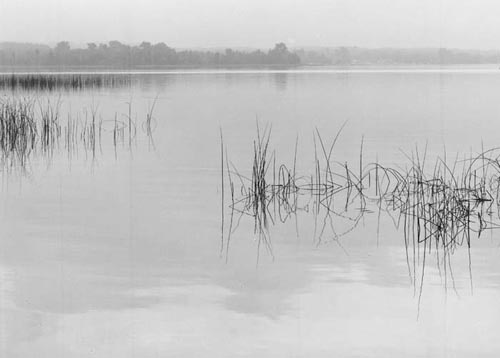
Reeds, Crooked Lake from the Waters of Michigan

Reeds, Crooked Lake photo by David Lubbers

Reeds, Crooked Lake, photo by David Lubbers

Michigan environmental writer Dave Dempsey has long been someone I admire. His biography of Michigan Governor William G. Milliken is a book that everyone who loves Michigan should read. For years I’ve had a gorgeous black & white photo of the Manitou Passage by David Lubbers hanging in my office.

I was therefore pretty darn excited when Dave told me about his new book, The Waters of Michigan.

It’s a rich and thoughtful journey through Michigan’s rivers, lakes and other manifestations of water with words and photos, and today I am honored to have some more photos from the book and an excerpt titled Water and Michigan’s Destiny on Absolute Michigan.

I hope you get a chance to read it.

A Michigan Osprey Pair at Wildwing Lake

Osprey Pair at Wildwing Lake 1

Osprey Pair at Wildwing Lake 1, photo by C.A. Mullhaupt.

C.A. Mullhaupt took this incredible photo (view it bigger) of a pair of osprey at Wildwing Lake in Kensington Metropark near Milford, Michigan.

The Michigan DNR’s Osprey (Pandion haliaetus) page says:

The “fish hawk” (length of 22-25 inches, wingspan of 4.5-6 feet) is brown above and white below, and flies with a distinct bend in its wing at the “wrist.” Their feet are equipped with spiny scales and long talons that give them a firm grip on slippery fish, their only prey. Ospreys usually select tall trees in marshes along streams, lakes or man made floodings. They will adapt to artificial nesting platforms. This help from humans, along with the restriction of certain harmful pesticides, has helped ospreys recover from the drastic population reductions seen in the 1950s and ’60s…

The Department of Natural Resources requests help from wildlife observers to report any sightings of osprey in southern Michigan, particularly in the Maple River area (north of St. Johns,) and in southeast Michigan (Oakland, Wayne, Macomb and Livingston counties.)

Osprey Watch of Southeast Michigan (OWSEM) is a non-profit volunteer organization based at Kensington Metropark. Their goal are to help the Michigan DNR in their efforts to restore the osprey to Southern Michigan and to educate the public about this very special raptor. On their very extensive web site they have a cool osprey sighting map, lots of reports and photos and there’s even information about osprey hacking.

You can learn more about the osprey from Wikipedia’s osprey entry and the get photos, calls and other info from
Pandion haliaetus (osprey) at the University of Michigan Animal Diversity Web

heart clothesline

heart clothesline

heart clothesline, photo by monitorpop.

Wikipedia says that Dicentra spectabilis is a perennial flower that is also known as Venus’s car, bleeding heart, Dutchman’s trousers, or lyre flower. They also come in white.

Mike has a lot more cool photos of flowers (slideshow) and more photography at monitorpop.com.

Morel Mushroom Star

Morel Mushroom Star

Morel Mushroom Star, photo by Odalaigh.

Chad writes that he found these beautiful morels while hiking with his wife. He has more morel photos, but somehow neglected to mention WHERE he found them … here’s hoping you find some tasty things to do when out and about in Michigan this weekend!

Here’s more morel goodness from Michigan in Pictures and also Absolute Michigan keyword morel!

Garter Snake

Garter Snake by Alanna St. Laurent Photography

Garter Snake, photo by Alanna St. Laurent Photography

The Michigan DNR’s page on the Eastern Garter Snake (Thamnophis sirtalis) says that the Eastern Garter is Michigan’s most common snake, inhabiting both peninsulas and even urban areas. Wikipedia notes that they are often mistakenly called garden snakes or gardener snakes and the UM Animal Diversity Web entry for garter snakes adds more info and lots of photos and says that although there are very rare cases of allergic reaction from bites from people handling garter snakes, these reptiles deserve their reputation as a harmless and beneficial low-level predator. Be warned if you handle them that their main defense is a stinky secretion!

This picture is part of a cool set of photos from the Bald Mountain Recreation Area (slideshow). Alanna also commented that she thinks snakes are cool. If you do too, you’ll probably enjoy the Snakes of Michigan page from Snaketamers. It lists Michigan’s 18 species of native snakes (with photos). You can also check out the listing of Michigan’s Snakes from the DNR.

Kirtland’s Warbler and the Kirtland’s Warbler Festival

Kirtlands Warbler (Dendroica kirtlandii)

Kirtlands Warbler (Dendroica kirtlandii), photo by birdman06.

The photographer notes that Kirtland’s Warbler is the rarest warbler in the US. It’s part of his cool set of photos of Songbirds and birds like Songbirds (slideshow).

The Michigan DNR’s page on Kirtlands Warbler (Dendroica kirtlandii) begins:

The endangered Kirtland’s warbler is one of the rarest members of the wood warbler (Parulidae) family. It is a bird of unusual interest for many reasons. It nests in just a few counties in Michigan’s northern Lower and Upper peninsulas, in Wisconsin and the province of Ontario and, currently, nowhere else on Earth. Its nests generally are concealed in mixed vegetation of grasses and shrubs below the living branches of five to 20 year old jack pine (Pinus banksiana) forests.

Click through to read about how the bird was named in honor of Ohio physician, teacher, horticulturist and naturalist Dr. Jared P. Kirtland, that it wasn’t until 1903 that Norman A. Wood discovered the first nest in Oscoda County in northern lower Michigan and much more about this truly rare bird. You can read more and see some pictures at Dendroica kirtlandii (Kirtland’s warbler) from the Animal Diversity Web at U-M and Wikipedia’s Kirtlands warbler entry. There’s even a Kirtland’s Warbler Audubon Society in Comins, Michigan that is a chapter of the Michigan Audubon Society and keeps track of all things warbly.

It’s maybe unsurprising then that there is an annual Kirtland’s Warbler Festival held every May on the campus of Kirtland Community College in Roscommon. The festival is billed as a celebration of nature and takes place next weekend (May 17, 2008). It features field trips to see Kirtland’s warblers, presentations about these and other rare or endangered Michigan species (piping plovers, osprey, eagles, turtles) and birding in general, plenty of activities for kids and a concert by the Great Lakes Myth Society

In addition to a ton more information about the festival and the feathered feature, the festival site features a Kirtland’s warbler video where you can hear the bird’s song.

Fiddlehead Forest

Fiddlehead Fern Forest by otisourcat

Fiddlehead Fern Forest, photo by otisourcat

While morels get the most love at this time of year, fiddleheads are another tasty treat that’s popping up in the woods of Michigan. Wikipedia of course has a fiddlehead entry, Michigan-based food grower Earthy Delights has better info. They say:

A Fiddlehead is a fern so young and new that it hasn’t yet “unfurled” and opened its leaves. The end is still curled in a tight spiral, ready to unroll as the sun warms it and it gathers strength and size. This spiral shape reminds many people of the end of a violin, hence the name “Fiddlehead.”

Early Spring signals the arrival of “Fiddlehead season,” when aficionados begin combing the riverbanks and forest floor.

The flavor? It has been described as similar to green beans with a hint of artichoke. But descriptions do not begin to capture the flavor. You must try them to know the wonderful flavor and delightful crunch of Fiddleheads.

Earthy actually grows and ships fiddleheads, and they have several recipes including Sauteed Fiddlehead Ferns with Parsley and Garlic, Steamed Fiddleheads With Wild Leek Greens and (my favorite) Spring Wild Harvest Ragout With Fiddlehead Greens & Morels.

otisourcat took this photo at the Muskegon State Park and got this tasty shot as well!