Here Comes The Sun … and the Northern Cardinal

Here Comes The Sun

Here Comes The Sun, photo by Beth Crawford 65.

When I saw this I thought that it might be a nice time to tip my hat to the Arizona Cardinals for their part in an exciting Super Bowl XLIII, show a little gratitude for a break in the bitter cold and take a look at a common winter bird in Michigan.

All About Birds has some facts about the Northern Cardinal:

Population density and range of the Northern Cardinal has increased over the last 200 years, largely as a response to habitat changes made by people. However, it is listed as a species of special concern in California and may disappear there because of habitat loss.

The female Northern Cardinal sings, often from the nest. The song may give the male information about when to bring food to the nest. A mated pair shares song phrases, but the female may sing a longer and slightly more complex song than the male.

The male cardinal fiercely defends its breeding territory from other males. When a male sees its reflection in glass surfaces, it frequently will spend hours fighting the imaginary intruder. (I know I do that all the time too)

Since the male gets all the press and the helmet and ball-cap royalties, it’s probably good that I’m featuring the female. You can see more photos of cardinals male, female and St. Louis from the Absolute Michigan group on Flickr and Beth has a bunch of cardinal photos as well (slideshow)! You can also purchase some of her photos at her Etsy store.

More info at Wikipedia’s Cardinal entry, Cardinalis cardinalis (northern cardinal) and from the Animal Diversity Web at UM and at Birding in Michigan where they share a poem:

A day and then a week passed by:
The redbird hanging from the sill
Sang not: and all were wondering why
It was so still-
When one bright morning, loud and clear,
Its whistle smote my drowsy ear,
Ten times repeated, til the sound
Filled every echoing niche around;
And all things earliest loved by me,
The bird, the brook, the flower, the tree,
Came back again, as thus I heard
The cardinal bird.

-William Davis Gallagher

Michigan Fox Squirrel

Got My Nut . . . I'm Outta' Here

Got My Nut . . . I’m Outta’ Here, photo by Matt Kedzior.

Wikipedia’s Fox Squirrel entry says that the Fox Squirrel (Sciurus niger) is the largest species of tree squirrel native to North America and are also sometimes referred to as the Stump-eared Squirrel, Raccoon Squirrel, or Monkey-faced Squirrel.

Fox Squirrels depend primarily on tree seeds for food, but they are generalist eaters and will also consume buds and fruits, cultivated grain, insects, birds’ eggs, and small lizards … In their regular diet of nuts, fox squirrels are classic scatter-hoarders that bury caches of nuts in dispersed locations, some of which are inevitably left unretrieved to germinate. (Matt says he watched this little guy dig around for a couple seconds in the snow and he came up with a nut that I assume he buried earlier)

Fox Squirrels are strictly diurnal, non-territorial, and spend more of their time on the ground than most other tree squirrels. They are still, however, agile climbers…

They are gregarious and apparently playful, often chasing each other up and down trees and across yards and clearings. They have a large vocabulary, consisting most notably an assortment of clucking and chucking sounds, not unlike some “game” birds, and they warn the listening world of approaching threats…

Fox Squirrels are also known for being living fossils, skeletally very similar to remains of the oldest-known squirrel, Protosciurus, from the late Oligocene and early Miocene epochs.

For more, check out the Animal Diversity Web pages on the Fox Squirrel and also Michigan DNR’s page on Michigan squirrels.

You can see this bigger in Matt’s slideshow.

change (your background)

change

change, photo by n.elle.

I am continually surprised by how popular Michigan in Pictures (in particular this post) is for searches for “fall backgrounds” or “fall wallpaper“. Every day about 100 people end up here, and I feel it’s sort of a duty to find a nice big photo every few days … sort of like feeding the fish.

Nicole took this photo on an Exposure.Detroit photo safari at Stony Creek Metropark on Saturday. You can purchase some of her photos in her etsy shop.

More fall wallpaper on Michigan in Pictures and also check out the Michigan autumn slideshow from Absolute Michigan!

Fall Color Tours: Marquette, Negaunee, Au Train

The Start of Autumn by Marjorie Obrien

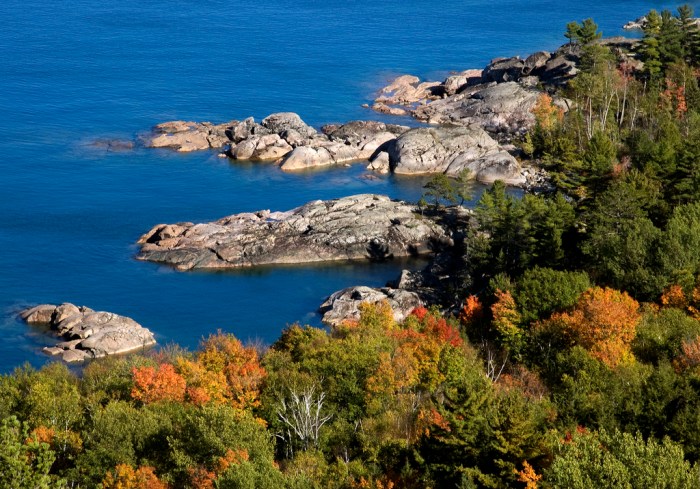
The start of Autumn, photo by I am Jacques Strappe

You can get 100+ more photos of the Upper Peninsula in autumn from Marjorie (slideshow).

Last fall through Absolute Michigan/Michigan in Pictures we started using the great information compiled in Travel Michigan’s Fall Color Tours as a starting point to point you to some great fall color touring (and fall color photos) around the state.  We’re trying to add to what they’ve put together – not rip them off! As always, if you have links to information or photos that we missed, comments or reports, post them in the comments below!

We’ll start with a driving tour of the Central Upper Peninsula that’s best from mid-September to early October and about 185 miles long. The tour starts in the UP’s largest city, Marquette. Marquette features some amazing architecture. You can read about and see pictures of it courtesy of Marjorie’s blog, Michigan Architecture, especially the beautiful red sandstone.

I recommend wandering around downtown for a while to check out the buildings and maybe grab a muffin from Babycakes and some coffee at Dead River Coffee. Travel Michigan (TM) recommends a visit the Marquette Harbor Lighthouse, home of the Marquette Maritime Museum. The lighthouse (pictured right by n. weaver, part of his UP slideshow) was constructed in 1866 and is the oldest significant structure in the city and more importantly, the lighthouse is one of the most historic navigation beacons on Lake Superior. There’s a nice little park behind it where you can swim if you are totally insensitive to temperature.

TM suggests that Presque Isle Park is also worth a visit and it is, offering a slow, brief jaunt along the rugged Superior shore and lots of nice little trails. It’s also a great bike ride along the shore on an excellent bike path from the lighthouse.

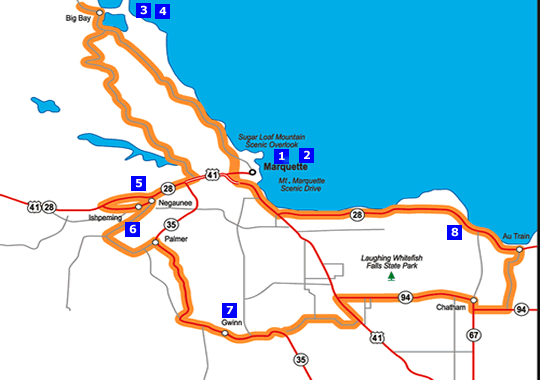
Now’s probably a good time for a map – click TM’s map to see larger. Heading north on County Road 550 to Big Bay takes you on a half hour cruise through some beautiful country rich in trees and views.  You can stop and do the 20 minute or so climb of Sugarloaf Mountain (see some pics from Lake Superior Photo). In Big Bay is the Thunder Bay Inn where you are required by travel writer code to mention  “Anatomy of a Murder” which was filmed there. Unfortunately the Thunder Bay Inn has been shuttered.  You can stop in at some of the other businesses and stay at the Big Bay Point Lighthouse Bed and Breakfast (if you call, they sometimes offer tours).

From Big Bay, head back on County Road 510 through the Huron Mountains and trees that arch over the roadway to form a tunnel of color. At US-41 head right and south into Negaunee (Chippewa word for pioneer) where you can visit the Michigan Iron Industry Museum, site of the first iron forge in the Lake Superior region. Negaunee’s Union Station Depot looks like a neat place to stay.  From Negaunee, continue to Ishpeming, home of the U.S. National Ski & Snowboarding Hall of Fame and the Cliff’s Shaft Mine Museum.

The route takes you down County Road 476 to Palmer and from there on M-35 south to Gwinn. You can enjoy hiking and mountain biking at Anderson Lake West State Forest Campground or continue south on M-35 to Little Lake where you take County Road 456 east to US-41. A left US-41 takes you north to M-94 where you turn right on M-94 to Chatham and can ask “Honey – are you sure we’re not lost?” 3 miles north off M-94 at Sundell are the about 100′ high Laughing Whitefish Falls (photo right by Church of One).

From there it’s east until you reach H-03 located between Chatham and Forest Lake, north on H-03 along the AuTrain River and past AuTrain Lake until you reach the junction of M-28. You can go east 12 miles along the Lake Superior shoreline on 28 to Tyoga Pathway or go west back to Marquette.

Check out more Michigan Fall Color Tours on Michigan in Pictures and also our fall wallpaper collection!

Seney National Wildlife Refuge

Seney, MI

Seney, MI, photo by lilrhgerl.

lilrhgerl took this Holga photo – do yourself a favor and check out her Holga slideshow. She writes that Seney is the most amazing place, and anyone who has spent time there would probably agree.

The Seney National Wildlife Refuge encompasses nearly 100,000 acres in the central Upper Peninsula. Seney was established in 1935 for the protection and production of migratory birds and other wildlife. It supports a variety of wildlife including a profusion of birds: bald eagles, common loons, trumpeter swans, Canada geese, hooded mergansers, mallards, black ducks, ring-necked ducks, wood ducks and sandhill cranes. Animals include black bear, white-tailed deer, coyote, river otter and beaver. There’s also black flies, deer flies, and mosquitoes during warmer months.

The wetlands, which are also known as the Great Manistique Swamp provide a great haven for all these animals and birds have their roots when:

…Over a century ago, lumbering operations altered the landscape of the Upper Peninsula’s great forests. The ring of the lumberman’s axe echoed through the forests as local mills depleted the region’s valuable supply of red and white pine. After the pine forests were cut, mill owners turned their axes and saws to the Refuge’s northern hardwood and swamp conifer communities.Following the lumbering operations, fires were often set to clear away the debris. These fires burned deep into the rich organic soil, damaging its quality and killing the seeds that would have produced a new forest. On many areas of the Refuge, the scars from these lumbering operations remain visible to this day.

After the fires, a land development company dug many miles of drainage ditches throughout Seney. This drained acreage was then sold using extravagant promises of agricultural productivity. But the new owners quickly learned that these promises were unfounded. One by one, the farms were abandoned, and the exploited lands reverted to state ownership.

In 1934, the Michigan Conservation Department recommended to the Federal Government that the Seney area be developed for wildlife. This proposal was accepted and Seney National Wildlife Refuge was established in 1935.

Check out Seney National Wildlife Refuge on the Absolute Michigan map and click for the Seney slideshow from the Absolute Michigan pool!

Banded Iron Formation at Jasper Knob in Michigan

Banded Iron Formation

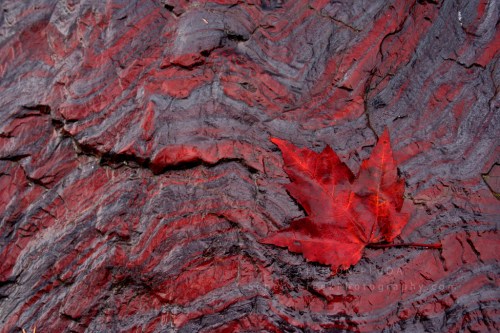
Banded Iron Formation, photo by Allie.P.

Alison writes that this formation is billions of years old and is the main evidence of showing when photosynthetic life first arrived on earth. This photo is part of her Fall set (slideshow) and you can order a copy online from Seneca Creek Photography.

UPDATE! Alison emailed me some great information that makes this a lot clearer!

The Banded Iron Formations (BIFs) are about 2 billion years old and are made of alternating layers of Magenetie (Fe3O4) or Hematite (Fe2O3) which are the grey shiny layers, and red layers of iron stained chert (SiO2) often called jasperite. This photo is part of the Negaunee Iron Formation. Fe2+ is soluble in water, but when iron is oxidized to Fe3+, it is insoluble in water and will precipiate and become a solid. So, the alternating layers represent Iron being oxidized, and precipitation out to form a red layer, and then iron not being oxidized so that you dont get precipitation and get a hematite layer. It is this cycle of there being oxic (oxygen present) and anoxic (no oxygen) conditions in the ocean that has scientists wondering how that could happen.

There are many models that have been put together of how this could happen, but the most interesting one says that ancient bacteria used to use iron as a nutrient. The first bacteria that photosynthesized on our planet produced oxygen, which could explain how the iron was oxidized, precipitated and formed the red layers. Some have said the layers represent the death and birth of algal blooms. Eventually, bacteria produced so much oxygen that all the iron was oxidized, and thus we don’t get BIFs forming in our oceans today since it is impossible to dissolve any iron in it. They even found bacteria in some of the BIFs in Minnesota!

-90% of the world’s BIF (>1014 tons of ore) is located in Australia (~ 27 tons), South Africa, Brazil, and the Lake Superior Region in the US and Canada. The iron that is mined in the UP is extracted from BIFs by grinding them to a powder, taking the iron out through magnets, adding bentonite clay, and then rolling it up into pellets more commonly known as taconite pellets.

She adds that she has some journals about these she would be glad to send to anyone interested, as she have done some research on these as well. Contact her through her web site!

Read more about banded iron formations, fossils in the Negaunee Iron Formation, Jasper Knob and cool spots for rock collecting in the Eastern UP.

Here’s a link to more or less the location of Jasper Hill (Jasper Knob) on the Absolute Michigan map!

Fallpaper

Untitled, photo by jacalynsnana.

Every day about 50 people wander over to Michigan in Pictures looking for “fall backgrounds” and “fall wallpaper”. The Google sends them to our Michigan fall … and the Michigan Fall Wallpaper Series page, which is a good place to go as the flames of autumn begin to lick at the leaves.

See more fall photos from jacalynsnana has more in her Autumn in Michigan set and at her autumn tag.

Sunset on the Two-Hearted River

Sunset on the Two-Hearted River

Sunset on the Two-Hearted River, photo by Vision Three Images – Michael Koole.

This photo is part of Michael’s Beach & Water Things and other sorta natural stuff set (slideshow). The Two-Hearted River was the setting for Hemingway’s short story, Big Two-Hearted River. An excerpt…

He stepped into the stream. It was a shock. His trousers clung tight to his legs. His shoes felt the gravel. The water was a rising cold shock.

Rushing, the current sucked against his legs. Where he stepped in, the water was over his knees. He waded with the current. The gravel slipped under his shoes. He looked down at the swirl of water below each leg and tipped up the bottle to get a grasshopper. The first grasshopper gave a jump in the neck of the bottle and went out into the water. He was sucked under in the whirl by Nick’s right leg and came to the surface a little way down stream. He floated rapidly, kicking. In a quick circle, breaking the smooth surface of the water, he disappeared. A trout had taken him.

Another hopper poked his face out of the bottle. His antennas wavered. He was getting his front legs out of the bottle to jump. Nick took him by the head and held him while he threaded the slim hook under his chin, down through his thorax and into the last segments of his abdomen. The grasshopper took hold of the hook with his front feet, spitting tobacco juice on it. Nick dropped him into the water.

Holding the rod in his right hand he let out line against the pull of the grasshopper in the current. He stripped off line from the reel with his left hand and let it run free. He could see the hopper in the little waves of the current. It went out of sight.

There was a tug on the line. Nick pulled against the taut line. It was his first strike. Holding the now living rod across the current, he hauled in the line with his left hand. The rod bent in jerks, the trout pulling against the current. Nick knew it was a small one. He lifted the rod straight up in the air. It bowed with the pull.

He saw the trout in the water jerking with his head and body against the shifting tangent of the line in the stream.

Nick took the line in his left hand and pulled the trout, thumping tiredly against the current, to the surface. His back was mottled the clear, water-over-gravel color, his side flashing in the sun. The rod under his right arm, Nick stooped, dipping his right hand into the current. He held the trout, never still, with his moist right hand, while he unhooked the barb from his mouth, then dropped him back into the stream.

He hung unsteadily in the current, then settled to the bottom beside a stone. Nick reached down his hand to touch him, his arm to the elbow under water. The trout was steady in the moving stream resting on the gravel, beside a stone. As Nick’s fingers touched him, touched his smooth, cool, underwater feeling, he was gone, gone in a shadow across the bottom of the stream.

Read the full story.

a little closer … to hornets, yellowjackets & wasps

a little closer

a little closer, photo by gerrybuckel.

Gerry was watching these wasps at work and got a little closer to the nest to take this photo, but had to back off as they got closer too!

I thought Gerry was wrong to refer to these “bees” as wasps, but in digging a little deeper, I realized that I was the one in error.

Wikipedia has a lot to say about yellowjackets & hornets. One good thing to know is not to mess with a nest as wasps aren’t limited to a single sting!

Hornets, like many social wasps, can mobilize the entire nest to sting in defense: this is highly dangerous to humans. The hornet alarm pheromone is used to raise alarm of nest attack, and to identify prey, for example bees. It is not advisable to kill a hornet anywhere near a nest, as the distress signal can trigger the entire nest to attack. Materials that come in contact with pheromone, such as clothes, skin, dead prey or hornets, must be removed from the vicinity of the hornets nest. Perfumes, and other volatile chemicals can be falsely identified as pheromone by the hornets and trigger attack.

My bee guy told me that you can neutralize hornet & yellowjacket venom with “Shout” – I have no idea whether or not that is true!

I still can’t tell what particular breed these wasps are, but the most common breed in our region is now the German yellowjacket. The Yellowjacket & Hornets through a Lens at bugguide.net might hold the answer!

Michigan Orange

Untitled, photo by Blondieyooper.

Usually you have to wait a month or so to see orange like this in Michigan.

Be sure to check it out bigger. This one too!

In fact, if it’s raining where you are, why not settle back and wander through April’s Negaunee photos (slideshow).