Eastern Chipmunk (Tamias striatus)

Untitled

Untitled, photo by kdclarkfarm1

The newly redesigned University of Michigan Animal Diversity Web says that Tamias striatus (eastern chipmunk):

Eastern chipmunks live in shallow burrows in the ground. They are partial to areas near rocky crevices, decayed tree trunks, and fence corners. They do not like dense forests where no sunlight reaches the ground. Burrows are made by digging and carrying away the dirt in their pouched mouths. Unlike prairie dogs and other sciurids, eastern chipmunks do not leave the dirt in mounds near the entrances of their burrows. This makes it harder for predators to find chipmunks in their homes. These burrows can be up to 30 ft. in length with several different exits and tunnels. Eastern chipmunks conceal the exits with leaves and rocks. They may inhabit these burrows for several years.

Eastern chipmunks are larger than most chipmunks. They are reddish brown in color with 5 black stripes on their backs. These stripes are separated by brown, white, or grey fur stripes. They also have white and dark markings around their eyes. The stomach is usually a yellowish brown or white color. Their tails are reddish brown and furry, but not bushy like common squirrels. Like many rodents, Tamias striatus has 4 toes on the front feet and 5 toes on the rear feet.

…Eastern chipmunks have excellent vision, hearing, and sense of smell. They communicate with each other by making a variety of sounds, including the ‘chip’ for which they are named.

Tamias striatus eats a wide variety of foods including nuts, acorns, seeds, mushrooms, fruits, berries, and corn. They also eat insects, bird eggs, and sometimes small vertebrates such as young mice.

Read more and see a bunch more photos of chipmunks as well!

Check this out background big (which is decidedly bigger than a chipmunk) and see more in Diane’s slideshow.

More Michigan animals right here.

The Gray Treefrog doesn’t care if you’re confused

Gray Tree Frog

You Can’t See Me, photo by MacDonald_Photo (Formerly Sl33stak)

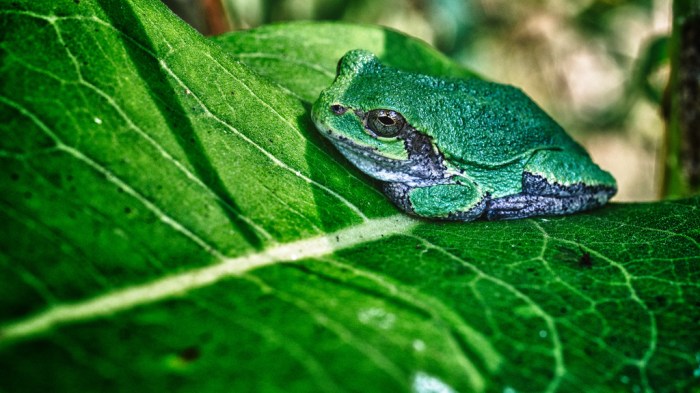
Michigan has two species of Gray Treefrog – the Eastern (Hyla versicolor) and Cope’s (H. chrysoscelis) that are hard to distinguish, sometimes even sharing the same ponds. Check out the Hyla versicolor page at the UM Animal Diversity Web for a bit about that. Their color spans a range of gray, green or brown according to environment or activity. See a collection of photos showing their wide range of color at the UM Animal Diversity Web.

They can be found in woods, swamps and your own backyard. Their ability to climb vertically & horizontally is due to their specially adapted toe pads, and you’ll sometimes find them on your screen windows at night. You’ll hear their short musical trill on warm spring & summer nights.

Jamie writes that he walked 20′ into the woods off a heavily used path and ran into this little guy – small as his thumb and sitting on a milkweed. Check this out background bigtacular and see more in his Fauna slideshow.

More Michigan frogs on Michigan in Pictures. Or, for something different, here’s what we have for green!

Have you gotten your dose of Vitamin N today?

Green Point in Fog

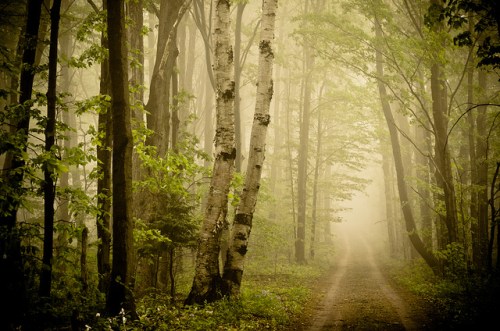
Green Point in Fog, photo by *ojoyous1*

I was paging through a copy of the AARP Bulletin (not mine … yet) and came across an interesting little article about the benefits of spending time in nature by Richard Louv. Louv wrote the book Last Child in the Woods, which introduced the concept of “nature-deficit disorder”. He writes:

A growing body of research links more time in nature — or in home, work or hospital environments enhanced through nature-based design — with reduction of stress and depression, faster healing time and less need for pain medication.

Health care professionals are taking note. In 2010, a pilot program in Portland, Ore., began pairing physicians with park professionals, who helped children and families get their green exercise or, as I call it, their dose of “vitamin N.”

Other benefits of vitamin N include enhanced use of the senses and higher work productivity. In 2008, University of Michigan researchers demonstrated that, after just an hour interacting with nature, memory performance and attention spans improved by 20 percent. In April, researchers at the University of Kansas reported a 50 percent boost in creativity for people who were steeped in nature for a few days.

Michigan is blessed with an amazing amount of opportunities to slip into nature for ten minutes or ten days so what’s stopping you?? Check out books and more at Richard Louv’s website.

Joy took this photo at the Green Point Nature Reserve near Elberta. Check it out bigger and in her Up North slideshow.

More nature on Michigan in Pictures!

Great Egret (Ardea alba) in Flight

Great Egret (Ardea alba) in Flight

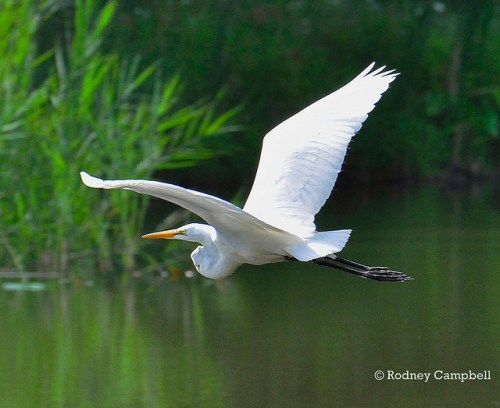
Great Egret (Ardea alba) in Flight, photo by AcrylicArtist

The Michigan Bird Atlas has a nice document on the Great Egret in Michigan that says (in part):

Today, the Great Egret is a powerful symbol of early conservation efforts mounted to safeguard it and other species from overhunting for their feathers in the 1800s. Protection in the early 1900s is credited with population recovery and establishment of the Great Egret as a breeding species in Michigan approximately 50 years ago.

…Great Egrets reach the northern edge of their U.S. distribution in Michigan. Historically, there is no evidence that this species nested in Michigan until the 1950s. For example, Barrows (1912) and Wood (1951) did not report Great Egrets as breeders in Michigan at the time of their studies, but Kelley et al. (1963) confirmed nesting in 1954 by nine pairs on Stoney Island (Detroit River) and seven on Dickinson Island (Lake St. Clair). These colonies appear to have persisted into the mid-1970s when W. Scharf et al. (1978) documented egrets at these sites in 1976. Although these colonies were no longer active at the time of the 1989-91 Great Lakes Colonial Waterbird Census, Sharf and Shugart (1998) reported new colonies in Saginaw Bay and at Pte. Mouillee State Game Area, Monroe Co.

The UM Animal Diversity Web has some information, calls and photos for Ardea alba, and also Great Egret (Ardea alba) on Michigan in Pictures.

Check this photo out background big and see more in Rodney’s Animals slideshow.

More Michigan birds on Michigan in Pictures.

Photographic Proof of the Michigan Cougar!

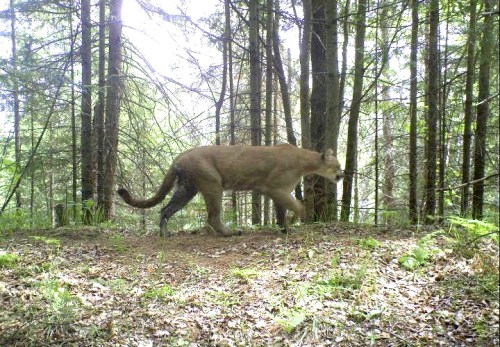
Marquette County Cougar, photo by Michigan Wildlife Conservancy

A trail cam in southern Marquette County operated by the Michigan Wildlife Conservancy (MWC) recently captured the above photo of a cougar. Dr. Patrick Rusz, Director of Wildlife Programs for the MWC and retired DNR forester Michael Zuidema verified the trail camera’s location on a well-worn wildlife trail atop a wooded ridge. The camera has also photographed wolves, coyotes, fishers and numerous other species at the same site over a four year period.

The MWC is publicizing this photograph because it may be the best, clearest photograph of a wild Michigan cougar ever taken. It is also unusually interesting because Mr. Zuidema has recorded over twenty credible cougar sightings in the same vicinity since the 1970s. These include several sightings within a few miles of the trail camera location.

Dr. Rusz stated that “the long history of sighting reports in the area indicates the cougar photographed on June 1 may be part of a resident population rather than a wandering cat from a western state.” Dr. Rusz has studied cougars for the Conservancy for 14 years and is co-author of a peer-reviewed study that confirmed cougars in both peninsulas of Michigan by analyses of DNA in droppings. He has also identified a long list of additional physical evidence dating back to 1966, and notes that Michigan State College zoologist Richard Manville documented several cougar sightings or incidents when he inventoried the fauna of Marquette County’s Huron Mountains from 1939 to 1942.

“The MDNR cougar team should now look at the very good evidence of a remnant cougar population collected before 2008,” said Bill Taylor, President of the Conservancy. “They could still easily verify cougar photos taken in the 1990’s in Alcona and Oscoda Counties in the Lower Peninsula and some others. The vegetation and other landmarks needed to confirm the photos are still there.”

You can compare the photograph above with photos of a wolf, coyote, raccoon, and porcupine taken by the same camera in the same location at the MWC website at www.miwildlife.org.

The Michigan Wildlife Conservancy is a non-profit citizens group established to restore Michigan’s wildlife legacy. They have restored more than 8,200 acres of wetlands, 2,500 acres of prairies and grasslands, and hundreds of miles of trout streams, and helped with several rare species recoveries and the creation of many backyard habitats.

More about cougars in Michigan on Michigan in Pictures and weigh in with your comments below or on the Absolute Michigan Facebook!

Seven Mile Point on the Keweenaw Peninsula

Untitled

Untitled, photo by North Woods Conservancy

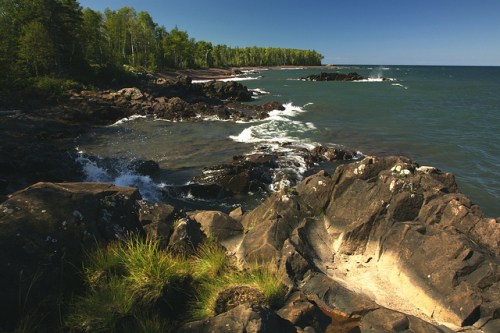
When someone with the commitment to jump into the icy waters of Lake Superior in February asks you to take a look at something she thinks is important, my feeling is that you darn well do it.

Kate shared news that the Keweenaw-based North Woods Conservancy owns a piece of property called Seven Mile Point. It’s 32 acres with 1,854’ of sand, basaltic bedrock and volcanic cobble beach located on Lake Superior about 5 miles from Eagle River. The Michigan Natural Features Inventory listed it for high-priority protection due to the unique plant and animal communities associated with the 1.1 billion-year-old basaltic lava flow lakeshore.

While they were able to get going with the purchase, they haven’t been able to raise enough funds to make the payments. They’re seeking folks to help with one-time or monthly donations. Click for more information and photos of this gorgeous spot and also follow them on Facebook!


You can get this photo background big and in their Seven Mile Point slideshow.

More of Lake Superior on Michigan in Pictures.

Sundews!

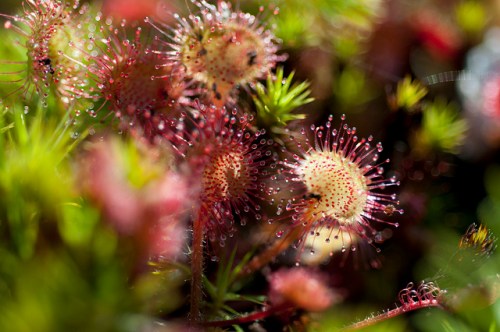
Sundews!

Sundews!, photo by Sundews! by I am Jacques Strappe

English sundew (Drosera anglica) is also known as Great sundew. This sundew guide from MSU says that there are 4 species of sundew in Michigan.

Similar to Sarracenia purpurea (pitcher-plant) and Pinguicula vulgaris (butterwort), sundews are carnivorous plants, capturing insects (primarily) with their nectar-like, mucilaginous secretions to supplement nutrients, such as nitrogen, that are otherwise in low availability in their habitats. Sundew leaves curl around their insect prey, when captured, to digest it.

Sundew are all species of special concern in Michigan so look but don’t dig them! Wikipedia’s Drosera anglica entry has more information including a cool photo of a sundew eating some damselflies.

See Jorie’s photo bigger and in her Native Flora slideshow.

Spread your wings

Bald Eagle

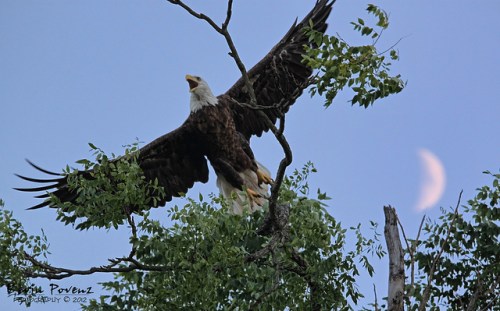
Bald Eagle, photo by Kevin Povenz

This feels like the perfect photo to feature one week from the Fourth of July!

Kevin, his son Aaron and his dog Charlie took a walk in the North Ravines on Grand River to see if they could see the eagles. As you can see, they were not disappointed! Check it out bigger and in Kevin’s awesome Birds of Prey slideshow.

More about the Bald Eagle in Michigan on Michigan in Pictures.

Michigan Turtle Tuesday: Eastern Box Turtle

Eastern Box Turtle

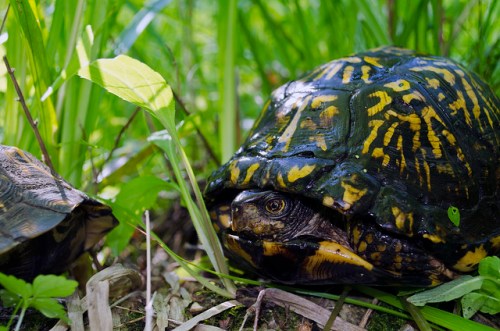
Eastern Box Turtle, photo by DavidGuthrie

According to the oral stories and traditions of the Great Lakes Woodland Indians, the turtle is a powerful symbol. One legend details how the turtle’s back provided a base for the first land that was formed in the midst of the great waters. Mackinac Island takes its name from a word in the Ottawa language meaning “Great turtle”.

So begins the Michigan DNR’s Turtle page. I found it fascinating reading, and I hope you enjoy it as well.

The earliest fossil remains of turtles date back about 225 million years to the late Triassic period. For millions of years they shared the planet with the dinosaurs. Unlike the dinosaurs, turtles survived the ecological and climatic changes that caused the extinction of many forms of life. All this was accomplished with little change to their anatomy: early fossils still closely resemble today’s turtles. Soft bodies were covered by a bony shell, with an oval shaped skull and beaked mouth; however these early turtles had teeth and had not yet evolved a way of pulling their heads into their shells. Today some 260 species of turtles (including the terrestrial tortoises) are found worldwide in nearly all temperate and tropical habitats.

The protective shell is one key to the turtle’s survival. Unlike the turtles in children’s cartoons, real turtles cannot climb out of their shell: A turtle literally wears part of its skeleton on the outside of its body. A turtle’s shell is composed of two parts. The upper portion, or carapace, is formed from the flat dermal bones covered by broad scales (scutes) and is connected to the backbone and ribs. The lower shell is the plastron and includes the abdominal ribs and portions of the shoulder girdle.

The shape and weight of a turtle’s shell can provide clues to its lifestyle. Shells can be helmet shaped, like the Blanding’s and eastern box turtle shells, for better protection against predators. A further adaptation of hinges in the middle of the plastron allows these turtles to partly or fully close their shell, offering even more protection for the head and legs. Shells can also be soft and rubbery like the pan caked shaped shell of the fast swimming spiny soft shell turtle, which is covered by skin instead of hard scales. Snapping and Musk turtles have very small, cross shaped plastrons, probably adapted to facilitate walking on pond and lake bottoms. Land living turtles have heavier shells – while these shells offer extra protection from land predators, their weight makes it more difficult to move quickly. The shell of a turtle that spends most of its life in a water environment is lighter in weight and more streamlined in shape.

Read on for more. Regarding the Eastern Box Turtle, they say that its high, domed carapace is dark with a radiating pattern of yellow or orange. The plastron has a flexible hinge that allows the turtle to completely close its shell. Box turtles are Michigan’s only true land-based turtle. They prefer open woodlands and adjacent meadows, thickets, and gardens, often near shallow ponds, swamps, or streams and eat plants, berries, worms & insects and carrion.

Box turtles’ home range is less than five acres, and they routinely live for several decades, occasionally a century or more! One important note is that the turtle’s life in captivity is MUCH shorter, so please enjoy them in their natural habitat! The box turtle is uncommon to rare in southern and western Lower Peninsula and the southern & eastern UP, and they are protected by Michigan law as a special concern species.

Here’s a (pdf) map of Eastern Box Turtle occurrences and you can get some more info and photos from Wikipedia’s Box Turtle entry and also get some really great information & photos about the Eastern Box Turtle and conservation efforts from the Herping Michigan blog!

Check this out bigger and in David’s Critters slideshow.

More of Michigan’s animals on Michigan in Pictures!

Into the Woods

Into the Woods

Into the Woods, photo by Pumpkin K

Some days the photographers do all the work. Have a wonderful weekend folks!

The way is clear,
The light is good.
I have no fear,
Nor no one should.
The woods are just trees,
The trees are just wood.

Little Red Riding Hood from “Into the Woods”

The photo was taken in BiCentennial Park in Tipton.

Check this out background big and in PumpkinK’s sideshow.