Seven Mile Point on the Keweenaw Peninsula

Untitled

Untitled, photo by North Woods Conservancy

When someone with the commitment to jump into the icy waters of Lake Superior in February asks you to take a look at something she thinks is important, my feeling is that you darn well do it.

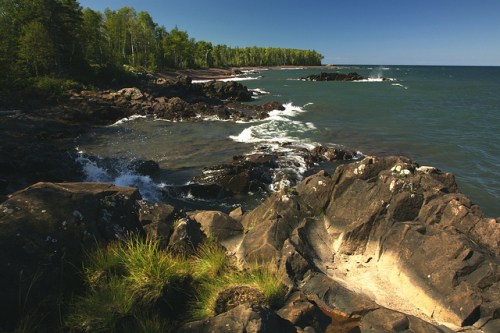
Kate shared news that the Keweenaw-based North Woods Conservancy owns a piece of property called Seven Mile Point. It’s 32 acres with 1,854’ of sand, basaltic bedrock and volcanic cobble beach located on Lake Superior about 5 miles from Eagle River. The Michigan Natural Features Inventory listed it for high-priority protection due to the unique plant and animal communities associated with the 1.1 billion-year-old basaltic lava flow lakeshore.

While they were able to get going with the purchase, they haven’t been able to raise enough funds to make the payments. They’re seeking folks to help with one-time or monthly donations. Click for more information and photos of this gorgeous spot and also follow them on Facebook!


You can get this photo background big and in their Seven Mile Point slideshow.

More of Lake Superior on Michigan in Pictures.

Sundews!

Sundews!

Sundews!, photo by Sundews! by I am Jacques Strappe

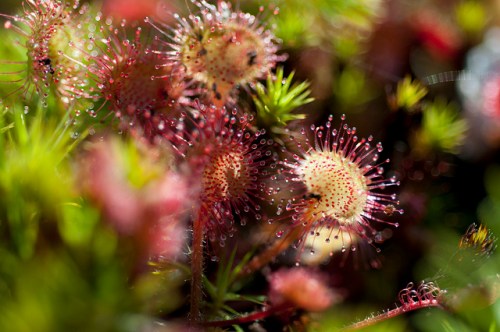
English sundew (Drosera anglica) is also known as Great sundew. This sundew guide from MSU says that there are 4 species of sundew in Michigan.

Similar to Sarracenia purpurea (pitcher-plant) and Pinguicula vulgaris (butterwort), sundews are carnivorous plants, capturing insects (primarily) with their nectar-like, mucilaginous secretions to supplement nutrients, such as nitrogen, that are otherwise in low availability in their habitats. Sundew leaves curl around their insect prey, when captured, to digest it.

Sundew are all species of special concern in Michigan so look but don’t dig them! Wikipedia’s Drosera anglica entry has more information including a cool photo of a sundew eating some damselflies.

See Jorie’s photo bigger and in her Native Flora slideshow.

Spread your wings

Bald Eagle

Bald Eagle, photo by Kevin Povenz

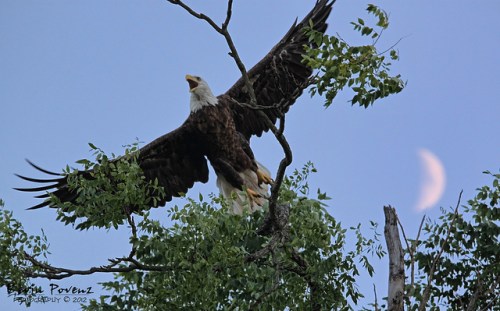
This feels like the perfect photo to feature one week from the Fourth of July!

Kevin, his son Aaron and his dog Charlie took a walk in the North Ravines on Grand River to see if they could see the eagles. As you can see, they were not disappointed! Check it out bigger and in Kevin’s awesome Birds of Prey slideshow.

More about the Bald Eagle in Michigan on Michigan in Pictures.

Michigan Turtle Tuesday: Eastern Box Turtle

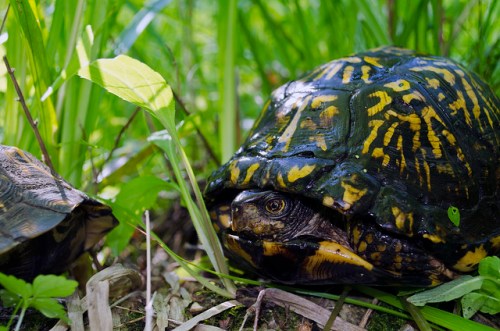
Eastern Box Turtle

Eastern Box Turtle, photo by DavidGuthrie

According to the oral stories and traditions of the Great Lakes Woodland Indians, the turtle is a powerful symbol. One legend details how the turtle’s back provided a base for the first land that was formed in the midst of the great waters. Mackinac Island takes its name from a word in the Ottawa language meaning “Great turtle”.

So begins the Michigan DNR’s Turtle page. I found it fascinating reading, and I hope you enjoy it as well.

The earliest fossil remains of turtles date back about 225 million years to the late Triassic period. For millions of years they shared the planet with the dinosaurs. Unlike the dinosaurs, turtles survived the ecological and climatic changes that caused the extinction of many forms of life. All this was accomplished with little change to their anatomy: early fossils still closely resemble today’s turtles. Soft bodies were covered by a bony shell, with an oval shaped skull and beaked mouth; however these early turtles had teeth and had not yet evolved a way of pulling their heads into their shells. Today some 260 species of turtles (including the terrestrial tortoises) are found worldwide in nearly all temperate and tropical habitats.

The protective shell is one key to the turtle’s survival. Unlike the turtles in children’s cartoons, real turtles cannot climb out of their shell: A turtle literally wears part of its skeleton on the outside of its body. A turtle’s shell is composed of two parts. The upper portion, or carapace, is formed from the flat dermal bones covered by broad scales (scutes) and is connected to the backbone and ribs. The lower shell is the plastron and includes the abdominal ribs and portions of the shoulder girdle.

The shape and weight of a turtle’s shell can provide clues to its lifestyle. Shells can be helmet shaped, like the Blanding’s and eastern box turtle shells, for better protection against predators. A further adaptation of hinges in the middle of the plastron allows these turtles to partly or fully close their shell, offering even more protection for the head and legs. Shells can also be soft and rubbery like the pan caked shaped shell of the fast swimming spiny soft shell turtle, which is covered by skin instead of hard scales. Snapping and Musk turtles have very small, cross shaped plastrons, probably adapted to facilitate walking on pond and lake bottoms. Land living turtles have heavier shells – while these shells offer extra protection from land predators, their weight makes it more difficult to move quickly. The shell of a turtle that spends most of its life in a water environment is lighter in weight and more streamlined in shape.

Read on for more. Regarding the Eastern Box Turtle, they say that its high, domed carapace is dark with a radiating pattern of yellow or orange. The plastron has a flexible hinge that allows the turtle to completely close its shell. Box turtles are Michigan’s only true land-based turtle. They prefer open woodlands and adjacent meadows, thickets, and gardens, often near shallow ponds, swamps, or streams and eat plants, berries, worms & insects and carrion.

Box turtles’ home range is less than five acres, and they routinely live for several decades, occasionally a century or more! One important note is that the turtle’s life in captivity is MUCH shorter, so please enjoy them in their natural habitat! The box turtle is uncommon to rare in southern and western Lower Peninsula and the southern & eastern UP, and they are protected by Michigan law as a special concern species.

Here’s a (pdf) map of Eastern Box Turtle occurrences and you can get some more info and photos from Wikipedia’s Box Turtle entry and also get some really great information & photos about the Eastern Box Turtle and conservation efforts from the Herping Michigan blog!

Check this out bigger and in David’s Critters slideshow.

More of Michigan’s animals on Michigan in Pictures!

Into the Woods

Into the Woods

Into the Woods, photo by Pumpkin K

Some days the photographers do all the work. Have a wonderful weekend folks!

The way is clear,
The light is good.
I have no fear,
Nor no one should.
The woods are just trees,
The trees are just wood.

Little Red Riding Hood from “Into the Woods”

The photo was taken in BiCentennial Park in Tipton.

Check this out background big and in PumpkinK’s sideshow.

Of Michigan, Mosquitoes & Malaria

Mosquito

Mosquito, photo by stepponme123456789

If you think you’re too small to have an impact, try going to bed with a mosquito.
~Anita Roddick

Today on Absolute Michigan we posted a weird little cartoon from the early 1900s by Michigan animator Winsor McCay who is often known as “The Father of Animation” titled “How a Mosquito Works.” That seemed to me to be good enough reason to take a closer look at these pesky pests.

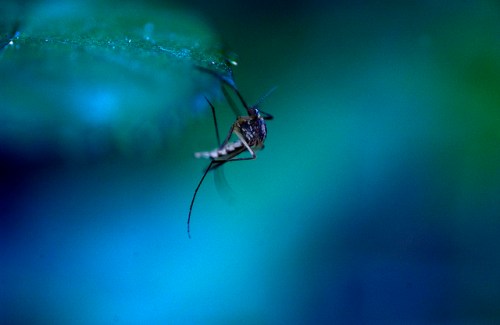
Wikipedia’s Mosquito entry says that mosquitoes are a family of small, midge-like flies: the Culicidae. The word mosquito is from the Spanish and Portuguese for “little fly”. You can click that link for likely more than you want to know about how they feed. The Michigan Mosquito Control Association claims that:

Mosquitoes are by far the most dangerous animals on earth. It is hard to comprehend the amount of disease and the resulting sickness, death, and economic loss caused by the mosquito. Some scientists estimate between 500 and 700 million people get malaria worldwide each year. That’s more than twice the entire population of the United States each year. Malaria has since been virtually eliminated here in Michigan , but the threat of mosquito-borne disease is still very real. Of the 60 different species of mosquitoes found in Michigan many are known to be vectors (carriers or transporters) of important diseases such as West Nile virus, Eastern Equine Encephalitis, St. Louis Encephalitis, and the California Group of encephalitis.

An interesting thing I learned was that Michigan was once a hotbed of malaria as Daniel Hager from the Mackinac Institute of Public Policy explained:

Willis F. Dunbar in “Michigan: A History of the Wolverine State,” writes that the disease “was so prevalent that it was rather unusual to escape it.” Ruth Hoppin, who grew up in a pioneer family in St. Joseph County near Three Rivers, recalled that “the pale, sallow, bloated faces of that period were the rule; there were no healthy faces except of persons just arrived.” A. D. P. Van Buren, whose family came to Calhoun County near Battle Creek in 1836, noted that the first question asked of new settlers was whether or not they had contracted malaria yet, and “if answered in the negative, the reply would be, `Well, you will have it; everybody has it before they’ve been here long.'”

The settlers’ common word for malaria was ague (pronounced “ag-yew”), which derived from the Latin word acuta, as in febris acuta, or “sharp fever.”

The state of Michigan has a ton of information about mosquito control in Michigan. You might also enjoy an interview with MSU Entomologist Howard Russell about mosquitos and this detailed article on Gallinipper mosquitoes, which are native to Michigan and large enough to bite through canvas shorts.

Check this out background big and see some more great shots in Stephanie’s Bugs slideshow.

Tunnel of Trees

Tunnel of Trees Ferguson Slough Trail

Tunnel of Trees Ferguson Slough Trail, photo by DTWpuck

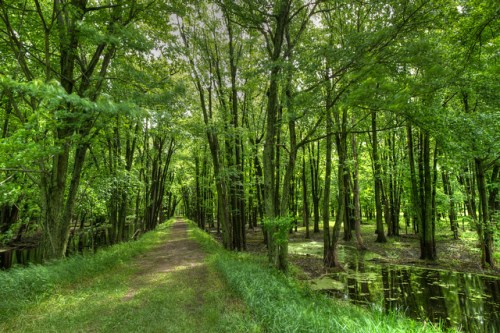
Scott wonders who in Michigan doesn’t get weak in the knees when looking down a tree canopied road or trail. This trail is located alongside the Ferguson Slough in the Shiawassee National Wildlife Refuge.

Check it out background bigtacular and see more on his map.

Piping Plover (Charadrius melodus)

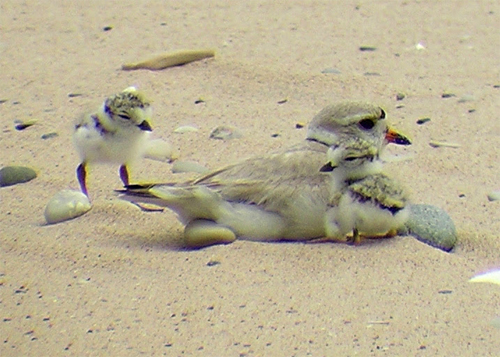
Adult Piping Plover caring for her chicks, photo courtesy National Park Service

The Sleeping Bear Dunes National Lakeshore page on piping plovers begins:

The Piping Plover (Charadrius melodus) is an endangered shorebird. They are sand-colored on the back and white below. During the breeding season adults have a black forehead band between the eyes and a single black band around the neck. (Its larger relative the Killdeer is commonly seen at parks, playgrounds, and golf courses, and has two dark bands around the neck.) Piping Plovers nest only on beaches and prefer beaches with cobble. There are three small populations: one in the Great Plains, one on the Atlantic Coast, and the one here in the Great Lakes. They winter together on the Gulf Coast but travel to the separate areas during the breeding season. It is a special opportunity to be able observe Piping Plovers since there are only between 50 and 60 nesting pairs in the entire Great Lakes area and less than 5000 individuals worldwide.

You can read more about piping plovers at All About Birds where they also have some photos, a plover call and a video. You can also check out a video of a piping plover feeding from the other side of the state on Saginaw Bay.

The Sleeping Bear Dunes National Lakeshore reports that four pairs of this federally endangered shorebird have made the Glen Haven beach their home for the summer. It’s an easily accessible location that provides visitors an excellent opportunity to view a rare bird in its natural habitat. While the entire shoreline will be open for walking, certain areas of the beach will be temporarily closed to all entry.

More photos of piping plovers from Alice van Zoeren and the Sleeping Bear Dunes National Lakeshore.

Before we were owls

10

10, photo by Sherri & Dan

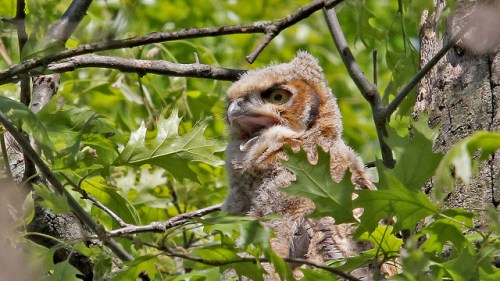
The Great Horned Owl article on Michigan in Pictures is stocked with all kinds of information about what this little guy will grow up to be (Sherri & Dan also took that photo). Also see Bubo virginianus (great horned owl) on the University of Michigan Animal Diversity Web and check out this video of three little horned owlets.

See this photo background big and and follow this owl’s growth in  Sherri & Dan’s owls slideshow.

Omagakii: Frog in Anishinaabemowin

Ribbit Tell'em

Ribbit Tell’em, photo by EEKaWILL

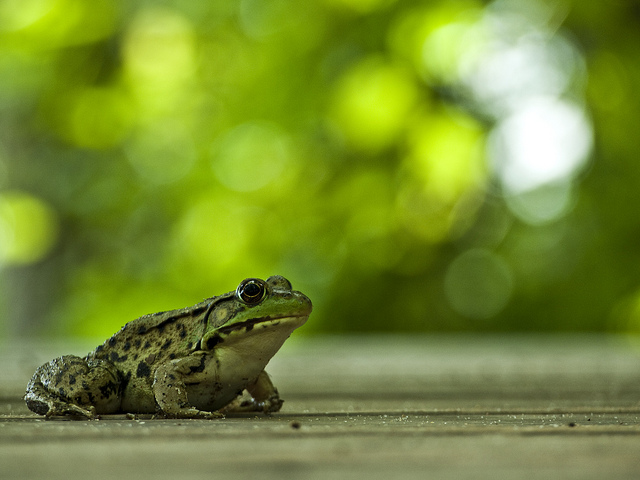
Spring is frog season, and today’s Anishinaabemowin word of the day is Omagakii which means frog. Omagakiins means little frog and Omagakiinsag means little frogs.

Anishinaabemow.in is a very cool (though no longer updated) website that used short videos to teach words and short phrases in Anishinaabemowin. They explain that:

Anishinaabemowin is the traditional language of the Anishinaabe people. It is sometimes referred to as Ojibwe, Ojibway, Saulteaux or Indian by people in the community. Outsiders sometimes refer to it as Ojibwa or Chippewa. On this site we refer to it by the proper name in the language Anishinaabemowin.

Some facts about Anishinaabemowin

  • During the Fur Trade era Anishinaabemowin was referred to as the ‘Lingua Franca’ or trade language of what is now called Canada, meaning at one time if you wanted to conduct business here you had to speak Anishinaabemowin
  • At one time Guiness Book of World Records listed Anishinaabemowin as having the most complex verb structure of any language in the world, a testament to the intellectual capacity of our ancestors
  • A number of English words are adopted from Anishinaabemowing including Totem (used in Freudian studies and to refer to West Coast art) which is adapted from Dodem or clan, Mocassin (leather slipper) which is adapted from Makasin or shoe and countless place names.
  • Anishinaabemowin is spoken in communities from Quebec to British Columbia, From Northern Ontario to the Midwestern United States. The diffusion of speakers means that it is now spoken in places where there never were Anishinaabeg before.
  • Old Anishinaabeg don’t die, they just Maazhiwe.

Check Will’s photo out bigger and also see the Frog slideshow from the Absolute Michigan pool!