Snowy Topper

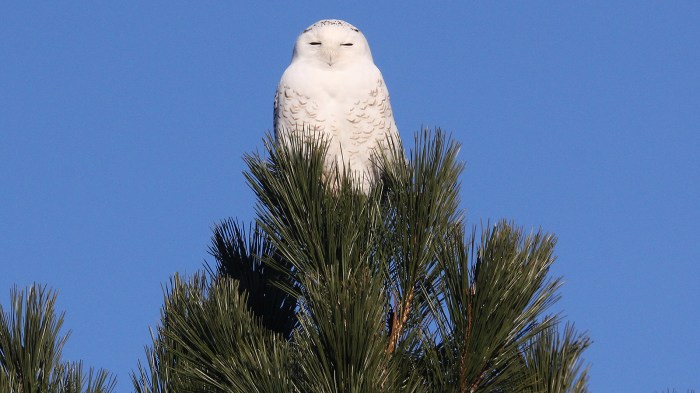
Michigan Snowy Owl Winter

snowy12-28-4, photo by Dan Lockard

What’s on top of your tree this year? Right now in the Absolute Michigan photo group, we’re seeing a ton of snowy owls. While these arctic owls are not found in the summer, we are in their winter range, as the Michigan DNR’s Winter Visitors page shares:

Just because the leaves have fallen from the trees and there is a chill in the air is no reason to put away your binoculars. Winter offers unique viewing opportunities. Many of our summer resident birds migrate to warmer summer climates. Still, there are several species of birds that migrate from Canada and find Michigan the perfect winter temperature. Winter is the only time several of these species can be found in Michigan.

Two of the largest migrants are the snowy owl and the great gray owl. Snowy owls can be found moving into Michigan during winter when the food supply on the arctic tundra is in short supply. Snowy owls have been recorded as far south as Lansing, Michigan. Because they rarely see humans on their northern homes, they are not timid and can be easily viewed for long periods of time.

Friday’s Sault Star reported that about three dozen snowys were sighted during the annual Audubon Christmas Bird count on December 20th. That’s more than average. We’ll know if this is an irruption year after all the bird count numbers are released in January.

View Dan’s photo taken near Muskegon background big and see lots more (including a couple shots of the great gray owl) in his awesome Owls slideshow.

Lots more snowy owl pictures & information (including a couple more by Dan) in the Michigan in Pictures archives!
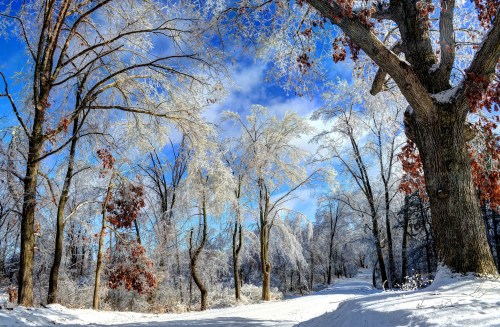

Winter Wonderland

Winter Wonderland

Winter Wonderland, photo by Rodney Campbell

Rodney took this photo on Christmas Eve day last year at the Seven Ponds Nature Center in Dryden.

View it background bigtacular and see more in his Landscapes slideshow.

More winter wallpaper on Michigan in Pictures!


Biodiversity is not a dirty word

Piping Plover

Untitled, photo by Anna Lysa

Sorry to mess up your holiday week with a bit of advocacy on the behalf of Michigan’s natural environment, but yesterday via Michigan Radio I learned of the very disturbing Senate Bill 78 that’s headed to Governor Snyder for signature or veto. The bill would forbid DNR from preserving biodiversity in forests and parks:

More than 130 scientists and the state’s environmental groups are calling on Gov. Rick Snyder to veto a bill they call anti-science. The bill would forbid the Michigan Department of Natural Resources from protecting native wildlife and plants on the pure merits of protecting nature.

  • The bill would prohibit the Department of Natural Resources from managing state lands for biodiversity.
  • It would prohibit the agency from managing forests for restoration.
  • It would end work to eliminate invasive species.
  • It would strike from the law the finding that most losses of biological diversity are the result of human activity.

Read on for more, and here’s the text of Senate Bill 78. If you’re so inclined, feel free to tell Gov. Rick Snyder what you think. I know that messages to our elected officials really do make a difference.

View Anna Lysa’s photo from July of 2012 at Ludington State Park bigger and see more in her Michigan slideshow.

PS: As I read it, piping plover would not be impacted by this as the species with just 8,000 adults is federally protected. I just picked them because they’re a recognizable species that has benefitted from extensive preservation efforts, some of them in the Sleeping Bear Dunes National Lakeshore in Michigan.

Here’s the piping plover and more of Michigan’s endangered plants and animals on Michigan in Pictures.

Cougar Cam Confirmation

Cougar Cam

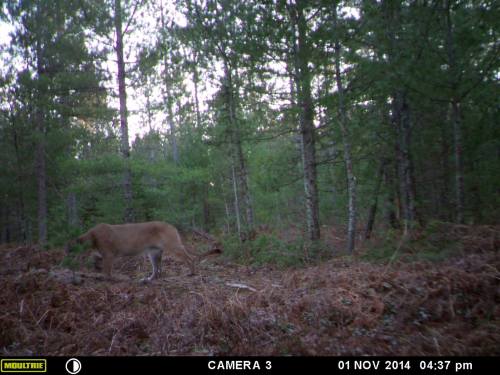
Confirmed Cougar, photo by the Hiawatha Sportsman’s Club

It was just a few years ago that the Michigan DNR vehemently denied the presence of cougars in Michigan, but things have definitely changed. Regarding this photo taken November 1st by an automatic trail cam in the Hiawatha Sportsman’s Club (located near Engadine in the southern Upper Peninsula), the Club writes:

This photo was confirmed by the DNR on November 3rd. The location is the area of S-trail / A-trail, east towards the perimeter of HSC property.

Click to view it big as a cougar and see more photos at the HSC Facebook page including some more trail cam shots and few shared by Denise Conroy of a cougar on someone’s porch near Cedarville!

Follow the whole Michigan Cougar Controversy on Michigan in Pictures.

Fall Chickadee

Fall Chickadee

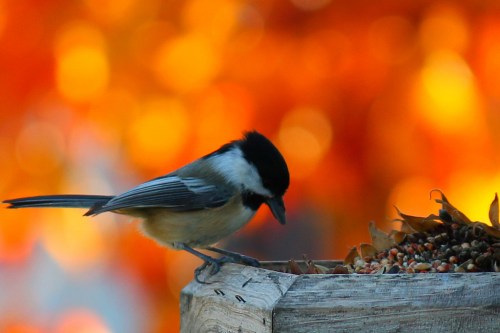
Fall Chickadee, photo by kdclarkfarm1

The UM Animal Diversity Web’s entry for Parus atricapillus (black-capped chickadee) says in part:

Black-capped chickadees prefer deciduous woodlands, open woods and parks, cottonwood groves, and willow thickets. They are most commonly seen near edges of wooded areas. They are a frequent visitor to backyard feeders. Black-capped chickadees nest in cavities, usually in dead trees or stumps, and are attracted to habitats with suitable nesting locations. During the winter, small flocks of black-capped chickadees can be found in dense conifer forests.

…Black-capped chickadees hop on trees (occasionally on the ground), rather than “walking.” These birds are very active during the day, and can often be seen foraging upside-down. Black-capped chickadees form monogamous pairs which usually stay together for several years. The black-capped chickadee social system has two extremes, one shown by territorial pairs during the breeding season, and the other consisting of non-breeding flocks. These are often mixed species flocks including nuthatches, woodpeckers, kinglets, brown creepers, warblers, and vireos. Black-capped chickadees perform short-distance migrations, but remain in the same general region throughout the year.

Read on for lots more including photos and chickadee calls.

View Diane’s photo background big and see lots more autumn goodness in her Fall slideshow.

More birds and more Fall wallpaper on Michigan in Pictures.

The Puff Adder aka Eastern Hognose Snake

Eastern Hognose Snake

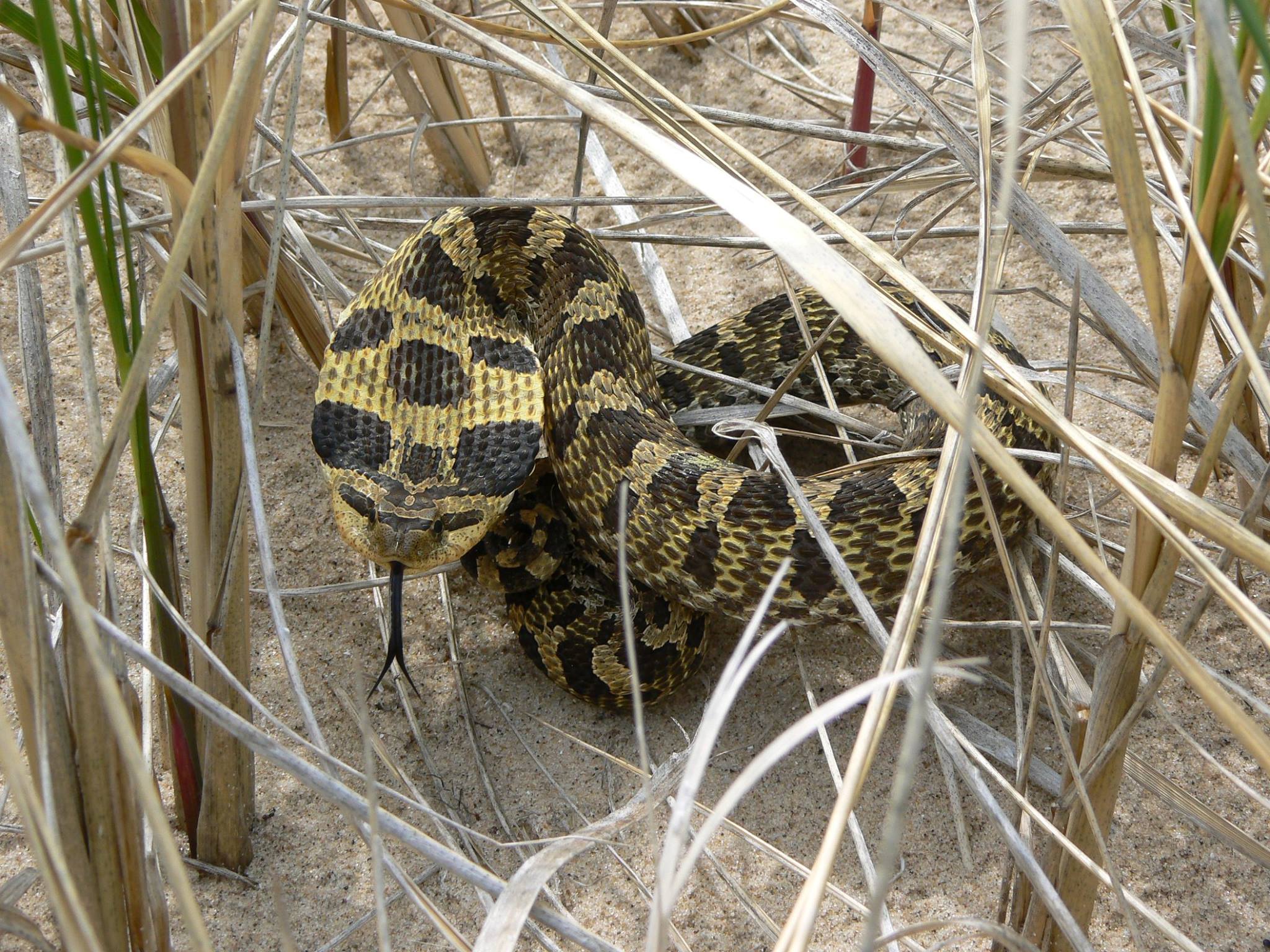
Eastern Hognose Snake by Sleeping Bear Dunes National Lakeshore

Of the approximately 2400 species of snakes in the world, Michigan has just 17. The State of Michigan’s page on the Eastern Hog-nosed Snake (Heterodon platirhinos) says (in part):

Description: A thick-bodied, slow-moving snake with a flattened, upturned “nose.” Color is variable some have dark spots and blotches on a yellow, orange, or brown background, but other specimens are solid black, brown, or olive with little or no visible pattern. Easily identified by defensive behavior (see below). Adult length: 20 to 40 inches.

Habitat and Habits: A snake of open, sandy woodlands – found in the wooded dunes of western Michigan. The upturned snout is used to burrow after toads, a favorite food. When threatened, hognose snakes puff up with air, flatten their necks and bodies, and hiss loudly. (This has led to local names like “puff adder” or “hissing viper.”) If this act is unsuccessful, they will writhe about, excrete a foul smelling musk, and then turn over with mouth agape and lie still, as though dead. Despite this intimidating behavior, Hog-nosed snakes are harmless to humans…

Range and Status: Though recorded from most of the Lower Peninsula and the southern tip of the Upper Peninsula, Hog-nosed Snakes are most common in the western and northern LP. Their numbers have declined in many places, in part due to persecution by humans who mistakenly believe they are dangerous.

View it bigger (if you dare!) on their Facebook and see more great shots of native flora & fauna on the Sleeping Bear Dunes National Lakeshore Facebook!

More Michigan snakes on Michigan in Pictures.

Support Michigan in Pictures with Patreon


Monarch & Sunflower

IMG_3378 (3) Monarch on sunflower
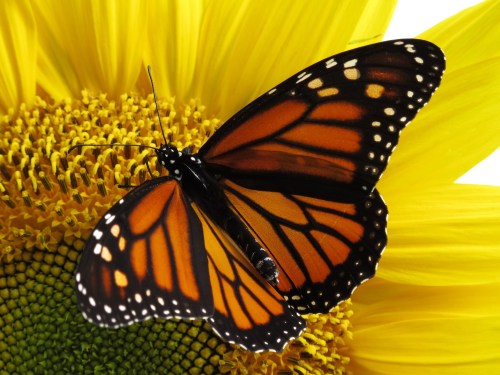
Monarch on sunflower, photo by jgagnon63@yahoo.com

The Michigan DNR page on Monarch Butterfly (Danaus plexippus) says:

Often called the Milkweed Butterfly, this large black veined orange winged butterfly can be observed feeding on milkweed. During its mating behavior, the adult male monarch will display a “courtship dance.” Perching on the tips of the milkweed, it will fly to other large butterflies to see if one is a female monarch; if it is, they will fly together in a fast, darting flight, lasting up to a minute and covering many yards and to a height of 100 feet.

As fall approaches, the monarchs can be seen in large numbers migrating along the Great Lakes shorelines enroute to Mexico and Central America.

Monarch butterfly populations have been declining in Michigan for the last decade, and it appears that last winter was another tough blow for this beleaguered beauty. You can learn a lot more about Monarch butterflies and how to help protect them at Monarch Watch.

View jgagnon’s photo background bigalicious and see more in his slideshow.

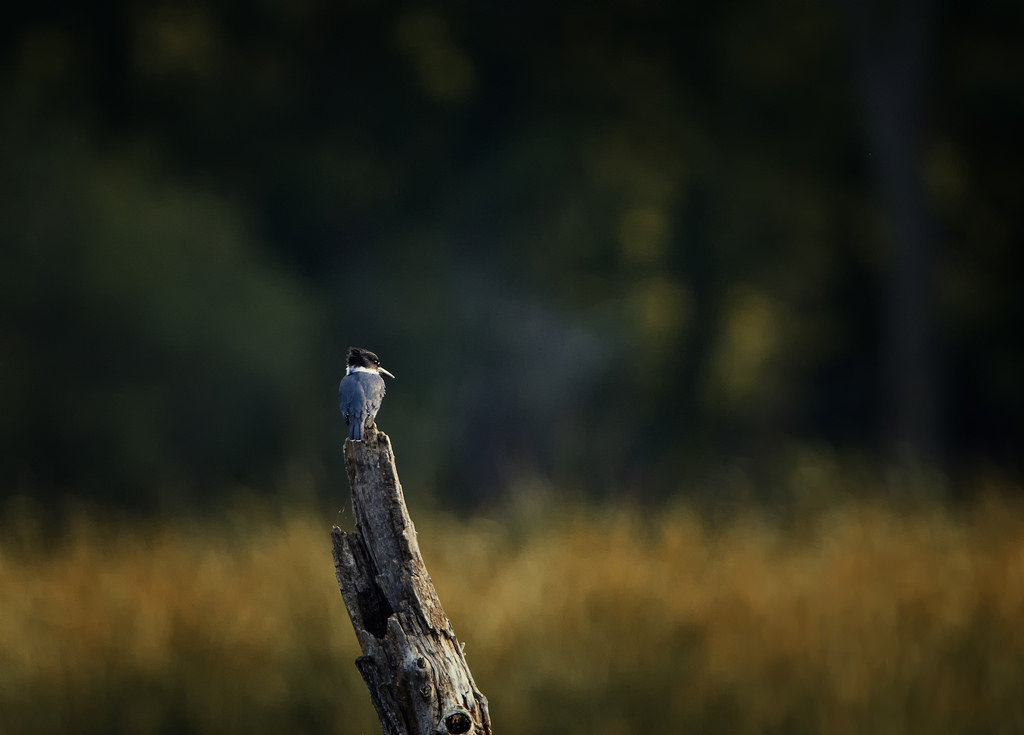
watercolor

watercolor by paulh192 (kingfisher)

watercolor, by paulh192

You really ought to view Paul’s photo of a kingfisher contemplating its next meal bigger. More in his slideshow.

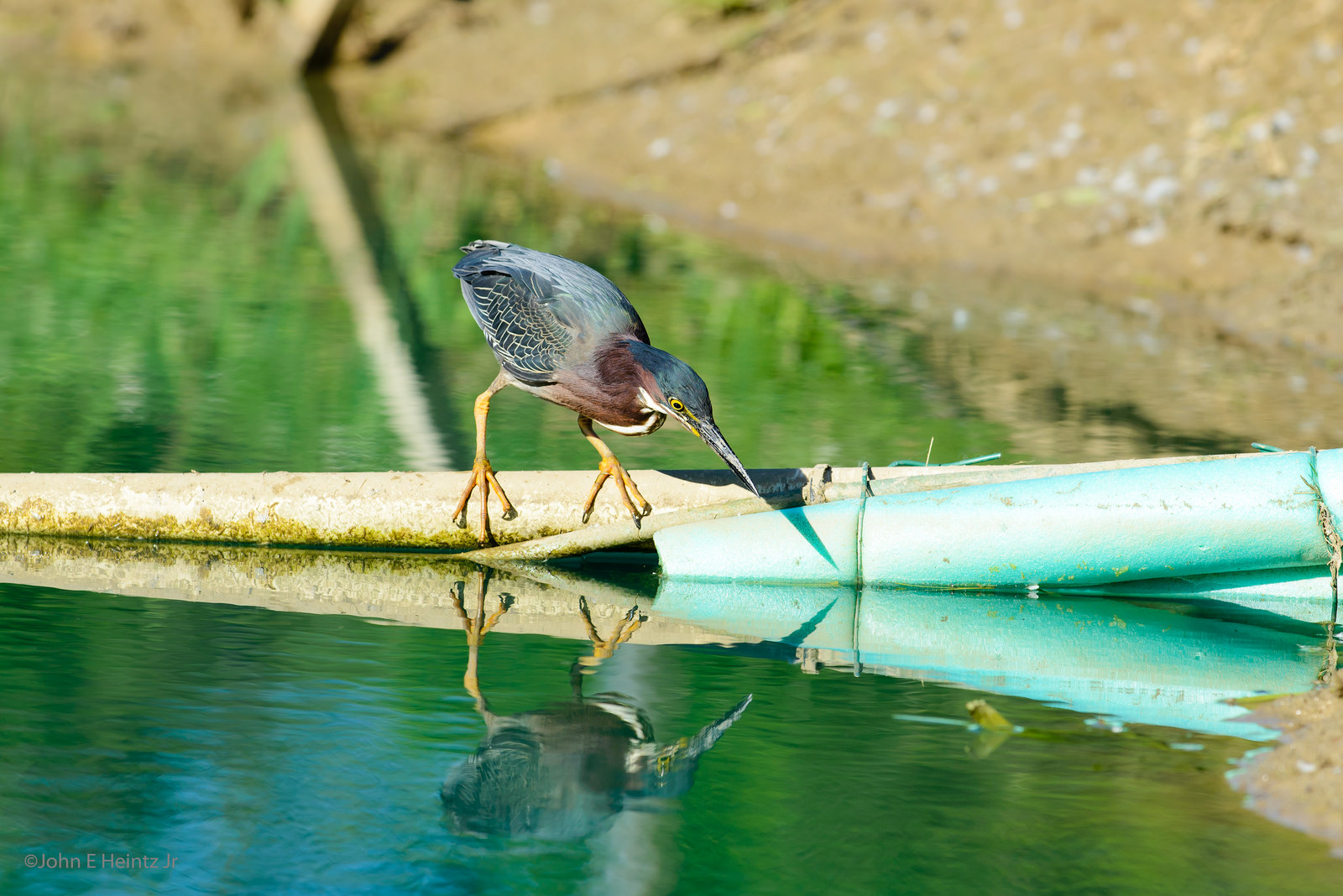
Gone fishin’ with a Green Heron

Green Heron and Frog by John Heintz

GREEN HERON by John Heintz, Jr.

The entry for Green Heron (Butorides virescens) at All About Birds says (in part):

From a distance, the Green Heron is a dark, stocky bird hunched on slender yellow legs at the water’s edge, often hidden behind a tangle of leaves. Seen up close, it is a striking bird with a velvet-green back, rich chestnut body, and a dark cap often raised into a short crest. These small herons crouch patiently to surprise fish with a snatch of their daggerlike bill. They sometimes lure in fish using small items such as twigs or insects as bait.

Some Fun Facts…

  • The Green Heron is one of the world’s few tool-using bird species. It creates fishing lures with bread crusts, insects, earthworms, twigs, feathers, and other objects, dropping them on the surface of the water to entice small fish.
  • Like many herons, the Green Heron tends to wander outside of its breeding range after the nesting season is over. Most of the wanderers stay nearby as they search for good feeding habitat, but some travel long distances. Individuals have turned up as far away as England and France.
  • Green Herons usually hunt by wading in shallow water, but occasionally they dive for deep-water prey and need to swim back to shore—probably with help from the webs between their middle and outer toes. One juvenile heron was seen swimming gracefully for more than 60 feet, sitting upright “like a little swan,” according to one observer.
  • The oldest Green Heron on record was 7 years, 11 months old.

Read on for more, with various Green Heron calls including the attack call. The Michigan Bird Atlas shows Green Heron distribution in the state.

FYI John is no longer on Flickr, but he has some awesome pics on Michigan in Pictures!

Many more Michigan birds on Michigan in Pictures.

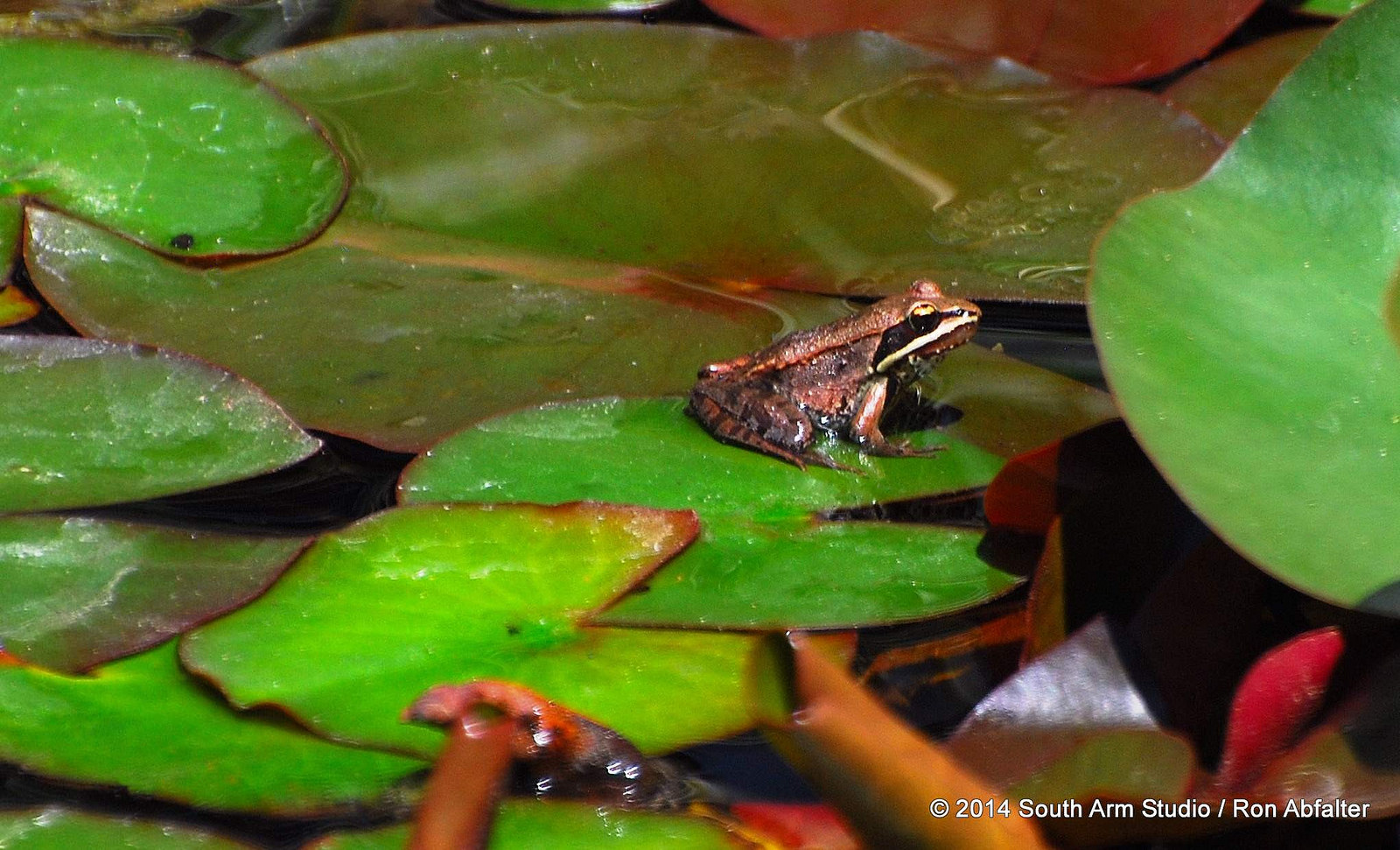
Michigan Frog Files: The Wood Frog (Rana sylvatica)

Michigan Wood Frog

Frog, photo by Ron Abfalter

Word on the pond is that Michigan’s frogs are a little put out by all the attention my readers are paying to Michigan turtles, so here’s a little payback. The DNR’s page on Wood Frog (Rana sylvatica) says:

DESCRIPTION: A brown or tan frog with a dark band (“robber’s mask”) through the eye and a white stripe on the upper lip. Small to medium – 2 to 21/2 inches long.

HABITAT: Woodlands, wooded swamps.

BREEDING: March-April, in woodland ponds and swamps often before ice is completely melted from pond. Egg masses are globular; many females may deposit in one area, often in deepest part of pond. Tadpoles will transform about 2 months later.

VOICE: A duck like “quack,” some describe it as “a lot of chuckling.”

RANGE AND STATUS: Common in moist wooded habitats state-wide.

You can hear the quacking call of the Wood Frog in this video and also learn more about wood frogs from the UM Animal Diversity Web.

View Rob’s photo bigger and see more of his photos from thePalms Supper Club & Dharma Cafe on Flickr.

More Michigan frogs on Michigan in Pictures!