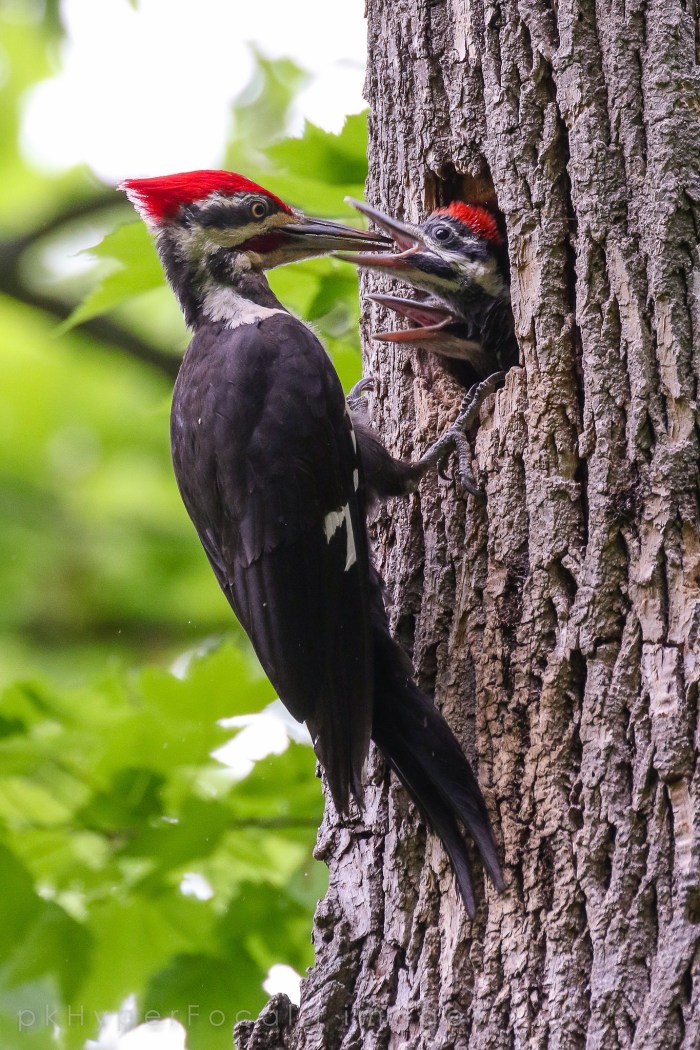
Red Mohawk: At Home with Michigan’s Pileated Woodpecker

Red Mohawk

Red Mohawk, photo by PK HyperFocal

The All About Birds entry for the Pileated Woodpecker (Dryocopus pileatus) says in part:

The Pileated Woodpecker is one of the biggest, most striking forest birds on the continent. It’s nearly the size of a crow, black with bold white stripes down the neck and a flaming-red crest. Look (and listen) for Pileated Woodpeckers whacking at dead trees and fallen logs in search of their main prey, carpenter ants, leaving unique rectangular holes in the wood. The nest holes these birds make offer crucial shelter to many species including swifts, owls, ducks, bats, and pine martens.

…The male begins excavating then nest cavity and does most of the work, but the female contributes, particularly as the hole nears completion. The entrance hole is oblong rather than the circular shape of most woodpecker holes. For the finishing touches, the bird climbs all the way into the hole and chips away at it from the inside. Periodically the adult picks up several chips at a time in its bill and tosses them from the cavity entrance. Pileated Woodpeckers don’t line their nests with any material except for leftover wood chips. The nest construction usually takes 3-6 weeks, and nests are rarely reused in later years. Cavity depth can range from 10-24 inches.

Nest trees are typically dead and within a mature or old stand of coniferous or deciduous trees, but may also be in dead trees in younger forests or even in cities. Dead trees are a valuable resource as nest sites or shelter for birds and other animals, and Pileated Woodpeckers battle for ownership with Wood Ducks, European Starlings, Red-bellied Woodpeckers, Red-headed Woodpeckers, Eastern Bluebirds, and Great Crested Flycatchers. Occasionally bats and swifts share roost cavities with Pileated Woodpeckers.

Click through for lots more including calls, Pileated facts, and video.

PK HyperFocal’s photo background big and see more in his Feathers slideshow.

Lots more Michigan birds on Michigan in Pictures.
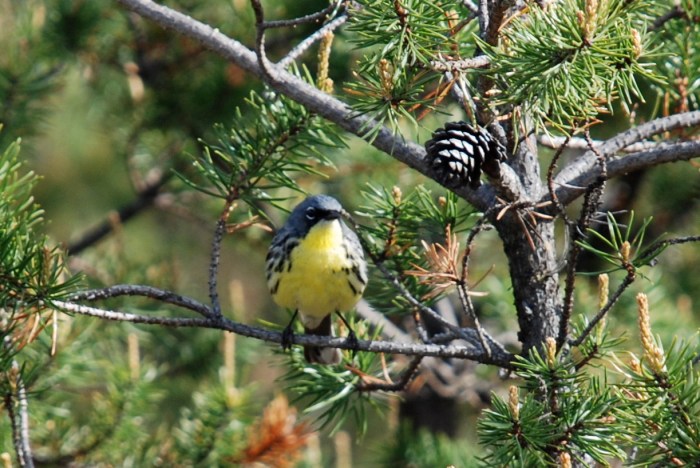
Michigan’s Bird of Fire: Saving the Kirtland’s Warbler

Michigan Bird of Fire Kirtlands Warbler

Kirtland’s Warbler, photo by James Fox

On June 3-4, northeast Michigan will celebrate a Michigan conservation success story with the annual Kirtland’s Warbler Weekend that includes an Au Sable River Kayak Tour. You can also lend a hand this Saturday with the annual jack pine planting day through the Kirtland’s Warbler Initiative!

The Detroit News has a nice editorial by Michael Bean, Principal Deputy Assistant Secretary for Fish and Wildlife and Parks at the U.S. Department of the Interior about how determination saved Michigan’s “Bird of Fire”, the Kirtland’s Warbler:

More than 60 years ago, scientists realized that the Kirtland’s warbler was in trouble. A 1951 census found fewer than 500 breeding pairs. The bird was among the first species ever listed as endangered and was the first species to ever have a “recovery team.”

Kirtland’s warblers will only nest in young jack pine forest. Jack pine requires fire to open its cones and spread its seeds — hence the nickname, “bird of fire.” Fire suppression policies last century led to the decline of the Kirtland’s warbler, as did parasitism from brown-headed cowbirds. The recovery team had to figure out a way to overcome these challenges to save the species.

Since 1974, the Kirtland’s Warbler Recovery Team has worked to save the species, even when the outlook for recovery was bleak. The recovery team brought together federal, state, academic, nonprofit, and even international partners.

Today, scientists estimate there are more than 4,000 Kirtland’s warblers in Michigan. The population has more than doubled its recovery goal, so the recovery team is no longer needed. Through years of hard work the partners figured out how to provide the conditions necessary for the warblers to survive, and the birds have flourished.

View James’ photo background big and see more in his Grayling 2009 slideshow.

Know Your Michigan Frogs: Mink Frog (Rana septentrionalis)

Michigan Mink Frog

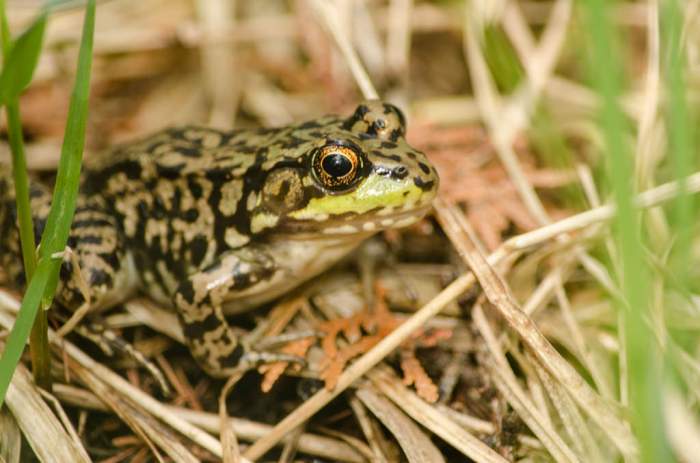
mink frog-0376, photo by tifranta

Saturday was World Frog Day so let’s add another Michigan frog to the list, the Mink Frog (Rana septentrionalis) about which the DNR says:

A blotchy, spotted, greenish or brownish frog. Similar to Green Frog, but has spots or blotches instead of cross bands on the hind legs. Bright green upper lip and creamy to yellowish belly. Produces a musky, mink like odor when handled. Medium – 2 to 3 inches long.

HABITAT: Bogs, ponds, and lake edges. Remains close to permanent water.

BREEDING: June-July. Eggs laid on vegetation in deep water. Tadpoles may require more than one summer to become frogs.

VOICE: Likened to distant hammering; “Kuk, kuk, kuk, kuk, kuk.”

RANGE AND STATUS: Found throughout Upper Peninsula, but generally uncommon.

Click over to the Wisconsin Sea Grant to hear the Mink frog’s call.

View Tiffany’s photo bigger, see more in her slideshow, and follow her at Tiffany Rantanen Photography on Facebook!

More Michigan frogs on Michigan in Pictures.

2016 Michigan Morel Season Underway!

Backyard Morels

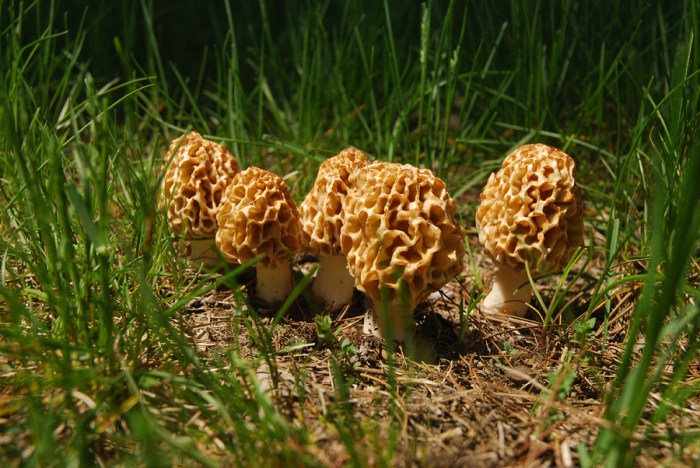
backyard morels, photo by Jason Rydquist

I’ve been getting word from various parts of the state that morel mushrooms are being found! They’re one of my favorite Michigan foods, and over on Absolute Michigan today I’ve put together Five Things you need to know about Michigan Morels. It includes a new online tool that could be of use to morel hunters so check it out!

View Jason’s photo bigger and see more in his slideshow.

Lots more morels on Michigan in Pictures.

Platte River Bald Eagle Nest Cam

Platte River Eagle Cam

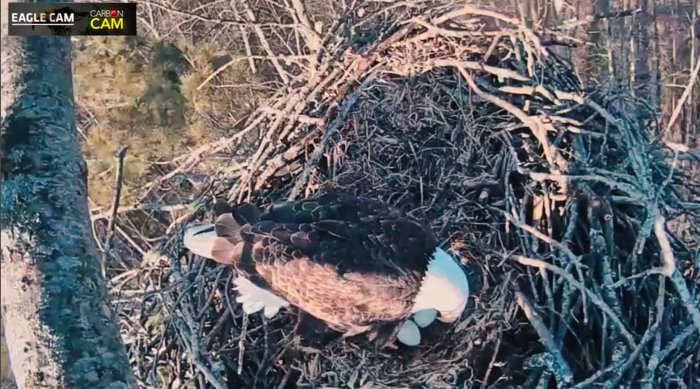
Michigan Eagle Cam, photo via Carbon TV

Carbon and the Michigan Department of Natural Resources are collaborating on a cool webcam of a nesting pair of bald eagles in Benzie County. mLive explains:

Cameras are pointed at a pair of nesting bald eagles in residence at the Platte River State Fish Hatchery. The large nest is 100 feet above the ground, along the Platte River in Benzie County.

Carbon Media Group alerted viewers earlier this week that incubation time is almost up, and that small holes called “pips” that parents make in the shells can be seen on two of the eggs.

“This pair of eagles have been regular visitors to this nest for the past three years,” Ed Eisch, DNR fish production manager, has said.

Click to view the live camera – which makes a really soothing background soundtrack – and also to check out video clips including an eagle adjusting the eggs from the photo above and visits by owls and pine martens!

Must be a Monday: Be Yourself Blue Heron Edition

Great Blue Heron Leaving Roost

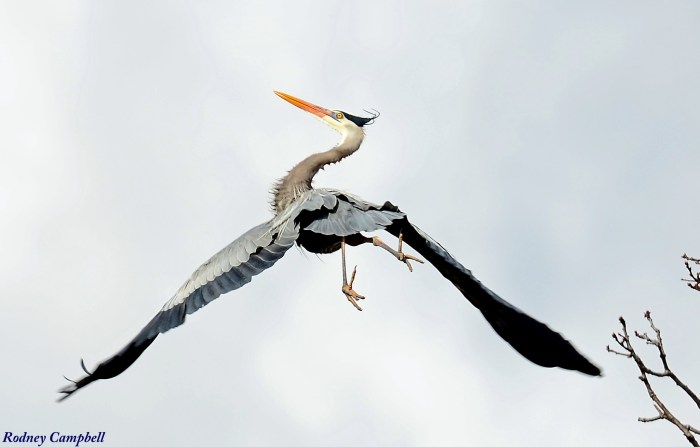
Great Blue Heron Leaving its Roost, photo by Rodney Campbell

Hope you have a wonderful week, even if you look a little goofy at times. ;)

The Michigan Natural Features Inventory entry for Great Blue Heron Rookeries explains:

The great blue herons in Michigan are largely migratory, with almost all leaving the state during the winter months. Most leave by end of October and return in early to mid-March.

The great blue heron is mostly a colonial nester, occasionally they nest in single pairs. Colonies are typically found in lowland swamps, islands, upland hardwoods and forests adjacent to lakes, ponds and rivers. Nests are usually in trees and may be as high as 98 ft. (30 m) or more from the ground. The platform like nests are constructed out of medium-sized sticks and materials may be added throughout the nesting cycle. Nests are usually lined with finer twigs, leaves, grass, pine needles, moss, reeds, or dry gras. The same nests are refurbished and used year after year.

Most great blue herons return to southern Michigan heronries in mid-March although a few may remain through the winter if there are areas of open water. Courtship and nest building commences from early April in southern Michigan to early May in the extreme northern portions of the state. Both sexes are involved in the nest building process with males primarily gathering sticks from the ground, nearby trees, or ungarded nearby nests.

More about Great Blue Herons on Michigan in Pictures.

View Rodney’s photo background bigtacular and see more in his Birds slideshow.


Must be a Monday

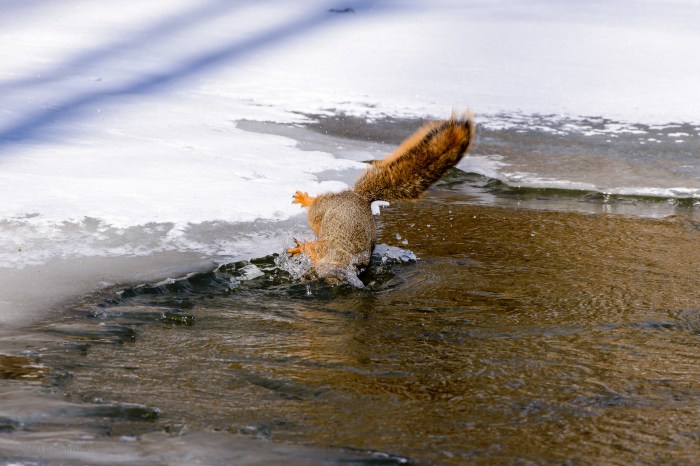
Fox Squirrel Falls in the River

FOX SQUIRREL, photo by John E Heintz Jr

“If one place is as good as any other, it’s high time we decided. Otherwise when we get there, we won’t know we’ve arrived.”
~Dr. Doolittle

I swear that John Heintz is a direct descendent of Dr. Doolittle – gets the best nature photos! View his photo bigger and definitely watch his slideshow for the whole story.

More from the animal kingdom and more funny photos on Michigan in Pictures.

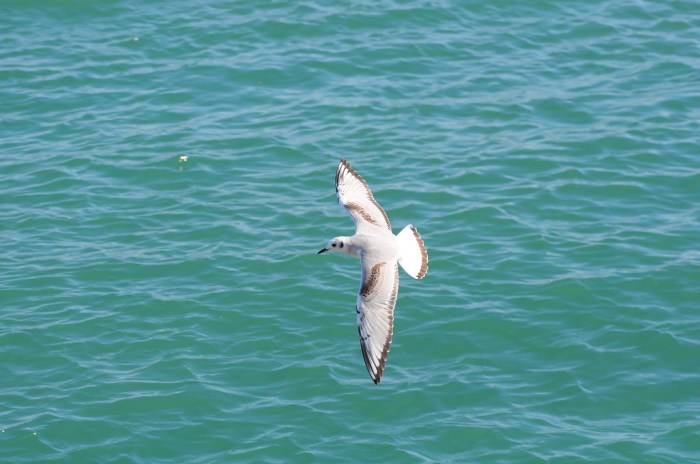
Bonaparte’s Gull (Chroicocephalus philadelphia)

Bonapartes Gull

Bonaparte’s Gull, photo by James Salinas

All About Birds has this to say about Bonaparte’s Gull (Chroicocephalus philadelphia):

A small, graceful gull with bright white patches in its wings, the Bonaparte’s Gull winters near people, but breeds in the isolated taiga and boreal forest.

  • The Bonaparte’s Gull is the only gull that regularly nests in trees.
  • The English name of the Bonaparte’s Gull honors Charles Lucien Bonaparte, who made important contributions to American ornithology while an active member of the Academy of Natural Sciences of Philadelphia during the 1820s. The scientific name philadelphia was given in 1815 by the describer of the species, George Ord of Philadelphia, presumably because he collected his specimen there.
  • During the breeding season, the Bonaparte’s Gull feeds mainly on insects, often catching them on the wing.
  • Breeds around lakes and marshes in boreal forest. Winters along lakes, rivers, marshes, bays, and beaches along coasts.
  • Eats small fish and large invertebrates, including insects. Does not eat garbage or carrion.

Read on for more and some photos and the gull’s distinctive call.

James took this photo in Port Huron. View it bigger and see more in his slideshow.

Lots more Michigan birds on Michigan in Pictures!


Happy Thanksgiving to you!

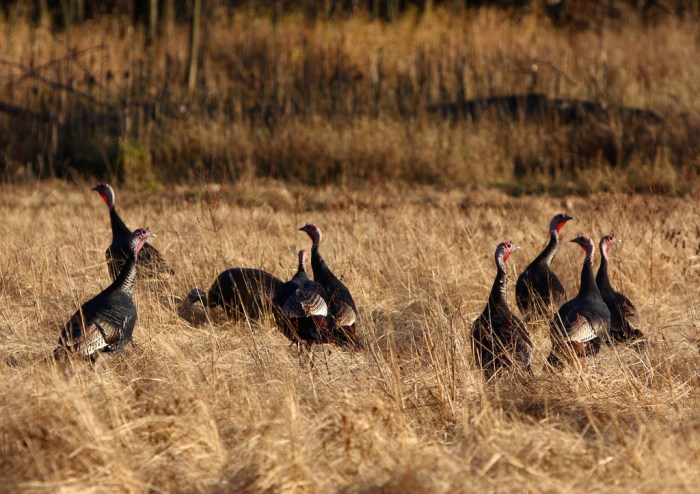
Happy Thanksgiving

Happy Thanksgiving, photo by Rick Corriveau

I am grateful for what I am and have. My thanksgiving is perpetual.
~Henry David Thoreau

I hope you have much to be thankful for, today and every day, within and without. I am thankful for all of you who give me reason to keep doing something that I dearly love – sharing photos of this beautiful and diverse place. Happy Thanksgiving to you all!!

Also sorry folks – had this scheduled for first thing this morning I thought!!

Rick says he’ll take one drumstick please! View his photo bigger and see more in his Birds slideshow.

Make Mine a Michigan Thanksgiving: High Bush Cranberry Edition

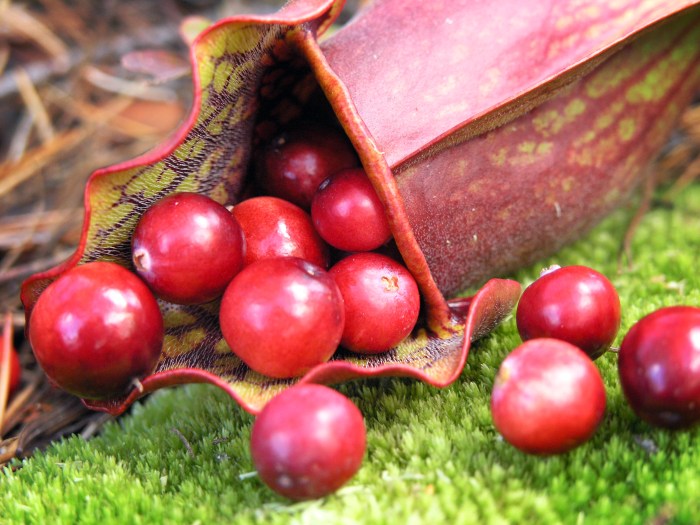
Highbush Cranberries by Blondieyooper

Cranberries, photo by Blondieyooper

One thing that I love is Thanksgiving dinner, and another is Michigan grown food. Dianna at Promote Michigan brings those together with 15 things that make Thanksgiving Pure Michigan. From starters like Koeze nuts, McClure’s Pickles, Koegel Meats, and Leelanau Cheese to sides like Michigan potatoes & squash to Michigan-raised turkeys and (of course) pumpkin & apple pie and ice cream!

One Thanksgiving staple that Michigan is producing more of are cranberries, and you can get all kinds of information from the US Cranberry Marketing Committee. While it’s too late to get them this year, we have another cranberry that grows in Michigan you might not be aware of. Green Deane’s Eat the Weeds is a great blog, and his page on the High Bush Cranberry says (in part):

The High Bush Cranberry is actually a Viburnum (Viburnum trilobum) and a cousin of the elderberry. Both are in the greater Honeysuckle Family and have a characteristic musky odor. That family by the way straddles the edibility line, with some members edible and others not, some tasty and some not. As one might suspect by the name, the High Bush Cranberry has tart fruit. Bradford Angier, a well-known Canada-based forager along side Euell Gibbons, wrote they require a “conditioned palate” to appreciate.

In North America the High Bush Cranberry is found in Canada and the northern half of the United States plus, oddly, New Mexico. It is not as that friendly to wildlife as one might suspect. The fruit persists into the winter because they are not on the top of birds’ preferred food. Birds like the berries after they soften and ferment. White-Tailed deer also browse on the twigs and leaves. For humans the berries are high in Vitamin C, about 30 milligrams per 100 grams.

Viburnum trilobum has several disputed botanical names and several mistaken common names including Pimbina, Mooseberry, Cranberry Tree, Cranberry Bush, American Cranberry, and Squashberry.

Read on for lots more including identification tips. There’s much more Michigan Thanksgiving to feast on at Michigan in Pictures too!

Blondieyooper says she picked over 8 pounds of these gorgeous highbush cranberries in the UP back in October of 2011. View her photo background bigilicious and see more in her Fall 2011 slideshow.