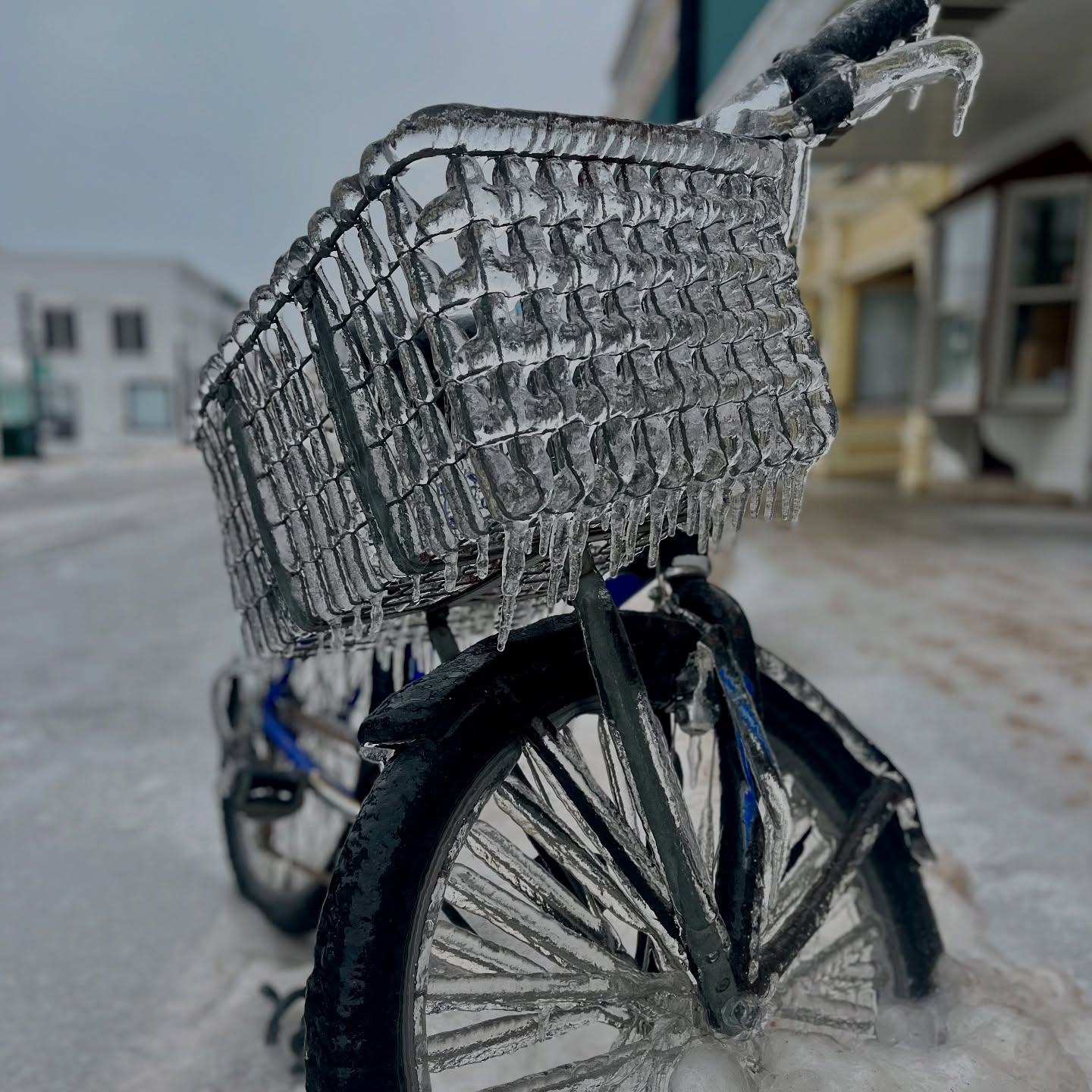
Sheen captured the crystal blue of the ice with a bit of pastel sky thrown in on the Straits of Mackinac over the weekend. Head over to her Facebook page for the latest including a tasty shot of the mighty Mackinac Bridge with the same sky & for sure check out her website for more work!
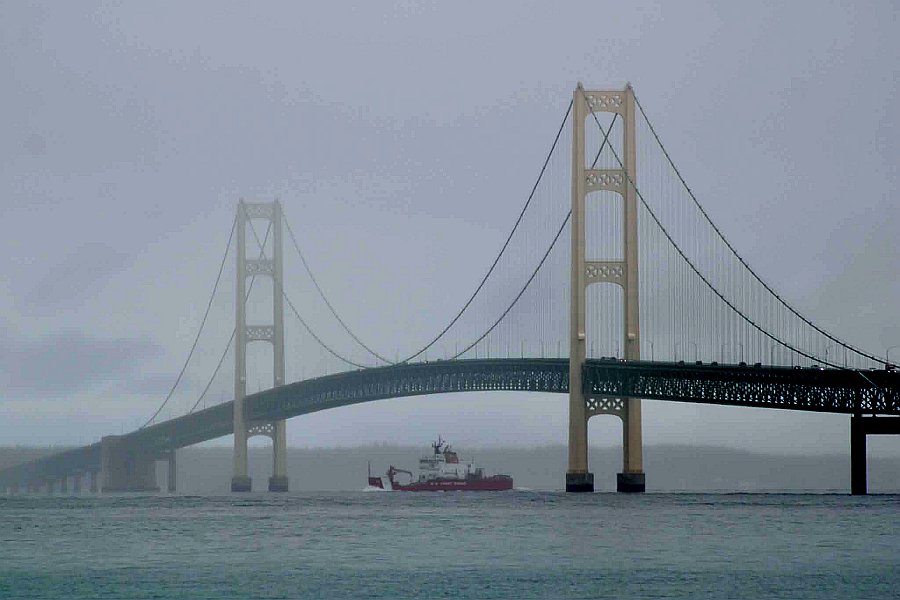
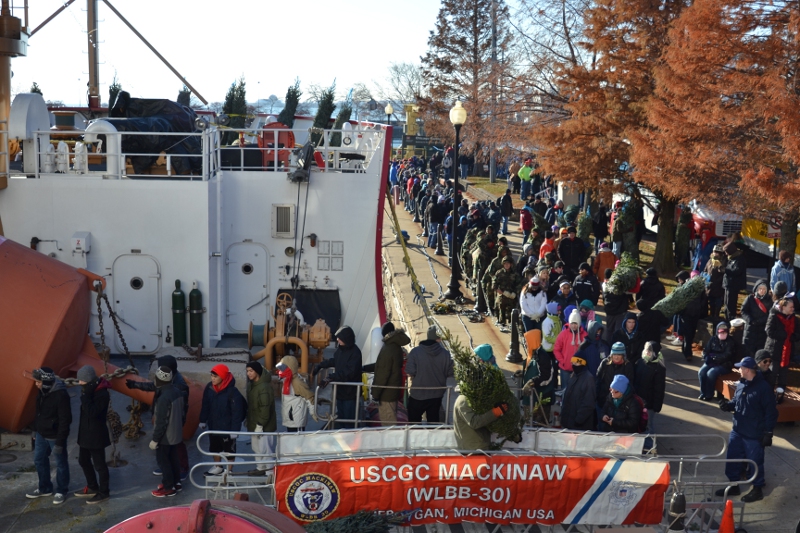
MightyMac.org is the leading resource for Mackinac Bridge news & photos. On Monday shared this shot of the USCG Cutter Mackinaw passing under the Mackinac Bridge Saturday on its journey to Chicago with 1,200 Christmas trees for families in need aboard. The ship is scheduled to arrive today (Friday, December 5th) and if you’re in the Windy City, you can head over to the Chicago Christmas Ship for all the info on the ship, the Christmas tree distribution, and how you can support this cool project.
The 1868 peak in sail-powered ships on Lake Michigan also marked the year the 123-foot Rouse Simmons was launched from Milwaukee’s shipyards. The ship was built by the firm of Allan, McClelland, and Company, one of Milwaukee’s preeminent shipbuilding firms …In the early 1870s, the Rouse Simmons joined the sizeable shipping fleet of wealthy lumber magnate and philanthropist Charles H. Hackley of Muskegon, hauling loads of lumber for Hackley’s fleet from company mills to the various markets around the lake for roughly 20 years.
By the late 19th and early 20th centuries, the popular German tradition of decorating an evergreen tree in the home was widely practiced, and it was not uncommon for a handful of lake schooners to make late-season runs from northern Michigan and Wisconsin loaded with thousands of Christmas trees for busy Chicago waterfront markets. Estimates of the number of Christmas schooners vary, but perhaps up to two dozen vessels in any season delivered evergreens to markets in Great Lakes states.
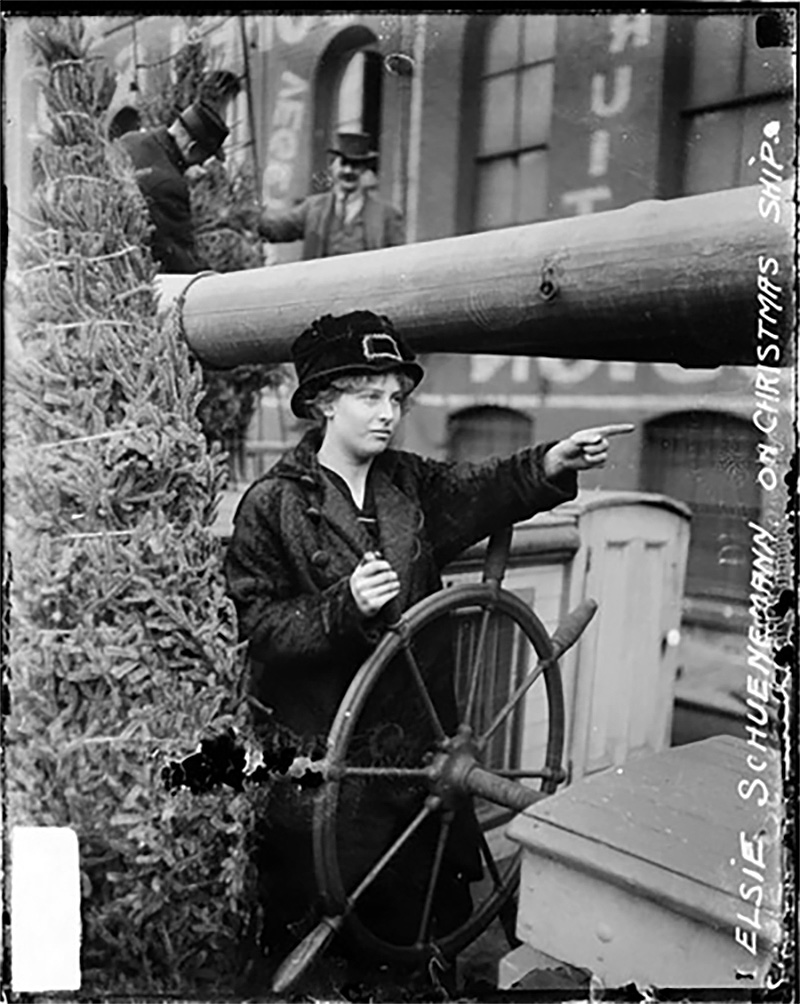
In Chicago, most vessels, including the Rouse Simmons, sold the trees directly from their berths along the Chicago River’s Clark Street docks. Electric lights were strung from the schooner’s bow to stern, and customers were invited to board the ship to choose their trees. In addition to selling Christmas trees, many boat operators, including Schuenemann, made and sold wreaths, garlands, and other holiday decorations. Barbara Schuenemann and her three daughters (Elsie is pictured above) helped make and sell these items as part of the family’s holiday trade.
You can read on for much more about Herman Schuenemann’s long career as “Captain Santa” which tragically came to an end on Friday, November 22, 1912 when the Rouse Simmons, heavily laden with 3,000–5,000 Christmas trees filling its hold & deck, left the dock at Thompson, Michigan looking “like a floating forest.” Sadly, the Rouse Simmons sailed into a powerful winter storm on the lake that sent her and several other ships including the South Shore, Three Sisters, and Two Brothers to the bottom of Lake Michigan.
Here’s a photo of Elsie Schuenemann at the helm of the Rouse Simmons along with one of the offloading in Chicago. Also be sure to check out a great video on the wreck of the Rouse Simmons by Richie Bravo.
Be sure to read all the way to the end for a super cool song about this from Michigan’s own Mustard’s Retreat!
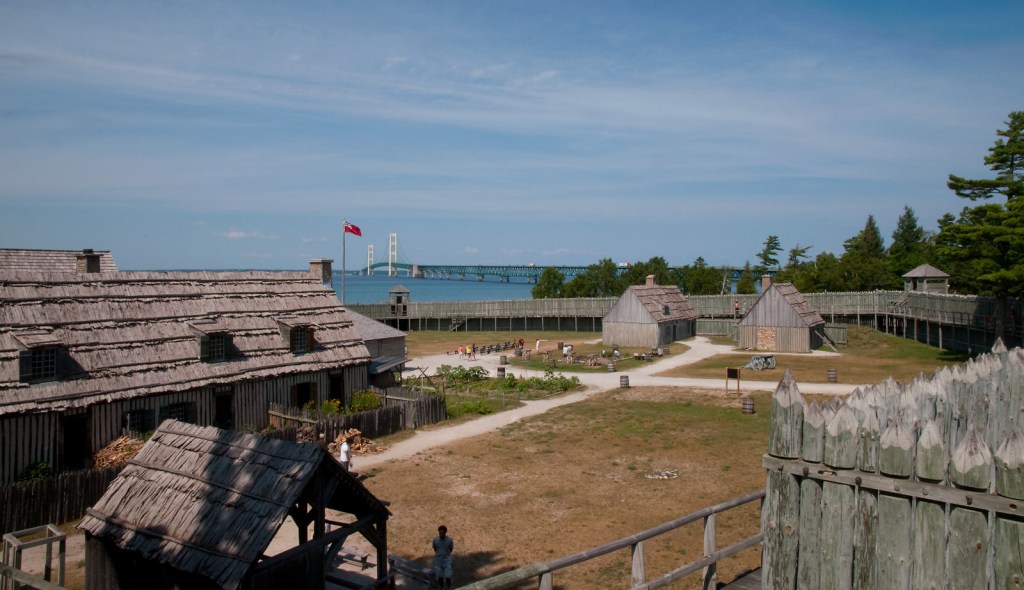
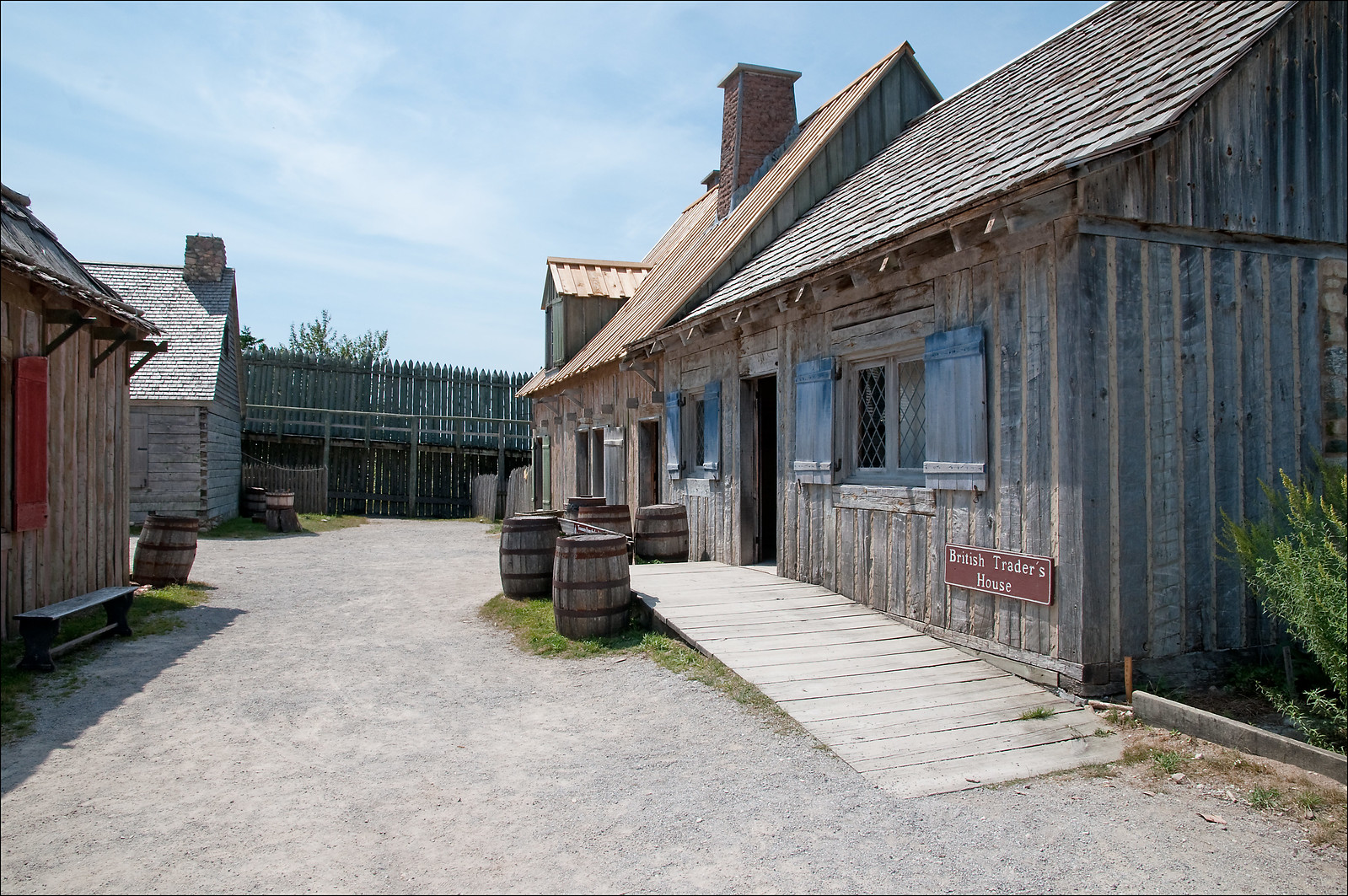
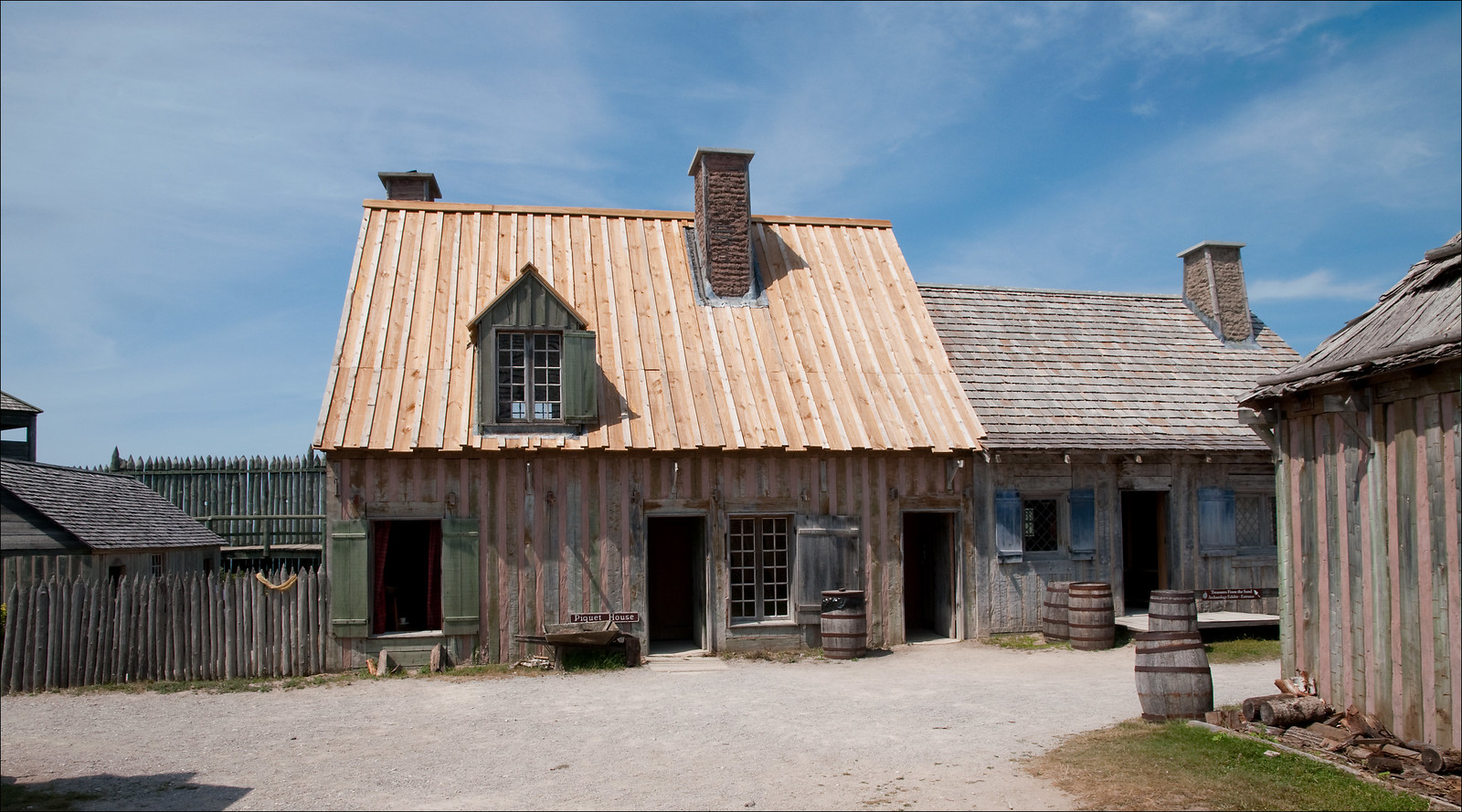
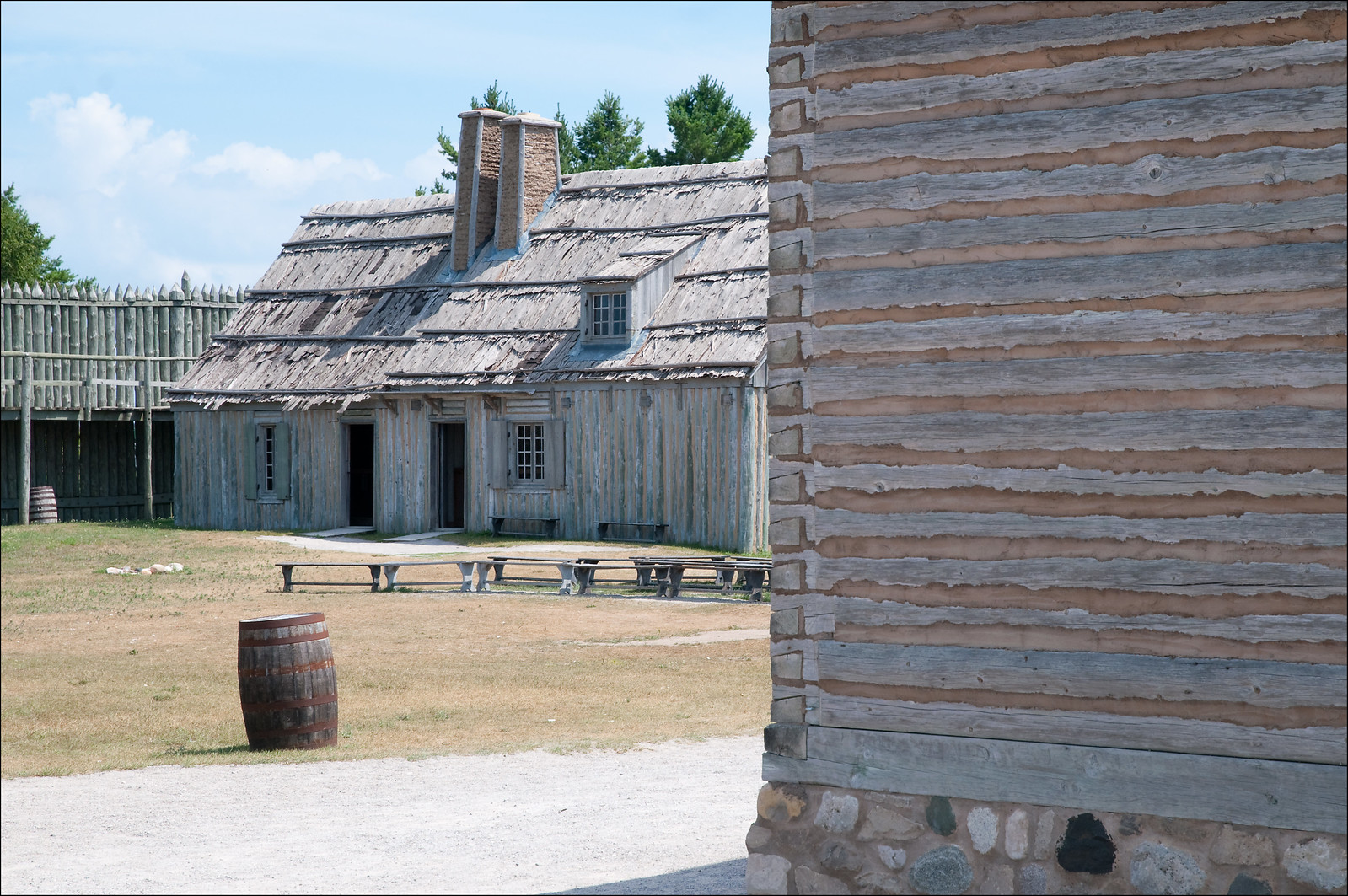
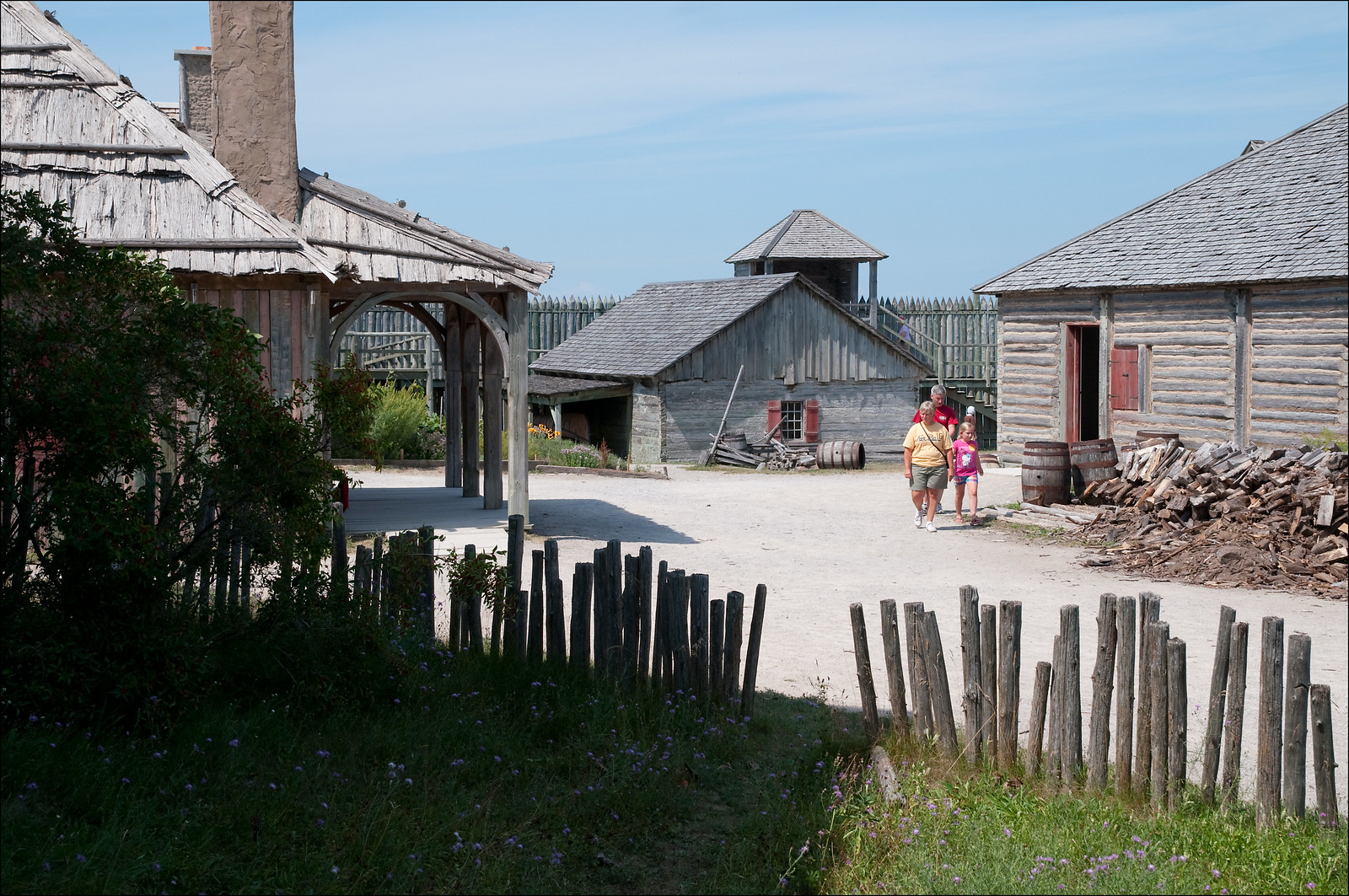
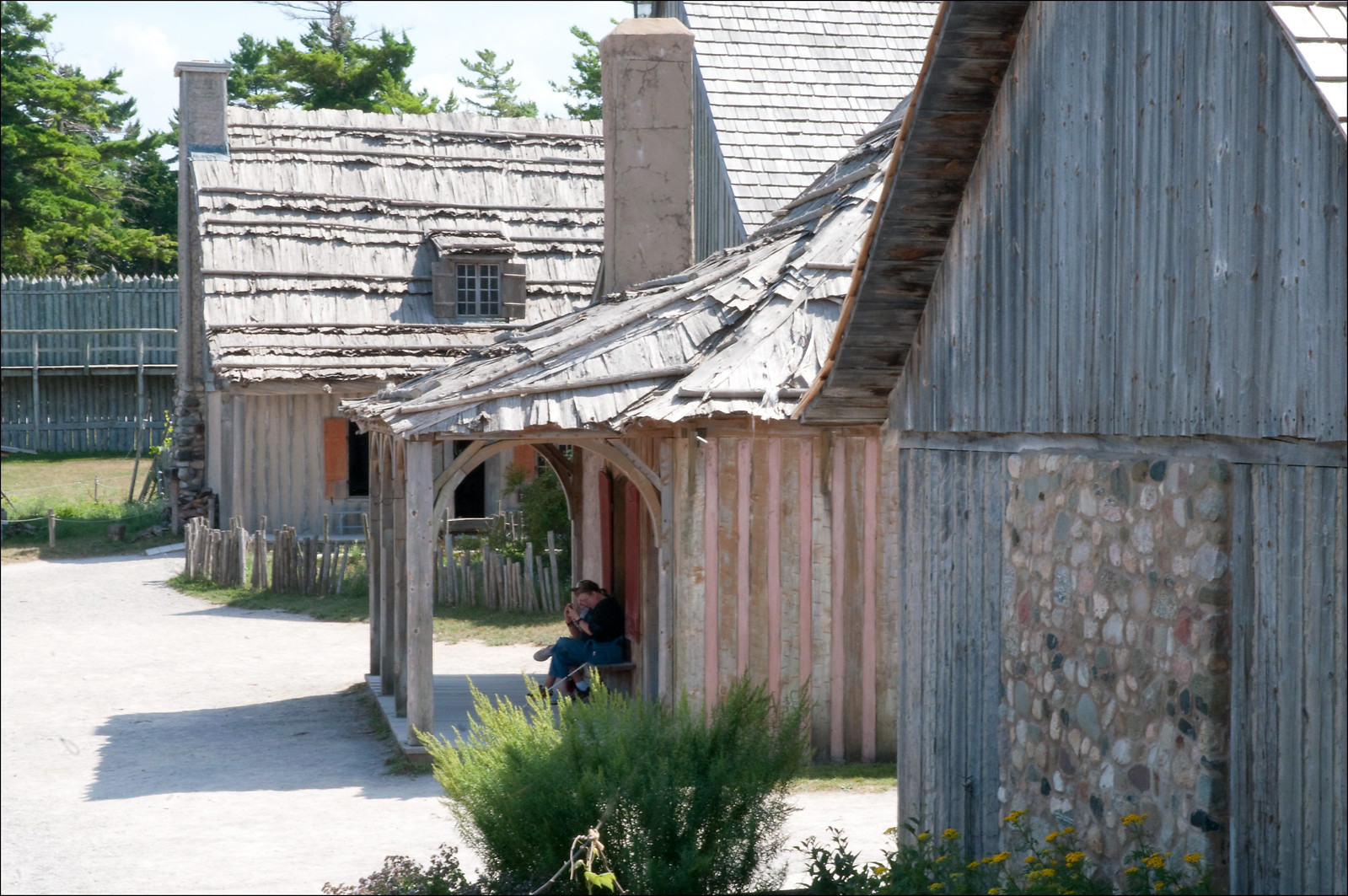
In 1715, the French founded the fortified community of Michilimackinac on the south side of the Straits of Mackinac in what is now Mackinaw City. Michilimackinac became an important center of the Great Lakes fur trade where thousands of Native Americans and French-Canadian voyageurs gathered at the post every summer, a pattern that was unchanged until the British took over the post. Lissa Edwards of Traverse Magazine details how the commandant of Fort Michilimackinac was invited to watch a game of baggatiway (lacrosse) between the Ojibwe and Sauk June day in 1763 writing (in part):
Under an unusually hot sun on a late spring day on the Straits of Mackinac, British Major George Etherington, commandant of Fort Michilimackinac, was suffering from an acute case of cultural blindness. And there was no excuse for it. Relaxed at the sidelines of a rousing game of baggatiway (similar to lacrosse) outside the fort, the major should have seen the danger signs in this Ojibwe versus Sauk contest of sweaty, half-naked bodies painted with white clay and charcoal.
…Though well armed, his garrison of 35 or so soldiers was vastly outnumbered by the hundreds of Indians encamped around it, there to exchange furs for wares—steel tomahawks and knives included—from French Canadian traders. That there’d been a run on tomahawks of late didn’t seem to worry the major. And he was only irritated by warnings from the many French Canadians who lived at the fort that the Indians were planning an uprising. He threatened to have the next person who spread similar gossip locked up down at Fort Detroit. The unwitting Etherington had not yet heard that Fort Detroit was under siege, attacked several weeks before by a coalition of tribes led by Pontiac, the Odawa chief. Foreseeing that English domination spelled the end of his people’s lifestyle, Pontiac had just begun his famous rebellion.
…It happened in seconds. A frenzy of sweaty, painted bodies clamoring for the leather-wrapped chunk of wood that was the ball as it fell at the mouth of the open gate. The women opening their blankets and handing off knives and tomahawks to the athletes-turned-warriors. Shrieks, screams and blood. Etherington and his lieutenant, William Leslye, whisked off to the woods—as the other fort officer and likely the only soldier armed that day, Lieutenant Jamet, was killed. The plan so carefully laid by Minweweh and Madjeckewiss, cohorts of Pontiac, was executed flawlessly. The attack and the events that followed were recorded in the painfully descriptive memoirs of Alexander Henry, who—at the time of the attack—was a young English fur trader staying at the fort. “Going instantly to my window I saw a crowd of Indians within the fort furiously cutting down every Englishman they found,” Henry wrote.
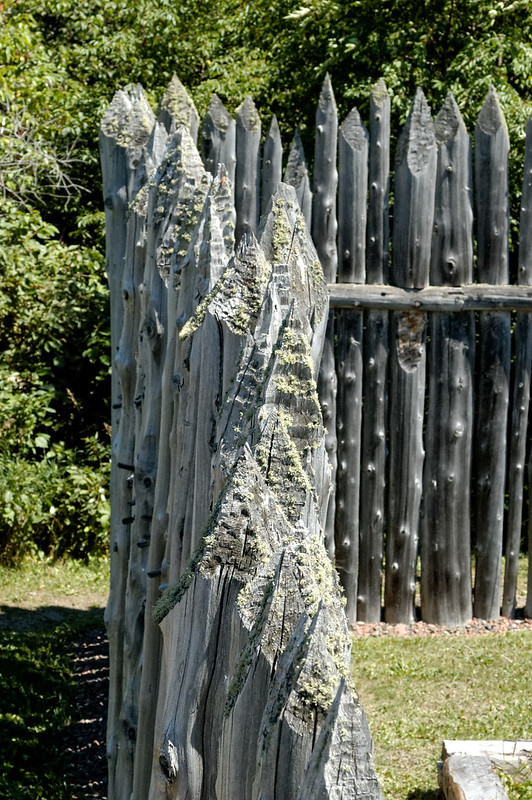
Joel noted Pontiac’s victory & that the British constructed the more serious Fort Mackinac on Mackinac Island as a result of this when he posted this back in 2011. See more below & in his Colonial Michilimackinac gallery on Flickr and follow him there. You can also see his photos in the Michigan in Pictures group on Facebook and explore his archive on Smugmug.
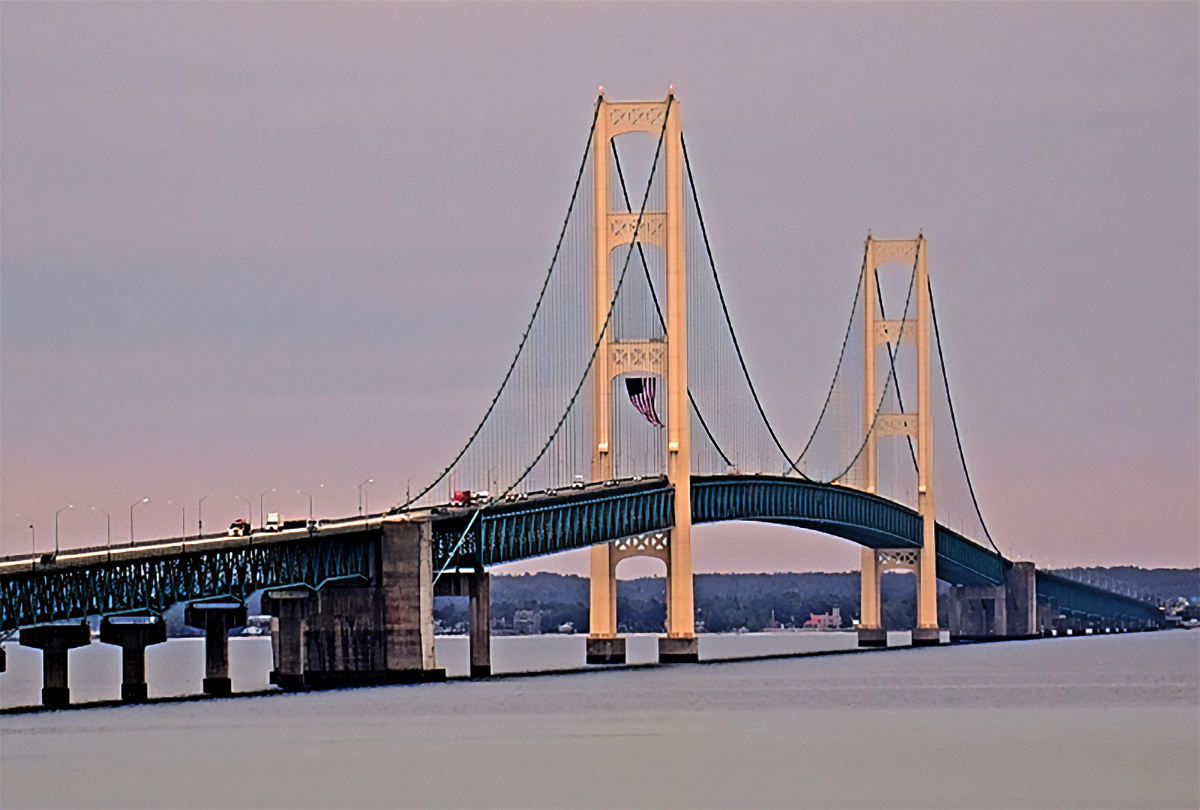
MightyMac.org shares that Old Glory is flying from one of the towers of the Mighty Mackinac Bridge this morning in memory of first responders and all those who died on 9/11. It’s a tumultuous time almost without precedent in the US, and I am hopeful we can use the memory of the incredible violence we watched together as a nation to remind ourselves that we loving all our neighbors is the only way to go.
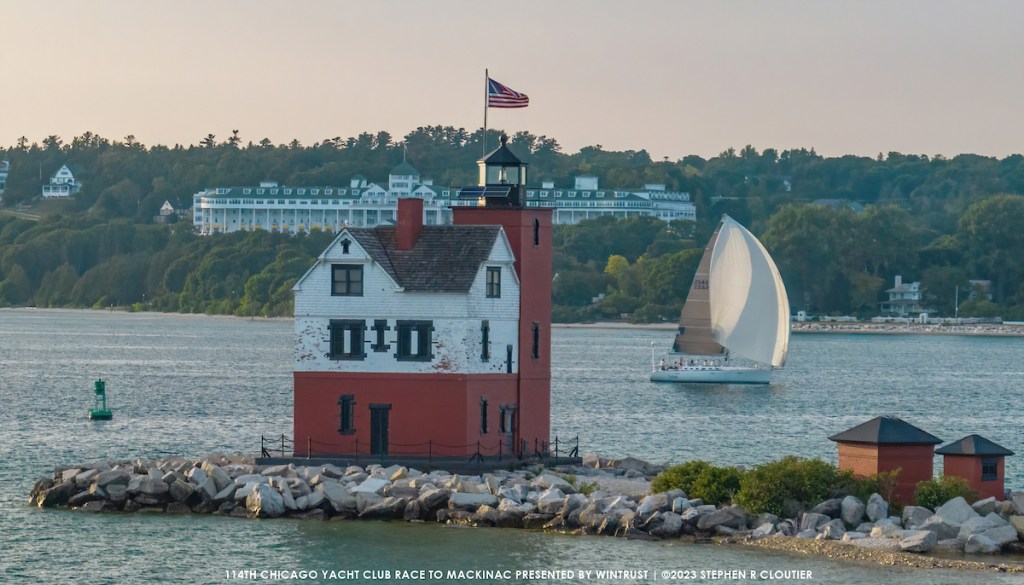
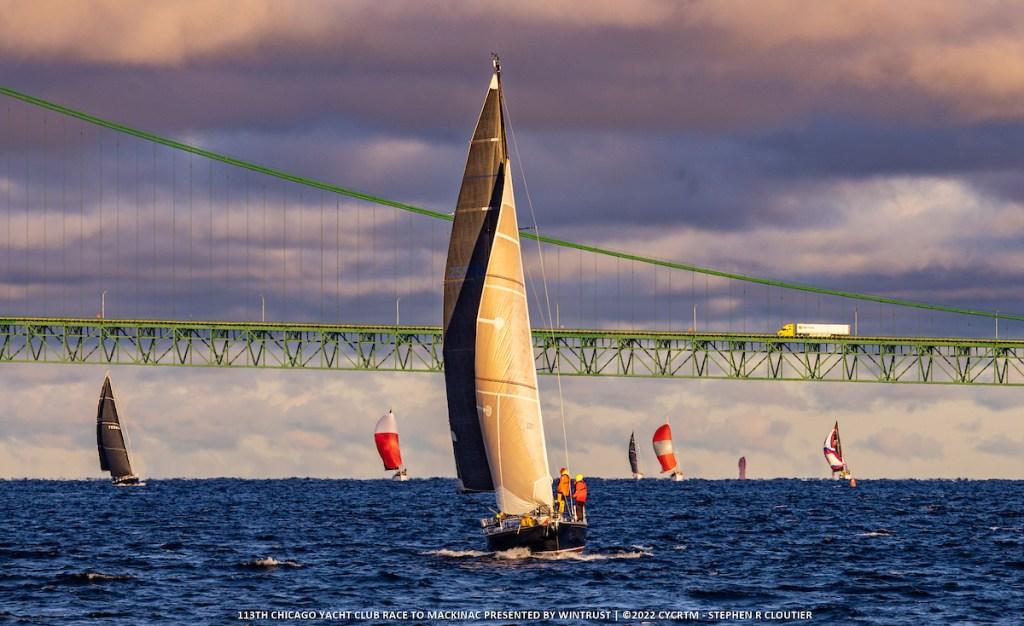
The Chicago Yacht Club Race To Mackinac starts Friday morning (July 18). The Chicago to Mac is the longest annual freshwater sailing race in the world, spanning 333 statute miles from the start at the Chicago Yacht Club, up the western shore of Lake Michigan, passing under the Mackinac Bridge to finish at Mackinac Island. They explain that:
…the race’s unpredictable weather and shifting winds on Lake Michigan make it a supreme test of sailing skill, rivaling many offshore ocean races. What first began in 1898 with just five boats has now evolved into a world-class sporting event. The origins of the Race to Mackinac date back to 1898, when Joseph Myers designed two fin-keel sloops, Siren and Vanenna. These vessels sparked a competition between their owners, George Peate of Siren and W.R. Crawford of Vanenna, and after three races in June of 1898, Vanenna remained undefeated. This prompted the idea of a unique, challenging race – one that would forever change the history of sailing.
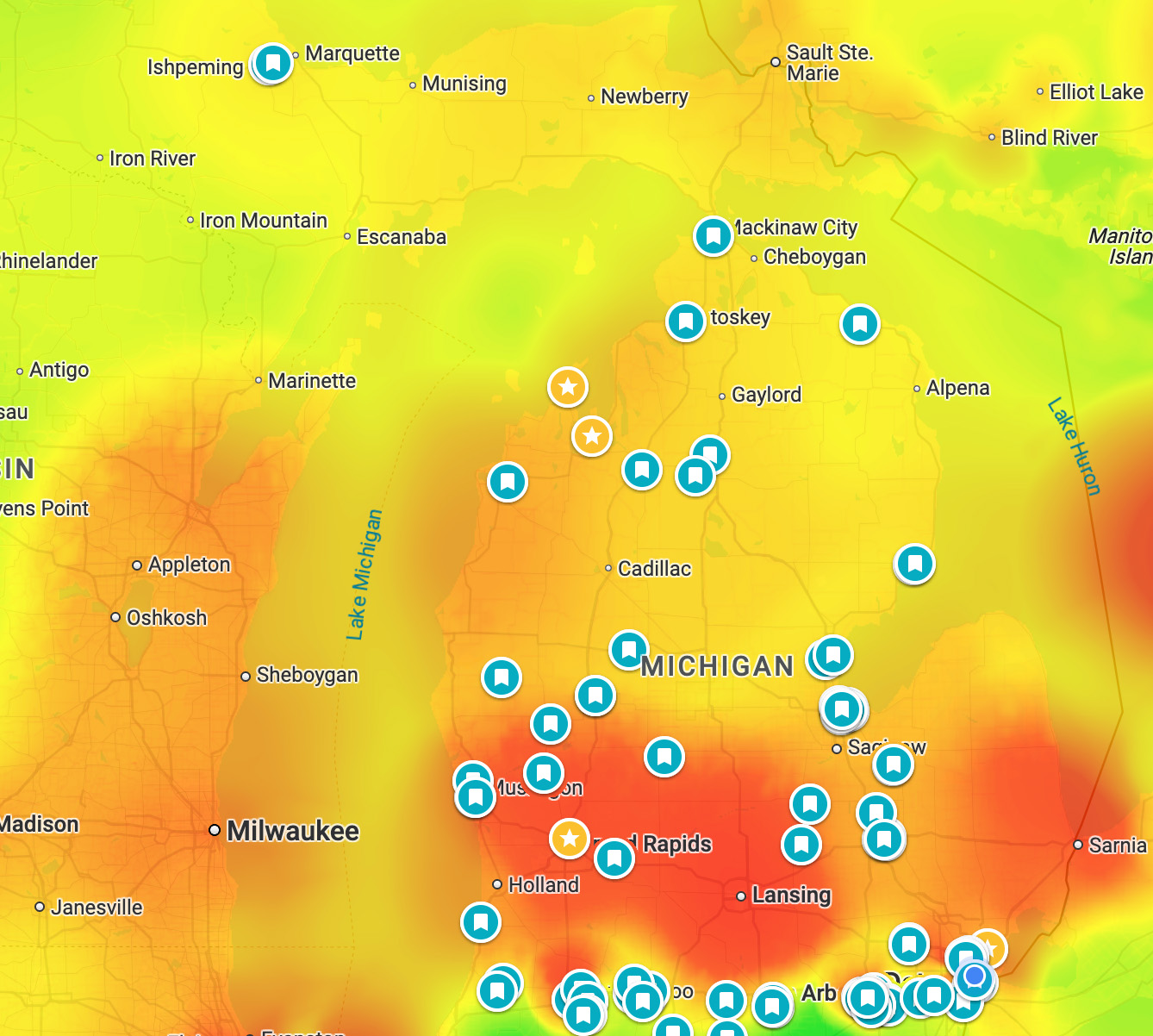
“Pollutants across the state are expected to reach the very unhealthy to unhealthy range in northern locations, with ranges of unhealthy to (unhealthy for sensitive groups) further south,” according to the service. Wildfire smoke from Canada is pushing into Michigan from till Monday. Increased fine particulate levels reached the western portion of the Upper Peninsula on Saturday afternoon.
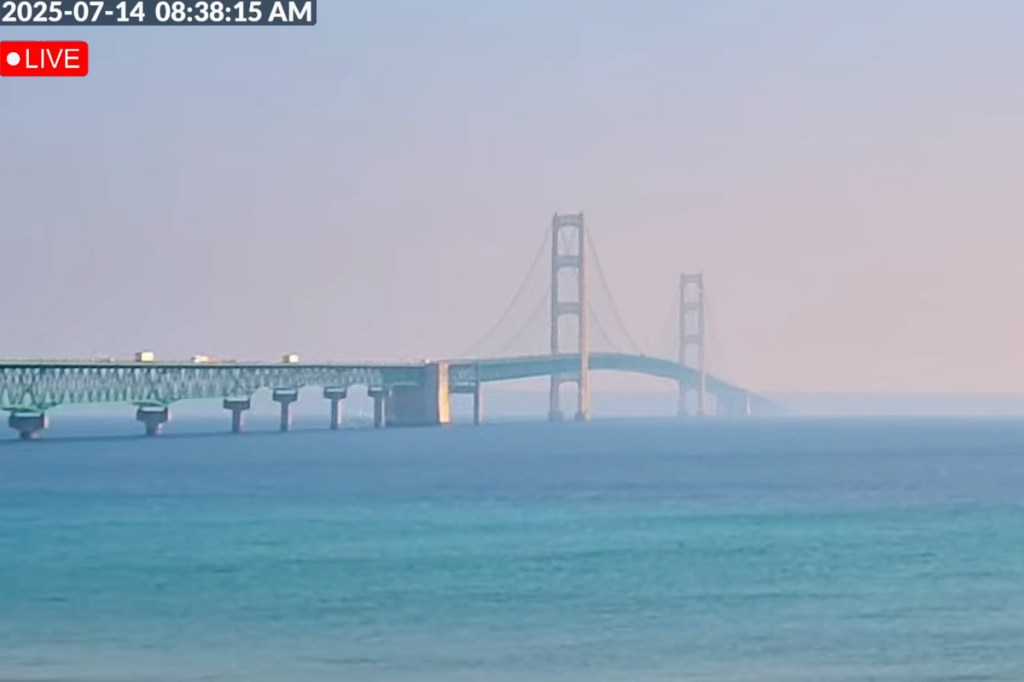
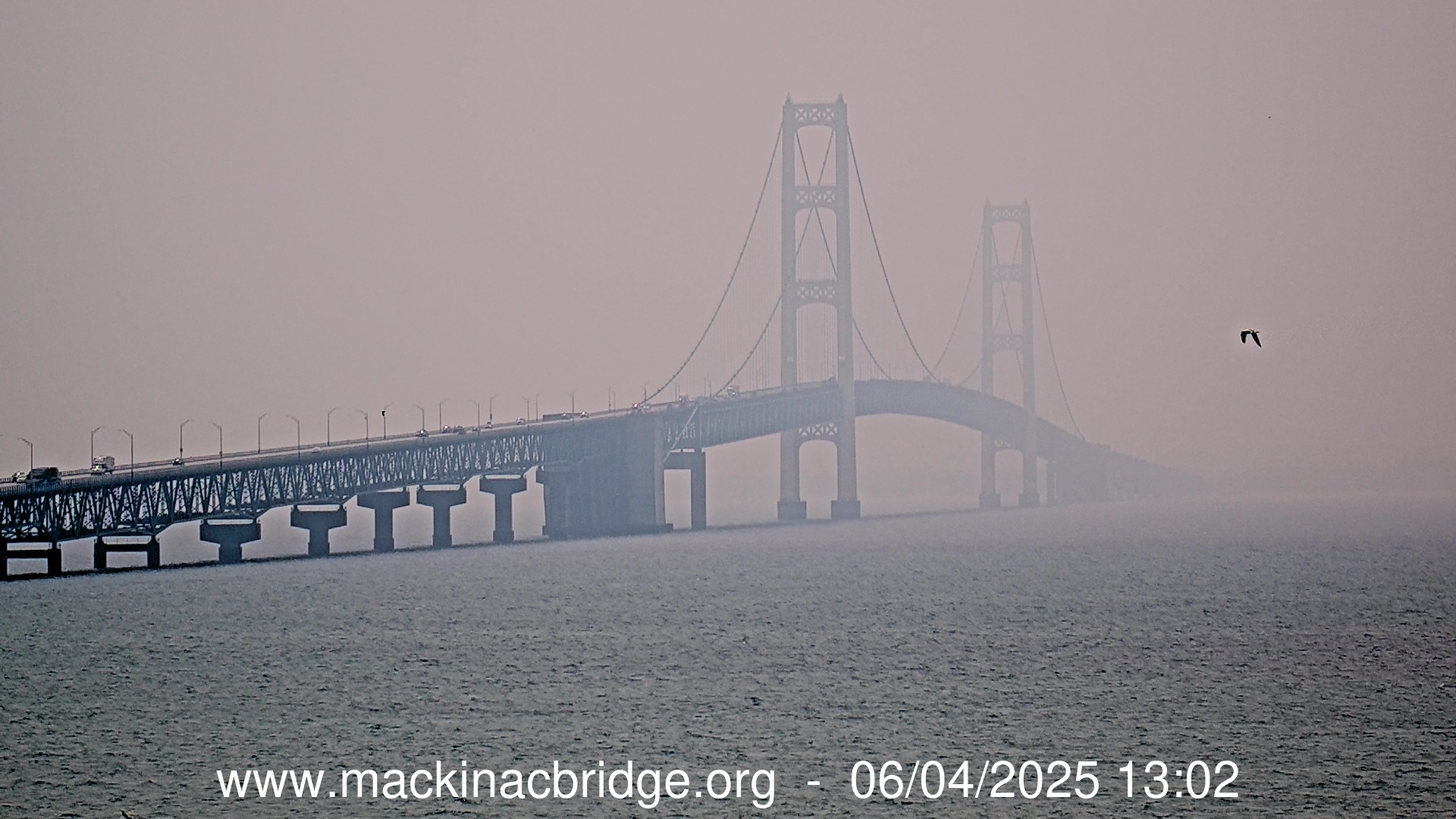
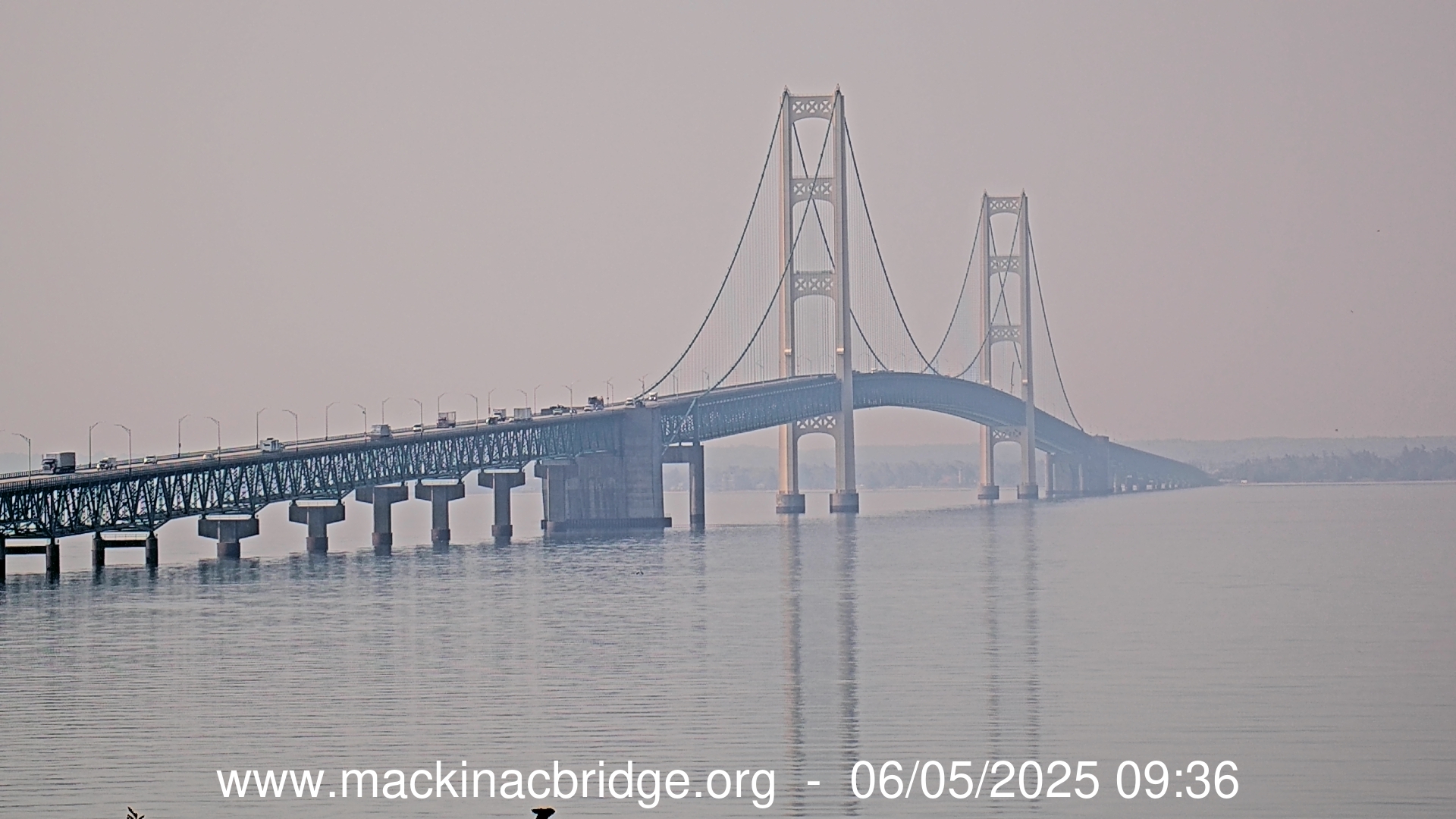
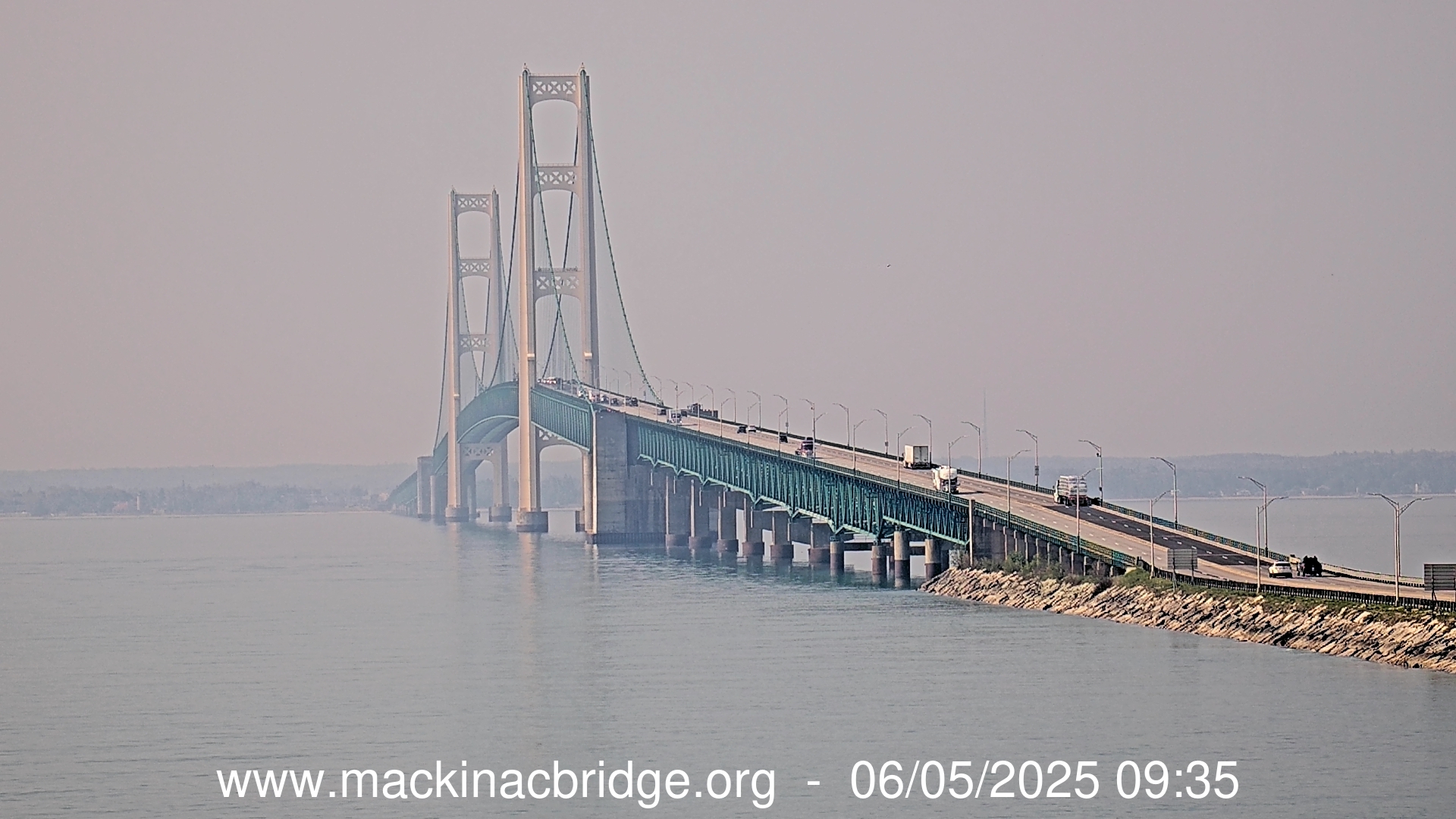
This zoomed in view of the live Mackinac Bridge webcam at the Riviera Motel shows how much the smoke from wildfires is impacting the view of the Bridge this morning in Mackinac City.
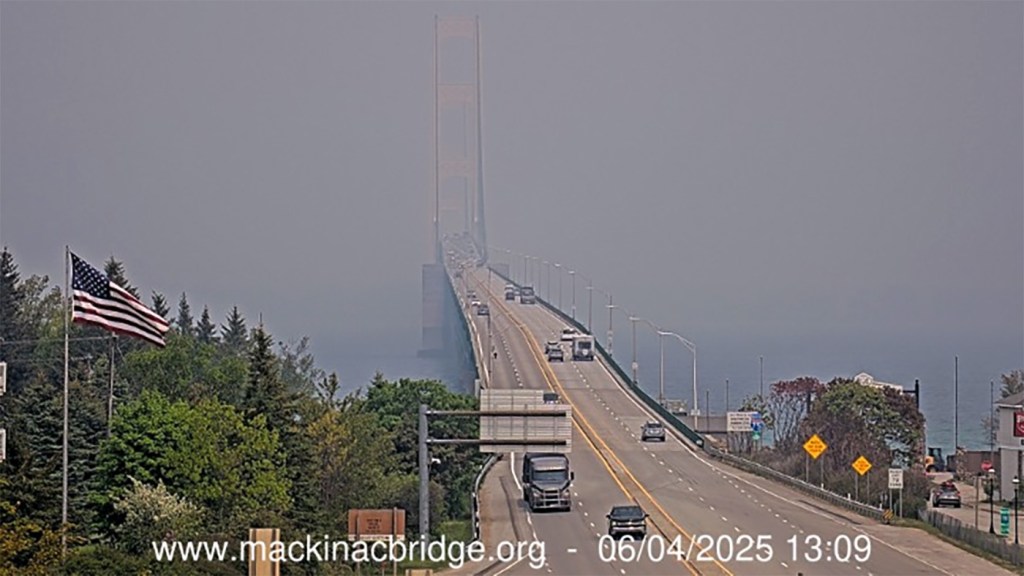
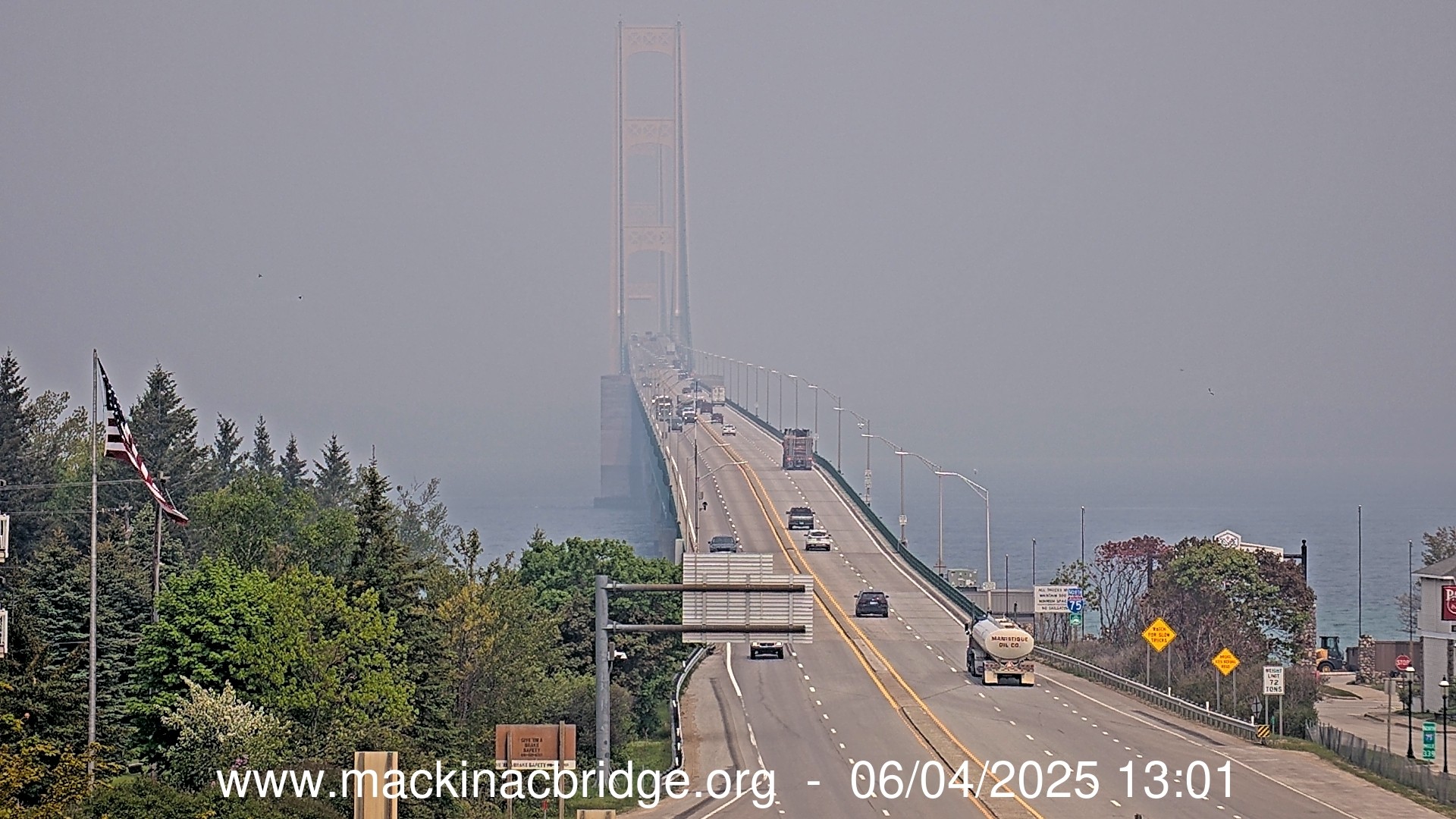
“Unfortunately, what you’re seeing today is not fog surrounding the Mackinac Bridge but smoke coming from the wildfires and our neighbors to the North.” -The Mackinac Bridge on X (which I won’t link to)
Yesterday morning the Mackinac Bridge Cam captured smoke so dense that it looked like the bridge was shrouded in fog! There’s less today but it’s still an astonishing amount of smoke so be sure to keep an eye on your local air quality because as the map shows, it’s not great right now!
Today is one of those days when I see the photo first and go looking for the post because honestly WOW! So here are some updates:
Last week Gov Whitmer met with President Trump & officially requested a Presidential Emergency Declaration for 12 counties and the Little Traverse Bands of Odawa. The request has nothing to do with FEMA actions or the ongoing process to pursue a Presidential Major Disaster Declaration, which is required to access longer-term recovery programs.



 Michigan in Pictures