Dogs vs Seagulls (and bacteria)

Untitled

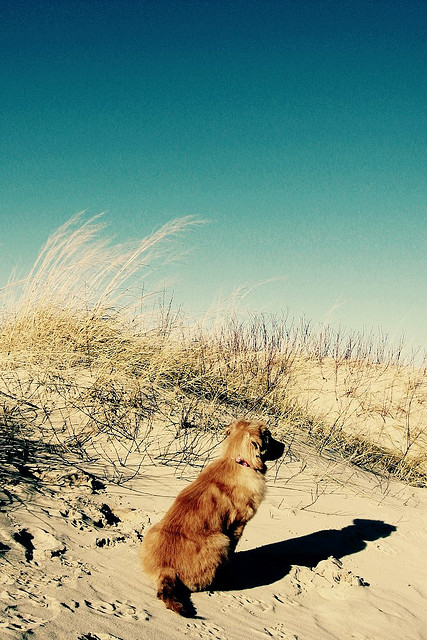
Untitled, photo by jenny murray

The Great Lakes Echo has a feature on an Environmental Science & Technology journal report on how scientists have used dogs to rid a Lake Michigan beach of seagulls. Why do that you ask? While gulls are certainly part of the Great Lakes beach experience, seagull waste contains bacteria that harms water quality & sometimes closes beaches. The test took place in Racine, Wisconsin and they explain:

For eleven days researchers calculated the concentration of different bacteria on the Lake Michigan beach. They measured E.coli and Enterococcus concentrations to calculate fecal contamination. In addition, the study collected information on potentially pathogenic bacteria, which can cause infectious diseases.

Researchers then used two trained border collies with handlers to harass gulls while continuing to survey the water quality.

The dogs prompted the gull population to drop 98 percent, from nearly 670 birds to just fewer than 20.

Fewer gulls meant better water. E.coli bacteria decreased nearly 30 percent with the removal of half the gulls. Before the dogs started working, water samples tested positive for potentially infectious bacteria on seven out of eleven days. After the dogs chased the seagulls, researchers failed to find any contagious bacteria.

Read on for more about this innovative solution.

Check this photo of Dot out on black and see more in Jenny’s dot slideshow.

More beaches on Michigan in Pictures.

Waterspout Weather

Waterspout moves across the Manitou Passage in the Sleeping Bear Dunes National Lakeshore

Waterspout moves across the Manitou Passage, photo by farlane

I don’t usually blog my own photos to Michigan in Pictures, but yesterday afternoon I had the good fortune to see a waterspout above the Manitou Passage in the Sleeping Bear Dunes National Lakeshore. If you look closely, you can see the turbulence on the water in front of South Manitou Island towards the center.

Meteorologist and Science and Operations Officer Bruce B. Smith of the National Weather Service in Gaylord writes the following about Waterspouts:

Persons living in northern Michigan are well aware that the Great Lakes have a profound impact on local weather patterns. Examples include heavy lake effect snows in winter, and cooling lake breezes in summer. As the end of the summer season approaches, another type of unique Great Lakes weather phenomena is possible — the waterspout.

Dr. Joseph Golden, a distinguished waterspout authority with the National Oceanic and Atmospheric Administration (NOAA), defines the waterspout as a “funnel which contains an intense vortex, sometimes destructive, of small horizontal extent and which occurs over a body of water.” The belief that a waterspout is nothing more than a tornado over water is only partially true. The fact is, depending on how they form, waterspouts come in two types: tornadic and fair weather.

Tornadic waterspouts generally begin as true tornadoes over land in association with a thunderstorm, and then move out over the water. They can be large and are capable of considerable destruction. Fair weather waterspouts, on the other hand, form only over open water. They develop at the surface of the water and climb skyward in association with warm water temperatures and high humidity in the lowest several thousand feet of the atmosphere. They are usually small, relatively brief, and less dangerous. The fair weather variety of waterspout is much more common than the tornadic.

He says that waterspouts occur most frequently in northern Michigan during the months of August, September, and October, when the waters of the Great Lakes are at their warmest and cold air moves in. If a spout develops, you can expect it to move at 10 to 15 knots (5-8 MPH make that 11-17 MPH) and last from two to twenty minutes. How about the 5 stages of waterspout formation from Dr Golden? Why not:

  1. Dark spot. A prominent circular, light-colored disk appears on the surface of the water, surrounded by a larger dark area of indeterminate shape and with diffused edges.
  2. Spiral pattern. A pattern of light and dark-colored surface bands spiraling out from the dark spot which develops on the water surface.
  3. Spray ring. A dense swirling annulus (ring) of sea spray, called a cascade, appears around the dark spot with what appears to be an eye similar to that seen in hurricanes.
  4. Mature vortex. The waterspout, now visible from water surface to the overhead cloud mass, achieves maximum organization and intensity. Its funnel often appears hollow, with a surrounding shell of turbulent condensate. The spray vortex can rise to a height of several hundred feet or more and often creates a visible wake and an associated wave train as it moves.
  5. Decay. The funnel and spray vortex begin to dissipate as the inflow of warm air into the vortex weakens.

Click through for more including how the NWS forecasts tornados and also see this Michigan in Pictures post from 2008 with some more Great Lakes Waterspouts.

Check this out on black and see more in my surprisingly cool You Can’t Change the Weather slideshow. I also captured a three waterspouts over North Manitou Island in September of 2008. Click the link to get it background big.

More weather on Michigan in Pictures.

Some say Masquigon, some say Muskegon

Masquigon

Masquigon, photo by Rudy Malmquist

Wikipedia’s Muskegon entry explains that:

“Muskegon” is derived from the Ottawa Indian term “Masquigon” meaning “marshy river or swamp”. The “Masquigon” river was identified on French maps dating from the late seventeenth century, suggesting that French explorers had reached Michigan’s western coast by that time.

Father Jacques Marquette traveled northward through the area on his fateful trip to St. Ignace in 1675 and a party of French soldiers under La Salle’s lieutenant, Henry de Tonty, passed through the area in 1679.

The earliest known Euro-American resident of the county was Edward Fitzgerald, a fur trader and trapper who first came to the Muskegon area in 1748 and who died here, reportedly being buried in the vicinity of White Lake. Sometime between 1790 and 1800, a French-Canadian trader named Joseph La Framboise established a fur trading post at the mouth of Duck Lake. Between 1810 and 1820, several French Canadian fur traders, including Lamar Andie, Jean Baptiste Recollect, and Pierre Constant had established fur trading posts around Muskegon Lake. In 1830 Muskegon was an Ottawa village.

Euro-American settlement of Muskegon began in earnest in 1837, which coincided with the beginning of the exploitation of the area’s extensive timber resources. The commencement of the lumber industry in 1837 inaugurated what some regard as the most romantic era in the history of the region.

Read on at Wikipedia.

Check this photo out background bigtacular and see more in Rudy’s Neutral Density slideshow. While we’re at Wikipedia…

In photography and optics, a neutral density filter or ND filter is a filter that reduces and/or modifies intensity of all wavelengths or colors of light equally, giving no changes in hue of color rendition. It can be a colorless (clear) or grey filter. The purpose of a standard photographic neutral density filter is to allow the photographer greater flexibility to change the aperture, exposure time and/or motion blur of subject in different situations and atmospheric conditions.

History? Yes, Michigan in Pictures has lots and lots of Michigan history … and a fair bit on Muskegon too!

The Edge of Isaac

The Edge of Isaac

The Edge of Isaac, photo by StacyN – MichiganMoments

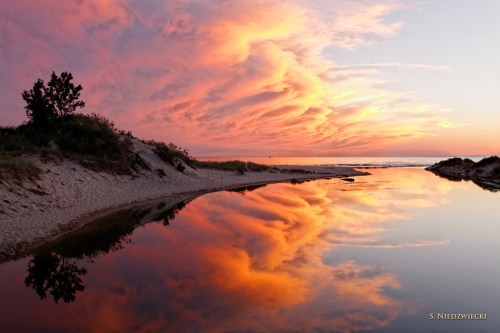
Hurricane Isaac’s northern push as see at sunset at Ludington State Park (or see the DNR site). I know this is twice in a week for Stacy, but I guess that’s just how it is sometimes.

Check this out bigger and in her Most Interesting slideshow.

More Michigan weather on Michigan in Pictures.

Aboard the Friends Good Will

P5115272_4639

Untitled, photo by bvriesem

“We have met the enemy and they are ours: Two Ships, two brigs, one schooner and one sloop.”
~United States Commodore Oliver Perry

The sloop was Friends Good Will, captured by the British briefly. The story of the Friends Good Will begins:

Oliver Williams was born in Roxbury, Massachusetts, a village near Boston, in 1774. Undoubtedly, he grew up aware of, and hearing stories about, the birth of his young nation.

Oliver Williams later saw opportunity in the vast Northwest Territory. He opened a dry goods store in Detroit, Michigan Territory, in 1808. The inventory for his store, like nearly all finished goods, came from the east. He made two trips each year, overland. The trips were slow and the resources he expended were never anything more than a continuing drain against whatever profits early businesses in the cash starved frontier would permit.

In 1810, Oliver Williams took a chance. The gamble was not particularly unusual for men of his nature. Men did not conduct business on the frontier without an entrepreneurial instinct. He decided to build a ship. The vessel would use the only “highway” available – Lake Erie; Buffalo to Detroit, non-stop, direct. His inventory would arrive faster, and in greater quantity, and while the vessel was a substantial capital outlay, she would sail for years and could earn money by shipping goods the length of each shipping season. Other vessels plying the Lakes were finding cargoes and the steady stream of settlers assured volumes of cargo and demand for the ship would only grow with each coming season.

Oliver Williams built his ship at the River Rouge, on the banks of the Detroit River. A private shipyard was laid out adjacent to the Federal yard, where the army transport snow Adams, the only government vessel on the upper Lakes, was built years before. Other ships sailed past while this new vessel took shape, the schooners Salina and Ellen and the sloop Contractor. The sight of each of them only encouraged Oliver Williams. His idea had merit; his gamble would pay.

The new ship slid down the ways, in early 1811. He christened her Friends Good Will. While no one knows for certain the origin of the name, a coincidence seems too obvious to ignore. The name may well have been in honor of an earlier Friends Good Will, which transported the first wave of Irish immigrants from Larne to Boston in 1717. It is likely Oliver Williams knew her story and borrowed her name. His vessel, he likely hoped, would also bring waves of settlers to a new land of opportunity ­ the Michigan Territory.

Read on for much more of the story of the remarkable story of the Friends Good Will including her capture by the British and subsequent adventures. See a video right here and definitely visit the Michigan Maritime Museum, online and when you’re South Haven for much more of Michigan’s maritime history.

Check this out background big and take a trip in Bill’s May 2012 Aboard the Friends Good Will slideshow.

Hot Air Balloon Ride over Grand Traverse Bay

Hot Air Balloon Ride-19

Hot Air Balloon Ride-19, photo by alioops1956

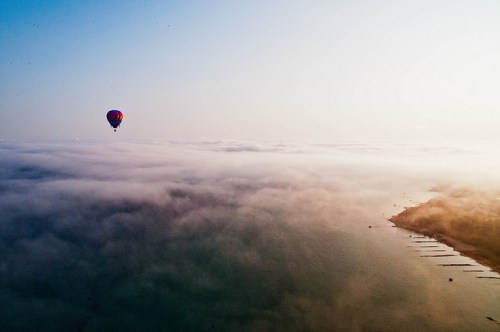
Here’s a great set of photos from a misty hot air balloon ride over Grand Traverse Bay. Check it out background bigtacular and in Alison’s Hot Air Balloon Ride slideshow.

I’m pretty sure this is a balloon from Grand Traverse Balloon.

Great Lakes Warriors follows tug boat captains in winter

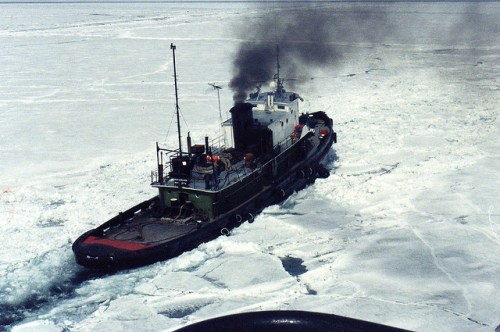
Tug John Selvick in Bay Ship Canal

Tug John Selvick in Bay Ship Canal, photo by boatnerd06

The Great Lakes Echo tipped me off to the new History Channel series Great Lakes Warriors. The show follows five captains battling winter storms on the Great Lakes as they break up ice, tow barges into port and try to stay alive. The second episode airs at 10:00 PM on Thursday, and the History Channel will rebroadcast the first episode, “The Lethal Season,” at 11:00 PM tonight. You can also watch it online at the History Channel.

That episode features the tug above – The John M. Selvick captained by John Selvick. Check it out background big and in Nathan’s massive Family Collections slideshow.

More boats on Michigan in Pictures.

On the lookout for rain

Big Red

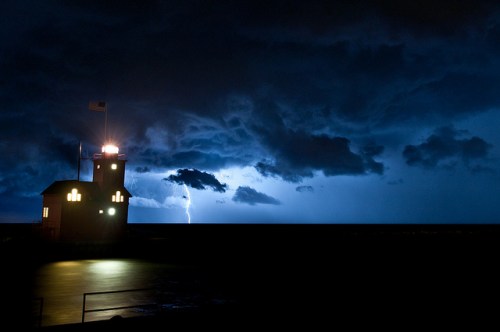
Big Red, photo by [DennisT]

Bloomberg is reporting that the Midwest drought is now affecting nearly 80% of the corn crop, over half of the US and is a factor in heat waves that have set or tied a whopping 6,639 daily high temperature records since June 1. The drought is already affecting southern and west Michigan and parts of the UP and appears likely to expand into northern Michigan as well.

This Detroit News article reports that the percentage of the state affected by severe drought has jumped to 21% from just 2% a week ago. The State Drought Monitor shows the level of drought severity in Michigan, and you can see more with the Midwest region map and the Michigan Interactive Drought Conditions map. This report on Yahoo lists some of the highlights (lowlights?) of Michigan’s 2012 drought:

  • Rainfall shortages since May 1 are up to six inches in some areas. The average rainfall at this time of year is eight to nine inches.
  • Last week, the Michigan State University Extension (of the Department of Geology) reported that across Michigan, particularly in the southwestern part of the state, there was evidence of plant water stress.
  • MSU Extension says that the extreme heat from the first week of July exacerbated crop concerns. Temperatures rose to high 90s and topped 100 degrees in some areas.
  • The Michigan DEQ has issued several ozone alerts already this year. Michigan cities of Ann Arbor, Detroit, Ludington and Benton Harbor have been under air quality alert for 14-15 days since late May. Grand Rapids, Mich., has been under ozone alert for 17 days.
  • MSU Extension says the intense drought across Michigan’s southern, central and eastern Corn Belt region has similar conditions to the great drought of 1988.
  • …and the bad news: Continued dryness in Michigan is predicted for the rest of July, says the National Oceanic and Atmospheric Administration’s Climate Prediction Center.

Check out this great capture from the other day on black and in Dennis’s thunderstorm slideshow.

More about Holland’s Big Red Lighthouse on Michigan in Pictures.

Real-time Great Lakes Surface Currents

Get Up - Stand Up

Get Up – Stand Up, photo by Rudy Malmquist

The Great Lakes Echo highlighted a really cool realtime map of Great Lakes surface currents that can really help keep you safe whether you’re swimming, boating, surfing or stand-up paddleboarding. It might even help you find a fish or two!

Check this out background bigtacular and in Rudy’s water slideshow.

Snapper

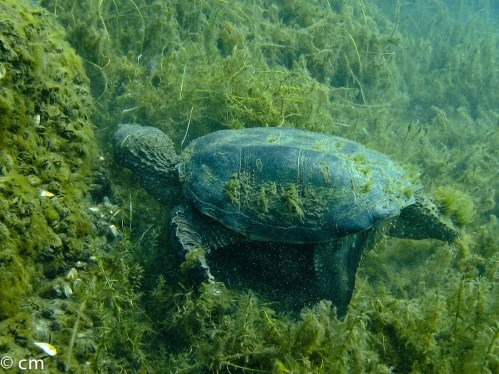
Snapping Turtle, photo by Michigan Free Diving

Christopher Morey got a couple of nice shots of this snapping turtle – be sure to check out his slideshow of diving photos!

The Michigan DNR notes that while snappers are dangerous if molested on land, they are less likely to bite under water. Read more snapping turtles on Michigan in Pictures!