Evening clouds after rain

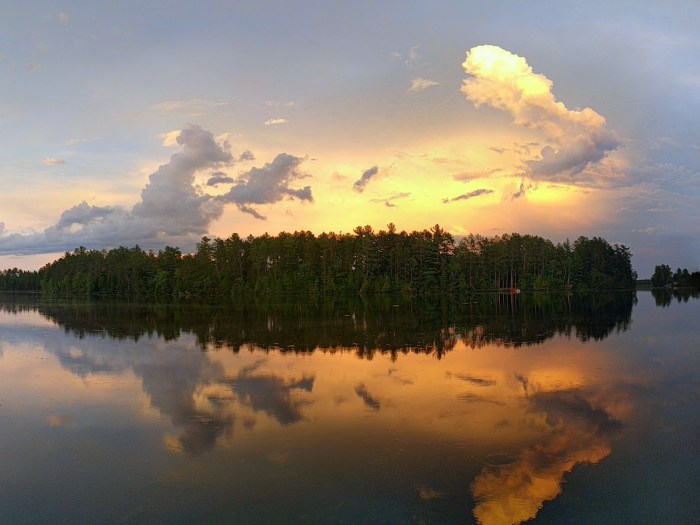
Evening Clouds After Rain

Evening clouds after rain, photo by Anne Fisher

Ann says she never tires of Bass Lake in the Upper Peninsula near Gwinn. I can see why! View her photo background big and see more in her 2016 UP slideshow.

More summer wallpaper on Michigan in Pictures and here’s a link to a map of Bass Lake.


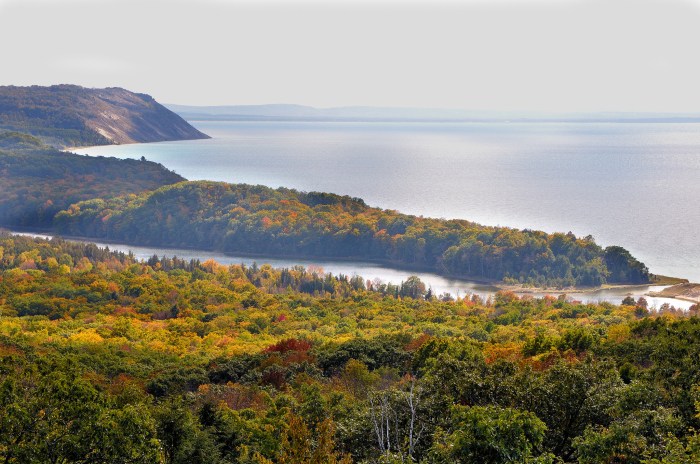
North Bar Lake in Sleeping Bear Dunes

North Bar Lake Sleeping Bear Dunes

North Bar Lake, Sleeping Bear Dunes, photo by jdehmel

The Sleeping Bear Dunes National Lakeshore pages on North Bar Lake and the North Bar Lake Overlook say (in part):

The small lake below is North Bar Lake. The name describes how the lake formed: it is ponded behind a sand bar. At times, the sand bar builds up and separates North Bar Lake from Lake Michigan. At other times, a small connecting channel exists between the two lakes. North Bar Lake occupies part of a former bay on Lake Michigan. This ancient bay was flanked by headlands on both sides: Empire Bluffs on the south and Sleeping Bear Bluffs on the north. Shorelines have a natural tendency to become straighter with time. Wave action focuses on the headlands and wears them back, while shoreline currents carry sediment to the quiet bays and fill them in. Deeper parts of the bay are often left as lakes when sand fills in the shallower parts. The same process that formed North Bar Lake also formed many of the other lakes in northern Michigan: Glen, Crystal, Elk and Torch Lakes, for example.

…North Bar Lake is one of the most popular beaches in the Lakeshore because it has shallow, clear water over a sandy bottom makes for warmer swim than in Lake Michigan. But for those who like the refreshing cool water and wave action of the big lake, you can walk across the low dunes that separate the two lakes in just a couple of minutes. The beaches of pure sand and the small outlet to Lake Michigan is ideal for the kids to play.

View jdehmel’s photo background bigilicious and see more in his Sleeping Bear Dunes slideshow.

More dunes and more summer wallpaper on Michigan in Pictures.

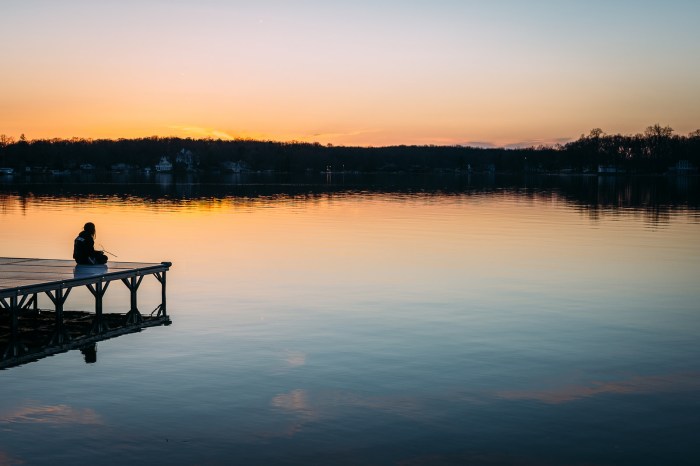
Sailor’s Delight on Crispell Lake

Sailors Delight

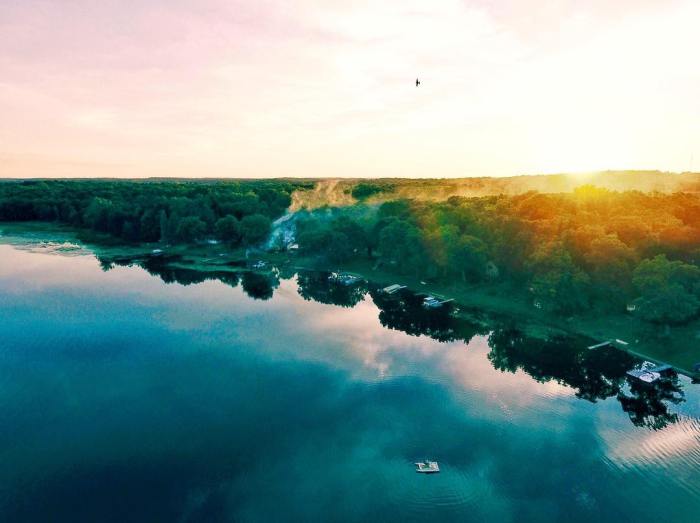
Sailor’s Delight, photo by Maury Page

Maury shares:

This photo was taken at Crispell Lake in Clarklake, MI on a calm, summer evening. I couldn’t capture the sun rays from where I was standing, so it seemed like a perfect opportunity to get out my new drone. There were only a couple boats on the lake and it was a nice quiet night. When I was capturing this scene it just so happened that a bird flew into the frame at the perfect moment.

Regarding Crispell Lake, Lake Link says:

Crispell Lake is located in Jackson County, Michigan. This lake is 82 acres in size. It is approximately 25 feet deep at its deepest point. Anglers can expect to catch a variety of fish including Black Crappie, Bluegill, Brown Trout, Grass Pickerel, Largemouth Bass, Sunfish, Walleye and Yellow Perch.

View Maury’s photo bigger,  check out more on his Instagram at mopage19 and also on his website.

More lakes on Michigan in Pictures.

Make your own rainbow

Otherside of the Tail

Otherside of the Tail, photo by John Rothwell

Be thou the rainbow in the storms of life.
The evening beam that smiles the clouds away,
and tints tomorrow with prophetic ray.
-Lord Byron

View John’s photo background bigilicious and see more in his slideshow.

More summer wallpaper on Michigan in Pictures.

Summer White-tail

Summer Whitetail by Arnie Bracy

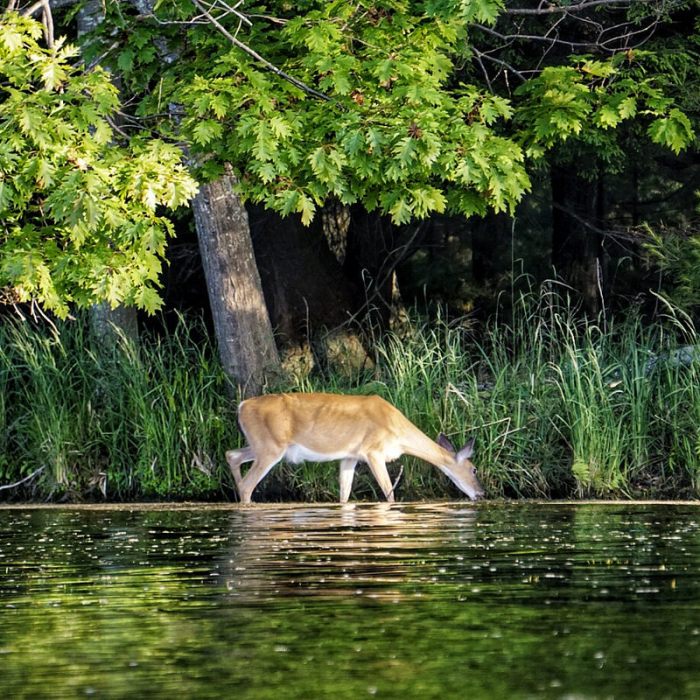
Summer Whitetail, photo by Arnie Bracy

Arnie quietly paddled his kayak closer to get this awesome shot of our state animal, the White-tailed deer on the shore of Hamlin Lake. View it bigger and see more in his Summer slideshow.

More white-tailed deer on Michigan in Pictures including this cool pic of a white-tail grabbing a drink in the fall.

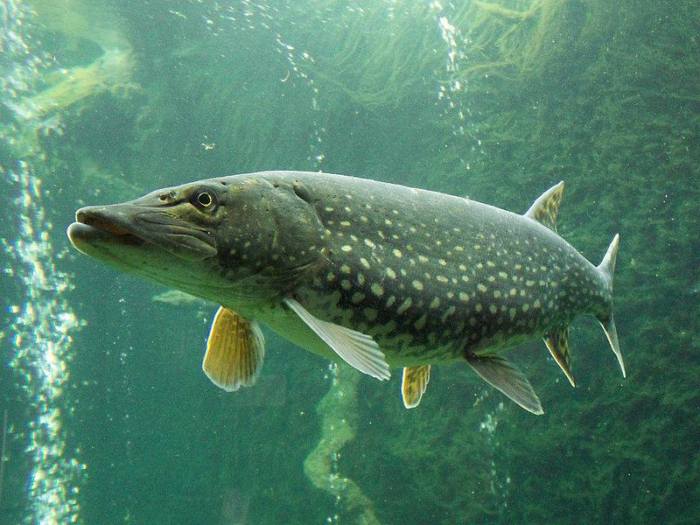
Know Your Michigan Fish: Northern Pike (Esox lucius)

Michigan Northern Pike Esox lucius

Northern Pike (Esox lucius), photo by Isle Royale National Park

The Michigan DNR’s Northern Pike page has this to say about this apex predator of the Great Lakes and Michigan’s inland lakes:

As predators, northern pike can have significant impact on their prey species. As with muskies, pike lurk in the cover of vegetation in the lake’s clear, shallow, warm waters near shore, although they retreat somewhat deeper in midsummer. Pike consume large numbers of smaller fish – about 90 percent of their diet – but seem willing to supplement their diet with any living creature their huge jaws can surround, including frogs, crayfish, waterfowl, rodents, and other small mammals. Their preferred food size is approximately one third to one half the size of the pike itself.

Great Lakes pike spawn in the shallows in April or May, right after the ice leaves, and before muskies reproduce. As a result of their eating habits, young pike grow rapidly in both length and weight. Females become sexually mature at age three or four years, and males at two to three years. Beyond sexual maturity, pike continue to gain weight, although more slowly. Great Lakes pike have an average life span of 10 to 12 years.

Pike eggs and new hatchlings (which stay inactive, attached to vegetation for their first few days of life) fall prey in large numbers to larger pike, perch, minnows, waterfowl, water mammals, and even some insects. Larger pike have two primary enemies – lampreys, and man. Spawning adult northern pike, exposing themselves recklessly in the shallows, are vulnerable to bears, dogs, and other large carnivores.

Northern pike flesh excels in flavor, thus making them a doubly rewarding game fish. Since their skin has heavy pigmentation and an unappetizing mucous coating, most people skin them or scale them carefully.

This photo was one of Isle Royale National Park’s “Wildlife Wonders of the Week.” They noted that a five pound female pike will lay about 60,000 eggs. Two weeks later fertilized eggs hatch, hungry for microscopic morsels. Once to the fingerling stage, food scarcity may force them to eat their own siblings for nourishment.

View it bigger on Facebook and definitely follow their page for the latest from one of Michigan’s coolest parks!

More Michigan fish on Michigan in Pictures.

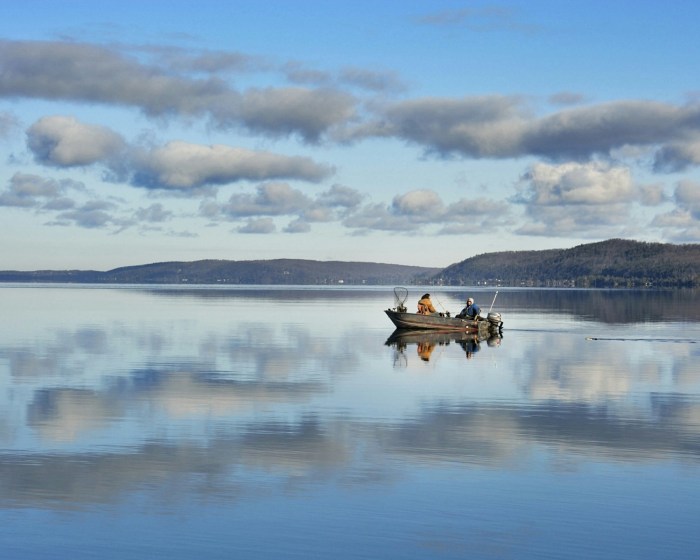
Fishermen on Crystal Lake

Fishermen by Noah Sorenson

Fishermen, photo by Noah Sorenson

Noah took this on Crystal Lake a month ago. Back when it was Spring and not Winter II.

View his photo background bigtacular and see more in his slideshow.

More spring wallpaper on Michigan in Pictures.

Anticipation

Anticipation

Anticipation, photo by Doug Jonas

Who’s looking forward to summer. Anyone?

View Doug’s photo background bigtacular and see more of his spring photos.

Without a doubt warmer

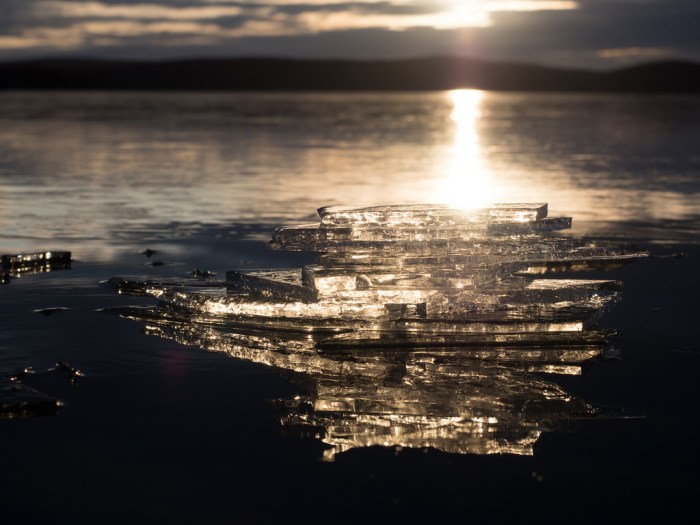
Fancy Anvil

Fancy Anvil, photo by Liz Glass

Every time I talk about things that some find political, there are readers who get uncomfortable/upset. I’m OK with that, especially in regards to today’s subject which I personally feel has moved beyond the realm of opinion and into fact. Your mileage may vary. 

One thing that struck me is that it doesn’t really matter what is causing the warming temperatures – we know that dumping carbon into the atmosphere increases the temperature, so we know how to combat it.

NASA’s Earth Observatory reported that February 2016 was the warmest month in 136 years of modern temperature records in that it deviated more from normal than any month on record since reliable, global records began in 1880. For what this means, let’s turn to Mashable for the implications of this fiery February:

The 1.35-degree Celsius temperature anomaly in February beat the anomaly recorded in January, which itself was a record high departure from average for any month. This means that temperatures in February 2016 had the largest departure from average of any month in NASA’s records since 1880. To put it more plainly, February stands out for its unusual heat more than any other month in the modern climate record.

…As Penn State climate scientist Michael Mann has pointed out via social media, the NASA February temperature findings are especially significant when compared to preindustrial temperatures. Before humans began pumping carbon dioxide into the air from burning fossil fuels like coal and oil, global average surface temperatures were far cooler.

When compared to those conditions, Mann says, February was probably about 2 degrees Celsius, or 3.6 degrees Fahrenheit, above the preindustrial average for the globe.

You can read on for lots more … or not.

View Liz’s photo bigger and see more in her 500+ Views slideshow.

PS: Apologies to Liz for once again using her photo in a possibly controversial post. She’s the owner of Lake Street Market in Boyne City and (as far as I know) not at all controversial! ;)

Five Things you need to know about Michigan: March Meltdown Edition

Grove

Grove, photo by Liz Glass

On my Absolute Michigan website, I have a favorite feature called Five Things you need to know about Michigan.  

1Please go out and vote in the Michigan primaries today. I am going to vote for Bernie Sanders because I feel that in Michigan and elsewhere working folks, retirees, students, and many more who have ended up on the short end of a globalizing, transforming world are hurting. It seems to me that many of those we have elected to represent us have forgotten that government can be a powerful force for the betterment of society and that when profits come at the expense of others, we all suffer. Please vote for whoever you want to, and I’d love it if you took some time today to remember that you are a part of your government.

2Wow. I had the chance to drive across Michigan yesterday, windows down, basking in near 60 degree temperatures and knowing that spring is on the way. Here’s hoping that the mercury stays moderate and our farmers, orchardists & vintners have a great growing season.

 

3Liz Glass took today’s photo. You can visit her at the Lake Street Market in Boyne City.  She shared today’s photo back in 2012 in the Absolute Michigan pool (where I get most of the photos for Michigan in Pictures). Liz wrote:

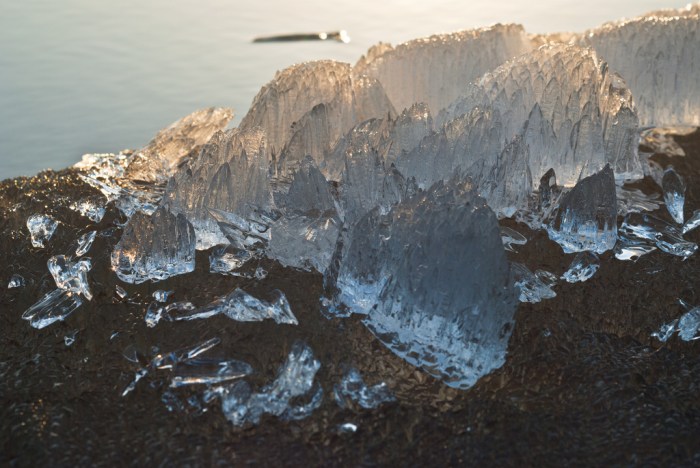
I’ve been saving some ice shots to sprinkle in during the warmer months. This is from March 15, when the ice on Lake Charlevoix had melted into a pack of splinters that could then be pushed into piles by the moving water. The color here is real. The low sun is bouncing the golden brown of the sandy lake bottom up through the ice mound, and the looser shards on top are picking up the shimmering silvers and blues of the water and sky.

View her photo bigger and see more in her crazy-awesome Ice slideshow.

4If you have a problem with me being myself, please consider not telling me to “stick to the photos” and instead follow another blog/person/path that doesn’t bother you. I love Michigan, I love Michigan in Pictures, but I am an actual person who believes as I believe and does what I do. I will continue to do this, and telling me not to will just upset us both.

5Congratulations! By making it to here, you can send me an idea for something about Michigan to feature. I can’t promise that I will be able to, but I can promise you that I will try and reply in any case. Just email me or post a comment below.

support Michigan in Pictures