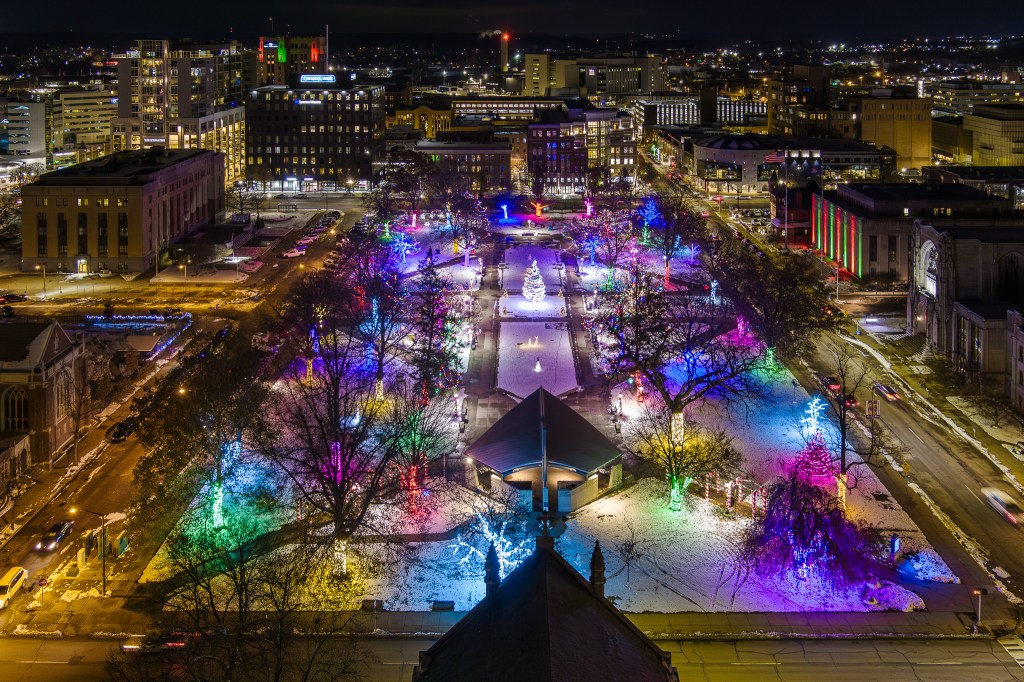
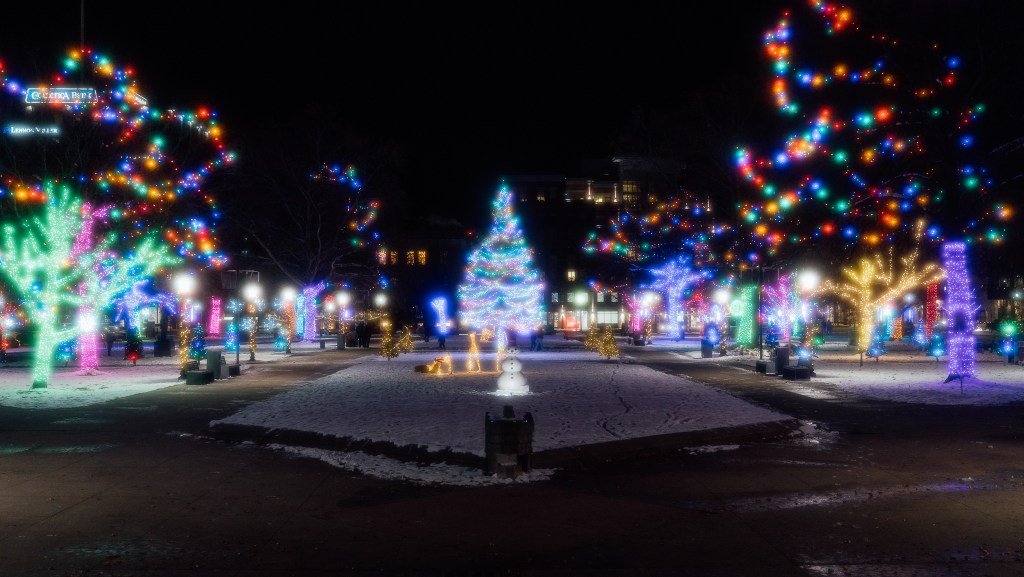
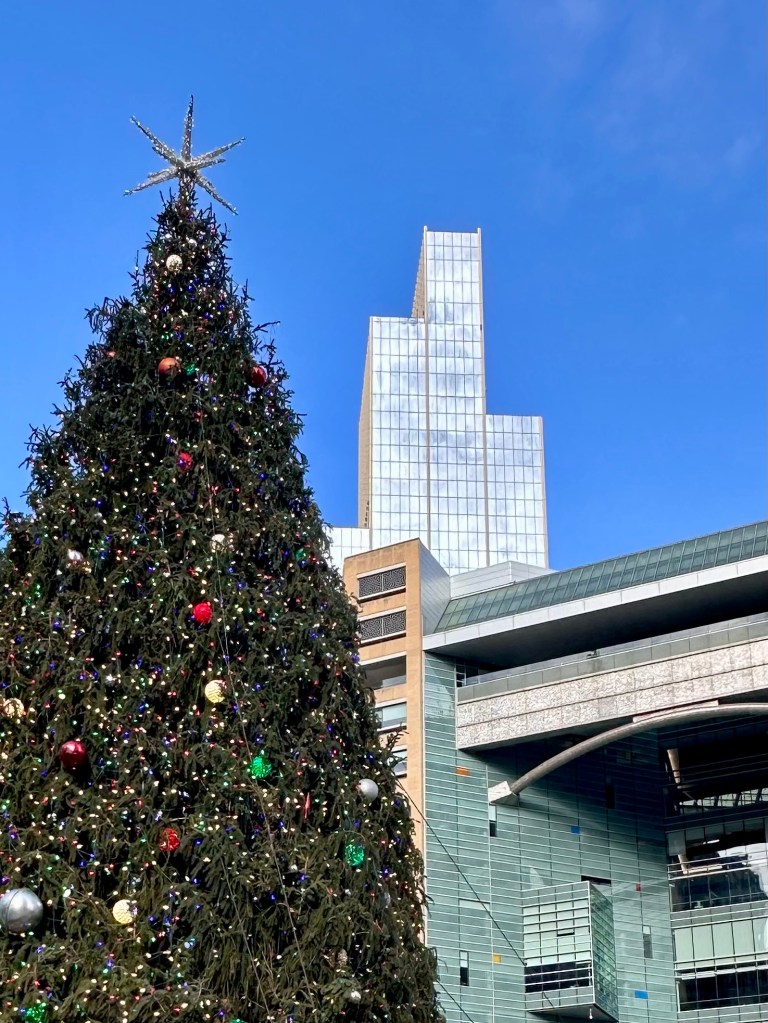
I’ve been seeing photos from all across Michigan of communities lighting up for the holidays, and for my money Kalamazoo’s Bronson Park nailed it this year!
Happy Black Friday! It’s an especially happy one for many since for the first time in eight years, we aren’t mourning a Lions Thanksgiving loss!! Yesterday Detroit also hosted another successful Thanksgiving Day Parade on Woodward Avenue (click for some video highlights) which got me thinking about the roots of this holiday tradition.
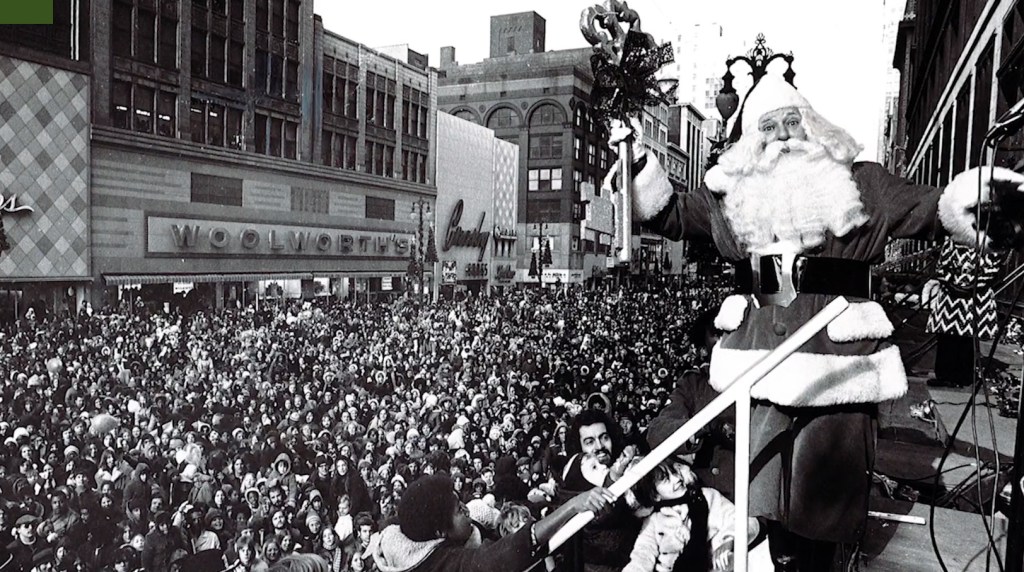
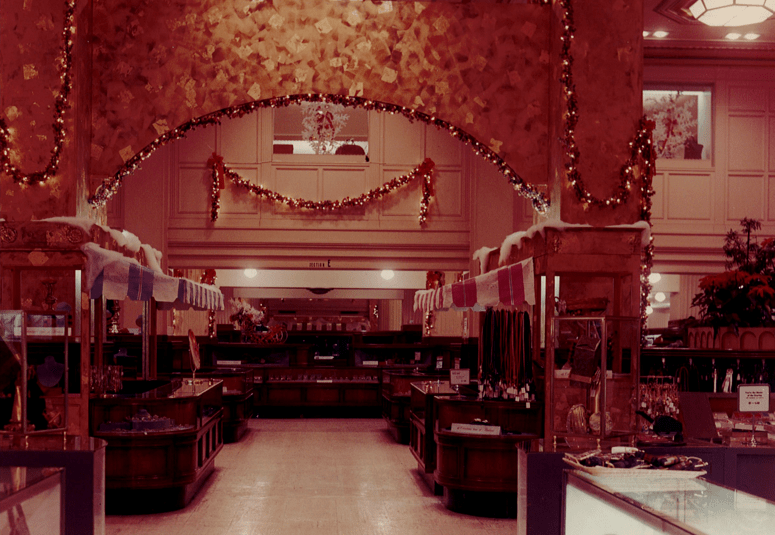
Thanksgiving parades were created in the early 20th Century by big department store chains to signal consumers that it was time to start thinking about Christmas shopping. The Holidays at Hudson’s video on Detroit PBS explains that the Motor City was no exception. Hudson’s Department Store provided the staff, resources to help launch the annual parade in 1924. A century later, the Parade remains one of the largest in the country.
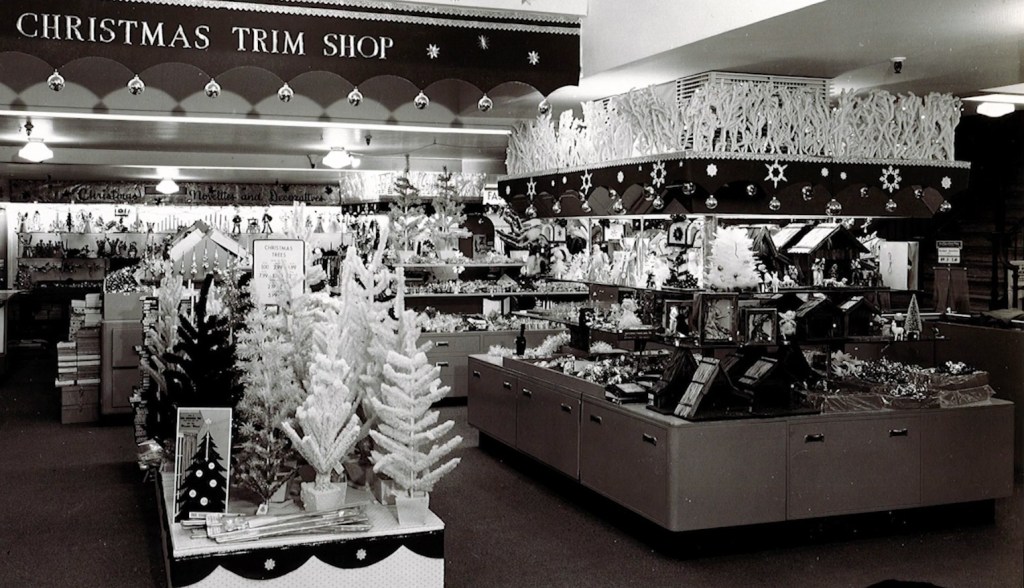
While you have to donate to view the whole video, the trailer for Holidays at Hudson’s has some great pics & info. One cool fact is that at its apex when a quarter of a million children a year would visit Santa every year at Hudson’s, they were one of the first stores in the country to offer a choice of Caucasian, Black, Hispanic or other Santas. I’ve got a some old pics, a couple parade photos & a video of the Big Heads below!
Hudson’s Float in front of the new Hudson’s by Andrew McFarlane
Happy Thanksgiving everyone! Dusting off this feature from 13 years ago (wow!) to help set the table for tomorrow.
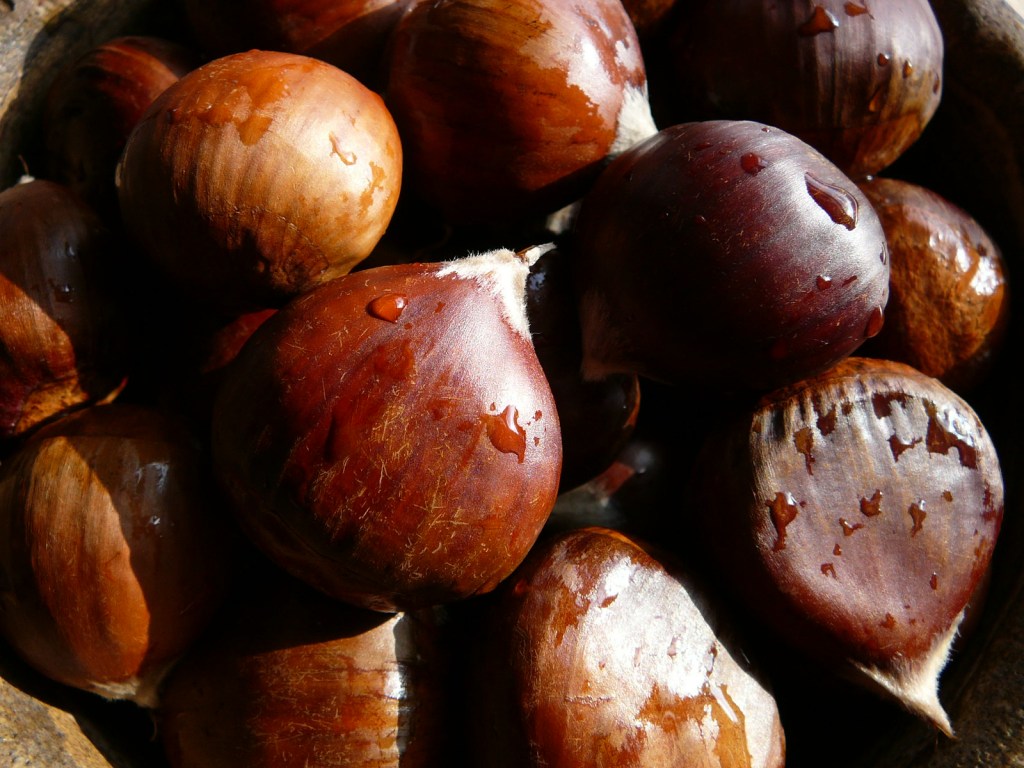
Wikipedia’s entry for the American Chestnut (Castanea dentata) explains that this large, deciduous tree of the beech family was once one of the eastern United States dominant hardwoods before it was nearly wiped out by chestnut blight. Curiously enough, one of the few pockets to survive were some 600 to 800 large trees in northern lower Michigan. Chestnut Growers, Inc. is a 37 member cooperative based in Michigan explain the difference between edible sweet chestnuts & non-edible horse chestnuts (the spiky ones with the burrs) & offer preparation tips & cooking instructions:
In Europe, chestnuts are consumed in a wide variety of dishes, from soups, stews, and stuffing to fancy deserts. Matter of fact, chestnut flour is the secret to many of the fancy French pastries. In other parts of the world, such as China, the chestnut is a staple food in the peoples’ diet. Chestnuts have about half the calories of other nuts and have the lowest fat content of all the main edible nuts. Chestnuts have only four to five percent fat as compared to sixty-two percent for the hazelnut and seventy-one percent for the pecan. In composition and food value, the chestnut, with its high carbohydrate content of about seventy-eight percent, is more akin to cereal grains, such as wheat, than to nuts with a low carbohydrate content. Since chestnuts are starchy rather than oily, they are readily digestible when roasted or boiled.
Read on for more and suggestions on cooking. They take orders for fresh chestnuts and ship beginning in October, and are at farm markets through the fall.
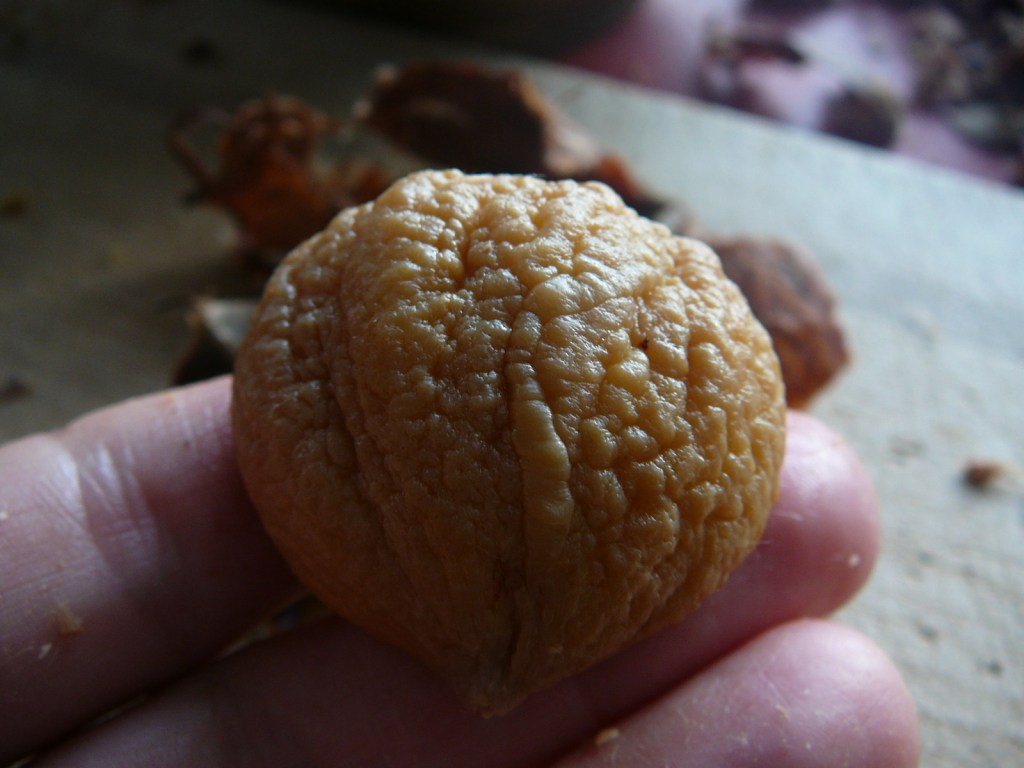
Julie bought these Michigan-grown beauties at Zingerman’s deli in Ann Arbor. Check them out background bigalicious and see more in Julie’s Food gallery on Flickr where she shares some preparation photos & the finished product!
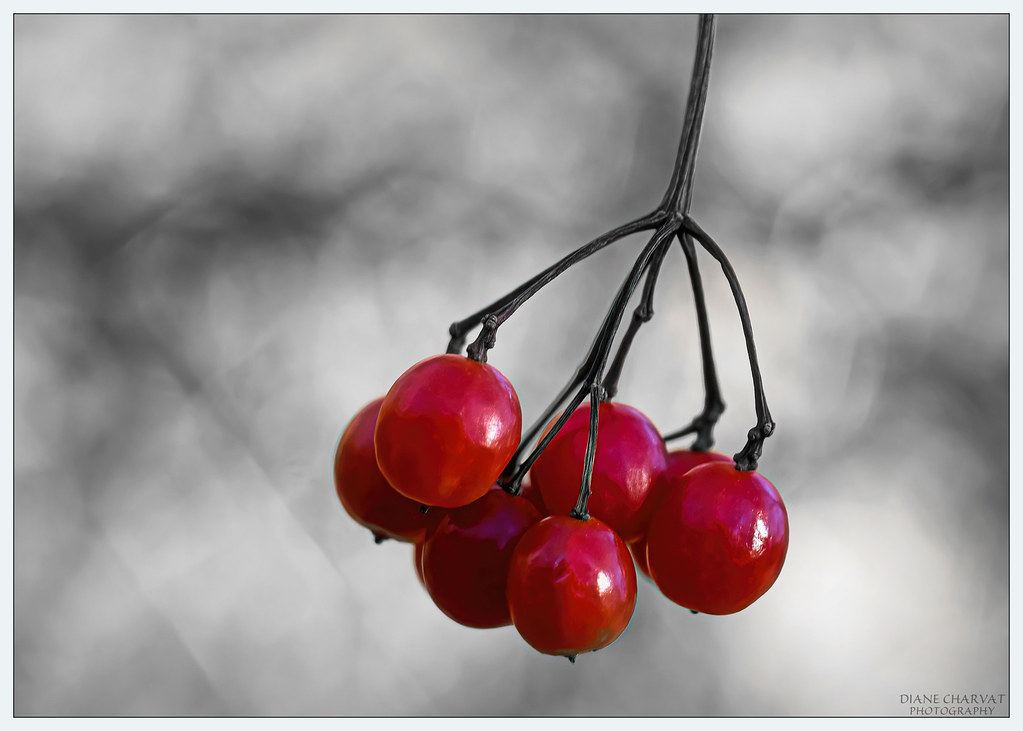
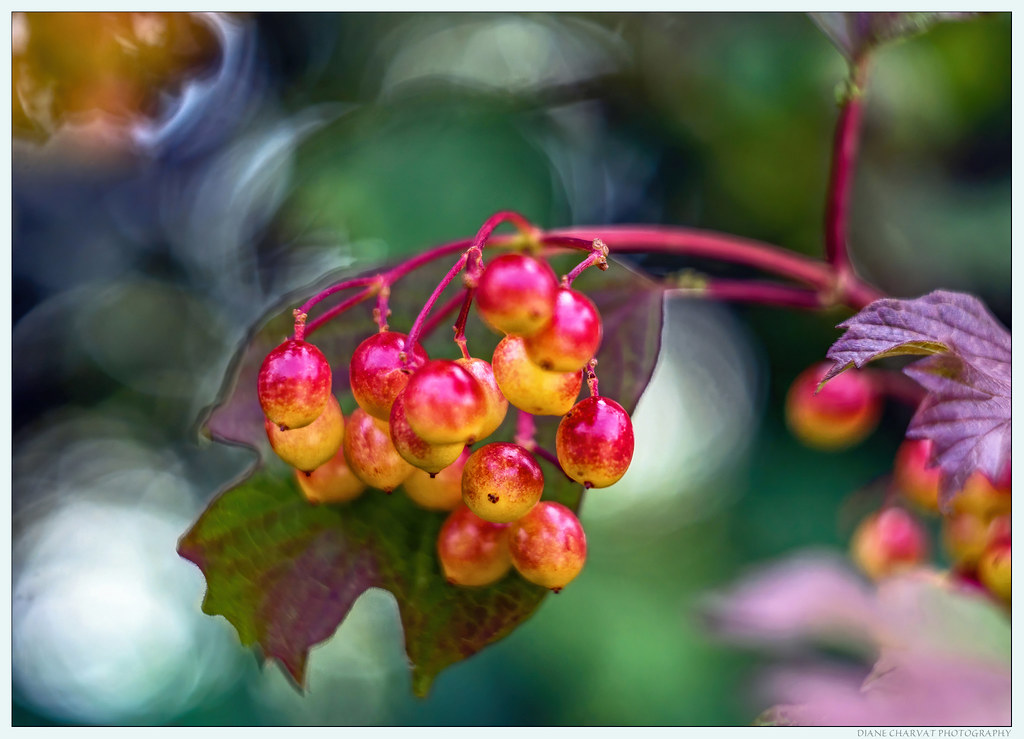
Another Thanksgiving staple that Michigan produces are cranberries, which are one of just a few fruits native to North America. While we do have about 300 acres of cranberries, there is another “cranberry” that the cranberry people want to make perfectly clear is not an actual cranberry. Green Deane’s Eat the Weeds blog has a great article on the High Bush Cranberry that says (in part):
The High Bush Cranberry is actually a Viburnum (Viburnum trilobum) and a cousin of the elderberry. Both are in the greater Honeysuckle Family and have a characteristic musky odor. That family by the way straddles the edibility line, with some members edible and others not, some tasty and some not. As one might suspect by the name, the High Bush Cranberry has tart fruit. Bradford Angier, a well-known Canada-based forager along side Euell Gibbons, wrote they require a “conditioned palate” to appreciate.
In North America the High Bush Cranberry is found in Canada and the northern half of the United States plus, oddly, New Mexico. It is not as that friendly to wildlife as one might suspect. The fruit persists into the winter because they are not on the top of birds’ preferred food. Birds like the berries after they soften and ferment. White-Tailed deer also browse on the twigs and leaves. For humans the berries are high in Vitamin C, about 30 milligrams per 100 grams.Viburnum trilobum has several disputed botanical names and several mistaken common names including Pimbina, Mooseberry, Cranberry Tree, Cranberry Bush, American Cranberry, and Squashberry.
Read on for lots more including identification tips. They do say that Highbush cranberries taste better when harvested after the first frost so please let me know if you try them! You can also buy Highbush cranberry bushes from your local Conservation District like Van Buren County. There’s much more Michigan Thanksgiving to feast on at Michigan in Pictures too!
Dian took the top photo in Greenville (just northeast of Grand Rapids) and the one below on the Betsie Valley Trail in Benzie County. See her latest pics on her Flickr!
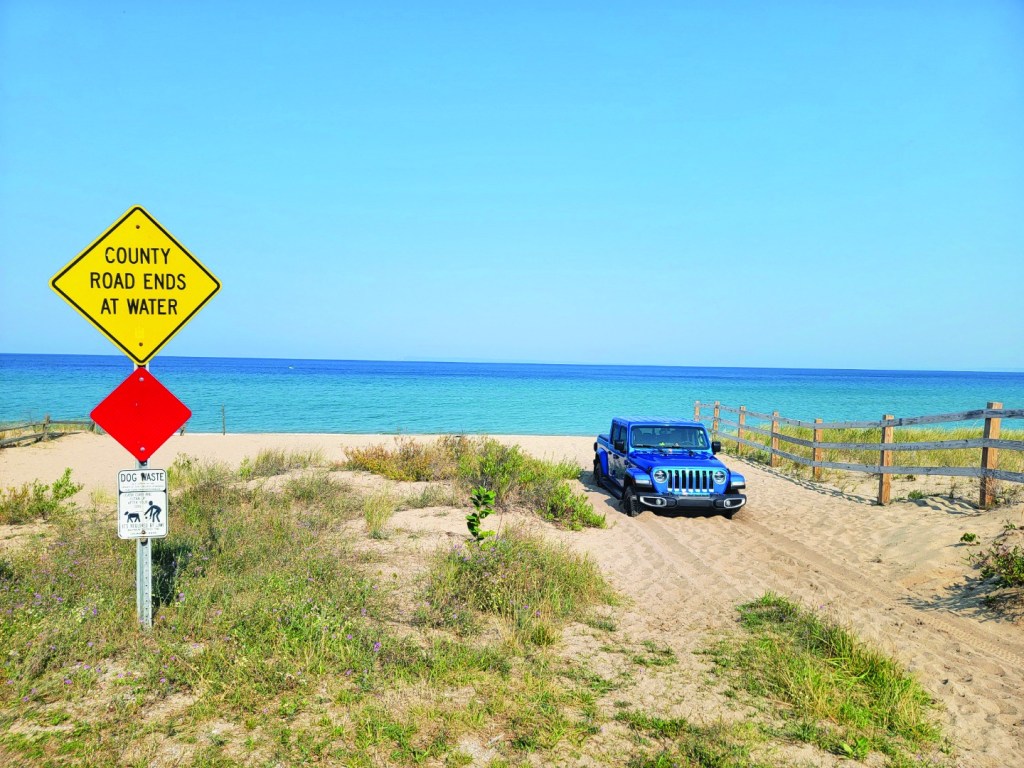
via Leelanau.com… The Glen Arbor Sun shared this photo a year ago, and I think it’s the perfect reminder for everyone to pay attention to your driving & traffic laws as we head into the Labor Day Weekend. Have fun and please don’t drink & drive – you simply don’t want to end up as a traffic statistic.
And yes, Jeep lovers, we know that you can deflate the tires to get out of a mess like this. The point is don’t break Federal law by driving on the beach in Sleeping Bear Dunes National Lakeshore or any of the other idiotic things that might seem like a good idea at the time!!
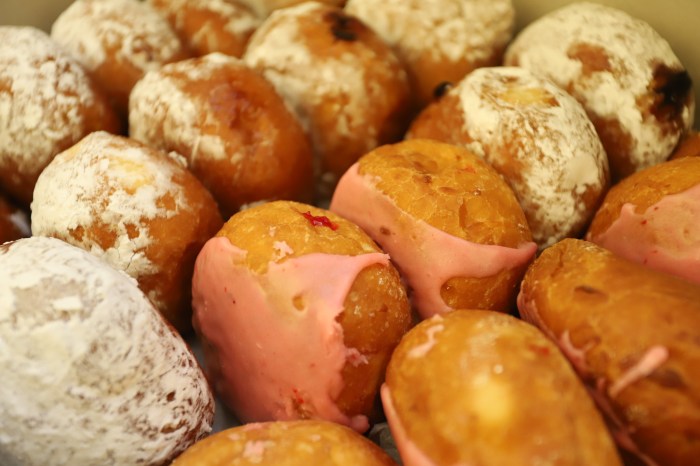
The making and indulging in paczki (pronounced “poonch-key”) dates back to the Middle Ages. During that time, people in Poland would make pastries to use up all of their lard, sugar, eggs and other decadent ingredients before beginning Lent (a period of 40 days where Christians cut out certain foods like sweets or dairy and avoid eating meat on Fridays). Back then, the rich pastries were filled with pork fat. The more modern versions are a lot sweeter, often filled with fruit jelly (commonly raspberry, apple or lemon) or custard and dusted in powdered sugar.
When Polish immigrants came to the United States—especially Midwestern cities like Detroit, Chicago, Green Bay and Cleveland—at the beginning of the 20th century, Paczki Day came with them. And it’s been celebrated here on Fat Tuesday ever since.
FYI, paczkis often clock in at over 1000 calories & 30 grams of fat so no, they are definitely not the best of health foods but a perfect Fat Tuesday treat!!
Corey took a picture of this nice assortment of Paczkis from Benny’s Bakery in Saline back in 2020 at the University of Michigan’s Ross School of Business library. Head over to Flickr for his latest which includes pics of Runyon, an adorable pup.
Gary took this stunning shot at Holland’s “Big Red” lighthouse on Valentine’s Day back in 2017. Head over to his Flickr for the latest & I hope that you all have a lovely week!








 Michigan in Pictures