Detroit has gone big before!

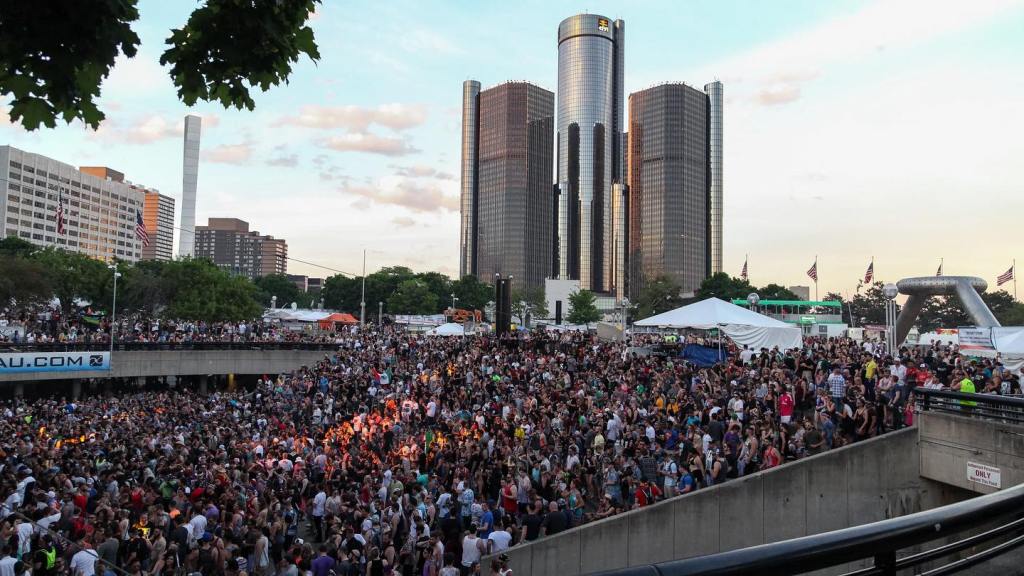
Detroit Electronic Music Festival, 2002 by Black Scroll Network

I’m still recovering from the MASSIVE event that was the 2024 NFL Draft in Detroit which hosted over 3/4 of a million people. There will be more posts, but I thought this post that Jamon Jordan of Black Scroll Network History & Tours shared on Facebook gives some great perspective on some of the massive events the Motor City has hosted over the years:

I’m sure everyone is aware that the crowds at the NFL Draft in Detroit are so large that no one else is being allowed into the 3 entry points. About 275,000 people are right here at, in or near Campus Martius, and Cadillac Square plus another 100,000 people in other venues downtown – Greektown, Hart Plaza, Grand Circus Park.

But Detroit has hosted large crowds before. Take a look at some of the large crowds – 100,000 or above – in Detroit’s history:

June 23, 1963 – Detroit Walk to Freedom – 125,000-250,000 people marched with Dr. Martin Luther King, Jr. & Rev. CL Franklin and heard Dr. King’s “Dream” 2 months before Washington DC.

August 19 – September 5, 1966 – Michigan State Fair – 1.2 Million people (our record attendance) The Temptations was one of the acts performing that year on Woodward between 7 & 8 Mile.

June 6, 1997 – Detroit Red Wings Stanley Cup Victory Parade – 1.4 Million people came down to celebrate with the Wings. And they threw an octopus on the streets too.

July 21, 2001 – 300th Birthday of Detroit/Free Stevie Wonder concert – 500,000-1 Million people listened to Stevie Wonder at Hart Plaza and watched the fireworks.

May 24-27, 2002 – Detroit Electronic Music Festival – 1.7 Million people. The Techno Festival surpassed a million people each of it’s 1st 3 years – 2000, 2001 & 2002 (2002 DEMF is pictured).

There are a TON more in the post on Facebook. You can follow Jamon on Instagram @jamonblackscrollhistorian & for sure check out Black Scroll Network for history tours of Motown!

Get ready for the Detroit Tigers Home Opener!

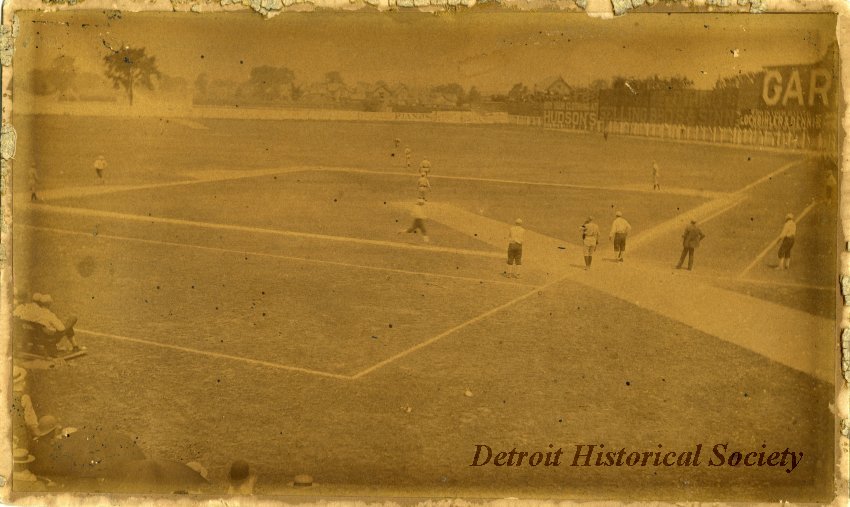
The Detroit Tigers first Opening Day courtesy Detroit Historical Society

The Detroit Historical Society shared: The Detroit Tiger’s Opening Day has always been cause for celebration!  While baseball’s return and renewed championship hopes are enough to excite sports fans, the promise of the long summer days baseball brings with it never fails to put the rest of the city in a celebratory mood.

The caption of the photo is: Photo: c. 1886, from the Detroit Historical Society collection. Black and white photographic print depicting the Detroit Wolverines playing at Recreation Park, as seen from behind home plate. Mounted on board.

Definitely our red hot Tigers being THE ONLY undefeated team in baseball & in first place in the AL Central has the city extra fired up for the home opener against the Gonna Be in Vegas Next Year A’s.

Read more & see pics including the shot of them building the bleachers at Bennet Park/Navin Field back in 1910 at the Detroit Historical Society & let’s go Tigers!!

Happy Birthday Diana Ross

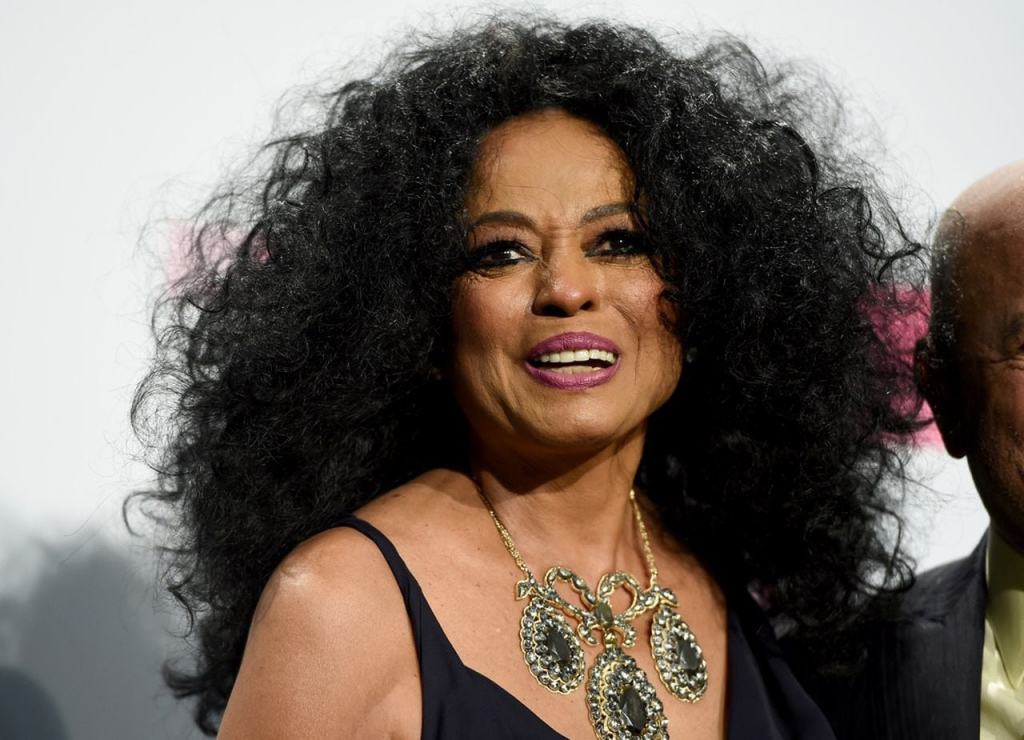
Diana Ross, 1976 photo by Motown Records & Diana Ross today by Diana Ross

Today is the birthday of Detroit-born singer, actress, record producer, and all around legend Diana Ross. The Black PR Wire Power news release in honor of her birthday says:

Born and raised in Detroit, Michigan, Ross rose to fame as the lead singer of the vocal group, The Supremes, who during the 1960s became Motown’s most successful act, and are the best-charting female group in US history, as well as one of the world’s best-selling girl groups of all time. The group released a record-setting twelve number one hit singles on the U.S. Billboard Hot 100, including “Where Did Our Love Go”, “Baby Love”, “Come See About Me”, “Stop! In the Name of Love”, “You Can’t Hurry Love”, “You Keep Me Hangin’ On”, “Love Child”, and “Someday We’ll Be Together”.

Following her departure from the Supremes in 1970, Ross released her eponymous debut solo album that same year, featuring the No. 1 Pop hit “Ain’t No Mountain High Enough.” She later released the album “Touch Me in the Morning” in 1973; its title track was her second solo No. 1 hit. She continued a successful solo career through the 1970s, which included hit albums like Mahogany and Diana Ross and their No. 1 hit singles, “Theme from Mahogany” and “Love Hangover”, respectively. Her 1980 album “Diana” produced another No. 1 single, “Upside Down”, as well as the international hit “I’m Coming Out.” Her final single with Motown during her initial run with the company achieved her sixth and final U.S. number one Pop hit, the duet “Endless Love” featuring Lionel Richie, whose solo career was launched with its success.

Ross has also ventured into acting, with a Golden Globe Award-winning and Academy Award–nominated performance in the film “Lady Sings the Blues” (1972); she recorded its soundtrack, which became a number one hit. She also starred in two other feature films, “Mahogany” (1975) and “The Wiz” (1978), later acting in the television films “Out of Darkness” (1994), for which she also was nominated for a Golden Globe Award, and Double Platinum (1999).

She is the only female artist to have number one singles as a solo artist; as the other half of a duet (Lionel Richie); as a member of a trio; and as an ensemble member (We are the World-USA for Africa). In 1976, Ross was named the “Female Entertainer of the Century” by Billboard magazine. In 1993, the Guinness Book of World Records declared her the most successful female music artist in history, due to her success in the United States and United Kingdom for having more hits than any female artist in the charts, with a career total of 70 hit singles with her work with the Supremes and as a solo artist. She had a top 10 UK hit in every one of the last five decades, and sang lead on a top 75 hit single at least once every year from 1964 to 1996 in the UK, a period of 33 consecutive years and a record for any performer.

In 1988, Ross was inducted to the Rock and Roll Hall of Fame as a member of the Supremes, alongside Mary Wilson and Florence Ballard. She was the recipient of the Kennedy Center Honors in 2007, the Grammy Lifetime Achievement Award in 2012, and the Presidential Medal of Freedom in 2016.

Visit the Motown Museum & DianaRoss.com for all kinds of info on this Detroit legend!

Michpics Rewind: Whitefish & Cranes edition

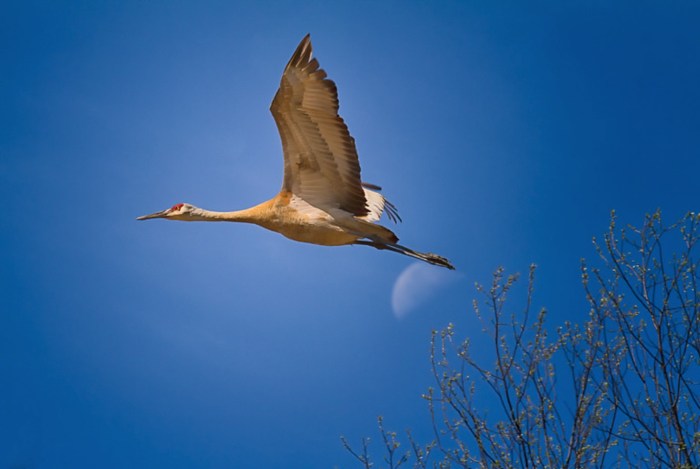
Over the Moon by Todd Bielby

Over the Moon by Todd Bielby

Here’s one of my favorite Native stories that I originally shared in back in 2013…

The 1896 book Myths and Legends of our Own Land by Charles M. Skinner relates a rather gruesome version of the tale of the origin of Whitefish:

An Indian who lived far in the north was so devoted to the chase that he was never at home for the whole of a day, to the sorrow of his two boys, who liked nothing so much as to sport with him and to be allowed to practise with his weapons. Their mother told them that on no account were they to speak to him of the young man who visited the lodge while their father was away, and it was not until they were well grown and knew what the duty of wives should be that they resolved to disobey her. The hunter struck the woman dead when he learned of her perfidy. So greatly did her spirit trouble them, however, that they could no longer abide in their old home in peace and comfort, and they left the country and journeyed southward until they came to the Sault Sainte Marie.

As they stood beside the falls a head came rolling toward them on the earth—the head of the dead woman. At that moment, too, a crane was seen riding on the surface of the water, whirling about in its strongest eddies, and when one of the boys called to it, “O Grandfather, we are persecuted by a spirit; take us across the falls,” the crane flew to them. “Cling to my back and do not touch my head,” it said to them, and landed them safely on the farther shore.

But now the head screamed, “Come, grandfather, and carry me over, for I have lost my children and am sorely distressed,” and the bird flew to her likewise. “Be careful not to touch my head,” it said. The head promised obedience, but succumbed to curiosity when half-way over and touched the bird’s head to see what was the matter with him. With a lurch the crane flung off his burden and it fell into the rapids. As it swept down, bumping against the rocks, the brains were pounded out and strewn over the water. “You were useless in life,” cried the crane. “You shall not be so in death. Become fish!” And the bits of brain changed to roe that presently hatched to a delicate white fish, the flesh whereof is esteemed by Indians of the lakes, and white men, likewise. The family pitched a lodge near the spot and took the crane as their totem or name-mark. Many of their descendants bear it to this day.

The version I read in one of my all-time favorite books, Lore of the Great Turtle : Indian Legends of Mackinac Retold by Dirk Gringhuis is pretty dark as well.

You can see more from Todd on his Flickr & view & purchase photos on his website.

Read lots more about Sandhill cranes on Michigan in Pictures

Support Michigan in Pictures with Patreon

Hartwick Pines donor honored

Hartwick Pines State Park by James Salinas

Hartwick Pines State Park by James Salinas

mLive shares that the woman whose donation created Hartwick Pines State Park has been honored by the Michigan Environmental Hall of Fame:

Nearly 100 years ago, a Grayling woman named Karen Hartwick bought and then donated to the state of Michigan an 8,000-acre parcel containing a rare and precious grove of pristine virgin pine trees.

The donation was significant for a woman acting alone at that time, but also considering that Hartwick’s father had made his fortune from the logging boom that had leveled much of Michigan’s ancient forests.

…Hartwick’s vision gave Michigan its beloved Hartwick Pines State Park, and it’s continued to keep that land safe in the century that has followed. As recently as a decade ago, the original “spirit and intent” of Hartwick’s donation was invoked as reason for the state to drop the land from an auction that would have allowed drilling exploration underneath those prized old-growth pines.

Lots more at mLive, visit the Environmental Hall of Fame & learn more about Hartwick Pines on Michigan in Pictures.

James took this photo way back in 2010. You can see more in his Hartwick Pines State Park gallery on Flickr.

Support Michigan in Pictures with Patreon

Sand Point Lighthouse

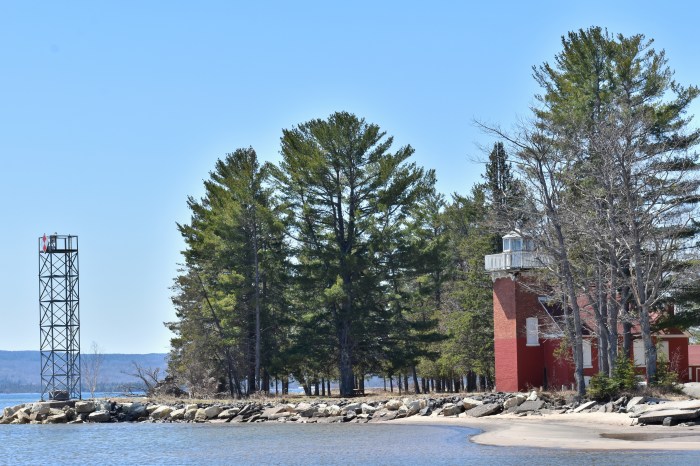
Tip of Sand Point by Mike Sherman

Tip of Sand Point by Mike Sherman

WHOOPS! This is Sand Point Lighthouse on Lake Superior

Head over to Mike’s Flickr and his Facebook page for his latest.

Support Michigan in Pictures with Patreon

#TBT Looking Down from Fort Mackinac

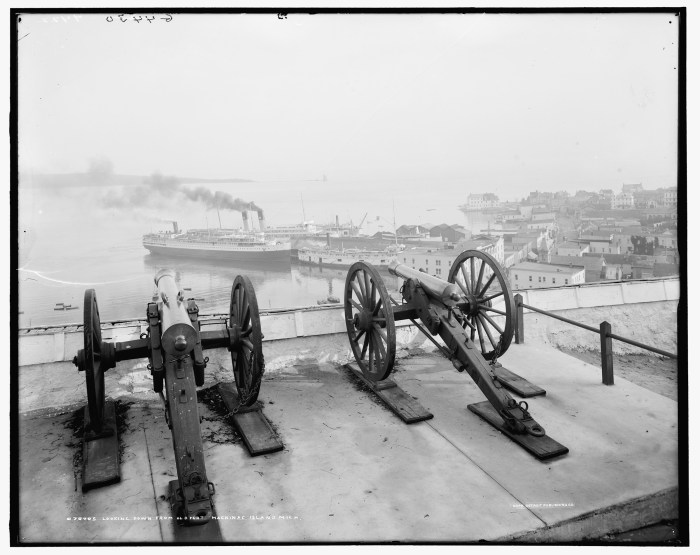
Looking Down from Old Fort Mackinac

Looking down from old fort, Mackinac Island, Mich by Detroit Publishing Co

This cool old photo from the Library of Congress shows ships at dock on Mackinac Island, including the black hulled steamer Juniata. Head over to the LOC for a lot more from Mackinac. 

Support Michigan in Pictures with Patreon

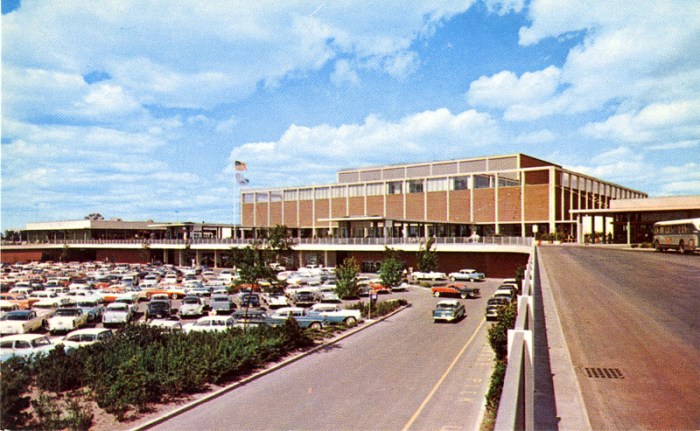
March 22, 1954: The Birth of the Mall

Northland Shopping Mall Southfield MI by William L Bird

Northland Shopping Mall Southfield MI by William L Bird

The Detroit Historical Society’s Encyclopedia of Detroit tells the story of the Northland Shopping Center in Southfield, potentially the world’s first mall:

Northland Center, located in Southfield, Michigan was the world’s largest shopping center, and first regional shopping center, when it opened on March 22, 1954. For many, its construction heralded the beginning of the end for downtown Detroit’s shopping district, and the beginning of suburban shopping malls.

Designed by architect Victor Gruen and constructed at a cost of $25 million, Northland Center’s opening, widely publicized in the national media, was said to signal the future of shopping in postwar America. The Center had a Hudson’s department store as its anchor with, at time of opening, an additional 80 spaces for tenants, all surrounded by an 8,344-space parking lot. Northland Center also featured a bank, post office, auditoriums, artwork, fountains and extensive landscaping, design features that were soon incorporated by other developers across the country.

The artwork included six sculptures commissioned by Hudson’s, perhaps the most well-known being Marshall Fredericks’ Boy and the Bear. Among other commissioned works were Moby Dick by Joseph Anthony McDonnell, and Lily Saarinen’s water sculpture/fountain, Noah.

In 1975, Northland Center was enclosed as a mall, and a food court was added to the complex in 1991. Despite these additions, Northland suffered a natural decline as it aged. Throughout the 1980s and 1990s, major tenants vacated their operations, as did several of the anchor stores. The volume of shoppers dropped from its peak of 18 million annually to half of that. The property had various owners until the last in 2014 who defaulted on his mortgage.

Read on for more. 

William shared this photo from the Hiawatha Postcard Co of Ypsilanti. You can see more in his awesome Northland Shopping Mall gallery on Flickr.

Support Michigan in Pictures with Patreon

March 3, 2022: Happy Birthday, Mackinac Parks!

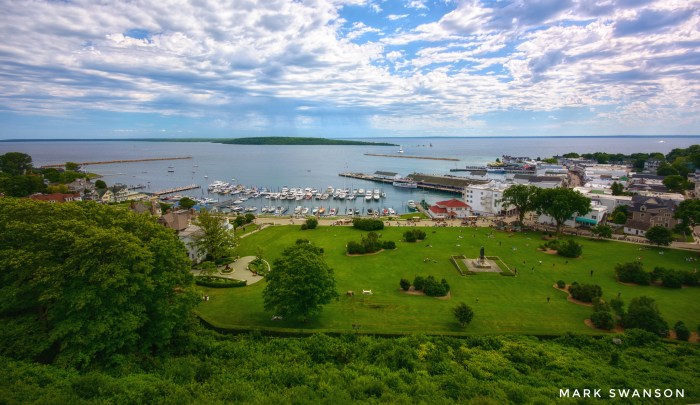
Beautiful Mackinac Island by Mark Swanson

Beautiful Mackinac Island by Mark Swanson

“Mackinac is a place largely visited by people from all parts of our country, and I take it from many foreign lands. A National Park is established on the island and I think the military post should be made not only comfortable but attractive.”
-Quartermaster General Montgomery Meigs

It’s a birthday of sorts for Mackinac State Historic Parks which is a treasure trove of our colonial history. The page from Mackinac Parks on Fort Mackinac and the Mackinac National Park explains the birth of the park and how one forward thinking officer may very well have created the model for historical preservation in the park that holds so much of Michigan and the nation’s cultural history:

After Congress created Yellowstone in 1872, Senator Thomas Ferry introduced legislation to create a second park on Mackinac Island. In addition to the island’s attractive history and natural features, the U.S. government already owned much of the island as part of the Fort Mackinac military reservation and the soldiers stationed at Fort Mackinac could act as caretakers. As a result, the park would cost almost nothing, which Ferry knew appealed to the tight-fisted Congressmen of the 1870s. After two years of campaigning, President Ulysses Grant created the Mackinac National Park, the second park in the country, on March 3, 1875.

The park made Mackinac Island even more attractive to Midwestern visitors, and brought changes to Fort Mackinac, where the commanding officer became the park superintendent and a second company of soldiers joined the garrison. The Army finally performed some long-overdue repairs at the fort … Quartermaster General Montgomery Meigs believed that “the fort itself is to the public one of the greatest curiosities within the lands of the park,” and required the fort’s commanding officer, Major Alfred Hough, to repair the post’s aging blockhouses. Although the blockhouses served no military purpose, Meigs knew that they were “among the few relics of the older time which exist in this country,” and believed that “there would be a cry from tourists” if they were destroyed. Fort Mackinac thus became as much a part of the national park as the island’s natural curiosities.

…On September 16, 1895, the last soldiers formally transferred Fort Mackinac and the Mackinac National Park to the state. Although the national park ceased to exist with this transfer, the state immediately created the Mackinac Island State Park, which continues to welcome thousands of Mackinac Island visitors every year.

Mark took this photo back in the summer of 2017 from the cannon deck at Fort Mackinac on the Island. See more in his Mackinac, Michigan gallery on Flickr.

Lots more from Mackinac on Michigan in Pictures!

Support Michigan in Pictures with Patreon

Fat Tuesday is Paczki Day in Michigan!

Kresge Library Services Paczki Day Extravaganza by Corey Seeman

Kresge Library Services Paczki Day Extravaganza by Corey Seeman

A Healthier Michigan has a nice look at the history of Paczki Day in Michigan:

The making and indulging in paczki (pronounced “poonch-key”) dates back to the Middle Ages. During that time, people in Poland would make pastries to use up all of their lard, sugar, eggs and other decadent ingredients before beginning Lent (a period of 40 days where Christians cut out certain foods like sweets or dairy and avoid eating meat on Fridays). Back then, the rich pastries were filled with pork fat. The more modern versions are a lot sweeter, often filled with fruit jelly (commonly raspberry, apple or lemon) or custard and dusted in powdered sugar.

When Polish immigrants came to the United States—especially Midwestern cities like Detroit, Chicago, Green Bay and Cleveland—at the beginning of the 20th century, Paczki Day came with them. And it’s been celebrated here on Fat Tuesday ever since.

FYI, paczkis often clock in at over 1000 calories & 30 grams of fat so no, they are definitely not the best of health foods but a perfect Fat Tuesday treat!!

Corey took a picture of this nice assortment of Paczkis from Benny’s Bakery in Saline back in 2020 at the University of Michigan’s Ross School of Business library. Head over to Flickr for his latest which includes pics of Runyon, an adorable pup.

Support Michigan in Pictures with Patreon