#TBT Detroit Police Radio Prowl Car

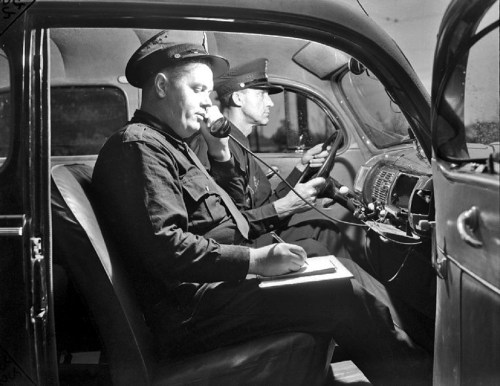
Detroit Police Radio Prowl Car
Detroit Police Radio Prowl Car, photo by Ronnie

I think the guy on the right is replaced by a computer in the 2015 version. About the photo, Ronnie writes:

Before the World War II started in Europe, 1939 was expected to be an exceptional year. America was filled with optimism, and with the Great Depression winding down, the nation was looking forward to what the coming decade of the 1940s would bring. Even the theme of the World’s Fair in New York was billed as “the world of tomorrow,” especially when it came to consumer and industrial electronics. However, for the Detroit Police Department one of the most important technological advancements in the world of law enforcement had become a reality.

Many electronics experts at the turn of the 1920s, said it would take another five decades before you would see two-way radios available for use in motor vehicles. While this philosophy was taken as gospel; several Amateur Radio operators pushed the envelope of experimentation to it’s zenith in their basements, and workshops across America. The fruits of their labor came to the forefront in the mid-to-late 1930s, which proved that two-way radio technology was viable for use by police officers in the field.

Earlier attempts at using two-way radio communications in the Motor City in 1934 had several drawbacks. The biggest was the cost, which was around $700 to equip each vehicle with the very large, and bulky equipment that took up the entire back seat and trunk of the patrol car. Not only did it take up a lot of space, but it really added a lot of weight that was hard on the vehicles’ suspension system.

Read on for more and to see the picture bigger and definitely check out Ronnie’s History photos for 100+ more photos from Michigan’s past with all kinds of great details!

More #TBT and more Michigan history on Michigan in Pictures.

Michigan Tech Huskies are on the road to hockey’s Frozen Four

Michigan-Tech-Hockey

Michigan Tech vs Minnesota State, photo by Michigan Tech Huskies

There’s just one Michigan team that will compete for a chance to appear in the NCAA hockey Frozen Four, and it’s a perennial hockey power that you may not know about: the Michigan Tech Huskies.

Tech has won three national titles in 1962, 1965 and 1972, and the Huskies (29-9-2) are currently ranked 5th in the nation and tied for most wins in the country this year. They received an at large bid to the tourney and take the ice as the #2 seed in the West region this Friday at 4:30 PM vs St. Cloud State. (details)

Here’s the beginning of a really excellent New York Times feature from last December entitled Stirring Passions in Hockey Hotbed:

Hockey rules this remote part of Michigan’s Upper Peninsula, where it is played by everyone from children to those in their 70s and 80s. All through the long winter it is always game on — in modern arenas, outside (into the wee hours of the night) and in two of the oldest hockey rinks in the world.

Professional hockey was born here in Copper Country in 1902, 15 years before the N.H.L. was formed. Even before that, the game was king in Houghton, Hancock, Calumet and nearby towns when they were at the center of a mining boom.

The mining is gone, the woods dotted with abandoned buildings and ghost towns. Only about 44,000 live in the area now, but the love affair with hockey endures. And the Michigan Tech Huskies are winning again, at last.

Tech’s hockey tradition stretches back 95 years and includes three N.C.A.A. Division I titles, in the 1960s and ’70s, but the Huskies have finished above .500 only once since 1993.

This season, though, they opened with 10 straight victories, their best start in history, and achieved their first No. 1 ranking. Now 13-3-0, Tech is ranked No. 5, having split a two-game series with No. 7 Minnesota-Duluth last week.

I really recommend that you click to read on at the Times for a great feel of the rich history of hockey in the Copper Country. If you want a lot more MTU hockey history, check out Copper Country Hockey History. Their compendium of Michigan Tech Hockey History begins with MTU’s crushing 30-0 destruction of Eagle River that still stands as the record for most goals in a game and rolls through nearly 100 years of hockey.

The photo above was taken during the WCHA Tournament Championship game on Saturday which the Huskies lost 5-2 to tourney top seed Minnesota State. View it and more in their gallery, get lots more at michigantechhuskies.com and be sure to follow them on Facebook & Twitter.

Lighthouses, Engineers & Orlando Metcalfe Poe

Poe Reef under construction

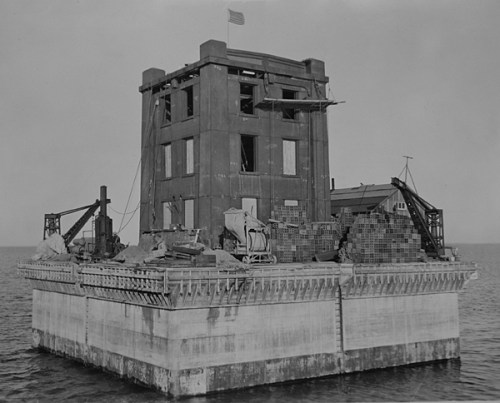
Poe Reef Lighthouse under construction, courtesy National Archives & Lighthouse Friends

Estately has compiled a list of what each state has the most of and for once, Michigan appears to have come off well:

Michigan has the most lighthouses and the most engineers per capita. So if you’re a photographer looking for a romantic getaway weekend with an eligible engineer, then Michigan is your paradise.

Click through for the whole list from Alabama (racist tweets) to Wyoming (people who chew tobacco).

It was easy to find a connection between lighthouses (of which we once had 247, still at least 125) and engineers (60,000) in the person of Orlando Metcalfe Poe, who coincidentally enough, would be celebrating his 183rd birthday today. After reviewing his service in the Civil War, Terry Pepper of Seeing the Light writes in Orlando Metcalfe Poe: The Great Engineer of the Western Great Lakes:

With the end of the Civil War, Poe assumed the position of Engineer Secretary of the Lighthouse Board in 1865, in which capacity he was charged with the supervision of building projects. In 1870, he was promoted to Chief Engineer of the Upper Great Lakes Lighthouse District.

In this capacity, Poe was responsible for all lighthouse construction, and he was largely responsible for the design of a style of lighthouse tower that has become known as the “Poe style” tower. These towers are all tall brick structures, with a gentle taper from bottom to top. All of the Poe designed feature graceful embellishments in the form of masonry gallery support corbels and arch topped windows. Exemplified by the towers at Grosse Pointe and Presque Isle, all together Poe was responsible for the construction of a number of such towers throughout Lakes Superior, Michigan and Huron.

…Many consider Poe’s crowning achievement to be the engineering, design and supervision of a new lock to at Sault St. Marie during the 1890’s. This project was instrumental in the development of commerce on the Great Lakes, permitting large ore carrying vessels from mining regions bordering Lake Superior to access the lower Great Lakes and Atlantic seaboard. At a length of eight hundred feet, and with a width of 100 feet wide, the new lock was the largest in the world, and in honor of the designer was named “Poe Lock,” a name that it carries to this day.

Connect the dots to the Poe Reef Lighthouse, about which Lighthouse Friends explains:

From the southeast point of Bois Blanc Island, a spit covered with fifteen feet of water extends a mile into Lake Huron, and five-eighths of a mile beyond this spit lies dangerous Poe Reef, a detached shoal, with a least depth of just twelve feet. In 1892, the Craig Shipbuilding Company of Toledo, Ohio was contracted to build four lightships for use on the Great Lakes. LV 62, a wooden-hulled vessel with a length of just over eighty-seven feet, was placed on Poe Reef on September 29, 1893, while her three sister ships LV 59, LV 60, and LV 61 were stationed, respectively, on Bar Point, Eleven Foot Shoal, and Corsica Shoal. With a red hull and POE REEF stenciled on its sides in white letters, LV 62 displayed a fixed white light from her foremast to mark the north side of the eastern entrance to South Channel.

LV 62 served Poe Reef, which is named after Orlando M. Poe, who served as the chief engineer of the eleventh lighthouse district, through the 1910 season, and then swapped stations with LV 59. In 1915, Poe Reef received a steel-hulled lightship, when LV 96 replaced LV 59. LV 96 marked the reef through the 1920 shipping season, and the following spring LV 99 started its service at Poe Reef.

The Lake Carriers’ Association had requested a permanent lighthouse and fog signal for Poe Reef as early as 1913, but it wasn’t until 1926 that the Commissioner of Lighthouses requested funds for such a project. Besides being less costly to maintain, lighthouses had an additional advantage over lightships: they could remain on station throughout the year rather than having to be withdrawn when ice started to form on the lakes.

Read on for more information and photos of the Poe Reef lightship, the construction of the lighthouse and modern photos. Also tune in the Michpics Facebook for a recent photo of Poe Reef.

More history and lots more lighthouses on Michigan in Pictures – enjoy your weekend everyone!

Big Red, White Snow & Blue Ice

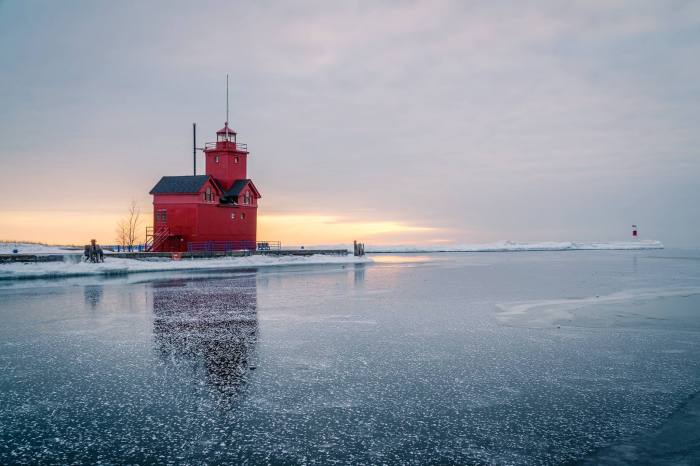
Big Red & Blue Ice

Reflections of a cold sunset, photo by Tony Reidsma

Here’s an incredible shot of Big Red aka the Holland Harbor Lighthouse. In his extensive article on the history of the Holland Harbor Light, Terry Pepper explains how the nickname came to be:

A Coast Guard crew arrived in Holland in 1956, and gave the combined fog signal building and lighthouse a fresh coat of bright red paint in order to conform to its “Red Right Return” standard, which called for all aids to navigation located on the right side of a harbor entrance to be red in coloration. Local residents thus began referring to the fifty year old structure as “Big Red,” a name which has stuck through the years. The Fourth Order lens was subsequently removed from the fog signal lantern in the late 1960’s, and replaced with a 250 mm Tidelands Signal acrylic optic.

With the fading of the Great Lakes passenger fleet, Holland Harbor had ceased to serve any real commercial traffic. With the station now serving only as a beacon to guide pleasure boats in and out of Lake Macatawa, the Coast Guard announced plans to abandon the old fog signal building to eliminate ongoing maintenance costs in 1972. Over the years, “Big Red” had become as much of an iconic symbol of tourist-centered Holland as tulips and windmills, and fearing the loss of their beloved landmark, the citizenry of Holland gathered together and circulated petitions in an attempt to save the historic structure. To this end, the Holland Harbor Lighthouse Commission was formed in 1974 to coordinate preservation and restoration efforts, and continues to manage the structure to this day.

View Tony’s photo big as Big Red on Facebook and see and purchase some of his work at imagesforyourwalls.com.  If you’re in an icy mood, consider attending the opening of his Frozen In Time exhibition at the Holland Arts Council from March 5 – April 18, 2015. The opening reception is March 5th, starting at 6pm.

More winter wallpaper and more lighthouses on Michigan in Pictures!

Heikki Lunta alias Hank Snow alias the Guy Responsible for the Snow

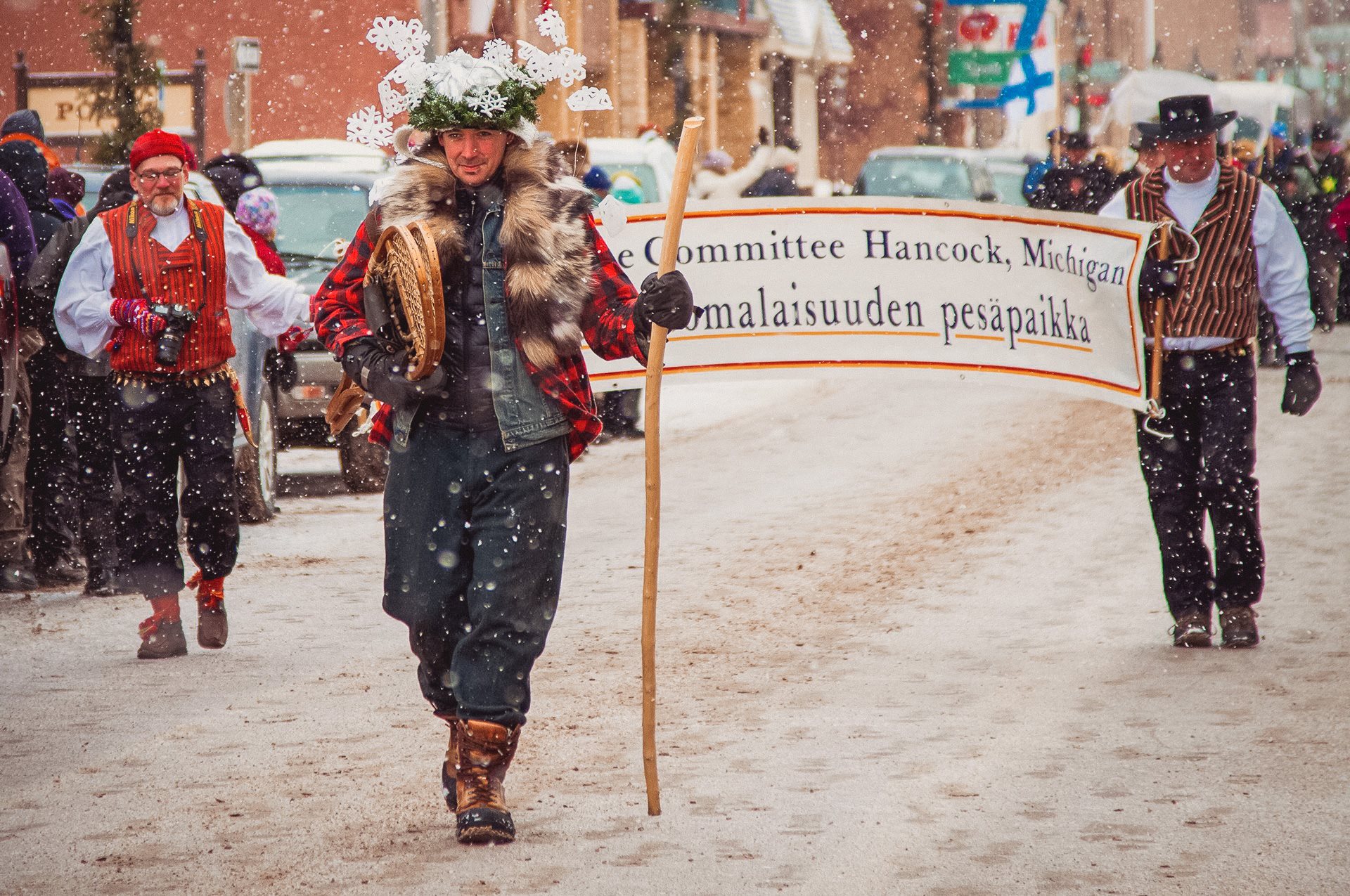
Houghtons Heikki Lunta

Hancock’s Heikki Lunta, photo by Mark Riutta / Defined Visuals

I know that many folks in southern Michigan are wondering where the heck all this snow came from. Last night I realized that a friend of mine was actually responsible!

Yooper Steez tells the Legend of Finnish snow god Heikki Lunta:

The name is now often associated with an annual winter festival in Negaunee, but it’s creation is linked to an annual snowmobile race held in Atlantic Mine. In 1970, the U.P. was having one of those winters where it doesn’t snow as much as we might like, which was threatening the success of the race. To increase support, radio salesman David Riutta wrote the “Heikki Lunta Snow Dance Song.” This song created the fictional Heikki Lunta as a creature that lived in the backwoods of Tapiola, twenty miles south of Houghton, and would perform a dance to make it snow. The song went on U.P. airwaves and was a success, and incidentally it did snow that year, causing the snowmobile race to be postponed on account of too much snow.

The song gained popularity enough to be mentioned on “The Today Show” and “The Tonight Show,” and the radio salesman was even invited to sing the song for winter events in California.

As anyone who has been through an Upper Peninsula winter knows, the snow can become relentless, and by the end of that winter, Riutta wrote “Heikki Lunta Go Away,” which is now often paired with the initial song.

The name Heikki Lunta comes from the Finnish translation of the name Hank Snow, like the popular country and western singer.

Read on for more including videos of the Heikki Lunta Song by Da Yoopers and also see Heikki Lunta – A Modern Copper Country Folk Hero at Pasty.com. If you want to go in depth, Hilary Virtanen presents a detailed and fascinating history of this distinctly Yooper phenomenon from 1970 to the present day with press clippings and more in Not Just Talking About the Weather: Tradition, Social Change and Heikki Lunta (use the dates on the left to navigate).

View Mark’s photo bigger and see his work at Defined Visuals on Facebook.

PS: When he’s not making it snow, Adam is also a fantastic photographer. See his work, some of which is potentially NSFW depending on where you work, at brockit.com.

Happy 178th Birthday to you, Michigan!

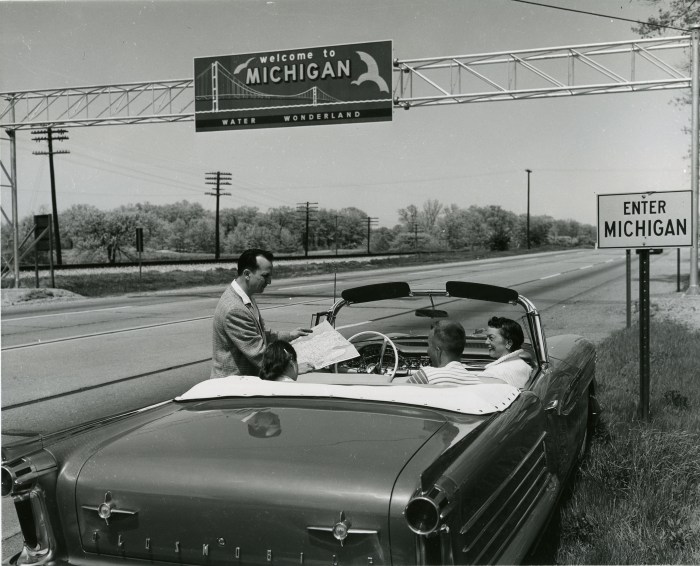
Michigan Sign at State Line 1958

Michigan Sign at State Line 1958, photo by Seeking Michigan

Today is Statehood Day, Michigan’s 178th birthday. For Michigan’s 175th birthday in 2012 I put together some fun facts about Michigan. They’re still true and still fun!

  • Michigan is derived from the Indian word Michigama, meaning great or large lake. (more about Michigan’s name on Michigan in Pictures)
  • French explorers Étienne Brulé & Grenoble are the first recorded Europeans to set foot in Michigan (you never know though). In 1668 Fathers Jacques Marquette and Claude Dablon established the first mission at Sault Ste. Marie, and in 1701, French officer Antoine de la Mothe Cadillac founded  Fort Pontchartrain in Detroit.
  • The Michigan Territory was created, with Detroit designated as the seat of government and William Hull appointed as our first governor.
  • Michigan became the 26th state on the 26th of January, 1837. Is 26 our lucky number? FYI, our first State governor was Stevens T. Mason, the 25 year old Boy Governor (the youngest state governor in American history).
  • Michigan’s nickname is “the Wolverine State”. It is generally believed to have been coined during the 1835 Toledo War between Michigan and Ohio, when our southern rivals gave us the name due to the wolverine’s reputation for sheer orneriness!
  • The Great Seal of Michigan was designed by Lewis Cass and was patterned after the seal of the Hudson Bay Fur Company. It depicts an elk on the left and a moose on the right supporting a shield that reads Tuebor (“I will protect”).The interior of the shield shows a figure on the shore with the sun rising over a lake. His right hand is raised, symbolizing peace, but he holds a rifle in his left hand, showing readiness to defend the state and nation.Below the shield is the inscription of our state motto Si quaeris peninsulam amoenam circumspice: “If you seek a pleasant peninsula, look about you.” (I just learned that Michigan has an Office of the Great Seal – how cool would it be to say you worked there??)
  • The original State Capitol of Michigan was Detroit, and it moved to Lansing in 1847 to help develop the western side of the state and due to the need to develop the western portions of the state and for easy defense from British troops. Here’s apic of Michigan’s original Capitol Building and an 1890s view of the current Michigan capitol.
  • Michigan is the 10th largest state by area if you count the water … and who wouldn’t count the water??
  • Speaking of water, we have 3,288 miles of Great Lakes shoreline, good for second to only Alaska in coastline!

View the photo background big and see more in their Tourism slideshow.

More of Michigan’s birthday on Michigan in Pictures.


Woodland Hipsters

Woodland Hipsters

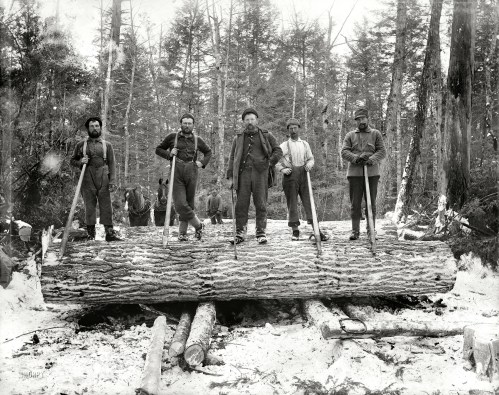
I’m a Lumberjack: 1899, photo courtesy Shorpy.com

While you might feel like you saw these stylish gents at the coffee shop the other day, Dave shares that the hipster look is timeless: Upper Michigan circa 1899. “The loggers.” 8×10 inch dry plate glass negative, Detroit Publishing Company.

View the photo background bigtacular and see TONS more incredible vintage photos (lots from Michigan) at Shorpy.com. You can also get prints of this and any photo they have.

Since 1880, 2014 was warmer

1880_Michigan_Wolverines_football_team

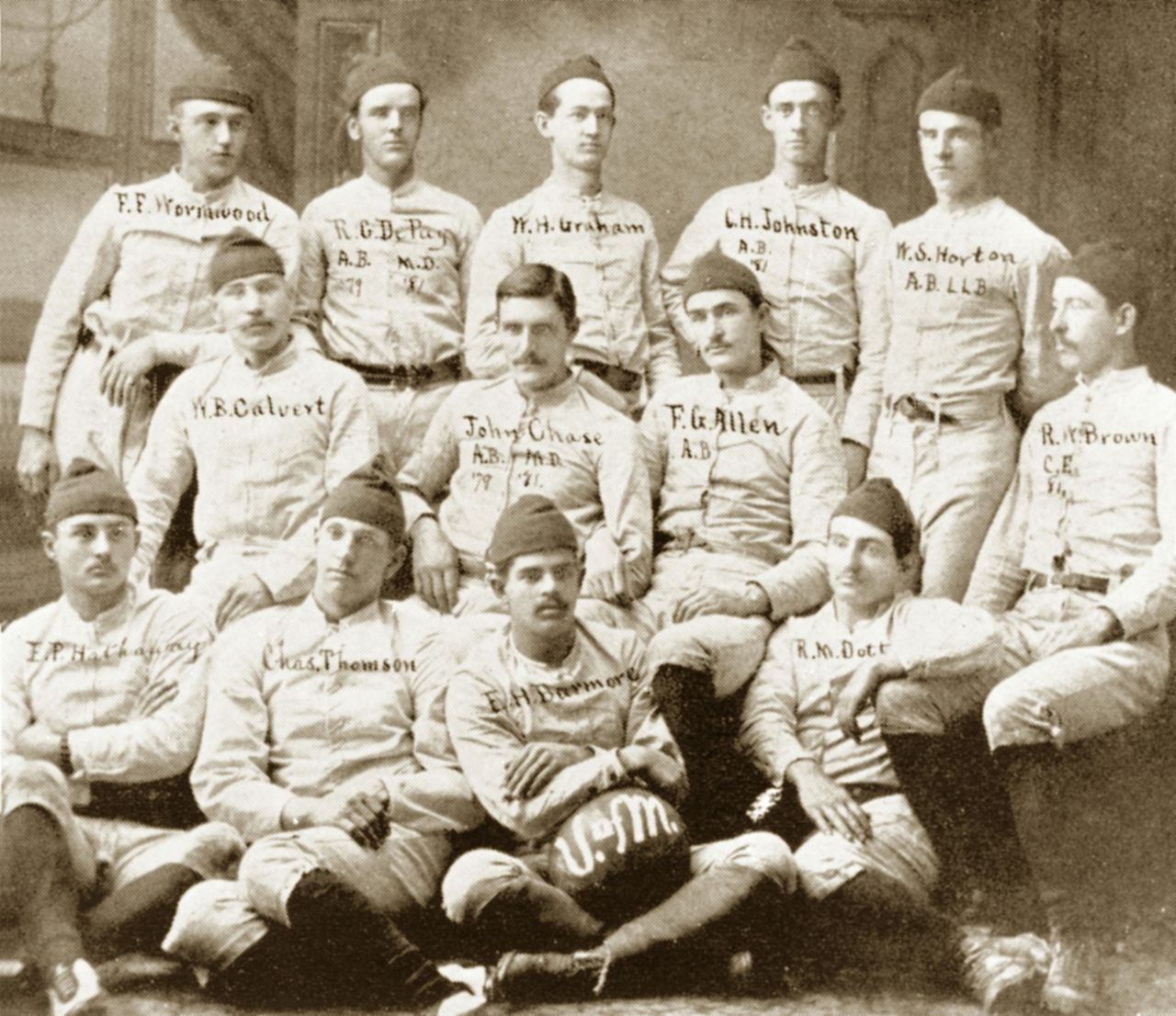
1880 Michigan Wolverines Football Team, photo courtesy Wikipedia

EarthSky’s Matt Daniel writes that NASA, NOAA, and Japan Meteorological Agency all report 2014 as Earth’s warmest year since modern-day record-keeping began in 1880.

Put in more tangible terms, since at least the days when University of Michigan footballers wore uniforms like this, there has not been a warmer year.

What’s more May, August, September, October and December of 2014 were ALL the warmest for that month since 1880! I’d like to suggest that global warming/climate change be shifted from a political issue to a survival issue. You are of course free to draw your own conclusions.

NASA has a snappy video that boils it down to a minute and a half.

Wikipedia says that these stylish gents played just one game, defeating the team from the University of Toronto, 13 to 6, at the Toronto Lacrosse Club. Michigan scored two touchdowns and one goal; Toronto scored three safety touchdowns.

Click the link for more and click the photo above to view it big as the big House.

MLK Say!

MLK Say by Rudy Malmquist

MLK Say !, photo by Rudy Malmquist

“And so we must say, now is the time to make real the promises of democracy. Now is the time to transform this pending national elegy into a creative psalm of brotherhood. Now is the time to lift our nation.

…this social revolution taking place can be summarized in three little words. They are not big words. One does not need an extensive vocabulary to understand them. They are the words “all,” “here,” and “now.” We want all of our rights, we want them here, and we want them now.

…With this faith, we will be able to achieve this new day when all of God’s children, black men and white men, Jews and Gentiles, Protestants and Catholics, will be able to join hands and sing with the Negroes in the spiritual of old: Free at last! Free at last! Thank God almighty, we are free at last!”

~ Dr. Martin Luther King in Detroit, June 23, 1963.

The words above are from Dr. Martin Luther King’s speech at Cobo Hall at the Great March on Detroit. The speech is regarded as the dress rehearsal for his famous I Have a Dream speech in Washington DC. Click to listen and read the text of the speech.

View Rudy’s photo background big and click for more of his graffiti photos.

More Martin Luther King on Michigan in Pictures.

I really encourage you to click through and listen. Dr. King was an incredible orator, and this was one of his very best speeches.

#TBT: Petoskey Pierhead Light

Petoskey Pierhead Lighthouse 1913

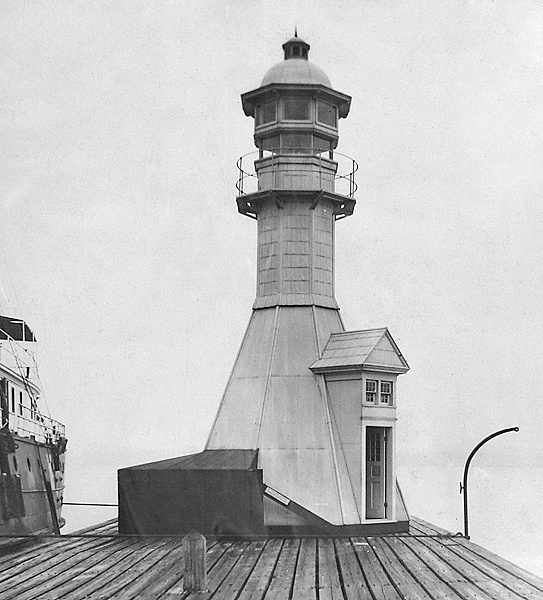
Petoskey Lighthouse in 1917, courtesy National Archives & Lighthouse Friends

Last month I featured a cool shot of the Petoskey Pierhead lighthouse that people really liked. Here’s a pic of what that light looked like a hundred years ago. The entry for the Petoskey Pierhead Light at Lighthouse Friends says (in part):

Named after the Ottawa Indian Chief Ignatius Petosega, Petoskey is situated at the southeast corner of Little Traverse Bay. In westerly winds, the lake steamers had difficulty offloading summer visitors at Petoskey, prompting Congress to pass an act on August 17, 1895, authorizing construction of breakwaters to protect the landing pier. One breakwater, connected to shore, was built west of the landing pier, and a second detached breakwater was built to the north.

Work on the breakwaters commenced in 1896, and in 1899, a metal post with a lamp house at its base was placed fourteen feet from the outer end of the western breakwater. Two lantern lights, a red one above a white one, were exhibited from the post starting on July 1, 1899. The beacon light was damaged by the schooner Willia Loutit on July 11, 1900, but repairs, paid for by the schooner’s owners, were soon made.

In 1903, structural steel and cast-iron metalwork were ordered to enclose the pier’s metal post, but the work was evidently not carried out until 1912. The resulting thirty-four-foot-tall lighthouse resembled an inverted funnel and consisted of a pyramidal base, a vertical mid-section, and an ornate lantern room. This funnel-like style of lighthouse was also deployed on piers at five other Lake Michigan cities: Waukegan, Illinois and at Kenosha, Milwaukee, Racine, and Sheboygan, Wisconsin.

…During a severe storm in December 1924, the lighthouse was washed from the breakwater and destroyed. A newspaper account noted that the “self-lighting lighthouse” had been discontinued for the season on December 8, just six days before it was swept off the breakwater. A temporary light was displayed from an unpainted post until 1930, when a concrete foundation was constructed on the breakwater, and a new light was displayed from a thirty-foot, skeletal, steel tower, painted red.

Read on for more information & photos and head over to lighthousefriends.com for many more Michigan lighthouse features.

…and of course Michigan in Pictures has lots more Michigan lights too!