January 20, 1985: The Michigan Moose Lift

Upper Peninsula of Michigan moose

Upper Peninsula of Michigan moose, photo by Greg Kretovic

Every so often, something I have featured on Michigan in Pictures will vanish from the internet, leaving whatever I shared as the only remaining source. Such is the case with one of my favorite modern Michigan stories, The Michigan Moose Lift of January 20, 1985. Click that link to read about this historic operation that relocated 59 moose from the Algonquin Provincial Park in Ontario and led to the re-establishment of moose in Michigan’s Upper Peninsula – somewhere north of 400 at last estimate*.

Here’s a very cool video from the DNR that does a great job of telling the story. Enjoy!

Greg took this photo of a large bull moose exploring the shoreline of an inland lake in Baraga County in October of 2012. View his photo bigger, see more in his slideshow, and definitely follow him at Michigan Nature Photos on Facebook.

* From the Detroit Free Press article on the latest biennial survey of Michigan’s moose population:

The latest biennial survey by the Department of Natural Resources produced an estimate of 323 moose in their primary Michigan range, which includes Baraga, Iron and Marquette counties. If correct, that would be a decline there of about 28 percent from 2013, when the estimate was 451.

Chad Stewart, a deer, elk and moose management specialist with the DNR, said the population could have held steady since the 2013 count but that the findings, including a decrease in the number of calves spotted with adult females, suggest a decline is the likelier scenario.

It is “quite possible that we’re looking at a considerable drop in numbers,” Stewart said Monday.

A smaller moose herd wanders the eastern U.P. Biologists have long estimated their number at around 100.

Ice is Nice at the Menominee Light Lighthouse

Ice is Nice Menominee Light Lighthouse

Ice is Nice, photo by cohodas208c

I’ll never miss a chance to tout Terry Pepper’s Seeing the Light as one of the premier resources for information about Michigan’s lighthouses, as well as others on the Great Lakes. He packs them full of the history including the political maneuverings and economic reasons for lighthouse development and closure and peppers in (sorry – couldn’t resist) historical photos and pictures from his own visits.

The entry on the Menominee North Pier Light details the lumber boom that led to the construction of the first lighthouse in 1877 and the development of the iron ore rich Menominee Range. He continues:

The town of Menominee continued to reap the benefits of the Range, and as a result significant harbor improvements were undertaken in the 1920’s, At their completion in 1927, a prefabricated octagonal cast iron tower was delivered by vessel, and lowered onto the pier.

The thirty-four foot tower was painted white, and integrated with an attached fog signal building. An elevated wooden catwalk stretched along the wooden pier to provide the keepers with safe access to the light during periods when waves crashed across the surface of the pier. The octagonal cast iron lantern room was outfitted with a Fourth Order Fresnel lens of unknown manufacture.

At some point thereafter, the wooden pier was replaced by a concrete structure with a forty-foot diameter circular crib at its offshore end. At this time, the fog signal was eliminated with the inclusion of an automated electrically operated signal in the tower. With automation of the light in 1972, the need for daily maintenance of the light was also eliminated, and the iron catwalk was removed from the pier.

The tower was painted bright red, and relocated to a white painted concrete platform in the center of the crib. Its elevated position on the pier provided a focal plane of forty-six feet.

While the catwalk no longer snakes its way along the pier, the iron tower still stands guard over the harbor entrance, its jewel-like Fresnel lens replaced by a stark modern 300mm plastic lens.

Read on for more at Seeing the Light.

View the photo background bigilicious and see more in cohodas208c’s Big City Breakout – Dec 2015 slideshow.

Lots more Michigan lighthouses and more winter wallpaper on Michigan in Pictures!

Michigan Castles: Meadow Brook Hall in Rochester

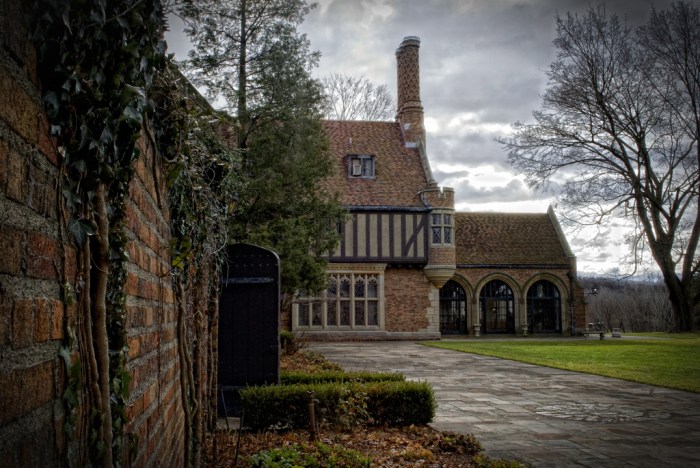
Meadowbrook Castle by Anna Lysa

Meadow Brook Hall, photo by Anna Lysa

The Lansing State Journal had a recent feature about Five Michigan Castles that includes Michigan’s largest castle, Meadow Brook Hall in Rochester:

Meadow Brook Hall was built between 1926 and 1929 by Matilda Dodge Wilson, widow of early auto magnate John Dodge, and her second husband, lumber baron Alfred Wilson. The 110-room home features carved wood and stone details and plaster ceilings and is modeled after the great country estates of England, which they toured on their honeymoon. During construction of the home in 1927, they went on a second architectural tour of England with their architect in tow. The house cost $4 million to build (more than $54 million in today’s dollars), and the Wilsons hosted a gala housewarming party for 850 people in November 1929.

Matilda died in 1967, bequeathing the estate and $2 million in seed money to create Oakland University. The house opened to the public in 1971.

Tours are available and you can get more info about those along with photos and info about four more castles in the LSJ. The Meadow Brook Hall history page has a lot more information, and adds that the castle:

…represents one of the finest examples of Tudor-revival architecture in America and is especially renowned for its superb craftsmanship, architectural detailing and grand scale of 88,000 square feet. Inspired by the country manor homes in England, it was designed and built by the Detroit architectural firm of Smith, Hinchman and Grylls between 1926 and1929, at a cost of nearly $4 million.

The exterior combines various textures and patterns using American materials of brick, sandstone, wood timbers and a roof of clay shingle tile. The house also features 39 uniquely designed brick chimneys that distinguish the picturesque roofline.

….The exterior and most of the interior rooms at Meadow Brook Hall were designed in the Tudor-revival style. However, a few rooms were decorated in other period-revival styles: the dining room and Matilda’s study are 18th-century Neo-classical, Matilda’s room and the French bedroom are 18th-century French Rococo, and Frances’ bedroom is American Colonial.

View Anna Lysa’s photo bigger and see more in her Michigan slideshow.

PS: There’s features on Owosso’s Curwood Castle and Kalamazoo’s Henderson Castle (now a B&B) as well as lots more Michigan architecture on Michigan in Pictures!

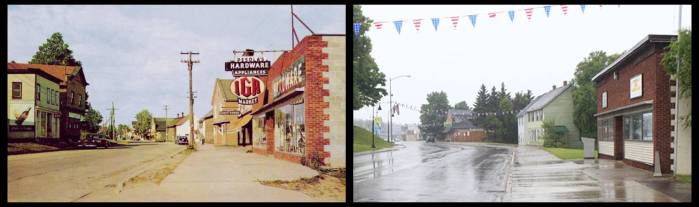
#TBT: Rephotographing Michigan, Baraga Edition

Downtown Baraga Michigan

Downtown Baraga, photo by Rephotographing Michigan

Paul started Rephotographing Michigan a few months ago. It’s a project to take old postcards of Michigan and photograph what the scene looks like today.

This photo shows downtown Baraga – check it out bigger and see lots more on the Rephotographing Michigan Facebook page!

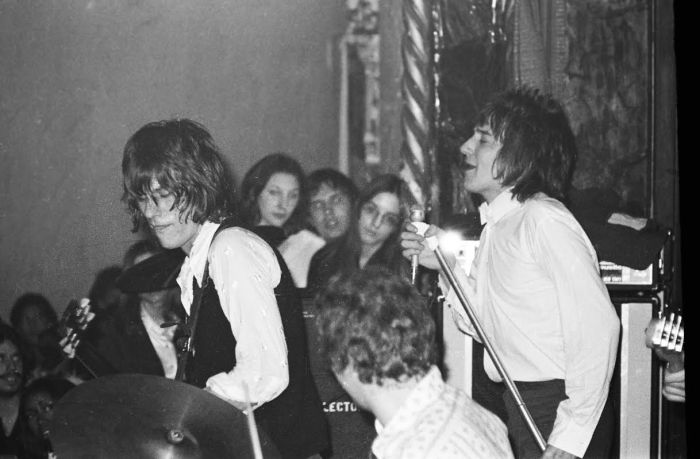
Detroit’s Grande Ballroom

Jeff Beck Group and Rod Stewart at the Grande Ballroom

Jeff Beck Group and Rod Stewart at the Grande Ballroom, photo courtesy Louder Than Love

The documentary Louder Than Love: The Grande Ballroom Story premieres on Detroit Public Television this Friday (Dec 18) at 8 PM. Dan Austin of Historic Detroit has a great look at the history of Detroit’s Grande Ballroom that says (in part):

Designed in 1928 by Charles N. Agree for dance hall entrepreneurs Edward J. Strata and his partner Edward J. Davis, the Grande started off as a place Detroiters would go to dance and listen to jazz and big band sounds, but it would later achieve immortal status in the annals of music history as a rock venue. It is arguably the birthplace of punk and hard-driving rock, where bands like The MC5 and The Stooges cut their chops and became legends.

The building was designed in the Moorish Deco style and contained storefront space on the first floor and on the second a ballroom with Moorish arches featuring a floor on springs that gave dancers the feeling of floating. The dance floor held 1,500 dancers and was one of the largest in the city. Its ground floor had several retail tenants, such as W.T. Grant Department Stores, Beverly’s and a drugstore. The neighborhood was a predominately Jewish enclave in the 1930s and ’40s.

…Russ Gibb, a social studies teacher at Maples Junior High School in Dearborn was a popular local radio DJ at the time. Gibb took a trip out to San Francisco to visit a friend in early 1966 and paid a visit to the storied Fillmore Auditorium and saw The Byrds. When he returned to Detroit, he set out to bring Bill Graham’s Fillmore to the Motor City. He scouted out several locations, including the then-closed, since-demolished Gayety Burlesque theater on Cadillac Square downtown and the ballroom of the Statler Hotel on Grand Circus Park, which also has been razed. He settled on the Grande, which was near the neighborhood he grew up in back in the 1940s and entered a rent-to-buy deal with the Kleinman family.

Read on for the story of how the Grande Ballroom grew through local acts like the MC5 to become the place to play in Detroit in the late 60s, hosting amazing acts including Led Zeppelin, John Lee Hooker, the Yardbirds, The Who, Cream, Pink Floyd, Canned Heat, the Jeff Beck Group, The Byrds, Big Brother and the Holding Company, Chuck Berry, Howlin’ Wolf, the Velvet Underground, Canned Heat, and many more.

Watch the trailer for the movie below and see many more photos of the Grande past & present, on the Louder Than Love website. Also don’t miss their collection of posters for some of the concerts at the Grande Ballroom from artists Gary Grimshaw, Carl Lundgren, and Donnie Dope and be sure to check out the Louder Than Love group on Facebook for many more great photos!

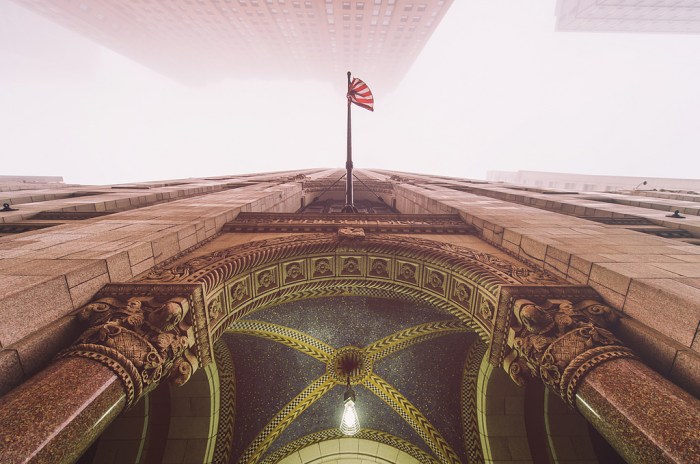
Detroit’s Buhl Building

Buhl Building Detroit Michigan

buhl building | detroit, michigan, photo by Ryan Southen

Detroit1701.org is an excellent resource for the history of Detroit. Their page on the Buhl Building says (in part):

The Buhl brothers, Frederick and Christian, came to Detroit early in the Nineteenth Century. They made their money in the fur trade and then in the hat business. As Detroit became a leading industrial metropolis, they turned to manufacturing as well as retailing and property development. They founded the Detroit Locomotive Works and then the Buhl Iron Works that later became the Detroit Copper and Brass firm. They added to their wealth by entering the hardware business and then erected an office building at the corner of Griswold and Congress that became an attractive location for prosperous law firms. Frederick Buhl served as mayor of Detroit in 1848, while his brother, Christian, served as mayor twelve years later after holding a variety of other political offices.

The skyscraper building boom in Detroit reached its zenith in the late 1920s, reflecting the demand for office space generated by the vehicle industry. A third generation of Buhls decided to make more profitable use of their prime downtown land by replacing their small office building at Griswold and West Congress with the 26 story building that you see. They selected the Smith, Hinchman and Grylls firm and, fortunately for them, the skilled and imaginative Wirt Rowland was selected as the architect. His most magnificent accomplishment is the nearby Guardian Building but he created a beautiful structure in the Buhl Building, one that has great appeal some eight decades after he first sketched it.

Read on for more and also check out Historic Detroit for more about the Buhl & architect Wirt C. Rowland, avid modernist, supporter of the Arts and Crafts movement, and key contributor to the Art Deco-style skyscrapers along Detroit’s skyline.

View Ryan’s photo bigger, see more in his Detroit slideshow, and be sure to follow him on Instagram. If you’re interested in a great wedding photographer, head over to his photography website!

More architecture and lots more Detroit on Michigan in Pictures!

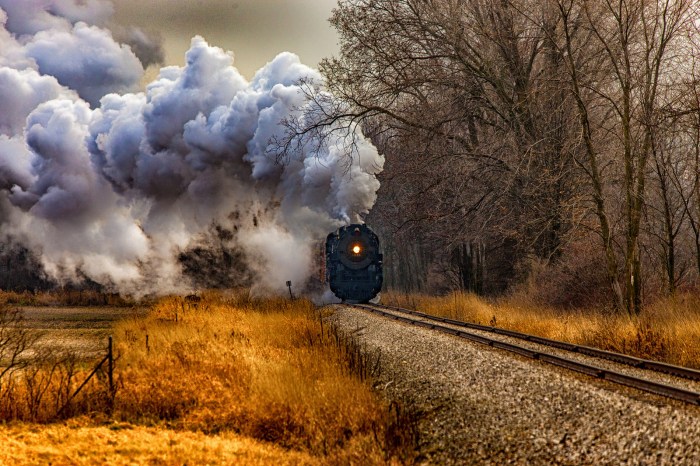
How Pere Marquette 1225 inspired the Polar Express

Pere Marquette 1255

Pere Marquette 1225, photo by Bob Gudas

The Steam Railroading Institute in Owosso is home station for the Pere Marquette 1225 locomotive aka the Polar Express:

Retired from service in 1951, 1225 was sent to scrap, in New Buffalo, Michigan. In 1955, Michigan State University Trustee, Forest Akers was asked by C&O Chairman Cyrus Eaton if the University would be interested in having a steam locomotive (Eaton did not want to scrap the engines but was having a hard time finding places that would accept them) so that engineering students would have a piece of real equipment to study. Forest Akers thought it a good idea and proposed the idea to University President John Hannah. John Hannah accepted the gift of the locomotive. When he told the Dean of the College of Engineering about the gift, the Dean said that Engineering was not interested in an obsolete locomotive. John Hannah then called up Dr. Rollin Baker, director of the MSU Museum and told him that he was getting a locomotive. The C&O then instructed the yardmaster at New Buffalo to send an engine to the Wyoming Shops for a cosmetic restoration and repainting with the name Chesapeake and Ohio on the side. The 1225 was the last engine in the line, i.e. easiest to get out. It had nothing to do with the number representing Christmas Day.

Baker received the gift of the locomotive in 1957 when it was brought to campus. The locomotive remained on static display near Spartan Stadium on the Michigan State campus in East Lansing, Michigan for a decade. While on display, a child by the name of Chris Van Allsburg used to stop by the locomotive on football weekends, on his way to the game with his father. He later stated that the engine was the inspiration for the story, Polar Express.

Lots more about the Michigan’s largest operating steam locomotive at Wikipedia and information about riding the train and the rest of their collection at the Steam Railroading Institute.

View Bob’s photo bigger and see more in his slideshow.

Old School Efficiency at Copper Harbor Lighthouse

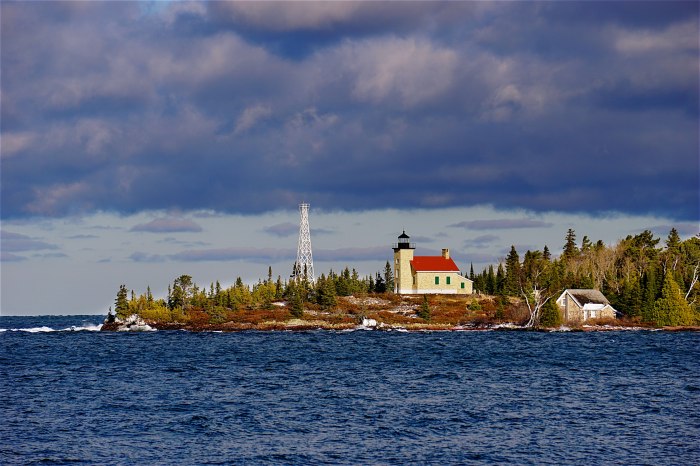
Copper Harbor Lighthouse

Copper Harbor Lighthouse, photo by Frank Wulfers

Terry Pepper’s Seeing the Light has an extensive article on Copper Harbor Lighthouse that shines a light on some solid planning from back in the day … and some that was less so:

As was the case with virtually all of the lighthouses built on the Great Lakes during the Pleasonton administration, the true costs of inferior materials and shoddy workmanship began to show. After his 1864 visit to the station, the Eleventh District Inspector remarked that the Copper Harbor lighthouse required “extensive repairs.” On subsequent investigation, the condition of the tower was determined to be beyond repair, and the following year the decision was made to raze the old tower and erect a completely new structure. With old Pleasonton-era stations needing replacement at both Marquette and Ontonagon, and new stations planned for Gull Rock, Huron and Granite Islands, the decision was made to build all six lights to the same plan. Specifying a simple brick two-story dwelling with a tower integrated into the center of one of the gable end walls, this design would eventually become known as the “schoolhouse” style, as a result of its similarity to the design of rural nineteenth century one room schoolhouses.

The lighthouse tender HAZE returned to Copper Harbor in early 1866 and deposited a working crew and materials on lighthouse point to begin construction of the new main lighthouse. Work began with the demolishing of the old rubble stone tower, and excavating the foundation for the new structure. Under normal circumstances one would assume that the old tower would have been left standing until the new station was complete. However, an archeological survey conducted by the Michigan Technological University in 1994 showed that a large portion of the stone from the old tower was reused in building the foundation of the new building. Thus it is evident that the old tower must have been demolished first. What steps were put in place to allow the continued display of a light at the station for the time period between the demolishing of the old tower and the completion of the new structure are unrecorded. However, it is almost certain that some arrangement for the display of a temporary light would have been made.

Atop the rubble stone foundation, a team of masons erected a Cream City brick building, and its 42-foot tall tower capped with a square gallery with iron safety railing. A spiral cast iron stairway within the tower provided the only means of passing between the first and second floors in addition to providing access to the lantern. Centered atop the gallery, a decagonal prefabricated cast iron lantern was installed, and the Fourth Order lens from the old tower reassembled atop a cast iron pedestal at the center of the new lantern.

Seeing the Light has much more including old photos and an account of the Pleasanton Administration’s first draft of the Copper Harbor lighthouse. Before you judge Stephen Pleasanton too harshly, however, click over to his Wikipedia entry where you will learn how this James Monroe appointee helped to save the Declaration of Independence during the War of 1812!

View Frank’s photo background big and see more in his Michigan Upper Peninsula slideshow.

More Michigan lighthouses and more Copper Harbor on Michigan in Pictures.

Cyber Monday: 1950s Edition

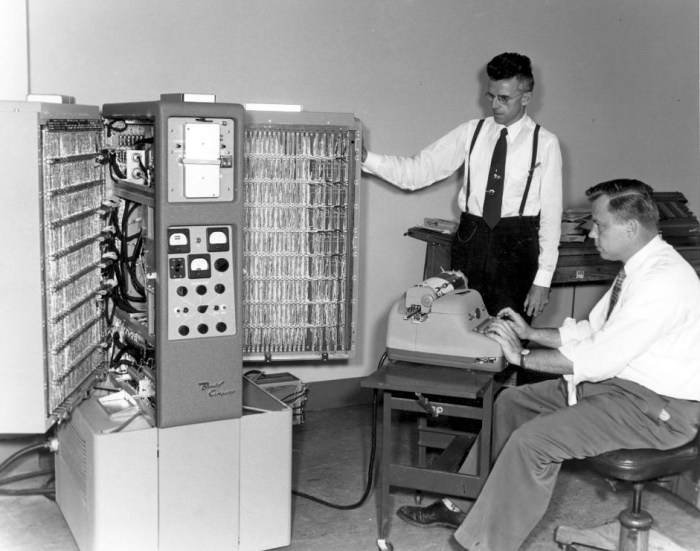
Computers in the 1950s

Computers in the 1950s, photo courtesy Archives of Michigan

Sorry – this post was supposed to publish on Monday morning but it didn’t!

This Cyber Monday, I encourage you to consider a print from one of the many fine photographers featured on Michigan in Pictures! In addition to supporting one of the fine men & women who make this blog possible, it shares your love of Michigan and supports Michigan’s economy!

Regarding the photo, Seeking Michigan writes:

This image most likely depicts a Bendix computer model G-15. Although undated, it was probably taken during the last half of the 1950s. The Michigan State Highway Department offices would seem the likely setting. (The words “Department of Transportation” are stamped on the reverse side. The Michigan State Highway Department is a predecessor agency of the Michigan DOT.)

View it bigger on Flickr, see more in their General Photographic Collection slideshow and definitely tune into the Archives of Michigan at seekingmichigan.org!

Farewell, David West

Flint Eastwood

Flint Eastwood, photo by Joel Williams

The Lansing State Journal reports that Flint native & amp builder David West has passed away:

In the late 1960s, three Flint musicians were on a mission to emulate the power-trio sound of Cream and the Jimi Hendrix Experience. They found a piece of it in David West’s 200-watt Fillmore amplifiers.

“Not only did they sound great, but they looked great,” said Don Brewer, the drummer for that Flint band, which eventually took the name Grand Funk Railroad.

West, a longtime resident of the Lansing area and architect of West Amps, died Nov. 10 at age 71. A Flint native, West last operated West Laboratories in Okemos, but started the business in Flint and operated in downtown Lansing for several years.

…”He was like a mad scientist in the shop. He’d get these fender amps and rip them all apart see how they were made and beat them up,” said Rob Grange, who built cabinets for West’s amplifiers. “He should have been a multi-millionaire. He was way ahead of his time.”

Read on for more, including news that West had intended to relaunch West Amps, which his son Aaron intends to continue. They don’t appear to have a website, but there is a Facebook page where more news might be shared.

View Joel’s photo bigger and see more of his concert photos right here.

In a wild coincidence that may be cool only to me, the band Flint Eastwood has a role in the post I’m hoping to feature tomorrow. So it goes…

More music on Michigan in Pictures.