Sunset Sunday from Fishtown

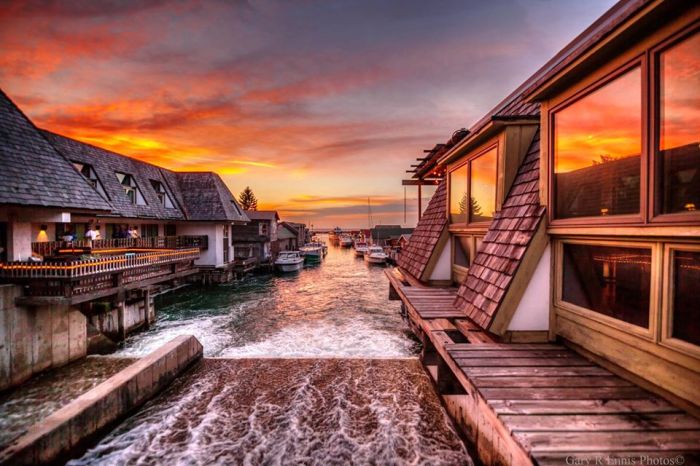
Fishtown Sunset by Gary Ennis

The folks @PureMichigan on Twitter thought that this photo of a summer sunset in Leland’s Fishtown by Gary Ennis was a perfect fit for their #SunsetSunday hashtag! I can’t help but agree!!

If you’ve got a soft spot in your heart for this historical treasure, I urge you to check out the Fishtown Preservation Association’s Campaign for Fishtown to raise the funds to resolve critical infrastructure and drainage issues & rehabilitate three shanties: The Village Cheese Shanty, Carlson’s Fishery and the Morris Shanty as well as to replace all docks,  address accessibility, and other site issues. The high water has exacerbated an already desperate situation – click through to see how you can help!

You can follow Gary on his Instagram for more great shots!

Great Lakes on the Rise in 2020

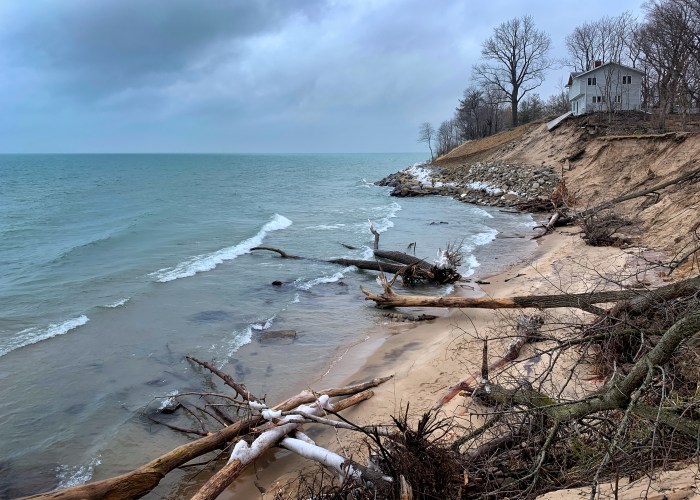
Precarious by Mark Swanson

Precarious by Mark Swanson

mLive reports that the six-month water level forecasts show a high-end forecast that could surpass all other modern water levels for some of the Great Lakes:

For the last three months, Lake Michigan and Lake Huron (which shares the same lake water level because they are linked) have set monthly record water levels. The monthly record water levels are expected to continue into summer. If we get significantly higher than usual precipitation, the water levels could slosh over the highest level ever recorded since good water level measurements began back in 1918.

…The upper end of the possible outcomes would take Lake Michigan and Lake Huron 5 inches higher than October 1986, the highest water level recorded since records began in 1918. July or August of this coming summer would be the months that could happen.

That would be a devastating high-water level for cities and beaches along the Lake Michigan and Lake Huron shoreline.

Remember one inch of water on Lake Michigan and Lake Huron is 800 billion gallons of water. If this summer’s water level reaches that upper end, Lake Michigan and Lake Huron would have 4 trillion gallons more water than the highest water level recorded by in the fall of 1986.

Read on for more about Lakes Superior (probably not dangerously high) and Erie & Ontario (also likely to be dangerously high).

Mark took this in February near Stevensville on Lake Michigan. See more in his Final 60 album.

Support Michigan in Pictures with Patreon

Into the Distance

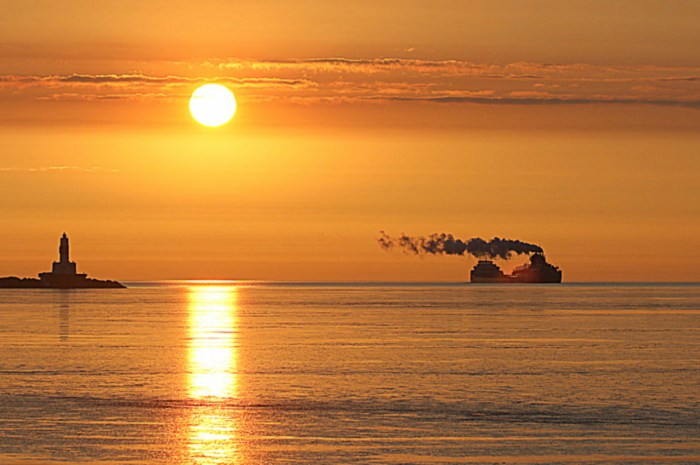
James L Oberstar leaving Marquette by Thom Skelding

James L Oberstar leaving Marquette by Thom Skelding

“I don’t cry because we’ve been separated by distance, and for a matter of years. Why? Because for as long as we share the same sky and breathe the same air, we’re still together.”
― Donna Lynn Hope

Thom got this sweet photo of the James L. Oberstar leaving Marquette Harbor last night, downbound with a load of iron ore pellets. Stay strong everyone, and look to those you share a sky with who may be struggling right now.

Check his photo & more out on Flickr & dive into almost 100 more photos of this Michigan freighter in the Absolute Michigan pool!

Support Michigan in Pictures with Patreon

A Peaceful Moment on Lake Superior

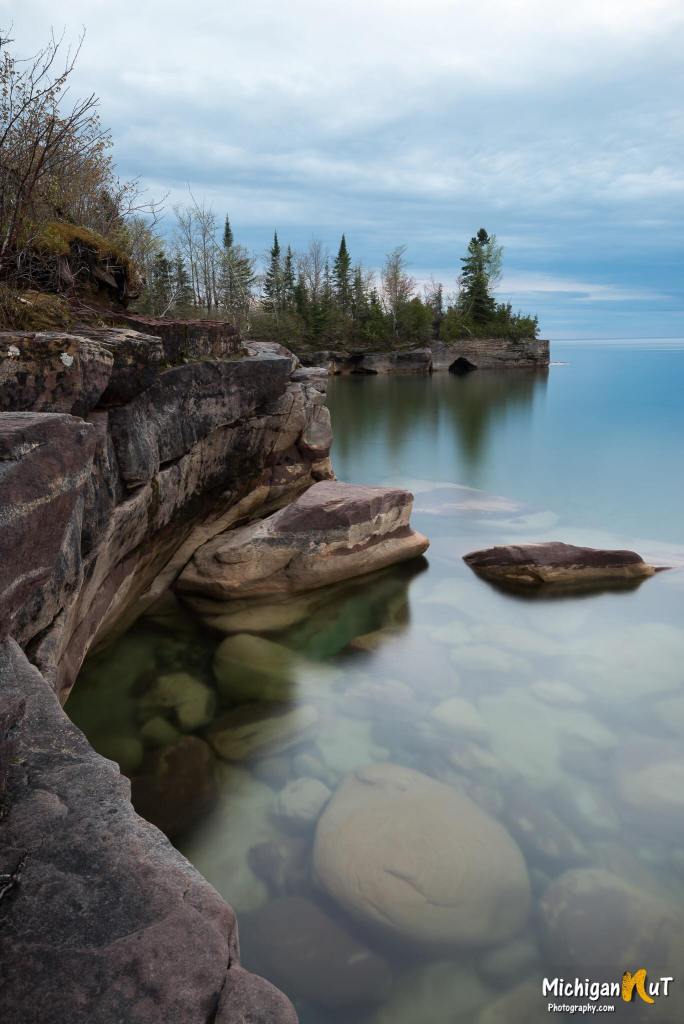
Peaceful Moment at Lake Superior near Munising by Michigan Nut Photography

Peaceful Moment at Lake Superior by Michigan Nut Photography

One of my favorite photographers on Michigan in Pictures is John McCormick aka Michigan Nut. He caught this peaceful moment at Lake Superior near Munising the other day, remarking that “you don’t often see the big lake this calm.

Prints of this photo and a whole lot more Michigan beauty are available at michigannutphotography.com.

Support Michigan in Pictures with Patreon

Michigan State Parks announce Covid-19 policy changes

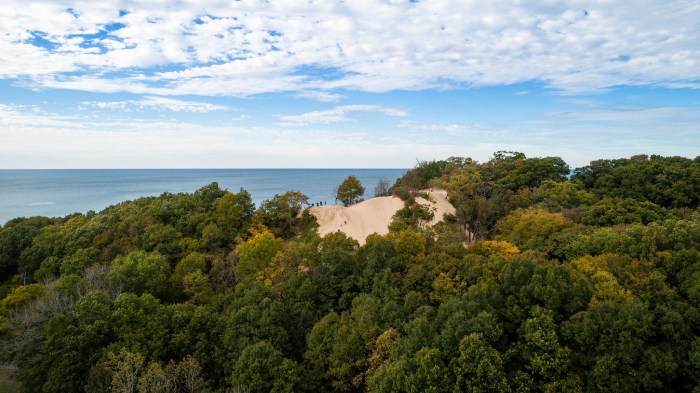
Dune Climbers by Bill Dolak

Dune Climbers by Bill Dolak

The Michigan DNR has announced that although state parks and recreation areas remain open to provide residents with local opportunities to get outdoors, extensive travel should be minimal & effective social distancing is required so that unsafe conditions do not develop and state-managed lands can remain open.

“We are doing everything possible to protect the health and safety of visitors and staff at state parks and recreation areas,” said DNR Director Dan Eichinger. “No matter how people are choosing to get outdoors, it is critical that everyone follows the social distancing guidelines. If they don’t, we will be forced to close public access to all state-managed lands.”

Closures and reduction in services include

Many park amenities have been closed in order to minimize the chance of people gathering in groups and/or maximize the environment for effective social distancing. Current closures include, but are not limited to, concessions, playgrounds and play equipment, viewing platforms, fishing piers, GaGa ball bits, volleyball and basketball courts, designated dog areas, disc golf courses, radio-controlled flying fields, pump tracks, and picnic tables and shelters.

All bathroom buildings and vault toilets will be closed in all state parks and recreation areas, including those at campgrounds, boating access sites, trailheads at state-designated trails, etc. People are encouraged to plan accordingly to avoid needing a restroom during a visit. Note: Over the next few days, vault toilets will be closing. Many locations, where available, will be transitioning to portable toilets that will be cleaned by local vendors.

There will be minimal trash service available. Visitors are encouraged to bring trash bags, if needed, to carry trash home and minimize litter.

No hand washing stations will be provided. Please carry hand sanitizer or sanitizing wipes containing at least 60% alcohol, as well as trash bags to carry out used wipes.

Additionally, grooming of snowmobile trails (the season closes March 31) and grooming, brushing, grading and clearing of all nonmotorized trails and ORV trails are suspended until at least the end of the order. When out on any trail, be aware of surroundings, including the potential for washouts or debris. To report anything that could be a risk to other trail users, call 517-331-0111.

Follow the DNR’s COVID-19 response webpage for the latest closure information related to events, meetings and facilities, including campgrounds, harbors and other sites.

Bill took this photo last October at Van Buren State Park near South Haven. See many more incredible shots in his Drone the Sixth – DJI Phantom 4 Advanced album on Flickr!

See photos and read about many of Michigan’s state & national parks on Michigan in Pictures!

Support Michigan in Pictures with Patreon

Wildfire in the Sky

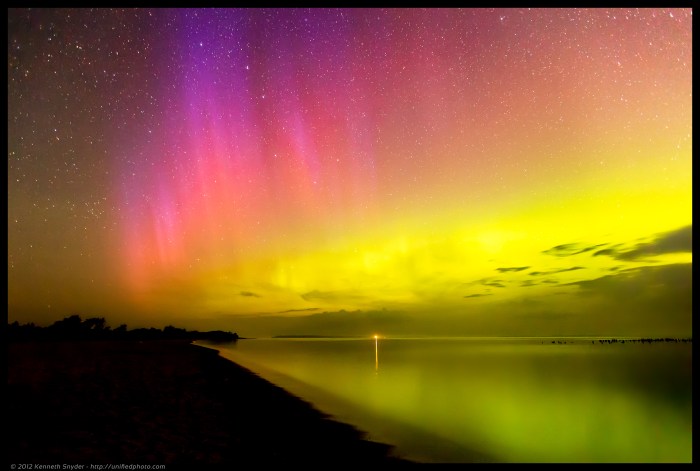
Sleeping Bear Bay Northern Lights, photo by Kenneth Snyder

Here’s a feature via Leelanau.com

A Conflagration of Storms from his online book The 23rd Cycle, Dr. Sten Odenwald tells of the evening of March 13, 1989 when a massive wave of solar energy struck our atmosphere, creating one of the most impressive northern lights displays of the modern era.

Alaskan and Scandinavian observers were treated to a spectacular auroral display that night. Intense colors from the rare Great Aurora painted the skies around the world in vivid shapes that moved like legendary dragons. Ghostly celestial armies battled from sunset to midnight. Newspapers that reported this event considered the aurora, itself, to be the most newsworthy aspect of the storm. Seen as far south as Florida and Cuba, the vast majority of people in the Northern Hemisphere had never seen such a spectacle. Some even worried that a nuclear first-strike might be in progress.

Luke Pontin, a charter boat operator in the Florida Keys, described the colors in reddish hues as they reflected from the warm Caribbean waters. In Salt Lake City, Raymond Niesporek nearly lost his fish while starring transfixed at the northern display. He had no idea what it was until he returned home and heard about the rare aurora over Utah from the evening news. Although most of the Midwest was clouded over, in Austin Texas, Meteorologist Rich Knight at KXAN had to deal with hundreds of callers asking about what they were seeing. The first thing on many people’s mind was the Space Shuttle Discovery (STS29) which had been launched on March 13 at 9:57 AM. Had it exploded? Was it coming apart and raining down over the Earth? Millions marveled at the beautiful celestial spectacle, and solar physicists delighted in the new data it brought to them, but many more were not so happy about it.

Silently, the storm had impacted the magnetic field of the Earth and caused a powerful jet stream of current to flow 1000 miles above the ground. Like a drunken serpent, its coils gyrated and swooped downwards in latitude, deep into North America. As midnight came and went, invisible electromagnetic forces were staging their own pitched battle in a vast arena bounded by the sky above and the rocky subterranean reaches of the Earth. A river of charged particles and electrons in the ionosphere flowed from west to east, inducing powerful electrical currents in the ground that surged into many natural nooks and crannies. There, beneath the surface, natural rock resistance murdered them quietly in the night. Nature has its own effective defenses for these currents, but human technology was not so fortunate on this particular night. The currents eventually found harbor in the electrical systems of Great Britain, the United States and Canada.

Read on for much more about how our electrical grid can be brought to its knees by the power behind the beauty of the northern lights and get much more in the 23rd Cycle.

Kenneth took this photo back in July of 2012. See more great pics in his Sleeping Bear Dunes album & also check out many more northern lights photos in the Leelanau.com group on Flickr!

2019’s Biggest Supermoon Flies Tonight!

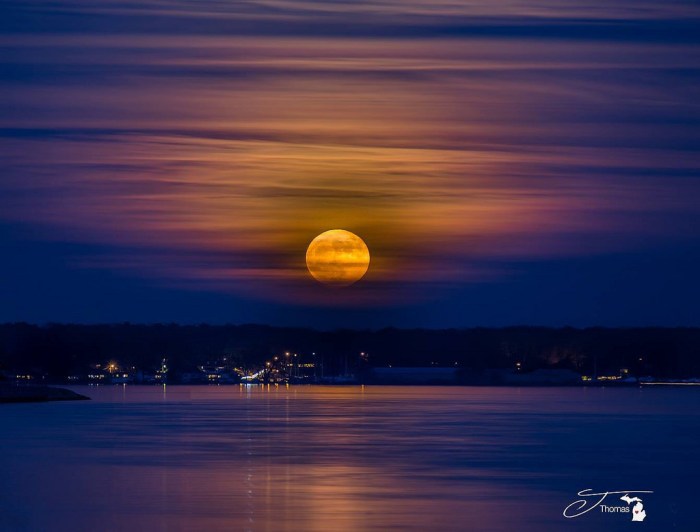
Super Moon Muskegon Michigan, photo by The Shutter Affair

EarthSky, which by the way is a fantastic website for anyone who wants to get more out of the night sky that’s in great need of your support, has this to say about tonight’s supermoon, which will be the largest of 2019:

This year’s February presents the biggest full moon supermoon of 2019. From around the world, the moon will look plenty full to the eye on both February 18 and February 19 as it parades across the nighttime sky. It reaches the crest of its full phase on February 19 for much of the world. What’s a supermoon? It’s a popularized term for what astronomers call a perigean full moon. In other words, it’s a full moon near perigee, or closest to Earth for this month. This February 2019 full moon reaches its exact full phase closer to the time of perigee than any other full moon this year. Hence the year’s closest supermoon.

Will you be able to discern with your eye that this full moon is larger than an ordinary full moon? Experienced observers say they can do it, but – for most of us – the difference is too small for the eye to notice.

…here are other factors that make a supermoon special. For example, if you look outside tonight – assuming your sky is clear – you might be able to discern with your eye that the landscape is more brightly lit than usual by moonlight. Supermoons are substantially brighter than ordinary full moons.

Also, the moon’s gravity affects earthly tides, and a supermoon – full moon closest to Earth – pulls harder on Earth’s oceans than an ordinary full moon. That’s why supermoons create higher-than usual tides, which tend to come a day or two after the full moon.

By the way, that bright star accompanying the February supermoon is none other than Regulus, the brightest star in the constellation Leo the Lion.

More at EarthSky & definitely consider helping to support EarthSky at helpsupportearthsky.org!

Julia took this photo of December of 2017 in Muskegon, Michigan. View it bigger, see more in her Lighthouse photo album, and also on her blog!

Much more about the Moon and about supermoons on Michigan in Pictures!

Blue Ice at Bay City

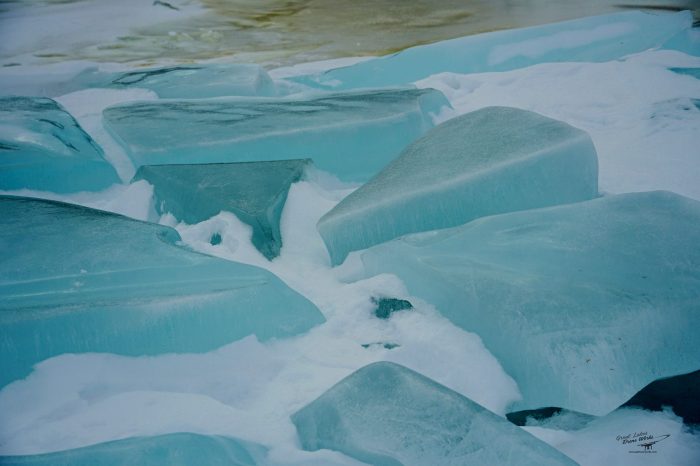
Bay City Blue Ice, photo by Great Lakes Drone Works

Great Lakes Drone Works captured some awesome shots from the ice on Saginaw Bay near Bay City. They write:

We made our way out to Bay City State Park to capture some images of these huge chunks of ice. At first we were hoping drone photos would be the way to go but after walking around and getting up close, it was clear that ground photography was the better option.
Blue ice occurs when weather conditions — such as a lack of high winds — allow water to freeze slowly and evenly, resulting in ice composed of large crystals (unlike snow, which is formed quickly and made up of small crystals).

When light hits these big ice crystals, it can travel deep into the structures (compare this to snow, wherein light hits a sharp edge and reflects off of it right away, resulting in blinding white). When the light travels deeper into slowly formed ice, some of the red wavelengths of sunlight — which is the longest wavelength of visible light — get absorbed into the ice structure.

The blue, which is the shortest wavelength of visible light, bounces back out, meet our eyes, and results in a deep aqua color.

Head over to their Facebook for more shots and get lots more icy goodness at the ice tag on Michigan in Pictures!

Firing up the Polar Vortex Ice Cave Hype Machine

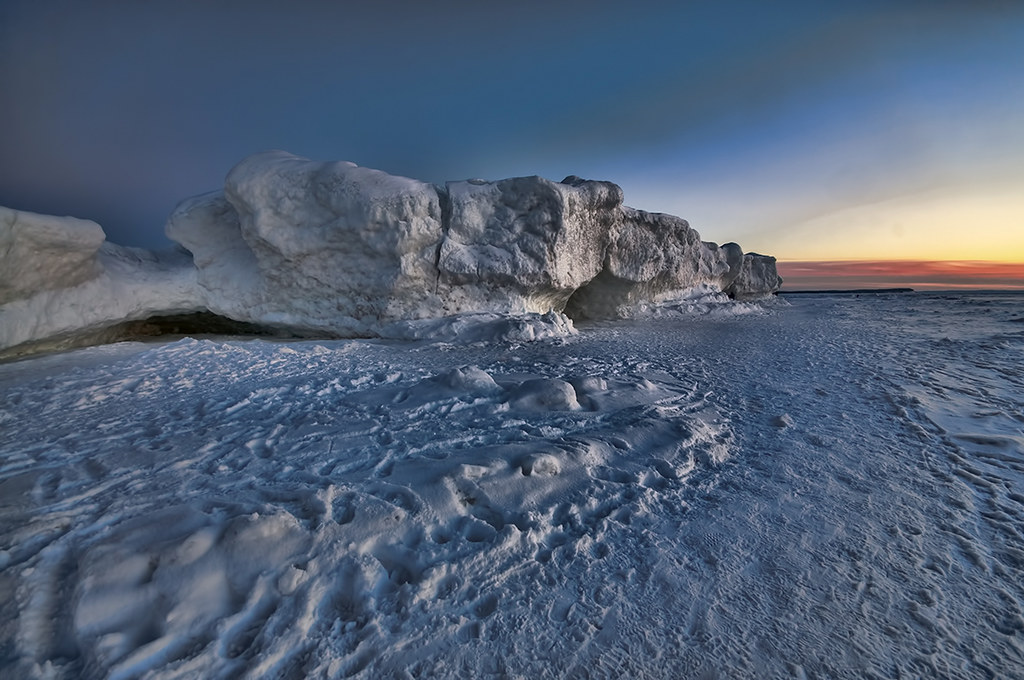
Ice Cave Evening by Mark Miller

Ice Cave Evening by Mark Miller

via leelanau.com who write:

It’s a frosty 3 degrees in Leland with winds whipping powdery snow around and more single digits & high winds driving wind chills far below zero coming over the next couple of days. That’s not optimal for driving, and schools across the county are cancelled. It could, however, bring to life ice formations & caves on Leelanau’s western shore like we’ve seen several times in recent years.

They’ve got past ice cave articles and will be posting updates right here! The Freep reports that Michigan is bracing for potentially record-breaking cold this week:

A polar vortex is forecast to batter the Great Lakes and Midwest regions Tuesday through Thursday, with the lowest temperatures set to occur Wednesday. Some areas of Lower Michigan could face wind chills as low as 45 degrees below zero, according to the National Weather Service.

That would mark the most bitter cold in years for the region.

…The polar vortex is the large area of cold air and low pressure near each of the Earth’s poles. The air flows counter-clockwise near each of the poles, hence “vortex.”

“Many times during winter in the northern hemisphere, the polar vortex will expand, sending cold air southward with the jet stream,” the NWS explains.

Mark took this back in Mark of 2014. View the photo bigger and see more awesome shots in his Northern Michigan winters photo album.

Support Michigan in Pictures with Patreon

Happy New Year 2019!!

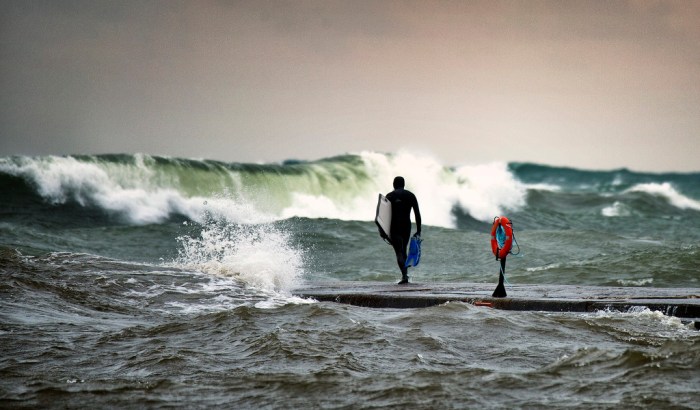
Surfing the Great Lakes, photo by Paulh192

“I hope that in this year to come, you make mistakes. Because if you are making mistakes, then you are making new things, trying new things, learning, living, pushing yourself, changing yourself, changing your world. You’re doing things you’ve never done before, and more importantly, you’re doing something.”
– Neil Gaiman
 
Live, try, learn, grow & push yourself in 2019. Happy New Year everyone and for the Fun Police, don’t try surfing in the winter if you don’t know how to surf in the summer. ;)
 
Paul took this shot a surfer contemplating some mountainous waves on Lake Michigan on the pier in Grand Haven, Michigan during an unusually violent November storm. What looks like the shoreline on the upper right is actually another huge wave!
 
See Paul’s photo on Flickr and get lots more on his Flickr page!