Speaking of Alpena: Rockport State Park

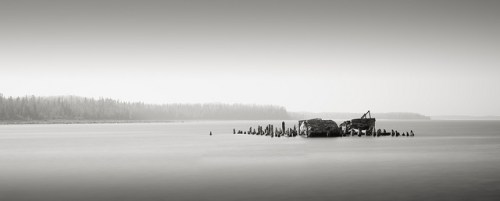
RockPort I

RockPort I, photo by Jeff Gaydash

In the course of writing about on how Alpena was named, I ran across this great photo from Rockport. It used to be called the Rockport Property, and in February it became the newest state park in Michigan. The DNR news release explains:

Rockport State Park offers many unique and special features. With 4,237 acres of land located on the shores of Lake Huron, north of Alpena, the property includes a deep-water protected harbor, an old limestone quarry of approximately 300 acres, a unique series of sinkholes, a dedicated Natural Area (Besser Natural Area), and a broad range of land types, vegetative cover, cultural resources and recreation opportunities. At the harbor, the Department has a boat launch facility, and there is a small park developed by Alpena Township on land leased from the State.

There’s no map on the DNR Park website yet, but you can get directions and some more photos from Quiet Solo Pursuits.

Check this out on black and in Jeff’s fantastic The Great Lakes slideshow.

Happy weekend everyone…

Sunflower Season in Saline

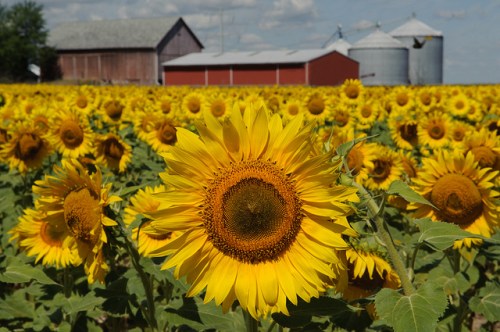
Sunflower Field

Sunflower Field, photo by C E Andersen

August is sunflower season in Michigan, and this shot is a beaut!

Check it out background bigtacular and in Chuck’s Sunflowers slideshow.

More great Michigan wallpaper on Michigan in Pictures!

How Alpena got its name

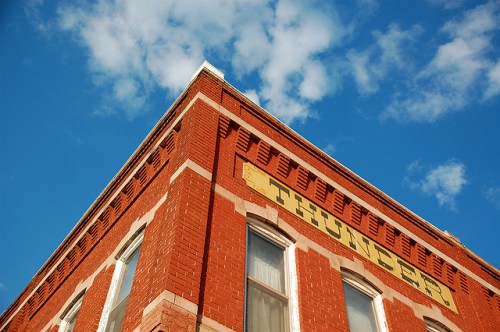
Brick Thunder

Brick Thunder, photo by cmu chem prof

The Pure Michigan Blog has an excellent series on how Michigan cities got their names. They are up to Part 10. One of the cities is Alpena:

Alpena

Alpena County was first named “An-a-ma-kee,” or “Thunder,” in honor of an old Chippewa chief of the Thunder Bay band who had signed a treaty negotiated with Henry Schoolcraft in 1826. After studying the Indian legends around the word “An-a-ma-kee” (or Animikee), Henry Schoolcraft concluded that the name was not completely appropriate. Then he manufactured the name Alpena from “Al,” an Indian syllable meaning “the”, and either “pinai,” an Arabic word meaning “partridge,” or “peanaisse,” an old French word meaning “bird.”

Check this photo out background big and in Phil’s huge Cities & Towns slideshow.

Sturgeon Moon, Blue Moon, August Moon

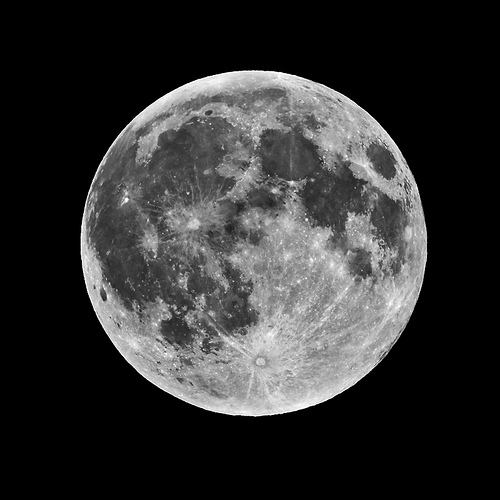
August Full Moon for 2009

August Full Moon for 2009, photo by Kevin’s Stuff

In 2012 we have a rare treat – two full moons in the month of August! The Sturgeon Moon is full TONIGHT at 11:28 PM and the 2nd full moon swings around at 9:58 AM on August 31st. Kevin took this photo at the James C. Veen Observatory near Grand Rapids and writes:

The Full Moon for August is the Full Sturgeon Moon, when this large fish of the Great Lakes and other major bodies of water like Lake Champlain is most readily caught. A few tribes knew it as the Full Red Moon because the moon rises looking reddish through sultry haze, or the Green Corn Moon or Grain Moon.

Some other names are the Dog Day’s Moon (Colonial America), Harvest Moon (China), Dispute Moon (Celtic) and the Corn Moon (English Medieval).

See this photo on black (very nice) and in Kevin’s The Moon slideshow.

Cloud Bridge

cloud bridge

cloud bridge, photo by gerrybuckel

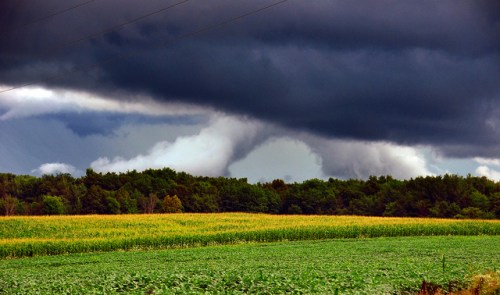
In honor of the rain we’ve recently received in parts of Michigan…

Check this out big as the sky and see more shots she’s shared in the Absolute Michigan pool in her Absolute Michigan slideshow.

More Michigan skies on Michigan in Pictures!

The Ford 999

Henry Ford and Barney Oldfield and the Ford 999 in 1902, photographer unknown (via Wikimedia)

Henry Ford, founder and namesake of the Ford Motor Company, was born on July 30, 1863. He’s shown above with early racing great Barney Oldfield and the Ford 999. The Motorsports Hall of Fame says:

The oldest vehicle in the Motorsports Hall of Fame is the famous Ford 999 racer from 1902. Although it is not the first race car ever built, it is certainly the first car to rise to the status of legend.

Always seeking publicity, Barney Oldfield dubbed the car 999 after the feats of the record-holding New York Central locomotive.

Although the car is equipped with only one seat, a “Mechanician” was often kept busy oiling bearings and making adjustments while the car was being driven! The role more closely resembled that of an active sidecar acrobat than that of a riding mechanic.

The sister car of the 999 was the Arrow. It was a rebuilt Arrow that Henry Ford drove to 91.37 mph on frozen Lake St. Clair in January of 1904, for the new automotive World Land Speed record. After Ford set the record, his racing partner, Tom Cooper, sold both the 999 and the Arrow. The Arrow was renamed the New 999 by the new owner.

…Shortly before his death, Henry Ford is said to have remarked to Barney Oldfield: “You made me and I made you.” Oldfield shook his head and replied “Old 999 made both of us.”

You can see a great gallery of photos of early Ford race cars that includes shots of Ford and his mechanician and a modern photo of the 999 from The Henry Ford Museum on Flickr. The Henry Ford is located in Dearborn and they (of course) have a ton of information about Henry Ford.

More cars on Michigan in Pictures!

Gypsum & Alabaster

Old Off Shore Alabaster Loading facility

Old Off Shore Alabaster Loading facility, photo by hz536n/George Thomas

One of the neatest features for me about Michigan in Pictures are the many things I learn from the photos that are posted. Today’s photo of the Lake Huron loading platform for US Gypsum is a perfect example. The Iosco County Historical Society explains that:

The tramway of the U. S. Gypsum Company at Alabaster has long been a tourist attraction. Built in 1928 the tramway stretches 1.3 miles out into Saginaw Bay. Like a horizontal ski-lift, the cable system carries 72 “buckets” of gypsum to a waiting ship or to the storage bin. Each bucket holds more than two tons. The tramway includes 6,450 feet of one and three-quarter inch steel cable and 14,000 feet of three-quarter inch cable. At a length of 6,350 feet it is the longest over-water bucket tramway in the world.

…Until 1898 when the railroad spur was installed, all shipments were made by sailing vessels that tied up to a 600 foot dock. Marine shipments were resumed in 1929 after the building of the tramway enabled the larger ships to load in deeper water at the end of the tramway. Rail shipments were then made when the boat season was closed.

The tramway was dismantled (though concrete pads which may house wind turbines remain). You can also read an interesting account detailing the history of the town of Alabaster. While I knew that gypsum was used in drywall, I had no idea of its versatility (or Michigan’s status as a leading gypsum producer). You can learn about in great detail from MSU Geology’s page on gypsum:

If you were given a chance to win a jackpot by correctly naming a material that was used in the pyramids and in your toothpaste; that helps peanuts grow and makes movie snow; and that is used in mushroom beds and the walls of your house, chances are at least 100 to 1 that the quizmaster would holler “Sorry, your time is up,” before you could say “hydrous calcium sulphate.”

But, don’t feel badly.

Even though more than 12 1/2 million tons of gypsum were used in the USA last year, and even though the average person is surrounded by gypsum products from dawn to dusk, from the cradle to the grave, people do not know much about gypsum.

Gypsum can be ground up and “boiled” (calcined) at a comparatively low temperature until 75% of its moisture content has evaporated. When that happens, the rock becomes a fine powder, commonly known as Plaster of Paris. By returning the water to the powder, one can make a pliable mortar that can be formed into any shape and hardened. Gypsum is the only natural substance that can be restored to its original rock-like state by the addition of water alone.

Check this photo out background big and see more in George’s Fall 2009 slideshow.

Hot Times for a Cold Lake

Lake Superior waves

Lake Superior waves, photo by ER Post

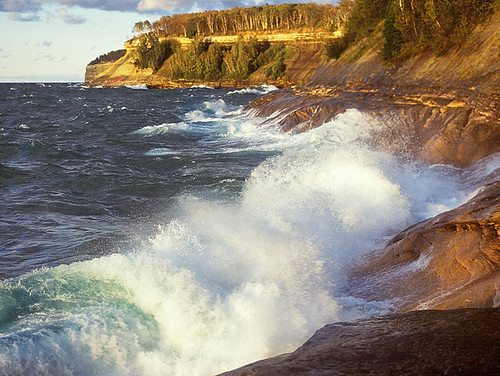
Hot times for a cold lake; Lake Superior headed for record temp from the Great Lakes Echo says that Lake Superior is already the warmest it’s been at this time of year in at least a century. The group Climate Central recently reported that Lake Superior began warming earlier than normal because of low lake ice cover, the March heat wave and warm temps have kept the heat on.

“It’s pretty safe to say that what we’re seeing here is the warmest that we’ve seen in Lake Superior in a century,” said Jay Austin, a professor at the University of Minnesota at Duluth, who has researched the lake’s water temperatures back to the beginning of the 20th century.

The lake’s record temperatures are yet another consequence of the record heat so far in 2012. The contiguous U.S. had its warmest January-to-June period since records began in the late 19th century. Manmade global warming will likely result in more years with very warm water temperatures, which could have significant adverse consequences for marine life. In a rare benefit from the ongoing drought, this summer has been so dry that the warm water temperatures are not resulting in major harmful algal blooms, such as one that occurred on Lake Erie last year.

Instrument data from three buoys in Lake Superior provide a reliable record of water temperatures since about 1980, and the information also shows that, with water temperatures running in the mid-to-upper 60s (and even warmer closer to shore), “we are at record temperatures for this time of year,” according to Austin.

When the 2nd biggest lake on the planet is sounding alarm bells, it might be a good idea to listen.

See this photo bigger and in Ed’s Michigan Scenery slideshow.

Blue Moon: Apollo 15 and the University of Michigan

Apollo 15: Irwin Scoops up Soil

Apollo 15: Irwin Scoops up Soil, photo by NASA on The Commons

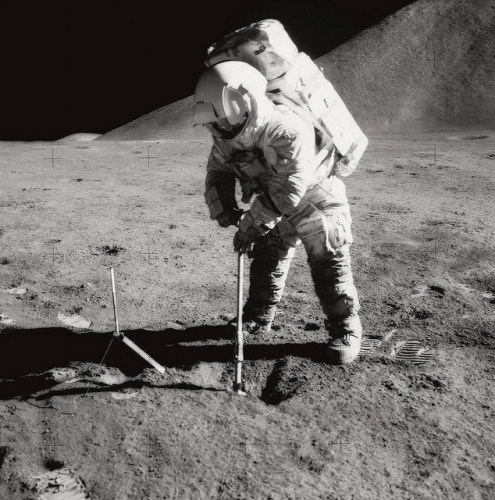
Over on Absolute Michigan we have a feature on the all-UM crew of the Apollo 15 that includes a great video. You can see a lot more images from the Apollo 15 mission from NASA. Here’s their caption for this photo:

This frame from Dave’s Station 8 pan shows Jim standing wide-legged as he digs the partially-completed trench in front of him. He sticks the scoop into the wall opposite where he is standing and propels the scoop-load of regolith back between his legs. The narrow fan of throwback can be seen behind him and, indeed, there seems to be some material still in motion at the far end of the throwback pattern just above the two fiducials at mid-thigh height. Mt. Hadley (14,765 feet tall) is in the background.

Check it out big as the moon and in NASA’s Happy Moon Day! slideshow.

More University of Michigan on Michigan in Pictures.

Sorry folks – the spammers took a liking to this post for some weird reason so I had to close comments!!

Waterfall Wednesday: Rock River Falls

Rock River Falls

Rock River Falls, photo by PaulWoj

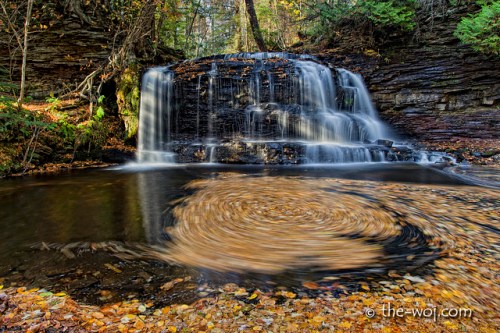
Rock River Falls is located in the Rock River Canyon Wilderness Area in Alger County which is s administered as a part of the Munising Ranger District of the Hiawatha National Forest:

The canyon area itself has been relatively undisturbed by humans. Little evidence of prior human activity can be found, except for an occasional old skid road or decaying stump. Dense undergrowth and brush covers most of the land. The canyons are points of interest because few such landscape features exist in the eastern Upper Peninsula of Michigan. Foot travel is difficult along the steep walls and through the densely vegetated and wet canyon floor. High ground around the canyons is covered by northern hardwoods and is easily traveled.

At the edge of the canyons are sandstone outcrops which water and weather have transformed into caves 10 to 40 feet deep. During winter, ice curtains formed by water seeping over the canyon edge hang in front of the caves. Large cedar trees also hang over the rim of the canyon. Rock River Falls is a notable feature in spring, when its waters cascade over a sandstone ledge into a pool 15 feet below.

Check this photo out background bigtacular and in Paul’s Especially in Michigan slideshow. Also see Paul’s cool Tumblr photo blog.

More Michigan waterfalls on Michigan in Pictures.