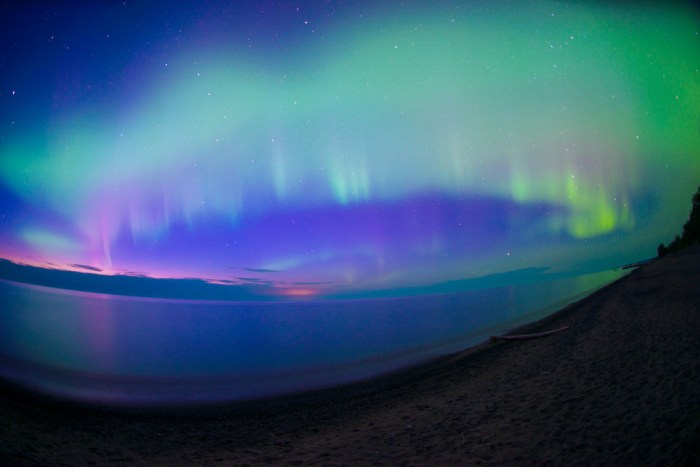
Twilit Aurora from the Keweenaw Peninsula

Twilit Aurora Borealis

Twilit Aurora, photo by Eric Hackney

Wowzas!!! Here’s the northern lights as seen last night from the Keweenaw Peninsula. Space Weather is saying that there’s a good chance of more strong northern lights tonight!

I’ve written about the science behind the colors on the Northern Lights, but how about some highlights of the beliefs about colors of the aurora from ancient people around the world?

In Bulfinch’s Mythology, Thomas Bulfinch claimed in 1855 that in Norse mythology: The Valkyrior are warlike virgins, mounted upon horses and armed with helmets and spears … When they ride forth on their errand, their armour sheds a strange flickering light, which flashes up over the northern skies, making what men call the “aurora borealis”, or “Northern Lights”.

The Algonquin think the lights are their ancestors dancing around a fire.

The northern lights in Scotland were known as “the mirrie dancers” or na fir-chlis. The dance often ended in a fight – “the mirrie dancers bled each other last night”. The appearance of the lights also predicted bad weather.

In Latvian folklore the aurora borealis, especially if red and observed in winter, are fighting souls of dead warriors especially if it is red and seen in the winter. It is an omen foretelling disaster.

Russian folklore associates the northern lights with the fire dragon (“Ognenniy Zmey”). The dragon came to women to seduce them when their husbands were gone.

The Finns named the northern lights revontulet, or fox fires. According to their legend, foxes made of fire lived in Lapland. And, the fox fires were the sparks they took up into the atmosphere on their tails.

Click for more including photos!

View Eric’s photo bigger and see more in his 9-7-15: Northern Lights V slideshow.

Many more Michigan aurora pics on Michigan in Pictures!

Salute to Michigan’s Workers on Labor Day

Detroit Industry Mural Diego Rivera

Detroit Industry, photo by Maia C

A very happy Labor Day to everyone and also a salute the generations of hard-working Michiganders whose struggles helped to build the society we have today.

View Maia’s photo background big and see more in her Rivera Court, Detroit Institute of Arts slideshow.

More Labor Day and more about the Diego Rivera murals at the Detroit Institute of Art on Michigan in Pictures.

Caribbean of the North

Carribean of the North

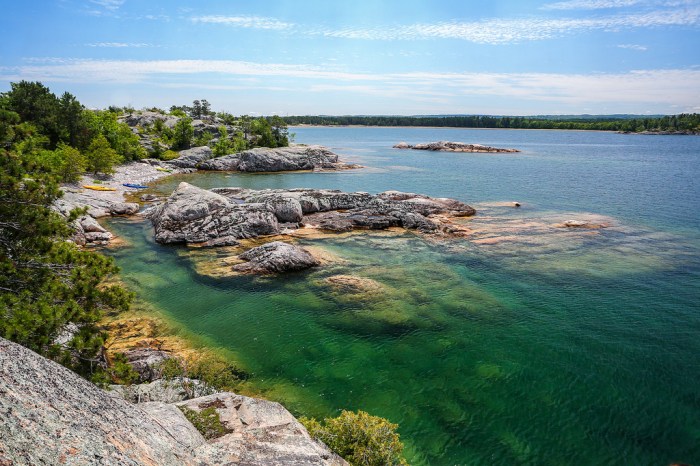
Caribbean of the North, photo by Cory Genovese

A while back I featured this as the cover photo on twitter.com/michpics. It’s so great I had to share it here as well! Cory wrote:

A day trip kayak cruise with a couple of friends on Lake Superior resulted in us finding ourselves in the “Caribbean of the North”…albeit with the pool heater unplugged ;)

Indeed! View the photo bigger and see more Lake Superior amazingness from Cory and be sure to follow him at facebook.com/PhotoYoop!

Bumper to Bumper

Tailgating

Tailgating, photo by Michael Seabrook

“Just pay attention when you’re behind the wheel. If you can’t drag yourself away from your cell phone, just lock it in the trunk.”
~ Lt. Michael Shaw, Michigan State Police

Here’s hoping that everyone who’s traveling this weekend (that’s 1.2 million Michiganders) can practice safe driving this weekend. Labor Day is our deadliest holiday – pay attention and please don’t drink & drive.

Michael took this shot of Two P-51s and a Spitfire flying in formation at the 2015 Thunder Over Michigan Air Show in Ypsilanti. He says the perspective makes them look closer than they really are. View his photo bigger and see more in his Airshows slideshow.

Have a wonderful weekend everyone!

Weird Wednesday: Hamlin Lake UFO

Strange Sunset on Hamlin Lake

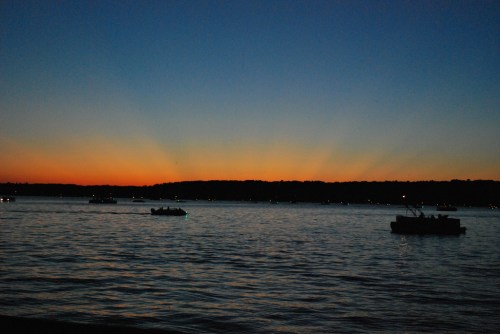
Strange Sunset, photo by Craig Downing

On the last Wednesday of every month I used to do a “Weird Wednesday” feature in conjunction with Linda Godfrey. She’s still going strong and you can follow her findings at LindaGodfrey.com.

This isn’t one of Linda’s stories, but I thought I’d share it for old times sake. Via the Mutual UFO Network:

I am now age 78 but when I was about 6 or 7 and messing in the dirt with ants on the dirt dead-end road in back of the cottage about 10 miles outside of Ludington, Michigan, I saw a saucer like object flying toward me; it then stopped over Hamlin Lake and after a second, went back the way it came from the other side of Hamlin Lake and on perhaps in the direction of Lake Michigan. It didn’t make any noise and I didn’t see any windows. It just looked like a flying saucer.

The speed was relatively slow and it seemed to stop for a moment over about the middle of the lake there and then reverse course going back in the direction it had come as if to say, “Oh, I’m going in the wrong direction” I don’t know why I recall this event today as if it happened yesterday. I wish I didn’t. I recently saw on T.V. the Lake Michigan triangle between Benton Harbor, Manitowac and Ludington.

You can head over to MUFON for more reports. As to what’s actually happening over to Hamlin Lake, the Sunrays – Crepuscular rays page at Atmospheric Optics explains:

Sun rays, also called crepuscular rays, streaming through gaps in clouds are parallel columns of sunlit air separated by darker cloud shadowed regions. The rays appear to diverge because of perspective effects, like the parallel furrows of freshly ploughed fields or a road wide at your feet yet apparently narrowing with distance. Airborne dust, inorganic salts, organic aerosols, small water droplets and the air molecules themselves scatter the sunlight and make the rays visible.

View Craig’s photo bigger and see more in his Ludington slideshow.

Lots more Michigan weirdness on Michigan in Pictures!

Michigan County Monument

Michigan County Monument

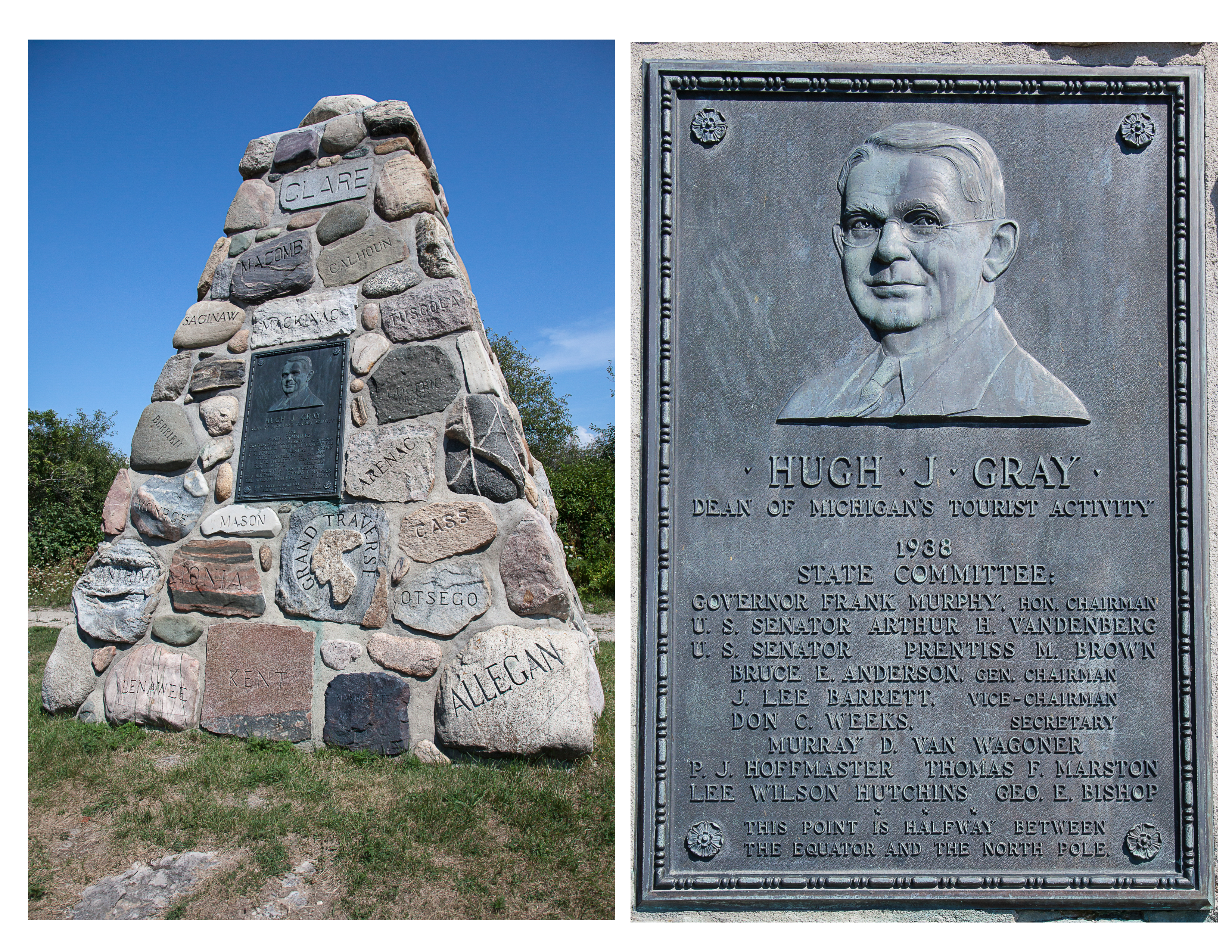
Michigan County Monument, photo by Ragnar II

Monument to the Dean of Michigan’s Tourism Activity on Roadside America says:

If someone asked, “Who has had a rock pyramid built in their honor?” you might think of an Egyptian pharaoh or an Aztec king. You would probably not think of a bespectacled, middle-aged, mid-western man named Hugh J. Gray. Nevertheless, Hugh has one — on a smaller scale compared to the ones in Egypt and Mexico, but a rock pyramid nevertheless.

Hugh was, according to the plaque on his pyramid, the “Dean of Michigan’s Tourist Activity.” The pyramid, erected in 1938, stands on Cairn Highway, named apparently in reference to Hugh’s pile of rocks. Cairn Highway is an obscure back road today, which says something about the transient nature of fame.

Hugh’s pyramid is built of rocks from each of Michigan’s 83 counties.

Ragnar suggests that you plug the coordinates 44.948227, -85.352708 into Google Maps to find your way there. View his photo background big and see more in his slideshow.

More roadside attractions on Michigan in Pictures!

The Science of Sand Waves, Silver Lake Dunes Edition

Sand Waves

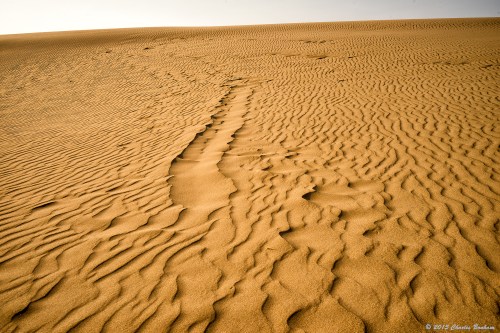
Sand Waves, photo by Charles Bonham

Confession: I probably don’t give Silver Lake Dunes State Park enough love. What an incredible place.

In Scientific American Robert S. Anderson, associate professor of earth sciences at the University of California at Santa Cruz explains why regular, wavelike shapes form when the wind blows over the sand on the beach for a long time:

Ripples in sand, found on both beaches and dunes, are one of nature’s most ubiquitous and spectacular examples of self-organization. They do not result from some predetermined pattern in the wind that is somehow impressed on the surface, but rather from the dynamics of individual grains in motion across the surface. They arise whenever wind blows strongly enough over a sand surface to entrain grains into the wind. The subsequent hopping and leaping of these grains is called saltation. Saltating grains travel elongated, asymmetric trajectories: Rising relatively steeply off the bed, their path is then stretched downwind as they are accelerated by drag forces. They impact the sand surface centimeters to tens of centimeters downwind, typically at a low angle, around 10 degrees. It is this beam of wind-accelerated grains impacting the sand surface at a low angle that is responsible for ripples.

“An artificially flattened sand surface will not remain flat for long. (Try it on the beach or on the upwind side of a dune and see for yourself.) Small irregular mottles in the sand surface, perhaps a couple centimeters in wavelength, rapidly arise and grow once the wind starts to blow hard enough to initiate saltation. They then slowly organize themselves into more regular waves whose low crests are aligned perpendicular to the wind direction and begin to march slowly downwind. Typical ripple spacing is about 10 centimeters, whereas the typical height of the crests above the troughs is a few millimeters. The pattern is never perfect, but instead the ripple crests occasionally split or terminate, generating a pattern that looks remarkably like one’s fingerprint.

Read on for a whole lot more including Michigan Sea Grant educator Walt Hoagman explaining how the speed of wind (and water) over sand influences the waves.

View Charles’s photo background bigilicious and definitely check out his incredible Silver Lake Dunes photos.

More science, more dunes and more summer wallpaper on Michigan in Pictures.

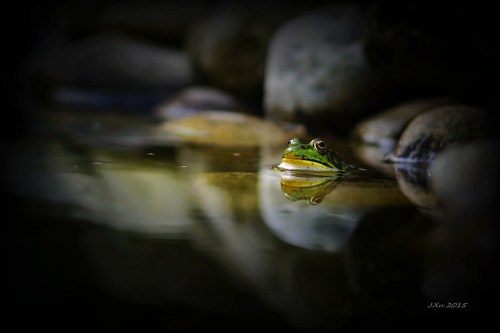
Frog Friday

Frog Friday

A frog in the backyard pond, photo by jiafanxu

Anyone feeling like this at the end of the week? Fortunately, one of our last summer weekends awaits!

View Jiafanxu’s photo bigger and see more in their slideshow.

More frogs on Michigan in Pictures!

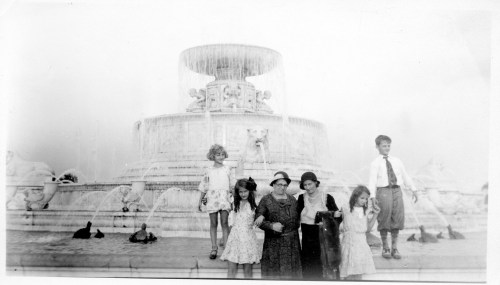
#TBT: Yesterday & today at the James Scott Memorial Fountain

James Scott Memorial Fountain 1932

James Scott Memorial Fountain, c 1932, photo by Tom Clark

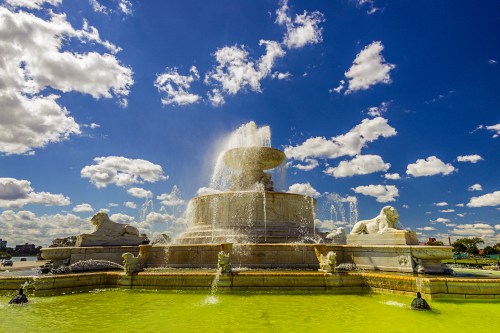
Here’s a fun pair of pics. Tom went back to where this family photo was taken in the early 30s and got a picture of the scene. You can see the one above background big, the one below right here and see more including another shot from the Belle Isle Conservatory in his Wonderful Michigan slideshow.

James Scott Memorial Fountain Bell Isle

More Belle Isle including the story of the James Scott Memorial Fountain on Michigan in Pictures.

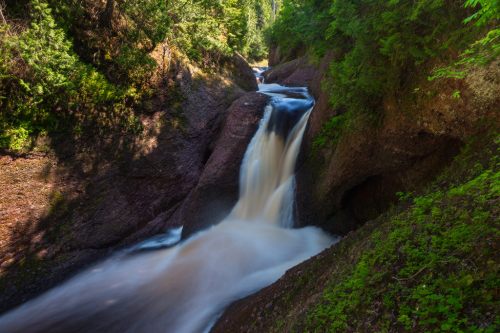
Waterfall Wednesday: Gorge Falls

Gorge Falls Black River Byway

Gorge Falls, photo by Eric Hackney

GoWaterfalling’s page on Gorge Falls says:

A very scenic waterfall set in a very scenic gorge. An added plus is the close proximity of the equally impressive Potawatomi Falls. These are two of the most impressive falls on the Black River and are also the two easiest to access.

Gorge falls is named for the deep and narrow gorge above and below the falls. This was my personal favorite of Black River Scenic Byway waterfalls. It is also one of the easier waterfalls to visit, being only a short distance from the parking area. There are a fair number of stairs to the falls overlook. It is only a short walk upstream to see Potawatomi Falls.

Read on for more including directions to this and other nearby waterfalls along the Black River.

You can check out Eric’s photo bigger and see more in his 6-27-15 Black River Scenic Byway slideshow.

Tons more Michigan waterfalls (including some by Eric!) on Michigan in Pictures.