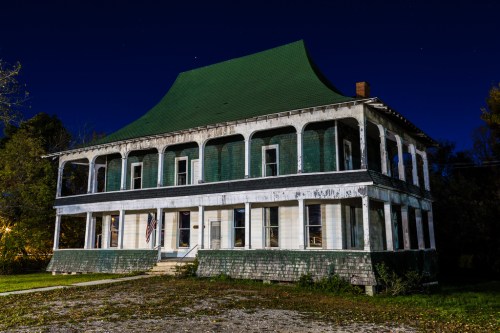
Iced Light in the Polar Vortex Night

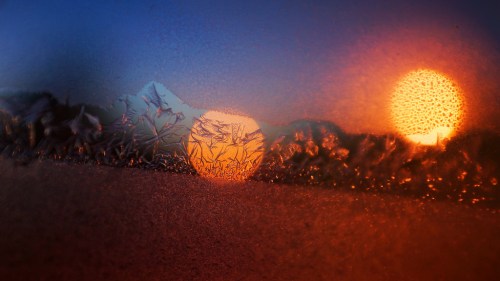
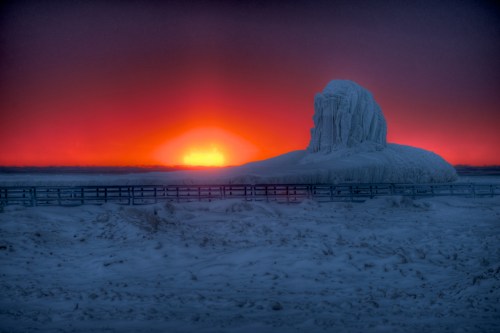
Iced Light in Polar Vortex Night @ -20 °C (-4 °F)

Iced Light in Polar Vortex Night @ -20 °C (-4 °F), photo by C.T.Yeh

Here in Traverse City,  schools are closed for (I think) the 5th time since January 1st. With 4 degree temps and the wind howling at 20-30 mph, our wind chill is near 20 below. The temps across Michigan show much the same with few places in the Lower Peninsula above single digits and most of the Upper Peninsula below zero. Marquette takes the (frozen) cake with -10 before any windchill is calculated.

What big teeth you have, Winter 2014.

Check Jimmy’s photo out background bigtacular and see more in his Nature slideshow.

There’s more winter wallpaper on Michigan in Pictures, but nobody’s going to blame you if you try on something a little more summery!

Rolling past 5,000!

5 Spot by Matt burrowsPoint of OriginFull Moon JanuaryVostok Snow Circle

Yesterday the Michigan in Pictures Facebook page blasted past 5000 fans, an occasion that just one photo didn’t seem enough to mark. I am so grateful to everyone who’s become a fan of Michigan in Pictures on Facebook or here at the blog. It means a lot to me that people share my love of the great state of Michigan. Thank you!

The photos left to right are…

5 Spot by Matt Burrows – Matt has been featured several times on Michigan in Pictures and is the first person that I know who really embraced iPhone photography. He says that it’s part of an “Enter” sign at 5/3 Bank in Grand Rapids and taken with an iPhone 3GS (CrossProcess app).

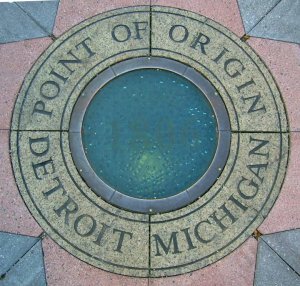
The Heart of Detroit by Maia C – Maia was one of the first 100 people to join the Absolute Michigan pool on Flickr. With 3400 members and nearly 200,000 photos, it’s still going strong! And yes, she has a couple of photos on Michigan in Pictures too! About this photo of the Point of Origin she writes: This compass in Campus Martius Park marks the base point for the survey that began the rebuilding of Detroit after a devastating fire in 1805. The glass center covers a granite pillar that was buried at this spot around 1820 to mark the “point of origin” for the new street grid. The Point of Origin is a few minutes’ walk north of Detroit’s riverfront.

Howl at the Full Moon by Kevin’s Stuff – Kevin is our Man of the Moon (and a little Northern Lights). Fittingly, the photo above is of the January full moon. He writes: The Full Moon of January is called the Full Wolf Moon. Amid the zero cold and deep snows of midwinter, the wolf packs howled hungrily outside Indian villages. It was also known as the Old Moon or the moon after Yule. In some tribes this was the Full Snow Moon; most applied that name to the next moon.

Circles in the snow by vostok71 – In January of 2008 Sergei wrote: Leaf got trapped during the last night ice storm. He has a few photos on Michigan in Pictures including the biggest apple grown in Michigan!

Click them all to see them bigger!!

January 21st is National Squirrel Appreciation Day

National Squirrel Appreciation Day

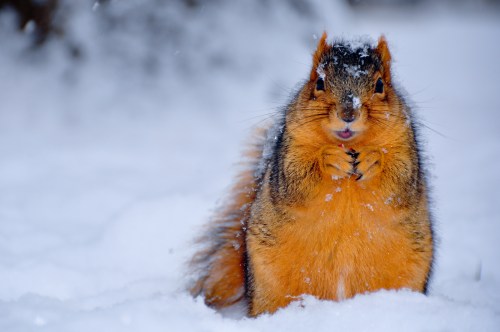
Fox Squirrel, Eastern Fox Squirrel, photo by AndrewH324

Jonathan Schechter of Earth’s Almanac marks Squirrel Appreciation Day, saying:

Squirrel Appreciation Day is here; like them or not. January 21st is the day to look at America’s favorite rodent as something other than pancake-flat road kill, a clever feeder-robber or free entertainment for a frustrated window watching cat. Take time today to appreciate their adaptability and ability to not just survive but thrive in our midst. This slightly nutty ‘holiday’ is saluted by the National Wildlife Federation and was founded in 2001 by Christy Hargrove, a wildlife rehabilitator in North Carolina. Despite the fact that many fail to look both ways before crossing a highway even squirrel haters should salute these creatures that bury nuts; helping to spread trees to areas where the nut did not fall.

In Oakland County the squirrels seen in winter are the evergreen tree loving red squirrels, the rusty orange colored fox squirrel and the gray squirrel, a squirrel of the great American hardwood forests that is sometimes jet black. We are also home to the northern flying squirrel; a nocturnal creature that is more common than many realize! Chipmunks are seldom seen in winter and our 13 lined ground squirrel are under ground snoozing until spring thaw.

Andrew took this photo at the University of Michigan. Due to the high degree of squirrel activity on campus, there’s a Squirrel Club at UM. View Andrew’s photo background bigtacular and see more of this little guy in his Squirrel slideshow.

More squirrels on Michigan in Pictures.

A Dream Begins in Detroit: Remembering Martin Luther King

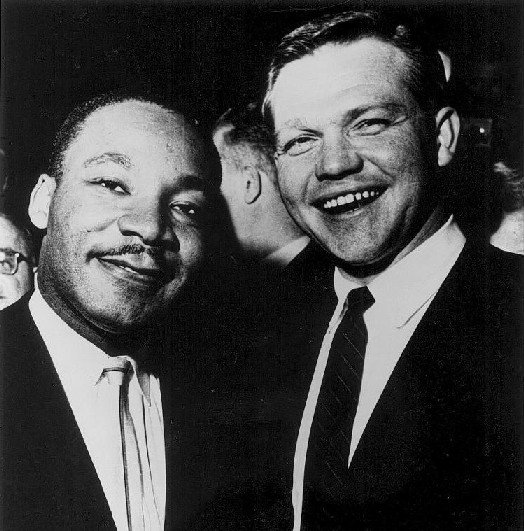
John Swainson and Martin Luther King

John Swainson and Martin Luther King, photo courtesy Archives of Michigan

Today’s post is by Bob Garrett of Seeking Michigan and the Archives of Michigan…

A Dream Begins in Detroit

In the above photo, Dr. Martin Luther King, Jr. appears with John Swainson, Michigan governor of 1961-1962. The photo is undated but was most likely taken on Sunday, June 23, 1963. On that date, Dr. King and former governor Swainson both participated in the Detroit “Walk to Freedom.”

The Detroit Walk to Freedom

Dr. King was then in the midst of a tour (begun that spring) from California to New York. His Detroit stop proved the tour’s biggest success. Police estimated the Freedom Walk crowd at 125,000. The day after the event, The Detroit Free Press labeled it “the largest civil rights demonstration in the nation’s history.” The walk began at Woodward and Adelaide and continued down Woodward to Cobo Hall. It lasted about an hour and a half, as marchers carried signs and sang songs (Songs included “We Shall Overcome” and “The Battle Hymn of the Republic.”).

The Detroit Council for Human Rights organized the Walk. The Council’s director, Benjamin McFall, and its Chairman, Rev. Clarence L. Franklin, marched in a line with King and Swainson. That line also included Detroit Mayor Jerome Cavanaugh, United Auto Workers President Walter P. Reuther and State Auditor General Billie S. Farnum. (Then-current governor George Romney, a Mormon who avoided public appearances on Sundays, did not directly participate. He did, however, proclaim the day “Freedom March Day in Michigan.”)

Speech at Cobo Hall (“I Have a Dream…”)

At the walk’s conclusion, King gave a speech at Cobo Hall. According to the contemporary Detroit Free Press report, approximately twenty-five thousand people sat in attendance, with African Americans comprising about ninety-five percent of that total. They listened as King spoke of non-violence and an end to racial segregation. The June 24, 1963 Free Press report notes that King “ended his speech by telling of a dream.” According to the Free Press, King described his dream of whites and blacks “walking together hand in hand, free at last.”

In his book King: A Biography, David Levering Lewis states that King repeated the phrase “I have a dream” several times during that Cobo Hall speech. Lewis notes that when King addressed a crowd in Washington, D.C. two months later, he “kept the refrain from the Detroit speech: I have a dream.” (See Lewis’ King: A Biography, second edition, Urbana: University of Illinois, 1978, pg. 227).

Conclusion

King’s Washington speech of August 28, 1963 became famous as his “I have a dream speech.” It was a defining moment in the American civil rights movement. In one sense, however, the seeds of Dr. Martin Luther King, Jr.’s dream were planted in Michigan – in Detroit’s Cobo Hall.

Editor’s Note: You can click to read the full text of Dr. King’s speech in Detroit and see a photo from the walk on Michigan in Pictures. Interestingly enough, Gov. Swainson had a harder road than many to participate in the walk – he lost both his legs in a land mine explosion in Alsace-Lorraine in WW II and had to learn to walk again on artificial legs. More on the Wikipedia entry for Governor John Burley Swainson.

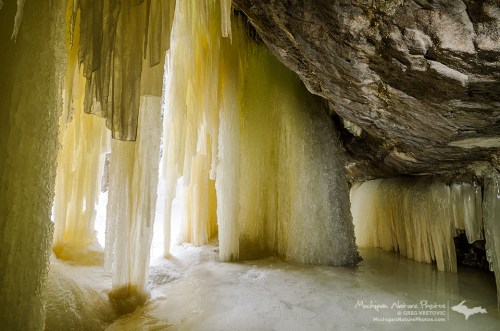
Exploring the Eben Ice Caves

Exploring the Ice Caves

Exploring the Ice Caves, photo by Michigan Nature Photog

View Greg’s photo bigger and see more in his great Winter slideshow. Catch another shot of the ice caves here and here on Facebook. While you’re there, Greg is also holding a contest and giving a print to 2 winners!

Last year I shared a photo feature on the Eben Ice Caves by Nina Asunto. On Black Coffee at Sunrise, her excellent blog of explorations of Michigan’s wild places, she writes (in part):

During winter, ground water seeps over the edge and down through the sandstone where it freezes, creating huge curtains of ice and closing off the front of the outcrops to form caves.

We had both seen a few photos of the ice caves, but none of them really captured the size of this phenomenon. It was difficult to decide where to begin to tackle it photographically, and we immediately began climbing around the hillsides to get a more expansive view, and crouching and crawling around at the base of the ice to see every possible angle…

What we weren’t able to capture, however, was the amazing sound inside the cave. The drips of water falling from above created wonderful echoes and added to the cave atmosphere. There is much variation of color and texture to the ice in different parts of the cave. Some formations were smooth and clear, others were bumpy and hollow-sounding, and there were some columns that looked like dripping candle wax.

Read more on her blog and get lots more on this transitory Michigan wonder on Michigan in Pictures!

Onekama Sunset

Onekama Sunset

Onekama Sunset, photo by lomeranger

I hope you all had a great week and that you’ll have a chance to get out and enjoy Michigan this weekend.

Wikipedia says that Onekama is a village in Manistee County located on the shores of Portage Lake, and that the town’s name is derived from “Ona-ga-maa,” an Anishinaabe word that means “singing water.” Here’s a Google map.

View Jason’s photo background bigtacular, see more in his Landscape IV slideshow and (if you like) purchase it right here.

More winter wallpaper on Michigan in Pictures.

2014 Michigan Ice Fest & Ice Climbing in Pictured Rocks

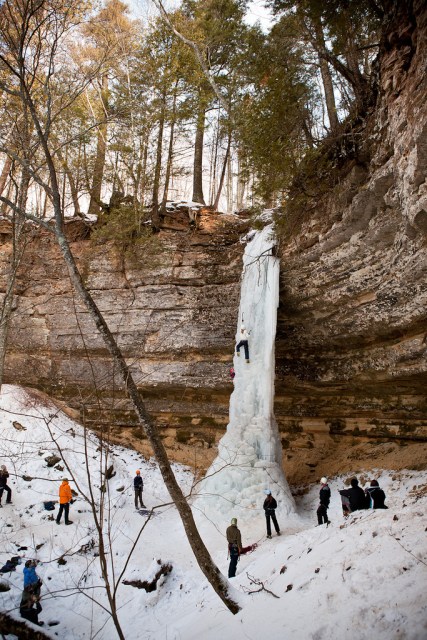
UP Michigan Ice Fest001

UP Michigan Ice Fest, photo by ebaillies

The annual Michigan Ice Fest takes place January 30 – February 2, 2014 in and around Munising. This annual festival takes place the 1st weekend of February every year and gives you a chance to look at and demo the latest and greatest equipment, meet some of the worlds best climbers and see what they’ve climbed all over the world. There’s also climbing socials and even intro to ice climbing classes using the ice climbing paradise that surrounds Munising.

Click the link above and be sure to check out their Michigan Ice Fest photo gallery on Facebook including galleries from 2009, 2010 & 2012 Ice Fests!

As the Ice Fest organizers note, the UP offers as much as 6 months of climbable ice! The Pictured Rocks National Lakeshore Ice Climbing page tells more:

Ice climbing is becoming a popular winter sport at Pictured Rocks National Lakeshore. With ample lake effect snow, numerous waterfalls, porous sandstone cliffs, and the water which seeps out of the rock layers, curtains and columns of ice are common.

Snow and ice are generally present by the second or third week in December and remain until late March. While ice frequently forms along the Pictured Rocks cliffs above Lake Superior, these areas are not recommended for climbing due to hazardous exposure to the lake. The most accessible ice columns are found along the Pictured Rocks escarpment between Munising Falls and Sand Point along Sand Point Road.

Eric took this photo at the Ice Fest in 2012. Check it out bigger and see lots more great shots in his slideshow.

More ice climbing on Michigan in Pictures!

Walking with the Icefoot on Great Lakes beaches

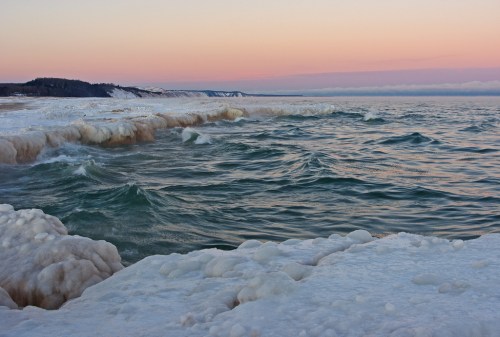
Winter morning on Agate Beach

Winter morning on Agate Beach, photo by Gary of the North(Footsore Fotography)

Ernest W. Marshall talks about a common winter feature along considerable stretches of Great Lakes shorelines, the Icefoot:

Air and water temperatures must be sufficiently low before an icefoot begins to form. The conditions favorable for icefoot formation are broad open shorelines gradually sloping below water level, and facing so that wind-blown spray is carried inland toward the shore to freeze. The character of growth of an icefoot differs during different periods of the winter. During the course of the winter the icefoot may suffer periods of denudation alternating with periods of accretion. The development of an icefoot can be held at one stage by the early freezing of fast ice offshore. An icefoot can be composed of any combination of frozen spray or lake water, snow accumulations, brash, stranded icefloes, and sand which is either thrown up on the icefoot by wave action or is blown out from the exposed beaches.

Observations of the icefoot along the shorelines of Lakes Superior and Erie indicated that the moderately steep portions of the shore were characterized by narrow terraces composed of frozen slush and brash thrown up by storm winds. The outer edge of this icefoot was often cusp-like in form, resulting from the mechanical and melting action of the waves. The inner portions of the cusps acted to concentrate the wave action, forming blowholes which threw spray back on the icefoot.

You can click to read more.

Gary took this photo at one of my favorite places in Michigan: Agate Beach on Lake Superior in Grand Marais, Michigan. In the distance is Grand Sable Dunes and the Pictured Rocks National Lakeshore. View his photo big as Lake Superior and see more in his Grand Marais Michigan slideshow including a shot of a staggeringly huge ice mound!

Lots more Grand Sable Dunes, Pictured Rocks National Lakeshore & winter wallpaper on Michigan in Pictures!

The Onaway Rim Fire and the biggest little town in northern Michigan

nightfall

nightfall, photo by Marty Hogan

The Onaway Historical Museum has an article on the Lobdell Fire that begins:

On the morning of Thursday, January 14, 1926 fire broke out in the company’s sanding machine and spread spontaneously through the blowers to different parts of the room.

In the few hours that followed, Onaway’s main means of livelihood went up in smoke and although the city still exists, it has never reached the proportion it was on that historical day. With the presence of the American Wood Rim Co. and its sister company, the Lobdell Emerey Manufacturing Co., Onaway experienced tremendous growth in its early year. The big industry, along with the profitable timber business made Onaway the biggest little town in northern Michigan.

According to one report, Onaway had two newspapers, three lawyers, four doctors, three large hotels, 17 saloons, nine churches, two bakeries, a fairgrounds, racetrack and an opera house in the pre-fire days. The figure varies, but Onaway’s population was approximately 4,000 and the two huge industries employed anywhere from 1200 to 1500 persons.

The Lobdell Emery Manufacturing co. was involved in lumbering, sawmill operations and the making of such products as dowels, broom handles, and coat hanger stock. The American Wood Rim Co., was the world’s largest and finest producer of automobile steering wheels and bicycle rims. For a number of years the company made all the steering wheels with either malleable iron or aluminum spiders. The aluminum spiders were all molded and finished in the plant while the malleable iron castings were purchased from outside sources.

During its last few years in Onaway, the American Wood Rim Co. introduced the all-wood steering wheel with only the hub made of steel. Some of the automobile rims were made of maple or beech, but the better ones were of black walnut with a black walnut or mahogany finish. The bicycle rims were made of hard rock maple or beech. All the wood used in manufacturing the wheels and rims was from the surrounding forests owned by Lobdell-Emery.

Read on for more and here’s a map to Onaway.

View Marty’s photo background big and see more in his September 2012 Road Trip slideshow.

If you like this sort of thing, Michigan in Pictures has lots more of Marty’s up north historical explorations!

Here comes the 2014 Detroit Auto Show

2013 North American International Auto Show-Detroit, MI-Hot Wheels-Camaro

2013 North American International Auto Show – Hot Wheels Camaro, photo by memories_by_mike

The 2014 North American International Auto Show takes place January 13-26th in downtown Detroit (consumer show Jan 18-26) and features the new models and a whole lot of sizzle and creativity as manufacturers seek to make the biggest splash. The NAIAS site includes Detroit Auto Show history page that takes you all the way back to the first Detroit Auto Show in 1907!

The first Detroit Area Dealer Association (DADA)-managed Detroit Auto Show was held in December 1907, at Riverview Park after the formation of the DADA in the same year. Since then, the show has grown from a regional event with 17 exhibitors to a world-class showcase featuring more than 60 exhibitors.

As the years passed, the show became increasingly popular as the demand and interest for automobiles grew. The show grew and moved to several new locations, including the Light Guard Armory on Eight Mile, the Wayne Gardens Pavilion and the Michigan State Fairgrounds.

Check Mike’s Photo out background big and see more in his 2013 North American International Auto Show-Detroit, MI slideshow.

More Detroit Auto Show and more cars on Michigan in Pictures.