Fruitless

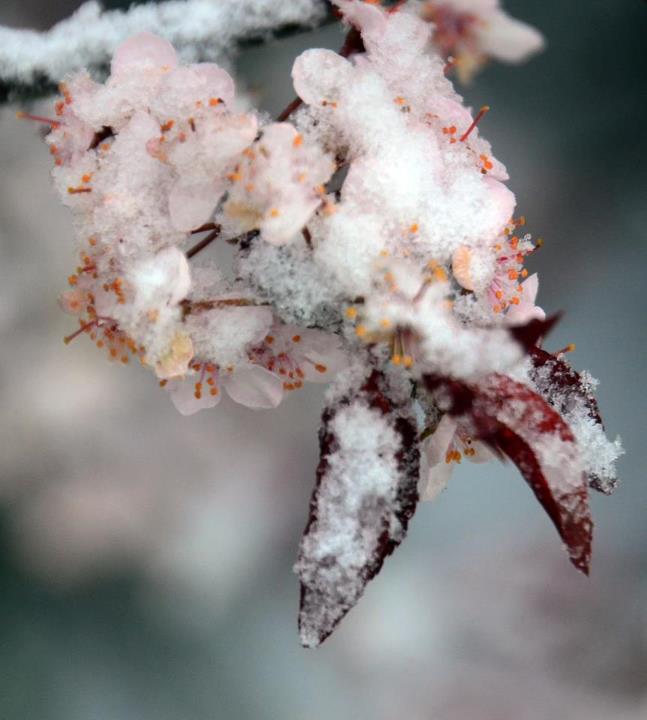
Frosty Blossom, photo by Gerry Buckel

“This is the worst that Michigan has experienced in the past 50 years at least. I don’t know how far you’d have to go back to find something similar.”
~Michigan Farm Bureau commodity specialist Ken Nye

Over on Absolute Michigan we have a report on the cataclysmic losses Michigan fruit farmers are facing in 2012.

Check this photo out bigger and see more of Gerry’s work at Your Hometown Photography.

Welcome to May in Michigan

may light break through

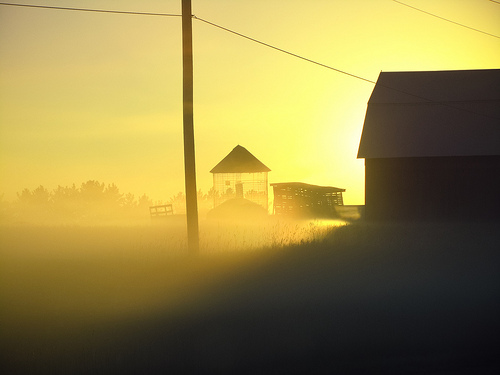
may light break through, photo by beaconsoul

This morning the perfectly titled photo was posted to our Absolute Michigan pool on Flickr, and while it’s actually from August, it definitely captures the light and promise of warmth that May brings.

Over on Absolute Michigan we’ve posted our May Event Calendar for Michigan that is packed full of all kinds of fun across Michigan celebrating new life and the beginning of summer in the Great Lakes State.

Check this photo out bigger and in beaconsoul’s morning slideshow.

Trouble for Tart Cherries

Beautiful Blossoms 5320-11
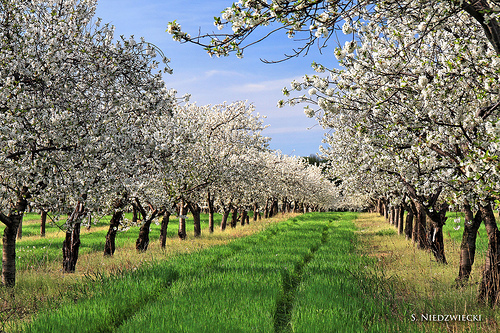
Beautiful Blossoms 5320-11, photo by StacyN – MichiganMoments

Cherry blossoms are out a full month early in Michigan, and our “Summer in March” appears to have claimed much of Northern Michigan’s 2012 tart cherry crop. Interlochen Public Radio reports:

A spring freeze last week across Northwest Michigan killed more than half of the buds on tart cherry trees. Industry officials estimate the loss for the region in the 50 to 70 percent range. Trees can produce a decent crop if a third of the buds survive. But several factors, including another freeze this spring, could still damage more of the crop before harvest.

Leelanau County saw the heaviest loss, estimated at as high as 90 percent of sour cherries killed in many orchards. But other fruit trees, like apple and sweet cherries, are in decent shape.

Antrim & Benzie county crops appear to be in better shape, but with a hard frost out there this morning, it’s probably not over yet.

Stacy took this shot last May just south of Traverse City. Check this out bigger and in her Spring slideshow.

Sorting cherries … and making sense of migrant labor in Michigan

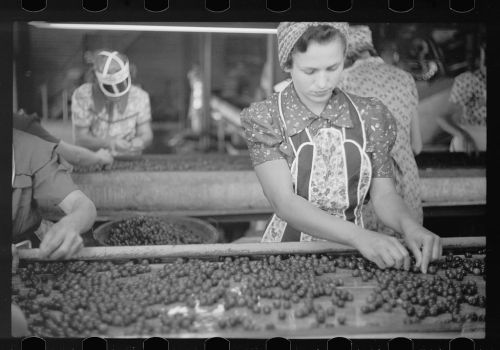
Migrant girls working in cherry canning plant Berrien County, photo by John Vachon

February is National Cherry Month and back in the day (July of 1940 to be precise), the cherry sorting machine was any able body that could tell the difference between a good and bad cherry as they sped past.

Agriculture is a vital part of the northern Michigan economy, and the League of Women Voters in Leelanau County has released an interesting study on migrant worker visas. They study contends that although the care for and harvesting of crops is a critical, labor-intensive aspect of our agriculture, Michigan workers aren’t stepping up to fill seasonal agricultural jobs, risking closure or bankruptcy for farmers and processors. The study notes that it’s an issue that’s been with us for years:

Seasonal workers have been essential to the operation of area farms since the transition from subsistence farming in the early 20th century. Agriculture was the principal livelihood for Michigan residents throughout the 1800s, but by the turn of the century, the Industrial Revolution was transforming agriculture from a small, self-sufficient family art to a large, mechanized, scientific industry. The tractor, the telephone, and the automobile revolutionized cultivation, communication, and transportation, and rural isolation was broken. Although farm conditions improved, people left the farms in droves and resettled in the cities. Rural depopulation became so severe during the 1920s that many farmers and growers had to import migrant labor.

The need for migrant labor has ebbed and flowed over the years. World War II was the catalyst for the Bracero Program, which from 1942 to 1964 brought Mexican migrant agricultural workers to the US legally. The program increased Michigan’s reliance on Mexican farm workers for harvest, and when the program ended, many workers continued to work in US agriculture.

Some crops like cherries have become largely mechanized, but apples, wine grapes and many other crops still have to be harvested by hand. Check out Migrant workers and Michigan agriculture on Absolute Michigan for a lot more about a critical issue for our farms and farmers.

You can get this photo background bigilicious and click to view the Michigan cherries gallery at the Library of Congress and you can also have a look at UpNorth Memories cherries slideshow.

The article on photographer John Vachon from the LOC’s American Memory Project says that his first job for the Farm Security Administration held the title “assistant messenger.” Vachon was twenty-one and had no intention of becoming a photographer when he took the position in 1936, but as his responsibilities increased for maintaining the FSA photographic file, his interest in photography grew. A memoir by his son quotes Stryker as telling the file clerk, “When you do the filing, why don’t you look at the pictures.”

Good advice.

Flint Corn, Calico Corn, Indian Corn

Nottawa Fruit Farm 016

Nottawa Fruit Farm 016, photo by bill.d.

Wikipedia’s entry for flint corn says that Flint corn (Zea mays indurata) is commonly known as Indian corn or sometimes calico corn. Its extremely low water content makes it much more resistant to freezing than other vegetables. Slow Food USA’s page on flint corn has some cool info and notes that this corn was the only to survive the infamous Year Without a Summer (1816), when snow fell in June and killing frosts struck in every summer month.

I found a Wisconsin Ojibway legend of the Father of Indian Corn that is very similar to one I heard from Michigan. It tells how a young man went out into the wilderness to seek another way of sustenance for his family.

For the first few days, he amused himself walking in the woods and over the mountain trails. He examined trees, plants, and flowers. This kind of physical effort in the outdoors prepared him for a night of sound sleep. His observations of the day filled his mind with pleasant ideas and dreams.

More and more he desired to know how the trees, plants, flowers, and berries grew. Seemingly they grew wild without much help from the Indians. He wondered why some species were good to eat, while others contained poisonous juices. These thoughts came back to him many times as he retreated to his lodge at night. He secretly wished for a dream that would reveal what he could do to benefit his family and his tribe.

“I believe the Chief of Sky Spirits guides all things and it is to him I owe all things,” he thought to himself. “I wonder if Chief Sky Spirit can make it easier for all Indians to acquire enough food without hunting animals every day to eat.”

“I must try to find a way in my dreams,” he pondered. He stayed on his bed the third day of fasting, because he felt weak and faint. Sometimes he thought that he was going to die. He dreamed that he saw a strong, handsome young man coming down from the sky, advancing toward him. He was richly dressed in green and yellow colours. He wore a plume of waving feathers on his head. His every movement was graceful.

“I have been sent to you,” said the sky-visitor. “The Sky Chief who made all things in the sky and upon the earth intends for me to be your Guardian Spirit and I have come to test you…

Read on to learn how corn was brought to the earth. Check the photo out background bigilicious and in Bill’s Nottawa Fruit Farm slideshow.

Fall, from the farm or at 440 miles

Fall

Fall, photo by southarmstudio

mLive tipped us off that NOAA has a MODIS high-res satellite image showing Michigan’s fall foliage throughout northern Michigan as taken by the high-resolution satellite. Click here for the photo which shows a lot of oranges and reds across the western U.P. and increasingly in northern lower Michigan. You can check the photo out that that link or if it’s gone, here’s a copy (1.6 MB).

They also include a link to the Foilage Network’s report for the upper Midwest.

Check it out bigger and in Ron’s Earthscapes slideshow.

Greeny Goodness from Michigan’s Vineyards

Greeny Goodness

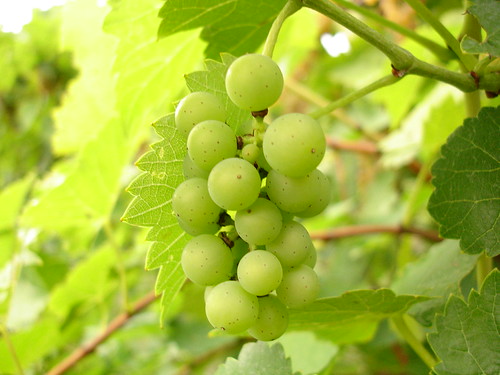
Greeny Goodness, photo by sgs_1019.

The sun, with all those plants revolving around it and dependent upon it, can still ripen a bunch of grapes as if it had nothing else in the universe to do.
~Galileo Galilei

The sun is working away on the 2011 vintage in Michigan’s vineyards, and today I’m working away on the lawn of the Grand Traverse Commons in Traverse City on the 3rd annual Traverse City Wine & Art Festival. It’s a celebration of the culture & cuisine of northwest Michigan that brings together 24 wineries from Leelanau, Old Mission, Traverse City & Benzie with over 100 wines from 2010 and other years along with a slew of artists with work for show and sale, great food & music and some incredible performance art!

If you’re in the neighborhood, please come by as I think it’s going to be amazing! If not, definitely pick up a bottle of Michigan wine – you will be happy to learn what the sun has been up to! If you’re looking for some suggestions, check out the medal winners from the 2011 Michigan Wine Competition!

Check this out bigger and in Sarah’s slideshow.

Michigan Blueberries are ready for market!

Michigan Blueberries

Michigan Blueberries, photo by Mi Bob.

Taste the Local Difference has a nice feature on Michigan Blueberries that says (in part):

Native Americans gathered blueberries for centuries, and much folklore developed around them, as they were considered a highly valuable food source. The elders of a tribe would tell the story of how the Great Spirit sent “star berries” to relieve the children’s hunger during a famine. The star refers to the perfect five-pointed star on the blossom end of each berry. Blueberry juice and tea were used as medicines, and as an excellent dye for baskets and clothing. They were also used in soups and stews and in a beef jerky that was eaten year round.

The Wampanoag Indians taught the early colonists how to gather blueberries, dry them, and preserve them, which helped people survive the long winters. It is believed that dried, crushed blueberries were used in a simple corn pudding that was served at the first Thanksgiving feast.

A beverage made with blueberries was an important staple for Civil War soldiers.

Much more including health benefits from Taste the Local Difference. Also see Eat Local: Michigan Blueberries on Absolute Michigan and find more blueberry info from Real Time Farms.

See this on black and in his slideshow.


More yummy Michigan Food on Michigan in Pictures!

(farm) Market Love

Market Love

Market Love, photo by aceshigh22.

Quick post today – headed to the Sara Hardy Farmers Market in Traverse City before heading to the beach.

Farmer’s markets are such a big part of Michigan, no doubt in part because Michigan is the nation’s second most agriculturally diverse state , trailing only California. No word of what will happen if South California becomes our 51st state.

Absolute Michigan has a nice (if slightly old) selection of farmer’s markets on our Michigan Map. A fantastic new resource, however, is Real Time Farms, which gives you information and photos about farm markets all across the state. You can become a part of the community and share your photos too!

However you choose to do it, I really encourage everyone to do what Taste the Local Difference (another great resource for farm market information) recommends, and spend $10 or more of your food budget with your neighborhood farmers & food producers. It makes our communities (and bodies) stronger. Take a bite out of Michigan!

Check it out background big and in Danielle’s Peeps slideshow.

Super A, Model A

Farmall
Farmall, photo by PepOmint

Wikipedia says that the “letter series” from Farmall was introduced in 1939 by International Harvester. Reading about these affordable vehicles that put tractors within reach of small farmers all across the nation put me in mind of another vehicle series that catered to the mass market, Henry Ford’s Model T, Model A and Model B.

That in turn reminded me of a recent feature on Absolute Michigan about a Michigan man who is driving a Model A for 365 days and blogging about it.

Check it out bigger and in her Super A slideshow.