Photo-op gone bad

photo-op-gone-bad

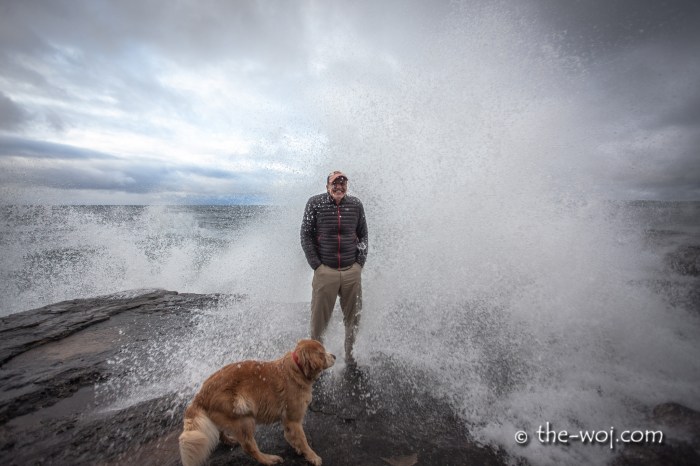
Photo-op gone bad, photo by Paul Wojtkowski

Paul got caught by an unexpectedly large wave on Lake Superior – good thing he had already taken his selfie-stick shots!! :D

View his photo big as the biggest lake, see more including Manabezho Falls in his slideshow, and view and purchase photos on the-woj.com.

On a more serious note, as yesterday and today’s posts show, these big lakes have big and sometimes unexpected power, particularly as we head into fall and winter. Take a moment to see what’s going on, watch for a minute so you know what’s going on, be sure of your footing, and take a buddy or two if you can!

Pier Energy at Frankfort North Breakwater Lighthouse

pier-energy-by-aaron-springer

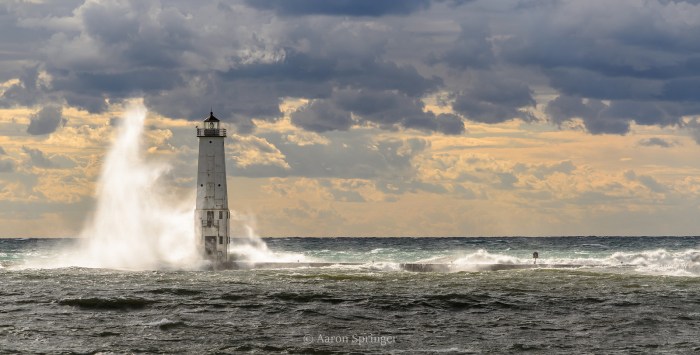
Pier Energy, photo by Aaron Springer

The Frankfort North Breakwater Lighthouse entry at Terry Pepper’s excellent Seeing the Light says the tip of the light is 72 feet off the water, making that spray over 80′ tall!! Click above for a ton more, but here’s something about the light tower:

1912 saw significant a significant change in the lighting of the Frankfort harbor entrance. A new square steel pyramidal tower was erected on the North Pier. Fully sheathed in steel plates, the white painted structure stood 44 feet from its base to the top of the ventilator ball. Outfitted with a fixed red Fourth Order Fresnel lens, the tower’s location on the north pier provided the new light with a focal plane of 46 feet, and a visible range of 12 miles in clear weather. The air siren from the South Pierhead light was relocated into this new structure, and set up to emit a characteristic isophase characteristic of alternating periods of 3 second blasts and 3 seconds of silence. An elevated walkway, similar to that installed on the south Pier, was erected from the new light to the shore.

…By 1924, the total car ferry tonnage through Frankfort Harbor was twenty five times greater than that prior to the establishment of the ferries. To better serve this vital commerce, the Army Corps of Engineers began construction of a pair of reinforced concrete arrowhead-type breakwaters at the harbor entrance in order to create a large stilling basin to protect the opening into the harbor. With the completion of these breakwaters in the early 1930’s, the twin piers at the entry into Lake Betsie no longer served any purpose. With plans in place to shorten them into short stub piers, the North Pierhead Light was lifted from the pier onto the deck of a barge and carried out to the end of the North Breakwater. A square steel base 25 feet in height had been erected on the end of the breakwater to receive it, and the tower was lifted onto the new base. After being bolted into position, the new tower stood 67 feet in height from the upper level of the pier to the top of the lantern ventilator ball. By virtue of its location on the concrete pier, the light stood at a focal plane of 72 feet, and the 17,000 candlepower incandescent electric light within the Fourth Order Fresnel was visible for a distance of 16 miles in clear weather.

Read on for lots more about the lighthouse including some great old photos.

View Aaron’s photo bigger and see more in his slideshow,.

Tons more lighthouses on Michigan in Pictures.

Dawn Patrol

dawn-patrol-by-soaring-pigeon

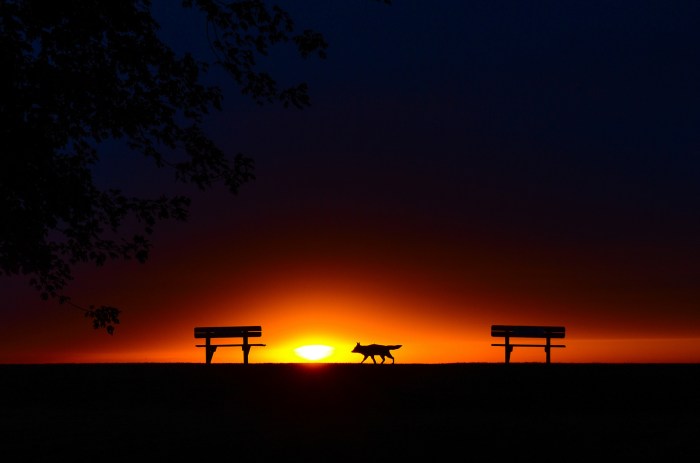
Dawn Patrol, photo by Soaring Pigeon

Soaring Pigeon caught this coyote stalking at sunrise.

View the photo bigger and see more in his slideshow.

Soaring Saturday: Hang Gliding in Michigan

coming-in-by-david-clark

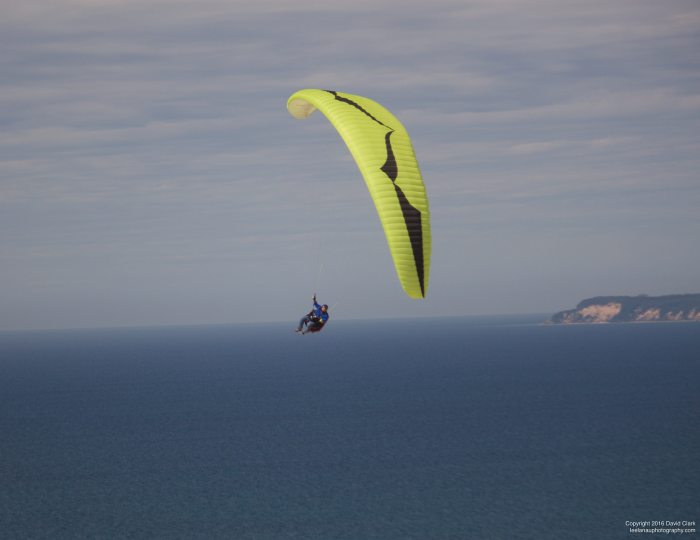
Coming In, photo by David Clark

USA Today has a feature on Hang Gliding Sites in Michigan that says (in part):

Most individuals will need lessons in hang gliding from a certified instructor prior to their first flight. Hang gliding schools provide instructions, gear, permits and safety equipment. The Draachen Fliegen Soaring Club is located in Cloud 9 Field between Detroit and Lansing, with instructors offering “tandem discovery” flights lasting from 15 minutes to one hour. Gliders drift in air space up to two miles high, in tandem with an instructor. Individuals with proven experience and certifications may rent gliders for solo flights. Traverse City Hang Gliders offers full programs of training and instruction in both traditional powerless hang gliding and “the Mosquito” powered hang gliding harness.

Hang gliding enthusiasts can enjoy practicing the sport at national parks within the state of Michigan, including Sleeping Bear Bear Dunes National Lakeshore. Several spots within the park are approved for powerless flight. Hang gliders can take off and land at Empire Bluff, Pyramid Point and Lake Michigan Overlook on the Pierce Stocking Scenic Drive, as well as Dune Climb in the months of November through March. Powerless flight permits are required and can be obtained free of charge at the Visitor Center Information Desk. Launch sites within the park require proficiency ratings established by the U.S. Hang Gliding Association. Gliders must also follow safety and federal regulations. Warren Dunes State Park also issues permits for hang gliding along the coastal dunes, about 14 miles from the state border with Indiana. Favorite launch and return sites within the park include Tower Hill and New Buffalo.

In the 1970s, Elberta Beach and the adjacent city of Frankfort, in Northern Michigan, were popular spots for what was then the new sport of hang gliding. Once referred to as the “Sail Plane Capital,” the area is still a magnet for gliders today. Just south of Frankfort, gliders can experience the thrill of soaring over sand dunes at Green Point Dunes. The Green Point Flyers Association, established in 1978, is a club for both hang gliders and parasailers, with a main flying site that is a sand dune stretching for three miles at a height of 370 feet. Licenses are required to fly at Green Point, and certified instructors are available. Pilots at Green Point also have access to hang gliding sites inside the Sleeping Bear Dunes National Lakeshore, as well as the bluffs of Elberta. Visitors can also team up for a ride with members of the Northwest Soaring Club, which is located in Cadillac, Michigan. Flights depart from the Wexford County Airport, then cruise over Lake Mitchell and Lake Cadillac.

View David’s photo background bigilicious, see more in his Turning 42 slideshow, and view and purchase work at leelanauphotography.com!

If you’d like to get a look at the process, here’s a video of aerial photographer Jim Anderson taking a flight from the Bluffs!

Tom Izzo: Definitely One of the Most Famous Natives of Michigan

tom-izzo-michigan-state-spartans

Tom Izzo, photo by Hillary Higgens

TRUE CONFESSION: Page-at-a-time slideshows make me want to smash my screen, but I have to say that what mLive is doing with slideshows has been pretty cool. Their feature on the Most Famous Natives of Michigan has their pick for the most famous person from each of Michigan’s 83 counties. Definitely worth a read. Share your thoughts here on on the Michigan in Pictures Facebook!

It’s hard to argue with their choice for the most famous person from Dickinson County, Michigan – Michigan State University Spartan coach Tom Izzo:

Since 1995, Tom Izzo has led the Michigan State men’s basketball team as head coach. Born Jan. 30, 1955, Izzo was recently inducted into the Naismith Memorial Basketball Hall of Fame. Under his watch, the Spartan team has made it to the Final Four seven times and taken home an NCAA Men’s Division I Championship.

Hillary took this photo back in 2011. View it background big and see more in her 2011 Champion’s Class slideshow.

Michigan’s Second Oldest City: Looking back on St. Ignace

st-ignace-lighthouse-explore-july-20-2012

St Ignace Lighthouse, photo by Sheldon Spurrell

You may know that Père Jacques Marquette founded Michigan’s oldest city Sault Sainte-Marie in 1668, but do you know Michigan’s second old city? If you can read titles, you know that’s St. Ignace, founded in 1671 and named in honor of Saint Ignatius of Loyola. Here’s some of the history of St. Ignace from the St. Ignace Visitor’s Bureau:

The natives of the St. Ignace region were migratory. In the spring, the Anishinabeg gathered maple sugar and fished sturgeon and smelt. Summer found them in settlements surrounded by crops of corn, potatoes and squash, and near the abundant supplies of wildlife, fish and berries. They developed efficient housing, watercraft, hunting and farming tools.

The heritage of the Straits evolved and changed over the centuries beginning with the arrival of Roman Catholic missionaries and then French and British explorers and fur traders … The natural waterway joining Lakes Michigan and Huron at the Straits of Mackinac generated extensive water traffic, and prompted the establishment of an outpost during the period of French occupation. The outpost – Fort de Buade – became the seat of King Louis XIV’s authority in the interior of North America. French notables including Rene-Robert Cavalier, Sieur de La Salle and Antoine Lamothe Cadillac spent time at the post. St. Ignace was among the largest settlements in New France from the last decade of the 15th century until the establishment of Detroit in 1701. The British arrived in the St. Ignace region with the defeat of the French during Seven Years War.

St. Ignace played a pivotal role in the fur trade until this industry began to wane. By the mid-1800’s the financial importance of commercial fishing to the economic well-being of the area eclipsed that of the fur trade. Ancillary industries including curing, packing and shipping augmented the fishery. It was during this period that the Mackinaw Boat became a familiar sight on the waters in and around the Straits. As the lumber industry in Michigan evolved, St. Ignace became a center for mill yards and its proximity to the shipping lanes added to its importance as a commercial hub in the northern Great Lakes area.

Read on for more including travel information.

Sheldon took this photo back in July of 2012 at sunrise. View it bigger and see more in his Michigan slideshow.

More from St. Ignace on Michigan in Pictures.

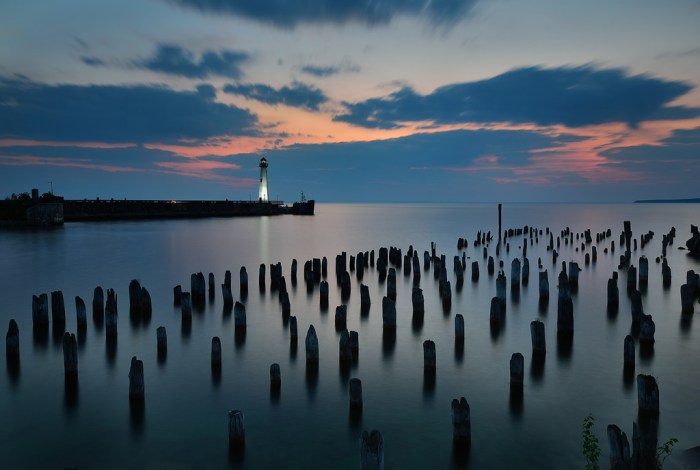
Set Adrift on Memory Bliss

set-adrift-on-memory-bliss

Set Adrift On Memory Bliss, photo by Robert Michaud

View Robert’s photo bigger, see more in his slideshow, and view & purchase photos on his photography website.

PS: PM Dawn? Don’t mind if I do!

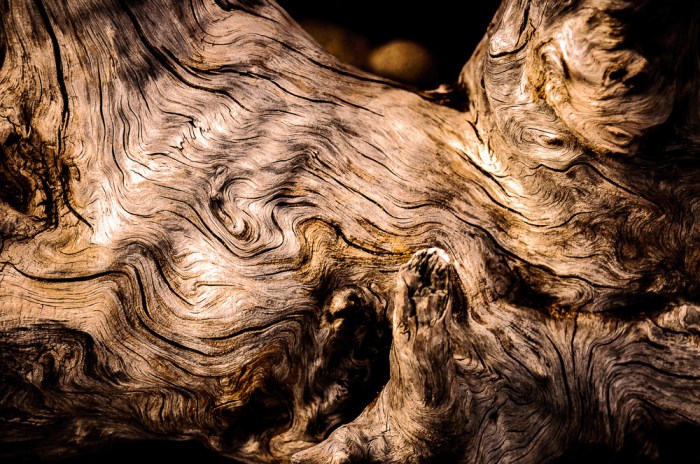
The science behind the magic: Fall color explained

yellow-glory-by-scottie

Untitled, photo by Scottie

The Science of Color in Autumn Leaves from the United States National Arboretum is such an excellent explanation of the science behind the magic of Michigan’s fall color show that I try and share it every year:

The process that starts the cascade of events that result in fall color is actually a growth process. In late summer or early autumn, the days begin to get shorter, and nights are longer. Like most plants, deciduous trees and shrubs are rather sensitive to length of the dark period each day. When nights reach a threshold value and are long enough, the cells near the juncture of the leaf and the stem divide rapidly, but they do not expand. This abscission layer is a corky layer of cells that slowly begins to block transport of materials such as carbohydrates from the leaf to the branch. It also blocks the flow of minerals from the roots into the leaves. Because the starting time of the whole process is dependent on night length, fall colors appear at about the same time each year in a given location, whether temperatures are cooler or warmer than normal.

During the growing season, chlorophyll is replaced constantly in the leaves. Chlorophyll breaks down with exposure to light in the same way that colored paper fades in sunlight. The leaves must manufacture new chlorophyll to replace chlorophyll that is lost in this way. In autumn, when the connection between the leaf and the rest of the plant begins to be blocked off, the production of chlorophyll slows and then stops. In a relatively short time period, the chlorophyll disappears completely.

This is when autumn colors are revealed. Chlorophyll normally masks the yellow pigments known as xanthophylls and the orange pigments called carotenoids — both then become visible when the green chlorophyll is gone. These colors are present in the leaf throughout the growing season. Red and purple pigments come from anthocyanins. In the fall anthocyanins are manufactured from the sugars that are trapped in the leaf. In most plants anthocyanins are typically not present during the growing season.

As autumn progresses, the cells in the abscission layer become more dry and corky. The connections between cells become weakened, and the leaves break off with time. Many trees and shrubs lose their leaves when they are still very colorful. Some plants retain a great deal of their foliage through much of the winter, but the leaves do not retain their color for long. Like chlorophyll, the other pigments eventually break down in light or when they are frozen. The only pigments that remain are tannins, which are brown.

The explain that because the starting time of the whole process is dependent on night length, fall colors appear at more or less the same time every year and are not overly dependent on temperature, rainfall or other factors, other than the fact that weather can shorten or prolong the show by stripping leaves from trees.

Click through to the US Arboretum for more and also see Fall & Fuit from the Science of Color!

View Scotties’ photo bigger and see more in his Infrared slideshow.

Tons more fall photos on Michigan in Pictures!

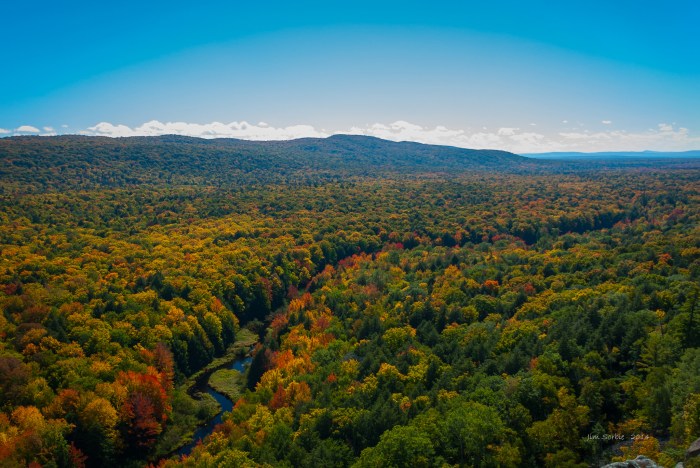
Wild & Scenic Rivers: September color along the Carp River

big-carp-river-in-september-fall-color

West from the Lake of the Clouds, photo by Jim Sorbie

Glints of yellow, orange and red are starting to pop up around the state, so it’s probably time to get some fall wallpaper for your computer! Check that link for a ton and get fall color reports and color touring ideas from the Pure Michigan Fall Color page!

It’s also been a while since I added a Michigan Wild & Scenic River to the blog, so here’s the somewhat brief entry for the Carp River from the National Wild & Scenic Rivers:

The Carp River, in Michigan’s Upper Peninsula, flows through predominantly forested lands with little development along its way. Spring’s high water provides for canoeing and offers steelhead fishing and dipping for smelt near the river’s mouth. Summer is the time for brook or brown trout, and fall brings salmon fishing. The Carp is known for its outstanding recreation, wildlife, geologic, ecological, fisheries and heritage resource values. The river flows through the Mackinac Wilderness Area.

Michigan has 16 nationally designated Wild & Scenic Rivers – get them all at that link!

View Jim’s photo background bigtacular and see more in his Color Tour 2014 – UP & Canada slideshow.

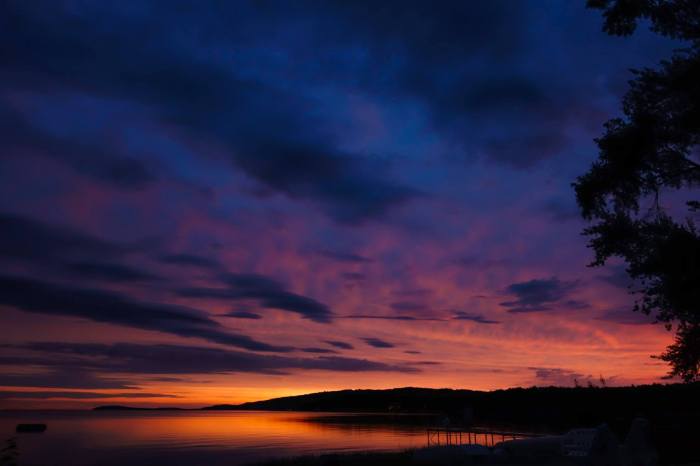
Last Dawn of Summer

last-dawn-of-the-summer

Last Dawn of Summer, photo by John Robert Williams Photography

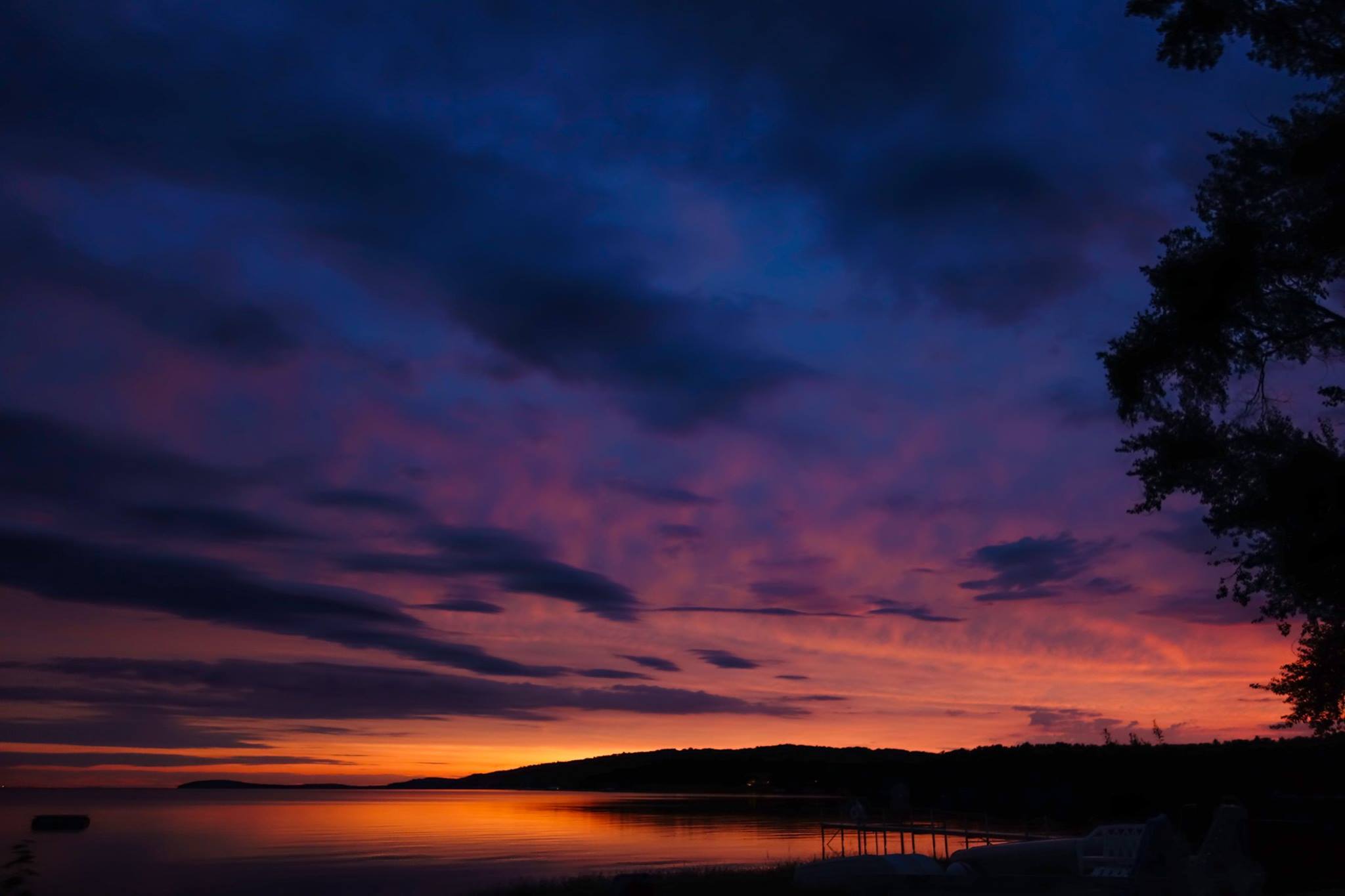
Since I shared something from the first day of fall, it seems only fitting that I share something from the last day of summer! Here’s a stunning sunrise over West Grand Traverse Bay in Traverse City by my friend John!

Click the pic to view it background bigilicious and get more from John, including professional portraits at jrwpix.com!

More Traverse City and more summer wallpaper on Michigan in Pictures!