Trumpeter Swan and the Birds of Michigan

trumpeter swan

trumpeter swan, photo by tobibritsch.

On the Michigan DNR’s page on the trumpeter swan, says that at 25-35 pounds when fully grown, the trumpeter swan is the world’s largest waterfowl with a wingspan of nearly 8′ and that:

Historically, trumpeter swans were most likely abundant throughout the Great Lakes region, even in the southern Michigan marshlands. On his travels along the Detroit River in 1701, Cadillac compared the abundance of swans to lilies among the rushes. However, with the settlement of America, the populations of trumpeters plummeted. Beginning in the late 1800s, European settlers cleared the land, draining and filling important marsh habitat, and market hunters took swans for their fine down and quills. By 1933, only 66 trumpeter swans remained in the continental United States, mainly in remote parts of the Rocky Mountains and Alaska. Nearly 100 years passed before trumpeter swans were seen again in the Michigan wilds.

In the 1980s Michigan began a swan reintroduction program as part of the North American Restoration Plan. While the program has been a success and dramatically increased the number of nesting pairs, there are some who question whether these birds did in fact historically nest in Michigan. Nuthatch at the excellent Michigan blog bootstrap analysis presents the case in with great links in swans, take 2. It’s something that merits consideration as swans are pretty rough on aquatic habitats!

For more on these birds, check out The Trumpeter Swan Society. Also, the UM Animal Diversity Web Cygnus buccinator (trumpeter swan) listing has some photos but unfortunately no sounds. Wikipedia’s Trumpeter Swan entry also includes creative commons photos of trumpeter swans for use and download.

The photographer has a cool set of waterbird photos (slideshow) and this photo is in the Birds of Michigan group on Flickr. It’s for sharing photos of birds found anywhere in the State of Michigan and they say that if you cannot identify the bird, post it to the group and likely someone there can!

Pushing the limits of Valentines … and outhouses

A Valentine

A Valentine, photo by John Baird.

John writes: You can’t say I’m not sentimental….

Happy Valentine’s Day all of you – hope there’s lots and lots of love in your lives.

While we’re on the subject of outhouses, don’t forget that next weekend features not one but TWO major races on the National Outhouse Racing Circuit. Absolute Michigan’s February Event Calendar says that on February 23 you can enjoy the Trenary Outhouse Classic – The Outhouse Races (see YouTube video) and The Outhouse 500 and Coopersville Chill 5-K Run (amazingly enough, there’s a video for this as well!).

Think they’ll be filming the next “Pure Michigan” installment there?

The U.P. 200 & Midnight Run Sled Dog Races

P1010050c

P1010050c, photo by Dan & Mary.

The web site for the annual UP 200 / Midnight Run and Jack Pine 30 sled dog races explains that 1988 a group of mushers and others began to discuss a dogsled race in the Upper Peninsula.

When the race finally began to take shape, the trail encompassed Marquette, Alger, and Delta counties, and ran from Marquette to Chatham, Rapid River, Escanaba, Gwinn, and back to Marquette…

…and on a snowy Friday evening in February of 1990, the dedication and perseverance finally paid off. To the cheers of 10,000 spectators, the mushers of the first UP 200 Sled Dog Championship ten dog race sped down Washington street in Marquette into the night. At midnight, in the community of Chatham the first Midnight Run racers departed on the long, cold journey towards Escanaba. These racers went on their way into history, with many “tails of the trails” for the years to come.

The UP200 and Midnight Run have remained successful events each year and they take place this weekend (Feb 15-17) and you can get all the details (including the trail map and Breakaway’s Blog at the link above!

Mary writes that this photo shows a team is approaching the crossing at Forest Highway 13, heading west to the next checkpoint at Munising/Wetmore, MI. It’s part of a set of UP 200 / Midnight Run dogsled races 2007 photos (slideshow)

Michigan Cherries

Michigan Cherries

Michigan Cherries, photo by david_s_carter.

Although I managed to deftly overlook the first ever National Eat Red Week (Feb 4-10), there’s still time for me to save face here in the Cherry Capital of the World by reminding you that February is National Cherry Month and asking you to eat (or drink) as many of these red beauties as you can find!

Why red? Why cherries? Choose Cherries explains:

Cherries’ RED color comes from powerful antioxidant compounds called anthocyanins that studies suggest may reduce risk factors for heart disease. Recent research conducted by the University of Michigan found that a cherry-rich diet significantly lowered blood cholesterol levels and reduced triglycerides, major risk factors for heart disease.

They list a whole lot more potential benefits of eating cherries including relief of arthritis and gout, diabetes and cancer prevention and better sleep.

To those I’d add the benefits of purchasing cherries and cherry products to Michigan’s farmers who who produce 75% of our nation’s tart cherries.

A Public Service Announcement from Michigan Beaches

Strolling in the sand.

Strolling in the sand., photo by photoshoparama.

We interrupt this wild winter weather for a special message from Michigan’s beaches who remind you that – despite all appearances to the contrary – winter is not forever and they will soon return with an all-new season of sun, sand and summer fun!

Thanks to Daniel (and Quentin) for the reminder from Grand Haven State Park in April of 2007. Be sure to click to the super-size for the full, glorious effect!

We now return to Winter, already in progress…

Winter Blues at the Ludington North Breakwater Light

Winter Blues by Sumply Dianne

Winter Blues, photo by simply, Diann.

Diann writes What I’m really wondering is whether or not its a good idea to edit out the blue shadows that often show up in winter shots when the sun is behind the camera. She offers this shot for comparison and discussion. She also has a bunch more photos of Ludington’s lighthouse, many in the crashing seas that are referred to below! (and usually uploads her photos at desktop wallpaper size!)

Terry Pepper’s page on the Ludington North Breakwater Light has a really fascinating history of this lighthouse at the mouth of the Pere Marquette river. A lighthouse was established here in 1870 to aid in the navigation of the lumber ships that served the mills of Ludington and Pepper’s article details the trials endured by the keeper after Congress appropriated funds for the light but none for his dwelling (sound familiar?). Pepper goes on to detail the unique structure of the current North Pier Light:

Over the summer of 1924, a unique structure took shape at the end of the North Breakwater. The main tower, fabricated of steel plates over an internal steel skeleton, took the form of a four-sided pyramidal tower with four round porthole windows on each of the three decks within. With plans calling for the installation of an air diaphragm fog signal operated by an electrically powered compressor, there was no need for a large fog signal building, and thus the signal building took the form of a relatively small structure integrated into the base of the landward side of the main tower. In order to help protect the structure from the force of waves crashing across the breakwater, the concrete foundation at the base of the structure was formed with angled surfaces designed to deflect the force of wave action up and away from the building. The white painted tower was capped by a square gallery and an octagonal iron lantern installed at its center.

There’s great historical photos at the link above and if you’re a lighthouse buff, I can’t recommend Terry Pepper’s site enough. His pages on lighthouses of Michigan and the rest of the Great Lakes are the best there is.

Although Wikipedia’s entry on the Ludington Light is downright feeble, it does link to a nice set of videos of the Ludington lighthouse. There’s also this cool video of the lighthouse.

I’ve also added the Ludington Light to Absolute Michigan’s Map of Michigan.

Newspaper did get delivered

Newspaper did get delivered

Newspaper did get delivered, photo by wxman1952.

mLive reported that the snowstorm of February 6, 2008 was a whopper, closing over 200 schools in Michigan and dumping up to up to 16 inches of snow fell in the Flint and Saginaw area.

Michael runs the Mid Michigan Weather web site where (among a whole lot of other weather things) you can find a discussion about the impact of the storm all over the state.

Thru the Woods on an Aero Sleigh

thru the woods

thru the woods, photo by litchard.

I’d never heard of the Wing Aero Sleigh – designed & built by Blain Wing in St. Ignace, Michigan in the 1940s – but Milton has a bunch of cool photos of the Aero Sleigh in action (slideshow)

There’s some information about how these were used from the Drummond Island Yacht Haven.

He uploaded the photos pretty large so be sure to click through check them out!

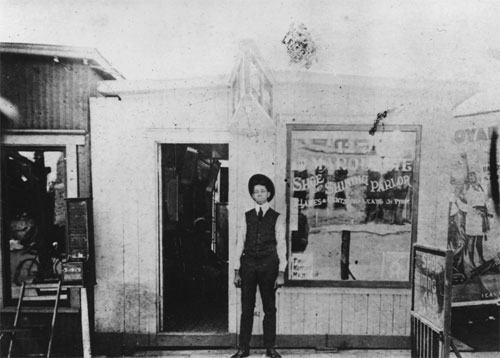
William Leabs, Jr. and Michigan’s Black History

William Leabs, Jr. at his Marquette Shoe Shining Parlor

William Leabs, Jr., photo courtesy the Archives of Michigan

The description from the Archives of Michigan begins:

Here, we see William Leabs, Jr., an African American businessman. He’s standing in front of his store, the Marquette Shoe Shining Parlor (view larger). This business is listed in the Lansing City Directories of 1902 and 1904, and the photo presumably dates from about that same time frame.

Lansing’s African American heritage is as old as the city itself. Lansing’s first black resident of record is James Little, a freed slave from New York state. Little came to Lansing in 1847 (the year of the city’s founding) and started a farm.

Lansing’s black population increased slowly during the remainder of the 19th Century. Many black settlers came from other Northern states and from the upper South. Some were Canadians descended from escaped slaves. Others came from elsewhere in Michigan, with the majority of those hailing from Cass County (Freed slave communities had been established there before the Civil War.).

You can read more at the Image of the Month for February 2008 and also in Robert Garrett’s article The Birth and Death of Lansing’s Black Neighborhoods in the Lansing City Pulse.

February is Black History Month in Michigan and you can get a ton more articles from Absolute Michigan’s Black History in Michigan.

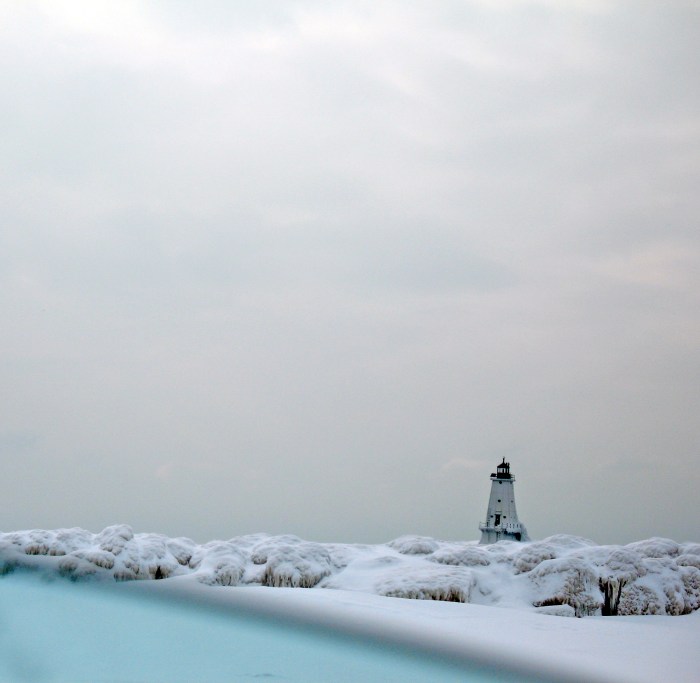
breakwater

breakwater

breakwater, photo by Latitude 45.

Martin has three photos of the ice-shrouded Petoskey breakwater. There’s also one photo of how his dog remembers where he left the salmon, but the less said about that, the better.