Layers of the Ledges

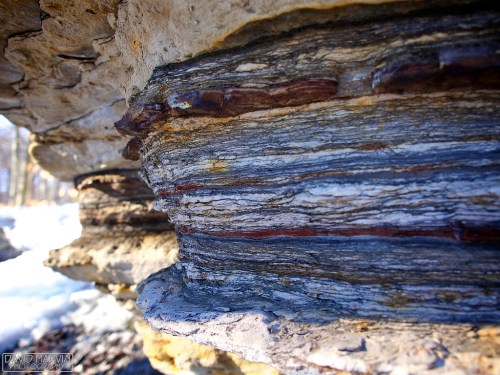
Ledges' Layers

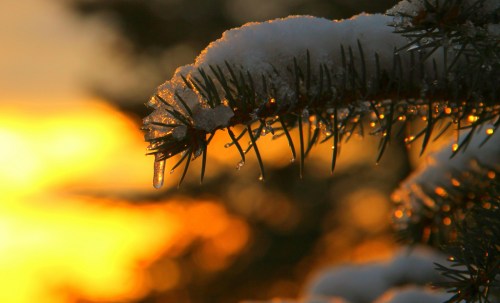
Ledges’ Layers, photo by daveumich

The Earth Science class for educators at Michigan Tech has an online textbook on Michigan Geography & Geology that’s pretty cool. The chapter on the Ledges at Grand Ledge includes At the Edge of an Ancient Ocean that talks about the rocks that make up The Ledges and begins:

The rocks at Grand Ledge are significant for several reasons. Grand Ledge is an “oasis” of bedrock in an “ocean” of glacial drift that blankets the Lower Peninsula, providing geologists a window into the distant past. The diverse set of sedimentary rocks contains a wealth of information on the plants and animals that dominated the Pennsylvanian Period, about 320 to 290 million years ago. The characteristics of the rocks allowed geologists to reconstruct the changing environment that marked the demise of a great inland ocean. The rocks have been quarried and hold economic value. Lastly, Grand Ledge is scenic and enjoyed by hikers, paddlers, and climbers.

Nearly all students of Michigan geology make a pilgrimage to Grand Ledge at some point in their careers. Good exposures of sedimentary rocks are rare in the Lower Peninsula. Not only are the rocks well exposed but they offer an opportunity to test your skills in identifying a variety of sandstones, some shale and limestone, and even 2 coal. The rocks are exposed in a few abandon quarries and in exposures along the Grand River. To get a good look at the rocks you will need drive between exposure north and south of the river. But don’t be discouraged; the distances are short.

As always in geology, the best place to start is at the base of the stratigraphic section, the oldest rocks. The lower part of the section contains shale, siltstone, and type of sandstone called greywacke. The shale is gray and so fine-grained that you cannot see the mud-sized particles that compose it. If you are brave, you might put a tiny piece in your mouth and push it around a bit. Shale feels smooth, almost creamy, a result of the mud. The shale is also soft and erodes to relatively gentle slopes. Shale is exposed at the base of the layers at the Face Brick Quarry. Think of the light-colored siltstone as a silty shale. You might rub the rock against your thumb and see if any small, visible grains come loose. Again, a taste test might be in order. Siltstone will leave a 3 gritty feel in your mouth. Siltstone is exposed at the base of the rock layers at the American Vitrified Quarry. The greywacke is a greenish-gray colored sandstone and the sand grains are visible to your unaided eye, no tasting required. With a hand lens you can see the rock is made of a mixture of sand sizes, what geologists call poor sorting, and a variety of sand compositions, including quartz, feldspar, mica, and fragments of pre-existing rocks. Greywacke is exposed just above the beach at the Face Brick Quarry.

Read on for more and visit Fitzgerald Park at Pure Michigan for more on this cool West Michigan park.

View Dave’s photo background bigalicious, see more in his Grand Ledge, Michigan slideshow and check out more photos from The Ledges on his Marvins’ Gardens blog!

More winter wallpaper on Michigan in Pictures.
Heavy Space Weather Ahead?

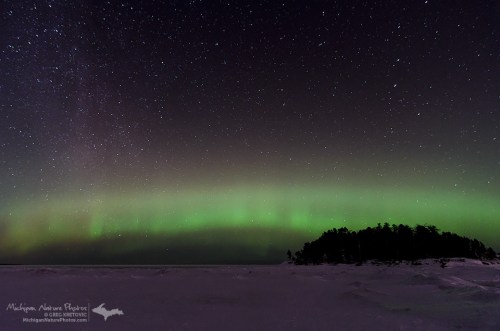
Frigid Auroras Over Superior

Frigid Auroras Over Superior, photo by Michigan Nature Photog

NOAA’s current space weather forecast reports an M Class (moderate) solar flare from solar region AR2002. Spaceweather.com adds that AR2002 has destabilized its magnetic field, making it more likely to erupt, and that NOAA forecasters are estimating a 60% chance of M-class flares and a 10% chance of X-class flares during the next 24 hours. X-class flares are major solar events that can spawn incredible auroras visible far to the south of us, planet-wide radio blackouts and long-lasting radiation storms. Click to Space Weather for a video of AR2002 development.

While there’s not much chance of a major event, I thought it was interesting that 25 years ago this week,  one of the most significant solar storms in memory created a spectacle in the skies as it demonstrated the power and danger of solar weather to modern society. A Conflagration of Storms begins:

On Thursday, March 9, 1989 astronomers at the Kitt Peak Solar Observatory spotted a major solar flare in progress. Eight minutes later, the Earth’s outer atmosphere was struck by a wave of powerful ultraviolet and X-ray radiation. Then the next day, an even more powerful eruption launched a cloud of gas 36 times the size of the from Active Region 5395 nearly dead center on the Sun. The storm cloud rushed out from the Sun at a million miles an hour, and on the evening of Monday, March 13 it struck the Earth. Alaskan and Scandinavian observers were treated to a spectacular auroral display that night. Intense colors from the rare Great Aurora painted the skies around the world in vivid shapes that moved like legendary dragons. Ghostly celestial armies battled from sunset to midnight. Newspapers that reported this event considered the aurora, itself, to be the most newsworthy aspect of the storm. Seen as far south as Florida and Cuba, the vast majority of people in the Northern Hemisphere had never seen such a spectacle. Some even worried that a nuclear first-strike might be in progress.

…Millions marveled at the beautiful celestial spectacle, and solar physicists delighted in the new data it brought to them, but many more were not so happy about it.

Silently, the storm had impacted the magnetic field of the Earth and caused a powerful jet stream of current to flow 1000 miles above the ground. Like a drunken serpent, its coils gyrated and swooped downwards in latitude, deep into North America. As midnight came and went, invisible electromagnetic forces were staging their own pitched battle in a vast arena bounded by the sky above and the rocky subterranean reaches of the Earth. A river of charged particles and electrons in the ionosphere flowed from west to east, inducing powerful electrical currents in the ground that surged into many natural nooks and crannies. There, beneath the surface, natural rock resistance murdered them quietly in the night. Nature has its own effective defenses for these currents, but human technology was not so fortunate on this particular night. The currents eventually found harbor in the electrical systems of Great Britain, the United States and Canada.

You can read on for more about how the storm spawned a power outage in Quebec and pushed US systems to the brink of collapse. If you want to totally geek out on auroral science, check this article out about how the Earth’s magnetosphere actually extends itself to block solar storms.

Greg took this shot in late February in Marquette in -17 temps! View his photo bigger and see more in his northern lights slideshow. You can purchase Greg’s pics at MichiganNaturePhotos.com.

There’s more science and much (much) more about the Northern Lights and Michigan on Michigan in Pictures.

Michigan Meltdown

Untitled

Untitled, photo by kdclarkfarm1

After a night of strong winds and with highs today predicted to be on the good side of 40 across much of the state today, spring is feeling almost possible.

View Diane’s photo background big and see more in her frost, snow & ice slideshow.

Spring or winter wallpaper for your computer’s background? That’s a decision only you can make…

Summer Dreams

Summer Dreams

Summer Dreams, photo by Miss Sydney Marie

Anyone else dreaming of summer?

View Sydney’s photo bigger and see more in her For Sale slideshow and on her website.

More from Michigan’s beaches.

Waugoshance Morning

Waugoshance Lighthouse - Morning

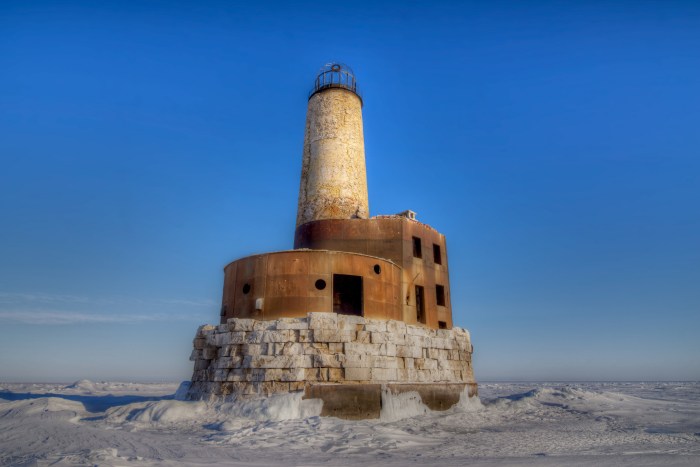
Waugoshance Lighthouse – Morning, photo by lomeranger

You can today’s photo under “dedication” as photographer Jason Lome hiked 18 miles hauling his camping gear in temperatures ranging from 0 to -20F to get this shot! You can purchase right here.

The Waugoshance Shoals entry at Terry Pepper’s fantastic Seeing the Light website tells the origin of this ruined light and of the significance of this site in Great Lakes Lighthouse history:

After a number of groundings in the early 1820’s, mariners began petitioning the Federal Government to construct an aid to navigation on Waugoshance Shoal. While the construction of underwater cribs had been attempted with success on the East Coast, the relatively short shipping seasons and thick winter ice of northern Lake Michigan appeared to make such an undertaking a daunting challenge.

As an interim measure, the wooden vessel LOIS MCLANE, which had been converted into a lightship, was placed on Waugoshance Shoal in 1832, thus taking her place in history as the first lighthouse to serve on all the Great Lakes.

In 1850, the decision was made to construct a more permanent light on the shoal, and work began with the construction of a timber crib on St. Helena Island. The crib was then towed to Waugoshance and sunk in place through the addition of large rocks.

…Exposed as it was to the full fury of Lake Michigan and to the great breaking fields of ice every spring, the crib began to deteriorate. Reacting to this deterioration in 1865, the Lighthouse Board appropriated the funds required to make the repairs necessary to ensure the station’s continued structural integrity, and quickly completed the work.

While the repairs of 1865 were considerable in their scope, they were no match for the relentless fury of the lake, and by the late 1880’s the crib and the soft brick of the tower had once again deteriorated to the point where major repairs were needed.

There’s much more to found at Seeing the Light including the construction of this edition of the Waugashance Lighthouse and how it came to be a ruin.

Check Jason’s photo out background bigtacular and see more in his Lighthouse slideshow.

There’s lots more about the colorful history of Waugoshance Shoals Lighthouse on Michigan in Pictures, and dozens and dozens of Michigan lighthouses.

Waters Tigers

NE Cheboygan Waters MI RARE RPPC BASEBALL BEEN BERRY BERRY GOOD TO ME The Waters Tigers Photographer BLAIN & YEOMANS Lower Corner NBD bend1

The Waters Tigers (Photographer BLAIN & YEOMANS), photo by UpNorth Memories – Donald (Don) Harrison

According to this page, Water’s Tigers were the baseball team from Waters, Michigan.

In the course of figuring that out, I stumbled upon the saga of Ne-naw-bo-zhoo, legendary prophet, warrior and clown. In addition to water tigers, the story has sea serpents and an ark in it so you can be assured it’s quite a tale.

View Don’s photo background big and see more of his baseball photo right here.

Ice Everywhere: Great Freeze on the Great Lakes

Ice Everywhere

So much ice, everywhere, photo by caterleelanau

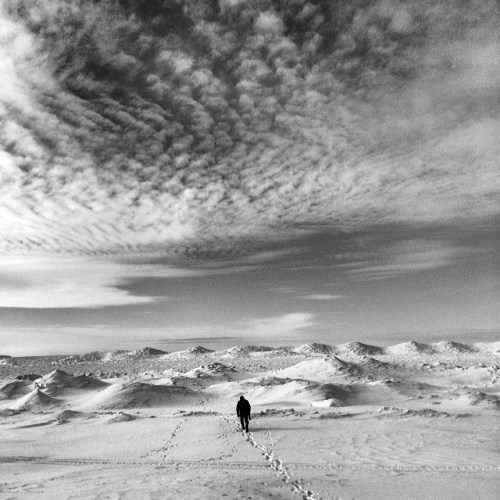
At night, as cold settles in, lake ice creaks and groans. It’s been excessively cold, and I camped exposed on the snow-swept surface. Other than the lack of vegetation and the sounds at night, you’d never know you were on a lake. It feels like an empty plain. In some places, you see pressure ridges where ice has pushed into itself, sticking up like clear blue stegosaurus plates.
~ Author Craig Childs on Lake Superior

From the latest satellite photo, it looks like Lake Huron is 100% frozen with Superior & Erie 95% and Michigan somewhere in the 85% area. Ontario is looking like the slacker right now, and you can follow along and see daily satellite shots from NOAA.

The NASA Goddard Space Flight Center provided the quotation above and reported on the Great Freeze Over the Great Lakes saying (in part):

Scientists say it’s understandable that the Great Lakes have had so much ice this year considering the cold temperatures in the region that persisted through the winter. Cold air temperatures remove heat from the water until it reaches the freezing point, at which point ice begins to form on the surface, explained Nathan Kurtz, cryospheric scientist NASA’s Goddard Space Flight Center in Greenbelt, Md.

“Persistently low temperatures across the Great Lakes region are responsible for the increased areal coverage of the ice,” Kurtz said. “Low temperatures are also the dominant mechanism for thickening the ice, while secondary factors like clouds, snow, and wind also play a role.”

The freeze this year has local implications, including possible changes to snowfall amounts in the Great Lakes area, explained Walt Meier, also a cryospheric scientist at NASA Goddard. When the lakes are primarily open water, cold air picks up moisture from the relatively warm and moist lake water, often resulting in lake effect snow on the lee side of the lakes, on the eastern and southern shores. When the lakes freeze, the lake effect generally shuts down. “Although this year, they’re still picking up a fair amount of snow,” Meier said.

Lake levels could also see an impact by summer, as winter ice cover generally reduces the amount of water available to evaporate during winter months. If that turns out to be the case, it would be “good news for local water supplies, as well as for shipping and recreational use,” Meier said.

A 2012 study in the Journal of Climate by scientists at NOAA’s Great Lakes lab, which included data from MODIS, found that winter season ice cover on Lake Superior has decreased 79 percent from 1973 to 2010. The study also showed that ice cover on the lakes is highly variable and difficult to predict.

Today’s photo was taken on frozen Lake Michigan off the Leelanau shore by my friend and neighbor Cammie, co-owner of Epicure Catering. You can follow her at caterleelanau on Instagram for lots of wintertime fun and summertime food!

More ice on Michigan in Pictures!

Rising Duck

Rising Duck

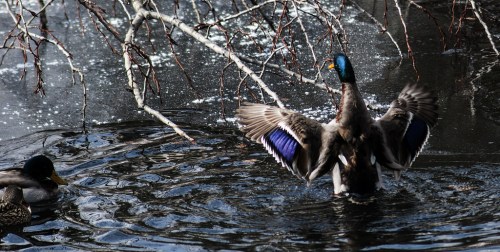
Rising Duck, photo by spang1mw

It’s been too long since a photo was added to the Michigan in Pictures Duckie Project.

View Matt’s photo background big and see more in his slideshow.

Crosseyed & Snowblind

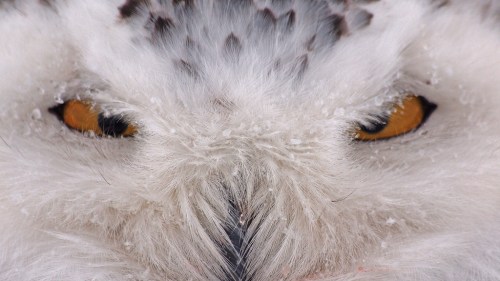
Snowy Owl

Snowy Owl, photo by Sherri & Dan

Enough with the vortexes already.

Sherry & Dan took their photo of a snowy owl near Muskegon. background bigtacular and see more in their 100+ photo Owls slideshow.

More about snowy owls on Michigan in Pictures.

Michigan in Pictures is a blog, folks

Polar Vortex Cabin Fever

Polar Vortex Cabin Fever, photo by lauraherd

A few readers shared Thursday that they’d rather I check my politics at the door and stick to the Michigan photo posting. 6 even unsubscribed, but since 8 more subscribed I guess it’s a wash.

I’ve run a lot of blogs and similar online projects, and I’ve seen what happens when they become places for people to fight about things. That’s not going to happen on Michigan in Pictures, and I want to make a couple of things clear, just so there’s no surprises.

  1. And this is #1 for a reason. I love Michigan. Love love love it. I’ve worked really hard on this site for 8 years for no financial gain, sharing and promoting and discovering Michigan. What I do gain is the satisfaction of learning more and seeing more of my state. My love of Michigan extends to a commitment to the preservation of Michigan’s water and environment, which I believe is critical to our state’s long-term economic health. I can’t and won’t separate this, so you’re going to have to deal with the occasional post about my thoughts on these matters.
  2. And this is really part 2 of #1: I love YOU. You follow Michigan in Pictures because you love Michigan and love learning about the same weird, fun, beautiful things that I do. You also appreciate the talented photographers who share pieces of the glorious whole of the Great Lakes State in the Absolute Michigan pool on Flickr, on Facebook, Twitter and Instagram.  Thank you for your support of my efforts and your support of all the photographers who trust their work to me.
  3. This is my personal blog. I’m glad that so many people enjoy it, and I try go out of my way to confront people. That said, I don’t do Michigan in Pictures for money, I do it for love and my own satisfaction. I find comments along the “Stick to posting pretty pictures of Michigan” insulting and offensive. I’ll be sticking to doing what I do, and if that’s a problem for you, there’s a big wide internet out there so please feel free to unsubscribe now.

Thanks, and have a wonderful weekend.

Laura let me post this photo she took of our cats, Monty & Acorn. It’s a personal favorite. Click to see it bigger on Instagram.