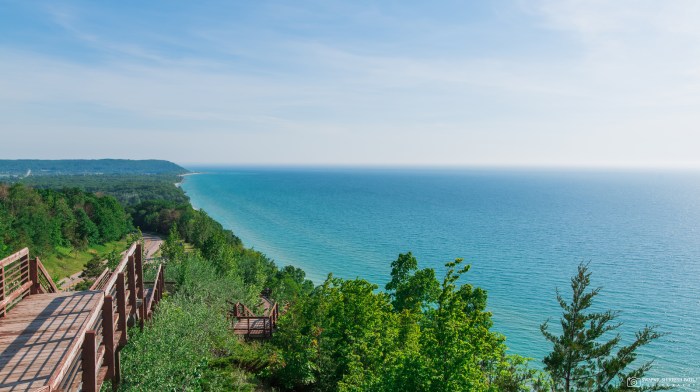
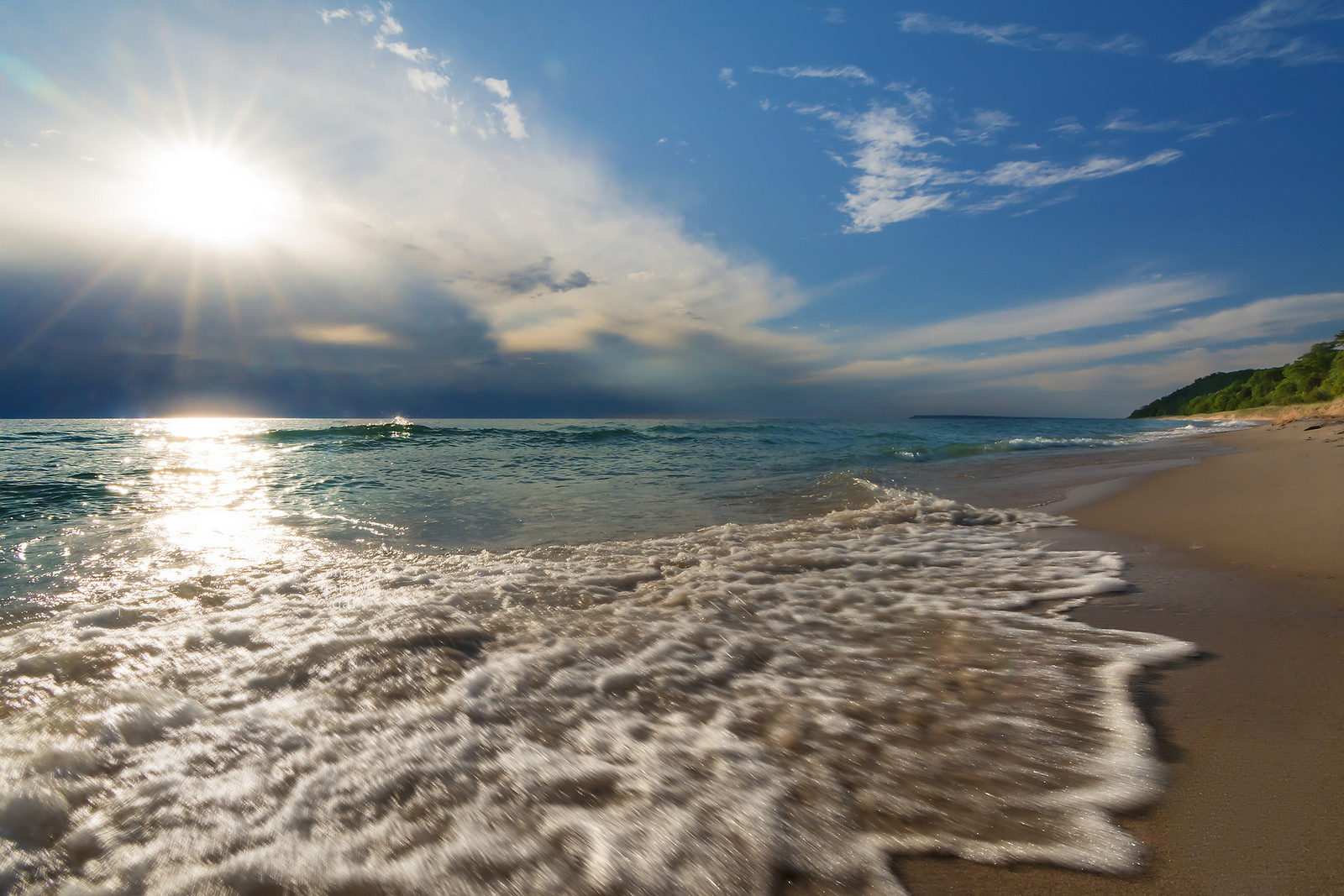
The view of Lake Michigan is perhaps the loveliest for the Eastern shore of the Lake. High above the Lake and even higher when you climb well-constructed stairs. Some people drive up every night to watch the sunset. We know of scores of marriage proposals that transpired there. Very near the C. S. Mott Nature Preserve, which we know as the blow-out and others call Old Baldy. On Highway M-22, one of the most beautiful roads in the Midwest. by all means, stop for awhile and watch the breakers (whitecaps) on a windy day.
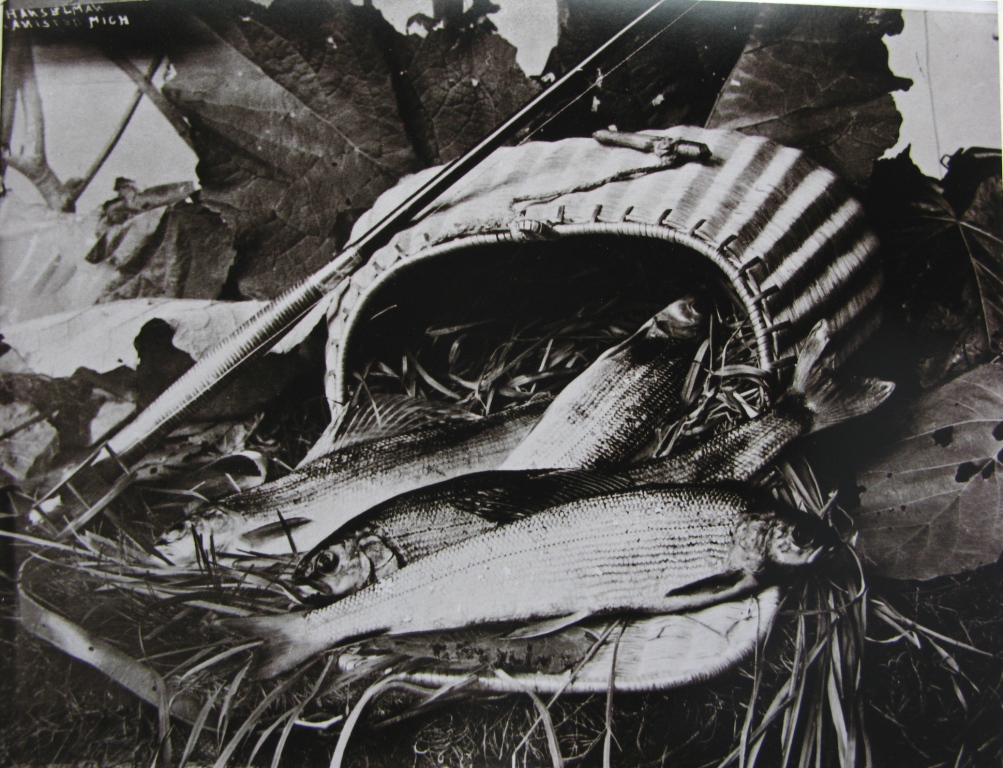
The Michigan Department of Natural Resources is partnering with the Little River Band of Ottawa Indians to bring back the Arctic grayling. Grayling were native to Michigan but are long vanished from our waters. Slate blue in color with a sail-like dorsal fin, they are of the salmon family and efforts will begin in the Manistee River watershed.
According to William J. Mantague, “One spring the Grayling were running up the Hersey. We noted they had some difficulty passing an obstruction in the stream, so we placed a canoe crosswise at that point and caught over seven hundred one afternoon.”
The Grayling were eaten. They were packed in ice, loaded onto railway cars, and shipped by the thousands of tons per year to the larger metropolitan areas. In some instances, they were tossed on the banks and buried in mounds.
At the same time, the lumbermen came and cut down centuries-old growth of virgin white pine. The land leading to the rivers was stripped as well, slashed and burned, and the logs floated downstream to the large mills and cities during the spring run-off. The rivers were cleared of logs and debris, places were the Grayling flourished. Shallow riffles were trenched out and deepened, and dams were built so that the flow of the river could be better controlled. Vegetation on the banks of the rivers was cleared as well, and the river slowly filled with sand. The sand filled the deepest pools and covered the Grayling’s spawning beds. By 1885, the Grayling had disappeared from the AuSable River. And in a period of ten to twenty years, a land unrivaled for its fishing and beauty, became a barren wasteland of stumps and empty pools.
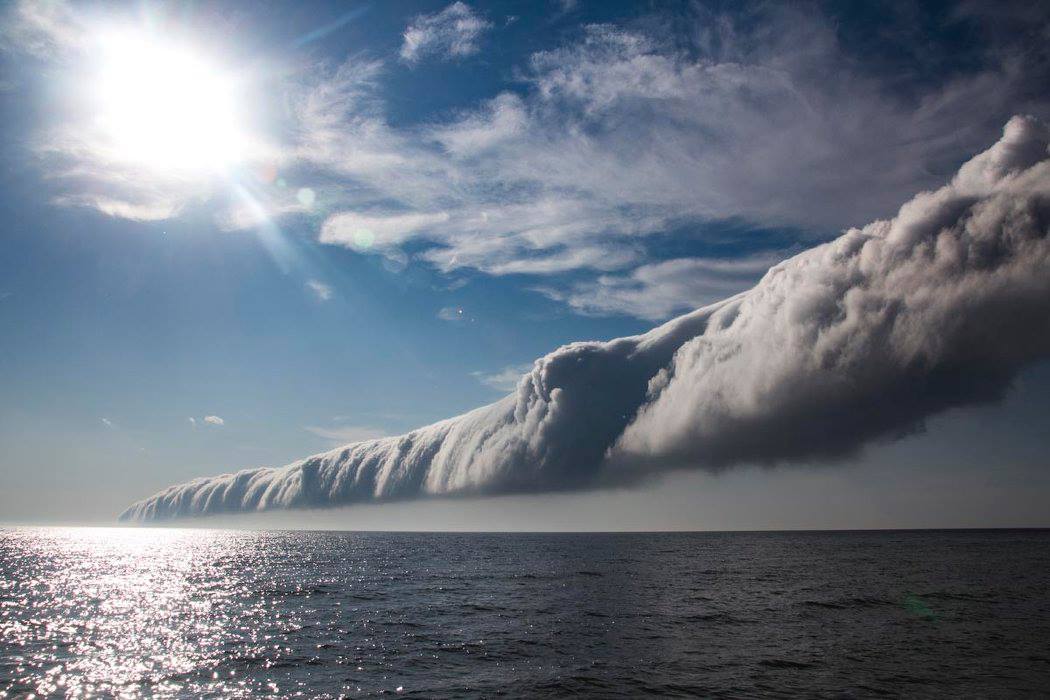
My corner of Northern Michigan was all abuzz last weekend due to a relatively rare meteorological phenomenon known as a “roll cloud.” Wikipedia’s entry on Arcus clouds explains:
An arcus cloud is a low, horizontal cloud formation. Roll clouds and shelf clouds are the two types of arcus clouds. A shelf cloud is usually associated with the leading edge of thunderstorm outflow; roll clouds are usually formed by outflows of cold air from sea breezes or cold fronts in the absence of thunderstorms.
…A roll cloud is a low, horizontal, tube-shaped, and relatively rare type of arcus cloud. They differ from shelf clouds by being completely detached from other cloud features. Roll clouds usually appear to be “rolling” about a horizontal axis. They are a solitary wave called a soliton, which is a wave that has a single crest and moves without changing speed or shape.
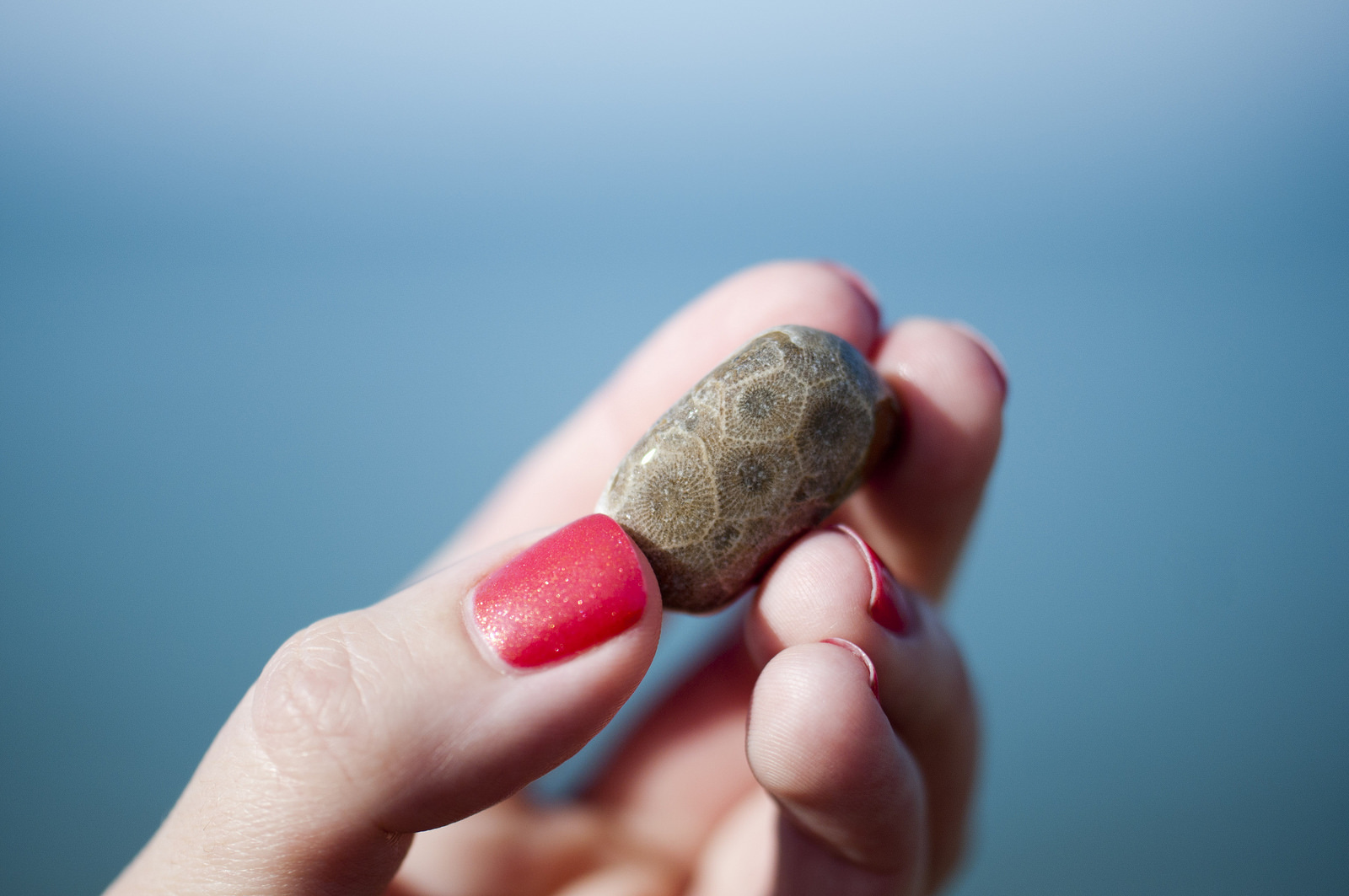
The Michigan Tech Geology Department explains that Michigan’s state stone is the Hexagonaria percarinata, the Petoskey stone. It is a fossil colonial coral that lived in the warm Michigan seas during the Devonian time around 350 million years ago. They can be found from Traverse City area across the state to Alpena in gravel pits, road beds, and of course beaches, with the largest concentration found on and around Lake Michigan’s Little Traverse Bay near the town of Petoskey. In June of 1965 the Petoskey Stone was named Michigan’s official State Stone and Miss Ella Jane Petoskey, the only living grandchild of Chief Petoskey, attended the formal signing.
Several years ago I shared the story behind the name as told by a young woman I know, Rose Petoskey:
My name is Noozeen (Rose) Nimkiins (Little Thunder) Petoskey (Rising Sun) and I am Anishinaabek.
Many people would associate the word Petoskey with the souvenir stone found on the northern Lake Michigan shorelines. However, to my family, the word Petoskey represents much more than a souvenir.
In the Odawa language, the word Petoskey (Bii-daa-si-ga) means the rising sun, the day’s first light, or the sun’s first rays moving across the water. The Petoskey stone is a fossilized coral created by impressions made in limestone during the last Michigan ice age. These stones were named “Petoskey” because the impressions resembled the rising sun coming up over the water. Just as the image of the rising sun is implanted within the Petoskey stone, the archaeology of a person’s names is implanted within. All names within our Anishinaabek culture reflect an individual’s personal history. Rocks go deep, but names go much deeper to reveal the stories of the past.
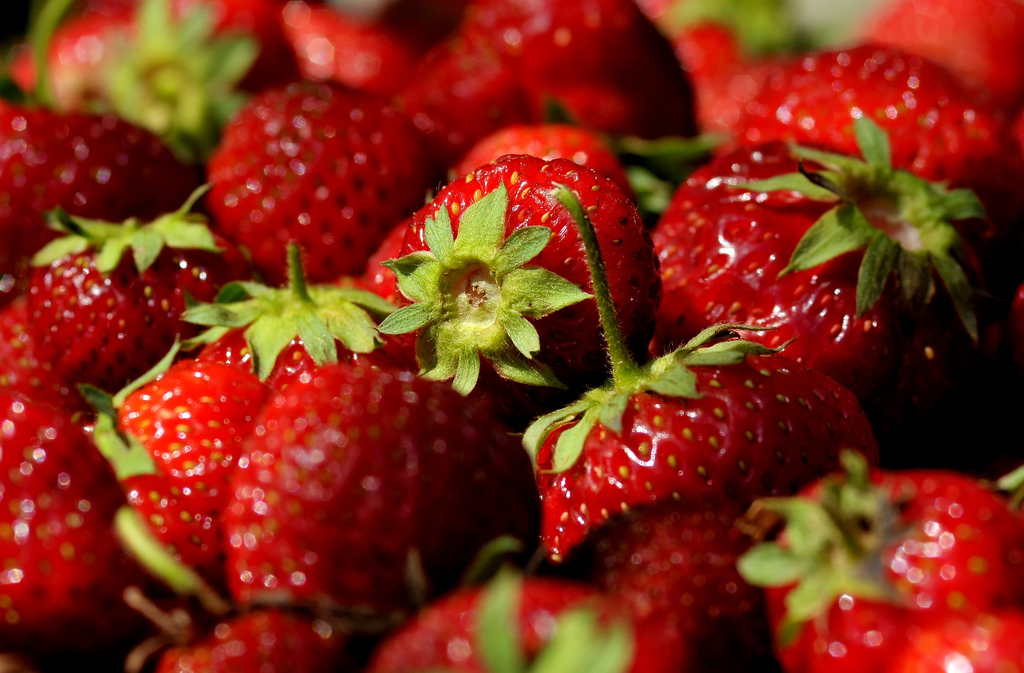
June’s moon is full on full on June 20 at 7:02 AM. It was known as the Strawberry Moon by Algonquin tribes, and it’s looking like Michigan’s strawberry season will be ramping up right on schedule. Here’s a couple of strawberry tidbits via Michigan Strawberries are Ready to Pick on Absolute Michigan:
Strawberries are grown in every county of Michigan and your fun fact of the day is that 53% of seven to nine year olds say strawberries are their favorite fruit. Strawberries are high in iron and Vitamin C – Eight strawberries will provide 14% of the recommended daily intake of Vitamin C for kids – and have less than 60 calories per cup.
Strawberries were a symbol of perfection and righteousness that medieval stone masons carved on altars and around the tops of pillars in churches and cathedrals. In parts of Bavaria, country folk still practice the annual rite each spring of tying small baskets of wild strawberries to the horns of their cattle as an offering to elves. They believe that the elves, who are passionately fond of strawberries, will help to produce healthy calves and abundance of milk in return.
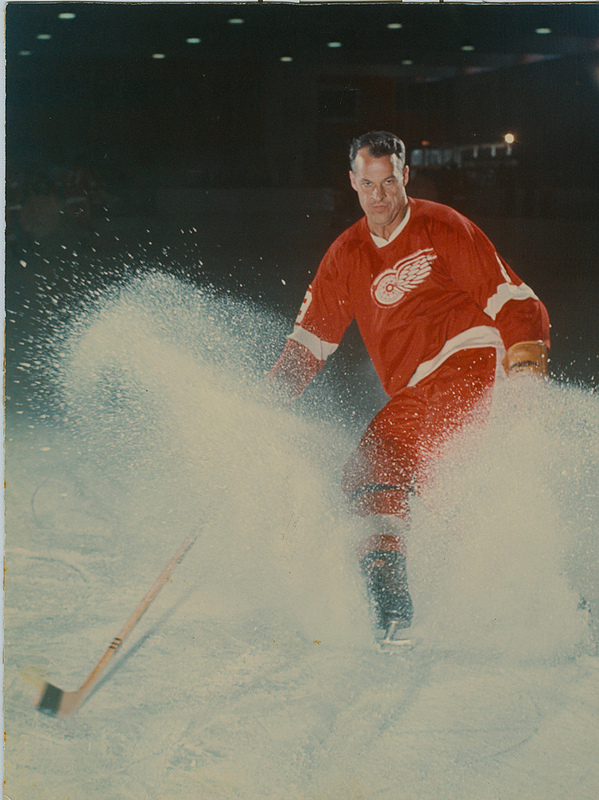
Gordie Howe is referred to as simply “Mr. Hockey”. World War II had just ended when he first entered the National Hockey League, and when he played his final NHL season 33 years later, Wayne Gretzky was playing his first. Over those five decades, Howe didn’t just survive, he was dominant – on the scoring lists, in battles in the corners, on game-winning goals and when the year-end awards were handed out. He was a big man, though by modern standards no behemoth, but what set him apart was his incredible strength.
Though other superstars could be deemed somewhat better scorers, tougher fighters or faster skaters, no player has approached Gordie Howe’s sustained level of excellence. Incredibly, Gordie finished in the top 5 in NHL scoring for 20 straight seasons. To endure and excel, Howe needed a unique set of qualities, both physical and mental, and the foundations for his astonishing career were laid in him from an early age.
Howe grew and matured quickly, and when he was 15 he made a bid to play with the New York Rangers, attending the team’s training camp in Winnipeg. He was homesick, however, and before the end of the camp he returned to Saskatchewan. He made a better impression with the Detroit Red Wings the next year, joining a group of Red Wing veterans and untried youngsters to work out in front of Detroit boss Jack Adams. The ambidextrous Howe drew Adams’ attention from the start with a sizzling rush down the left wing and a sharp shot. The next minute he escaped down the right wing, switched his stick to the other side and still with a forehand zipped another shot at the goal.
Howe made his professional debut when he was 18, taking up the right wing for Detroit at the beginning of the 1946-47 season. He was 6′ tall and just over 200 pounds, making him one of the heavier players in the league…
…Apart from his forbidding temperament, Howe’s athletic and savvy playing style also contributed to his longevity. He never wasted energy if he didn’t need to, especially after he cut down on the number of fights he’d take part in early in his career. He was economical with his movements, anticipating when and where the play would intersect with his effortless progress around the ice. He often played 45 minutes of a game when the average total was 25. Observers noticed that when his exhausted line returned to the bench, Howe was the first to recover and raise his head, ready for another shift.
In all, Howe was selected to 21 NHL All-Star squads, 12 times to the First Team. Six times he led the NHL in scoring to capture the Art Ross Trophy and six times he won the Hart as the league’s most valuable player. His Detroit teams won the Stanley Cup four times.
Howe had been in his prime during a defensive era, the 1940s and 1950s, when scoring was difficult and checking was tight. When he was 40, in 1967, the league expanded from six to 12 teams and the number of offensive opportunities grew with it. Howe played the 1968-69 season on a line with Alex Delvecchio and Frank Mahovlich, the mercurial but talented star who had moved to Detroit from Toronto. Mahovlich was big, fast and skilled and Delvecchio was a gifted playmaker. The three were dubbed “the Production Line 3” and Howe’s scoring returned to the levels of his youth and then beyond. He topped 100 points for the first time, scoring 44 goals and adding a career-high 59 assists.
Read on for much more and watch the Legends of Hockey profile of Gordie Howe below.
Wayne T. ‘Tom’ Helfrich shared this photo by longtime Michigan news photographer Ed Noble, then of the Pontiac Press and later of the Oakland Press. Tom writes that Ed had a photo shoot with Gordie and knew he was a big fan and brought him this print. View the photo bigger and see more great old shots in his Detroit Red Wings slideshow.
I sincerely hope that everyone who reads today’s post remembers that three-quarters of all bicycle fatalities are caused by driver error. It’s your duty as a driver to PAY ATTENTION as you pilot a several thousand pound machine that can become a deadly weapon if you are not vigilant. I would also add that I am in no mood today to hear about the cases where cyclists violate the rules of the road. That does not happen in 3/4 of car/bike fatalities including this one…
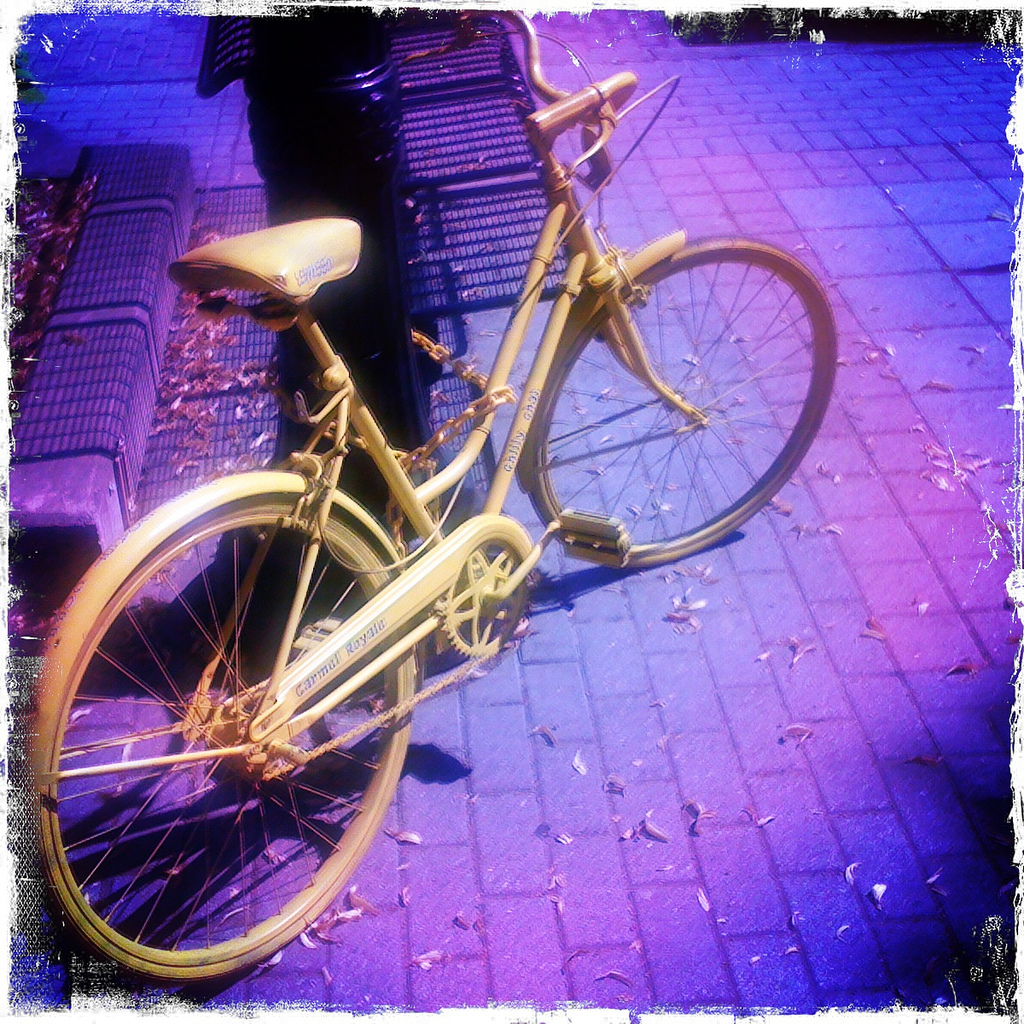
Today’s picture shows a ghost bike, a white-painted memorial for a bicyclists who was killed or struck while riding on the street. Accompanied by a small plaque, they serve as reminders of the tragedy that took place at their location and as enduring statements in support of cyclists’ right to safe travel.
The city of Kalamazoo now has need for a host of ghost bikes after the deadly bicycle crash on Tuesday, June 7, 2016 where five bicyclists died when a pickup truck hit them on Westnedge Avenue. Four more cyclists were seriously injured. That link has photos from last night’s Ride of Silence and also the horrible damage to the bikes.
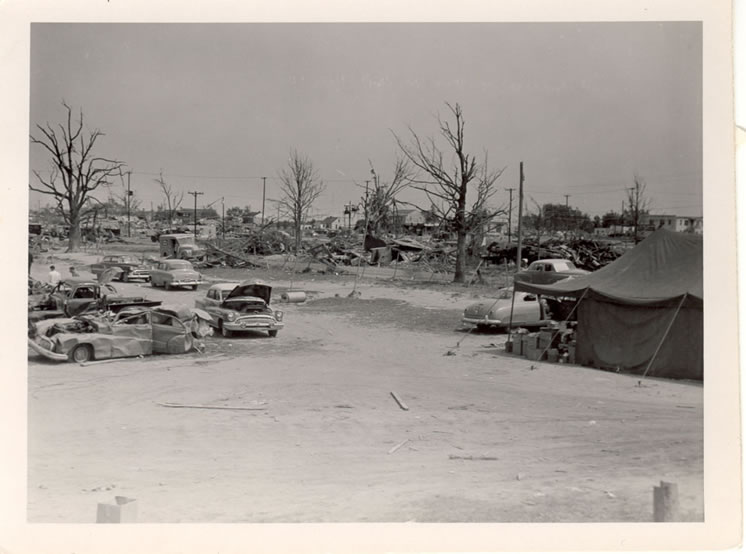
“The noise sounded like two freight trains going over a trestle right over your head; it was an ugly roar. My wife said the noise when the house went was like a giant pencil sharpener working.” -Tornado Survivor Robert Blue
This was the last tornado to kill over 100 people in a single tornado event anywhere in the United States. On June 8th, 1953, 116 people lost their lives in the Flint-Beecher community, and 844 people suffered injuries. The Flint-Beecher Tornado was just one of eight tornadoes that occurred that horrible evening across the eastern portion of the Lower Peninsula. Those other seven tornadoes resulted in an additional 9 deaths, 52 injures, and damage stretching from Alpena to Erie.
The Flint-Beecher tornado was rated as an F5, the highest rating on the Fujita scale of damage. Winds were likely in excess of 200 mph as the 800 yard wide tornado moved on its 27 mile path through Genesee and Lapeer counties. Approximately 340 homes were destroyed, 107 homes had “major damage”, and 153 homes had “minor damage”. In addition farms, businesses and other buildings were destroyed and had damage. These totaled another 50 buildings destroyed and 16 with damage. The damage was estimated around $19 million (about $125 million adjusted for inflation).
So great a number were killed by the monstrous tornado that the National Guard Armory building, along with other shelters, was turned into a temporary morgue. The scene of bodies pouring into the Armory (as an intermittent light rain poured outside) was incredibly bleak and horrifying, especially for the families and friends of the victims. At least 100 people waited outside into the rainy night before they could move inside to try and identify the bodies.
Atmospheric Optics from the UK is far and away the best website for rainbow science as well as other atmospheric optical phenomena. Regarding primary rainbows as seen in Noah’s photo from Frankfort, they say:
To see a rainbow we need sunshine and falling rain. Rainbows are rarer than might be thought … Halos occur much more frequently.
Early morning and late afternoon are the best times to see them because the sun must not be too high. Rainbows are always opposite the sun and their centres are below the horizon at the the antisolar point. The lower the sun the higher is the bow.
Red is always outermost in the primary bow with orange, yellow, green and blue within. Occasionally, when the raindrops are small, fainter supernumerary arcs of electric greens, pinks and purples lie just inside the main bow.
A rainbow is not just a set of coloured rings. The sky inside is bright because raindrops direct light there too. The primary bow is a shining disk brightening very strongly towards its rim.



 Michigan in Pictures