What’s ahead for 2014?

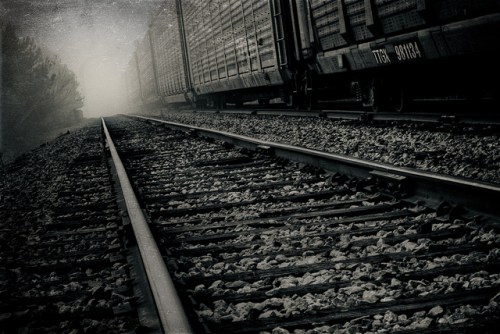
Unknown

Unknown, photo by Mike Lanzetta

Probably my favorite thing about the New Year is the sense that anything and everything is possible. For myself, I’m happy to close the door on 2013 which has been a tougher than usual year and looking forward to new opportunities in 2014.

I hope that whatever you’re feeling about the year that’s gone that the year to come brings you everything you hope for and some wonderful surprises that you weren’t expecting. Happy New Year everyone!

View Mike’s photo bigger and see more in his train slideshow.

PS: Thanks everyone for the great comments and kind words yesterday!

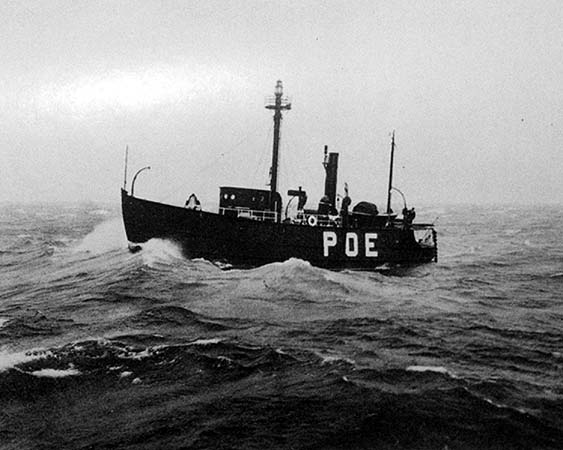
Riding the storm out with the Poe Reef Lightship

Poe Reef Lightship

Poe Reef Lightship LV62 riding out a storm on her station, courtesy the Lake Carrier’s Association

The Poe Reef Lighthouse page at Terry Pepper’s Seeing the Light begins with the story of the vessel that preceded the lighthouse:

Poe Reef lies just eight feet beneath the water’s surface between Bois Blanc Island and the Lower Peninsula mainland, and as such has long represented a significant hazard to vessels making their way through the Straits between Lakes Michigan and Huron.

In the early 1890’s the Lighthouse Board faced a vexing problem. Increasing vessel traffic created a need to install navigational aids at a number of offshore shoals and reefs. With Congressional funds increasingly difficult to obtain, and the costs of offshore lighthouse construction prohibitively high, the Board determined that the use of lightships to mark such hazards would be both significantly more expeditious and cost effective.

Unable to convince Congress to free up the funds for these lightships, the Board took the chance of redirecting an existing $60,000 congressional appropriation for a lighthouse off Peninsula Point to the purchase of four lightships.

In 1892 two contracts totaling $55,960 were awarded to the Craig Shipbuilding Company in Toledo for the construction of four lightships. Designated as Lightships LV59, LV60, LV61 and LV62, all four vessels were built to similar specifications. Framed and planked of white oak they measured 87′ 2″ inches in length, 21′ 6″ inches in the beam, with a draft of 8 feet. In a cost-cutting effort, the vessels were un-powered, outfitted with only a small riding sail carried on a short after mast. Equipped with a cluster of three oil-burning lens lanterns hoisted on their foremasts, each was also equipped with 6″ steam whistles and hand-operated bells for fog use. Work was completed on the four vessels the following year, and after sea trials, all four were commissioned by the Board and placed into service, LV59 being assigned to Bar Point, LV60 to Eleven Foot Shoal, LV61 to Corsica Shoal and LV62 to Poe Reef.

With the words POE REEF brightly painted in white on her fire engine red hull, LV62 was towed to Poe Reef by the lighthouse tender Marigold, and anchored on station to begin her vigil on September 29, 1893. For the next seventeen years LV62 spent every shipping season faithfully guarding the shoal. With the end of each shipping season, one of the lighthouse tenders would make the rounds of all lightship stations in the Straits area, and tow them into Cheboygan harbor for winter lay-up. While in Cheboygan, necessary repairs and improvements would be made in preparation for the following season. At some time in March or April, the ice would break up sufficiently to allow the vessels to be towed back to their stations to stand guard for yet another season.

Read on for another shot of this vessel and for more about the lighthouse that replaced the lightship at Poe Reef. Also have a look at these photos of Light Vessel 96, which took over for LV 62 from 1915-1920 at Poe Reef.

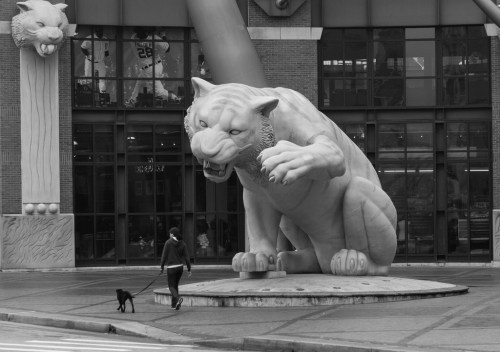
Roar

Roar

Roar, photo by Matt Gowing

Just sayin’.

Check Matt’s photo out background bigilicious and see more in his Street slideshow.

And oh yeah – go Tigers!

The Sky Walker of Huron

"Winter Moon" Sturgeon Point , Lake Huron

“Winter Moon” Sturgeon Point, Lake Huron, photo by Michigan Nut

Myths and Legends of our Own Land by Charles M. Skinner (1896) has some incredible stories from Michigan’s first people. Here’s The Sky Walker of Huron:

Here is the myth of Endymion and Diana, as told on the shores of Saginaw Bay, in Michigan, by Indians who never heard of Greeks. Cloud Catcher, a handsome youth of the Ojibways, offended his family by refusing to fast during the ceremony of his coming of age, and was put out of the paternal wigwam. It was so fine a night that the sky served him as well as a roof, and he had a boy’s confidence in his ability to make a living, and something of fame and fortune, maybe. He dropped upon a tuft of moss to plan for his future, and drowsily noted the rising of the moon, in which he seemed to see a face. On awaking he found that it was not day, yet the darkness was half dispelled by light that rayed from a figure near him—the form of a lovely woman.

“Cloud Catcher, I have come for you,” she said. And as she turned away he felt impelled to rise and follow. But, instead of walking, she began to move into the air with the flight of an eagle, and, endowed with a new power, he too ascended beside her. The earth was dim and vast below, stars blazed as they drew near them, yet the radiance of the woman seemed to dull their glory. Presently they passed through a gate of clouds and stood on a beautiful plain, with crystal ponds and brooks watering noble trees and leagues of flowery meadow; birds of brightest colors darted here and there, singing like flutes; the very stones were agate, jasper, and chalcedony. An immense lodge stood on the plain, and within were embroideries and ornaments, couches of rich furs, pipes and arms cut from jasper and tipped with silver. While the young man was gazing around him with delight, the brother of his guide appeared and reproved her, advising her to send the young man back to earth at once, but, as she flatly refused to do so, he gave a pipe and bow and arrows to Cloud Catcher, as a token of his consent to their marriage, and wished them happiness, which, in fact, they had.

This brother, who was commanding, tall, and so dazzling in his gold and silver ornaments that one could hardly look upon him, was abroad all day, while his sister was absent for a part of the night. He permitted Cloud Catcher to go with him on one of his daily walks, and as they crossed the lovely Sky Land they glanced down through open valley bottoms on the green earth below. The rapid pace they struck gave to Cloud Catcher an appetite and he asked if there were no game. “Patience,” counselled his companion. On arriving at a spot where a large hole had been broken through the sky they reclined on mats, and the tall man loosing one of his silver ornaments flung it into a group of children playing before a lodge. One of the little ones fell and was carried within, amid lamentations. Then the villagers left their sports and labors and looked up at the sky. The tall man cried, in a voice of thunder, “Offer a sacrifice and the child shall be well again.” A white dog was killed, roasted, and in a twinkling it shot up to the feet of Cloud Catcher, who, being empty, attacked it voraciously.

Many such walks and feasts came after, and the sights of earth and taste of meat filled the mortal with a longing to see his people again. He told his wife that he wanted to go back. She consented, after a time, saying, “Since you are better pleased with the cares, the ills, the labor, and the poverty of the world than with the comfort and abundance of Sky Land, you may return; but remember you are still my husband, and beware how you venture to take an earthly maiden for a wife.”

She arose lightly, clasped Cloud Catcher by the wrist, and began to move with him through the air. The motion lulled him and he fell asleep, waking at the door of his father’s lodge. His relatives gathered and gave him welcome, and he learned that he had been in the sky for a year. He took the privations of a hunter’s and warrior’s life less kindly than he thought to, and after a time he enlivened its monotony by taking to wife a bright-eyed girl of his tribe. In four days she was dead. The lesson was unheeded and he married again. Shortly after, he stepped from his lodge one evening and never came back. The woods were filled with a strange radiance on that night, and it is asserted that Cloud Catcher was taken back to the lodge of the Sun and Moon, and is now content to live in heaven.

Check John’s photo out bigger and see more in his Lake Huron slideshow.

More Lake Huron on Michigan in Pictures.

a language we all understand

a language we all understand

a language we all understand, photo by mlephotos

About this photo she shot a few years ago at the Detroit Electronic Music Festival, Meghan writes:

Detroit has produced some of music’s most highly regarded and historically important figures. Home to the Queen of Soul, Motown, the birth of techno, numerous top 40 hits and one-hit wonders, Detroit’s musical influence can be heard around the world in every genre of music. Detroit artists and musicians have won countless awards, topped the Billboard charts, sold millions of records, and many have been inducted into the Rock & Roll Hall of Fame. Legendary and iconic artists Marvin Gaye, Diana Ross, Stevie Wonder, Madonna, Eminem, Kid Rock, Iggy and the Stooges, MC5, Ted Nugent, Bob Seger, The White Stripes, Kevin Saunderson, Juan Atkins, Derrick May, Parliament featuring George Clinton, and The Romantics all emerged from the area. Rock on, Detroit!

With a heritage like that, it’s no surprise that music is a $1 billion a year industry in Motown. Click the link for the story from Crain’s Detroit Business.

Check her photo out bigger and see more in Meghan’s i like {my fave 30} slideshow.

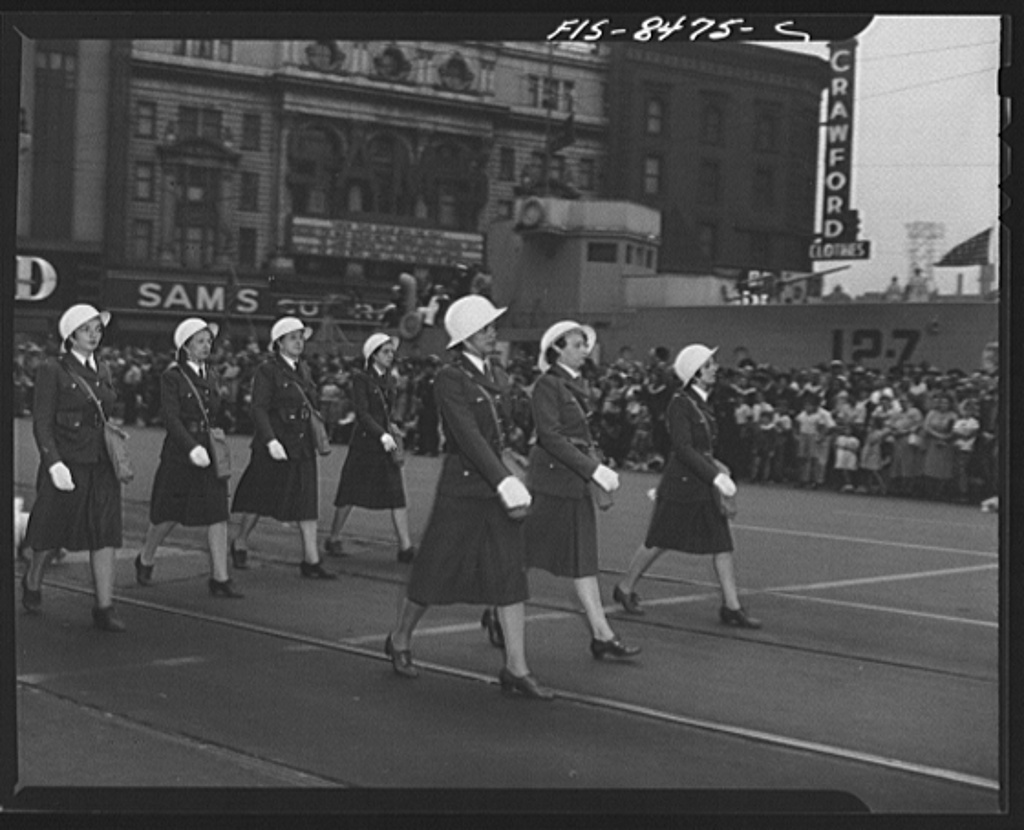
Labor Day traditions in Detroit

Labor Day 1942

The Detroit News Feature “Holiday for Labor” that provides an excellent look at the traditions of labor and labor day parades in Detroit:

The Detroit Trade Assembly’s labor parades in 1865 formed a part of established parades and gatherings on national holidays, such as the Fourth of July or Washington’s birthday. The unions gathered at Campus Martius, each carrying a banner with a name and symbol of their occupation. Many wore all white with matched hats or aprons. The names of their unions sound a bit quaint today: blacksmiths, iron molders, ship carpenters, caulkers, joiners, coopers, cigar packers, tailors, broommakers, stovemounters, bricklayers, shoemakers, painters, bakers, tinsmiths, cabinet makers, and saddle, trunk and harness makers.

In all about 9,000 people were involved and ended up having parties “gypsy-style” in the Bella Hubbard Grove at Vinewood and 25th Street, with shuttle trips to Belle Isle and Grosse Ile and moonlight excursions to Lake Erie on the ship T.F. Park.

…At that time, almost everyone worked at least 10 hours a day and, for many, 12 hours. Huge strikes for eight-hour work days shook the nation, and independent labor political parties surfaced in community after community. Many of the strikes and parades drew thousands and ended in violence.

…In those years, Labor Day was seen as a welcome holiday for working men and women who labored before the concept of sick days, paid leave, weekends and paid vacations. A Detroit News editorial from Sept. 5, 1927 put it this way:

“In America no man need be apologetic because he works; he needs to explain if he does not. Accordingly, Labor Day is not the peculiar property of some group, but is the holiday which recognizes that this great country of ours with all its glorious achievements, ideals and purposes is a vindication of a whole people’s pride in labor.”

Read on more MUCH more!

This is part of a series of photos taken at the 1942 Labor Day Parade in Detroit by Arthur S. Siegel. Check them all out at the Library of Congress.

Lots more Labor Day on Michigan in Pictures.

Remembering Michigan author Elmore Leonard

Detroit-Author-Elmore-Leonard

Elmore Leonard, The Dickens of Detroit, photo courtesy Archives of Michigan

“After 58 years you’d think writing would get easier. It doesn’t. If you’re lucky, you become harder to please. That’s all right, it’s still a pleasure.”
~Elmore Leonard

Legendary Michigan author Elmore “Dutch” Leonard passed away Tuesday at the age of 87. Leonard was the author of many best-selling crime novels including Get Shorty, Freaky Deaky and Killshot. Another great Michigan author, Jim Harrison, wrote:

“Elmore was the opposite of the loudmouthed, big shot novelist. He was graceful, fairly quiet and poignantly intelligent. We have lost our best. No one wrote better dialogue in America.”

The photo above appeared in The Dickens of Detroit from Seeking Michigan on Leonard’s birthday (October 11, 2011). They do a nice job of hitting the highlights of an illustrious career:

Leonard was born in New Orleans in 1925. He has made the Detroit area his home since 1934, when his family moved there. The city of Detroit often serves as the main character in his novels. As a result, fans often refer to Elmore Leonard as the ‘Dickens of Detroit.”

Leonard graduated from University of Detroit Jesuit High School in 1943. He then immediately joined the Navy, where he served with the Seabees. After his service, he enrolled at the University of Detroit and graduated in 1950 with a degree in English and Philosophy. Leonard started his writing career as a copywriter at the Campbell-Ewald Advertising Agency. Writing on the side, he was able to publish his first novel, The Bounty Hunters in 1953. In his early career, he focused on writing pulp Westerns, because that was what was selling at the time. Leonard eventually moved on to specialize in crime fiction and suspense thrillers. A large number of his books have been turned into movies or television programs.

Critics praise Leonard for his effective use of dialogue and the gritty realism in his books. His unique ear for dialogue and the ability to capture it on the page is rarely matched. Concise and plot driven, his stories are stuffed with colorful characters and tricky, often humorous plot twists.

Read on for more. Here are a few of the best features I found – please feel free to post more in the comments:

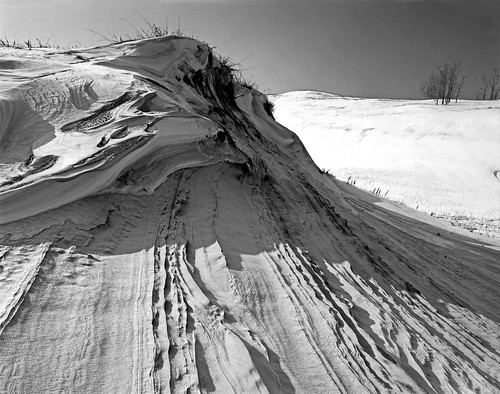
Sleeping Bear Winterscape

Sleeping Bear Winterscape

Sleeping Bear Winterscape, photo by ManualFoci

We interrupt this summer to check in with winter. James writes:

I’ve been visiting Sleeping Bear Sand Dunes all my life but it wasn’t until I was an adult photographer that I hazarded a trip up to our northern Michigan National Lakeshore landmark in the depths of Winter. I was confident it would be awesome and I wasn’t disappointed. Driving north on Route 22 from the little town of Empire I turned left onto South Dune Highway and soon could see Glen Lake to my right and Sleeping Bear Sand Dunes to my left. The Visitors Bureau is officially closed in Winter and so I parked my Cherokee at the side of the road and proceeded on foot along Hunter Road to the base of the mountainous dunes. Ahead of me was the leeward side of the dunes and as such they are steep. Part way up I saw an ominous sign that read “Avalanches Stay Off”. I noticed that there were other brave souls already on the dunes and so I figured it was safe to climb.

With Linhof camera on Gitzo tripod and a 35 pound Domke camera bag the climb up the dune was a challenge. Flat, and with small undulating hills punctuated by the occasional tuft of intrepid dune grass, the top of the dunes resemble the high desert plains of the southwest. As if trying to brave the frigid gale winds of nearby Lake Michigan, the sandy hills had solidified into rows of spiny ridges with the top of the hill resembling a marble cake with layer upon layer of sand and ice. In the distance the luminous midday sun lit a gently sloping bank upon which a barren stand of trees proudly stood. I moved my gloveless hands frantically over tilt and swing controls and finally turned the aperture ring to F22. The wind chill was well below zero. I snapped off but two 4 X 5 exposures and quickly donned my Baxter gloves to venture off in search of another Sleeping Bear winterscape.

Check this out background bigtacular and in his A Great Lakes Love Affair slideshow.

You can check out the Sleeping Bear Dunes National Lakeshore website and see more black & white photography on Michigan in Pictures.

Happy 150th Birthday, Henry Ford

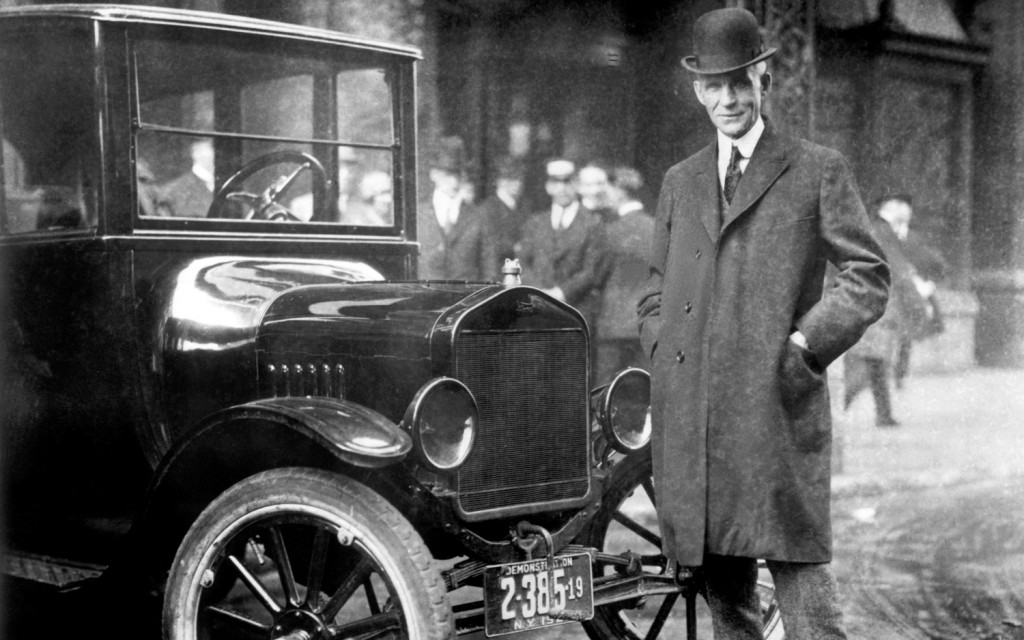
Henry Ford 1921 Model T

Henry Ford poses with 1921 Model T, photographer unknown

150 years ago today, on July 30, 1863, American industrial icon Henry Ford was born in Greenfield Township. The museum that he founded, The Henry Ford, says that Ford was a complex man who was ultimately responsible for transforming the automobile from an invention of unknown utility into an innovation that profoundly shaped the 20th century and continues to affect our lives today. A sampling of some of the facts about Ford they offer bear that out:

  • As a child, he was inspired by his mother, who encouraged his interest in tinkering. His father was a farmer. He encouraged Henry’s interest in the use of machines on the farm.
  • Thomas Edison was Henry Ford’s role model and later his close friend. (here’s a photo of Edison & Ford)
  • He built and drove race cars early in his career to demonstrate that his engineering designs produced reliable vehicles.
  • He financed a pacifist expedition to Europe during WWI, but during WWII Ford mobilized his factories for the war effort and produced bombers, Jeeps, and tanks. (more about that check out Willow Run on Absolute Michigan)
  • He owned a controversial newspaper, The Dearborn Independent, that published anti-Jewish articles which offended many and tarnished his image.
  • Henry Ford built Village Industries, small factories in rural Michigan, where people could work and farm during different seasons, thereby bridging the urban and rural experience.
  • The idea for using a moving assembly line for car production came from the meat-packing industry. Ford sought ways to use agricultural products in industrial production, including soybean-based plastic automobile components such as this experimental automobile trunk.
  • He was one of the nation’s foremost opponents of labor unions in the 1930s and was the last automobile manufacturer to unionize his work force. (not really a surprise there)

Read on for a full bio and if you ever have a chance definitely visit – it’s pretty amazing!

Battle in the Mist

Battle in the Mist

Battle in the Mist, photo by Anapko

Great shot of the rock formation known as Battleship Row in the Pictured Rocks National Lakeshore. Check Andrea’s photo out big as a battleship and see more in her Pictured Rocks National Lakeshore slideshow.

Many more photos from the Pictured Rocks on Michigan in Pictures!