Aboard the Friends Good Will

P5115272_4639

Untitled, photo by bvriesem

“We have met the enemy and they are ours: Two Ships, two brigs, one schooner and one sloop.”
~United States Commodore Oliver Perry

The sloop was Friends Good Will, captured by the British briefly. The story of the Friends Good Will begins:

Oliver Williams was born in Roxbury, Massachusetts, a village near Boston, in 1774. Undoubtedly, he grew up aware of, and hearing stories about, the birth of his young nation.

Oliver Williams later saw opportunity in the vast Northwest Territory. He opened a dry goods store in Detroit, Michigan Territory, in 1808. The inventory for his store, like nearly all finished goods, came from the east. He made two trips each year, overland. The trips were slow and the resources he expended were never anything more than a continuing drain against whatever profits early businesses in the cash starved frontier would permit.

In 1810, Oliver Williams took a chance. The gamble was not particularly unusual for men of his nature. Men did not conduct business on the frontier without an entrepreneurial instinct. He decided to build a ship. The vessel would use the only “highway” available – Lake Erie; Buffalo to Detroit, non-stop, direct. His inventory would arrive faster, and in greater quantity, and while the vessel was a substantial capital outlay, she would sail for years and could earn money by shipping goods the length of each shipping season. Other vessels plying the Lakes were finding cargoes and the steady stream of settlers assured volumes of cargo and demand for the ship would only grow with each coming season.

Oliver Williams built his ship at the River Rouge, on the banks of the Detroit River. A private shipyard was laid out adjacent to the Federal yard, where the army transport snow Adams, the only government vessel on the upper Lakes, was built years before. Other ships sailed past while this new vessel took shape, the schooners Salina and Ellen and the sloop Contractor. The sight of each of them only encouraged Oliver Williams. His idea had merit; his gamble would pay.

The new ship slid down the ways, in early 1811. He christened her Friends Good Will. While no one knows for certain the origin of the name, a coincidence seems too obvious to ignore. The name may well have been in honor of an earlier Friends Good Will, which transported the first wave of Irish immigrants from Larne to Boston in 1717. It is likely Oliver Williams knew her story and borrowed her name. His vessel, he likely hoped, would also bring waves of settlers to a new land of opportunity ­ the Michigan Territory.

Read on for much more of the story of the remarkable story of the Friends Good Will including her capture by the British and subsequent adventures. See a video right here and definitely visit the Michigan Maritime Museum, online and when you’re South Haven for much more of Michigan’s maritime history.

Check this out background big and take a trip in Bill’s May 2012 Aboard the Friends Good Will slideshow.
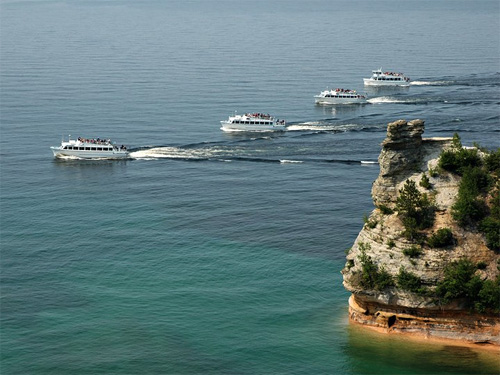
Pictured Rocks fleet at Miners Castle

Pictured Rocks fleet at Miners Castle, photo by ExploreMunising.com

The above photo was posted to the ExploreMunising.com Facebook last July. It shows four boats from the Pictured Rocks fleet passing Miner’s Castle in the Pictured Rocks National Lakeshore.

The tour boats are a great way to see the many formations the Lakeshore offers. Visit their website for tour highlights and also a nice photo gallery.

More Miner’s Castle photos on Michigan in Pictures.

The Beauty of Lake Charlevoix

Lake Charlevoix Yacht Race

Lake Charlevoix Yacht Race, photo by Innerspacealien

Last week USA Today released their list of the best lakes in America. The Great Lakes were not eligible and Lake Tahoe was the winner, but Lake Charlevoix in Northern Michigan managed to grab the runner-up spot. Click that link to read what some of their readers wrote. The Lake Charlevoix Lake Association says:

Lake Charlevoix is the third largest lake in the state with a surface area of over 17,200 acres and approximately 60 miles of shoreline. The maximum depth in the main basin is 122 feet and in the south arm, 58 feet. It is located at 45 degrees north latitude and 85 degrees west longitude. It has direct access to Lake Michigan via dredged channels in and out of Round Lake in the city of Charlevoix. There are close to 1,700 lots on the lake, with approximately 1,200 different owners. The lake is usually frozen for about three months of the year from near the end of January to early April.

There are three cities at the ends of the lake. Boyne City is at the east end of the main lake and is a historic lumber and tannery town. It is now a year round recreation center with the lake in the summer and Boyne Mountain ski resort in the winter. East Jordan is at end of the south arm and was also important in lumbering in the nineteenth century as well has having a large iron works that is still there today. The city of Charlevoix is at the mouth of the lake and is both a historic and present day resort town.

The city of Charlevoix is named after Pierre François Xavier de Charlevoix, a French explorer who traveled the Great Lakes and was said to have stayed the night on nearby Fisherman’s Island one night during a harsh storm. Lake Charlevoix had been named “Pine Lake” until 1926 when it was decided to change the name because, among other reasons, most of the pines had been harvested in the previous century and there were 25 other lakes in Michigan with that name.

They also have some great historic photos you can check out.

See Craig’s photo background big and see more photos from the area in his Up North slideshow.

More great Michigan lakes on Michigan in Pictures!

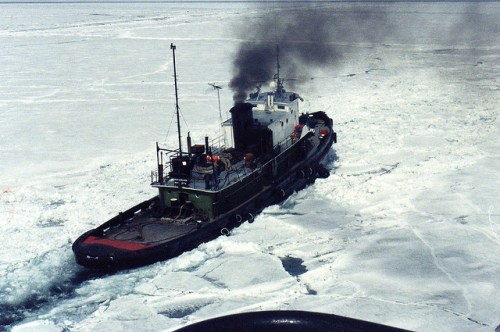
Great Lakes Warriors follows tug boat captains in winter

Tug John Selvick in Bay Ship Canal

Tug John Selvick in Bay Ship Canal, photo by boatnerd06

The Great Lakes Echo tipped me off to the new History Channel series Great Lakes Warriors. The show follows five captains battling winter storms on the Great Lakes as they break up ice, tow barges into port and try to stay alive. The second episode airs at 10:00 PM on Thursday, and the History Channel will rebroadcast the first episode, “The Lethal Season,” at 11:00 PM tonight. You can also watch it online at the History Channel.

That episode features the tug above – The John M. Selvick captained by John Selvick. Check it out background big and in Nathan’s massive Family Collections slideshow.

More boats on Michigan in Pictures.

Freedom, Fireworks and the Fourth!

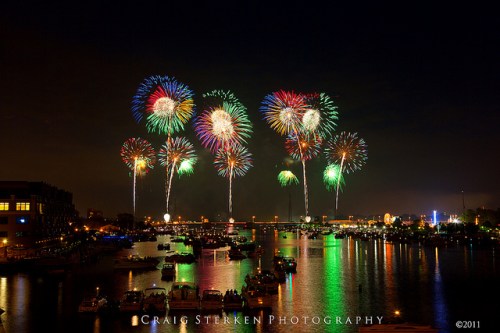
Fireworks!

Fireworks!, photo by Craig – S

My definition of a free society is a society where it is safe to be unpopular.
~Adlai Stevenson, speech in Detroit, 1952

The safety to be unpopular is a freedom we don’t always think of, but something we might well consider. It strikes me that in our relentless drive to get everyone on the same page, we’re not able to get anything done. There is a lot to be done and a lot of places we can find common ground to make our schools and communities better and protect the natural resources that make Michigan the place we love.

If it’s total agreement you’re looking for, that’s probably fascism. Democracy is messy.

Speaking of messy, you’ve no doubt noticed bigger booms over the last few days, That’s due to a new law in Michigan that allows the purchase of any federally allowed firework. The messy democratic process is already at work:

City officials across Michigan have scrambled in recent weeks to try to stymie the party in the sky — limiting when residents can set off fireworks in light of a change in state law that allows a more powerful category of explosives to be sold and used in the state.

Warren Mayor Jim Fouts blasted the state law, saying “pyromaniacs” are terrorizing the community, scaring children, pets, seniors and veterans with post-traumatic stress disorder with the louder explosions caused by the more powerful fireworks.

“The state has legalized these ‘consumer fireworks’ and people are going gung ho,” Fouts said. “People, who were hesitant to do illegal fireworks now are empowered.”

State legislators approved the looser fireworks legislation, which went into effect in January, to keep residents from taking their money to other states to purchase fireworks not available here. The new law forces communities to allow the fireworks on the day before, the day of and the day after federal holidays, such as the Fourth of July.

Warren, Grand Rapids, Ferndale, Novi, Birmingham, Royal Oak and other cities across Michigan are already creating ordinances to ban these fireworks during other times of the year.

Check this out background big and in Craig’s Bay City Michigan slideshow.

Here’s hoping you have an explosively fun and very safe Fourth of July! Here’s many more Fourth of July photos from Michigan in Pictures!

Take a drive this holiday weekend…

amphicar

amphicar, photo by northernlightphotograph

Gas prices are at an astonishing low – $2.99 at the Lambertville Kroger – and the weekend weather looks hot but amazing. It’s probably time to make a trip to one of Michigan’s great parks or beaches. While I’m guessing that most of you don’t have a sweet boat car like this, it’s a great weekend for boating too!

Check this photo out bigger and in Tim’s 2012 Bay Harbor Car Show slideshow.

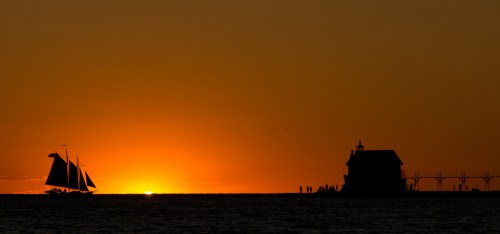
almost there

almost there

almost there, photo by randyr photography

I’m pretty sure this is the schooner Wind Dancer approaching the Grand Haven Lighthouse. Here’s another shot of the Wind Dancer from the Absolute Michigan pool by Dan Johnson.

Check this out bigger and see some more in Randy’s slideshow.

More Michigan boats & ships on Michigan in Pictures!

Happy Birthday to you, U.S. Coast Guard Icebreaker Mackinaw!

The USCGC Icebreaker Mackinaw at Cheboygan HDR

The USCGC Icebreaker Mackinaw at Cheboygan HDR, photo by hz536n/George Thomas

The United States Coast Guard Cutter Mackinaw (WLBB 30) has its 6th birthday tomorrow. MightyMac.org has this to say about the United States Coast Guard Cutter Mackinaw:

Commissioned June 10, 2006 Mackinaw (WLBB 30) assumed the “Mackinaw” name and heritage and now stands as the largest United States Coast Guard Cutter on the Great Lakes. WLBB 30 is configured to better handle a variety of roles including buoy maintenance, and handling of environmental spills.

The Mackinaw is powered by 3 Caterpillar 3612 Turbocharged V-12 engines – 3360 KW each. Prolusion comes from 2 ABB azimuthing electric propulsion drives where the propulsion motor is installed inside a submerged azimuthing (unlimited 360 degrees) pod and coupled directly to an extremely short propeller shaft.

Click for more including lots of photos, and definitely don’t miss this sweet panoramic tour of the Mackinaw. You can see the Mackinaw every year at the Grand Haven Coast Guard Festival (July 27 – August 5, 2012). Her predecessor is now the Icebreaker Mackinaw Maritime Museum in Mackinaw City.  Michigan in Pictures has more about icebreakers on the Great Lakes and you can also see a video of the Mackinaw at work from Boatnerd on YouTube.

Check this out big as a boat and see more in George’s massive Photomatix HDR slideshow.

More Michigan ships & boats on Michigan in Pictures.

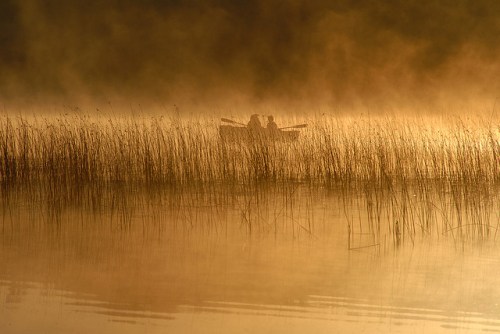
Morning on Pearl Lake

DSC_5813

DSC_5813, photo by jsorbieus

Today is the opening day of walleye season in Michigan. I couldn’t find a good walleye photo, but even though Pearl Lake isn’t on the list of top walleye lakes in Michigan, I thought it captured the mood perfectly! Much more at Michigan Walleye on Absolute Michigan.

Check this out background bigtacular and in Jim’s My Most Interesting Photos slideshow.

More fish & fishing on Michigan in Pictures.

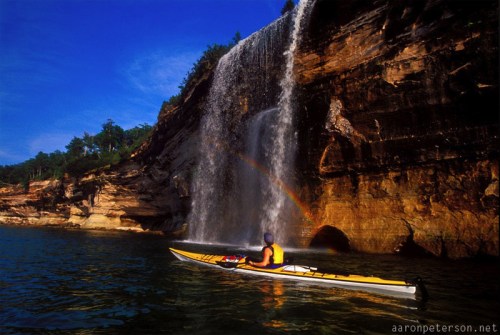
Kayaking at Spray Falls in the Pictured Rocks National Lakeshore

Kayaking at Spray Falls, photo by Aaron Peterson

In Wednesday Waterfall: Spray Falls on his blog Aaron writes:

Remote Spray Creek bubbles up somewhere in the middle of Pictured Rocks National Lakeshore, meanders through miles of maple and beech forest—then flies foam-first over a 50-foot cliff into Lake Superior. Seeing the creek upstream, you’d never guess the little guy had it in him to become one of the most dramatic waterfalls in the region.

Due to its remote location and precipitous drop, visitors to Spray Falls will have to decide ahead of time how they’d like to view it: from land, or from water. Each gives an amazing perspective and a good workout (3 miles by foot, 12 miles by float). Either way, you can contemplate gravity and the world’s largest lake in peace, because the park’s tour boats usually turn around a couple miles short of this fascinating feature. Scan the water at the base of the falls for the rusting remnants of a boiler from an 1856 shipwreck.

Read on for directions and another stunning shot of this amazing waterfall. Click to see this photo bigger and check out some more shots by Aaron of Spray Falls and view a lot more of his photography of the Upper Peninsula and the Lake Superior region on his website.

Many more Pictured Rocks photos on Michigan in Pictures.