Stormin’ Norman

Stormin Norman

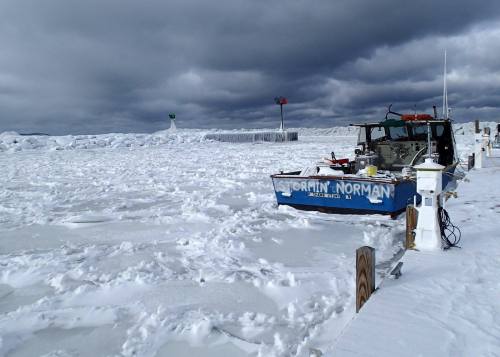
Stormin’ Norman, photo by Fishtown Leland

Here’s a shot an iced-in fishing tug in the Leland Harbor. It was taken yesterday before the latest storm rolled through. Gonna be a while before fresh fish is available!!

View this photo by Fishtown Preservation background bigtacular, see more on their Facebook page and learn about this organization and their mission at fishtownmi.org.

There’s more boats and more winter wallpaper on Michigan in Pictures.

PS: If you want a look at (or share) pics of the storm impacts across Michigan, mLive is calling for folks to share their photos. Of course you can also share them on the Michigan in Pictures Facebook or by tweeting @michpics!


Golden Hour on the Rouge River

The Golden Hour on the Rouge

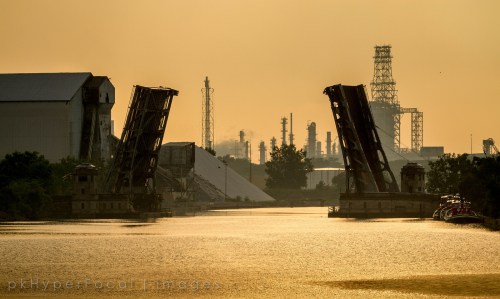
The Golden Hour on the Rouge, photo by pkHyperFocal

The Rouge River Gateway Project relates that the Potawatami referred to the river as Minosa Goink which means “Singeing Skin River” – the place where game animals were dressed. The history continues (with my links to other fun stuff):

The French first settled on the banks of the Rouge River in the 1780s. They named the river “Rouge”, or red. Settlers would claim a few hundred feet of river frontage and extend their farms deep into the forest. Remnants of these “ribbon farms” still exist today in land ownership patterns along the river. Europeans continued to immigrate into the region to take advantage of its resources. They used the reddish clay for brick, mined the area’s salt deposits, and built farming communities along the riverbanks. The native prairie oak savannah and hardwood forests were cleared to make room for agriculture and industry.

Rapid growth and industrial development characterized the late nineteenth century. Henry Ford purchased extensive land holdings along the river. He built a factory in Dearborn to manufacture farm tractors, but kept a good portion of his land in agricultural production, partially for testing equipment. In 1914, he started construction of a permanent residence on the banks of the Rouge River.

A defining moment in the history of the river transpired with the construction of the Ford Rouge Plant during World War I. The development of the plant was motivated by Henry Ford’s desire to supply submarine chasers to the US military. The Ford Rouge Manufacturing Complex grew into a massive self –contained industrial complex that daily employed over ninety thousand men in the early 20th century. Raw materials including coke, iron ore, and rubber were brought in and transformed into cars in less than thirty hours, a process that set a new global standard for industry. The Rouge Manufacturing Complex became the largest manufacturing site in the world.

In his book Burning Rivers, Allen Park native John Hartig relates how heavy manufacturing and population growth seriously impacted the river to the point where the river became one of the most polluted waterways in the nation, catching fire in 1969 shortly after the famous Lake Erie/Cuyahoga River fire.

In 1986, in a Sunday feature on a new organization seeking to restore the Rouge, the Detroit Free Press called it the “sewer for a metropolis, discharge drain for industry, dumping ground for junk and garbage”. They went on to say that “the Rouge River has become so polluted that a cleanup seems unthinkable.”

While the Rouge is certainly far from restored, the organization the Freep was talking about, Friends of the Rouge, has been dedicated along with other public and private efforts to the preservation & restoration of the river. I encourage you to check them out for more information and to learn about their good work on the behalf of the river. Lots more at the Rouge River Project and Wayne County’s Rouge Project.

View pkHyperFocal’s photo big as a boat and see more in their Man Made slideshow.

More industry on Michigan in Pictures.

#TBT: Wreck of the Carl D. Bradley

Carl D. Bradley

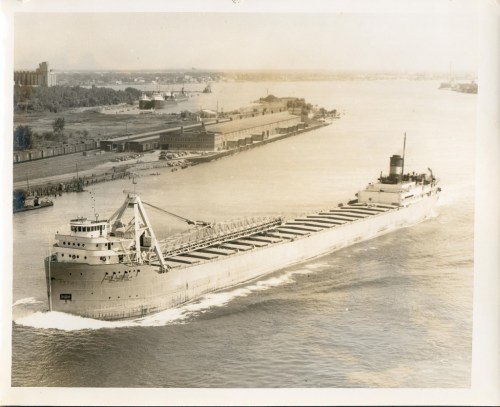
Carl D. Bradley, photo by John Rochon

If you know of any shipwreck on the Great Lakes, chances are it’s the S.S. Edmund Fitzgerald. While that was no doubt a terrible tragedy, my vote for the most grievous loss is the S.S. Carl D Bradley which sank 56 years ago next Tuesday on November 18, 1957. I found a really excellent article on the ship and shipwreck at Lake Effect Living titled Lost To The Lake: The Wreck of the Carl D. Bradley:

Known as ‘Queen of the Lakes’, the Carl D. Bradley was the largest ship on the Great Lakes from 1927 to 1949. At 639 feet, it was the longest freighter on the Lakes until the launch of the SS Wilfred Sykes twenty-two years later. The largest self-unloading ship for its time, the Bradley was the Bradley Transportation Company’s flagship. Named after the president of Michigan Limestone, Carl David Bradley, this state of the art freighter had its maiden voyage in the summer of 1927. Since Michigan Limestone’s company base was in Rogers City, Michigan, the freighter drew most of its crew from this small community.

…On Monday, November 17, 1958, the steamer left Buffington, Indiana bound for Port of Calcite harbor in Rogers City, Michigan.

The Bradley’s captain was 52-year old Roland Bryan, a veteran seaman. Manned by a crew of thirty-five and carrying a light cargo, the Bradley headed out onto Lake Michigan at 9:30pm. But signs of severe weather were already in evidence when they left Buffington, where winds gusted at more than 35 miles an hour. It was the first ominous indications of an extreme cold front forming over the plains. Temperatures in Chicago plummeted twenty degrees in one day, and thirty tornadoes were sighted from Texas to Illinois.

Aware that gale winds were forecast, the crew readied the steamer for bad weather. They traveled along the Wisconsin shore until reaching Cana Island, where they shifted course for Lansing Shoal which lay across Lake Michigan. The winds on the lake reached 65 miles an hour by 4pm the following day. Still, the Bradley seemed to be weathering the gale force winds and heavy seas with little problem. This changed at 5:30pm when the Port of Calcite received a radio message from First Mate Elmer Fleming informing them that the Bradley, approx. twelve miles southwest of Gull Island, would arrive home at 2am. As soon as this message was sent however, a loud thud or bang was heard on the ship.

When the day was done, 33 of the 35 member crew were dead, 23 of the from Rogers City, Michigan. For a town of less than 4000, it was a heavy blow. Read on for much more and also see Seeking Michigan: The Wreck of the Carl D. Bradley on Absolute Michigan and the tribute site at carldbradley.org.

John Rochon shared this photo of the Bradley was taken from the Blue Water Bridge by Schjelderup Marine Studio and shows the ship heading towards the mouth of Lake Huron. View it big as the Bradley and see more in his massive Great Lakes Ships & Shipping slideshow.

More shipwrecks on Michigan in Pictures.

Coming Home

Coming Home

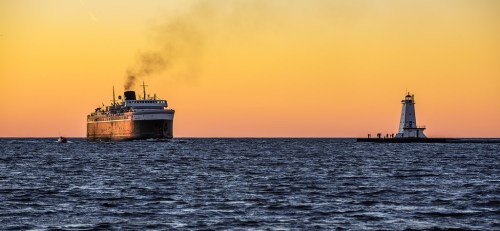
Coming Home, photo by David Frey

David got a great shot of the SS Badger car ferry arriving in Ludington on its last crossing of Lake Michigan for the 2014 season.

View his photo background bigtacular and see more of his Ludington photos right here.

More SS Badger pics on Michigan in Pictures!


Michigan Movie Moment: Christopher Lloyd, Mickey Matson and the City of Milwaukee

Christopher Lloyd on the City of Milwaukee

Christopher Lloyd on the City of Milwaukee, photo courtesy Mickey Matson/10 West

While Michigan hasn’t become the movie mecca that was envisioned when the state created its film incentive – in large part because it was abruptly gutted – movies are still being made here. Pirate’s Code: The Adventures of Mickey Matson, was filmed in Manistee and Muskegon and premiers October 16 at the Grand Rapids Public Museum to kick off their 160th year. If you click that link, you can check out the movie trailer! It’s opening weekend of their new exhibition “Real Pirates: The Untold Story of the Whydah from Slave Ship to Pirate Ship.”

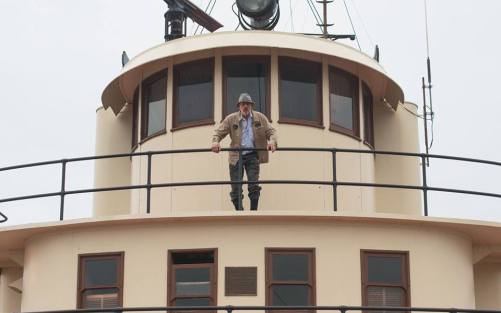
Here’s a production skill showing Christopher Lloyd, one of the film’s stars, on the pilot deck of the SS City of Milwaukee, a car ferry that is now a museum in Manistee that plays a big role in the film.

View the photo bigger and see more and learn more about the movie at the Mickey Matson Facebook page.

PS: Every Friday & Saturday night in October, the City of Milwaukee does a really cool haunted Ghost Ship that’s a blast!

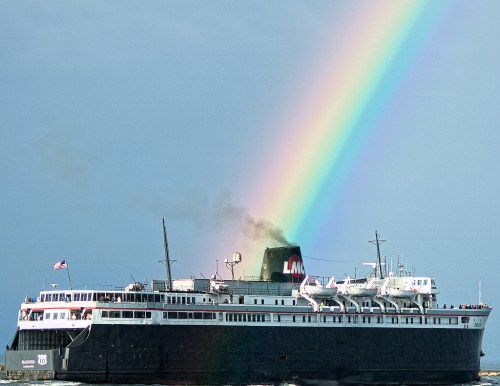
Rainbow over the Badger

Rainbow over the Badger

Rainbow over the Badger, photo by mark zacks

View Mark’s photo big as a boat and click for more of his Ludington shots including a few more of the Badger car ferry.

More ships & boats and more rainbows on Michigan in Pictures.

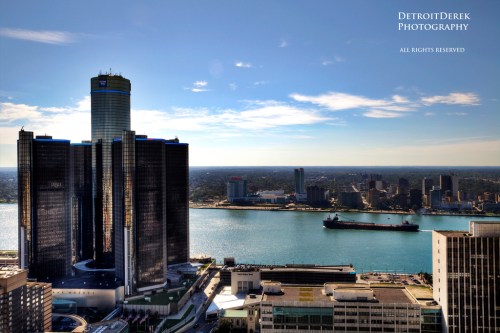
When Tall Met Long

When Tall Met Long

When Tall Met Long, photo by Derek Farr

View Derek’s photo bigger and see more in his Renaissance Center slideshow!

More Renaissance Center photos and info on Michigan in Pictures.


Belief

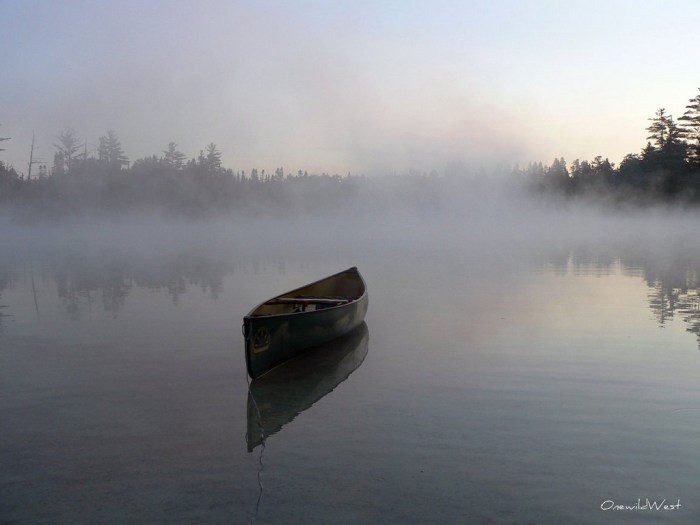
Canoe in the Fog by Brent West

CanoeFog, photo by Brent West

“Everyone must believe in something. I believe I’ll go canoeing.”
~ Henry David Thoreau

View Brent’s photo bigger and see more in his random slideshow.

More mist on Michigan in Pictures.

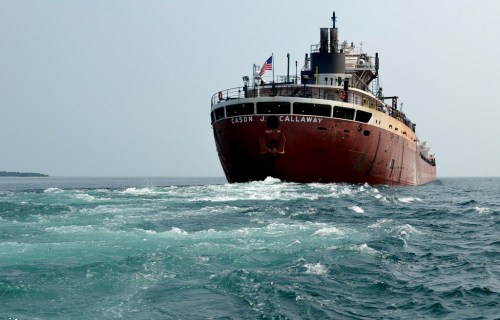
Headed Out with the Cason J Callaway

Cason J Calloway

headed out, photo by Susan H

The Cason J. Callaway made an appearance this winter when she was locked in the ice on Lake Huron. Boatnerd’s page on the Callaway says that the 767′ ship took her maiden voyage on September 16, 1952, draws 36′ and is able to haul over 250,00 tons:

The Cason J. Callaway was one of the eight “AAA” class vessels which entered service during 1952 and 1953. She was the last of the trio of vessels in this class (the Philip R. Clarke and Arthur M. Anderson were the first two) built for Pittsburgh Steamship Company, who originally developed the blueprints used for all eight members of this class.

…Initially, the Callaway was used almost exclusively in the iron ore trade. In the early 1960s, the Callaway occasionally visited the St. Lawrence Seaway, often hauling grain from Toledo to ports on the St. Lawrence River and returning with iron ore. By the end of the 1960s, the Callaway returned to the traditional U.S. Steel iron ore trade route. She remained on this route regularly until her conversion to a self-unloader. After the conversion, the vessel began loading a wider variety of cargoes and visiting an even greater variety of ports. Ports such as Ashland and Green Bay, Wisconsin and Ontonagon and Dollar Bay, Michigan would occasionally become part of the Callaway’s trade route. By the late 1980s, the Callaway fell into a somewhat regular trade route, including a trip from either Duluth or Two Harbors with iron ore to a Lower Lakes port, often Lorain; one or two intermediate trips between ports on Lakes Huron, Michigan, and Erie; and a limestone load from quarries at Rogers City (Calcite) and Cedarville (Port Dolomite), Michigan back up to Duluth. An occasional odd cargo or port remains a possibility.

Susan had a great view of the Callaway as the ship headed out to the open water near Cedarville. Check it out background bigtacular and see more in her slideshow.

Hunting the Griffon

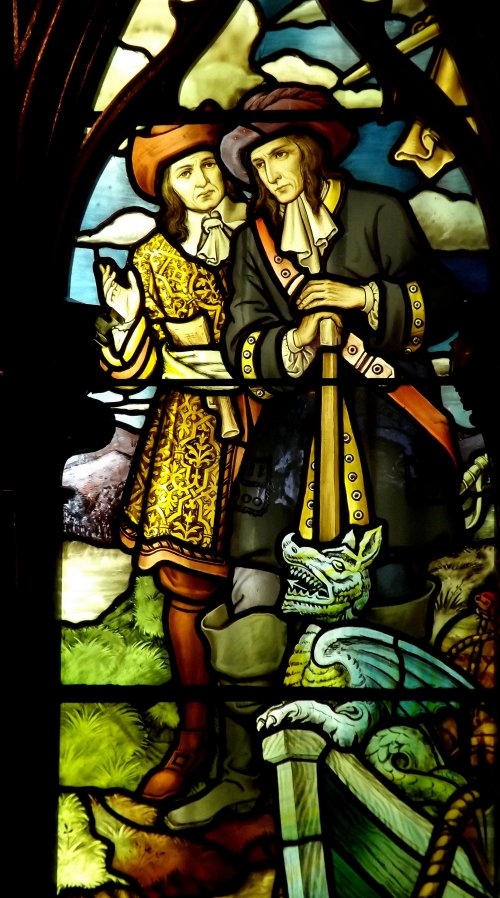
Detail: The LaSalle Stained Glass Window, Installed at Dossin Great Lakes Museum, Belle Isle Park--Detroit MI

Detail: The LaSalle Stained Glass Window, Installed at Dossin Great Lakes Museum, Belle Isle Park–Detroit MI, photo by pinehurst19475

John Flesher of the Associate Press has a feature on NBC News about the possible discovery of the Holy Grail of Great Lakes shipwrecks, Le Griffon, the ship of French explorer Rene-Robert Sieur de La Salle. The article says (in part):

A wooden beam embedded at the bottom of northern Lake Michigan appears to have been there for centuries, underwater archaeologists announced Tuesday, a crucial finding as crews dig toward what they hope is the carcass of a French ship that disappeared while exploring the Great Lakes in the 17th century.

Expedition leaders still weren’t ready to declare they had found a shipwreck or the long-lost Griffin. The ship, commanded by the French explorer La Salle, was never seen again after setting sail in September 1679 from an island near the entrance of Green Bay, in what is now northern Wisconsin, with a crew of a six and a cargo of furs.

…Scientists and divers began excavating last week at the base of the wooden beam, hoping to determine whether it is part of the Griffin. Steve Libert, a diver and shipwreck enthusiast who has searched three decades for the Griffin, discovered the timber in 2001 and recently obtained state and federal permits to probe beneath the muddy surface.

Read on for more. Libert is president of Great Lakes Exploration Group started the Lasalle-Griffon Project with the state of Michigan and the Republic of France in July of 2010. He’s definitely obsessed with finding the ship, and their Expedition page explains:

If the wreck Libert has found is Le Griffon, it will be a find of tremendous historical significance. Le Griffon was built by Rene-Robert Sieur de La Salle, one of the first French explorers of the Great Lakes Region. He would later claim the Mississippi River watershed for France, a vast expanse of land that extended from the Allegheny Mountains to the Rocky Mountains and North of the Great Lakes, a portion of which became what is presently known as the Louisiana Purchase.

Exploration and study of the ship will tell us much about the history of our country and how our ancestors lived. “The ship is a time capsule that will fill the missing gaps of La Salle’s early exploration of North America,” says Libert. In particular, the wreck is a record of ship construction of that period, about which relatively little is known. La Salle constructed Le Griffon on the banks of the Niagara River, about three miles above the falls. There is strong documentation to support the view that Le Griffon was built on what is now the U.S. side of the Falls. If the wreckage is Le Griffon, however, it may be possible to use samples to establish definitively which side it was built on.

The fact that Le Griffon was built in the wilderness, as opposed to a shipyard, will reveal the circumstances La Salle and his men faced and the tools and technology they possessed. The ship was built with timber cut on site. The exact dimensions of the vessel are not known. It is however known to have been a 40 tun* vessel with three masts, a foremast, main and mizzen, and several square sails.

*Tun is an old French word for a large cask used in shipping wine, equivalent to 33.7 cubic feet or 252 gallons. Read on for a whole lot more.

Regarding the stained glass above, pinehurst19475 writes:

This is a full view of part of a panel that depicts two cavaliers in discussion. They are part of a scene that depicts Robert Cavalier Sieur de la Salle’s voyage through the Detroit River in 1678-9. The small boat in the foreground is the “Griffon,” the vessel that made the voyage.

The five-part stained glass window was originally installed in the Gothic Room of the “City of Detroit III.” At the time it was built (1912), it was the world’s largest side-wheeler. The Edward F. Lee Glass Company of Detroit designed the stained glass window.

View his photo background big and see more in his Stained Glass slideshow.