Spring Tease: Winter Aconite & Snowdrop

Spring Tease

Spring Tease, photo by MichaelinA2

I was thinking there had been entirely too much ice on Michigan in Pictures this week. Thankfully Michael shared this photo in the Absolute Michigan pool, saying:

NE Ann Arbor ~ At 41F. our first break towards Spring… Winter Aconite (yellow flowers) and Snow Drops (white flowers)

Wikipedia explains that Eranthis (winter aconite) is a genus of eight species of flowering plants in the Buttercup family:

They are herbaceous perennials growing to 10–15 cm (4–6 in) tall. The flowers are yellow (white in E. albiflora and E. pinnatifida), and among the first to appear in spring, as early as January in mild climates, though later where winter snowpack persists; they are frost-tolerant and readily survive fresh snow cover unharmed. The leaves only expand fully when the flowers are nearly finished; they are peltate, 5-8 cm diameter, with several notches, and only last for 2-3 months before dying down during the late spring.
Species in this genus are spring ephemerals, growing on forest floors and using the sunshine available below the canopy of deciduous trees before the leaves come out; the leaves die off when the shade from tree canopies becomes dense, or, in dry areas, when summer drought reduces water availability.

There is (of course) a detailed Wikipedia entry for Galanthus (Snowdrop), but I found Plant Focus: Snowdrops by George Papadelis at The Michigan Gardener to be full of great information. He begins:

The very first bulb to cheerfully announce spring is the snowdrop. As the last winter snow melts, carpets of delicate white flowers emerge through last year’s fallen leaves. Snowdrops will reliably return year after year despite Mother Nature’s most challenging winters. The botanical name, Galanthus, comes from the Greek words Gala meaning “milk” and anthos meaning “flower.” They will thrive in the rich, moist soil usually found in the shade provided by deciduous trees. Few bulbs can tolerate shade, but snowdrops develop in the winter sun well before the leaves of trees and shrubs have expanded. Their flowers last for several weeks beginning in early March and persisting through the cool days of spring in early April. Once planted, Galanthus require no maintenance.

One of the most treasured features of this easy-to-grow perennial is its ability to propagate on its own and develop into large masses. It is this trait that gives snowdrops the label “good naturalizer.” Many other popular bulbs such as tulips, hyacinths, and alliums flower beautifully the first few seasons, but eventually weaken and disappear. Galanthus may be left undisturbed for years to form large, densely packed colonies.

Read on for much more including planting tips for Michigan and a bunch of photos.

Check this out on black and see more in Michael’s slideshow.

More flowers and by gosh more SPRING on Michigan in Pictures.

Hop on the bus, Gus

Ann Arbor Greyhound depot

Ann Arbor Greyhound depot, photo by MI photographer

A line from one of my favorite Paul Simon tunes is a good enough excuse to share this cool video of the band Galactic featuring Corey Glover performing 50 Ways to Leave Your Lover.

See MI Photographer’s photo bigger and see more in his Michigan Scenes slideshow.

More from Ann Arbor on Michigan in Pictures.

What’s around the corner in 2013?

What's around the corner?

What’s around the corner?, photo by johnmcgrawphotography

A new year always holds a lot in the way of promise and possibilities. If you have any predictions or hopes for the great state of Michigan in 2013, please share them in the comments.

See it on black and see a couple more shots in John’s University of Michigan slideshow.

Wishing you all the very best in 2013!

Robot Supply & Repair and 826 Michigan

NOVEMBER 2012-1152

NOVEMBER 2012-1152, photo by RichardDemingPhotography

Today is Black Friday, and though many of us – your host most definitely included -get worn down by the constant march of “Consumer Christmas”, it’s important to remember that our dollars when spent wisely can build strength in our communities. Below is one great example and I’m sure people can suggest more in the comments! I should add that I’ve had this post saved as a draft for almost a month which is why Richard has a rare back-to-back feature! 

This photo is of Liberty Street Robot Supply & Repair in Ann Arbor. Stocking common items as well as more esoteric gear like positronic brains, they’re the source for all your robot needs in Southeast Michigan.

The store is also (literally) the front for 826michigan, a nonprofit student writing & tutoring center, and all proceeds go toward their free student programs. 826michigan is dedicated to supporting students aged 6 to 18 with their creative and expository writing skills, and to helping teachers inspire their students to write. 826 opened its doors in June of 2005 and believes that strong writing skills are fundamental to future success and that great leaps in learning can happen with one-on-one attention.

I for one welcome our new robot overlords and encourage you to watch this great video about Liberty Street Robot Supply & Repair and 826Michigan.

See Richard’s photo bigger and see more in his Impressions 2012 slideshow.

More Ann Arbor on Michigan in Pictures.

Bringing in the Blueberries

Ann Arbor Farmers Market

Ann Arbor Farmers Market, photo by Vasenka

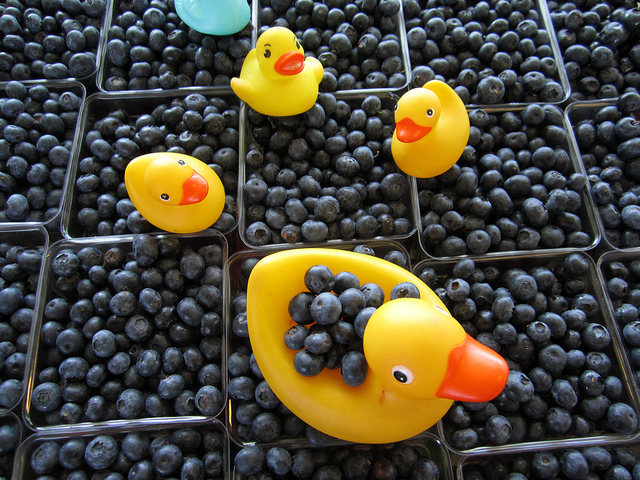
Blueberries have arrived at the Ann Arbor Farmer’s Market.  Not sure if they’re local or not – anybody know? You can read a lot more about Michigan blueberries at Absolute Michigan.

If duckies are your thing, view the complete Duckie collection at Michigan in Pictures.

Check this out background big and see more in Vasenka’s Ann Arbor Farmer’s Market slideshow.

Barton Dam, in ice and history

IMG_3373.jpg

Barton Dam 1/21/12, photo by pcaines

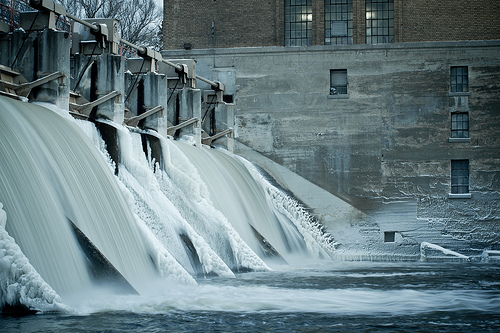
ArborWiki’s entry for Barton Dam says that:

Barton Dam is one of Ann Arbor’s four dams on the Huron River. It was designed by engineer Gardner Stewart Williams and architect Emil Lorch and built in 1912-13 as part of the development of hydroelectric power on the Huron River by the predecessor of Detroit Edison. The earthen-construction dam is 34 feet high and 1767 feet long, and has a typical surface area of 315 acres and typical storage of 5050 acre-feet. The dam can be accessed from Huron River Drive from the city park located at the foot of Bird Road.

The City of Ann Arbor purchased the dam from Detroit Edison in the 1960s, and restarted hydroelectric generation in the 1980s. The facility has a 900-kilowatt turbine that generates 4.2 million kWh per year.

In case you’re wondering, Emil Lorch (1870-1963) was the first University of Michigan Dean of Architecture and – as this page from the Bentley Historical Library explains, Gardner Stewart Williams was the engineer who worked with the Detroit Edison Company to identify sites for dams to generate power on the Huron in the early 1900s. There’s also a Flickr group for Barton Dam where you can see a lot more photos!

Be sure to check this photo out bigger and see more in cpcaines Ann Arbor slideshow.

An opening at the Argus Museum

Argus Factory
Argus Factory, photo by Voxphoto

The Argus Museum has an exhibition opening Friday, October 21st entitled Sunday Afternoon on the Porch: Reflections of a Small Town in Iowa, 1939-1942, photographs by Everett W. Kuntz. The exhibition runs from October 21st through November 18th, 2011. However, as the exhibit really has nothing at all to do with Michigan, and as this blog is called Michigan in Pictures, we’ll press on and tell you that the museum is located on the second floor of the Argus l building in Ann Arbor, one of the buildings that housed the Argus Camera Co.

Several years ago, Michigan in Pictures had a piece telling the story of the Argus Camera Company, whose cameras had a big role in the explosion in consumer photography. The post has become an internet phenom of sorts, gathering nearly 100 comments from folks buying, selling or wondering about Argus cameras. The article said little, however, about the museum itself. Fortunately, the email that the museum sent me shares a bit more, adding that:

Also on display will be artifacts from the Argus Museum collections. Products manufactured by the Argus Camera Company, including rare objects and prototypes, are featured, as well as military items and employees’ personal effects. Many of the artifacts on display were manufactured in the same building which now houses the Museum.

Former Argus employees and their families will be invited to the opening, giving those interested a chance to speak with them. Argus-related presentations are planned for Saturday, October 22nd, with an afternoon field trip to the Yankee Air Museum which will include a private tour and photography opportunities. (A $2.50 admission fee per person will be charged.) The Argus Museum Archives will open for research on Sunday, October 23rd. Reservations are required for Saturday and Sunday events. If you are interested in giving a presentation (it can be an informal one), please contact Cheryl Chidester…

So it sounds like all you Argus & old camera fans out there will want to check this weekend out. Cheryl is the museum curator and her number is 734-759-0770 (or email) – contact her for questions about the weekend and reservations for Saturday & Sunday.

Ross took this shot of the former Argus camera factory with an Argus 75 pinhole conversion. See it bigger and see more in his arghole slideshow.

Never a night game at Regents Field & Ferry Field at the University of Michigan

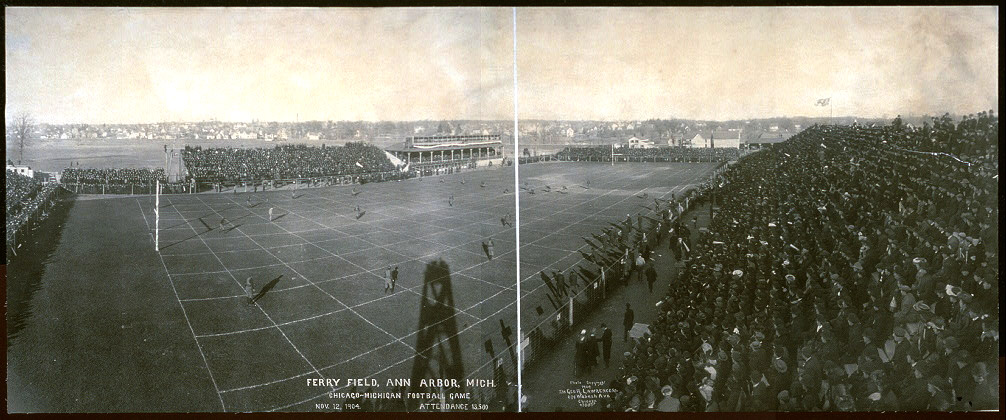
Ferry Field, Ann Arbor Mich 1904, photo courtesy Library of Congress

The University of Michigan Wolverines will play their first-ever night game at Michigan Stadium this Saturday at 8 PM, so I figured it would be a good time to look back at UM’s stadium history. The Michigan Stadium story at the UM Bentley Library says that “student agitation” for better facilities and concerns over holding football games at the Ann Arbor Fairgrounds led to:

In October 1890 the Board of Regents authorized expenditure of $3,000 to acquire land for athletic uses. A ten acre parcel along South State street, approximately where Schembechler Hall now stands, was purchased in 1891. At their May 1891 meeting, the Regents appropriated $4,500 “for the purpose of fitting up the athletic field.”

Michigan christened the field on October 7, 1893 with a 6-0 victory over the Detroit Athletic Club. In 1902, Dexter Ferry donated land immediately north of Regents Field to the university and it was renamed Ferry Field.

Regents Field was home field for several of Michigan’s greatest teams and individual stars. Center William Cunningham was named Michigan’s first All-American in 1898. Neil Snow, end and fullback, was an All-American in 1901, four time All-Western, and star of the first Rose Bowl, also excelled on the Regents Field track and baseball diamond, earning 10 varsity letters. The incomparable halfback Willie Heston, twice an All-American, scored many of his school record 72 touchdowns at Regents Field.

Michigan compiled an overall record of 87 wins 2 losses and 3 ties at Regents/Ferry Field between 1893 and 1905. Fielding Yost’s great “point-a-minute” teams of 1901-1905 went 44-0 at Regents Field, outscoring their opponents 2821-42. Possibly the greatest victory at Regents Field came in the 1904 Chicago game. Michigan beat the previously undefeated team of Amos Alonzo Stagg 22-12 to win the Western Conference title and be proclaimed national champion.

By curious coincidence, that game (which appears in the photo above) was filmed by the Edison Company in one of the earliest successful attempts to film a football game! Click here to view the video!!

The UM v Chicago game was played November 12, 1904 and had an attendance of 13,500. The U of M/Notre Dame game is expected to draw over 111,000 people. You can see another view of Ferry Field at the Library of Congress.

Many more shots can be found at the Michigan Stadium entry and the Ferry Field entry on Wikipedia and more about the University of Michigan on Michigan in Pictures!

Stormy August

IMG_3470

IMG_3470, photo by ahknaten.

Here’s hoping that Hurricane Irene spares folks her worst…

Check this out bigger and in Kai’s Late August Ann Arbor Storm slideshow.

Check out the latest storm photos from the Absolute Michigan pool too!

Talkin’ about a heat wave

37/365/1132 (July 18, 2011) – Squirrel on a very hot day in Ann Arbor (University of Michigan)

37/365/1132 (July 18, 2011) – Squirrel on a very hot day in Ann Arbor (University of Michigan), photo by cseeman.

This squirrel isn’t the only one broasting in Michigan’s hottest run of weather since 1995. You know I couldn’t resist Motown’s own Martha Reeves and the Vandellas. Beat the Heatwave and stay cool with Absolute Michigan!

Check this out background big. He’s got one even flatter and hotter! See more from Corey and others in the hilarious Squirrel Pancakes photo group.

And don’t worry, while you might find a chipmunk or two, there’s no dead squirrels allowed!