Michigan’s Lake Effect Snow and the Ice Beast of the Frozen Tundra

ice-beast-of-the-frozen-tundra

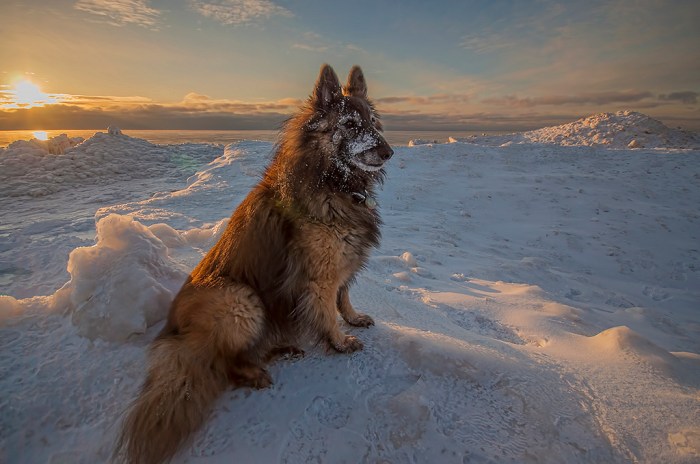
Ice Beast of the Frozen Tundra, photo by Mark Miller

As Michigan deals with the first winter storm of the season, it’s a good time to brush up on how Michigan’s lake effect snow machine works with a nice video (below) from mLive chief meteorologist Mark Torregrossa who writes:

The areas hit by lake effect are called snowbelts. Some parts of the snowbelts typically get much more snow than other parts. This is because some locations get lake effect from multiple wind directions. Good examples are in the heart of the northwest Lower Peninsula snowbelt. Mancelona and Gaylord get heavy lake effect with northwest, west and slightly southwest winds. Also, the Keweenaw Peninsula, sticking out into Lake Superior, can get lake effect snow from west winds to north winds to northeast winds. That’s why they often shovel over 200 inches of snow in Houghton, MI.

The opposite is true for Grand Rapids and to some extent, Traverse City. Grand Rapids needs a west to southwest wind for heavy lake effect. West winds are common in winter, but don’t tend to last for more than 12 hours. That’s why Grand Rapids often gets only 12 hours of heavy lake effect and a few inches of snow. The wind then veers to the northwest and areas around Holland and Allegan get buried. Downtown Traverse City has a hard time getting heavy lake effect also. Traverse City needs a north-northwest wind to straight north wind for the heaviest lake effect to move into downtown. That wind flow does happen, but it only lasts 24-48 hours a few times each winter.

Thanks to another Mark, Mark Miller, for today’s photo of the Ice Beast of the Frozen Tundra aka Major. View the photo bigger and see more in his “Major” slideshow.

Here’s Mark Torregrossa’s video:
Alien Sheep

alien-sheep-by-swatzo

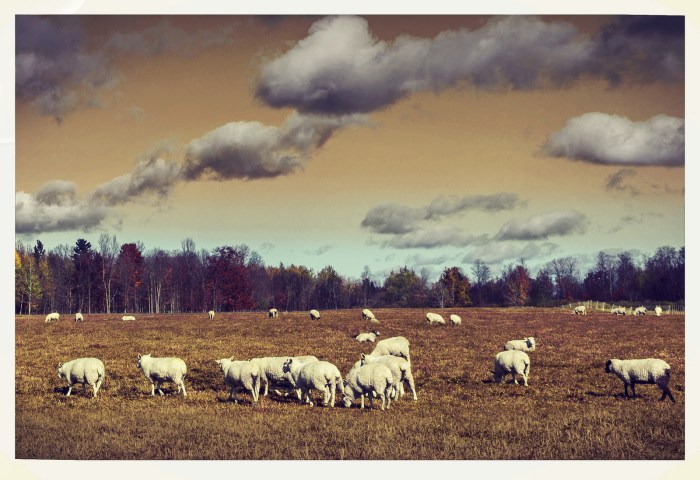
Alien Sheep, photo by Steve

The Truth is out there … if the sheep didn’t eat it.

View Steve’s photo bigger and see more in his Canon 5D Mark II / III / IV slideshow.

King of the Forest

king of the forest

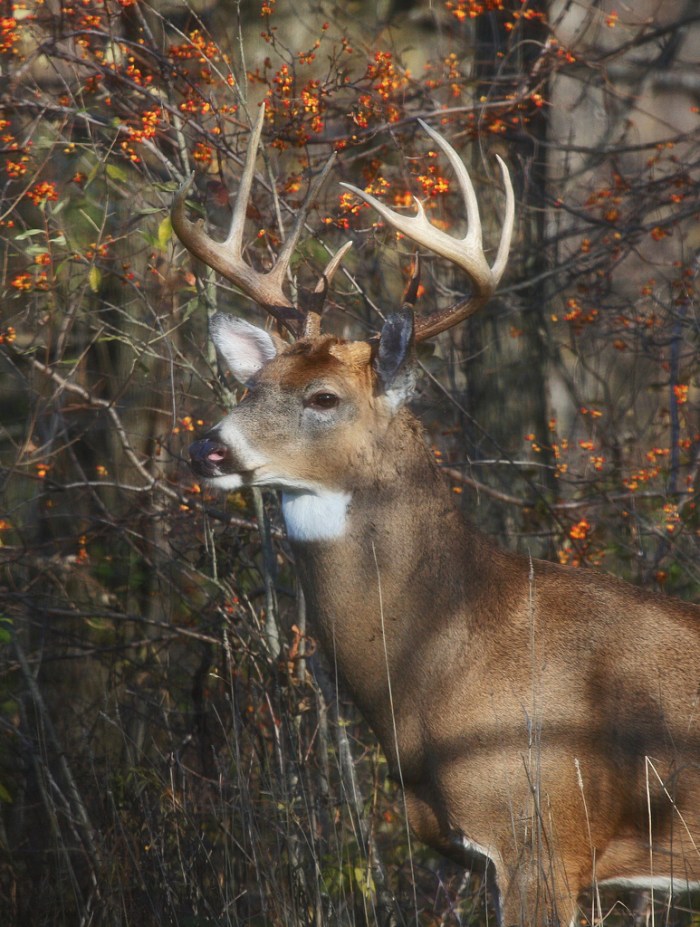
King, photo by Andrew Inwood

Michigan’s firearm deer season starts today and runs through November 30th so remember to practice sensible precautions if you’re headed out for a walk in the wild. I’m still not sure why this day isn’t an official state holiday because it pretty much is up here in northern Michigan where I live!

Good luck to all you hunters in your quest to fill the freezer with what was a staple of Michiganders for thousands of years … and still is for many Michigan families.

Andrew took this back in November 2008 and asks you to note the broken point on this buck’s magnificent 10 point rack of antlers. View his photo bigger and see more in his excellent Whitetailed Deer slideshow.

More photos and information about whitetailed deer on Michigan in Pictures.

PS: I posted this early in case you’re out there waiting for the sun to rise. ;)


Four Horsepower Plow

amish-farmer-plowing-james-korringa

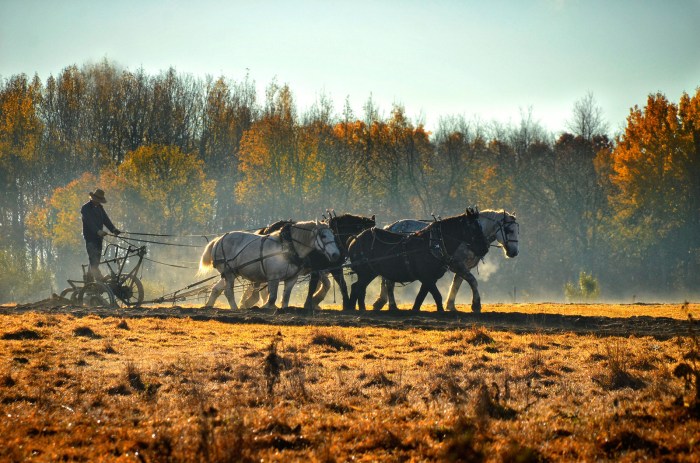
Amish Farmer Plowing, photo by James Korringa

James took this photo of an Amish farmer plowing his field early Friday morning near Stanton. View it bigger and be sure to check out his Amish Barn Raising slideshow!

Stoll Trail Incident and How Isle Royale Became a Park

Version 4

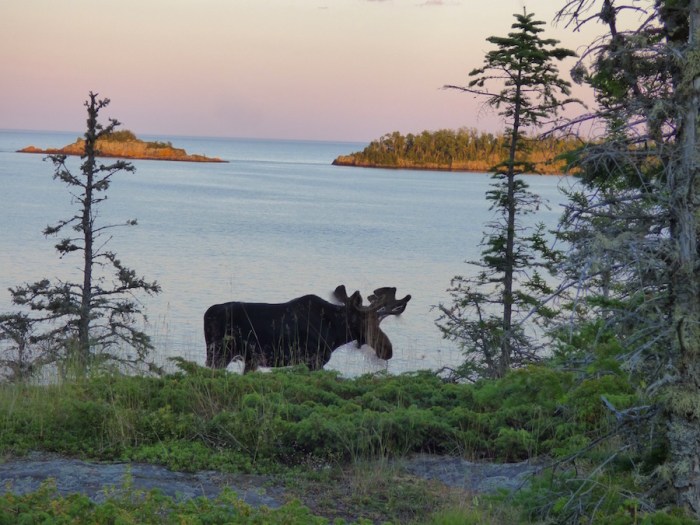
Silhouette of a Moose, photo by Nina

Nina writes that she came upon this moose looking like a fake silhouette against a beautiful backdrop while hiking Albert Stoll Memorial Trail just before sunset at Isle Royale. Read Houghton, Flight to Isle Royale, and the Stoll Trail Incident for lots more including photos on Nina’s blog Black Coffee at Sunrise.

This excellent history of Isle Royale National Park from ParkVision explains how this remote Lake Superior Island became a park and Mr. Stoll’s role:

As early as the 1860’s some visited the island for touring or pleasure. But by the turn of the century a real tourism industry was beginning to exist on the island, fueled in part by the growth of midwestern cities. The first hotel on the island, the Johns Hotel, was built in 1892, and other early resorts were built at Tobin Harbor, Rock Harbor, and Washington Island. By the 1920’s there were a number of sizeable resorts located on Isle Royale and some of the smaller islands surrounding it. The moist, cool air on the island provided a popular escape from the midwestern summer heat and for hay fever sufferers.

The 1920’s also brought an effort to gain preservation of and national park status for the island. This effort was spearheaded by Albert Stoll Jr. of the Detroit News, and it was endorsed by Stephen Mather who visited the island in 1924. The threat of extensive logging of the island’s forests in 1922 enhanced concern about the importance of preservation of the island’s magnificent natural resources. Isle Royale gained a measure of fame as a result of a daring winter visit by plane by Ben East and his companions.

In 1930 the Michigan legislature created the Isle Royale National Park Commission. Establishment of the island and surrounding areas as a national park was authorized when Herbert Hoover signed legislation on March 31, 1931. However, initially no money was authorized for its establishment. The Depression and World War II intervened, and it was not until August of 1946 after all park lands had been acquired that the park was finally dedicated in a ceremony on Mott Island.

Read on for lots more!

View Nina’s photo background big and see more at Black Coffee at Sunrise where she will have further posts from her latest journey!

Dawn Patrol

dawn-patrol-by-soaring-pigeon

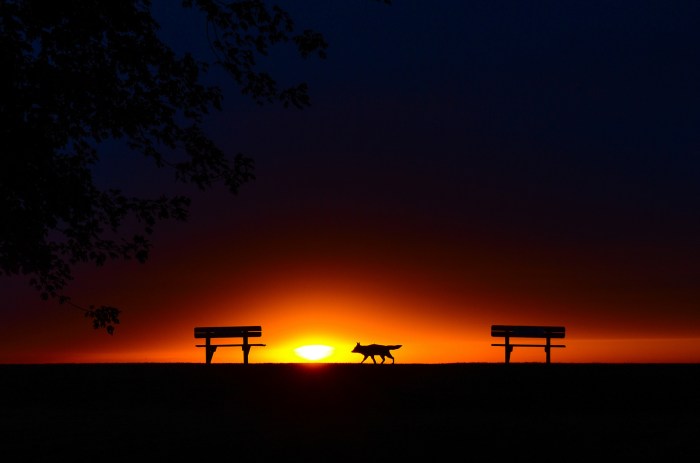
Dawn Patrol, photo by Soaring Pigeon

Soaring Pigeon caught this coyote stalking at sunrise.

View the photo bigger and see more in his slideshow.

Frog Friday: You Looking at Me? Edition

Frog Friday You Looking at Me Edition

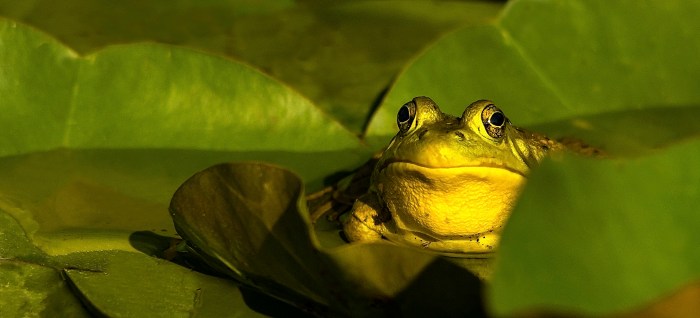
You Looking at Me?…, photo by Kevin Povenz

I had so much fun with Blackcaps: Blackberry or Black Raspberry last week that I had to try it again (spoiler alert: they were black raspberries).

What do you think, internets: is this a Northern green frog or a Michigan bullfrog? The only difference I know of between the two is that the green frog has a fold of skin from the eardrum down each side of the back.

View Kevin’s photo bigger and see more in his Animals slideshow.

More frogs on Michigan in Pictures.

Summer White-tail

Summer Whitetail by Arnie Bracy

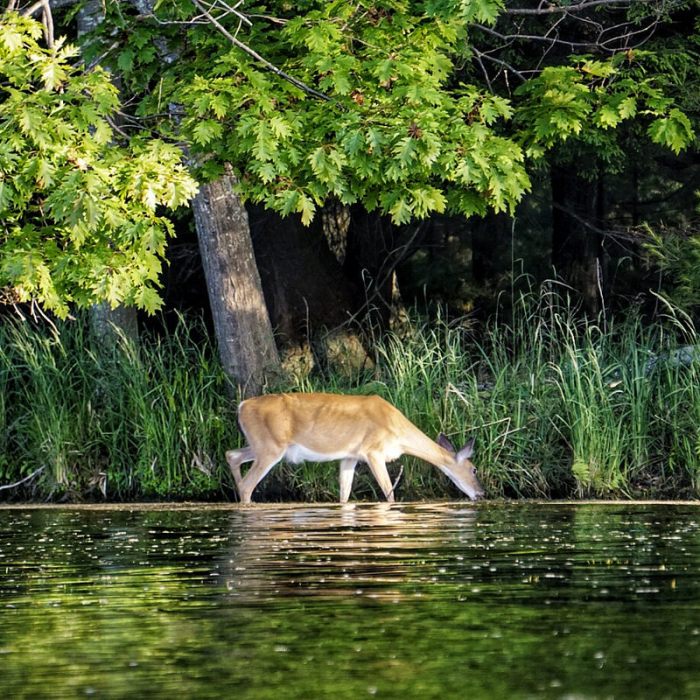
Summer Whitetail, photo by Arnie Bracy

Arnie quietly paddled his kayak closer to get this awesome shot of our state animal, the White-tailed deer on the shore of Hamlin Lake. View it bigger and see more in his Summer slideshow.

More white-tailed deer on Michigan in Pictures including this cool pic of a white-tail grabbing a drink in the fall.

Know Your Michigan Fish: Northern Pike (Esox lucius)

Michigan Northern Pike Esox lucius

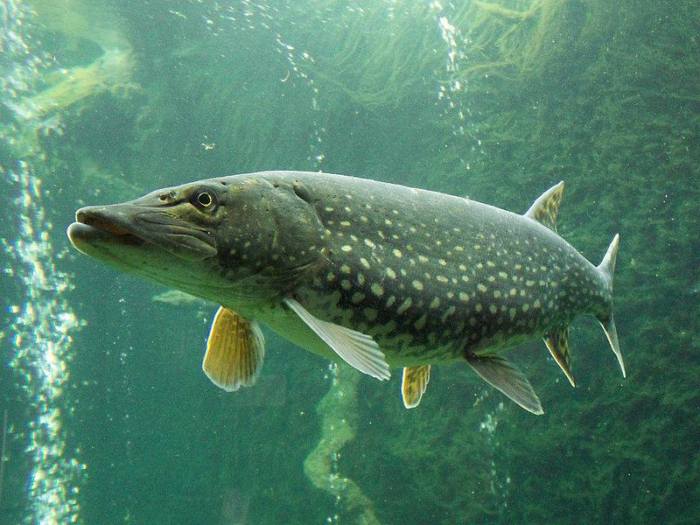
Northern Pike (Esox lucius), photo by Isle Royale National Park

The Michigan DNR’s Northern Pike page has this to say about this apex predator of the Great Lakes and Michigan’s inland lakes:

As predators, northern pike can have significant impact on their prey species. As with muskies, pike lurk in the cover of vegetation in the lake’s clear, shallow, warm waters near shore, although they retreat somewhat deeper in midsummer. Pike consume large numbers of smaller fish – about 90 percent of their diet – but seem willing to supplement their diet with any living creature their huge jaws can surround, including frogs, crayfish, waterfowl, rodents, and other small mammals. Their preferred food size is approximately one third to one half the size of the pike itself.

Great Lakes pike spawn in the shallows in April or May, right after the ice leaves, and before muskies reproduce. As a result of their eating habits, young pike grow rapidly in both length and weight. Females become sexually mature at age three or four years, and males at two to three years. Beyond sexual maturity, pike continue to gain weight, although more slowly. Great Lakes pike have an average life span of 10 to 12 years.

Pike eggs and new hatchlings (which stay inactive, attached to vegetation for their first few days of life) fall prey in large numbers to larger pike, perch, minnows, waterfowl, water mammals, and even some insects. Larger pike have two primary enemies – lampreys, and man. Spawning adult northern pike, exposing themselves recklessly in the shallows, are vulnerable to bears, dogs, and other large carnivores.

Northern pike flesh excels in flavor, thus making them a doubly rewarding game fish. Since their skin has heavy pigmentation and an unappetizing mucous coating, most people skin them or scale them carefully.

This photo was one of Isle Royale National Park’s “Wildlife Wonders of the Week.” They noted that a five pound female pike will lay about 60,000 eggs. Two weeks later fertilized eggs hatch, hungry for microscopic morsels. Once to the fingerling stage, food scarcity may force them to eat their own siblings for nourishment.

View it bigger on Facebook and definitely follow their page for the latest from one of Michigan’s coolest parks!

More Michigan fish on Michigan in Pictures.

Memorial Day in Michigan: 1907 Edition

via leelanau.com

Suttons Bay May 27th 1907

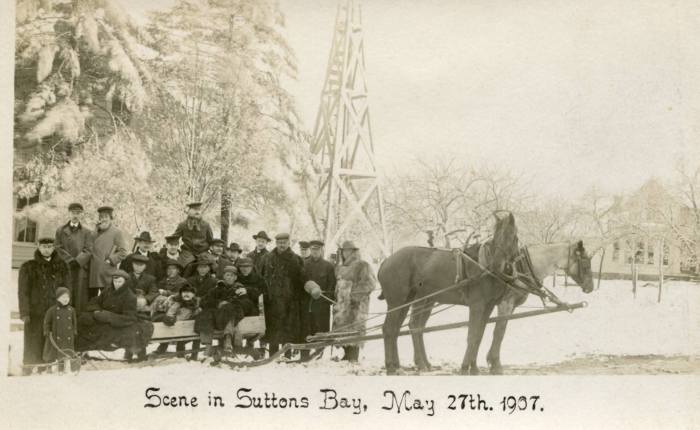
Scene in Suttons Bay, May 27th. 1907, photo courtesy Leelanau Historical Society

Here’s the scene 110 years ago on Memorial Day in the village of Suttons Bay. Yikes!!

Hoping you have a safe and fun holiday weekend with the absolute minimum of snow!!

View the photo bigger, follow the Leelanau Historical Society on Facebook for more great photos, and check out their online photo archive for fun stuff like this search of Suttons Bay.