The Ice Caves of Leelanau

IMPORTANT SAFETY UPDATE! The Leelanau County Sheriff’s Department has declared the ice caves on Lake Michigan unsafe!! The winds have moved the ice and there is now open water within feet of the caves, and the strong winds expected today and tomorrow will continue to push water and ice inland. There are also large cracks in the arches and they are expected to start collapsing soon.
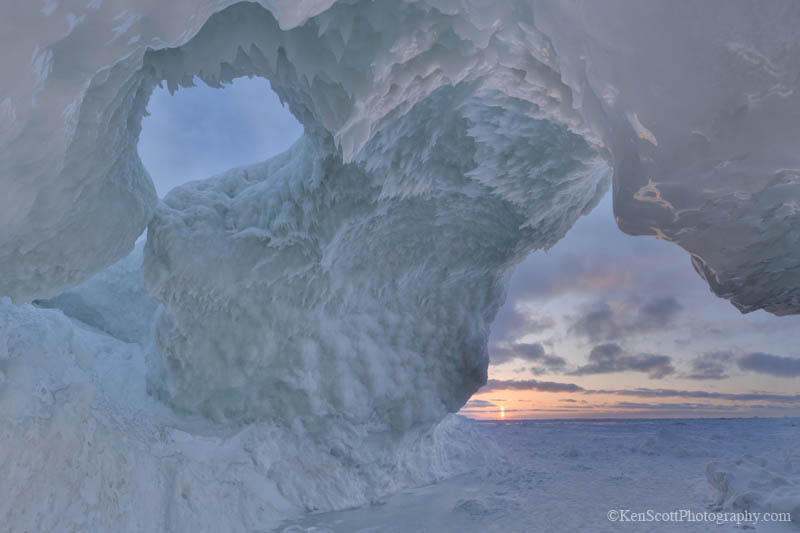
Lake Michigan … ice cave sunset II by Ken Scott

Ken Scott took a trip out to the massive ice caves off the shore of the Leelanau Peninsula near Traverse City. You can see a fantastic video of his explorations and should definitely take a minute to watch his cautionary video showing the cracks that can form in these massive structures. There are few things less forgiving than the Great Lakes in winter, and with temps forecast in the upper 30s for tomorrow, things could get very dangerous.

View Ken’s photo bigger and see more in his Ice Cave slideshow.

Although ice caves and similar formations form every winter on Michigan’s shoreline, these ones are particularly incredible due to the greater than normal mass of ice generating more force. They have made it all the way to national news and have drawn thousands of visitors. A couple more features are at Huffington Post, another nice YouTube video showing the structures and the crowds and this mLive article with directions.
ISS Flyover and Flythrough

Downtown Flyover

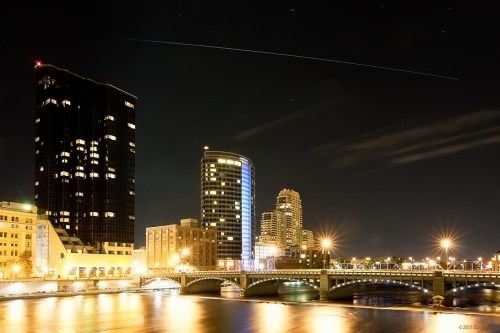
Downtown Flyover, photo by Kevin’s Stuff

The other night I came across an incredible video tour of the International Space Station by Commander Sunita Williams of NASA before she departed for Earth. It’s one of the most amazing things I’ve ever seen and does so much to make the experience of living, working and moving in space a lot more tangible.

Commander Williams is a big part of what makes this video so engaging. She guides you through the corridors of the space station with a skill for explanation that I have seldom (if ever) seen. If she were born a hundred or so miles to the east, she’d be a Michigander. She wasn’t though, so I guess it might not be true what my grandmother told me about Ohio. Read her blog of the mission at NASA. (great photos)

Kudos to Commander Williams, and to everyone who worked across national and other divisions to make the ISS a reality. This video really made my day and I hope it makes yours – click to watch on YouTube!

About the photo, Kevin writes:

The International Space Station flies through the constellation Orion in the skies over downtown Grand Rapids, Michigan on a chilly and windy October evening.

This was a low pass in the southern sky (maximum altitude 34 degrees) so I decided to drive downtown to see if I could get a shot as the spacecraft flew over the buildings. I had done something similar in March of 2010, and figured if I could do it once, a second time wouldn’t be a problem.

Using timings and coordinates from Heavens Above  via their Android app, I was able to determine where the flyover would begin and end. I set up my camera and did a few test shots before the actual time, and was ready by the time ISS was visible over the south-southwestern horizon.

I timed it so the light from the station would already be in the FOV of the lens, and opened the shutter until it disappeared a short time later. Then it was home to the computer to see if I could make anything out of the image. I guess I did.

Who says you can’t do astrophotography from the city? :)

View his photo bigger and see more in his ISS slideshow.

More nighttime photos on Michigan in Pictures.

Paradise is the nickname of this place

Paradise is the nickname of this place

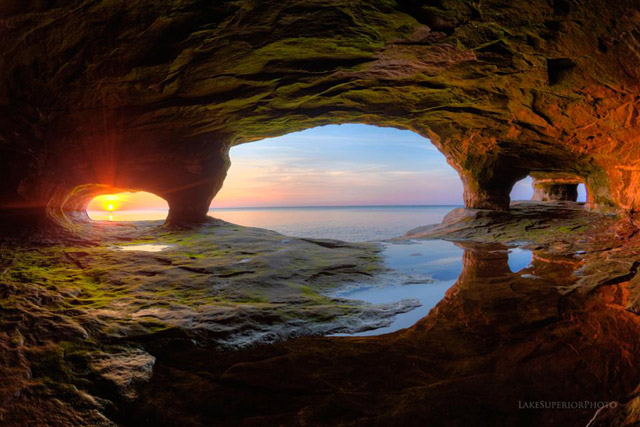
Paradise is the nickname of this place by Shawn Malone

Shawn says she crawled into this cave on Lake Superior when it was warm this summer.

View it bigger on Facebook and see more of her work at Lake Superior Photo … but don’t bother asking her where it is because she’s not telling … or me, because I don’t know!

Bent Trees at Sleeping Bear

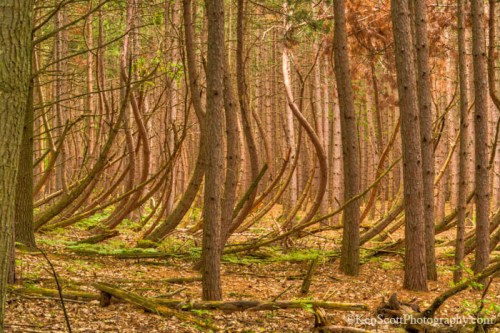
Bent tree forest ... II

Bent tree forest … II, photo by Ken Scott

One of my favorite photographers (Ken Scott) was featured Monday on one of my favorite blogs (NASA’s Earth Science Picture of the Day). Via the EPOD:

During a hike late this summer I noticed the oddly bent trees shown above in Sleeping Bear Dunes National Lakeshore, Michigan. It’s likely that snow loading or extreme icing from big storms during a previous winter caused this bowing. These trees were perhaps big enough to bend but not yet so inelastic as to break beneath heavy the snow/ice load. In subsequent years, with less damaging weather conditions, their crooked trunks may begin to straighten. Photo taken on September 21, 2013.

Check Ken’s photo out bigger and see more including another view in his Sleeping Bear Dunes National Lakeshore slideshow.

If you have photos of interesting natural phenomena, consider submitting them to the EPOD!

Our Great Lakes would be a lot less pretty with Asian carp

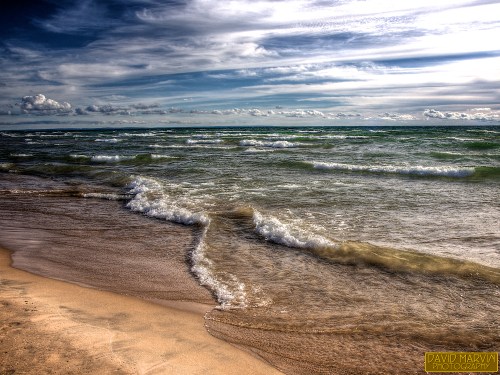
Lake Michigan near Brevort, Michigan

Lake Michigan near Brevort, Michigan, photo by daveumich

I tried to find something amazing about Lake Michigan – a poem, a legend, anything – but I really couldn’t find something to match up with this stunning photo. I’ll fall back on the real & urgent need to protect the beauty of Lake Michigan and the rest of the Great Lakes from the  very real threat of Asian carp.

Asian carp just suck: massive, leaping fish that seriously injure boaters and eat everything else in the lake. They would be an apocalypse for the $7 billion Great Lakes fishing industry, and it is estimated that just 20 fish getting in would be all it would take.

So of course, yesterday John Flesher (IMO the best environmental journalist in the Great Lakes who also happens to be my neighbor) wrote an article on Asian carp that begins:

The recent discovery of a large Asian carp near Chicago underscores the need to protect the Great Lakes from the voracious fish and other invasive species that could slip into Lake Michigan, two members of Congress said Tuesday.

“If Asian carp are not stopped before they enter the Great Lakes, they could destroy the ecosystem, as well as the boating and fishing industries, and hundreds of thousands of jobs,” said Sen. Debbie Stabenow, a Michigan Democrat.

…John Goss said the 53-inch, 82-pound fish was caught about a month ago in Flatfoot Lake, on the Illinois-Indiana state line.

Flatfoot Lake is landlocked and surrounded by a berm that would prevent it from flooding and enabling Asian carp to escape, said Chris McCloud, spokesman for the Illinois Department of Natural Resources.

But it’s very close to Chicago’s Lake Calumet, where commercial fishermen landed a 3-foot-long Asian carp in 2010 about six miles from Lake Michigan. Lake Calumet and Lake Michigan are connected by the Calumet River.

The latest find “is another reminder that we must find a permanent solution to protect the Great Lakes,” Rep. Dave Camp, a Michigan Republican, said Tuesday.

Indeed. How about we work on that? The Great Lakes are far too beautiful to be filled with the likes of Asian carp. If you agree, please share this with others. We can do something about this threat to our lakes.

Check this photo out background bigtacular, see more in Dave’s slideshow and also check out his photography website, Marvin’s Gardens including a shot of what I’m pretty sure was his breakfast up on Brevort Lake!

Regrettably, there’s more Asian carp on Michigan in Pictures.

Ball Ice and the Ice Boulders on Lake Michigan

Ice Boulders by Leda Olmstead
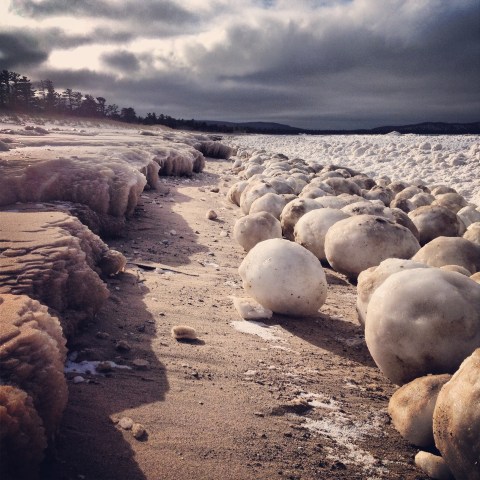
Lake Michigan Ice Boulders, photo by Leda Olmsted

Todays post is from the “Ain’t it Cool” Department. A couple of weeks ago Leelanau County resident Leda Olmsted was walking the Lake Michigan shore in the Sleeping Bear Dunes National Lakeshore when she came across this incredible scene. TV 7&4 reports in Ice boulders roll onto shores of Lake Michigan that Leda took some photos, uploaded to the news station’s Facebook and:

Leda says she was shocked by the response. Olmsted explains, “From there it got like 800 shares and thousands of likes and overnight I had Good Morning America and The Weather Channel calling me, so it has been a really crazy weekend!”

Deputy Superintendent from the Sleeping Bear Dunes National Lakeshore Tom Ulrich says, “It’s not that it never happens and this is a once in a decade thing, it happens more often than that, but these are very large and got bigger than they normally get.”

The ice balls or boulders along the shores of Lake Michigan are about the size of giant beach balls or basketballs and weigh up to 50 pounds.

Click to watch the video from UpNorthLive with Leda.

I looked a little further into the phenomenon and found and AIR PHOTO INTERPRETATION OF GREAT LAKES ICE FEATURES by Ernest W. Marshall  in the Great Lakes Digital Library at the University of Michigan. With the help of Marshall’s information, here’s an explanation of how ball ice forms:

Ball ice consists of roughly spherical masses of slush and frazil ice that accrete in turbulent water. Frazil ice (via Wikipedia)is a collection of loose, randomly oriented needle-shaped ice crystals that form in open, turbulent, supercooled water. Lumps that form in the less turbulent zones are typically flattened discs, while those formed in the extremely turbulent zone near the shoreline ice where wave action is strongest form into spheres.

The author explains that ball ice is a feature common to all of the Great Lakes and can occur at any time during the winter where water turbulence breaks up a slush layer. You can read more about this in Great Lakes Ice Features.

More science, winter and amazing on Michigan in Pictures!

Iced Roots

Iced Roots

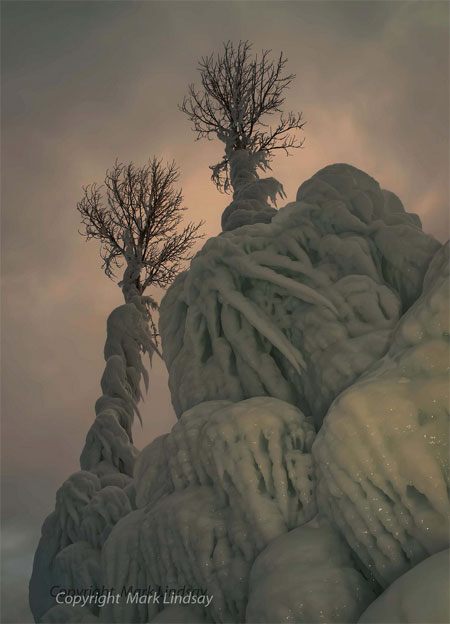
Iced Roots, photo by Happyhiker4

See this photo from the Lake Michigan shore at Point Betsie bigger on Mark’s Facebook, where you can also see the trees from the other side! About these photos, Mark writes:

Sometimes gifts just appear in the strangest places. In this case it was the gift of the most beautiful trees, wrapped and protected with the most beautiful layers of ice, with a most amazing lake in the background. I watched as the waves crashed and delivered the next layer. It certainly was a gifted and blessed day. Blessed in Nature, What a Life.

What a life indeed.

Garage Sale Culture: I’m one of those Americans

david-mcgowan-garage-sale-culture

I’m one of those Americans, photo by David McGowan

David says that in the summer of 2008, he started shooting an essay on the culture of garage sales in Michigan as we moved deeper into recession.

Now his essay is one the fantastic photography site Burn. Burn is curated by notable Magnum and National Geographic photographer, David Alan Harvey, and was established to be a platform for emerging photographers online and in print. Do yourself a favor and check out David McGowan – Garage Sale.

I’m serious – do not miss this one.

I have to also say thanks to David for introducing me to Lux Land,  Michigan songstress and wife of Brian Vander Ark who I had heard of but never really heard. Her song, Touching a Legend is the soundtrack and you can can check her music out at Luxy Land or MySpace.

Canadian Freeze Ray encases Mackinac Bridge!

Canadian Freeze Ray encases Mackinac Bridge!

Canadian Freeze Ray encases Mackinac Bridge!, photo by farlane.

Unfolding details of this shocking story at Canadian Freeze Ray wreaks havok on Michigan!!

(and yes, we mention Kwame so it qualifies as news)

Anatomy of a Sun Dog

EDITOR’S NOTE: SEPTEMBER 22, 2012: Greetings from the future, people of January 2008! I think that this is the first post that I’ve ever re-done. The photos here were really cool but they were removed from Flickr. I probably would have waited for winter but as today’s post about rainbows refers here, I figured I’d do it now! Also, this post is in the new science category that I created today. If you have suggestions for other posts from Michigan in Pictures to be included, post a comment on them!

bluffsundogcaron-vi

bluffsundogcaron-vi, photo by MILapse

Sundogs, Parhelia, Mock Suns on the fantastic website Atmospheric optics says:

Sundogs, parhelia, are formed by plate crystals high in the cirrus clouds that occur world-wide. In cold climates the plates can also be in ground level as diamond dust.

The plates drift and float gently downwards with their large hexagonal faces almost horizontal. Rays that eventually contribute their glint to a sundog enter a side face and leave through another inclined 60° to the first. The two refractions deviate the ray by 22° or more depending on the ray’s initial angle of incidence when it enters the crystal. The condition where the internal ray crossing the crystal is parallel to an adjacent face gives the minimum deviation of about 22°.

Red light is refracted less strongly than blue and the inner, sunward, edges of sundogs are therefore red hued.

Rays passing through plates crystals in other ways form a variety of halos.

Head over to Atmospheric Optics for more about sundogs & other halos and definitely don’t miss their staggering sundog & moondog photo gallery. Also see sun dogs on Wikipedia.

Check this photo from the Sleeping Bear Dunes National Lakeshore on black and see a couple more shots of the sundog in Mr Jay’s Summer Vacation 08 slideshow.

More science on Michigan in Pictures!