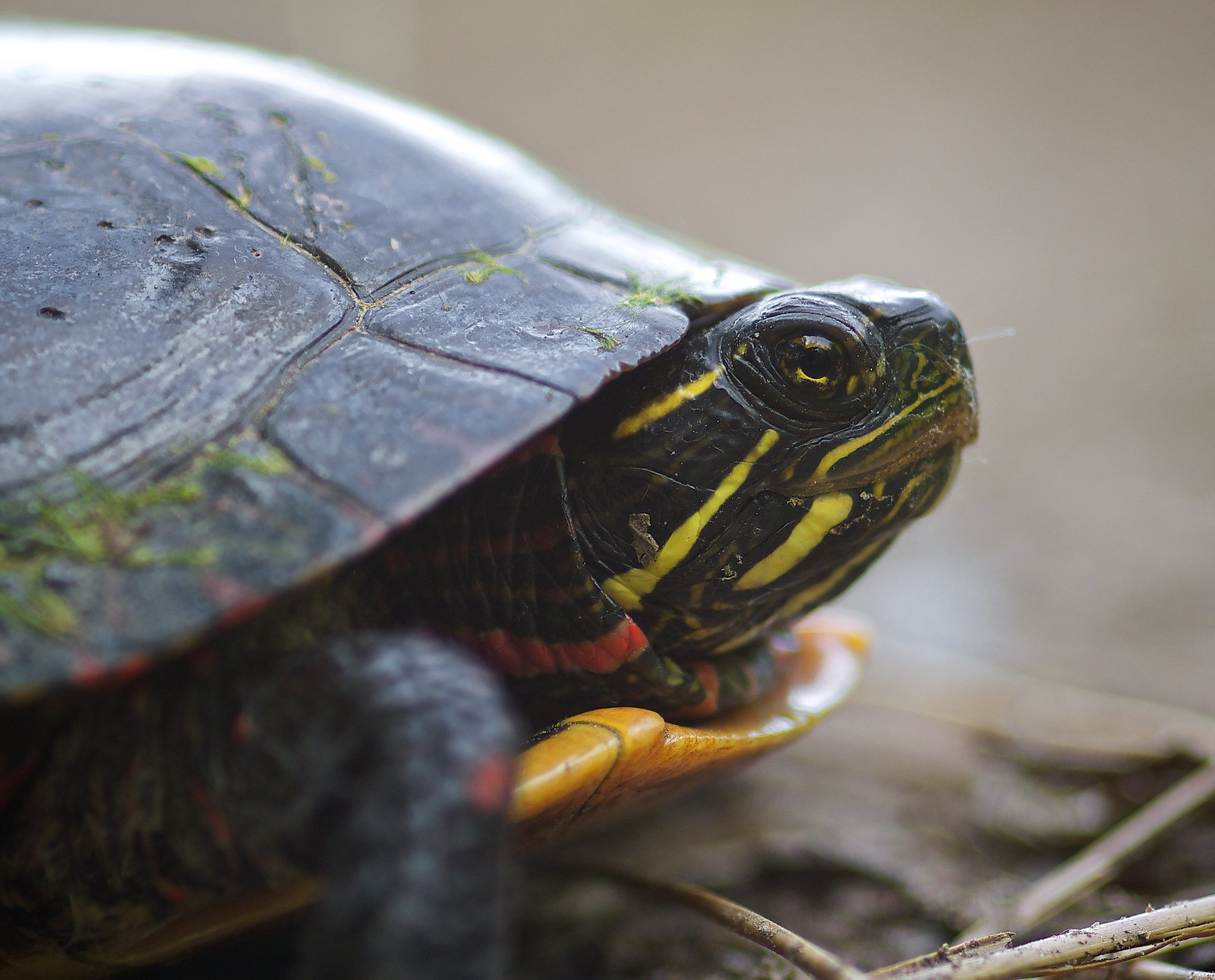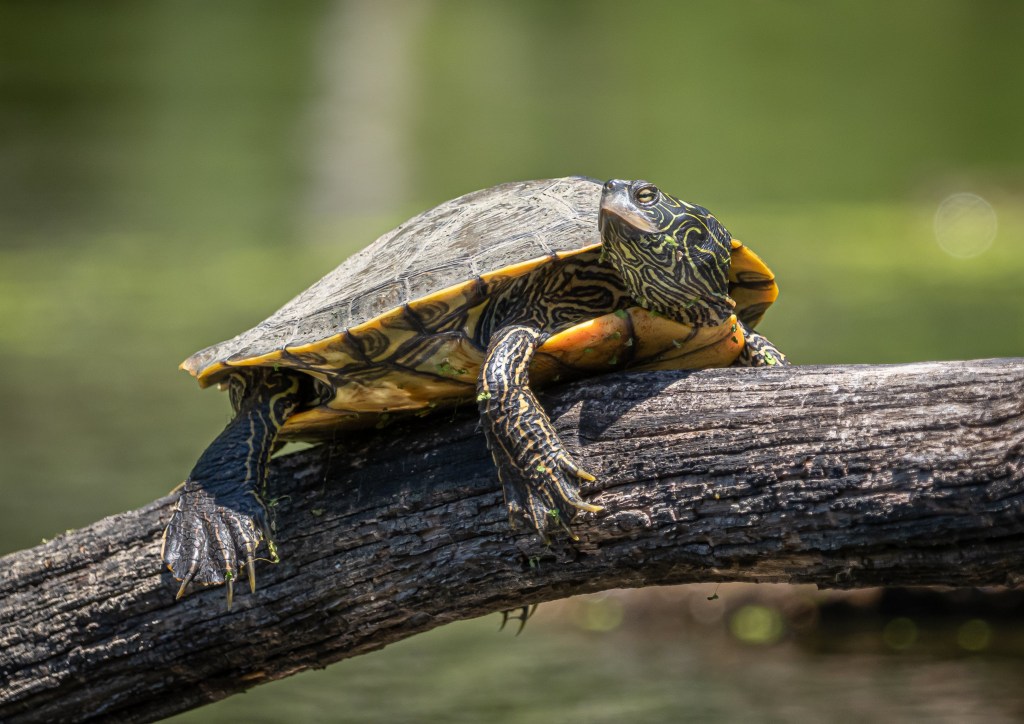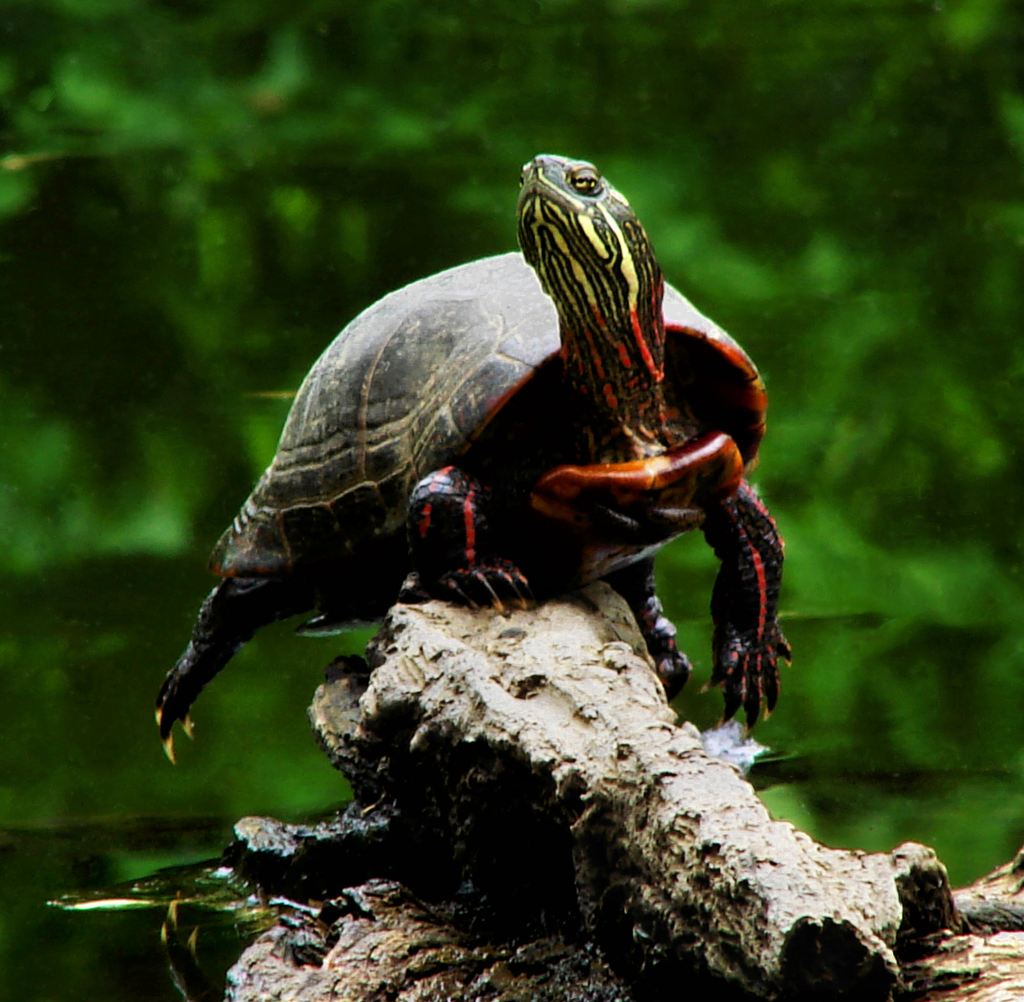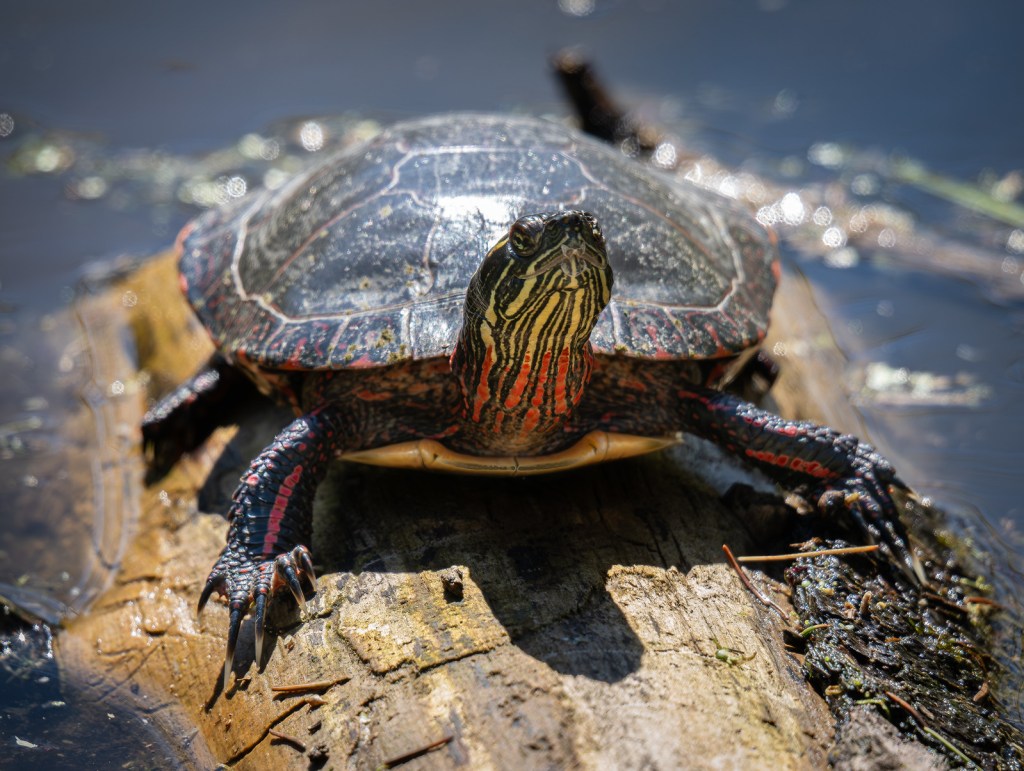
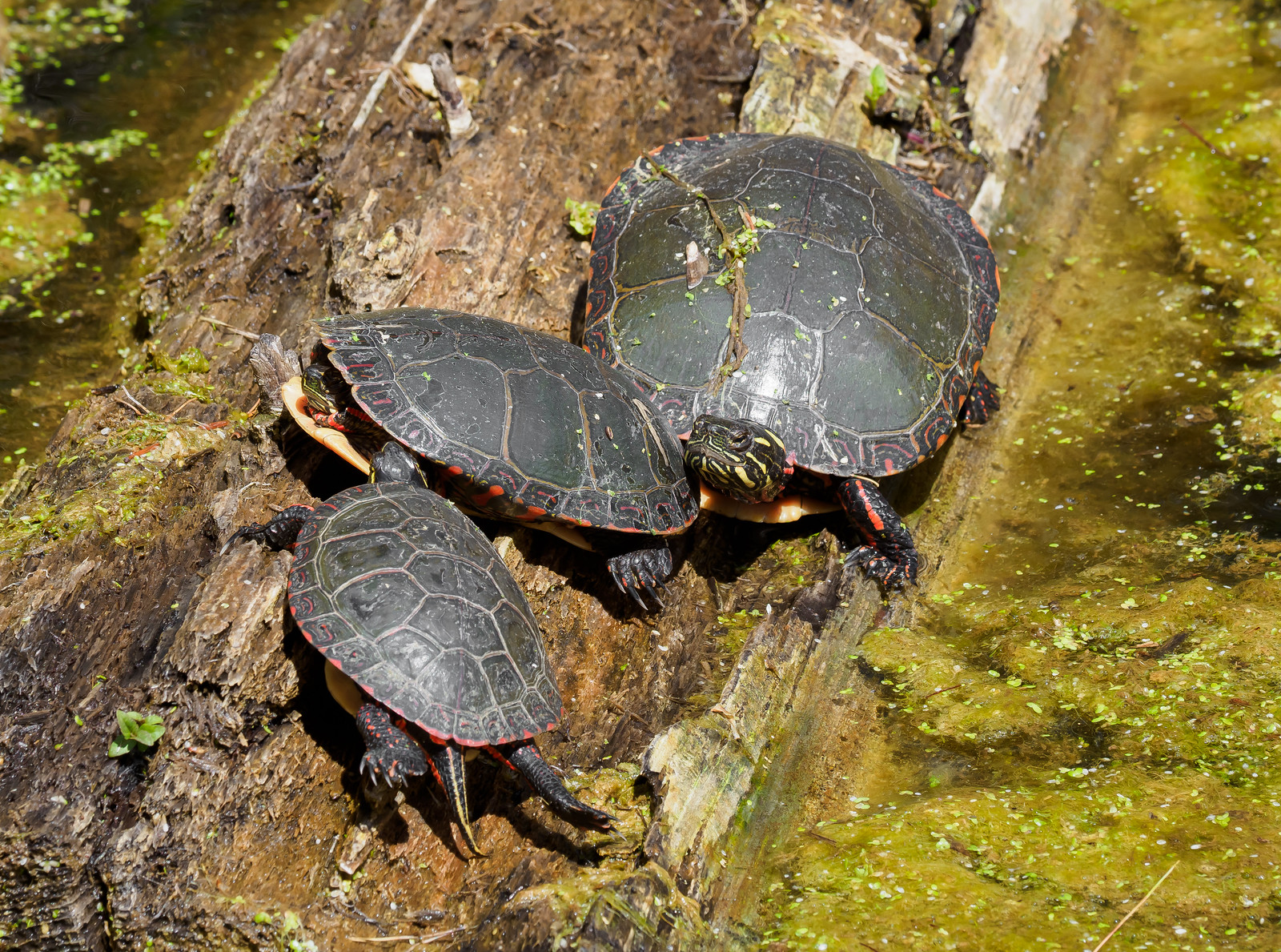
Happy World Turtle Day from the Midland Painted Turtle!

 Painted Turtle by David Marvin

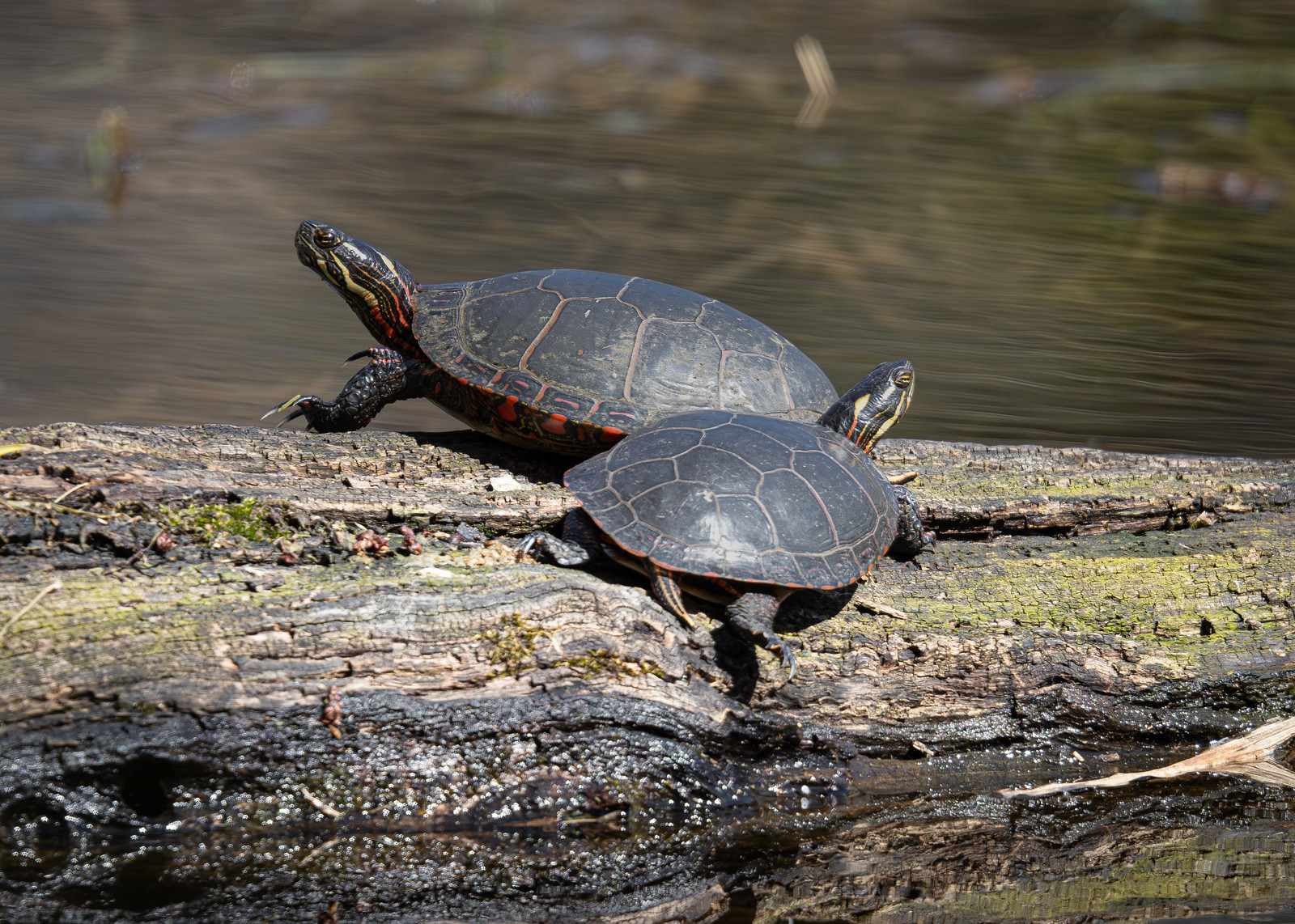
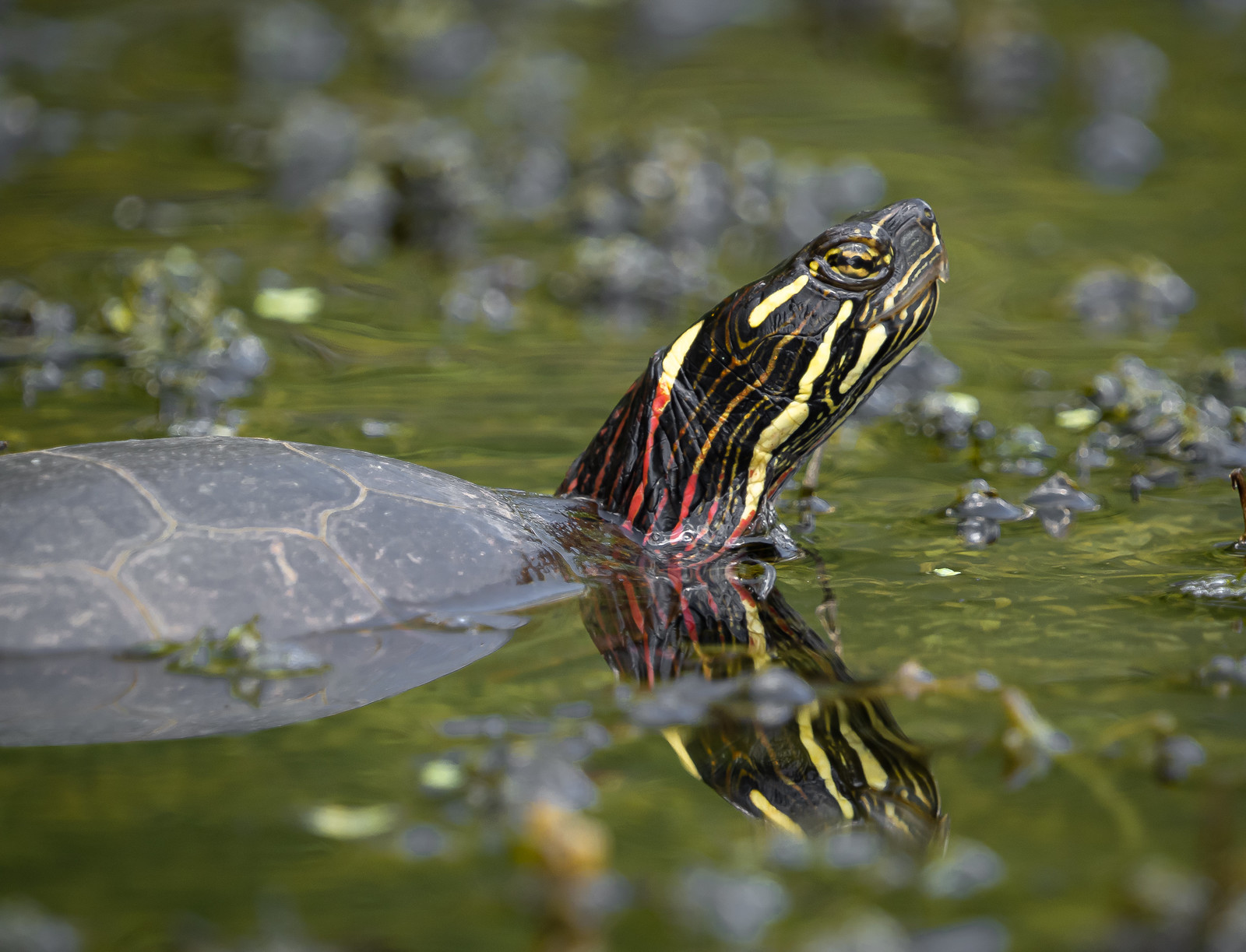
Painted Turtle by David Marvin

World Turtle Day was created by American Tortoise Rescue as an annual day of recognition to raise awareness about turtles & help preserve endangered turtles worldwide. Michigan has ten species of native turtles including Michigan’s state reptile, the Painted Turtle, but I was today years old when I learned there’s such a thing as the Midland Painted Turtle (pictured above)! Herpman explains in the Painted Turtle entry in his Michigan Herpetological Atlas that:

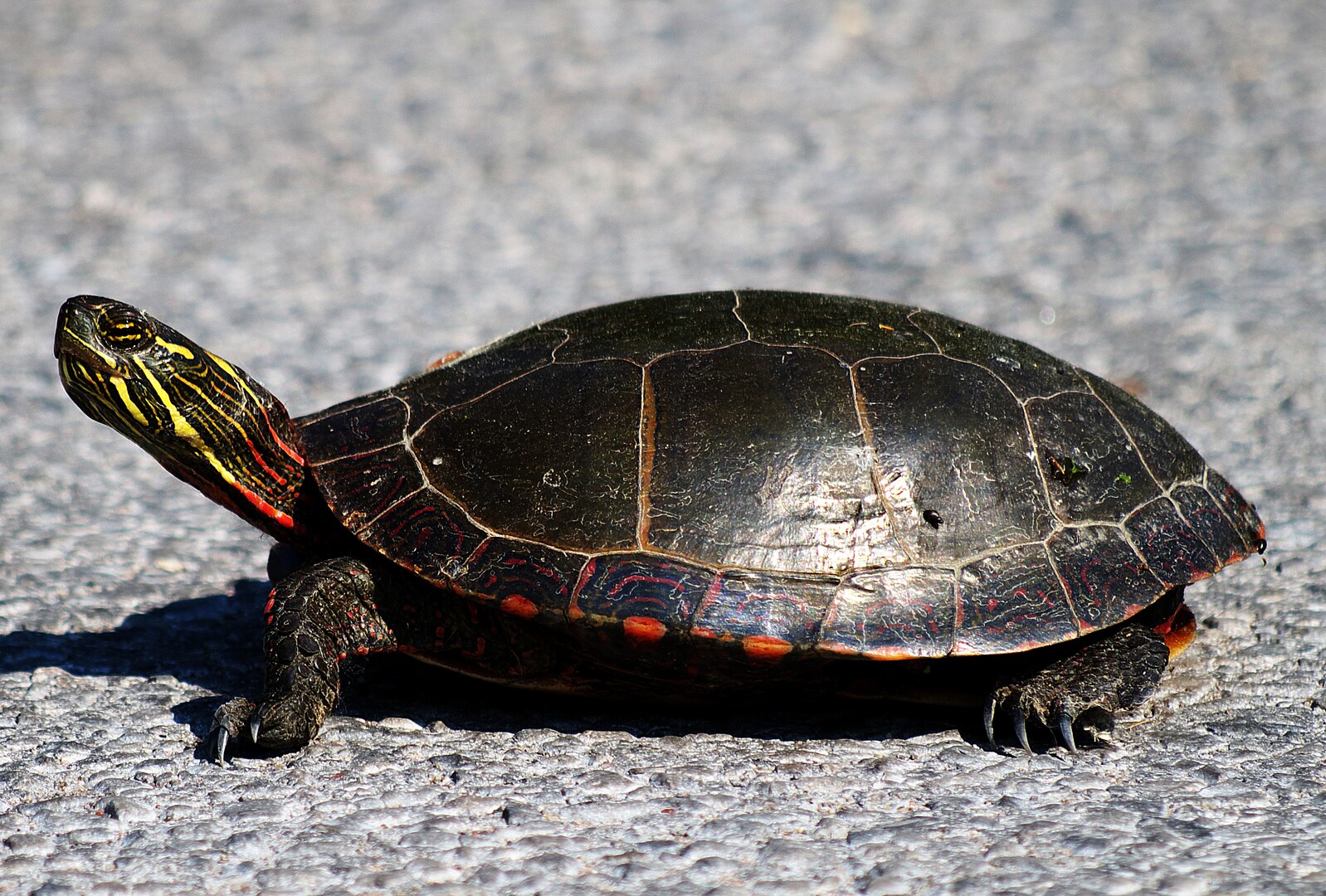
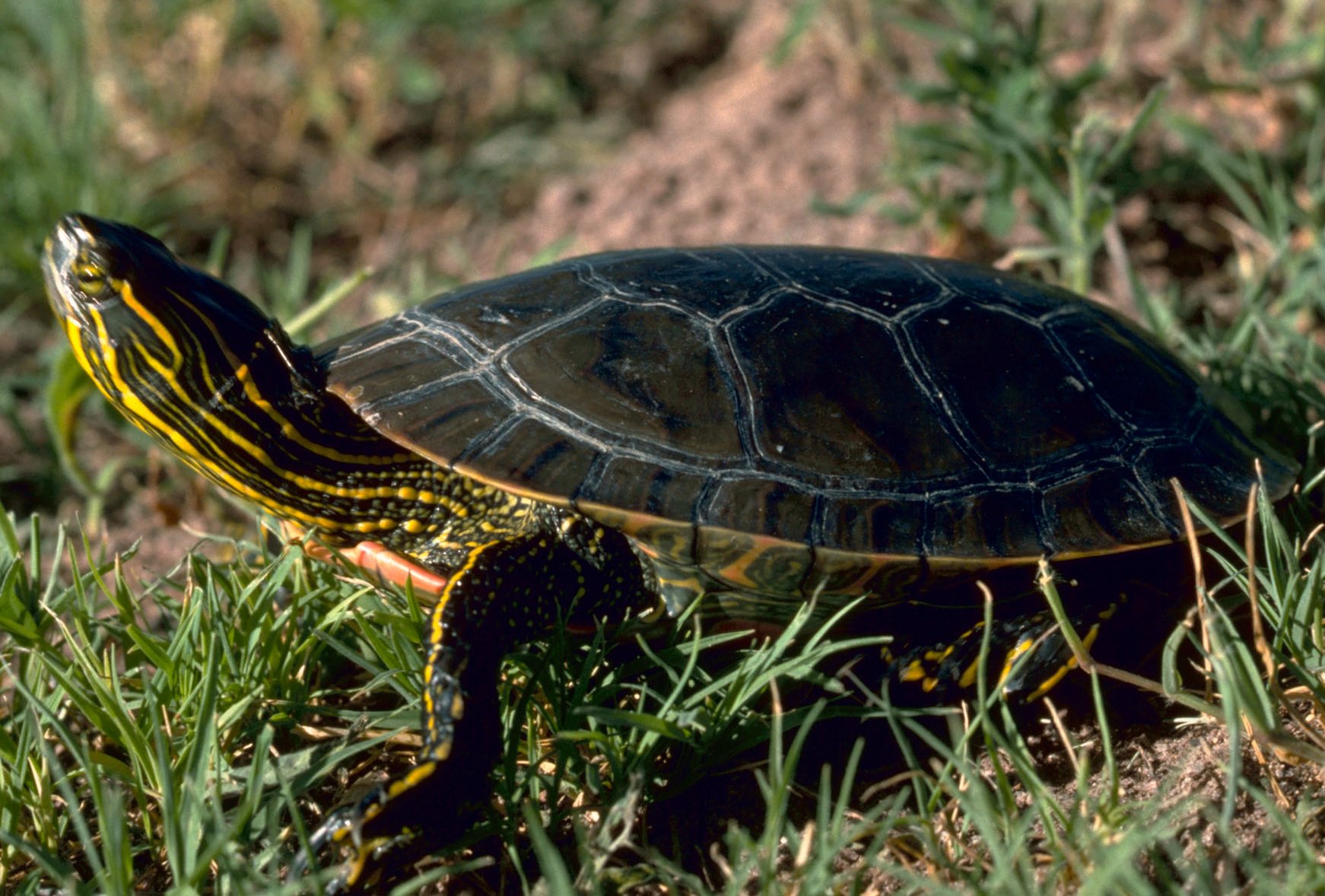
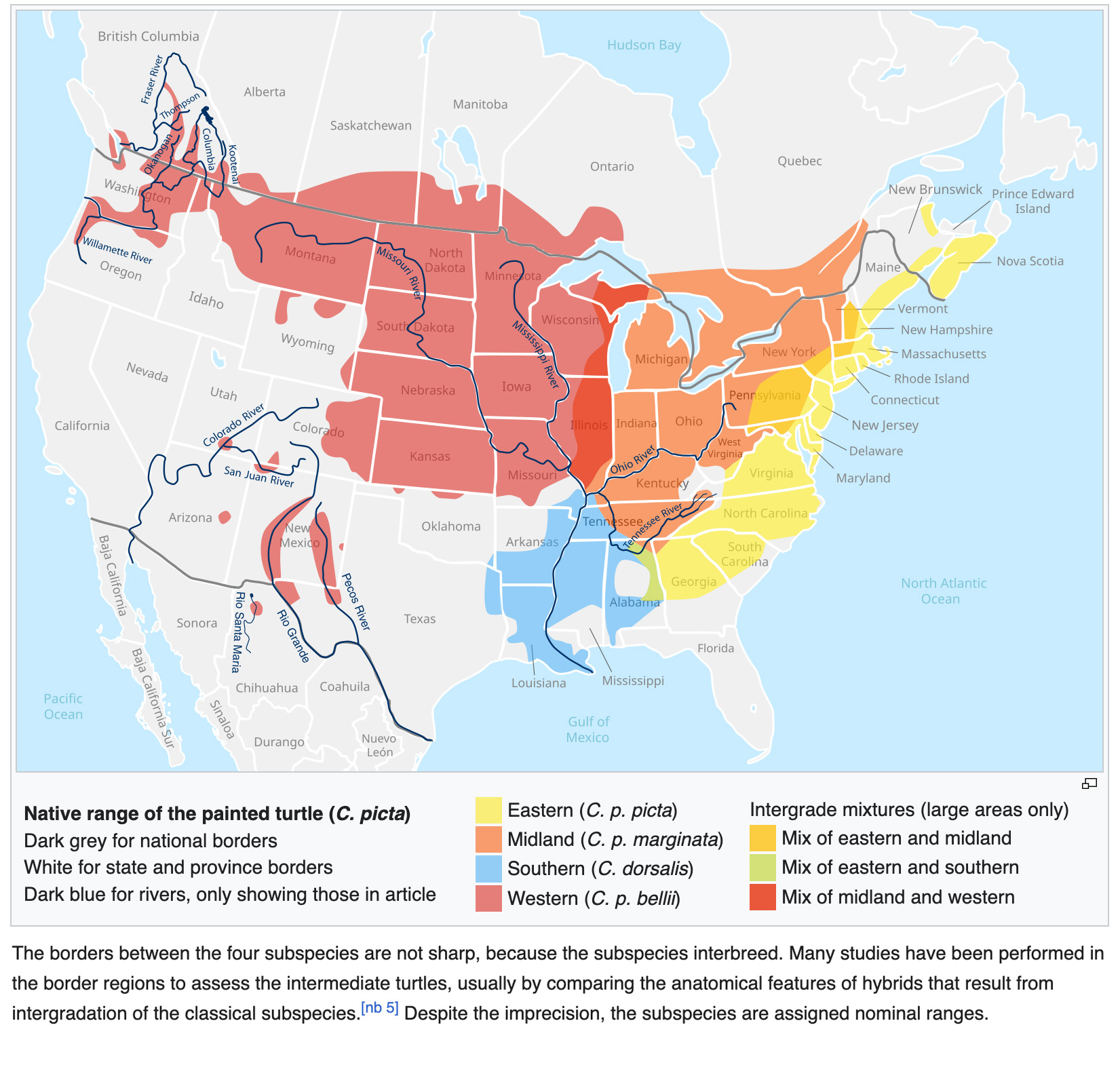
Four distinct subspecies are recognized, two of which are found in the Great Lakes basin. The Midland Painted Turtle (C. picta marginata) tends to have prominent red stripes on forelegs and neck, and plastron is usually yellow or orangish yellow with elongate dark central blotch that does not cover more than half the plastral width. The Western Painted Turtle (C. picta belli) usually has narrow yellow stripes on forelegs and neck, and a pattern of light lines on the carapace.

Plastron (shell) may be reddish or orangish, with complex central pattern of dark and light lines that extends out along the scute seams and often covers more than half of the plastral width. Intergrade individuals within the overlapping range display a variable blending of these characteristics.

You can see the difference pretty easily in the photos of the Midland Painted Turtle by Kobie Mercury-Clarke on the left and the Western Painted Turtle from the US Fish & Wildlife Service. However, as you can see on the map, Michigan’s Upper Peninsula has some intergrade turtling going on.
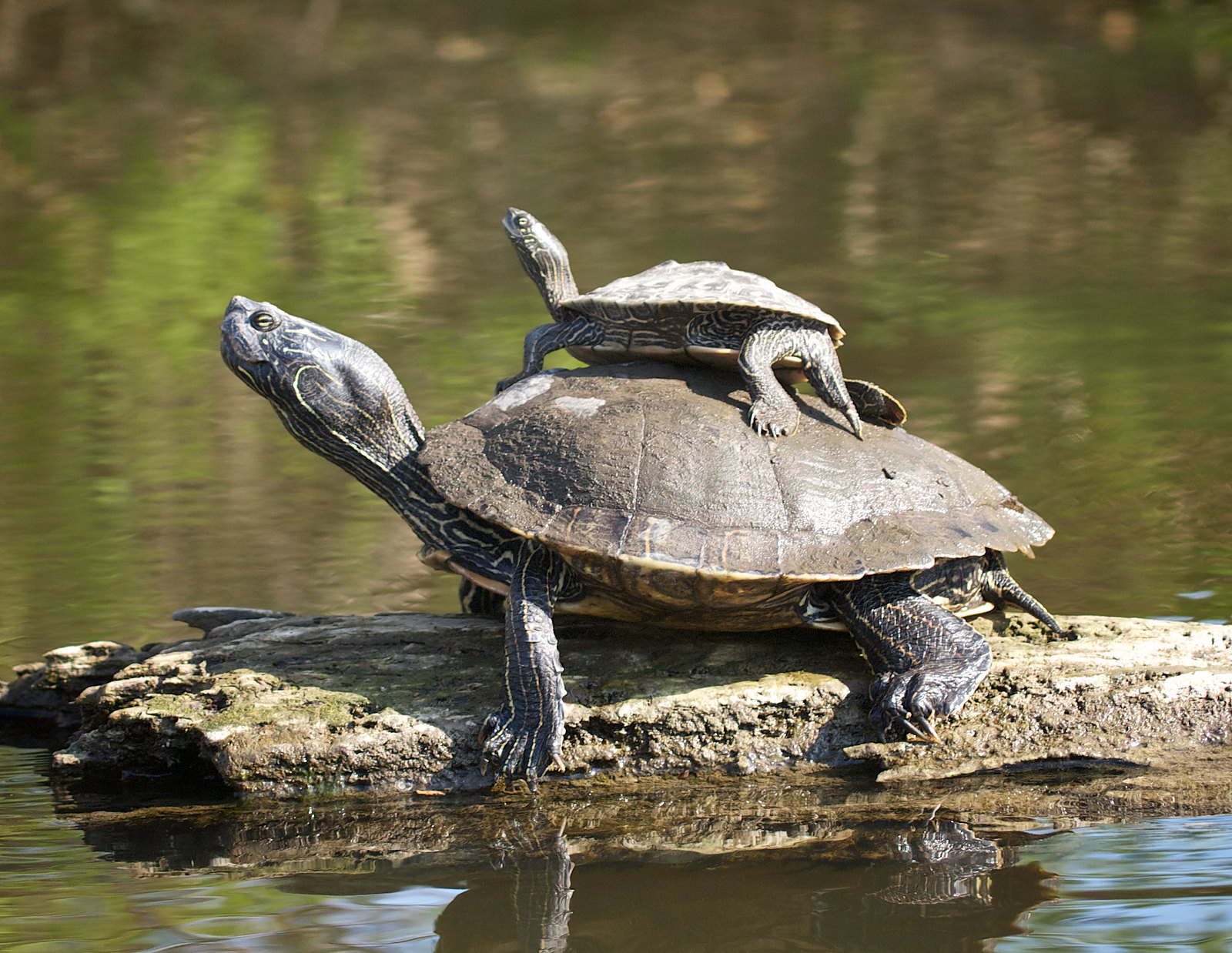
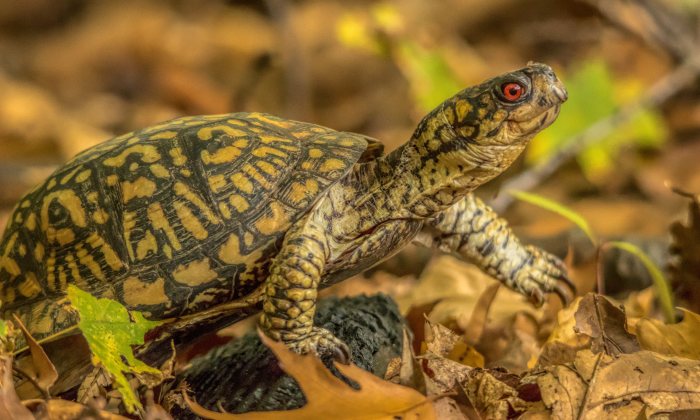
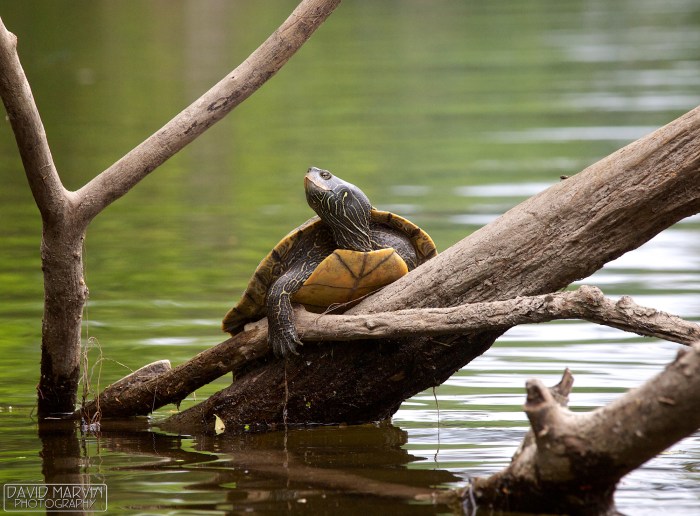
David took the top photo last April. Here are some more of his Painted turtle pics along with one of two Map turtles doing a “turtle stack”. See David’s latest pics including a Calico Pennant Dragonfly on Flickr & for sure visit his blog to read about Red Cedar River turtles & other important things.
Support Michigan in Pictures with Patreon

Happy World Turtle Day 2024!

Map Turtle by David Marvin

May 23rd is World Turtle Day, an annual day of recognition created by American Tortoise Rescue to raise awareness about turtles & help preserve endangered turtles worldwide. Michigan has ten species of native turtles including the Northern Map Turtle (Graptemys geographica) – check them all out at Know Your Michigan Turtles

The Michpics entry on the Map turtle says that they are avid baskers, often basking in groups. They are diurnal, active both in the day and at night and also a very wary animal, slipping into the water to hide at the slightest hint of danger. During courtship the male initiates by tapping his long claws on the front of the female but few details are known. Well I guess those claws demand attention!! 👀

David took this photo a couple years ago while kayaking on the Grand River. See the latest on his Flickr!

Support Michigan in Pictures with Patreon

Turtles get ready for their closeup

I’m Posing for the Camera by R.Miller96

From Waterfall Wednesdays to the Michigan Duckie Project to every flavor of rainbows, one of the things that keeps Michpics fun for me are my little photographic obsessions. Way back in 2011, I shared this photo on what became the all time most popular post on Michigan in Pictures: Know Your Michigan Turtles.

World Turtle Day (May 23) is just a week away so it felt like a perfect time to bring back this photogenic painted turtle for an encore! See more in R Miller’s water gallery on Flickr.

Support Michigan in Pictures with Patreon

Happy World Turtle Day from Phillip the Box Turtle!

Phillip the Box Turtle by Kevin Povenz

Phillip the Box Turtle by Kevin Povenz

May 23rd is World Turtle Day, an annual day of recognition that was started in 2000 by American Tortoise Rescue to raise awareness about turtles & help preserve endangered turtles worldwide. Michigan has ten species of native turtles including the Eastern Box Turtle – check them all out and Know Your Michigan Turtles

Kevin took this photo of Phillip the Box Turtle for the Blanford Nature Center back in 2017. See more in his Animals gallery on Flickr.

Support Michigan in Pictures with Patreon

Happy (belated) World Turtle Day!

Map Turtle by David Marvin

Map Turtle by David Marvin

World Turtle Day (May 23rd) is an annual day of recognition that was started in 2000 by American Tortoise Rescue to raise awareness about turtles & help preserve endangered turtles worldwide. Although it was yesterday, I can’t let it pass without comment & really hope you take the time to Know Your Michigan Turtles. We have TEN native species in Michigan, including the common map turtle

David took this photo back in 2014 and you can see more from him in his Lansing gallery on Flickr.

Support Michigan in Pictures with Patreon

Reflections on World Turtle Day!

Reflections (Turtles) by Glen Suszko

Reflections (turtles) by Glen Suszko

I know I said I was taking the weekend off, but May 23rd is World Turtle Day, one of my favorite days! It was created by the good people at American Tortoise Rescue to help people celebrate and protect turtles and tortoises and their disappearing habitats around the world.

Every year I’m happy to report that one of the most popular features on Michigan in Pictures remains Know Your Michigan Turtles that I wrote back in 2013 and have added to through the years with photos and articles about every one of Michigan’s 10 native turtle species including our most common one, the painted turtle.

The UM Animal Diversity web has pictures and information about Chrysemys picta (the painted turtle) and says that:

Painted turtles prefer living in freshwater that is quiet, shallow, and has a thick layer of mud.

Painted turtles are brightly marked. They have a smooth shell about 90 to 250 mm long. Their shell acts as protection, but since the ribs are fused to the shell, the turtle cannot expand its chest to breathe but must force air in and out of the lungs by alternately contracting the flank and shoulder muscles. The painted turtle has a relatively flat upper shell with red and yellow markings on a black or greenish brown background.

Painted turtles may live as long as 35 to 40 years, but most will not survive for this long

Glen took this photo last month at Stony Creek Metropark. Visit his Flickr for lots more photos!

Support Michigan in Pictures with Patreon

Happy World Turtle Day from Phillip the Box Turtle!

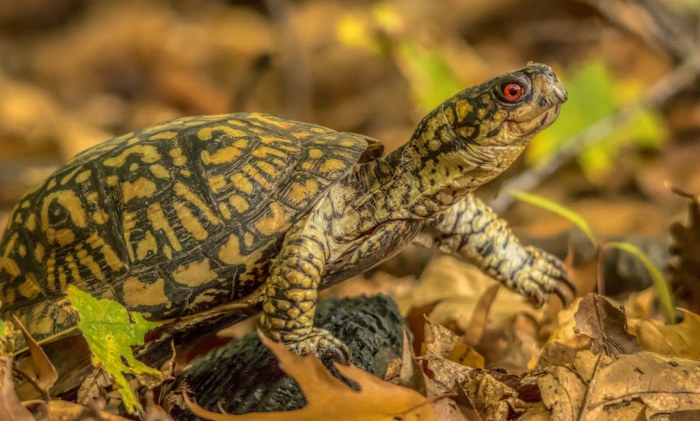
Phillip the Box Turtle, photo by Kevin Povenz

May 23rd is World Turtle Day, created by the good people at American Tortoise Rescue to help people celebrate and protect turtles and tortoises and their disappearing habitats around the world.

Every year I’m happy to report that one of the most popular features on Michigan in Pictures remains Know Your Michigan Turtles that I wrote back in 2013 and have added to through the years with photos and articles about every one of Michigan’s 10 native turtle species including Eastern Box Turtles.

Kevin took this at the Blandford Nature Center in Grand Rapids and you can click that link to learn all about them and the wildlife you can see there. View the photo bigger and see more in his Animals photo album.

Egg Season for Michigan Turtles

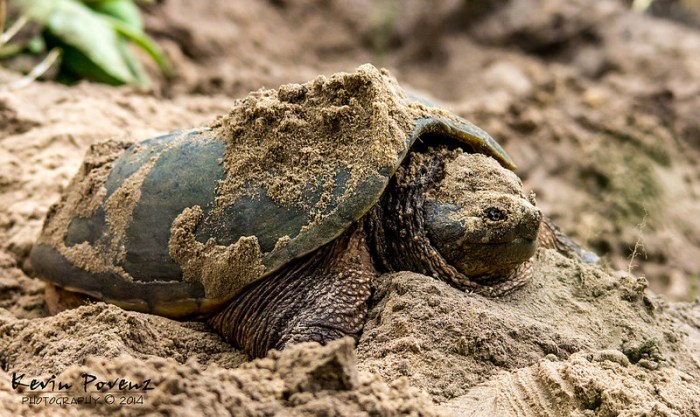
Snapping Turtle, photo by Kevin Povenz

I came across a cool video of a snapping turtle laying her eggs – check it out below! The Michigan Turtles page from the DNR says in part:

Turtles reproduce by internal fertilization and produce shelled eggs deposited on land. Most mating takes place in spring after a brief courtship, which begins shortly after turtles emerge from their hibernation sites. Courtship displays vary greatly. Male Eastern Box turtles chase their intended mates and nip at their shell edges, or chin. Female painted turtles receive soft toenail strokes from potential mates. Male snapping turtles may fight fierce battles to drive rivals away from a choice breeding territory.

Between late May and early July, a female turtle will leave the water and seek a sunny spot with little or no vegetation and moist, but not saturated, sand or soil. She digs a shallow nest cavity with her hind feet and deposits her clutch of eggs. Depending on species, the eggs may be round or oval and have either hard or flexible shells. The nest is then refilled by the female with excavated materials, without ever having seen the eggs and is abandoned to its fate. Many (probably most) turtle eggs are eaten by raccoons or other predators within a few days of being laid. Those that survive will hatch in two to three months. In most cases, the young head immediately for cover in shallow water (aquatic species) or leaf litter (box turtles). Young painted turtles have the ability to withstand partial freezing and often remain in the nest over winter, emerging in spring.

In most turtle species, gender is determined by the temperature of the egg during a critical part of incubation. In general, male turtles tend to hatch from cooler eggs, and females hatch from warmer eggs. Once hatched, baby turtles can grow quickly for the first few years, with growth slowing as they near adulthood.

Turtles are among the longest living animals on earth. Several species of turtles can live for several decades. With this longevity also comes a negative side. It takes several years for turtles to sexually mature (4 to 10 years for a Painted turtle, 14 to 20 years for a Blanding’s or Wood turtle, and 15 years for a Snapping turtle). Non breeding turtles are often the targets of predators, automobiles, and pet seekers. In addition, the longer life span allows turtles to build up environmental toxins in their tissues. These toxins can have serious affects on a turtle’s health and breeding ability.

About this photo from 2014 Kevin writes: While out on our hunt for Bald Eagles on Sunday we came across 5 different female snapping turtles laying their eggs. This one was on the bank of the Grand River that was probably 10 feet above the river.

View it bigger and see more in his Animals slideshow.

Know Your Michigan Turtles: Common Musk Turtle (Sternotherus odoratus)

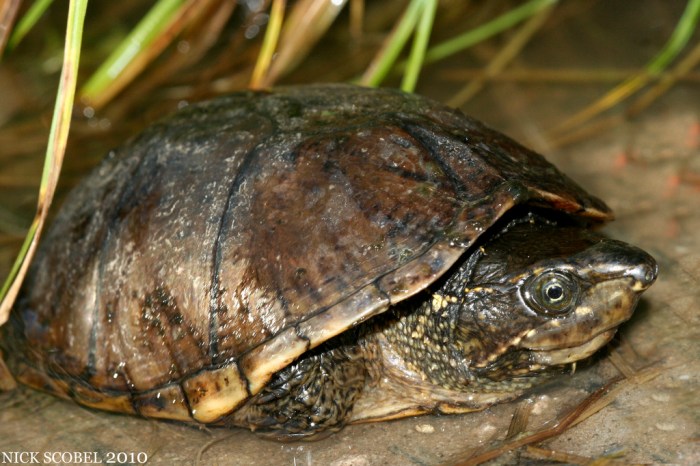
Common Musk Turtle, photo by Nick Scobel

Happy World Turtle Day everyone!

World Turtle Day (May 23rd) was started in 2000 by American Tortoise Rescue to bring awareness about dangers to turtles worldwide. It’s also the perfect day to add the 10th and final turtle to one of the most popular posts on Michigan in Pictures, Know Your Michigan Turtles!

The UM Animal Diversity Web entry for the common musk turtle (Sternotherus odoratus), a relatively small turtle with an average length of about 3 to 5 inches, says in part:

The habitat of the common musk turtle includes any kind of permanent body of water, like shallow streams, ponds, rivers, or clear water lakes, and it is rare to find the turtle elsewhere. While in the water, this musk turtle stays mainly in shallow areas. Sometimes it can be found basking on nearby fallen tree trunks or in the branches of trees overhanging the water

…The most prominent behavior of the common musk turtle is its defensive tactic. When disturbed, this turtle will quickly release a foul-smelling liquid from its musk glands. This kind of defense earned the musk turtle the nickname of “stinkpot”. Also, the male is particularly aggressive and will not think twice about biting. Another unique behavior the nocturnal common musk turtle exhibits while foraging is that they walk on the bottom of the stream or pond instead of swimming like other turtles.

Sternotherus oderatus is somewhat of a food generalist, as it is known to eat small amounts of plants, mollusks, small fish, insects, and even carrion. Foraging on the muddy bottom of streams or ponds is the chief way of collecting food.

Nick runs the very useful Herping Michigan Blog where you can find lots more of his excellent photos of Michigan’s reptiles and amphibians along with informative writeups.  View the photo bigger and see more of Nick’s awesome turtle photos on Flickr.

Get the complete list of all 10 turtles native to Michigan right here!

Turtles don’t care about personal space

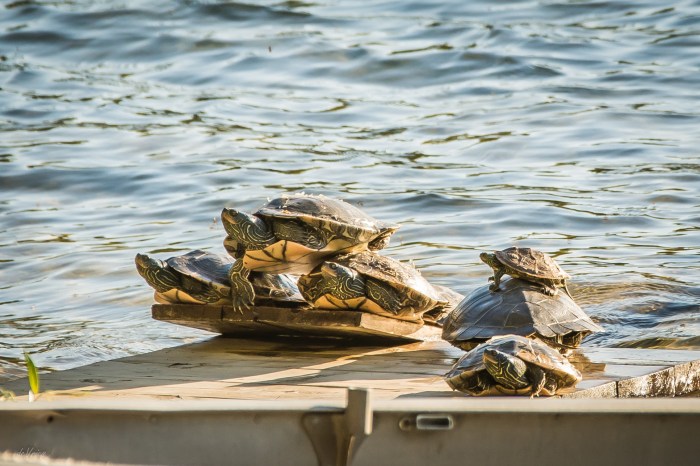
Apparently turtles have no concept of “my personal space”, photo by Dale Devries

Regular readers are aware that World Turtle Day is a big favorite of mine. It takes place a week from today on Tuesday, May 23rd, and I’m extra excited for this year as I will post the 10th and final turtle on my list of the ten turtles native to Michigan! Be sure to tune in and definitely consider supporting American Tortoise Rescue and their World Turtle Day!

I tried to find a definitive answer as to why turtles “stack” like this. It appears to be a way for littler turtles to get more sun, but I’m curious if anyone has a definitive answer.

About the photo Dale writes:

I took an old section of dock and made a ramp up to it just above the waterline, and the turtles have voiced their approval! I have no idea why we have so many turtles here, but it must mean the lake is healthy!

View the photo background big and see more in Dale’s The Best of West Lake slideshow.