“I’ve made movies that nobody saw initially, and then, all the sudden, people over the years pick up on it.” – Rob Reiner
On Sunday, director, actor, writer, producer & comedian Rob Reiner was murdered. Because we are thoroughly broken as a society, a tawdry political back & forth led by the actual President of the United States has threatened to overwhelm reflection on a truly legendary career that spanned decades. Let me say that if you haven’t dug into Reiner’s filmography from Spinal Tap to Stand By Me to Defending My Life, this is an excellent time to do so. All I want to say about Reiner is that few filmmakers have ever had such a deft touch in bringing to life the small moments that make us human.
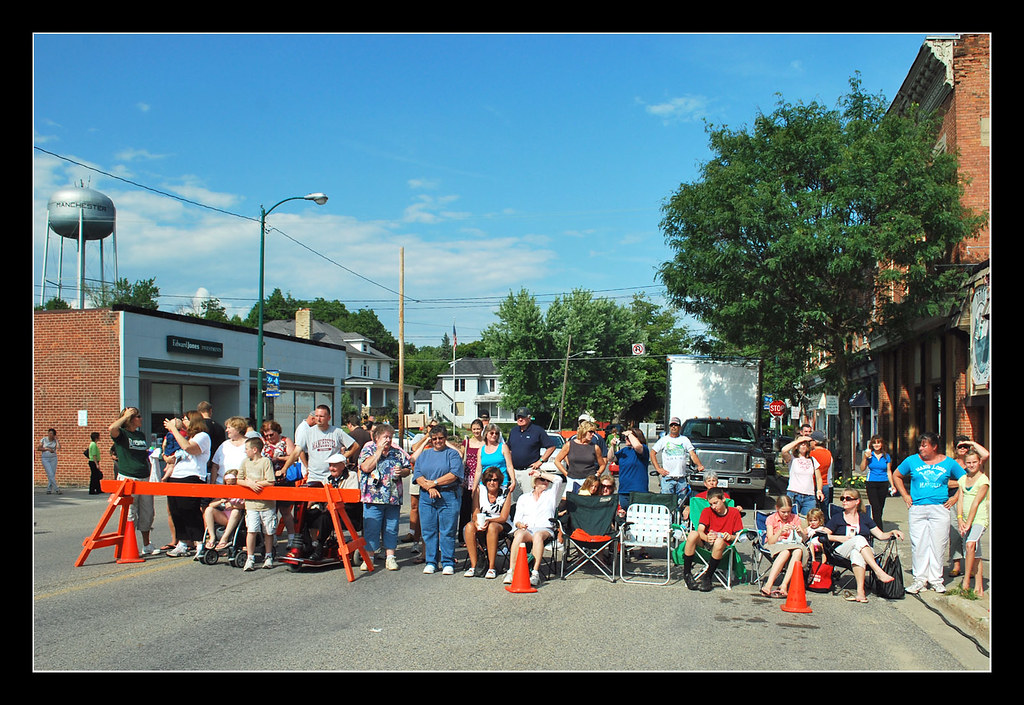
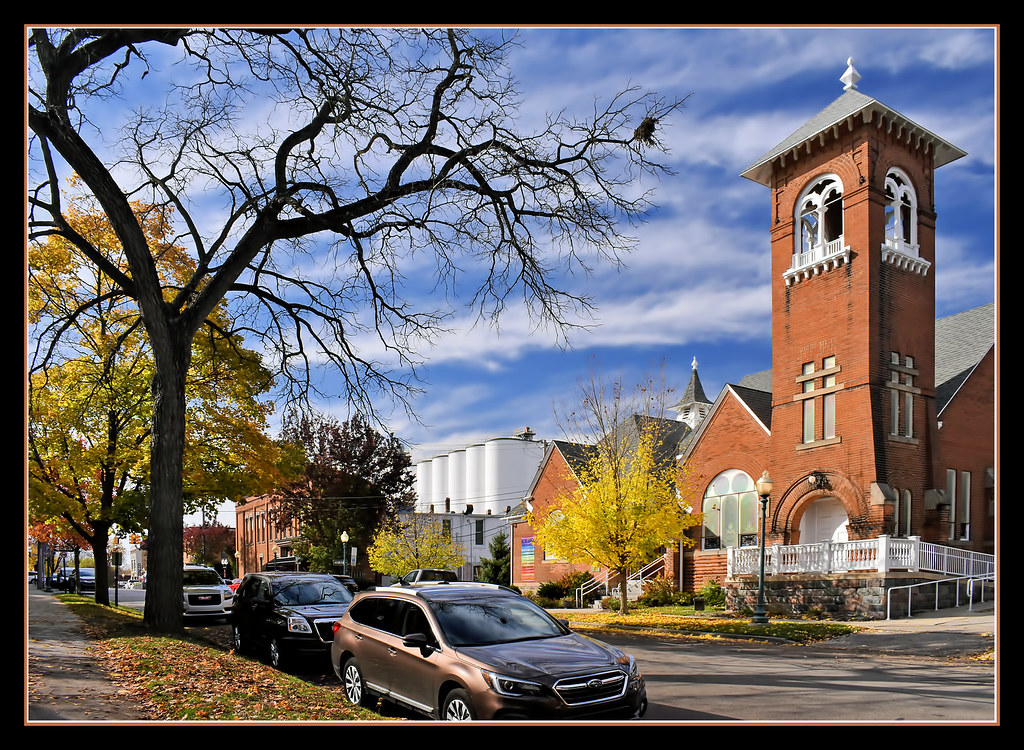
Steve shared that the parts of the Disney movie “Flipped” (August 2010) were filmed in his hometown of Manchester, Michigan writing “Rather exciting for the residents of a small town, 2500 miles from Hollywood, when parts of a movie are filmed right on Main Street. Here a small crowd of local resident spectators has gathered on July 27, 2009. Kind of funny how the film crew had to herd us spectators around to keep us out of the way!”
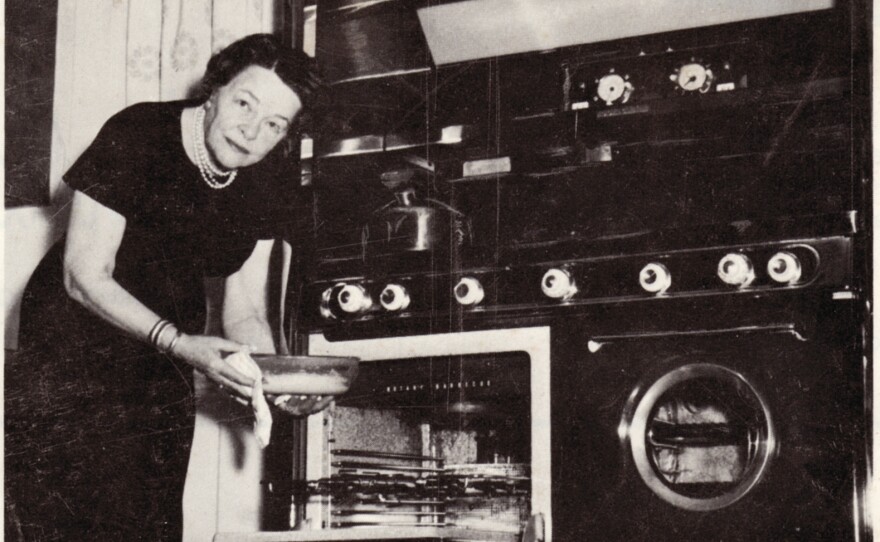
When a friend of her twin sons Howard and Dudley visited their home, Mabel noticed the biscuits in the boy’s lunch were flat and unappetizing. She set out to find a way to create a pre-made mix which would assist the boy’s single father in the kitchen.
In 1930, with the support of her husband Howard Samuel Holmes, Mabel’s home-grown project became the first prepared baking mix sold to the public. The convenient, simple to use mix only required the addition of milk to produce perfect biscuits every time. By keeping their “JIFFY” brand baking mixes affordable, the Holmes’ new venture was able to help many families who were recovering from the effects of the Great Depression.
Read lots more from Jiffy & cheers to everyone who looks at a child’s lunch with an eye towards making it better!! There’s a poster from the Chelsea Area Chamber of Commerce below with info about the festivities on tap today that include games & prizes, a treasure hunt, food trucks & a visit from Detroit Lions Mascot Roary.
mLive shares that the decision to start the school year before or after Labor Day has long been a point of debate in Michigan due to the need for student workers in the hospitality & agricultural sectors. Even though the law requiring schools to start post-Labor Day passed 20 years ago, most Michigan schools are still starting before summer’s end:
…The Michigan Department of Education only tracks districts that are granted Labor Day waivers, but not which districts use their waiver or their start dates, according to spokesman Ken Coleman. There are currently 185 waivers held in the state, covering more than 500 school districts and public academies.
Forty-eight of those are held by intermediate school districts (ISDs) or area educational agencies and their waivers almost entirely cover all districts within their regional boundaries. Additionally, 102 individual charter schools or public academies have their own waivers, as well as 30 school districts outside of ISDs. A few hundred more schools and districts, including several ISDs, are not waiver eligible that automatically start after Labor Day. Still, more Michigan schools than not are starting before Labor Day despite the mid-2000s law.
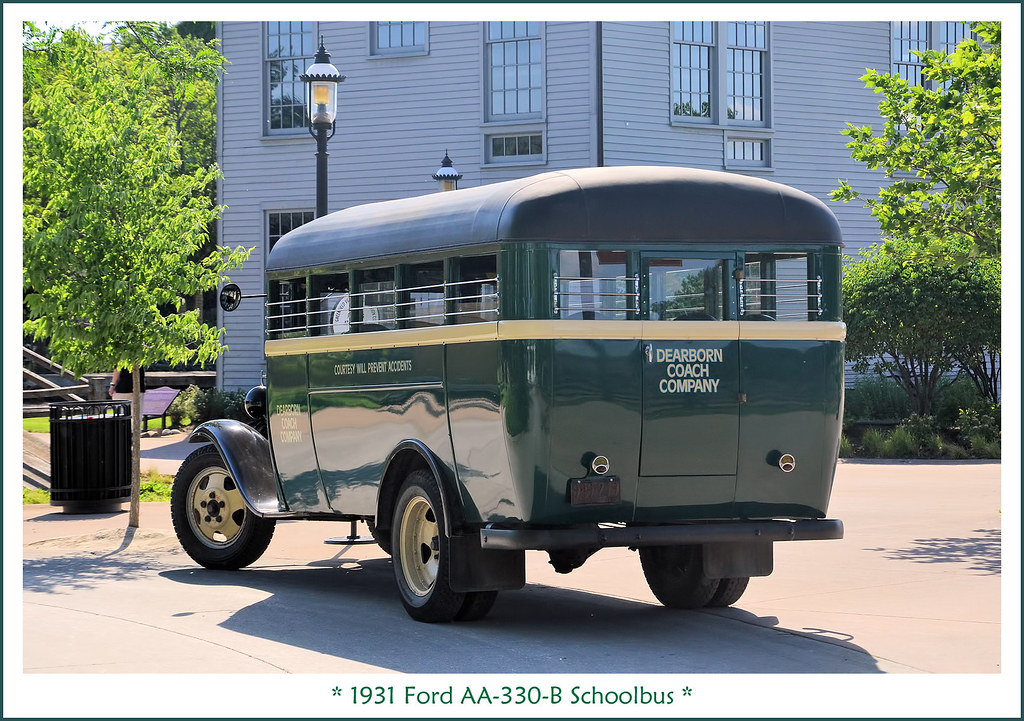
Steve passed on a couple years ago, but his photos and his love of history remain (click for his Michigan in Pictures features). He took these back in 2018 at Greenfield Village, Henry Ford’s outdoor living history museum in Dearborn. The Model AA school bus was acquired from Florida and visitors can use the historic bus for transportation around the Village (for a price). See lots more in his Classic Busses Old & New gallery on Flickr.
One of my favorite websites, Atmospheric Optics, says that secondary rainbows or “double rainbows” feature a secondary bow that is nearly always fainter than the primary, with colors reversed and more widely separated:
Light can be reflected more than once inside a raindrop. Rays escaping after two reflections make a secondary bow.
The secondary has a radius of 51º and lies some 9º outside the primary bow. It is broader, 1.8X the width of the primary, and its colours are reversed so that the reds of the two bows always face one another. The secondary has 43% of the total brightness of the primary but its surface brightness is lower than that because its light is spread over its greater angular extent. The primary and secondary are are concentric, sharing the antisolar point for a center.
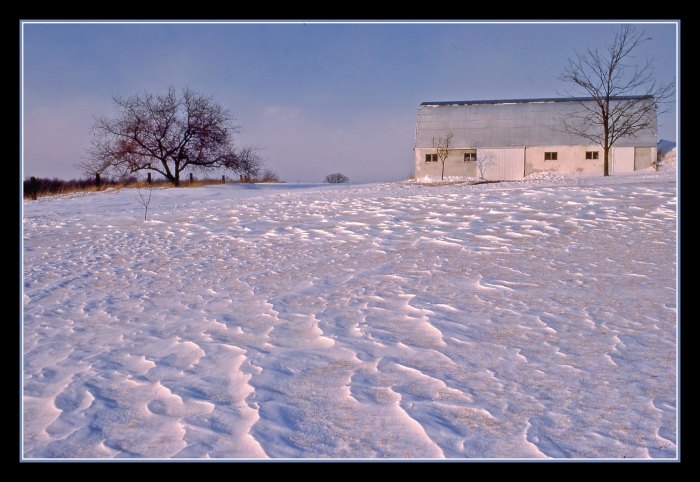
As Michigan gets popped by a winter storm, here’s a look back to 1972. Steve writes:
Quite amazing what a wintry wind can do to fallen snow across an open field. I took this photo in February, 1972 after the winds of a modest blizzard had reshaped the fallen snow on the front yard of the home where I lived near Manchester, Michigan.
My post on Tuesday generated a little controversy because I stated who I was supporting in Michigan’s primary and also that I’d continue to share my personal opinions here on Michigan in Pictures. Most readers who commented agreed, including Jim Schaefer who shared the most powerful comment I’ve ever read on my work:
Dear Farlane…I’m so glad you posted item #4 today along with the great photo. I had to move to Sheboygan, WI in 2014 for health reasons, leaving behind 45-yrs of life in Flint, MI. I’ve been saving your photos and their accompanying stories on a daily basis for several years now in their own special folder on my laptop. They are my daily reminder about all of the good things about Michigan that some Michigan residents seem to take for granted.
Unfortunately, some of these same people have conveniently forgotten about your 1st Amendment rights to editorialize on your own website. Shame on them! I am also a 72-yr old Army veteran who served a 13-month tour in a combat zone in Korea in 1966. That’s why I’m so glad that you reminded people to vote today. I was drafted against my will back in 1966 but I served my country and did my job over there and I’ll be damned if I’m going to let anyone take away my right to vote. So you keep right on posting all of those great photos along with the Michigan history behind them.
May God bless you always…Jim Schaefer
God bless you too Jim, and here’s something for your desktop folder from Flint! The Charles Stewart Mott Foundation shares this about their founder:
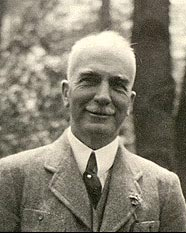
Charles Stewart Mott
Charles Stewart Mott established the C.S. Mott Foundation in 1926, in response to his deep concern about the welfare of Flint, Mich., as well as his abiding affection for his adopted community.
An automotive pioneer, Mr. Mott was an original partner in the creation of the General Motors Corporation, founded in Flint in 1908. As one of the city’s leading industrialists, Mr. Mott was elected mayor, serving three terms (1912–13, 1918) during periods of overwhelming and turbulent growth in the city. As mayor he was responsible for instituting fair property assessments, orderly accounting audits, health and safety ordinances, building codes and a house numbering system.
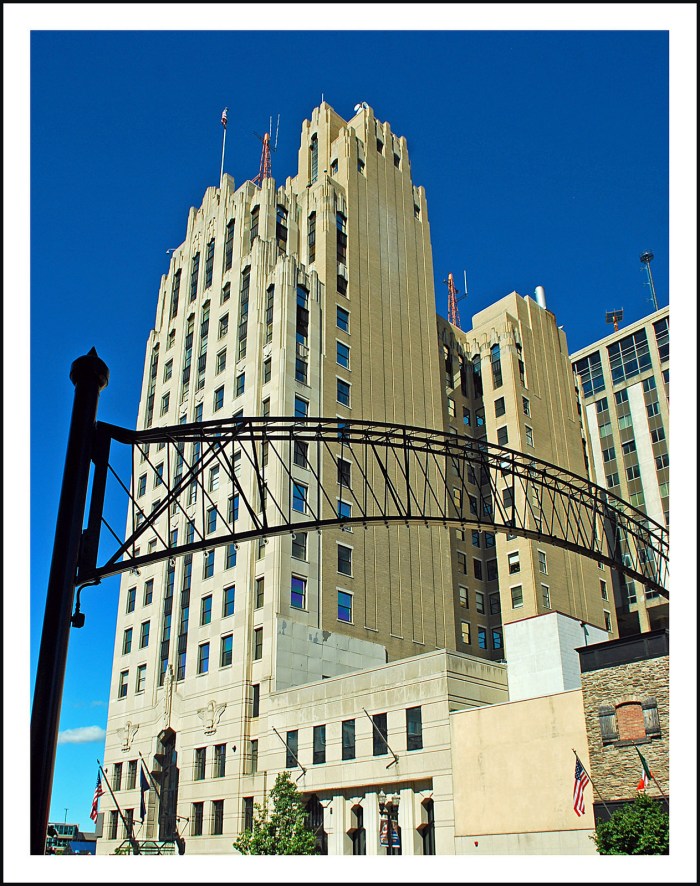
Read more about Mott in Autos not Apples. Here’s a few facts about the 16-story Art Deco building that bears his name and houses the Mott Foundation:
Flint’s first skyscraper with a total height of 226 feet to the top of the passenger elevator penthouse.
Designed by Smith, Hunchman & Grylls (SmithGroup) the oldest practicing architectural firm in the US.
Construction took one year to complete at a cost of approximately $2,000,000.
Original design included seven retail stores on the first floor. There were also originally men’s rooms on every floor, but women’s restrooms only on every other floor.
The Freight elevator is still operated with the vintage 1930 controls.
Building name was changed to the Mott Foundation Building on January 1, 1945.











 Michigan in Pictures