The Scary Sound of Meteors

Bolides & Electrophonic Sounds by Aaron Springer

Bolides & Electrophonic Sounds by Aaron Springer

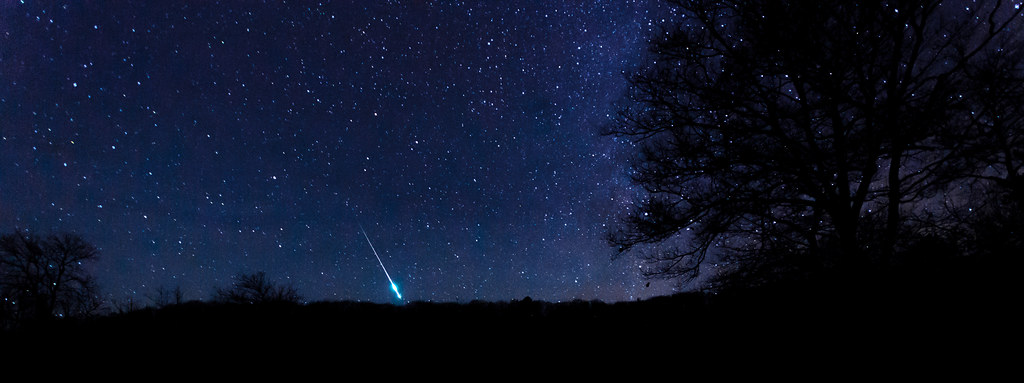
While much of Michigan was shrouded in clouds for the peak of the Orionids, the October meteor shower will still be producing a lot of meteors for the next few days. As you are watching the skies, you may hear sounds that have been reported along with meteors for millenia, and dismissed for the same amount of time by such luminaries as Edmund “The Comet Guy” Halley. This Space.com article says that you might be able to believe your ears that meteors can make hissing sounds:

These faint sounds are probably created when bright pulses of light from the meteors heat up certain objects on the ground below, a new study reports. These objects — for example, leaves or hair — radiate thermal energy into the nearby air, producing pressure waves that generate a variety of sounds.

“I think our answer is pretty solid,” said study co-author William Sweatt, a researcher at Sandia National Laboratories in New Mexico.

The mysterious sounds are associated with very bright fireballs, meteors that blaze up at least as intensely as the full moon shines in the sky. Generally, an incoming object must weigh 1.1 lbs. (0.5 kilograms) or more to make noise audible to humans, Sweatt said.

The faint, whispery sounds have been described in many different ways by people who have heard them; popping, sizzling, rustling and hissing are commonly employed adjectives. And hearing them is a rare treat indeed. “I think a person’s lucky if they get one per lifetime,” Sweatt told Space.com.

You can read more & check out the video below. A very cool twist on the story for me is that a friend shared my experience of hearing the sounds with today’s photographer Aaron Springer when he shared this back in November of 2015. Aaron referenced the American Meteor Society’s theories on the sounds which appear to have been correct!!

Another form of sound frequently reported with bright fireballs is “electrophonic” sound, which occurs coincidentally with the visible fireball. The reported sounds range from hissing static, to sizzling, to popping sounds. Often, the witness of such sounds is located near some metal object when the fireball occurs. Additionally, those with a large amount of hair seem to have a better chance of hearing these sounds. Electrophonic sounds have never been validated scientifically, and their origin is unknown. Currently, the most popular theory is the potential emission of VLF radio waves by the fireball, although this has yet to be verified.

Head over to Aaron’s Flickr for his latest & don’t forget to look up!!

Support Michigan in Pictures with Patreon

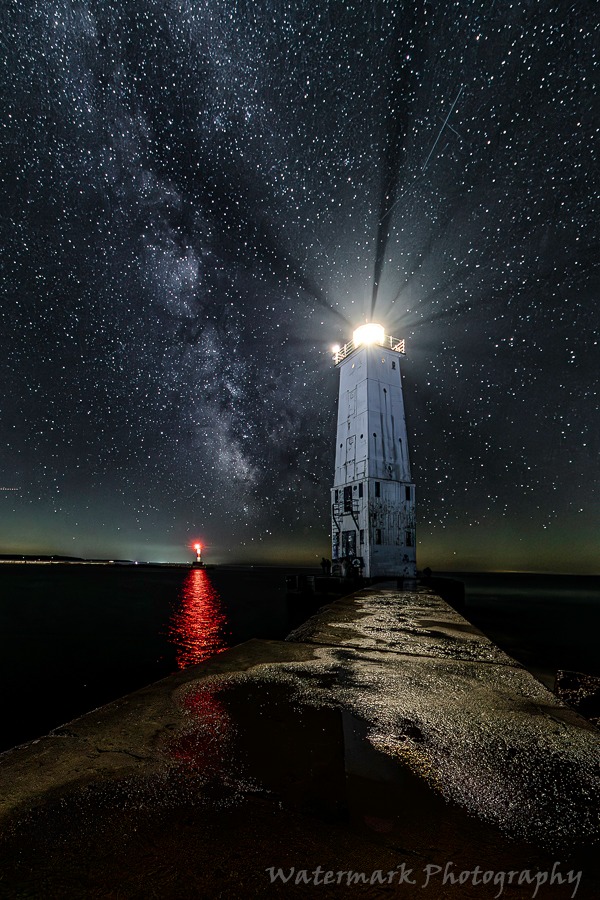
Starry Night at Frankfort Light

Starry Night at Frankfort Lighthouse by Watermark Photography

Starry Night at Frankfort Lighthouse by Watermark Photography

“I have loved the stars too fondly to be fearful of the night”

-Vincent Van Gogh

Such a gorgeous shot of the Frankfort Lighthouse! Head over to Jeff’s A Little Night Music gallery on Smugmug to view & purchase this and other work & also follow Watermark Photography on Facebook.

PS: You can help protect this light through the Frankfort Lighthouse Restoration Project!

Support Michigan in Pictures with Patreon

How to see Comet A3

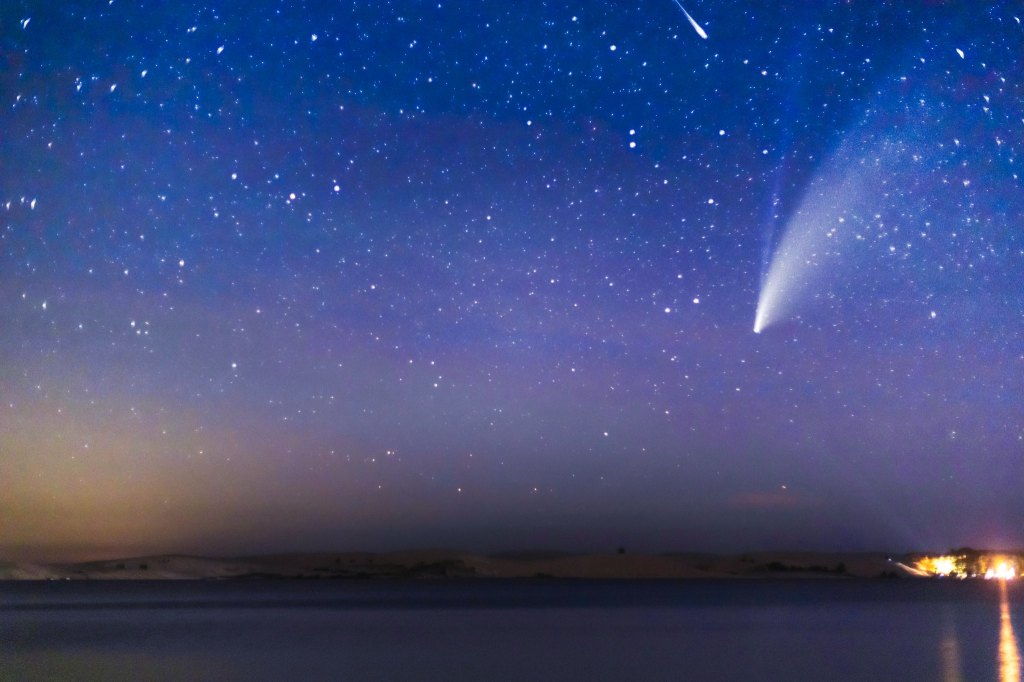
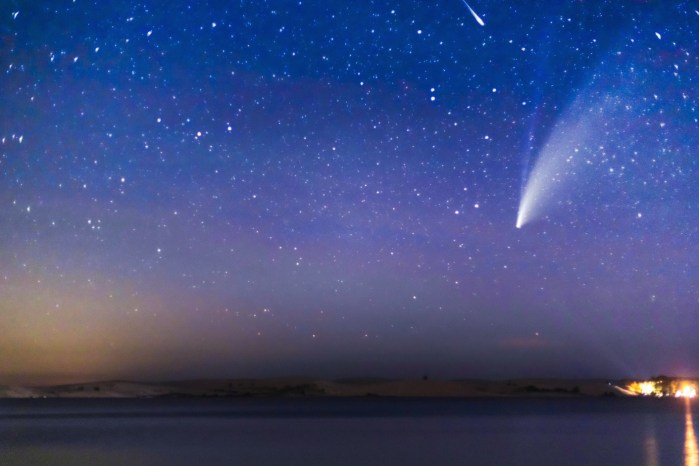
Neowise and meteor by Gary Syrba

There were hopes that Comet C/2023 A3 Tsuchinshan–ATLAS aka Comet A3 would be the comet of the century. While it is not quite that, it does appear that it will be visible for the next couple of weeks just after sunset, even to the naked eye! The good folks at EarthSky offer a helpful checklist to spot Comet A3:

  1. Be sure you’re looking at the correct direction and time. Comet A3 will be visible low in the west after sunset beginning around October 14.
  2. You need a dark, unobstructed sky. Start looking when the sky is dark, but close to sunrise or sunset. Make sure there aren’t hills, trees or buildings blocking your view.
  3. If you can’t see the comet with your eye, try your phone. Most cell phone cameras provide a night or low-light mode. But capturing an image of the comet will require that you hold the camera firmly – or lean against a fixed object like a tree – to avoid shaky or blurred image.
  4. AFTER you’ve located the comet, use binoculars or your eyes to sweep in that area in the sky.

Gary took this shot of Comet Neowise back in July of 2020. See more in his Night Skies gallery on Flickr and view & purchase his work on his website.

Support Michigan in Pictures with Patreon

Embrace Michigan’s Dark Skies!

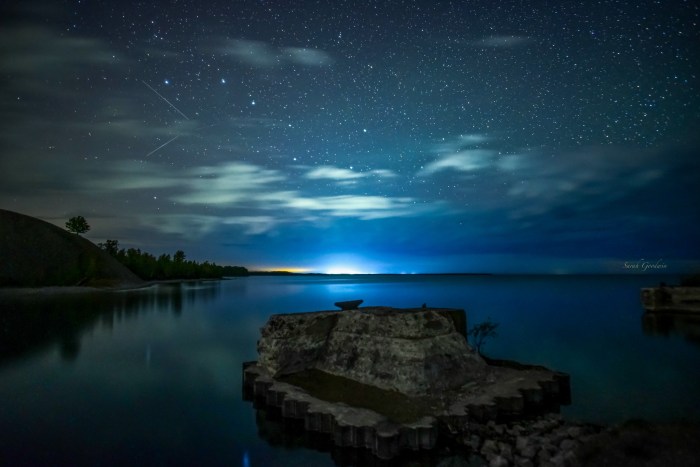
Dark Skies at Rockport Recreation Area by SG Captures

Dark Skies at Rockport Recreation Area by SG Captures

Michigan State Parks, Trails and Waterways shared this photo from the Rockport State Recreation Area, asking: What are you doing to do to celebrate #InternationalDarkSkyWeek?

Michigan is lucky to have designated areas that host spectacular nighttime viewing. Dark sky parks and preserves have a limited amount of artificial light, making it easier to stargaze in those locations. Dark sky preserves are designated by Michigan legislature and dark sky parks are designated by the International Dark Sky Association. The six state parks that have dark sky preserves are:

In addition to these dark sky preserves, there are two dark sky parks in Michigan:

And if that’s not enough, there is also plenty of excellent night-sky viewing opportunities across more than 15,000 square miles in Michigan’s Upper Peninsula. For more details, visit Michigan.gov/DarkSky.

Sarah is a Michigan State Parks Photo Ambassador, and you should definitely check out her website where you can view & purchase her work as well as her Facebook & sg.captures on Instagram!

Support Michigan in Pictures with Patreon

Amongst the Stars at the Ludington Light

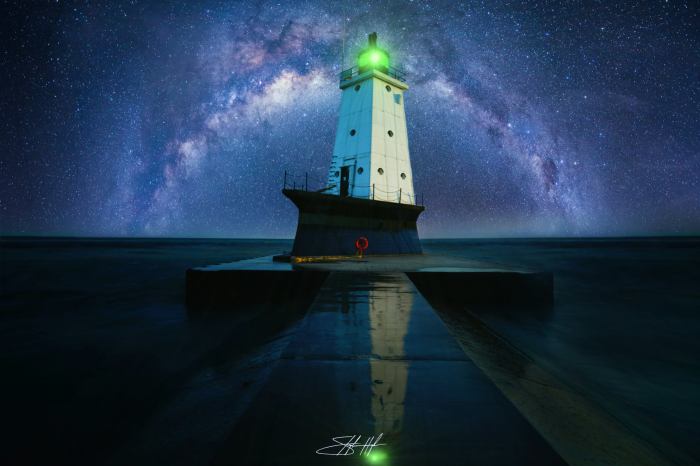
Ludington Lighthouse by S Hughes Photos

Ludington Lighthouse by S Hughes Photos

“You cannot look up at the night sky on the Planet Earth and not wonder what it’s like to be up there amongst the stars.”
– Tom Hanks

I feel this Tom Hanks quotation so deeply. Not many experiences on this earth in my book that compare with gazing into the deep night sky.

The photo was taken at the Ludington Light last year. With apologies in advance to the small but vocal minority of anti-Facebook fans, you can see a lot more on S. Hughes’ Facebook page.

Support Michigan in Pictures with Patreon

Falling Skies in October: Draconid & Orionid meteor showers

Neowise and meteor by Gary Syrba

Neowise and meteor by Gary Syrba

In addition to being the season of cider, changing leaves, and Halloween, October also brings a pair of meteor showers. Our friends at EarthSky give you all you need to know to see the Draconid & Orionid meteor showers:

The Draconids, October 8th

In 2021, watch the Draconid meteors at nightfall and early evening on October 8. You might catch some on the nights before and after, as well. Fortunately, the thin waxing crescent moon sets before nightfall. It won’t hinder this year’s Draconid shower … This shower is usually a sleeper, producing only a handful of languid meteors per hour in most years. But watch out if the Dragon awakes! In rare instances, fiery Draco has been known to spew forth many hundreds of meteors in a single hour.

The Orionids, October 21st

Unfortunately a full moon accompanies 2021’s Orionid shower. Try watching for these meteors in the wee hours before dawn on October 21. You won’t escape the moon, though. On a dark, moonless night, the Orionids exhibit a maximum of about 10 to 20 meteors per hour. More meteors tend to fly after midnight, and the Orionids are typically at their best in the wee hours before dawn. The Orionids sometimes produce bright fireballs, which might be able to overcome a moonlit glare. If you trace these meteors backward, they seem to radiate from the Club of the famous constellation Orion the Hunter.

Gary took this shot last summer. Head over to his Flickr for the latest!

Support Michigan in Pictures with Patreon

Waterfall Wednesday: Agate Falls under the Milky Way

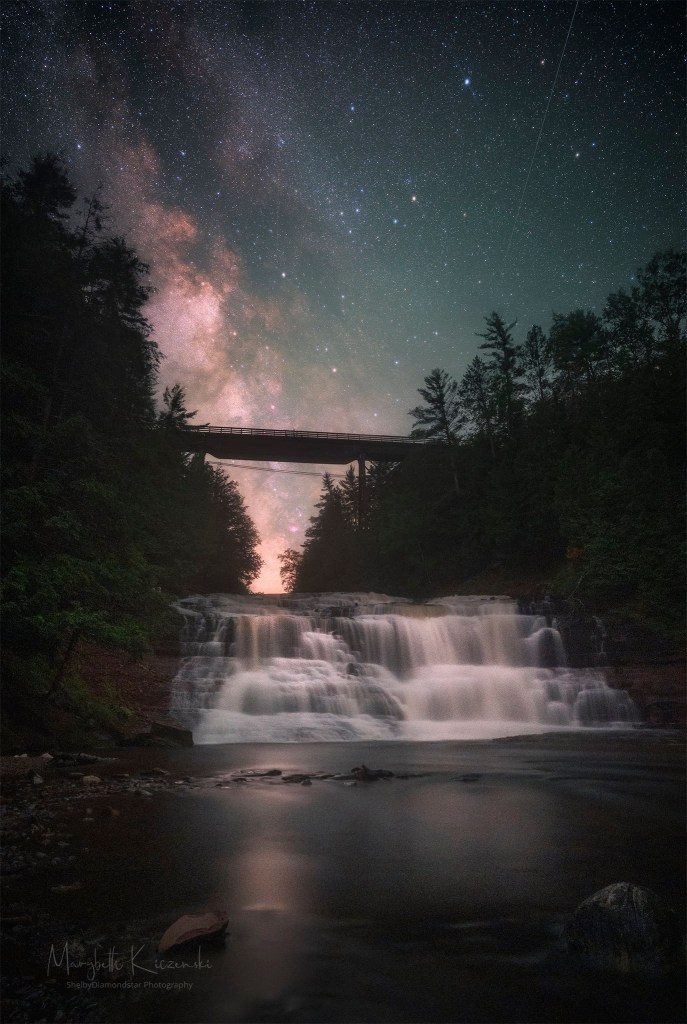
Agate Falls under the Milky Way by Shelbydiamondstar Photography

Agate Falls under the Milky Way by Shelbydiamondstar Photography

GoWaterfalling says that Agate Falls is an impressive waterfall that’s relatively easy to get to:

Agate Falls is a Michigan State Scenic Site 6.5 miles east of Bruce Crossing on MI-28. There is a roadside park (Joseph F. Oravec roadside park) just past the bridge over the Ontonagon River. This is one of the largest and most impressive waterfalls in Michigan. Unfortunately the provided trails and overlooks are somewhat limited. With some effort you can scramble down to the river to get some very good views of the falls, which seems to be popular with local fishermen, or scramble up the river banks to get to the old railroad bridge over the falls. The bridge is now part of a snowmobile trail.

Marybeth got this stunning shot last week. See lots more on her Facebook page & at shelbydiamondstar.com!

More Michigan waterfalls on Michigan in Pictures!

Support Michigan in Pictures with Patreon

Get all the stars at Wilderness State Park

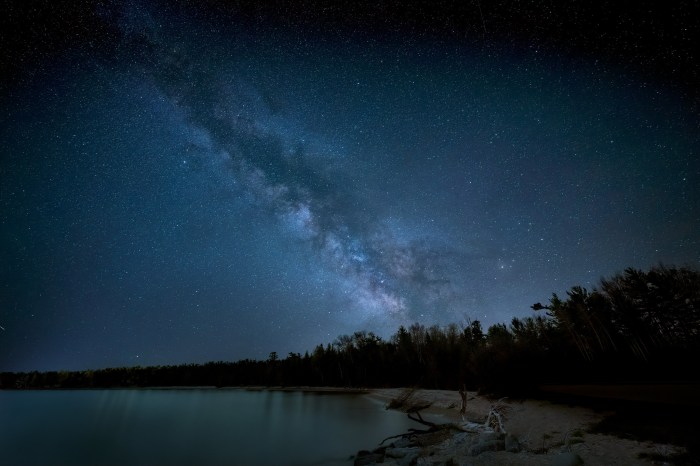
The Milky Way over Lake Michigan at Wilderness State Park by Diana Robinson

The Milky Way over Lake Michigan at Wilderness State Park by Diana Robinson

The Michigan DNR explains that Wilderness State Park is one of Michigan’s Dark Sky Preserves:

Michigan is lucky to play host to both dark sky preserves and parks that offer stellar celestial landscapes. These locations are specially designated because they have qualities that complement nighttime viewing, such as the ability to limit the amount of artificial light. There are also plenty of excellent night-sky viewing opportunities across more than 15,000 square miles in Michigan’s Upper Peninsula.

Diana took this photo earlier in May & you can see more in her Night Photography gallery on Flickr.

More great night photography on Michigan in Pictures!

Support Michigan in Pictures with Patreon

Perseverance: New Mars Rover Lands Today

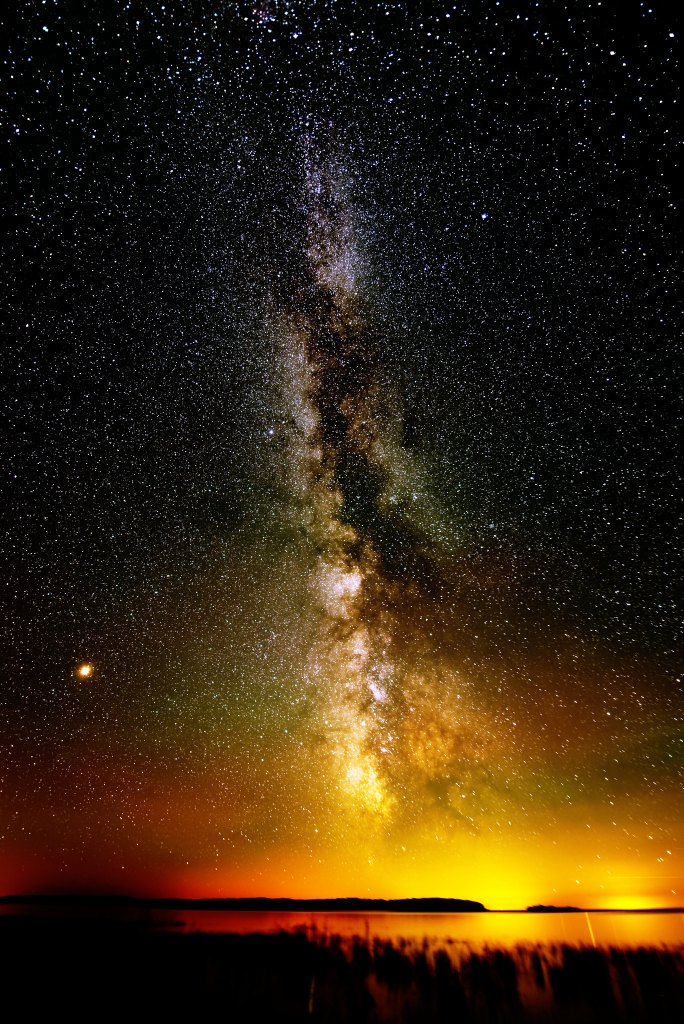
Milky Way + Mars viewed from Garden Peninsula MI by Daniel Sandin

Milky Way + Mars viewed from Garden Peninsula MI by Daniel Sandin

NASA’s Perseverance Rover will land on the surface of Mars today, Feb. 18, 2021 in a search for ancient life that will test the next generation of exploration tools:

Perseverance is the most sophisticated rover NASA has ever sent to the Red Planet, with a name that embodies NASA’s passion, and our nation’s capability, to take on and overcome challenges. It will collect carefully selected and documented rock and sediment samples for future return to Earth, search for signs of ancient microbial life, characterize the planet’s geology and climate, and pave the way for human exploration beyond the Moon.

Perseverance is also ferrying several cutting-edge technologies to the surface of Mars – including a helicopter named Ingenuity, the first aircraft to attempt powered, controlled flight on another planet.

The landing takes place just before 4 PM EST & you can watch online at NASA.

Daniel took this photo back of Mars in July of 2018 on the UP’s Garden Peninsula. See more great night photography on his Flickr & for sure check out his website – he looks like a very interesting guy!

Here’s NASA’s YouTube stream which goes live around 2 PM today.

Support Michigan in Pictures with Patreon

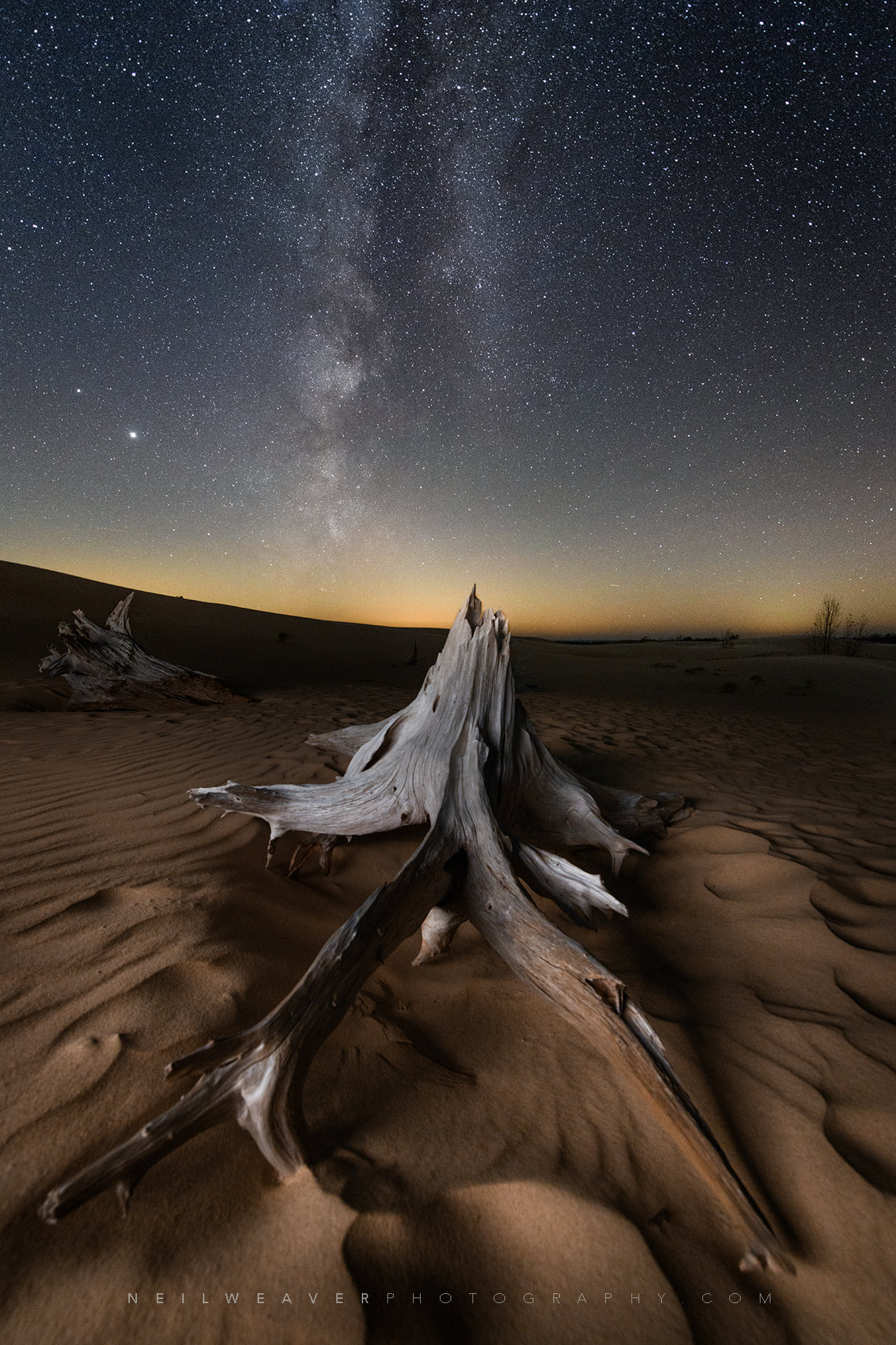
Last night at Silver Lake Sand Dunes

Last night at Silver Lake Sand Dunes by Neil Weaver

Last night at Silver Lake Sand Dunes by Neil Weaver

Neil captured this stunning shot of the galactic core of our Milky Way stretching across the night sky over Silver Lake Sand Dunes during a recent visit. Head over to neilweaverphotography.com or follow him on Facebook for more great pics!

Support Michigan in Pictures with Patreon