Michigan Meltdown

Untitled

Untitled, photo by kdclarkfarm1

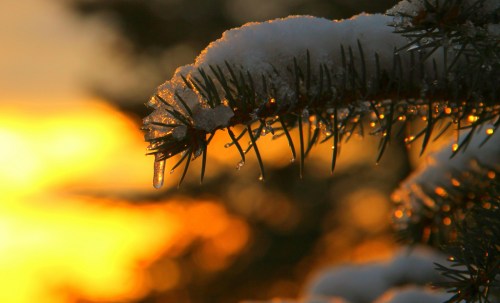
After a night of strong winds and with highs today predicted to be on the good side of 40 across much of the state today, spring is feeling almost possible.

View Diane’s photo background big and see more in her frost, snow & ice slideshow.

Spring or winter wallpaper for your computer’s background? That’s a decision only you can make…

Frozen Fruit? May freeze puts Michigan’s fruit crops in peril

Cherry Orchard ... spring snow

Cherry Orchard … spring snow, photo by Ken Scott

The National Weather Service noted that the high temperature yesterday at the Otsego County Airport in Gaylord only reached 35 degrees – a new record for the coldest high temperature for the date that crushed the previous record of 44 degrees from 2003. It was also the coldest high temperature ever recorded in the month of May for Gaylord. They notched a record snowfall of 2 inches as well, beating the old record of 1 inch from 1971.

Temperatures dipped into the 20s across the state last night. Although the word isn’t in yet about the effect those temps have had, an mLive article about the apple crop on Fruit Ridge explains:

As fruit trees begin to develop and blossom each spring, their ability to withstand cold temperatures is greatly reduced. As bloom nears, temperatures in the upper 20-degree can cause considerable damage to early blooming crop varieties.

Currently on the area’s Fruit Ridge — a band of ideal growing land northwest of Grand Rapids — several different varieties of apples are in bloom, said Armock. Also, sweet cherries are nearly past bloom in some areas, he said. Tart cherries are in the flowering stage of bloom, as well as some varieties of strawberries and blueberries.

In fact, across the state, growers have been making preparations for “potentially the largest crop of apples and cherries that we’ve ever seen,” said Armock, who estimated the 2013 crop could yield between 30 and 34 million bushels of apples this year, from Traverse City down to the state line.

Read on for more, and here’s hoping their efforts at bringing in helicopters last night paid off. After the near total destruction of the apple, tart cherry and other crops last year, it would be a hard blow to stand.

View Ken’s photo on black and see more in his massive Leelanau slideshow.


Cherry Blossom Season all across Michigan

Cherry Blossoms II

Cherry Blossoms II, photo by leelanau2010

A run of warm weather has the cherry trees in Michigan ready to blossom. Due to their pent up demand to bloom, we should see blossoms all across the state this weekend. Up here in the “Cherry Capital of the World” near Traverse City, we saw leaves pushing out over the weekend and the first buds are getting ready to burst. The same is true in Southwest Michigan.

Even better news is that despite a little flirting with the 30s expected for the coming weekend, we aren’t likely to see full-on frost in 2013. This is a welcome change from 2012 when Michigan saw near total losses across a broad range of fruit crops due to our “summer in March.”

Check David’s photo out background bigtacular and see more in his Spring 2008 in Leelanau slideshow.

More blossoms and also more spring wallpaper on Michigan in Pictures.

Sign of spring #77: Trillium in the Woods!

Trillium

Trillium, photo by karstenphoto

One of the many signs of spring in Michigan is the appearance of the endangered trillium flower in the woods. In Plant Focus: Trillium, George Papadelis of the Michigan Gardener writes that for hundreds of years, this plant and its name have been used to symbolize purity, simplicity, elegance, and beauty.

In Ohio, where all 88 counties have masses of wild trillium, it was selected as the state’s official wildflower. Its flowers have twice graced a U.S. postage stamp. Even our Canadian friends across the bridge have declared white trillium (Trillium grandiflorum) the official provincial flower of Ontario. Other parts of the world share our passionate admiration for this plant. In Europe, where trilliums are not found in nature, gardeners dedicate vast amounts of time and money acquiring them, especially rare species. In Japan, a cult-like interest has developed towards trillium.

The most readily available species is Trillium grandiflorum or white wake-robin. This has large, pure white flowers up to 5 inches across. These develop in great abundance throughout the northeastern U.S. Its flowers usually fade to a dull pink and sometimes red. Trillium erectum is a much more diverse species with flowers ranging from red to purple to yellow-green and beige. It also grows wild in the Northeast and Michigan. Trillium luteum is the most common yellow species. It originates from areas around eastern Tennessee. One of its most notable features is the beautiful dark green leaves decorated with pale green markings. The flowers are relatively small. Trillium recurvatum bears maroon-purple to clear yellow flowers with strongly curved petals.

Read on for information about how to legally grow trillium.

Check this out background bigtacular, check out his Spring slideshow and see more from Steve on Michigan in Pictures.

More spring wallpaper

Spring Bokeh

Untitled

Untitled, photo by Brooke Pennington

I refuse to give the ice storm that’s outside my door any power.

Brooke takes some great shots of flowers – check this out on black, see more in his slideshow or here on Michigan in Pictures.

More about bokeh.

Crocus kind of mood

DSC08382

DSC08382, photo by ansonredford

Crocuses have to be one of my favorite flowers. In addition to being beautiful, they are also one of the leading harbingers of spring in Michigan!

Check this out background bigtacular, get yourself in a springtime mood with Donald’s Flowers slideshow and see more of his photos on Michigan in Pictures.

More flowers on Michigan in Pictures, and if you want to be particular, here’s just the crocuses!

Maple Syrup: Not for the lazy!

Maple syrup 2

Maple syrup 2, photo by Deb Perry Studio

One of the best things about spring for my money is that it’s the one time of year that you can make maple syrup! Michigan ranks 5th in the US in maple syrup production, and the Michigan Maple Syrup Producers Association has a page about the history of maple syrup production that shows we’ve been a maple syrup player for a long time:

Native Americans have many wonderful stories about how they began making maple syrup. The first is the legend of Glooskap. Many, many, many years ago the Creator had made life much easier for man. In fact, in those days the maple tree was filed with syrup and all man had to do was cut a hole in the maple tree and the syrup dripped out. One day the young prince Glooskap (known by other names in other tribes) came upon a village of his people that was strangely silent. There were no dogs barking, no children playing, no women minding the cook fires, and no men getting ready to go hunting! Glooskap looked and looked and finally found everyone in the nearby maple grove. They were all lying at the bases of the trees and letting the sweet syrup drip into their mouths. Even the dogs were enjoying the syrup. “Get up, you people,” Glooskap called. “There is work to be done!” But no-one moved.

Now Glooskap had special powers, and he used these powers to make a large bark container. He flew to the lake, filled the container with water and flew back to the maple grove. When he poured the water over the trees it diluted the syrup so it was no longer sweet. ”Now, get up you people! Because you have been so lazy the trees no longer hold syrup, but only sap. Now you will have to work for your syrup by boiling the sap. What’s more, the sap will soon run dry. You will only be able to make syrup in the early spring of the year!”

…The Chippewas and Ottawas of Michigan tell a similar story of the god NenawBozhoo, who cast a spell on the sugar maple tree many moons ago, turning the near pure syrup into what is now called sap. He did this because he loved his people and feared they would become indolent and destroy themselves if nature’s gifts were given too freely. This legend is unique in that, in various forms, it can be found almost universally throughout the Eastern Woodland Indian tribes. This is unusual for cultures that did not have a written history.

Read on for more about how the process and techniques have evolved through the years. Michigan in Pictures has a ton of photos documenting the process of making maple syrup. that you’ll want to check out as well!

See Deb’s photo on black and see how it fits together in her maple syrup slideshow.

Spring in a drop of water

Untitled

Untitled, photo by ~Abby

I feel certain that spring is about to break over us in a warm & refreshing way … I just wish I hadn’t felt this way for 3 weeks.

Check it out on black and see more in Abby’s Water slideshow.

More spring on Michigan in Pictures!

Spring Return: Eastern Redbud

I'll Return With Spring

I’ll Return With Spring, photo by MightyBoyBrian

On AnnArbor.com Rick Meader writes:

When you think about popular, colorful ornamentals, Eastern Redbud (Cercis canadensis) often comes to mind. It’s a real crowd-pleaser, with a graceful, ornamental shape that puts out a “bouquet on a stem” look, with thousands of tiny pink/purple flowers lining its branches in early spring before its leaves emerge.

And, the best thing about it is, it’s native to southern Michigan, as well as most of the eastern half of the United States south of here. Furthermore, as a member of the Pea family (Fabaceae) it’s a cousin to the previous pod-producers we’ve learned about, Honeylocust (Gleditsia triacanthos) and Kentucky Coffeetree (Gymnocladus dioica).

As mentioned before, Eastern redbud is native to southern Michigan, occurring naturally up to a line across the lower peninsula from Kent County to Genesee County.

…If you want to use it in your landscape, it is fairly flexible in terms of where it will grow. It naturally occurs in rich soil along stream and river banks but is tolerant of a wider range of conditions. It likes sun or partial shade and can do well in most soils except waterlogged soils and dry, sandy soils.

Read on for more including Rick’s advice to make sure your tree comes from a northern nursery because trees from southern nurseries often are killed off by Michigan’s cold winters.

Brian’s photo is the first background we selected for the new Absolute Michigan, and  as you can see from past features of his work on Michigan in Pictures, he’s a really talented photographer who uploads big enough for backgrounds. See this shot from April of last year background bigilicious and see more in his Nature slideshow.

More spring wallpaper on Michigan in Pictures!

The crocuses are coming, the crocuses are coming!

The crocuses are coming, the crocuses are coming!

The crocuses are coming, the crocuses are coming!, photo by Alissa Holland

Felt a little bad for failing to post anything about the spring equinox this year. As we are still under a blanket of snow up here in Traverse City and since I shared this hopeful sign, maybe I get a pass?

Alissa took this last Saturday, and she cautions you not to mistake the background for sky – it’s snow! See it on black and get your garden on in her how my  garden grows slideshow.

More Michigan spring on Michigan in Pictures.