
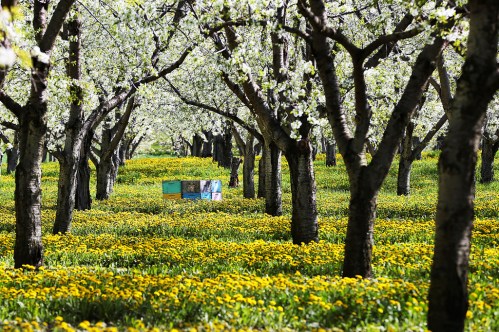
Blossoms & Bees, photo by Lee Lynn Awe
View Lee Lynn’s photo background bigtacular and see more in her slideshow.
More spring wallpaper on Michigan in Pictures.
Blossoms & Bees, photo by Lee Lynn Awe
View Lee Lynn’s photo background bigtacular and see more in her slideshow.
More spring wallpaper on Michigan in Pictures.

Miners Castle, with ice and kayaks, photo by Ann Fisher
The Washington Post has a feature on Lake Superior’s stubborn ice cover:
As of Memorial Day, ice covered 4.5 percent of Lake Superior according to NOAA, and 1.7 percent of the Great Lakes overall (though Superior is the only lake with remaining ice). The recent Great Lakes ice cover is unrivaled in records dating back to the early 1970s.
Ice cover the Great Lakes has been way above normal and, at times record-setting, for months.
In early March this year, the Great Lakes ice extent reached 94.19%, the second most on record for any month, dating back to 1973 in NOAA’s dataset, and most on record so late in the season. In late April, ice still covered nearly one-third of the Great Lakes, the most on record by a large margin so late into spring.
Click through for some photos of people enjoying the ice.
Ann took this last weekend at Miners Castle in the Pictured Rocks National Lakeshore. How cold is that water right now? Michigan Sea Grant’s Coastwatch for the central UP shore of Lake Superior recorded a balmy 36.7 degrees on May 25th!!
View Ann’s photo big as Lake Superior and see more in her 2014 U.P. slideshow.
There’s more Miners Castle and more Lake Superior wallpaper on Michigan in Pictures.
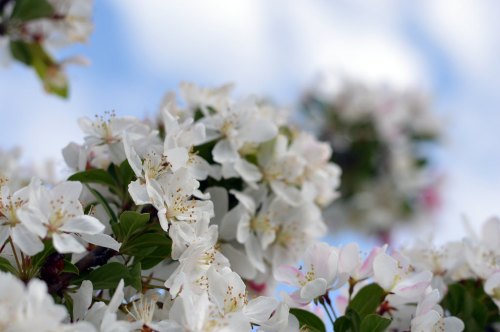
White Blossoms, photo by cncphotos
In addition to Michigan in Pictures, I run the website Leelanau.com. The most common question this time of year over there is “When will cherry blossoms be out?” Although this year has been slow going, I was out and about yesterday and caught some of the first blooms of the season. Click that link to see them on Leelanau.com and also a pile of morels!
Visit Traverse City’s cherry blossom section says that the blossoms on the trees last on average of four to five days, but because different parts of the region bloom at different times, it’s a safe bet you can see blossoms for one to two weeks on average if you make the rounds.
View CNC’s photo background bigilicious and see more in his Spring slideshow.
Lots more blossoms and more spring wallpaper on Michigan in Pictures.
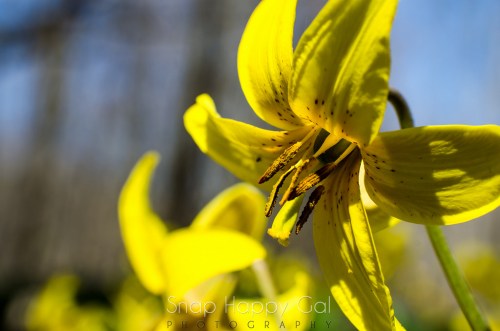
Trout lily (3 of 3), photo by Heather Higham
I love old books, and was happy to find Wild Flowers Worth Knowing by Neltje Blanchan, a 1917 book that is available online through Project Gutenberg. The entry for Yellow Adder’s Tongue; Trout Lily; Dog-tooth “Violet” (Erythronium americanum) is a good example of the descriptive & endearing turns of phrase you often find in books from another age:
Flower – Solitary, pale russet yellow, rarely tinged with purple, slightly fragrant, 1 to 2 in. long, nodding from the summit of a root-stalk 6 to 12 in, high, or about as tall as the leaves. Perianth bell-shaped, of 6 petal-like, distinct segments, spreading at tips, dark spotted within; 6 stamens; the club-shaped style with 3 short, stigmatic ridges. Leaves: 2, unequal, grayish green, mottled and streaked with brown or all green, oblong, 3 to 8 in. long, narrowing into clasping petioles.
Preferred Habitat – Moist open woods and thickets, brooksides.
Flowering Season – March-May.
Distribution – Nova Scotia to Florida, westward to the Mississippi.
Colonies of these dainty little lilies, that so often grow beside leaping brooks where and when the trout hide, justify at least one of their names; but they have nothing in common with the violet or a dog’s tooth. Their faint fragrance rather suggests a tulip; and as for the bulb, which in some of the lily-kin has toothlike scales, it is in this case a smooth, egg-shaped corm, producing little round offsets from its base. Much fault is also found with another name on the plea that the curiously mottled and delicately pencilled leaves bring to mind, not a snake’s tongue, but its skin, as they surely do. Whoever sees the sharp purplish point of a young plant darting above ground in earliest spring, however, at once sees the fitting application of adder’s tongue. But how few recognize their plant friends at all seasons of the year!
Every one must have noticed the abundance of low-growing spring flowers in deciduous woodlands, where, later in the year, after the leaves overhead cast a heavy shade, so few blossoms are to be found, because their light is seriously diminished. The thrifty adder’s tongue, by laying up nourishment in its storeroom underground through the winter, is ready to send its leaves and flower upward to take advantage of the sunlight the still naked trees do not intercept, just as soon as the ground thaws.
View Heather’s photo background bigtacular and see more in her Up Close slideshow.
Many more Michigan flowers and more Spring wallpaper on Michigan in Pictures!
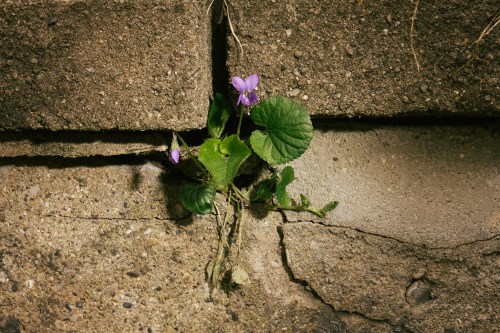
Roses are red, violets are tough, photo by Bill Dolak
View Bill’s photo background bigilicious and see more in his Flowers slideshow.
More Spring wallpaper on Michigan in Pictures.
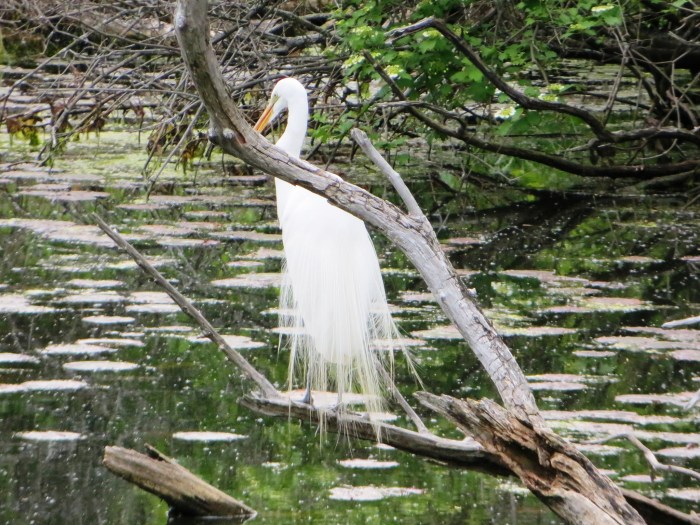
Spring Arrival, photo by Cowboy*
How the Great White Egret Inspired Bird Conservation in the Smithsonian says:
One particular group of birds suffered near extermination at the hands of feather hunters, and their plight helped awaken a conservation ethic that still resonates in the modern environmental movement. With striking white plumes and crowded, conspicuous nesting colonies, Great Egrets and Snowy Egrets faced an unfortunate double jeopardy: their feathers fetched a high price, and their breeding habits made them an easy mark.
To make matters worse, both sexes bore the fancy plumage, so hunters didn’t just target the males; they decimated entire rookeries. At the peak of the trade, an ounce of egret plume fetched the modern equivalent of two thousand dollars, and successful hunters could net a cool hundred grand in a single season. But every ounce of breeding plumes represented six dead adults, and each slain pair left behind three to five starving nestlings. Millions of birds died, and by the turn of the century this once common species survived only in the deep Everglades and other remote wetlands.
This slaughter inspired Audubon members to campaign for environmental protections and bird preservation, at the state, national and international levels. The Lacey Act passed Congress in 1900, restricting interstate transport of wild fowl and game. In 1911 New York State outlawed the sale of all native birds and their feathers, and other states soon followed suit. Passage of the Weeks-McLean Act (1913) and the Migratory Bird Act (1918) took the protections nationwide and mirrored legislation in Canada, Britain, and Europe, effectively ending the fancy-feather era.
More about Great Egrets on the UM Animal Diversity Web.
You can view Cowboy’s photo from last May background big and see more in his Animals & Wildlife slideshow.
More birds and more Spring wallpaper on Michigan in Pictures!
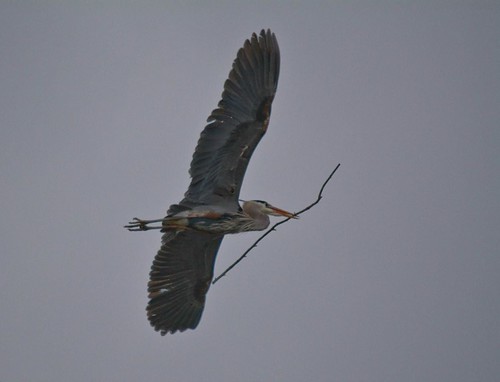
Nest Building Heron, photo by Dawn Williams
Last year I cited the Michigan Natural Features Inventory entry for Great Blue Heron Rookeries. It remains the definitive source, so I guess a rewind is in order:
The great blue herons in Michigan are largely migratory, with almost all leaving the state during the winter months. Most leave by end of October and return in early to mid-March.
The great blue heron is mostly a colonial nester, occasionally they nest in single pairs. Colonies are typically found in lowland swamps, islands, upland hardwoods and forests adjacent to lakes, ponds and rivers. Nests are usually in trees and may be as high as 98 ft. (30 m) or more from the ground. The platform like nests are constructed out of medium-sized sticks and materials may be added throughout the nesting cycle. Nests are usually lined with finer twigs, leaves, grass, pine needles, moss, reeds, or dry gras. The same nests are refurbished and used year after year…
Most great blue herons return to southern Michigan heronries in mid-March although a few may remain through the winter if there are areas of open water. Courtship and nest building commences from early April in southern Michigan to early May in the extreme northern portions of the state. Both sexes are involved in the nest building process with males primarily gathering sticks from the ground, nearby trees, or ungarded nearby nests. Males pass sticks to females who then place them on the nests.
Click to read more and you can see more on these herons at the Kensington Metropark’s annual Heron Days May 17 & 18, 2014.
View Dawn’s photo background big and see more in her slideshow.
You can read more about heron rookeries and Michigan herons and get more spring wallpaper on Michigan in Pictures.
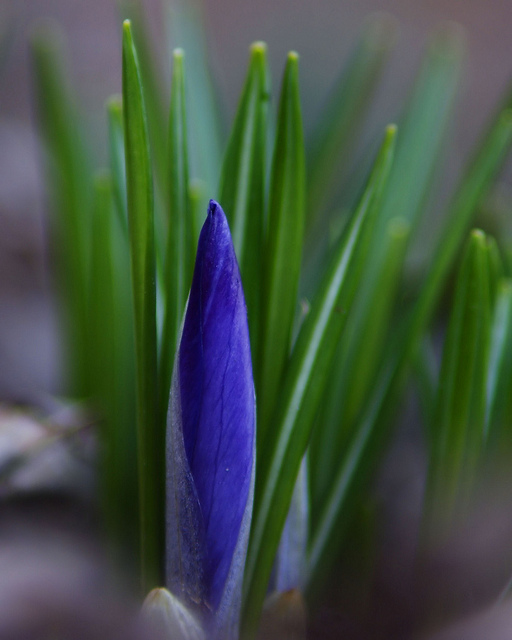
Untitled, photo by Donald Anson
By “Good Old Days” I mean April 2011.
View Donald’s photo background big and see more in his awesome Flowers slideshow.
For the flower-deprived, there’s lots more flowers and more spring wallpaper on Michigan in Pictures too!
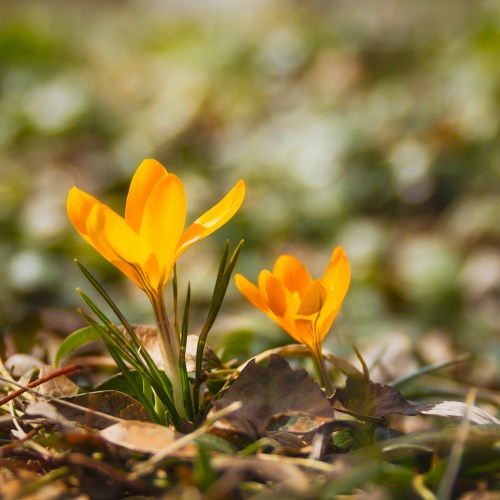
First Flowers of Spring, photo by Bill Dolak
Although this photo is from a year and two days ago, reports are starting to roll in of crocus sightings. That’s good enough for me – set a course for Spring, Warp 6!
Check it out background bigtacular and see more in Bill’s Flowers slideshow.
There’s more spring wallpaper on Michigan in Pictures and in case you were feeling wimpy after March, UpNorth Live reports that March 2014 was indeed a lion!
In the Month of March the average temperature for these cities were well below normal. March was 10 degrees below normal in Houghton Lake and 11 degrees below normal in Gaylord. This past March was the 3rd coldest on record in Alpena, and in both Gaylord and Houghton Lake it was the coldest on record!
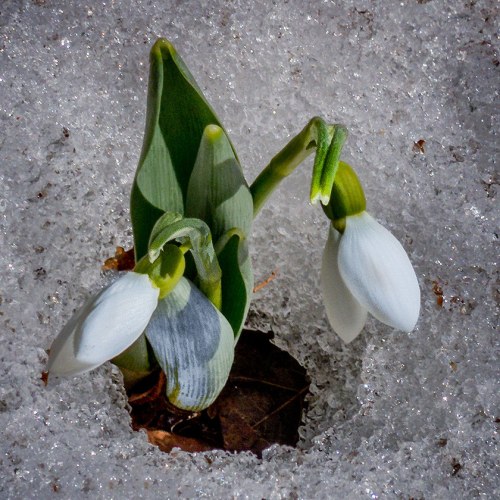
Push Up, photo by Michael in A2
Michigan Gardener’s plant focus on Snowdrops begins:
The very first bulb to cheerfully announce spring is the snowdrop. As the last winter snow melts, carpets of delicate white flowers emerge through last year’s fallen leaves. Snowdrops will reliably return year after year despite Mother Nature’s most challenging winters. The botanical name, Galanthus, comes from the Greek words Gala meaning “milk” and anthos meaning “flower.” They will thrive in the rich, moist soil usually found in the shade provided by deciduous trees. Few bulbs can tolerate shade, but snowdrops develop in the winter sun well before the leaves of trees and shrubs have expanded. Their flowers last for several weeks beginning in early March and persisting through the cool days of spring in early April. Once planted, Galanthus require no maintenance.
Read on at Michigan Gardener and bring on the spring!
View Michael’s photo background big and see more in his 2014: Flowers slideshow.
More flowers and more spring wallpaper on Michigan in Pictures.
 Michigan in Pictures
