Snow Days like the Olden Days

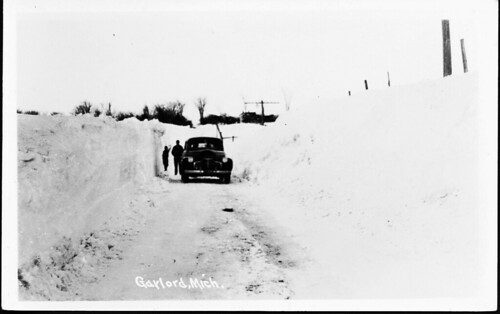
Otsego Gaylord Mi Winter Drifts in the 1940s RPPC

Otsego Gaylord Mi Winter Drifts in the 1940s, photo by UpNorth Memories – Donald (Don) Harrison

Winter 2014 has been a real throwback with many school districts already past the maximum number of snow days and no sign that winter is slowing down. Seeking Michigan has a feature on two large snowstorms in recent memory—the blizzard of January 1967 and the one in 1978 about which they say:

On January 26-27, 1978, snowstorms with fifty-to-seventy-mile per hour winds pummeled much of Michigan. Snowfall totals ranged from eighteen inches in Lansing to an incredible fifty-one inches in Traverse City. More than 100,000 cars were abandoned on roads and highways, and travel was impossible for days. Governor William G. Milliken declared a state of emergency on January 26 (See the image below.) and activated the National Guard to assist with the cleanup. The governor also requested financial assistance from the federal government and estimated damage totals to be more than $25 million, not including lost productivity from workers who were unable to get to their jobs.

Seeking Michigan is the website of the Archives of Michigan. If you’re interested in the wild & wooly side of Michigan, the Michigan Historical Museum has a special exhibit “Lake Effects: Exploring Michigan Weather” where you can learn about winters past and share stories of your winter memories. They ask that you share a favorite winter photograph on the Michigan Historical Center’s Flickr page by e-mailing it to icy27ran@photos.flickr.com with the photo title in the subject line.

View the photo background big and see more snow photos from Don & UpNorth Memories.

Winter wallpaper? We have it if winter hasn’t beaten you yet!

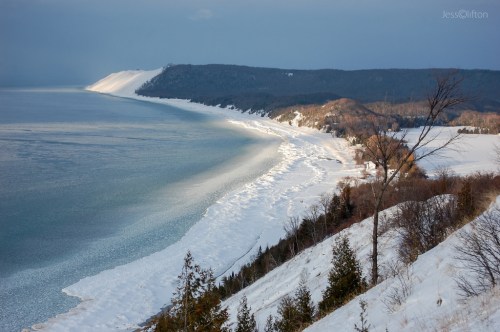
In between the dark and the light on Empire Bluffs

Sun Spill, Empire Beach

Sun Spill, Empire Beach, photo by jess_clifton

Recently Michigan in Pictures regular Jess Clifton and her family made a wintertime excursion to Empire in the heart of the Sleeping Bear Dunes National Lakeshore. She writes (in part):

At Empire, the beach was already sprinkled with about 10-15 other folks and the scene was surreal. Kids were crawling in and out of caves carved into the thick, massive ice formations built up along the water’s edge. Clouds intermittently descended and receded, offering up dramatic skies that beckoned you out.

…Once I finally convinced myself the beach was “safe” to venture out onto after watching about 14 other people successfully make the trek, I was off cresting mini ice mountains at a snails pace until I could finally peer into the water.

It was there that I finally got a sense of just how still the water was. Pancake ice floated gently on the barely breathing lake. The revelation of something so calm in such a harsh environment was almost jarring. (In a really good way.)

Read on for more and lots of stunning photos in her Why Michigan? blog.

View Jess’s photo background bigtacular and see more in her Winter in Northern Michigan slideshow. She also has a comparison photo from last year.

Lots more winter wallpaper on Michigan in Pictures.

Buried by the Polar Vortex in Michigan

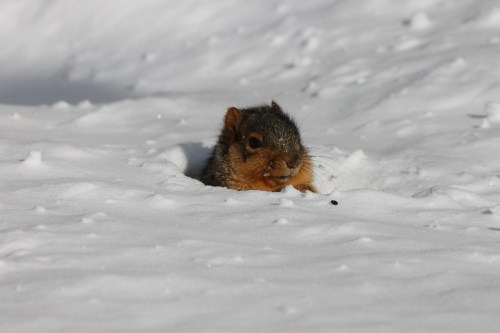
Squirrels and other pictures at the University of Michigan on an awful cold wintry day (January 6, 2014)

Squirrels and other pictures at the University of Michigan on an awful cold wintry day (January 6, 2014), photo by cseeman

If yesterday’s Michigan temps seemed chilly, today’s are worse! Ironwood is still the coldest, but they are up a few degrees at -20 (before the -33 windchill of course). Most of the rest of the state is joining them below zero this morning. Detroit and Lansing are at -11, Marquette is at -15 and Grand Rapids is at a balmy 1.6 degrees!

Dr. Jeff Masters blog on the Extreme Cold Blast at Weather Underground, the site he founded and runs in Michigan says:

The most extreme cold air outbreak since 1994 is in store for much of the U.S. on Monday and Tuesday, as Arctic air behind a major winter storm invades the Midwest. The powerful 989 mb storm blasted the Upper Midwest on Sunday, bringing snows in excess of a foot over portions of Illinois, Michigan, Indiana, Missouri, and Ohio. The 11.4″ that fell on Sunday in Indianapolis, Indiana made it that city’s second snowiest day on record (the all-time record: 12.1″ on March 19, 1906); Flint, Michigan also recorded its second snowiest day on record: 14.5″ (the all time record: 15.0″ on November 28, 1937.) … The high temperature in Detroit on Tuesday is expected to remain below zero; the city’s list of days with a high temperature below zero is a short one, with only three such days in recorded history. The frigid air is being propelled by strong Arctic winds of 15 – 25 mph, which will generate dangerously low wind chill readings in the -30° to -60°F range from Michigan to Minnesota on Monday and Tuesday.

In the winter, the 24-hour darkness over the snow and ice-covered polar regions allows a huge dome of cold air to form. This cold air increases the difference in temperature between the pole and the Equator, and leads to an intensification of the strong upper-level winds of the jet stream. The strong jet stream winds act to isolate the polar regions from intrusions of warmer air, creating a “polar vortex” of frigid counter-clockwise swirling air over the Arctic. The chaotic flow of the air in the polar vortex sometimes allows a large dip (a sharp trough of low pressure) to form in the jet stream over North America, allowing the Arctic air that had been steadily cooling in the northern reaches of Canada in areas with 24-hour darkness to spill southwards deep into the United States. In theory, the 1.5°F increase in global surface temperatures that Earth has experienced since 1880 due to global warming should reduce the frequency of 1-in-20 year extreme cold weather events like the current one. However, it is possible that climate change could alter jet stream circulation patterns in a way that could increase the incidence of unusual jet stream “kinks” that allow cold air to spill southwards over the Eastern U.S., a topic I have blogged about extensively, and plan to say more about later this week.

Read on for more and to see a shot of Jeff shoveling 14″ off his metro Detroit roof!

Corey took this shot on the campus of the University of Michigan. View it background big and see more in his massive Squirrels of the Univ. of Michigan slideshow.

PS: Curiously enough, there’s a Campus Squirrels photo group on Flickr.

Michigan in the Deep Freeze

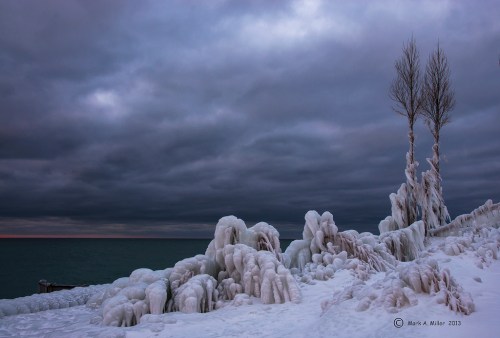
Icy Evening

Icy Evening, photo by GLASman1

Some of the coldest air in decades has moved into Michigan, producing morning temps in the low teens to single digits and packing windchills over -20! The lowest temp? Ironwood in the western UP at -26! The weather has closed schools in much of the state and has every news outlet and the Michigan State Police warning you about the extreme conditions.

The Freep is reporting snowfall totals of 13 inches of snow in Holly and Waterford, more than 16 inches on the ground in Flint and 17 inches of snow in Clarkston as of just after midnight last night! They also have a collection of photos sent in by metro residents.

Weather Underground’s winter storms page has Winter Storm Ion page that will be a good resource for looking back.

mLive has a nice collection of storm information. Meteorologist Mark Torregrossa says that lower Michigan will take the brunt of the snowfall, anywhere from 5-11 inches! They also have some tips for dealing with the extreme cold.

If you live in west Michigan, you may remember the blizzard of January 6, 1999 which dumped 30 inches of snow!

Mark’s photo was taken at Point Betsie lighthouse in January of 2012 and is also the latest cover on the Michigan in Pictures Facebook. You can view it bigger and see more in his Pte Betsie Lighthouse slideshow.

It doesn’t get more winter than this

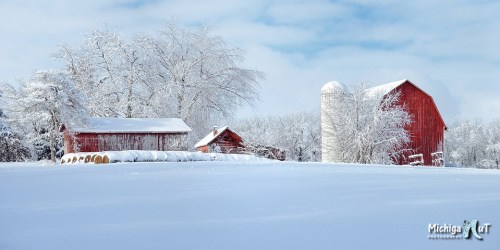
Fresh Winter snow on a historic Michigan Farm

Fresh Winter snow on a historic Michigan Farm, photo by Michigan Nut

John writes: We were treated to 8 inches of new snow in lower Michigan over the last two days. This farm is a couple of miles from us here in Montcalm county. View his photo bigger and see lots more in his Winter slideshow.

More barns on Michigan in Pictures.

Don’t look back, winter might be gaining on you

IMG_9393

Untitled, photo by JerryPHD

Check Jerry’s photo out background bigilicious and see more in his slideshow.

More winter wallpaper on Michigan in Pictures.

White Christmas dreams will come true in Michigan!

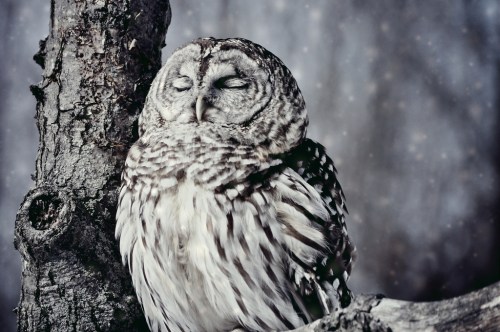
I'm Dreaming Of A White Christmas!

I’m Dreaming Of A White Christmas!, photo by Spring Noel

mLive meteorologist Mark Torregrossa makes the question of whether we’ll have a white Christmas or not pretty simple, saying: “If you will be in Michigan this Christmas, your dream of a white Christmas will come true – wherever you are.” Read on for his detailed forecast.

Alert readers will note the first back-to-back owling in Michigan in Pictures history. What can I say? This shot of a barred owl is simply perfect!!

View Spring’s photo bigger and see more in her Birds of Prey slideshow.

More birds on Michigan in Pictures.

Snowfall, with Color

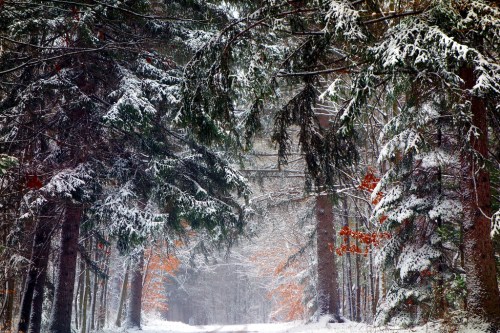
Snowfall With Color

Snowfall With Color, photo by Mark Oliver Photos

Mark took this in the Proud Lake Recreational Area near Milford last December. Check it out bigger and see more in his great Michigan slideshow.

More parks on Michigan in Pictures!

The Beauty of My Nemesis: Snowflake Edition

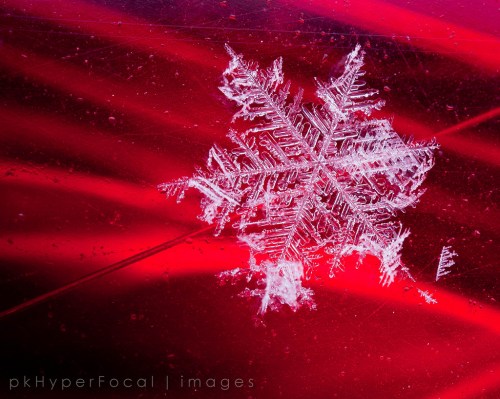
The Beauty of My Nemesis

The Beauty of My Nemesis, photo by pkHyperFocal

Waaaay back when I started out on the capital “I” Internet with an online publication called the Northern Michigan Journal. For over five years I edited NMJ, producing around 4 issues a year that featured some interesting work from a wide range of writers & artists.

Two of these were my friends Jerry Dennis and Glenn Wolff, a writer/artist duo who collaborated on several books.  Their first was called It’s Raining Frogs & Fishes: Four Seasons of Natural Phenomena and Oddities of the Sky, a fascinating romp through the oddities and beauties of the natural world through Jerry’s captivating prose and Glenn’s engaging drawings. You can click that link to learn more about the book from Jerry’s website. Trust me, it’s the perfect gift for the nature lover or scientist in your life!

Glenn & Jerry shared a chapter from the book with me that I published to the inaugural issue of NMJ. Here’s the beginning of Nature Baroque: Snowflakes & Crystals:

There is more to the birth of a snowflake than Aristotle’s assertion that “when a cloud freezes there is snow.” Snow is not merely frozen rain. Rain occasionally freezes, falling to the ground as sleet or freezing rain, but snow originates independent of atmospheric drops of water. Individual ice crystals for high in the atmosphere when water vapor freezes around dust or other particulates. Without particles to serve as condensation nuclei, water vapor can be cooled to -40 degrees Fahrenheit before freezing occurs. A supercooled cloud of this sort seeded with a few particles often escalates into a snowstorm. The individual crystals collect additional molecules of water vapor one at a time, building on one another symmetrically in a rapidly growing, widening circle. Temperature, wind, humidity, and even barometric pressure will determine the growth and ultimate form of the crystal. Large and elaborate crystals for at higher temperatures and humidity while, while the small, basic crystals such as those common in polar regions form when temperature and humidity are very low. As the crystals fall they bump against each other, breaking off pieces of ice that in turn serve as nuclei for new crystals. As they pass through warmer layers of air they adhere to one another, congregating into snowflakes that may contain a thousand or more crystals.

Snowflakes, then, are aggregates of snow crystals. When the temperature is near or slightly above freezing, snowflakes become wet, adhere to other flakes, and grow to two or three inches in diameter. On very rare occasions, they can grow larger yet. According to a report in a 1915 issue of Monthly Weather Review, a snowfall on January 28, 1887 dropped flakes “larger than milk pans,” measuring fifteen inches in diameter by eight inches thick across several square miles near Fort Keogh, Montana.

Only when the temperature remains consistently below freezing will complete, individual crystals fall to the ground. If the temperature of the cloud they form in and the air they descend through is warmer than 27 degrees Fahrenheit, the crystals tend to be flat and hexagonal. Between 27 and 23 degrees, they tend to be needle-shaped. Between 23 and 18 they are likely to be hollow and columnar, with prismatic sides. At temperatures below 18 they can be columnar, hexagonal, or fernlike. Virtually all have six sides. That hexagonal tendency is something of a mystery, although some scientists suggest it is produced by electrical charges in the crystals, while others say it is basic to the molecular structure of water molecules. The atoms in a molecule of H20 are arranged, in physicist Hans C. von Baeyer’s graphic description, “with two little hydrogens stuck onto a big oxygen like ears on a Mickey Mouse’s head.” Scientists like von Baeyer believe that the angle at which the hydrogen molecules protrude from the oxygen atom–about 120 degrees–causes snow crystals to grow to a six-pointed symmetry that repeats the molecular structure of water.

Read on for much more including whether or not two snow crystals are alike, heavy snowfalls and snow words & myths.

View this photo background bigtacular and see more in pk’s really, really cool Chromatic Progression slideshow.

More snow, sciencewinter wallpaper on Michigan in Pictures!

Early Start for the 2013 Michigan Ski Season!

1126130-winchcat-crystal-mountain

New Cat on Buck, photo by Crystal Mountain Resort

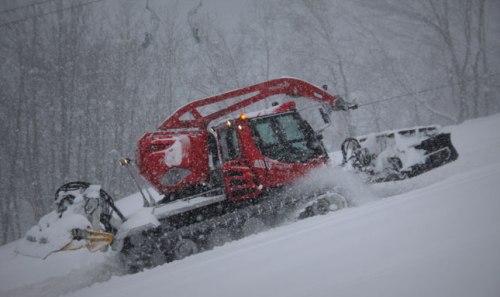
While the blizzardy blowing going on this morning in northern Michigan and the U.P. isn’t the best for “over the rivering”, it is ensuring that Many of Michigan’s ski resorts get to enjoy their earliest opening date in tears with plenty of white gold!

If you’re looking to check out Michigan’s ski scene, head over to goskimichigan.com from the Michigan Snowsports Industries Association. They have updates from Michigan ski resorts on snow conditions & planned opening dates. Their Discover Michigan Skiing program will give you a beginner lesson, ski or snowboard rental equipment and a beginner-area ski lift pass or cross-country trail pass at 23 Michigan ski facilities! It’s available through January 31 and costs just $20 for cross-country skiing, $30 for downhill skiing and $40 for snowboarding. While you’re there, check Cold Is Cool – a promotion that gives every Michigan 4th Grader FREE skiing at participating Michigan resorts.

This photo from yesterday (Nov 26, 2013) shows Crystal Mountain’s new PistenBully Winch Cat roaring up the ski hill “Buck” – they open for skiing and riding Thanksgiving Day! Stay up to date with their ski & snow report.

More Michigan skiing on Michigan in Pictures!