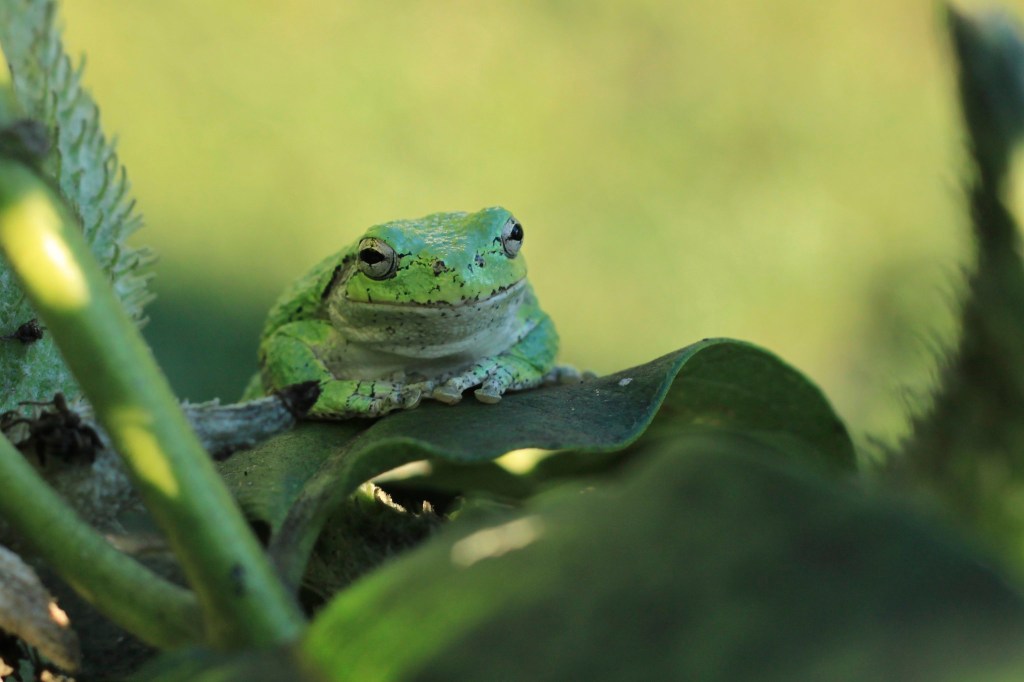
Frog saunas will make it easier to be a frog!

It ain’t easy… by Steven Karsten

Here is an excellent update about the fungus that has been devastating frog populations since long before I shared this photo & news of chytridiomycosis back in 2011! Earth.com reports that on a new way to save frogs in Michigan & worldwide from the chytrid fungal infection. The fungus driven 90 frog species to extinction or presumed extinction in the wild and reduced the number of another 124 species by over 90%. Dr. Anthony Waddle of Macquarie University‘s Applied BioSciences (Australia) explains:

“In the 25 years since chytrid was identified as a major cause of the global collapse of amphibian populations, our results are the first to provide a simple, inexpensive and widely applicable strategy to buffer frogs against this disease,” said Dr. Waddle.

The researchers developed artificial ‘hotspot’ shelters using readily available materials like bricks and PVC greenhouses. These structures create warm environments where frogs can raise their body temperature to levels that are uncomfortable for the chytrid fungus.

“In these simple little hotspots, frogs can go and heat up their bodies to a temperature that destroys the infections,” explained Dr. Waddle. It’s like a natural antibiotic treatment, but instead of popping pills, the frogs just need to bask in their personal saunas.

The results were remarkable. When frogs shifted to these hotspot shelters, chytrid infections were reduced significantly. This simple intervention could have far-reaching benefits for amphibian conservation efforts worldwide.

Lots more at Earth.com, and since Michigan’s 13 species of frogs & toads are not immune, fingers (and flippers) crossed that this works!!

Though Steven titled this It ain’t easy… he wrote actually, on this day, it seemed pretty easy being green. This guy was eating fly after fly as I snapped away. Must’ve had 5-6 flies in about as many minutes. He looked like lack of food was not an issue.

See more of his photos on Flickr & more frogs on Michigan in Pictures!

Support Michigan in Pictures with Patreon

Hurricane Beryl bringing a different rainstorm to Michigan

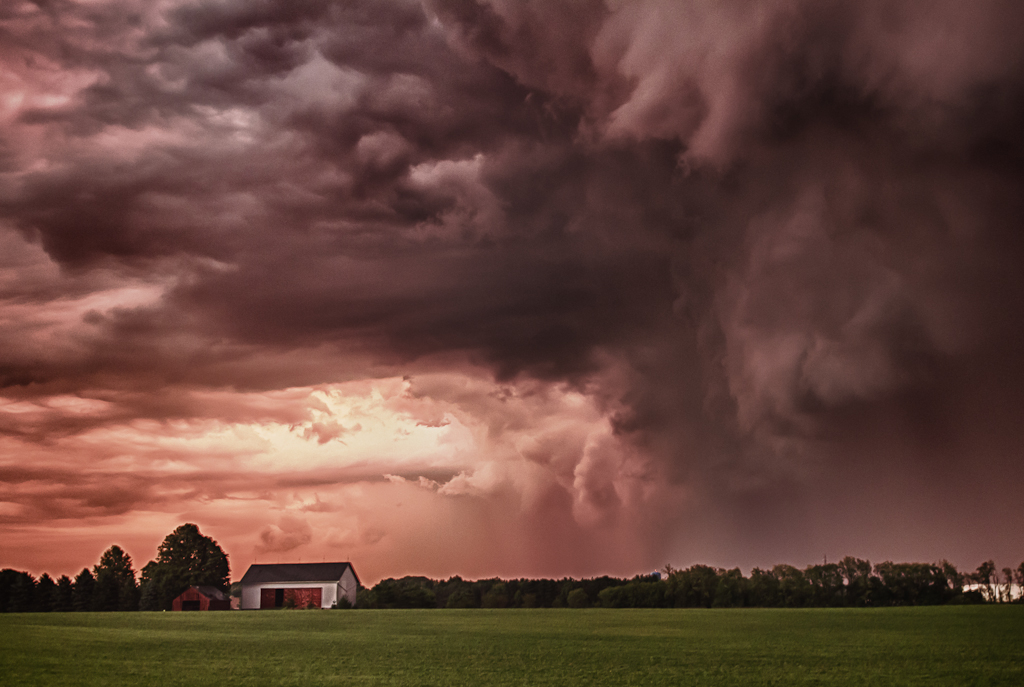
Another Angry Sky by Jeremy Vohwinkle

Another Angry Sky by Jeremy Vohwinkle

Beryl is the earliest category 5 hurricane since we classifying them 100 years ago & a pretty clear indication that climate change continues apace. Since we’ve all probably formed an opinion on that which can’t be changed, how about some other science? mLive meteorologist Mark Torrregrossa shares that the storms in Michigan due to Hurricane Beryl are NOT your ordinary rainstorms:

Tropical rain such as the heavy rain we are having tonight and Wednesday originates from a different part of the globe compared to most all other rains in Michigan. The rain now has some moisture in it from Africa, the Atlantic Ocean, the Gulf of Mexico and the deep southern states of the U.S. Most of our rain has moisture gathered from the air over the Pacific Ocean or the western and central United States.

…. The tropical clouds typically have a lower base, sometimes only one thousand to two thousand feet above the ground. You may feel like you can reach up and touch the clouds. Our ordinary rains would have a low base at five thousand feet and many bases are higher than five thousand feet.

…Now think about the different things that can be in a raindrop from Africa and the tropics. I haven’t seen any actual research on this but tropical rains can carry more and different nutrients within the drop. I call this rain, “the great green-up.” Look at your grass. Look at your vegetable and flower garden after the rain. If it’s not drowned out, your garden with go through robust growth this week. It will be like you fertilized it. It’s about to get nature’s “Miracle-Gro.”

Lots more in this fascinating article!

Jeremy took this way back in the summer of 2011 in Edwardsburg, way down in southwest Michigan. See more in his Landscapes gallery on Flickr & stay dry!!

Support Michigan in Pictures with Patreon

Glowing Flying Squirrels are actually a thing!

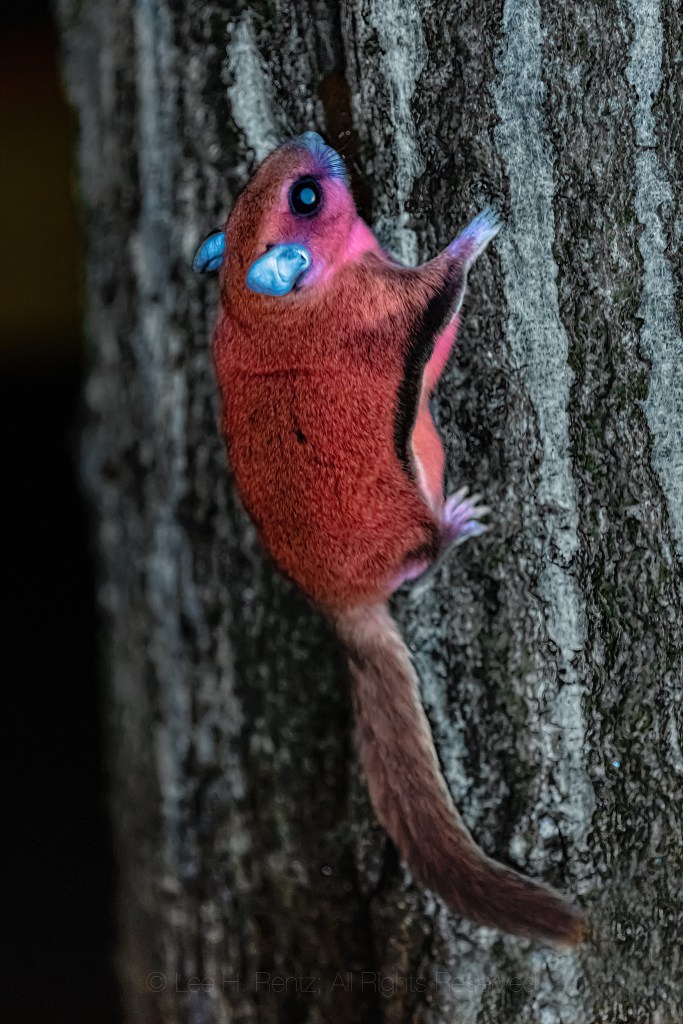
Southern Flying Squirrel Showing Biofluorescene by Lee Rentz

Southern Flying Squirrel Showing Biofluorescene by Lee Rentz

Lee’s incredibly cool shot of a southern flying squirrel exhibiting biofluorescence when illuminated by a UV light source led me to this fascinating 2019 New York Times article on the discovery of ultraviolet fluorescence in squirrels:

One spring night in Wisconsin, John Martin, a biologist, was in his backyard with an ultraviolet flashlight. Suddenly, a hot-pink squirrel flew by.

It was a southern flying squirrel, a small, furry creature most active at dawn and dusk. Under most circumstances, it has a warm brown color. But in the beam of Dr. Martin’s flashlight, it sported a gaudy Day-Glo hue closer to something you might see in a nightclub or a Jazzercise class circa 1988.

“He told his colleagues at Northland College, but of course, everyone was pretty skeptical,” said Allison Kohler, a graduate student at Texas A&M University.

Dr. Martin asked Ms. Kohler, then a student at Northland, to look into it. After examining more than 100 specimens of flying squirrels across two museum collections and spotting five more squirrels under UV light in the wild, the researchers and their colleagues reported surprising results last week in the Journal of Mammalogy: The pink is real.

…What the flying squirrels get out of it is still a mystery. Confirming that the squirrels are even capable of seeing in ultraviolet wavelengths will require additional study, Ms. Kohler said.

The researchers have some hypotheses concerning what’s behind the squirrels’ Day-Glo displays. Ultraviolet rays are abundant during the dawn and dusk periods when the squirrels are moving around. So it is reasonable to expect that the fluorescence is visible to other organisms even when there are no biologists with UV flashlights in the vicinity.

The vivid pink color might have evolved to confuse the owls who prey on the squirrels. Those birds of prey fluoresce in precisely the same hue themselves; a flying squirrel may look, superficially at least, like a flying owl.

Or, if it’s confirmed that the squirrels see UV, the color might have something to do with mating or signaling to other flying squirrels.

“It could also just be not ecologically significant to the species,” Ms. Kohler said, noting that future work will delve into the question. “It could just be a cool color that they happen to produce.”

Head over to Lee’s Flickr for more shots of this squirrel & a friend!!

PS: Can I interest you in glow in the dark mushrooms?

Support Michigan in Pictures with Patreon

The color of a mosquito bite

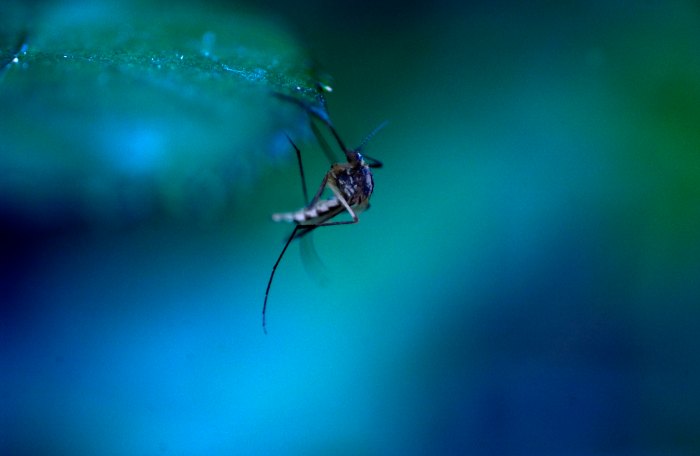
Mosquito by Stephanie

Mosquito by Stephanie

Although this study didn’t focus on our Michigan-bred mosquito, I thought you’d enjoy this article from Sci-News about how specific colors impact the feeding behavior of mosquitos:

A new University of Washington-led study shows that after detecting a telltale gas that we exhale, yellow fever mosquitoes (Aedes aegypti) fly toward specific colors, including red, orange, black and cyan, but they ignore other colors, such as green, purple, blue and white.

“Mosquitoes appear to use odors to help them distinguish what is nearby, like a host to bite,” said Professor Jeffrey Riffell, a researcher in the Department of Biology at the University of Washington.

“When they smell specific compounds, like carbon dioxide from our breath, that scent stimulates the eyes to scan for specific colors and other visual patterns, which are associated with a potential host, and head to them.”

…The researchers tracked individual mosquitoes in miniature test chambers, into which they sprayed specific odors and presented different types of visual patterns — such as a colored dot or a tasty human hand.

Without any odor stimulus, mosquitoes largely ignored a dot at the bottom of the chamber, regardless of color.

After a spritz of carbon dioxide into the chamber, mosquitos continued to ignore the dot if it was green, blue or purple in color. But if the dot was red, orange, black or cyan, mosquitoes would fly toward it.

…If the researchers used filters to remove long-wavelength signals, or had the researcher wear a green-colored glove, then carbon dioxide-primed mosquitoes no longer flew toward the stimulus.

You can read more at Sci-News & (if you’re so inclined) dig MUCH deeper into the study from Nature Communications

Stephanie took this pic 13 years ago & shares that three of this little ladies friends bit her while she was taking the photo! Thanks to Stephanie for her service & see more in her Bugs gallery on Flickr.

Support Michigan in Pictures with Patreon

The Weather & Fall Color

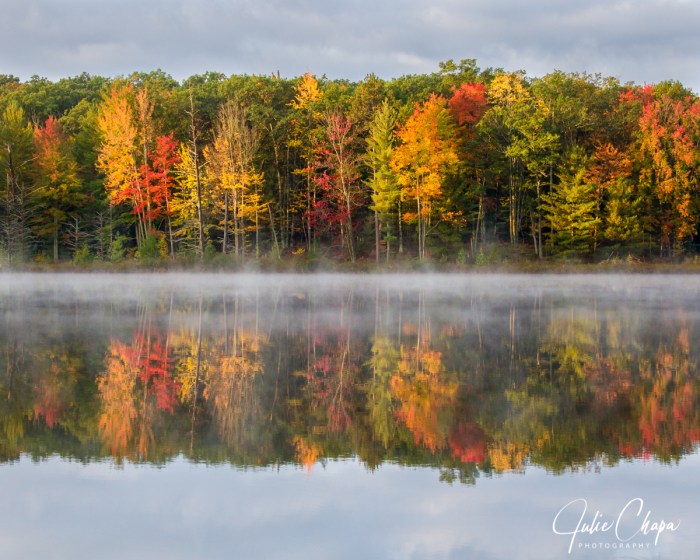
Mirror Lake in Autumn by Julie Chapa

Mirror Lake in Autumn by Julie Chapa

In their excellent article on The Science of Fall Color, the US Forest Service explains the role of the weather in the annual seasonal show:

The amount and brilliance of the colors that develop in any particular autumn season are related to weather conditions that occur before and during the time the chlorophyll in the leaves is dwindling. Temperature and moisture are the main influences.

A succession of warm, sunny days and cool, crisp but not freezing nights seems to bring about the most spectacular color displays. During these days, lots of sugars are produced in the leaf but the cool nights and the gradual closing of veins going into the leaf prevent these sugars from moving out. These conditions – lots of sugar and light – spur production of the brilliant anthocyanin pigments, which tint reds, purples, and crimson. Because carotenoids are always present in leaves, the yellow and gold colors remain fairly constant from year to year.

The amount of moisture in the soil also affects autumn colors. Like the weather, soil moisture varies greatly from year to year. The countless combinations of these two highly variable factors assure that no two autumns can be exactly alike. A late spring, or a severe summer drought, can delay the onset of fall color by a few weeks. A warm period during fall will also lower the intensity of autumn colors. A warm wet spring, favorable summer weather, and warm sunny fall days with cool nights should produce the most brilliant autumn colors.

Julie took this photo at a small lake near Fife Lake back in 2014. See more in her Michigan gallery & follow Julie Chapa Photography on Facebook.

TONS more fall color on Michigan in Pictures!

Support Michigan in Pictures with Patreon

Scientists now know what causes the northern lights!

Thanks by Julie

Thanks by Julie

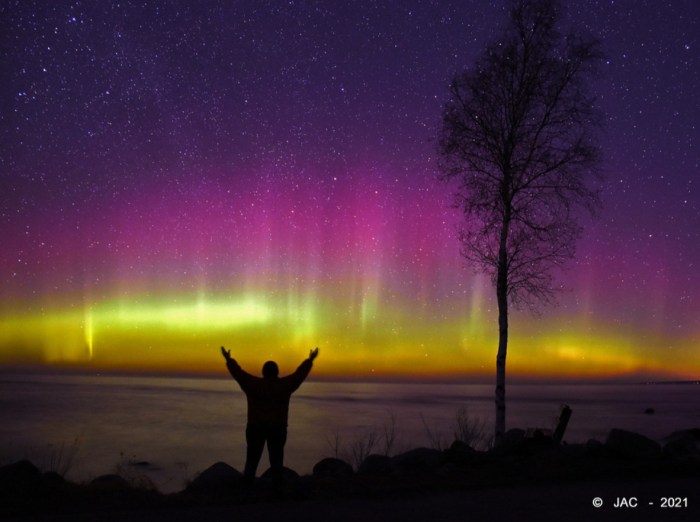
NPR reports that scientists have finally confirmed the source of the Northern Lights:

An article published in the journal Nature Communications this week suggests that the natural light show starts when disturbances on the sun pull on Earth’s magnetic field. That creates cosmic undulations known as Alfvén waves that launch electrons at high speeds into Earth’s atmosphere where they create the aurora.

“It was sort of theorized that that’s where the energy exchange is occurring,” said Gregory Howes, associate professor of physics and astronomy at the University of Iowa. “But no one had ever come up with a definitive demonstration that the Alfvén waves actually accelerate these electrons under the appropriate conditions that you have in space above the aurora.”

The sun is volatile, and violent events there such as geomagnetic storms can echo out into the universe. In some cases, the sun’s disturbances are so strong that they yank on the Earth’s magnetic field like a rubber band, pulling it away from our planet.

But, like a taut rubber band when it’s released, the magnetic field snaps back, and the force of that recoil creates powerful ripples known as Alfvén waves about 80,000 miles from the ground. As those waves get closer to Earth, they move even faster thanks to the planet’s magnetic pull.

…”Think about surfing,” said Jim Schroeder, an assistant physics professor at Wheaton College and the article’s lead author. “In order to surf, you need to paddle up to the right speed for an ocean wave to pick you up and accelerate you, and we found that electrons were surfing. If they were moving with the right speed relative to the wave, they would get picked up and accelerated.”

When the electrons reach Earth’s thin upper atmosphere, they collide with nitrogen and oxygen molecules, sending them into an excited state. The excited electrons eventually calm down and release light, which is what we see as the aurora.

More at NPR.

Julie took this celebratory photo back in March. See more in her massive Michigan gallery on Flickr & keep your eyes on the skies!!

More Northern Lights on Michigan in Pictures.

Support Michigan in Pictures with Patreon

Moons Big & Small: Perigee & Apogee Moons

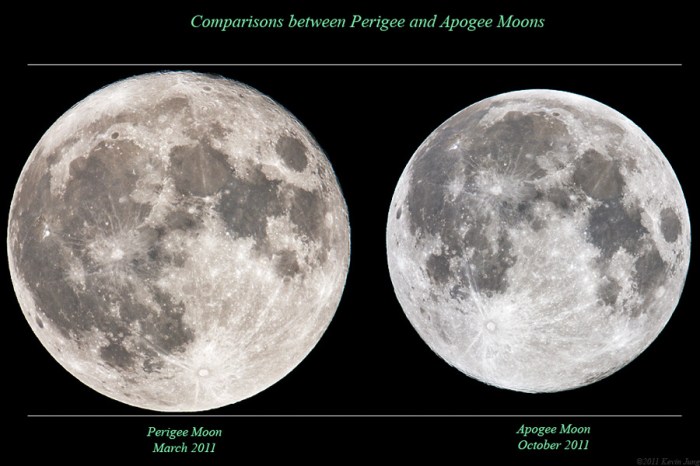
A comparison of the perigee and apogee Moons of 2011.

Moons Big and Small, photo by Kevin

Last night I learned that the full moon was at apogee, and with all the love I’ve given to supermoons, I figured that I should throw a bone to the tiny ones as well. Kevin is a regular on Michigan in Pictures with his stunning photos of the night sky. He made a comparison of the perigee and apogee Moons of 2011 and shared this explanation:

The Full Moon of October 2011 was near apogee, which is the furthest point in the Moon’s orbit of the Earth. Back in March, you may recall, the Moon was at it’s closest point in its orbit to Earth, and the media dubbed it the “Supermoon.”

According to several sources, the difference in size between the March Full Moon and the October Full Moon is 12.3%. Why is there such a difference, you may ask?

Well, the Moon’s orbit around the Earth is elliptical, just as the Earth’s is around the Sun. That means that as the object – the Moon in this case – orbits the “parent” object (the Earth) it will never be the same distance away.

The image I put together shows the difference between the size of the Moon at perigee (March 2011) and apogee (October 2011). This comparison makes the size difference quite clear.

Kevin adds that both images of the Moon were taken with exactly the same equipment. View it bigger and see more in his massive The Moon slideshow.

PS: This full moon is the strawberry moon, and you can click that link for more about that and (unsurprisingly) a photo from Kevin!

Dance of Light, March of Science

Dance of Light, photo by Eric Hackney

“Nothing in life is to be feared, it is only to be understood. Now is the time to understand more, so that we may fear less.”
― Marie Curie

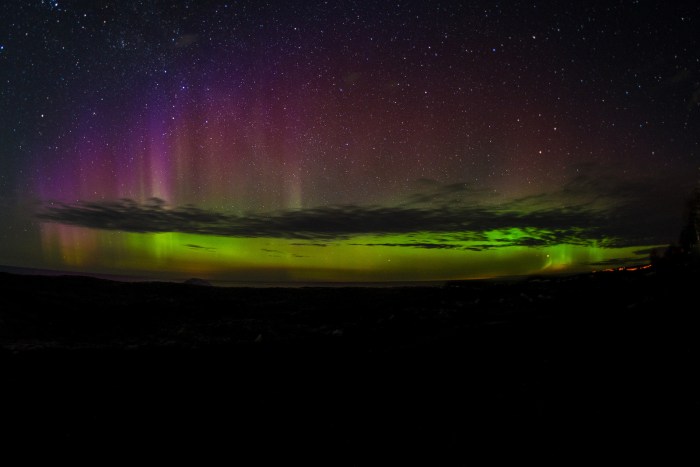
The NOAA/NWS Space Weather Prediction Center (SWPC) has forecast a G2 level storm for tonight, which may very well produce Northern Lights! The SWPC is an invaluable scientific resource that is wholly produced by our tax dollars. In addition to letting us know when northern lights are possible, the SWPC helps to maintain our modern communication grid when the Sun gets a little extra exuberant.

It’s my heartfelt belief that one of the duties of our government is to work to make our country the leader in scientific advancement. As threats in public health, the environment, and a host of other realms increase, we need to be investing much more in science, not less.

To any who are participating in any of the 15 local Science Marches in Michigan today, the March for Science in Washington DC, or anywhere else, I salute you.

View Eric’s photo bigger and see more in his Personal Favorites slideshow.

PS: Happy Earth Day everyone.

22-Degree Radius Halo

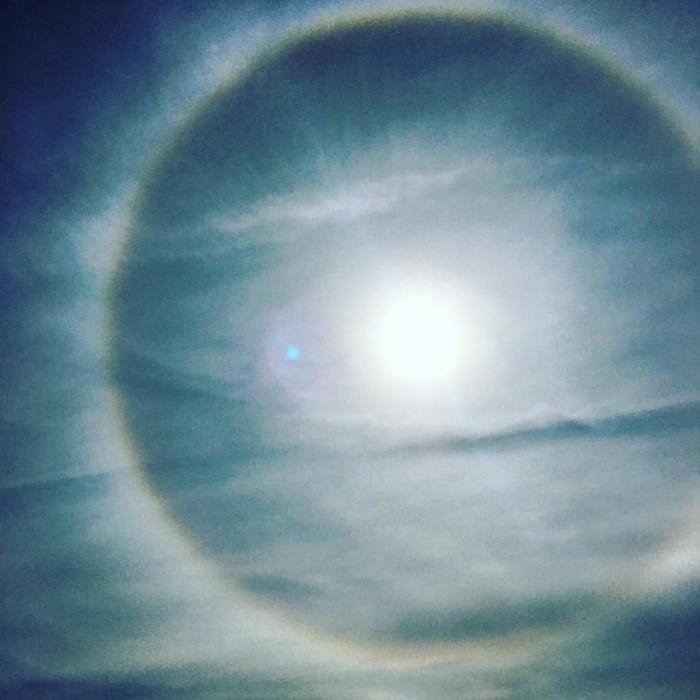
22 degrees at Van’s Beach, photo by Andrew McFarlane

Atmospheric Optics is an excellent resource for rainbows and similar phenomena. Their page on 22-degree halos says:

22º radius halos are visible all over the world and throughout the year. Look out for them (eye care!) whenever the sky is wisped or hazed with thin cirrus clouds. These clouds are cold and contain ice crystals in even the hottest climes.

The halo is large. Stretch out the fingers of your hand at arms length. The tips of the thumb and little finger then subtend roughly 20°. Place your thumb over the the sun and the halo will be near the little finger tip. The halo is always the same diameter regardless of its position in the sky. Sometimes only parts of the complete circle are visible.

Much smaller coloured rings around the sun or moon are a corona produced by water droplets rather than ice crystals.

Lots more at Atmospheric Optics!

See the photo bigger and view more on my Instagram.

More rainbows, sundogs, etc. on Michigan in Pictures – seriously cool stuff in here folks!

The science behind the magic: Fall color explained

yellow-glory-by-scottie

Untitled, photo by Scottie

The Science of Color in Autumn Leaves from the United States National Arboretum is such an excellent explanation of the science behind the magic of Michigan’s fall color show that I try and share it every year:

The process that starts the cascade of events that result in fall color is actually a growth process. In late summer or early autumn, the days begin to get shorter, and nights are longer. Like most plants, deciduous trees and shrubs are rather sensitive to length of the dark period each day. When nights reach a threshold value and are long enough, the cells near the juncture of the leaf and the stem divide rapidly, but they do not expand. This abscission layer is a corky layer of cells that slowly begins to block transport of materials such as carbohydrates from the leaf to the branch. It also blocks the flow of minerals from the roots into the leaves. Because the starting time of the whole process is dependent on night length, fall colors appear at about the same time each year in a given location, whether temperatures are cooler or warmer than normal.

During the growing season, chlorophyll is replaced constantly in the leaves. Chlorophyll breaks down with exposure to light in the same way that colored paper fades in sunlight. The leaves must manufacture new chlorophyll to replace chlorophyll that is lost in this way. In autumn, when the connection between the leaf and the rest of the plant begins to be blocked off, the production of chlorophyll slows and then stops. In a relatively short time period, the chlorophyll disappears completely.

This is when autumn colors are revealed. Chlorophyll normally masks the yellow pigments known as xanthophylls and the orange pigments called carotenoids — both then become visible when the green chlorophyll is gone. These colors are present in the leaf throughout the growing season. Red and purple pigments come from anthocyanins. In the fall anthocyanins are manufactured from the sugars that are trapped in the leaf. In most plants anthocyanins are typically not present during the growing season.

As autumn progresses, the cells in the abscission layer become more dry and corky. The connections between cells become weakened, and the leaves break off with time. Many trees and shrubs lose their leaves when they are still very colorful. Some plants retain a great deal of their foliage through much of the winter, but the leaves do not retain their color for long. Like chlorophyll, the other pigments eventually break down in light or when they are frozen. The only pigments that remain are tannins, which are brown.

The explain that because the starting time of the whole process is dependent on night length, fall colors appear at more or less the same time every year and are not overly dependent on temperature, rainfall or other factors, other than the fact that weather can shorten or prolong the show by stripping leaves from trees.

Click through to the US Arboretum for more and also see Fall & Fuit from the Science of Color!

View Scotties’ photo bigger and see more in his Infrared slideshow.

Tons more fall photos on Michigan in Pictures!