Michigan Ice Fest is taming frozen falls in the Upper Peninsula

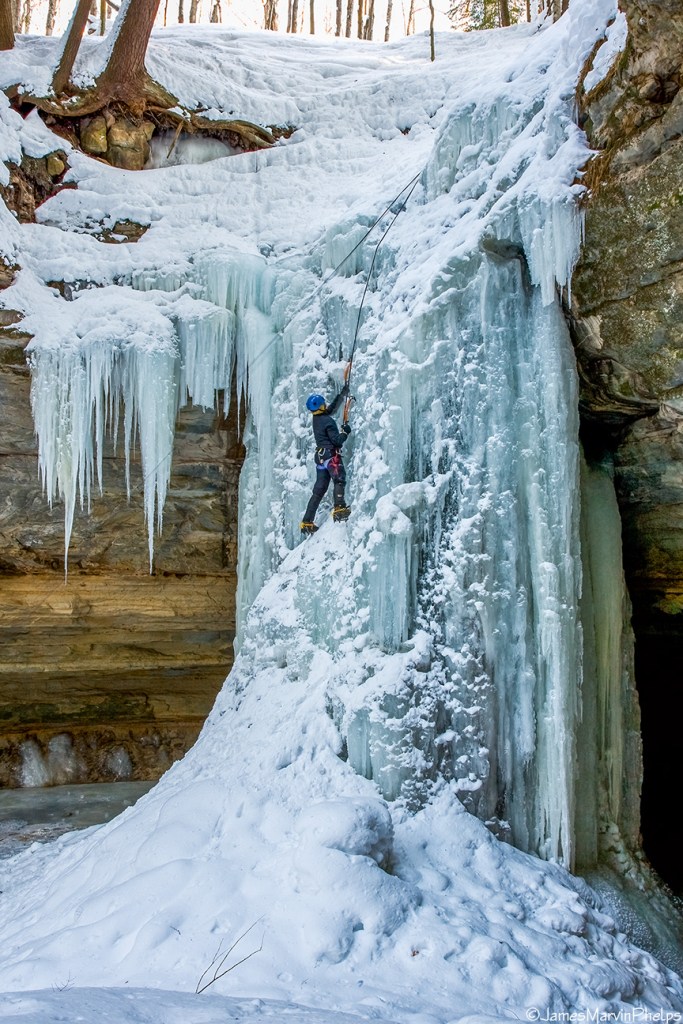
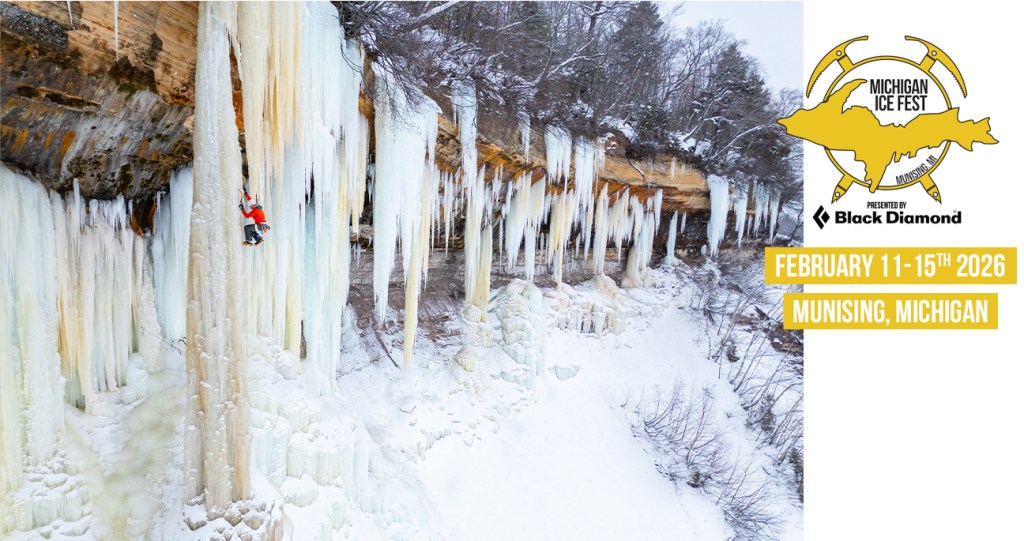
Michigan Ice Fest is an annual ice climbing event that kicks off today and runs February 11-15, 2026 in Munising in the Pictured Rocks National Lakeshore. The event is an annual celebration of the sport of ice climbing with competitions, clinics, and plenty of social fun! National Parks of Lake Superior Foundation has an interview with Michigan Ice Fest organizer Bill Thompson below that you should check out.

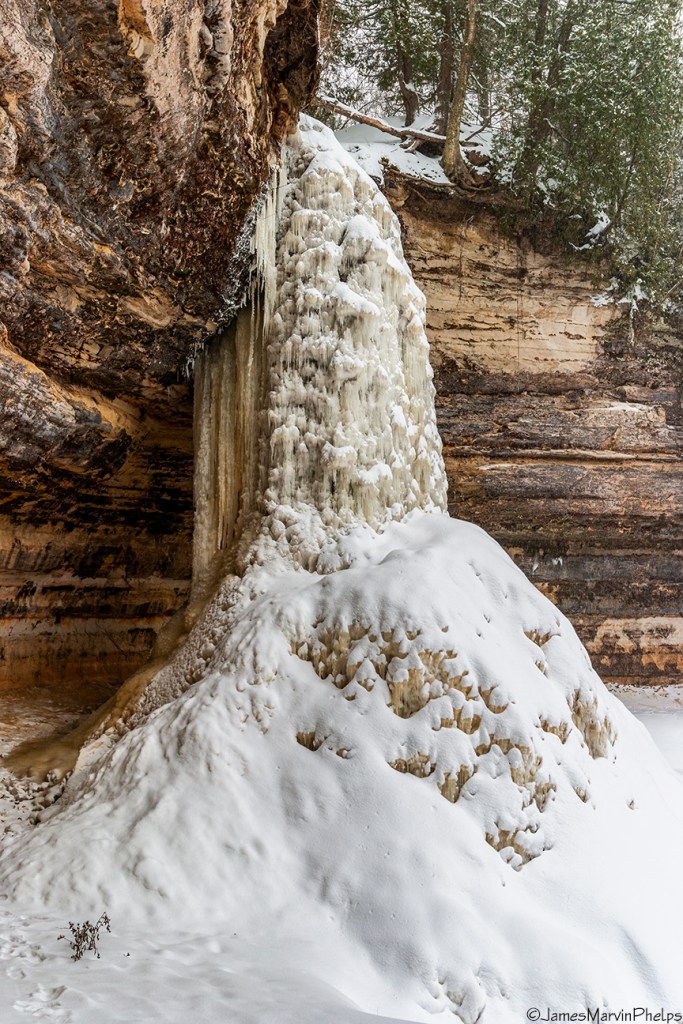
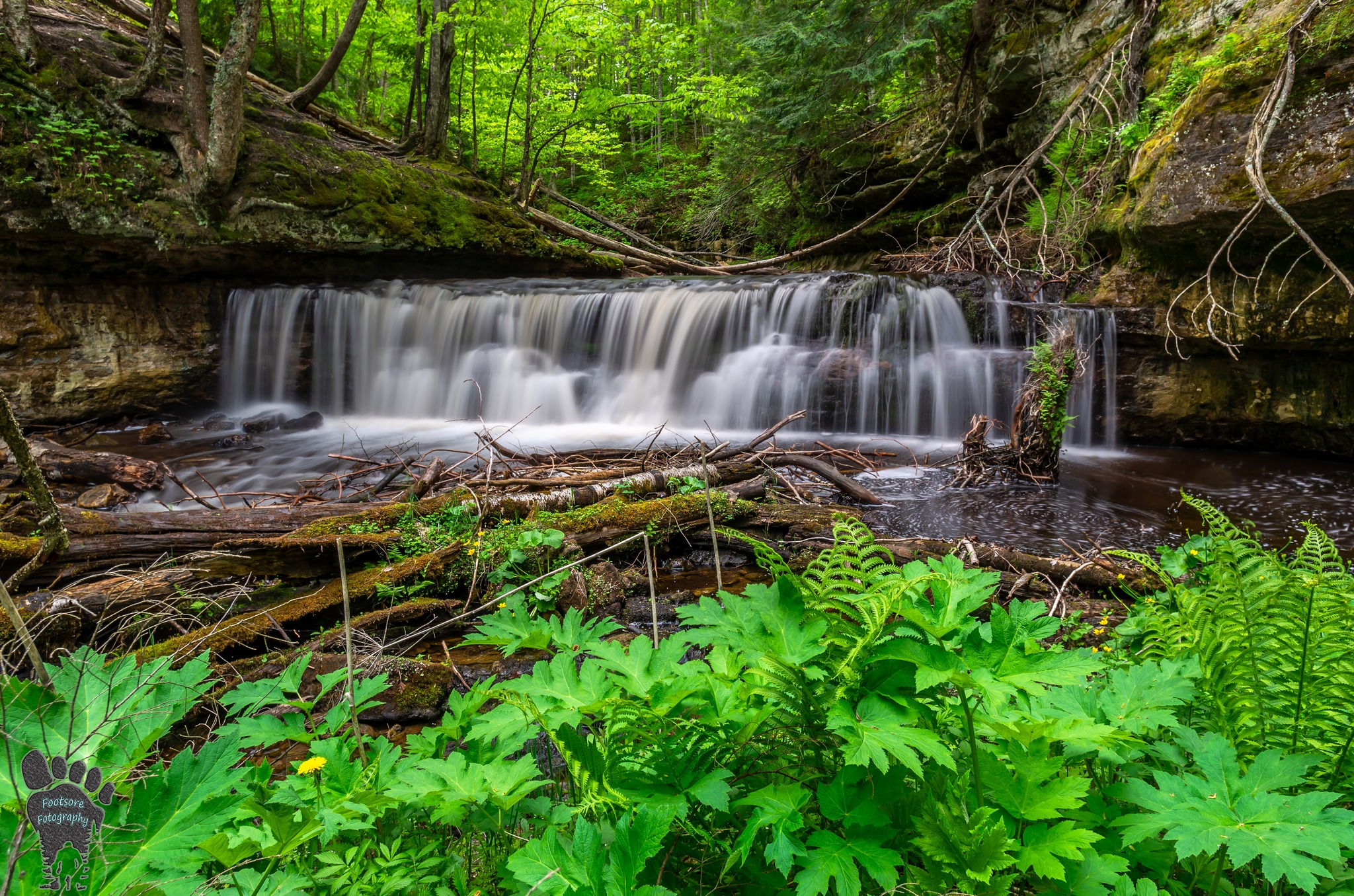
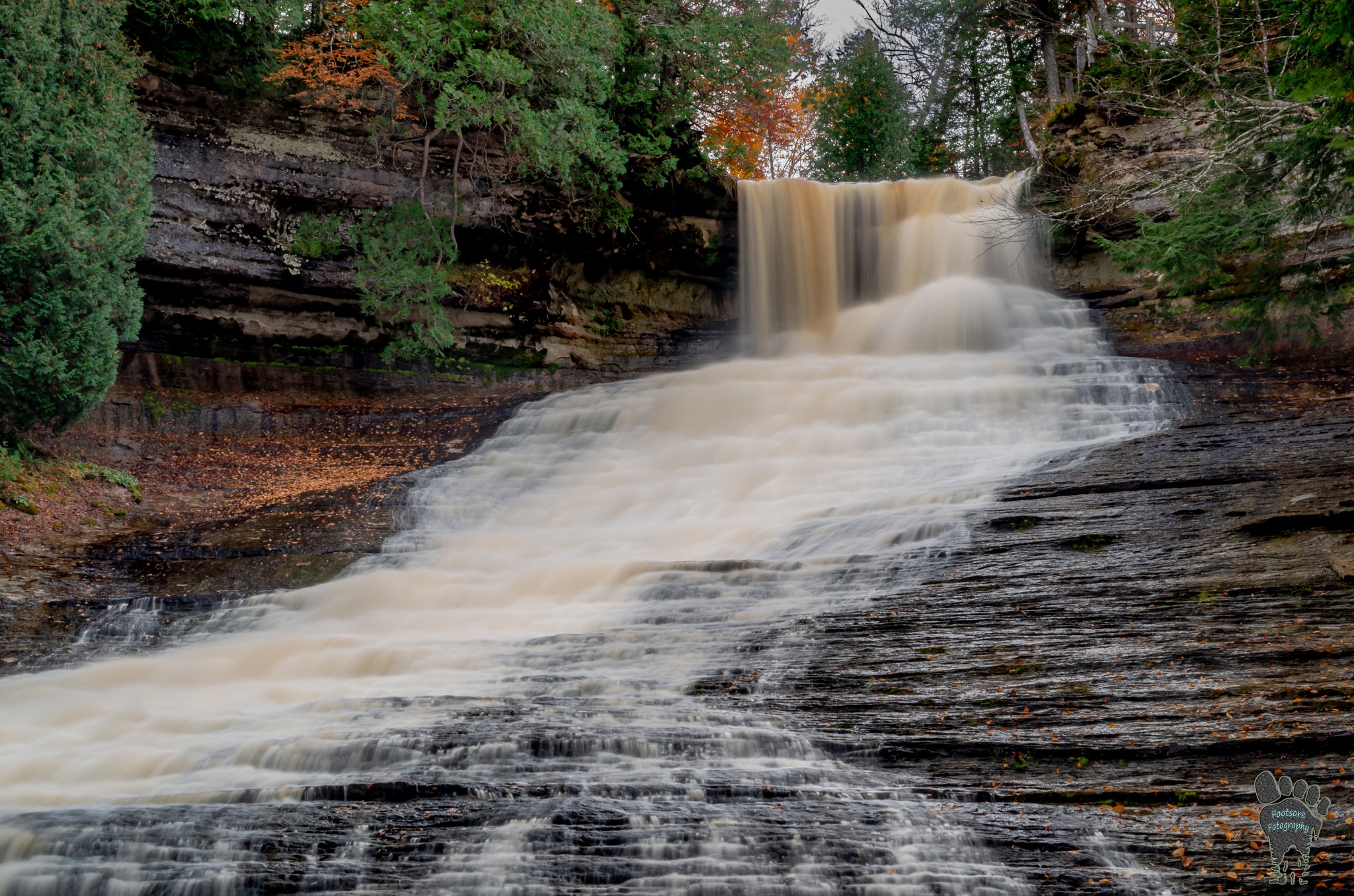
James took these photos last January in the Pictured Rocks. See more in his Michigan Waterfalls gallery and visit James Marvin Phelps Art to view & purchase his work!

Support Michigan in Pictures with Patreon

Looking around at Chapel Beach

Chapel Beach Storm by Gary McCormick

Chapel Beach Storm by Gary McCormick

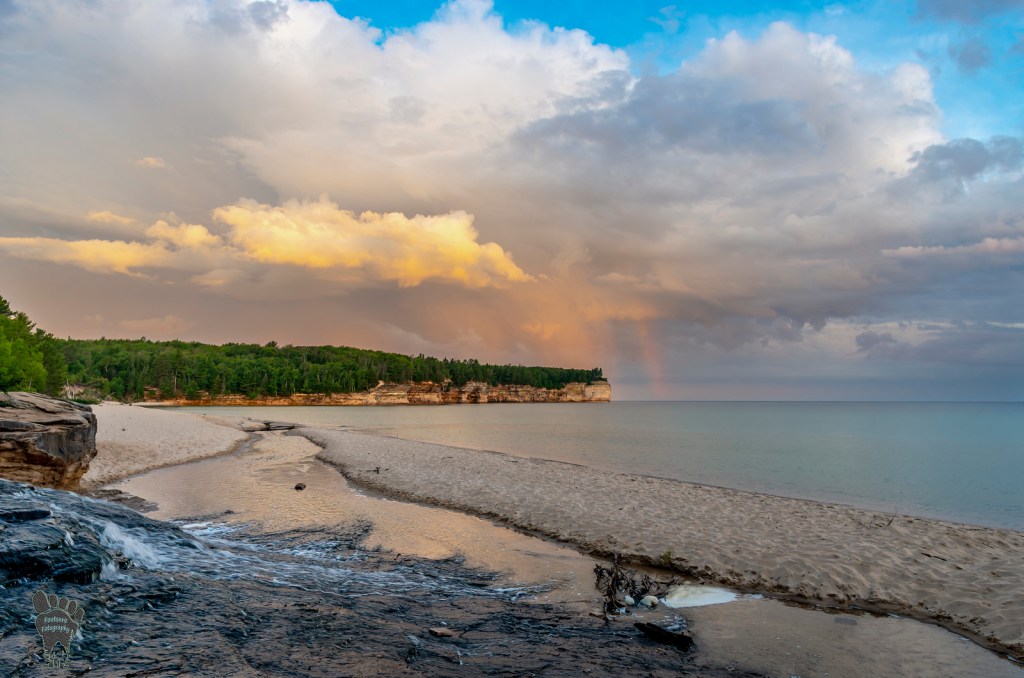
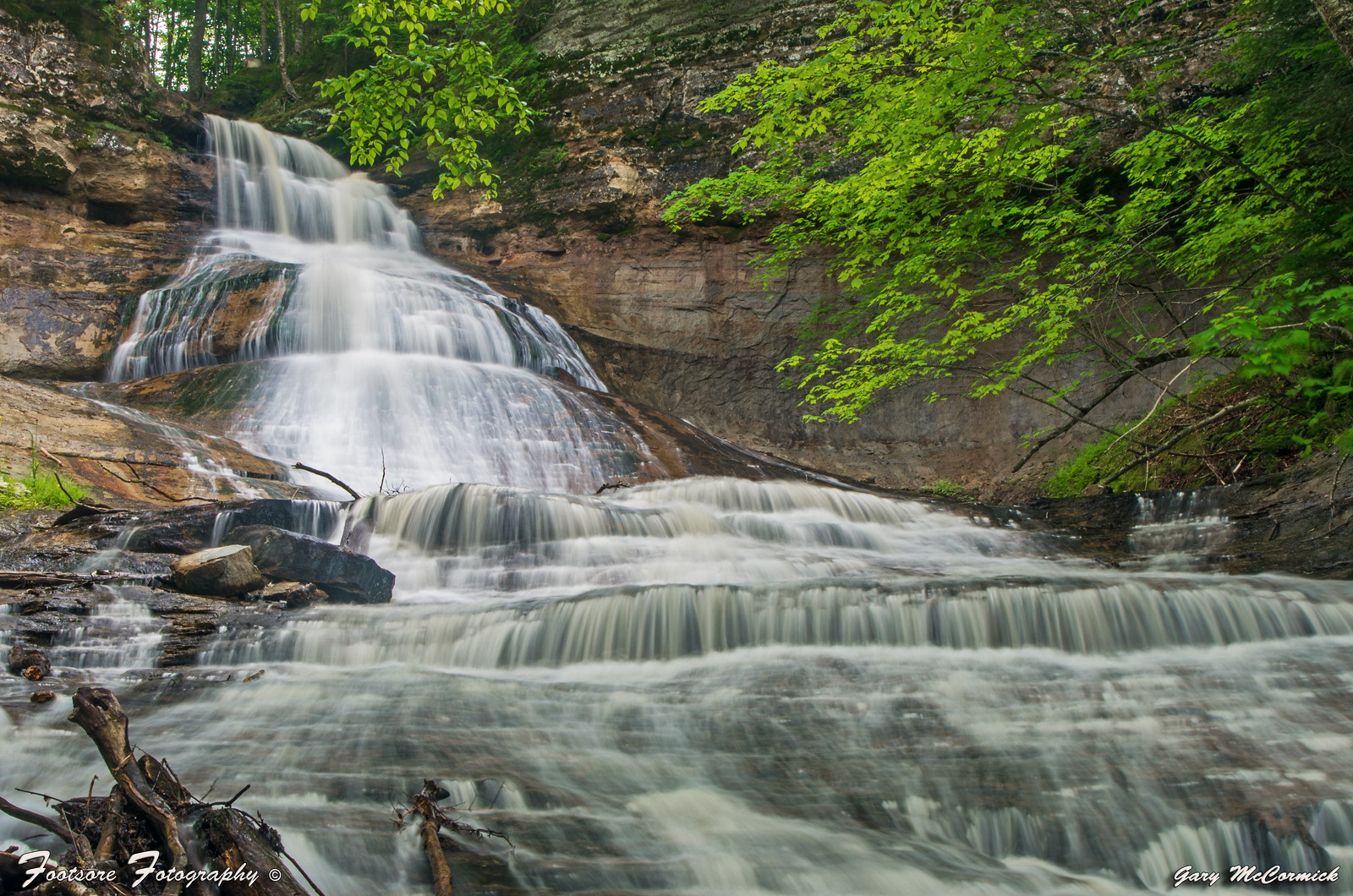
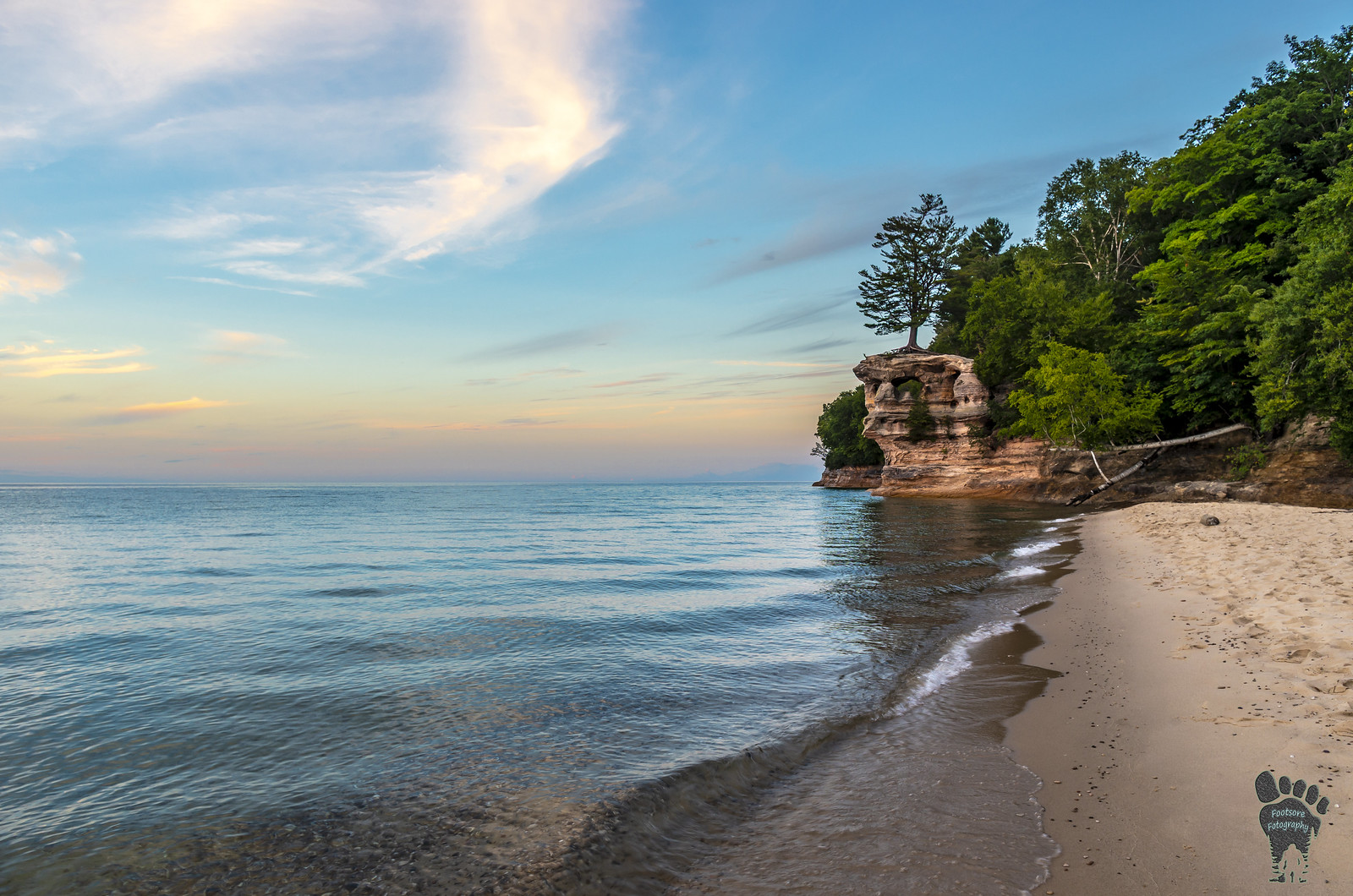
Although we were just in the neighborhood on Monday for the Seven Wonders of Michigan, I couldn’t resist encouraging you to take a look around at one of my favorite Michigan hikes when Gary shared this photo of a storm rolling into Chapel Beach yesterday! The river you see in the foreground is the Chapel River that flows from Chapel Falls (pictured below).

You can see lots more in Gary’s Pictured Rocks National Lakeshore gallery on Flickr and view & purchase his photos of Pictured Rocks & elsewhere at Footsore Fotography!

Support Michigan in Pictures with Patreon

7 Wonders of Michigan: Chapel Rock edition

Chapel Rock by Craig Sterken Photography

Chapel Rock by Craig Sterken Photography

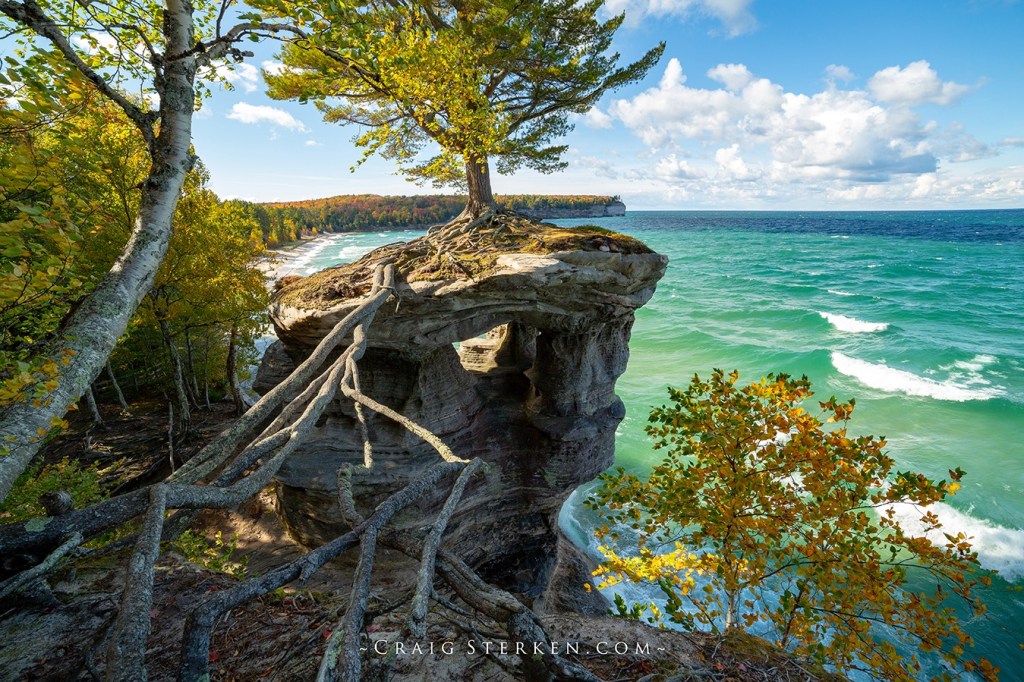
Michigan has some truly incredible sights, but I have to think that Chapel Rock in the Pictured Rocks National Lakeshore belongs at or near the top of any list of the 7 Wonders of Michigan. Apparently I started to compile a list back in 2015 & added Mackinac Island’s Arch Rock to it. Let’s add Chapel Rock as well. If you have suggestions for the list, share in the comments and then we can vote on them all!

The Pictured Rocks National Lakeshore says:

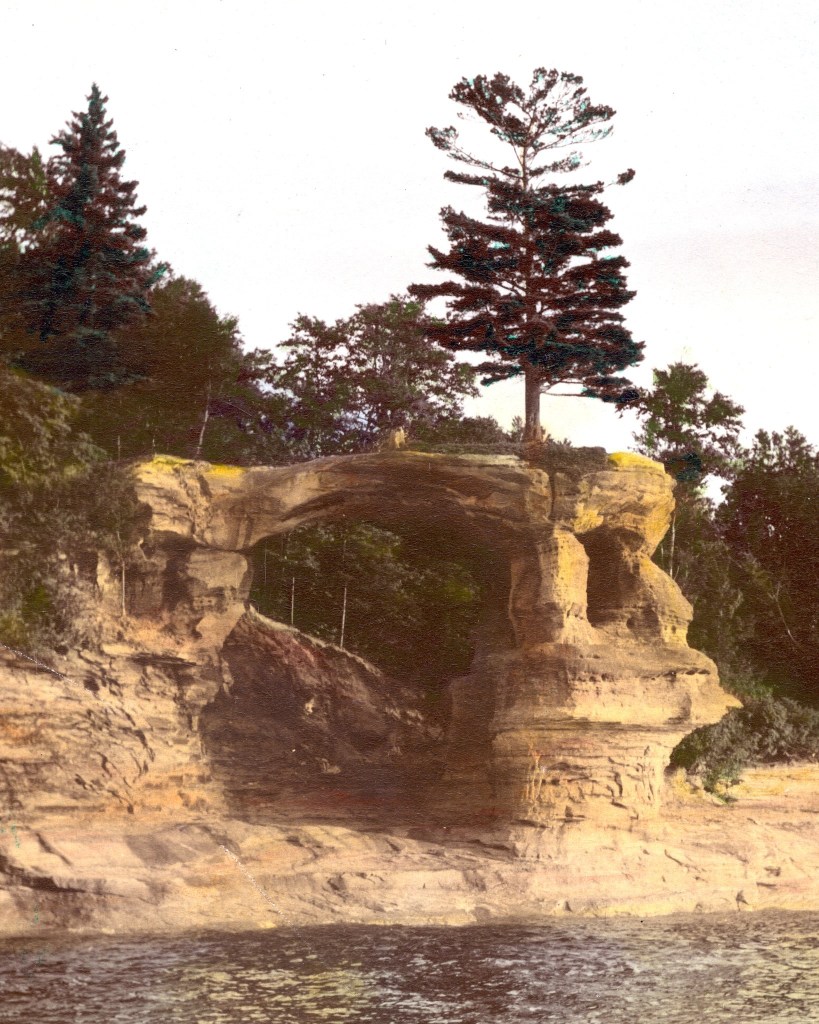
The Chapel area was named by early European explorers and is found on early maps as La Chappelle. Chapel Rock is a remnant of Cambrian age sandstone that was carved by Lake Nipissing high water some 3800 years ago. Continual erosion has carved the rock into the beautiful sculpture it is today. There once was an archway connecting the rock to the mainland (see pic below!). The arch collapsed in the 1940s. The lone white pine on Chapel Rock is estimated to be about 250 years old. 

Atlas Obscura adds that a member of the Douglass Houghton expedition exploring Lake Superior’s southern shore described a single pine tree that grew like a “spire” out of the sparse dirt covering the top of the outcropping. Till this day, the same resilient pine stands sentinel over Chapel Rock, connected to the mainland by its extensive root system.

Craig shares that the cool weather has him thinking about autumn colors, and that he was honored to have this photo purchased by National Geographic for a book on national parks! I will for sure share the book when it’s out. You don’t have to wait to see more from Craig though! Follow Craig Serken Photography on Facebook and view or purchase his work on his website!

Chapel Arch by Pictured Rocks National Lakeshore

Chapel Arch by Pictured Rocks National Lakeshore

Support Michigan in Pictures with Patreon

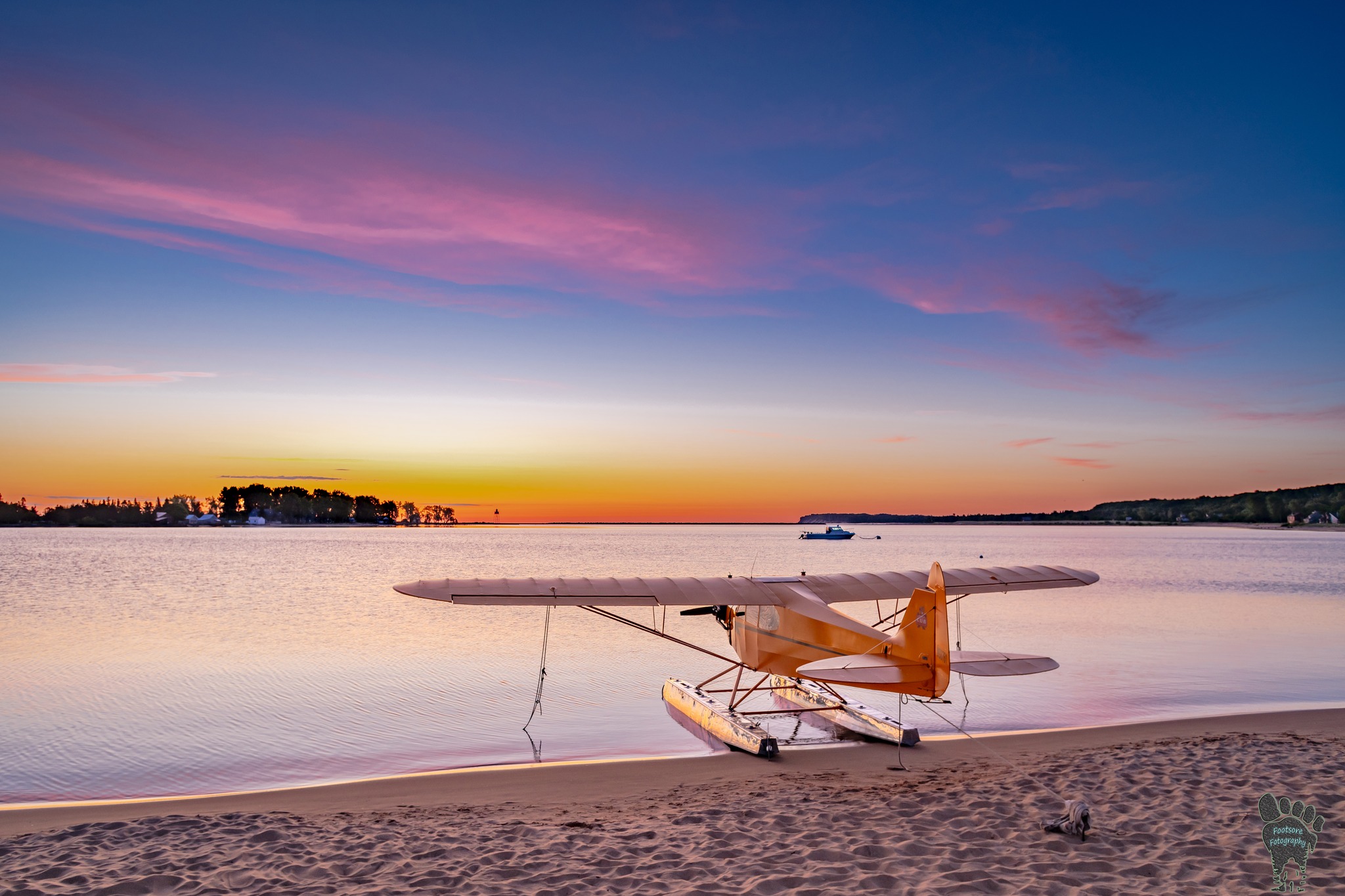
Sunset at the Coves

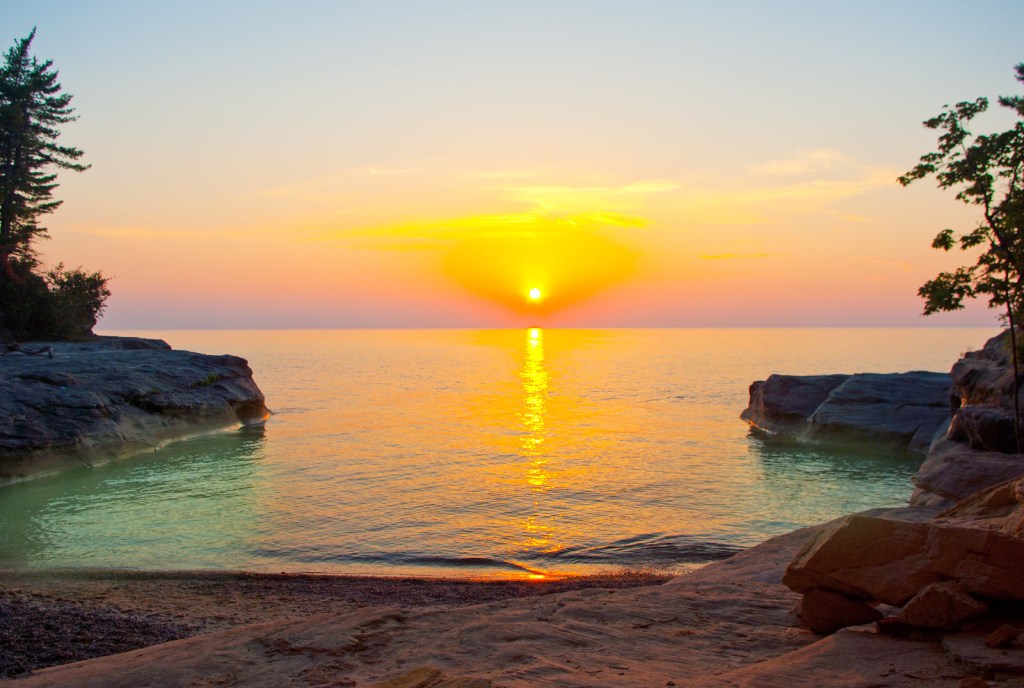
The Coves Sunset by Footsore Fotography

The Coves Sunset by Footsore Fotography

I shared this photo 13 years ago, but it really felt like I needed to return here this morning, if only for a virtual moment.

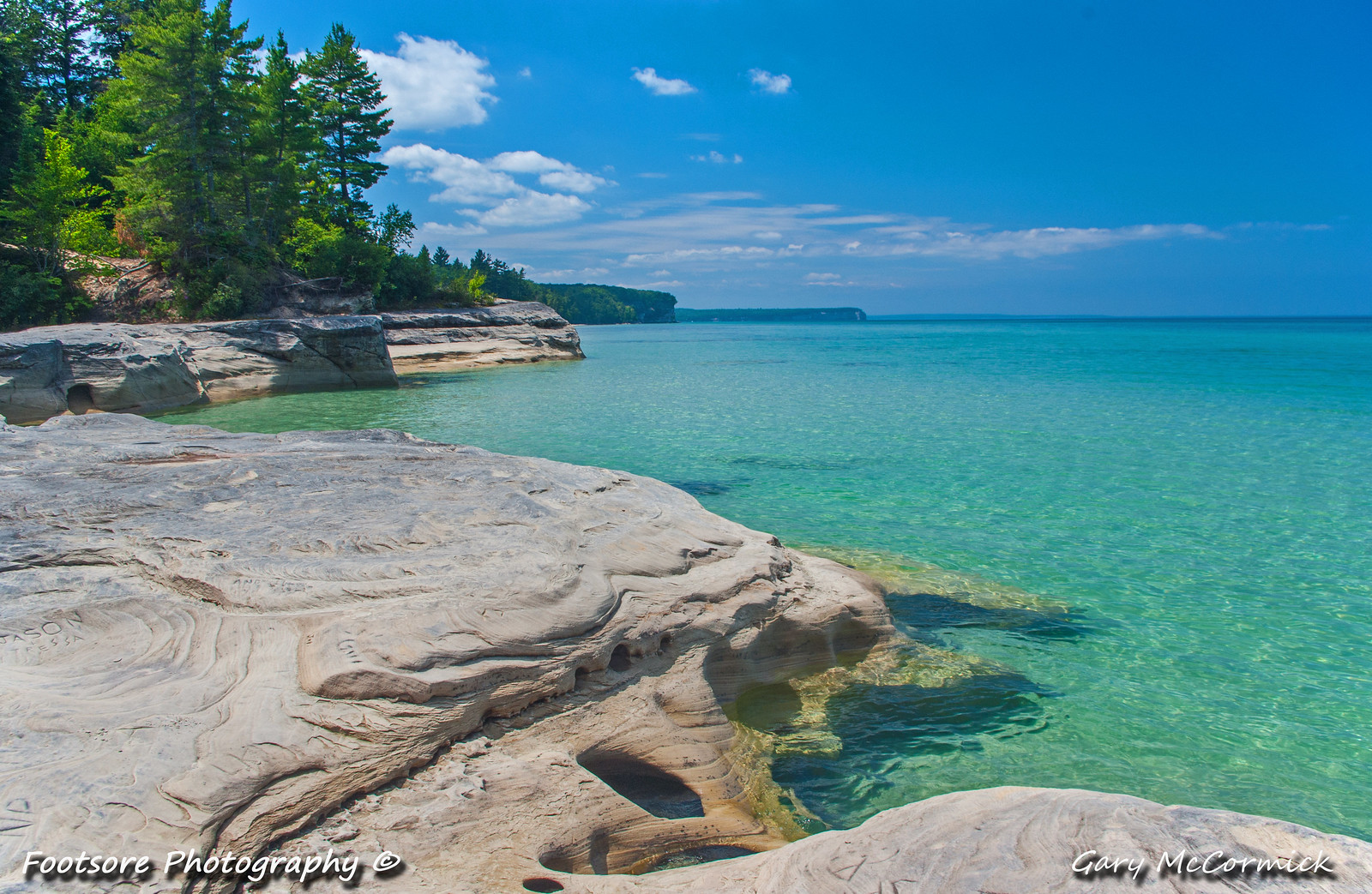
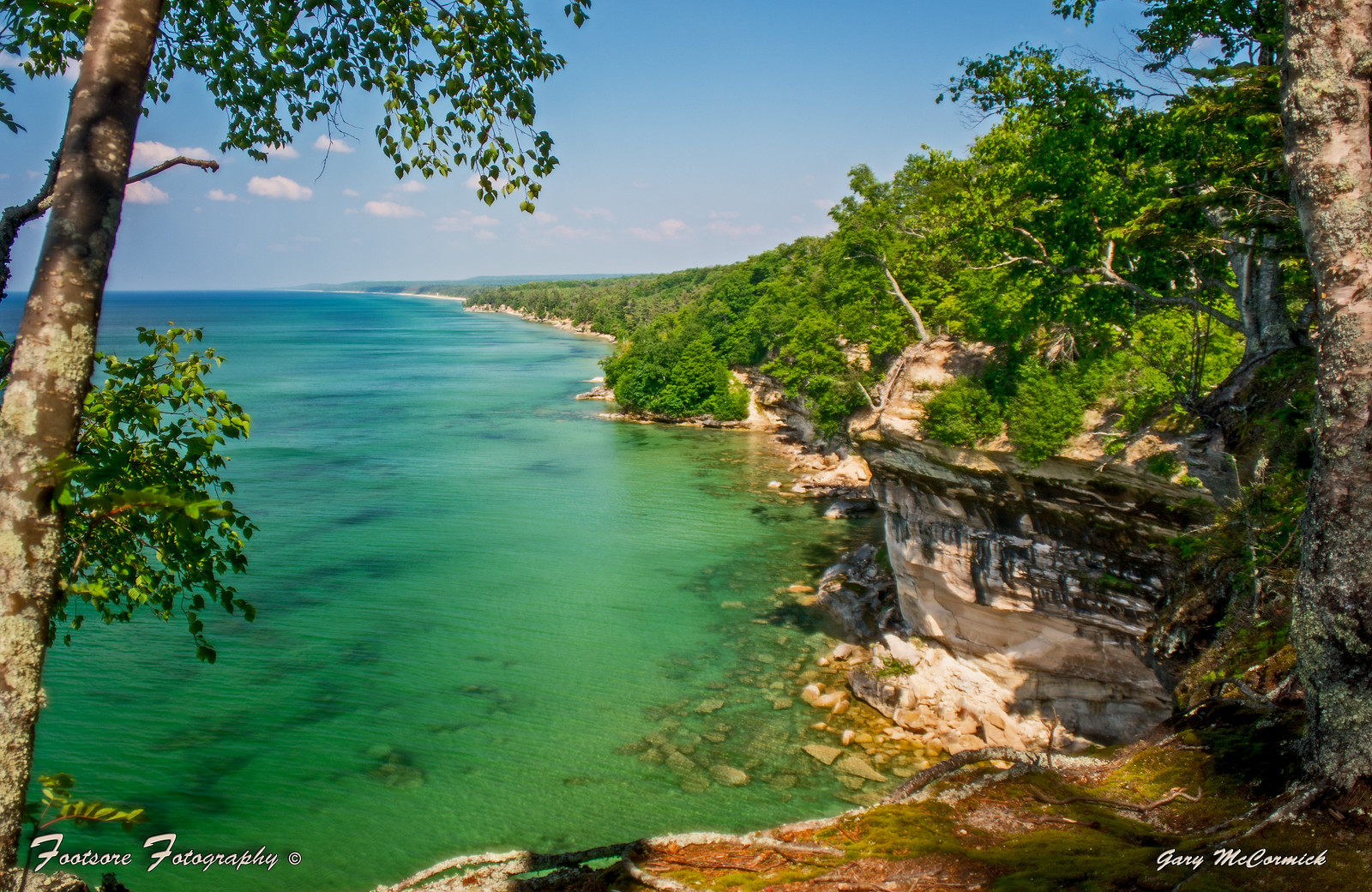
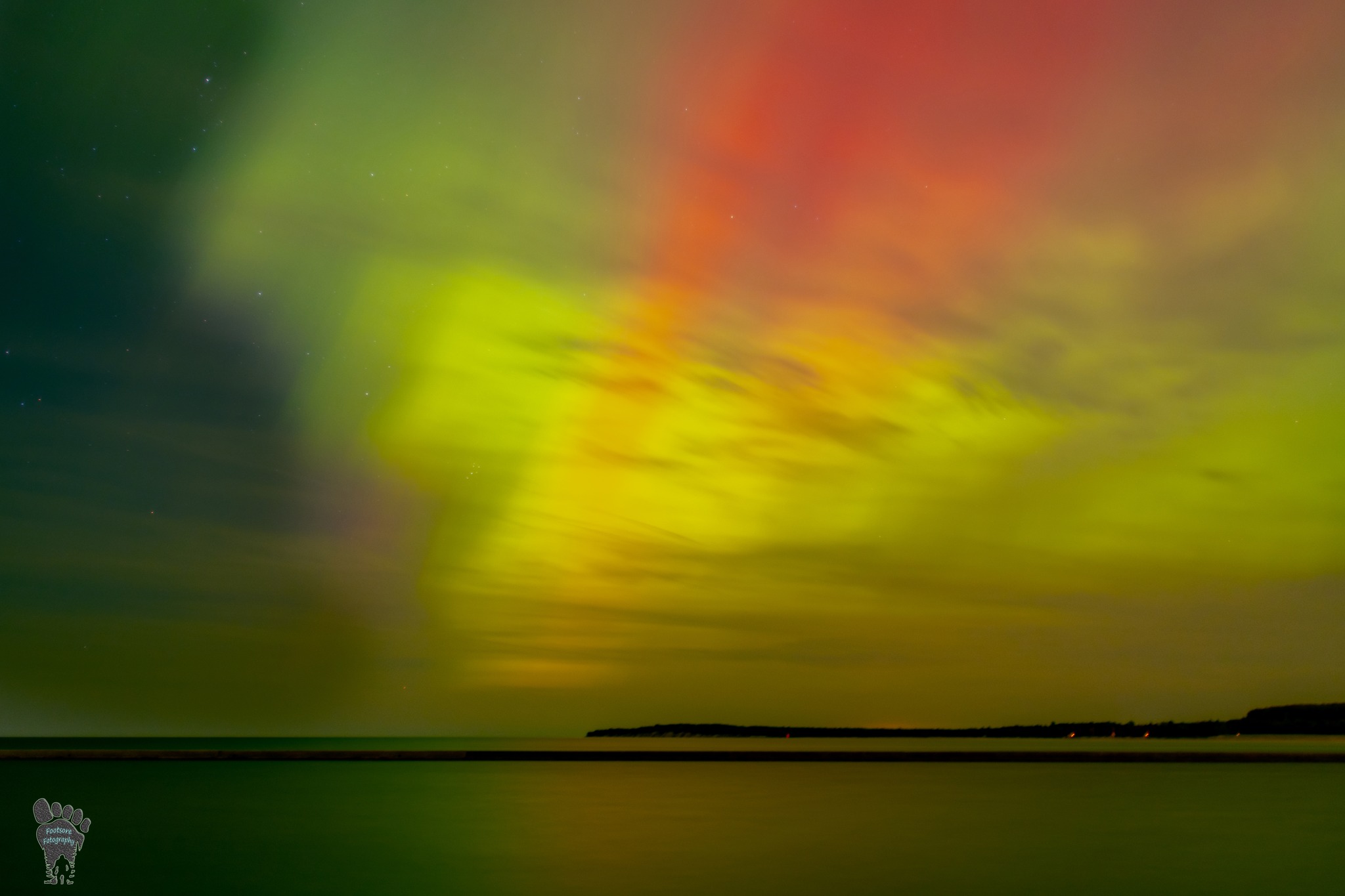
Gary has been a part of Michigan in Pictures for years now, bringing photos from across Michigan, but especially Grand Marais & the Pictured Rocks National Lakeshore. View & purchase his work at Footsore Photography & for sure follow Gary on Facebook! The first two below are from The Coves along with a collection including Lower Mosquito Falls in the Pictured Rocks National Lakeshore & the last is from the upcoming Grand Marais Fly-in!

Support Michigan in Pictures with Patreon

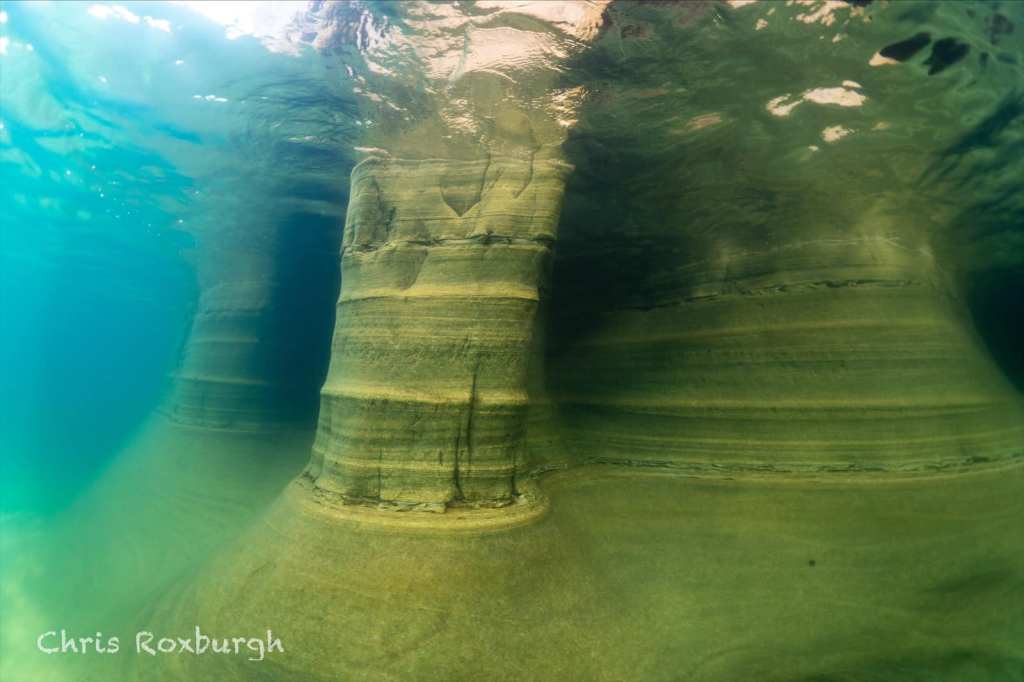
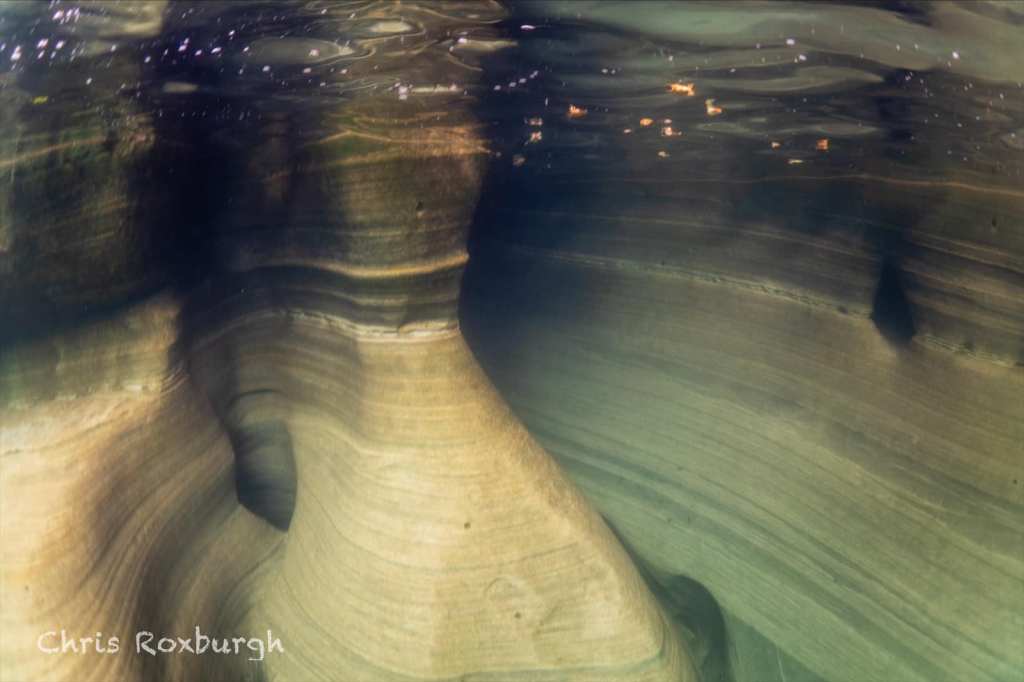
Underneath Miner’s Castle

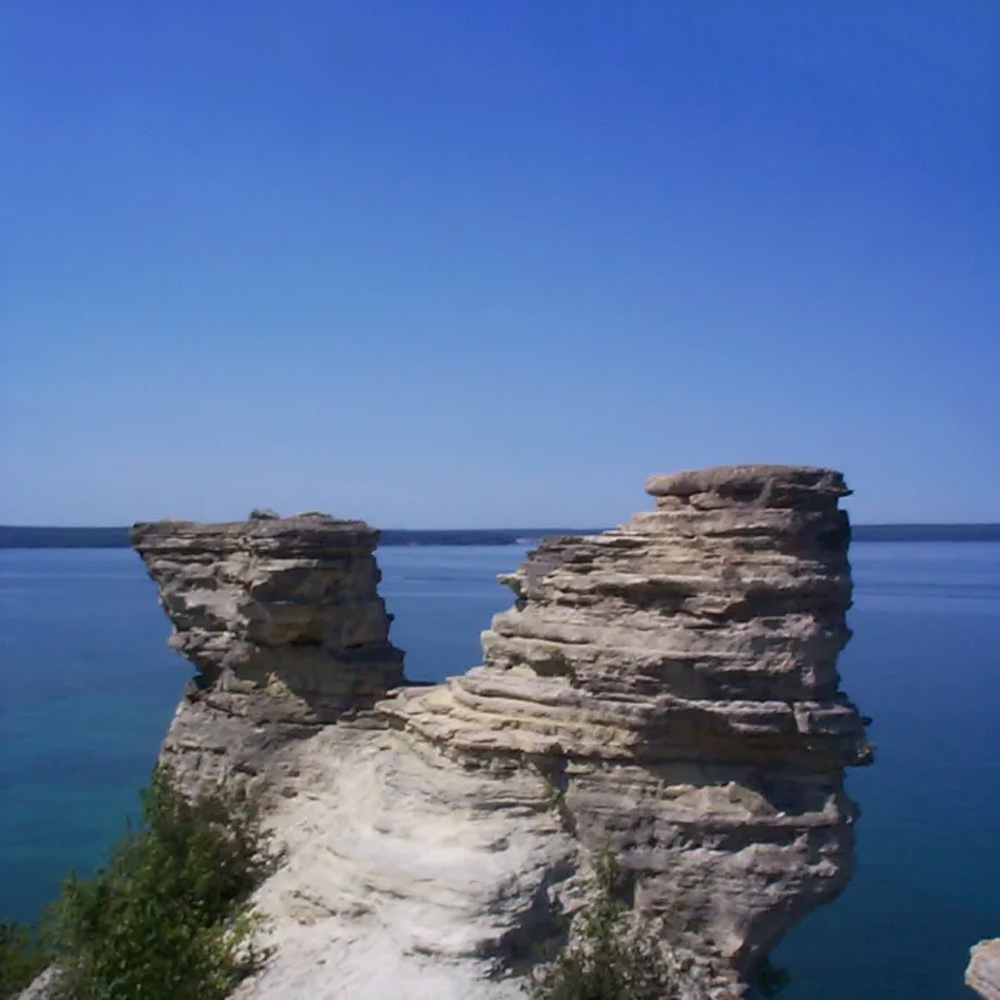
Underneath Miners Castle by Chris Roxburgh

Pillars of Ancient Sandstone by Chris Roxburgh

Michigan in Pictures regular Chris Roxburgh is one of my absolute favorite follows on Facebook. It seems like every week all year round he’s under the water showing me something I’ve never seen or a new look at an old friend. Miner’s Castle in the Pictured Rocks National Lakeshore is for sure one of those old friends. What I didn’t realize until today is that the millions of years old sandstone underneath the surface of Lake Superior may be even cooler than what’s above the water!!

Follow Chris on Facebook, YouTube and on his website for much more!

Underneath Miners Castle II by Chris Roxburgh

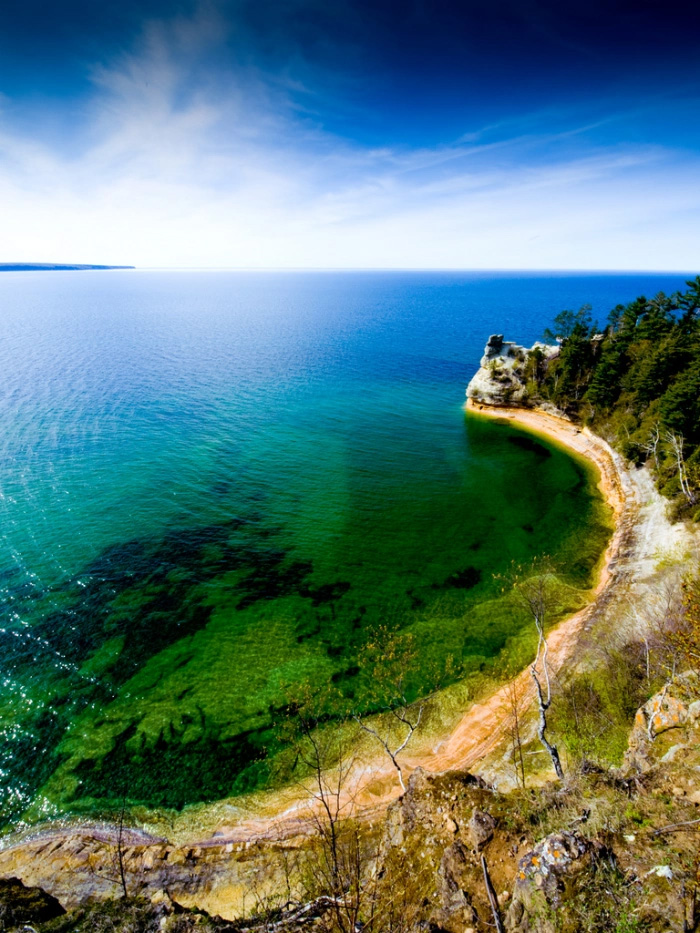
Here’s the photo “Pictured Blue” by Kiiraaan so you can see what it looks like above the water! More about the pic on this post.

Pictured Blue by Kiiraaan
Support Michigan in Pictures with Patreon

This could be your front porch!!

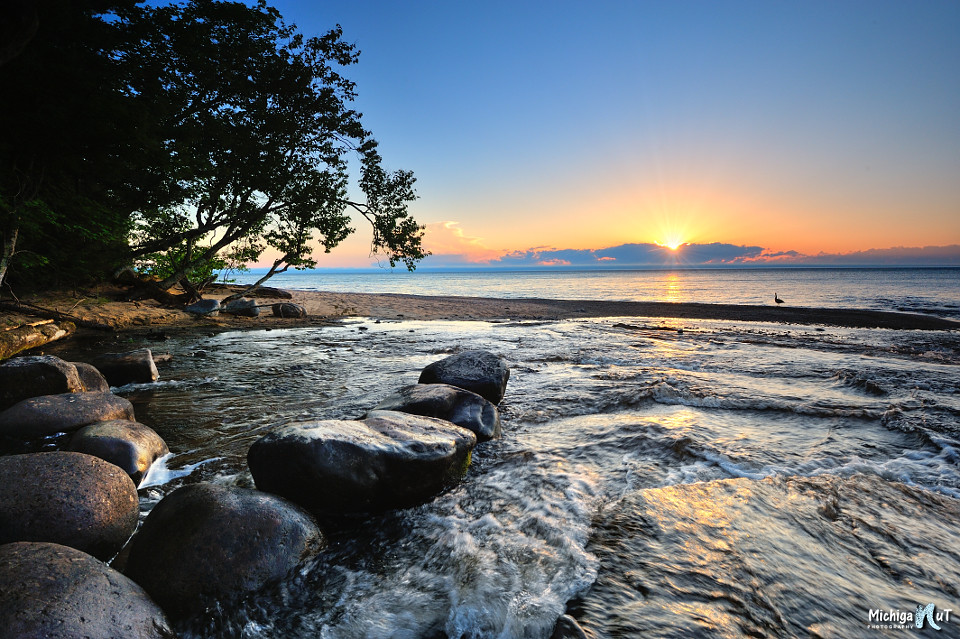
Mouth of the Hurricane River

“Lonely Goose” Mouth of the Hurricane river by Michigan Nut Photography

The Pictured Rocks National Lakeshore asks if you’ve ever thought about being a campground host?

If the answer is “Yes!” they are seeking a volunteer campground host for the month of June at Hurricane River Lower Campground. Volunteer campground hosts work 5 days a week and stay in a designated campsite, assisting fellow campers with information and registration, but they do not handle any money, and do not clean restrooms. Campground hosts are welcome to bring their own RVs and campers, though there are no electric or sewer hookups (vault toilets are available) and cell reception is limited.

Hurricane River Campground is on the eastern side of Pictured Rocks National Lakeshore, about 12 miles outside of Grand Marais. The campground sits above a sand and pebble beach on Lake Superior, which is dotted with shipwrecks as it stretches east towards the Au Sable Light Station.

It’s an awesome spot – learn more & apply on the Pictured Rocks National Lakeshore website!

John took this photo of a lonely goose at the mouth of the Hurricane River way back in 2012! For sure view & purchase prints from Pictured Rocks & elsewhere on his website!!

Support Michigan in Pictures with Patreon

Before & after the fall at Miner’s Castle

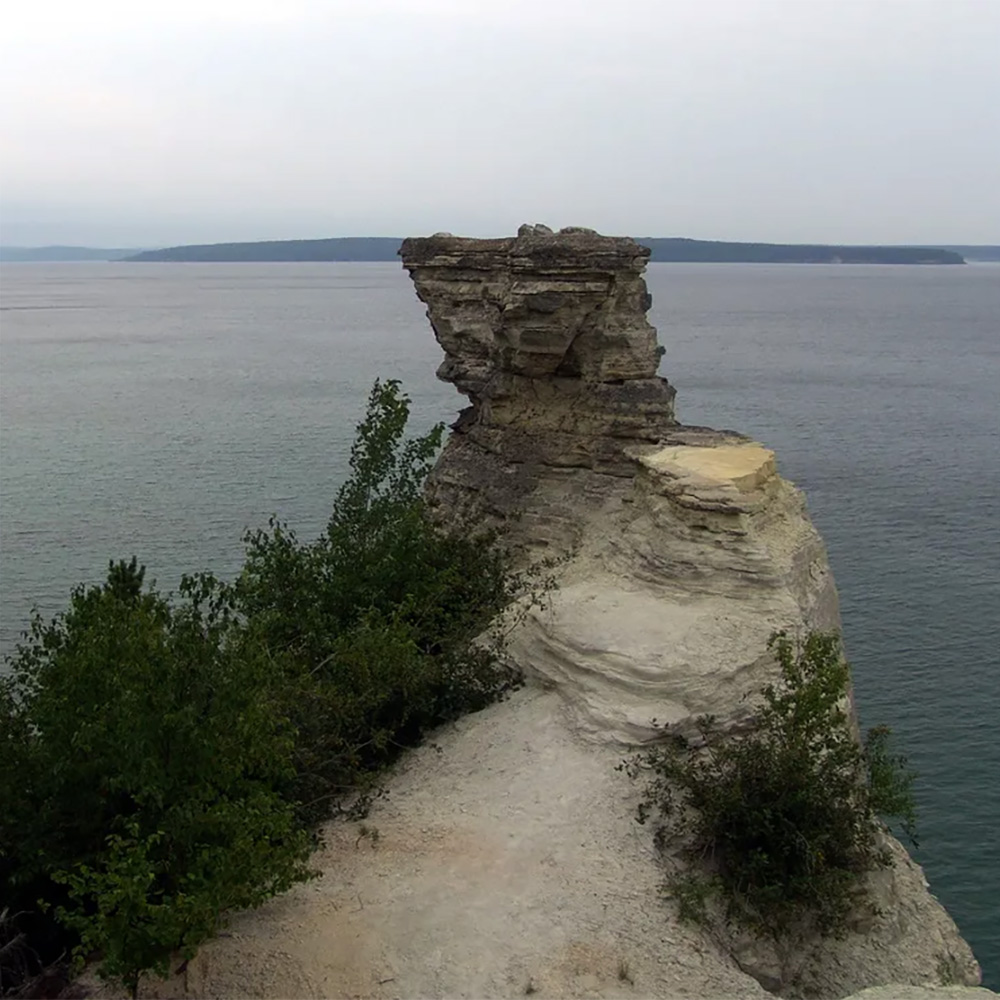
Miner’s Castle before it fell by Sue Spaulding & Miner’s Castle (post-collapse) by Arie Koelewyn

17 years ago today, one of Michigan’s most notable rock formations became less notable when the northeast tower of this distinctive formation collapsed. The day after, the Pictured Rocks National Lakeshore reported:

On Thursday morning, April 13, 2006, the northeast turret of Miners Castle collapsed. One turret remains on Miners Castle, the best-known feature of Pictured Rocks National Lakeshore. The collapse was reported via cell phone by fisherman in the area, according to chief ranger Larry Hach.

Most of the rock fell north and into Lake Superior, and there were no injuries. The lower overlook platform near Miners Castle appears to be unaffected.

While the rockfall at Miners Castle on April 13 was startling, such events are not rare along the Pictured Rocks escarpment. At least five major falls have occurred over the past dozen years … Rockfalls along the cliffs typically occur in the spring and fall due to freezing and thawing action of Mother Nature.

You can read more & see more photos in this Absolute Michigan article on the collapse of a turret at Miner’s Castle.

Frozen Falls in FiveK

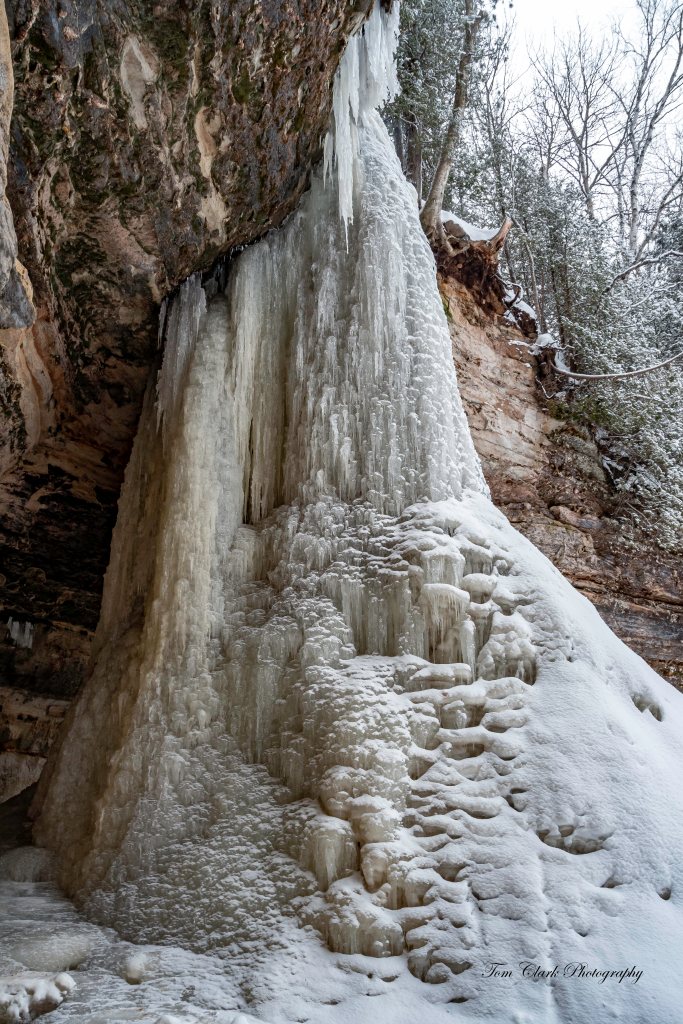
Frozen Munising Falls, Michigan by Tom Clark

Frozen Munising Falls, Michigan by Tom Clark

Tom took this shot last weekend at the 50-foot Munising Falls in the Pictured Rocks National Lakeshore. See more shots in Tom’s UP Trip for Ice 2-4-2022 album on Flickr & for sure zoom in for the crazy detail in this 5k photo!

Support Michigan in Pictures with Patreon

#TBT: Walking with the Icefoot on Agate Beach

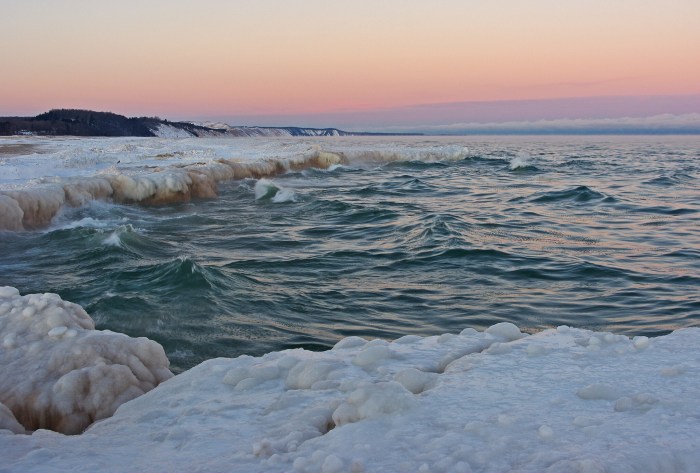
Winter morning on Agate Beach by Gary McCormick

Winter morning on Agate Beach by Gary McCormick

Here’s a special Science Term Throwback Thursday from January 14th 8 years ago!

Ernest W. Marshall talks about a common winter feature along considerable stretches of Great Lakes shorelines, the Icefoot, a narrow fringe of ice attached to the coast:

Air and water temperatures must be sufficiently low before an icefoot begins to form. The conditions favorable for icefoot formation are broad open shorelines gradually sloping below water level, and facing so that wind-blown spray is carried inland toward the shore to freeze. The character of growth of an icefoot differs during different periods of the winter. During the course of the winter the icefoot may suffer periods of denudation alternating with periods of accretion. The development of an icefoot can be held at one stage by the early freezing of fast ice offshore. An icefoot can be composed of any combination of frozen spray or lake water, snow accumulations, brash, stranded icefloes, and sand which is either thrown up on the icefoot by wave action or is blown out from the exposed beaches.

Observations of the icefoot along the shorelines of Lakes Superior and Erie indicated that the moderately steep portions of the shore were characterized by narrow terraces composed of frozen slush and brash thrown up by storm winds. The outer edge of this icefoot was often cusp-like in form, resulting from the mechanical and melting action of the waves. The inner portions of the cusps acted to concentrate the wave action, forming blowholes which threw spray back on the icefoot.

You can click to read more.

Gary took this photo at one of my favorite places, Agate Beach on Lake Superior in Grand Marais. In the distance is Grand Sable Dunes & the Pictured Rocks National Lakeshore. See more in Gary’s Grand Marais Michigan gallery including a shot of a staggeringly huge ice mound & view and purchase his work at Footsore Fotography.

Support Michigan in Pictures with Patreon

2021 Geminid Meteor Shower on the way!

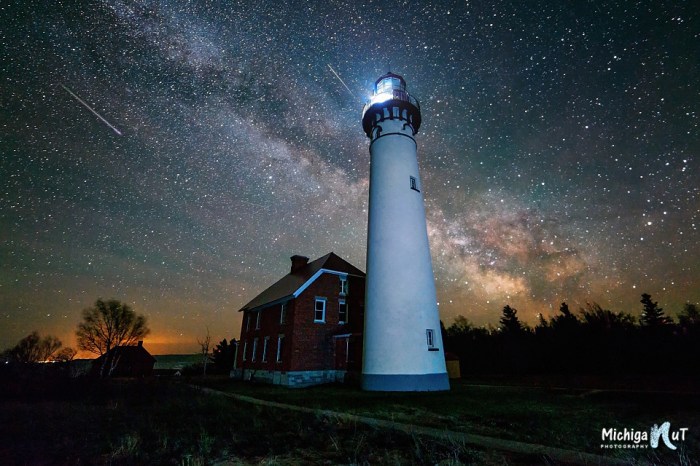
Milky Way over Au Sable Point Lighthouse by Michigan Nut Photography

Milky Way over Au Sable Point Lighthouse by Michigan Nut Photography

EarthSky says that the annual Geminid Meteor Shower that will peak next week is one of the year’s best:

The Geminids are a reliable shower for those who watch around 2 a.m. local time from a dark-sky location. We also often hear from those who see Geminid meteors in the late evening hours. This year, a waxing gibbous moon will be above the horizon during peak time for viewing. But it’ll set shortly afterwards, leaving the sky dark for watching meteors. Thus the best time to watch for Geminid meteors in 2021 is likely before dawn – say, from around 3 a.m. to dawn – on the morning of December 14.

It’s a somewhat narrow window for meteor-watching. But still worth a look!

On a dark night, near the peak of the shower, you can often catch 50 or more meteors per hour. On an optimum night for the Geminids, it’s possible to see 150 meteors per hour. A new moon on December 4 means that the peak of the shower coincides with a moon just a few days past first-quarter phase.

Click through for all the details but remember the key to success is finding dark skies!!

John took this back in May 2014 at the Au Sable Lighthouse in the Pictured Rocks National Lakeshore. See more in his Starry Nights gallery on Flickr & view and purchase prints & calendars on his website.

Support Michigan in Pictures with Patreon