Tranquility at Pictured Rocks

Tranquility at Pictured Rocks

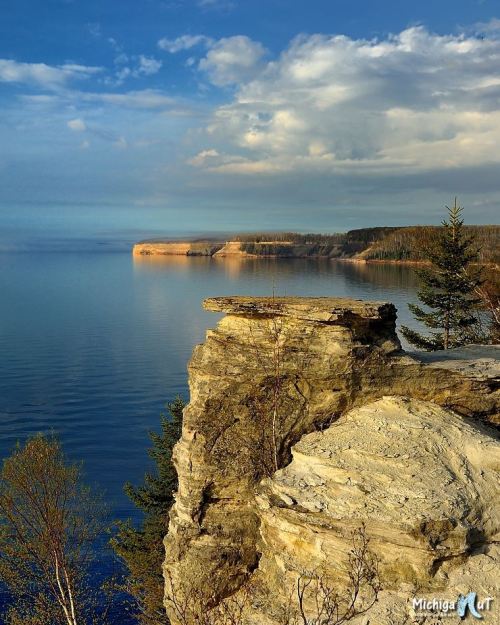
Tranquility, photo by Michigan Nut Photography

John McCormick aka Michigan Nut shared this gorgeous shot from the Pictured Rocks National Lakeshore showing Lake Superior at its calmest.

View John’s photo bigger on Facebook, view & purchase photos at michigannutphotography.com and definitely follow him on Facebook for many more photos of the Great Lakes State.

PS: John’s Pictured Rocks gallery will knock your socks off!

Layers of the Ledges

Ledges' Layers

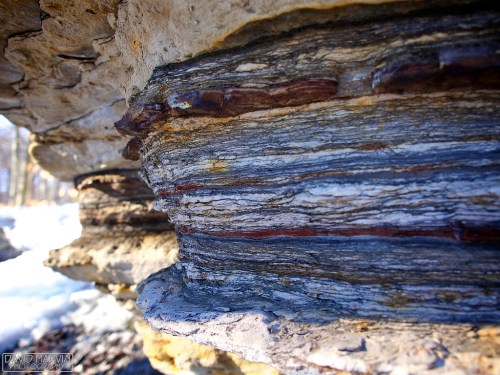
Ledges’ Layers, photo by daveumich

The Earth Science class for educators at Michigan Tech has an online textbook on Michigan Geography & Geology that’s pretty cool. The chapter on the Ledges at Grand Ledge includes At the Edge of an Ancient Ocean that talks about the rocks that make up The Ledges and begins:

The rocks at Grand Ledge are significant for several reasons. Grand Ledge is an “oasis” of bedrock in an “ocean” of glacial drift that blankets the Lower Peninsula, providing geologists a window into the distant past. The diverse set of sedimentary rocks contains a wealth of information on the plants and animals that dominated the Pennsylvanian Period, about 320 to 290 million years ago. The characteristics of the rocks allowed geologists to reconstruct the changing environment that marked the demise of a great inland ocean. The rocks have been quarried and hold economic value. Lastly, Grand Ledge is scenic and enjoyed by hikers, paddlers, and climbers.

Nearly all students of Michigan geology make a pilgrimage to Grand Ledge at some point in their careers. Good exposures of sedimentary rocks are rare in the Lower Peninsula. Not only are the rocks well exposed but they offer an opportunity to test your skills in identifying a variety of sandstones, some shale and limestone, and even 2 coal. The rocks are exposed in a few abandon quarries and in exposures along the Grand River. To get a good look at the rocks you will need drive between exposure north and south of the river. But don’t be discouraged; the distances are short.

As always in geology, the best place to start is at the base of the stratigraphic section, the oldest rocks. The lower part of the section contains shale, siltstone, and type of sandstone called greywacke. The shale is gray and so fine-grained that you cannot see the mud-sized particles that compose it. If you are brave, you might put a tiny piece in your mouth and push it around a bit. Shale feels smooth, almost creamy, a result of the mud. The shale is also soft and erodes to relatively gentle slopes. Shale is exposed at the base of the layers at the Face Brick Quarry. Think of the light-colored siltstone as a silty shale. You might rub the rock against your thumb and see if any small, visible grains come loose. Again, a taste test might be in order. Siltstone will leave a 3 gritty feel in your mouth. Siltstone is exposed at the base of the rock layers at the American Vitrified Quarry. The greywacke is a greenish-gray colored sandstone and the sand grains are visible to your unaided eye, no tasting required. With a hand lens you can see the rock is made of a mixture of sand sizes, what geologists call poor sorting, and a variety of sand compositions, including quartz, feldspar, mica, and fragments of pre-existing rocks. Greywacke is exposed just above the beach at the Face Brick Quarry.

Read on for more and visit Fitzgerald Park at Pure Michigan for more on this cool West Michigan park.

View Dave’s photo background bigalicious, see more in his Grand Ledge, Michigan slideshow and check out more photos from The Ledges on his Marvins’ Gardens blog!

More winter wallpaper on Michigan in Pictures.

Belle Isle to become state park?

Belle Isle Beauty

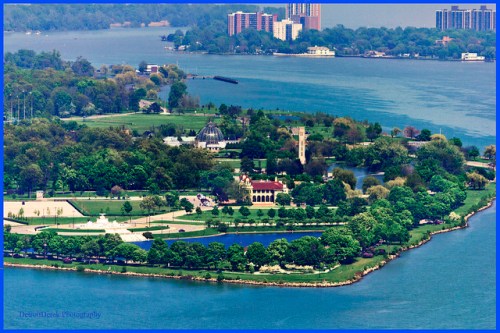
Belle Isle Beauty, photo by DetroitDerek Photography

The Detroit News reports that Governor Rick Snyder has made a deal with Detroit Emergency Manager Kevyn Orr for the State of Michigan to lease Belle Isle for 30-60 years:

Under the deal, Detroit will not receive any direct monetary payment for the lease, but state operation of Belle Isle is expected to save the cash-strapped city $4 million to $6 million annually, officials said. The state also plans to apply for grants to invest $10 million to $20 million in the park’s aging infrastructure.

The deal also gives the council, which was largely sidelined when Orr took over City Hall in March, the chance to approve the lease or offer an alternative plan that would save the same amount of money.

Starting Jan. 1, Detroiters and other state residents would be required to have Michigan’s $11-a-year Recreation Passport on their vehicles to enter the park. Pedestrians, bicyclists and individuals using public transportation could get onto the island for free.

The president of the Belle Isle Conservancy said the lease agreement is “a very important step” toward keeping the park in the public’s hands at a time when city assets are being targeted for liquidation in Detroit’s historic bankruptcy.

Under Michigan’s Emergency Manager Law, the Detroit City Council has 10 days to approve the lease or propose an alternative that would save the same amount of money or more. Read on for more.

About his photo Derek writes:

Taken from a few miles away ( 3.4 miles I believe ) on the 63rd floor of the Rencen, Detroit’s Belle Isle Park is one of the most popular summer destinations in the city. The land was purchased in 1879 and opened to the public 10 years later – the park itself was designed by Frederick Law Olmstead, the designer of New York City’s Central Park. Admission is free but on a hot summer day get there early or all the best spots on this 982 acre island will be taken. It is America’s largest City-Owned Island Park.

Check his photo out bigger and get an idea of how cool this island park is in his Belle Isle slideshow.

PS: Go back in time at Belle Isle on Michigan in Pictures.

Sunset & Sequestration

"Lake Michigan Overlook" Pierce Stocking Scenic Drive - Sleeping Bear Dunes National Lakeshore

“Lake Michigan Overlook” Pierce Stocking Scenic Drive, photo by Michigan Nut

The other day on Leelanau.com I posted Sequestration and the Sleeping Bear Dunes detailing cuts that will be made at the Sleeping Bear Dunes National Lakeshore to meet their 5% budget requirement. The Pictured Rocks National LakeshoreIsle Royale and the Keweenaw National Historical Park will all be forced to trim budgets as well. Due to the fact that the NPS fiscal year ends in September, the cuts end up being closer to 10% than 5%.

All of the officials quoted stress that the parks remain open and (mostly) accessible, but when Michigan is spending millions of dollars promoting Pure Michigan nationwide with these parks at the center of our offerings, there’s no question that this is bad news for tourism!

John took this photo about a year ago – view it bigger and see more in his Sleeping Bear Dunes National Lakeshore slideshow. He is a frequent guest on Michigan in Pictures – view more of his posts right here.

Living in the Light at Friends of Miners Memorial Heritage Park

Miners Memorial Heritage Park (2)

Miners Memorial Heritage Park (2), photo by siskokid

I’ve always found snow & cold to be a lot more tolerable when accompanied by a healthy dose of sun & blue skies. About this photo Jim writes:

During the recent snowshoe weekend with my buddies Jim, Fred and Roger, we snowshoed the trails of this beautiful park located in my hometown. A recent snowfall had left a good blanket of powder that hadn’t been groomed as of yet for cross-country skiing. Lucky for us!

The City of Ironwood, Michigan passed an ordinance in 2011 that designated 167 acres of city-owned land in the center of Ironwood as the Miners Memorial Heritage Park. This area once contained five iron ore mines, the last of which closed in the 1960’s. The Friends of Miners Memorial Heritage Park has created a 2.6 mile looping trail through a portion of this area for hiking in the summer and cross-country skiing and snowshoeing in the winter. The Park is “Dedicated to those who toiled underground to work these mines. Many died in the darkness so future generations could live in the light.”

More about the park including some old photos at fmmhp.com.

Check this photo out on black, see more from the park in Jim’s slideshow and also view more of his UP shots on Michigan in Pictures.

Michigan Shoreline Tour: Grand Mere State Park (and a flying dog)

My dog can fly

My dog can fly, photo by J. Star.

J Star writes:

The boy, the dog and I went to Lake Michigan yesterday, planning to stay until tonight. The forecast called for clear skies and eighty degrees for today…last night at about midnight the storms started. By morning, the thunder was deafening, the tent was afloat in three inches of water, and hail was pounding down everywhere. Needless to say, we packed it in early and headed home.

We did have fun on the beach for about two hours yesterday. Steve seems to think it was worth the drive. You can tell by the sand being joyously flung everywhere, and by the huge gob of it he left stuck to my polarizer.

The DNR page on Grand Mere State Park near Stevensville says that the 985 acre park features magnificent sand dunes, deep blowouts, one mile of Lake Michigan shoreline and three inland lakes behind the dunes in the undeveloped natural area. Both the DNR page and Wikipedia entry for Grand Mere State Park are remarkably scant on information, leading me to believe that with a 1/2 mile hike to the beach, it’s a pretty good place to avoid the crowds. Here’s a Google map to Grand Mere State Park.

Been there? Done that? Tell us or show us what it was like in the comments!