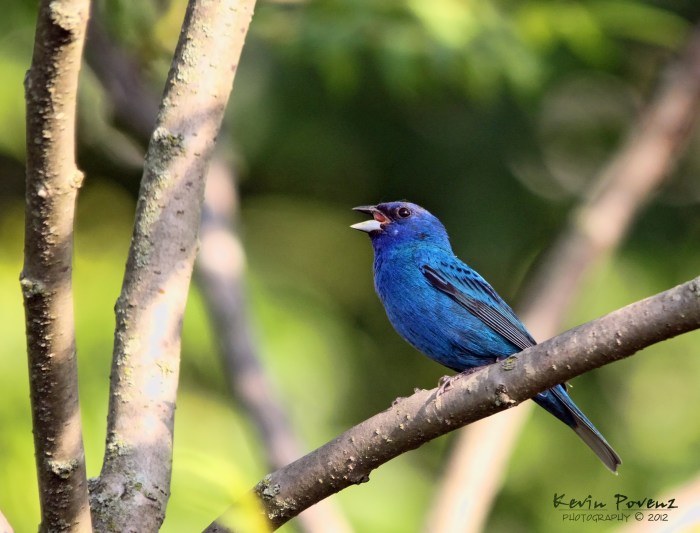
Blue Canary aka Indigo Bunting

Indigo Bunting by Kevin Povenz

Indigo Bunting by Kevin Povenz

Yesterday I saw a brilliant blue Indigo bunting on the bird feeder, so let’s talk about them! All About Birds shares that the all-blue male Indigo Bunting are sometimes nicknamed “blue canaries” and known for their bouncy songs. There’s all kinds of info including recordings of their songs and fun facts like:

Indigo Buntings migrate at night, using the stars for guidance. Researchers demonstrated this process in the late 1960s by studying captive Indigo Buntings in a planetarium and then under the natural night sky. The birds possess an internal clock that enables them to continually adjust their angle of orientation to a star—even as that star moves through the night sky.

Indigo Buntings learn their songs as youngsters, from nearby males but not from their fathers. Buntings a few hundred yards apart generally sing different songs, while those in the same “song neighborhood” share nearly identical songs. A local song may persist up to 20 years, gradually changing as new singers add novel variations.

Like all other blue birds, Indigo Buntings lack blue pigment. Their jewel-like color comes instead from microscopic structures in the feathers that refract and reflect blue light, much like the airborne particles that cause the sky to look blue.

Kevin took this a decade ago at the Upper Macatawa Natural Area in Zeeland. See more in his Birds gallery on Flickr.

Support Michigan in Pictures with Patreon

Red Flag Fire Danger today!

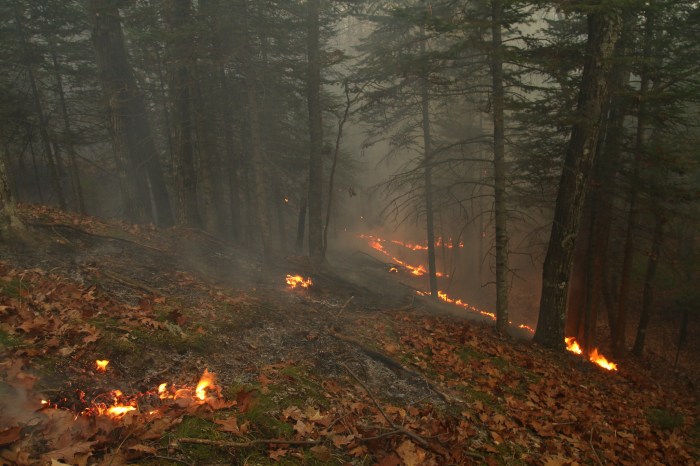
Forest Fire - Sleeping Bear Dunes by Todd

Forest Fire – Sleeping Bear Dunes by Todd

mLive shares that the northern half of Lower Michigan has a red flag fire warning today, meaning that the warm, dry, windy conditions allow wildfires to not only start easily, but also spread quickly. Much of the lower peninsula is dry as well so PLEASE careful with fire today!!

Todd took this back in 2018 on a Sleeping Bear Dunes National Lakeshore trail. He shares, “The scene was surreal as the flames wound their way through the forest. It was disturbing and beautiful at the same time. No one else was around to experience it.”

I bet!! See more in his Sleeping Bear Dunes gallery on Flickr.

Support Michigan in Pictures with Patreon

Building a Backyard Habitat

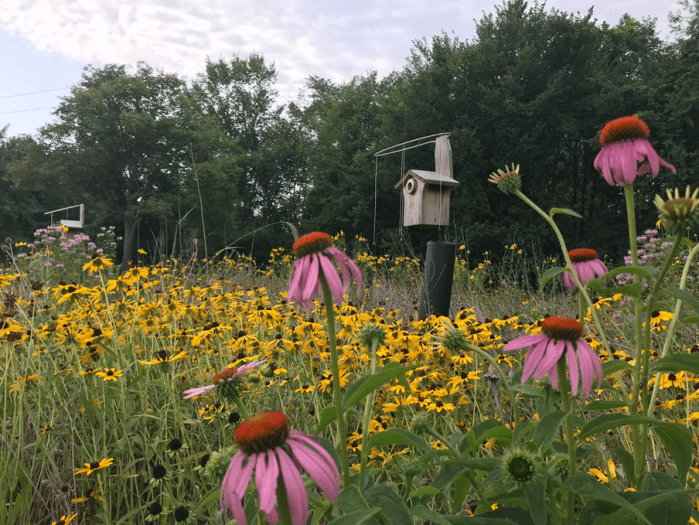
Prairie by Natalie Cypher

Prairie by Natalie Cypher

Rayna Skiver of the Great Lakes Echo has an article on the benefits of building a backyard habitat for Michigan wildlife that says in part:

A habitat can be as simple as a place that provides food, water and shelter for wildlife, said Natalie Cypher, naturalist and educator for the Michigan Department of Natural Resources Outdoor Adventure Center.

Building a habitat in your backyard can require as much or as little space as you want, Cypher said. It depends on what type of wildlife you want to attract.

Research is the first step.

“If you’re looking to provide a habitat for monarch butterflies, you have to use milkweed,” Cypher said. “Monarch butterflies only lay their eggs on milkweed plants and it’s the only food that their caterpillars will eat.”

…Backyard habitats benefit both wildlife and the people making them. For wildlife, they provide food and a safe place to nest. People benefit because of the positive feelings associated with added greenery and the presence of wildlife.

In a suburban neighborhood, a lot of land doesn’t provide habitat, Cypher said. One million acres of wildlife habitat are lost every year due to suburban development, according to the National Wildlife Federation.

“Providing a small patch of habitat can be high impact,” Cypher said.

The National Wildlife Federation reports benefits like higher percentages of native plants, indicator species, tree coverage, water conservation and wildlife presence.

Native plants use less water and sequester carbon, according to the National Wildlife Federation.

Home gardeners benefit from native pollinators such as bees and butterflies because they can increase fruit and vegetable production and help with pest control, Cypher said.

Read on for much more at the Echo. You can learn more about the Michigan Department of Natural Resources Outdoor Adventure Center & even apply for a job on their website!

More Michigan gardens & gardening on Michigan in Pictures.

Support Michigan in Pictures with Patreon

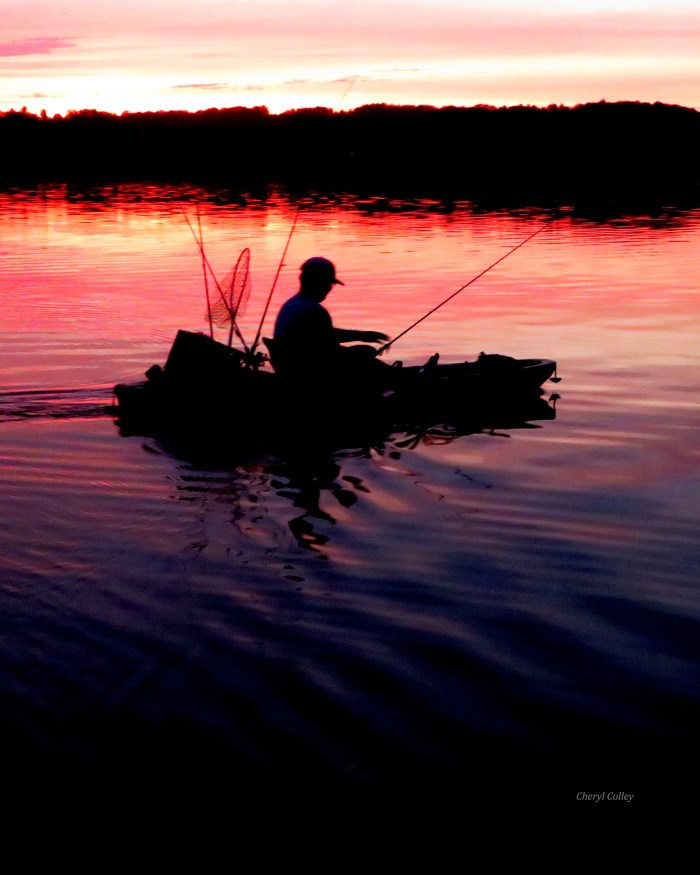
Michigan Fisherman

Michigan Fisherman by Cheryl

Michigan Fisherman by Cheryl

You could definitely do worse than floating in one of Michigan’s lakes this weekend – here’s hoping it’s a great one!

Cheryl took this last August. See more in her massive SUMMER gallery on Flickr.

Support Michigan in Pictures with Patreon

#TBT Time for Tulip Time in Holland

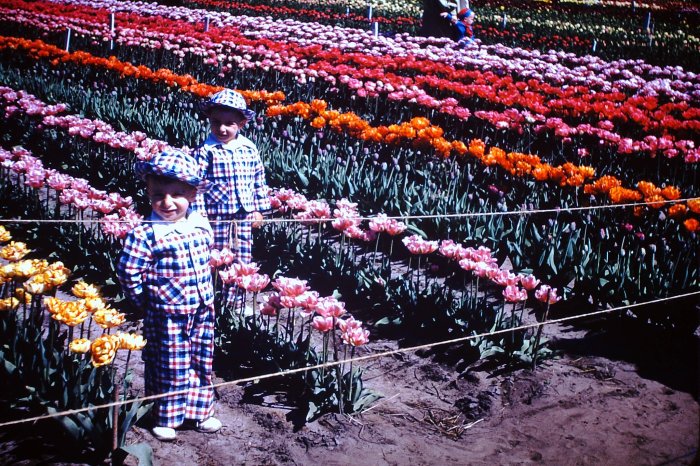
Tulip Time 1953 Edition

Tulip Time 1953 Edition

Holland’s annual Tulip Time Festival starts this Saturday and runs May 7-15, 2022. Tulip Time is the oldest tulip festival in North America that started in in 1929 when the City of Holland planted its first crop of 100,000 tulips, and it has continued to grow with national entertainment acts and events & activities for all ages.

The Tulip Time Festival shared this awesome photo from the 1950s, a perfect Throwback Thursday! Head over to their Facebook Page for more!

More tulips & Tulip Time on Michigan in Pictures.

Support Michigan in Pictures with Patreon

May 15th Lunar Eclipse & what the heck is a Blood Moon anyway?

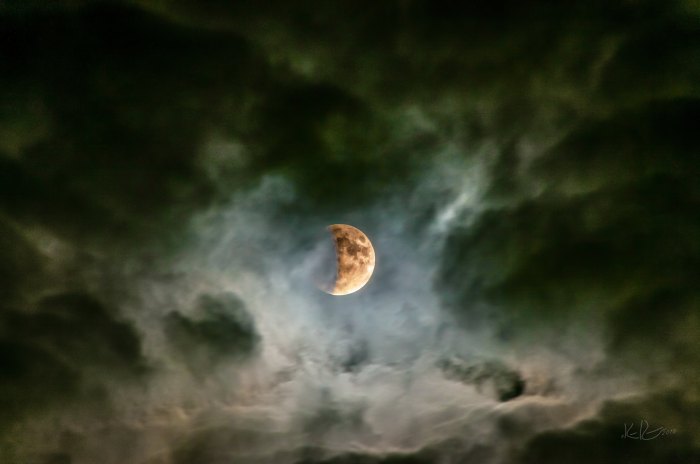
Super Moon Total Lunar Eclipse by Kenneth Raymond

Super Moon Total Lunar Eclipse by Kenneth Raymond

On the night of Sunday, May 15th, a lunar eclipse will begin at 10:28 pm with total eclipse (when the moon turns red) occurring at 12:11 am. The red cast of the moon at total eclipse has inexplicably become popularized as a “blood moon” in recent years. NASA’s page on viewing the total lunar eclipse gives viewing information & explains why the moon turns red during a lunar eclipse:

The same phenomenon that makes our sky blue and our sunsets red causes the Moon to turn red during a lunar eclipse. It’s called Rayleigh scattering. Light travels in waves, and different colors of light have different physical properties. Blue light has a shorter wavelength and is scattered more easily by particles in Earth’s atmosphere than red light, which has a longer wavelength.

Red light, on the other hand, travels more directly through the atmosphere. When the Sun is overhead, we see blue light throughout the sky. But when the Sun is setting, sunlight must pass through more atmosphere and travel farther before reaching our eyes. The blue light from the Sun scatters away, and longer-wavelength red, orange, and yellow light pass through.

During a lunar eclipse, the Moon turns red because the only sunlight reaching the Moon passes through Earth’s atmosphere. The more dust or clouds in Earth’s atmosphere during the eclipse, the redder the Moon will appear. It’s as if all the world’s sunrises and sunsets are projected onto the Moon.

Kenneth took this in Detroit back in September of 2015 during the super moon total eclipse. See more in his The Night Sky gallery on Flickr and view & purchase prints & other products on his website.

Support Michigan in Pictures with Patreon

Riding the Waves: Baby Duck Edition

Riding the Waves by David Juckett

Riding the Waves by David Juckett

It’s been a while since I added to the world famous Michigan in Pictures Duckie Gallery, so cowabunga everyone!!

David shares that although these little guys were only hatched last week, they seemed to be holding their own in the waves. See more in his Birds gallery on Flickr.
Support Michigan in Pictures with Patreon

River Otters and the Detroit River comeback

River Otter by Ashleigh Mowers

River Otter by Ashleigh Mowers

Great Lakes Now has an excellent feature on the return of river otters to the Detroit River that says (in part):

On the cool morning of April 25, doctoral student Eric Ste Marie from the University of Windsor’s department of integrative biology went out for a walk with his partner along the Detroit River prior to an anticipated long day in his lab. Much to his surprise, he saw an animal pop its head out of the water. It was too big to be a mink and, as it dove, he noticed that it did not have a flat beaver tail. Ste Marie ran out to the end of a pier beneath the Ambassador Bridge to get a closer look to check, and there it was: a river otter.

River otters were quite common in southeast Michigan, including the Detroit River, up through the arrival of European explorers and fur traders,” said Gearld P. Wykes, a historian from the Monroe County Museum System. “During the fur trade era, they were much sought after for their fur, along with beaver. Based on historical records, river otters were likely extirpated from the Detroit River in the early 1900s.”

In 1986, the Ohio Department of Natural Resources reintroduced river otters into high water quality rivers and streams in eastern Ohio. The river otters thrived. As their population grew, they began to move westward – what scientists call expanding their range. By the early 2000s, they had found a home in western Ohio, particularly near Cedar Point and Ottawa National Wildlife Refuge, just east of Toledo.

…Biologists studying the Detroit River and resource managers have been excited about the possible range expansion of river otters into the Detroit River. There have been a few anecdotal reports from citizens, but no photographic or videographic proof until Ste Marie was greeted with that ecological surprise on the morning of April 25.

…River otters are considered an indicator species, and their return to the Detroit River after an absence of more than 100 years is a hopeful sign of improving watershed conditions.

Ashleigh took this back in 2016 in Detroit at the Detroit Zoo. Hopefully she gets a shot of them in the wild! See more in her Detroit gallery on Flickr & for sure check out her Go See Do Photography website for more great pics!

More about River otters on Michigan in Pictures.

Support Michigan in Pictures with Patreon

Embrace Michigan’s Dark Skies!

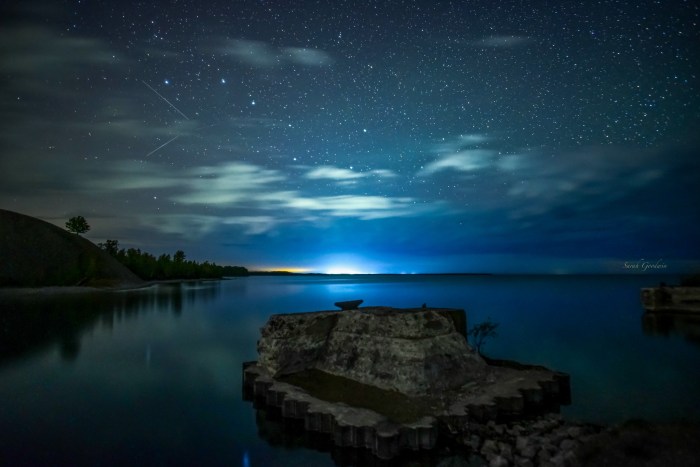
Dark Skies at Rockport Recreation Area by SG Captures

Dark Skies at Rockport Recreation Area by SG Captures

Michigan State Parks, Trails and Waterways shared this photo from the Rockport State Recreation Area, asking: What are you doing to do to celebrate #InternationalDarkSkyWeek?

Michigan is lucky to have designated areas that host spectacular nighttime viewing. Dark sky parks and preserves have a limited amount of artificial light, making it easier to stargaze in those locations. Dark sky preserves are designated by Michigan legislature and dark sky parks are designated by the International Dark Sky Association. The six state parks that have dark sky preserves are:

In addition to these dark sky preserves, there are two dark sky parks in Michigan:

And if that’s not enough, there is also plenty of excellent night-sky viewing opportunities across more than 15,000 square miles in Michigan’s Upper Peninsula. For more details, visit Michigan.gov/DarkSky.

Sarah is a Michigan State Parks Photo Ambassador, and you should definitely check out her website where you can view & purchase her work as well as her Facebook & sg.captures on Instagram!

Support Michigan in Pictures with Patreon

Glow in the Dark Michigan: the Railroad Worm

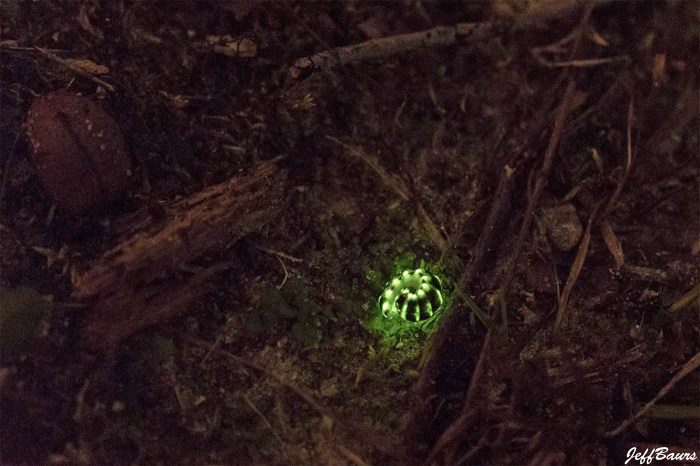
Railroad Worm by Jeff Baurs

Railroad Worm by Jeff Baurs

You may remember Jeff from the bioluminescent oyster mushrooms I shared last October. In any case, he’s back with another glowing critter he photographed last week, a railroad worm! The University of Florida Entomology & Nematology Department shares some information about these glow worms:

The family Phengodidae are uncommonly encountered beetles that have bioluminescent females that appear to be larvaiform (or larger versions of the immature stage.) These adult females are able to produce light from paired photic organs located on each body segment (one glowing spot on each side) and sometimes also from luminous bands that extend across the dorsal surface of the body between each body segment. Because these glowing spots along the females body resemble the windows of train cars internally illuminated in the night, they are often referred to as “railroad-worms.”

…Even though females appear to hide in their burrows during the day, they can often be detected on the surface of the ground by their glowing, immediately following a summer rain. Even though the females are bioluminescent, the females light emission does not appear to be the cue that the males use to locate their mates.

Be sure to follow Jeff on Facebook or Instagram for more including this shot of a railroad worm AND glowing oyster mushrooms!

Support Michigan in Pictures with Patreon