That Super Beaver Moon is actually a Super Hunter’s Moon

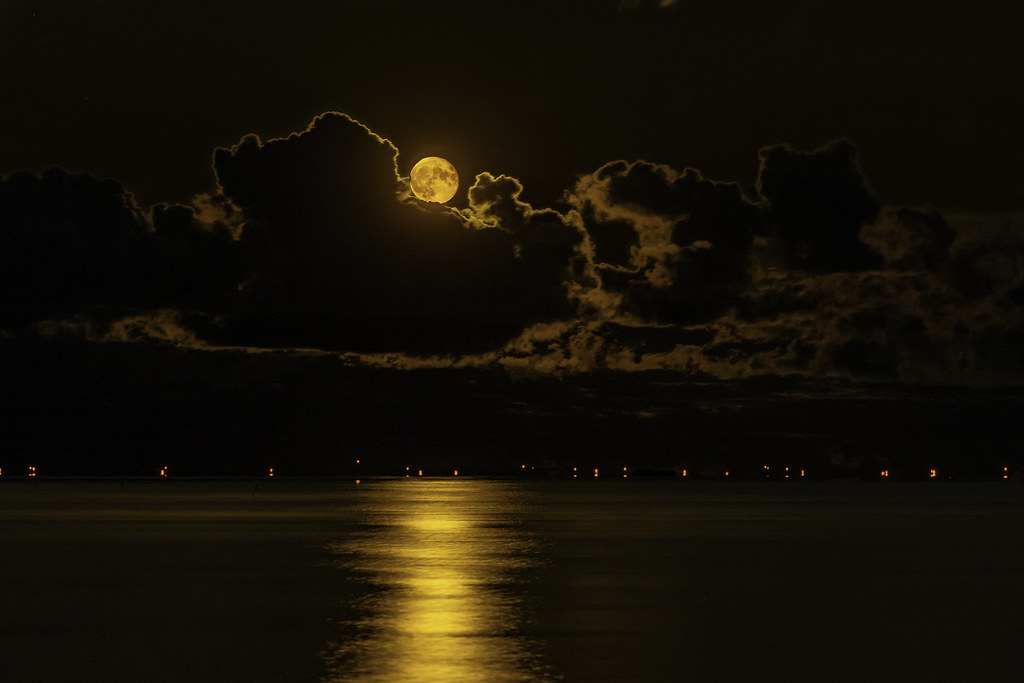
Lake Huron Moonshine by kare hav

Lake Huron Moonshine by kare hav

I got a lot of enjoyment from walking around the house yesterday saying “Super Beaver Moon” so it is with sadness & regret I share that EarthSky’s Deborah Byrd explains that if a full moon of November falls after November 7, it’s the Beaver Moon but if it’s before the 7th, it’s the Hunter’s Moon. Deborah writes:

Nature is particularly cooperative around the time of the autumnal equinox to make the fall full moonrises special. On average, the moon rises about 50 minutes later each day. But when a full moon happens close to the autumnal equinox – either a Harvest or a Hunter’s Moon – the moon (at mid-northern latitudes) rises about 30 minutes later daily for several days before and after the full moonThe result is that there’s a short-than-usual lag time between successive moonrises around the Hunter’s Moon adding to the brightness of evening twilight.

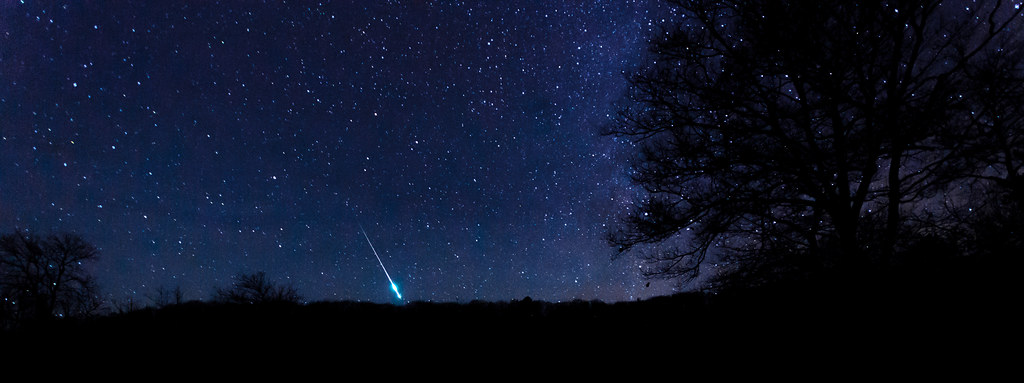
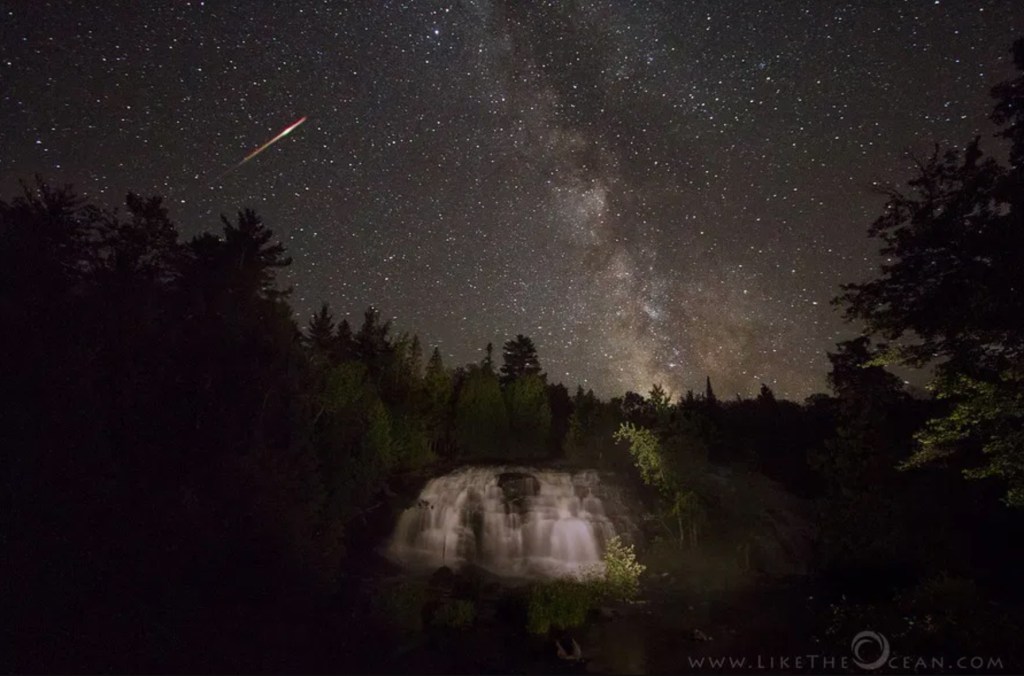
The moon has for sure been looking huge when it’s risen the last couple of nights! To add to the fun, EarthSky shares that the South Taurid & North Taurid meteor showers are both happening right now! While they aren’t a very active shower with just 5-10 meteors per hour, they can produce really intense fireballs like this one from Monday night over Glen Lake in the Sleeping Bear Dunes National Lakeshore.

This moon is neither Hunter nor Beaver: it’s the August 2020 Sturgeon Moon as seen over Lake Huron. See more in kare hav’s Point Lookout / Au Gres gallery on Flickr including the first pic I ever shared from this awesome photographer on Night and Light.
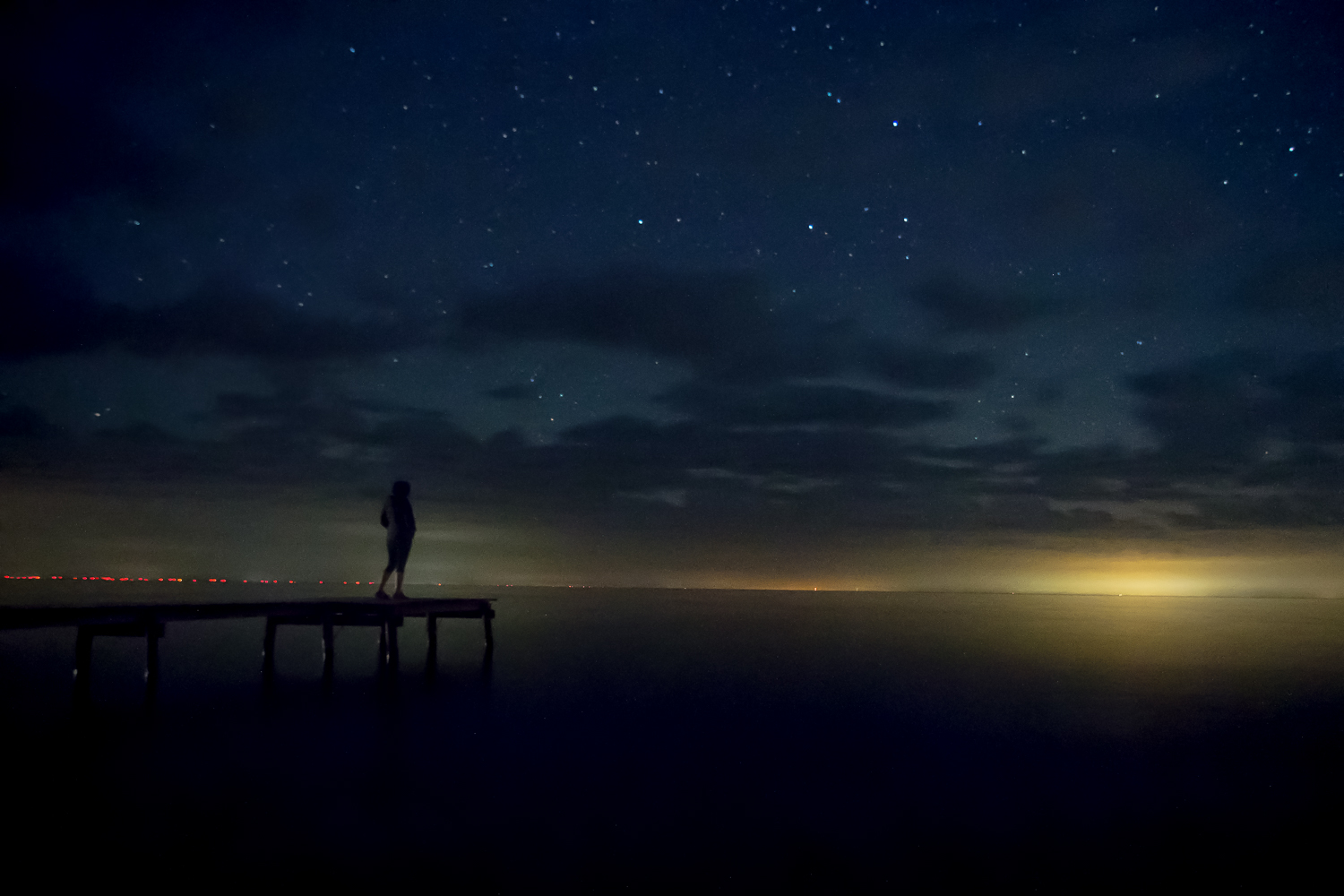

Night by kare hav

Support Michigan in Pictures with Patreon

The Scary Sound of Meteors

Bolides & Electrophonic Sounds by Aaron Springer

Bolides & Electrophonic Sounds by Aaron Springer

While much of Michigan was shrouded in clouds for the peak of the Orionids, the October meteor shower will still be producing a lot of meteors for the next few days. As you are watching the skies, you may hear sounds that have been reported along with meteors for millenia, and dismissed for the same amount of time by such luminaries as Edmund “The Comet Guy” Halley. This Space.com article says that you might be able to believe your ears that meteors can make hissing sounds:

These faint sounds are probably created when bright pulses of light from the meteors heat up certain objects on the ground below, a new study reports. These objects — for example, leaves or hair — radiate thermal energy into the nearby air, producing pressure waves that generate a variety of sounds.

“I think our answer is pretty solid,” said study co-author William Sweatt, a researcher at Sandia National Laboratories in New Mexico.

The mysterious sounds are associated with very bright fireballs, meteors that blaze up at least as intensely as the full moon shines in the sky. Generally, an incoming object must weigh 1.1 lbs. (0.5 kilograms) or more to make noise audible to humans, Sweatt said.

The faint, whispery sounds have been described in many different ways by people who have heard them; popping, sizzling, rustling and hissing are commonly employed adjectives. And hearing them is a rare treat indeed. “I think a person’s lucky if they get one per lifetime,” Sweatt told Space.com.

You can read more & check out the video below. A very cool twist on the story for me is that a friend shared my experience of hearing the sounds with today’s photographer Aaron Springer when he shared this back in November of 2015. Aaron referenced the American Meteor Society’s theories on the sounds which appear to have been correct!!

Another form of sound frequently reported with bright fireballs is “electrophonic” sound, which occurs coincidentally with the visible fireball. The reported sounds range from hissing static, to sizzling, to popping sounds. Often, the witness of such sounds is located near some metal object when the fireball occurs. Additionally, those with a large amount of hair seem to have a better chance of hearing these sounds. Electrophonic sounds have never been validated scientifically, and their origin is unknown. Currently, the most popular theory is the potential emission of VLF radio waves by the fireball, although this has yet to be verified.

Head over to Aaron’s Flickr for his latest & don’t forget to look up!!

Support Michigan in Pictures with Patreon

Falling Skies: October 2025 Meteor Showers

Thumb Barn Milky Way & Meteor by Charles Bonham

Thumb Barn Milky Way & Meteor by Charles Bonham

In addition to being the season of cider, changing leaves, and Halloween, October also comes with two meteor showers. Our friends at EarthSky give you all you need to know to see the Draconid & Orionid meteor showers:

The Draconids, October 6-10 / peak October 8

The best time to watch the Draconid Meteor Shower in 2025 is as darkness falls on the evening of October 8 through the wee hours of the morning on October 9. A waning gibbous will light up the sky that night, so try to block out the moon when watching for meteors. The radiant point for the Draconids is highest in the sky right when darkness falls so this is a great one for the early to bed crowd!

The Orionids, September 26 – November 22 / peak October 21st

The best time to watch for these meteors is on the morning of October 21, starting after midnight through the hours before dawn. In 2025 conditions are perfect with a dark sky and new moon. The Orionids produce a maximum of about 10-20 meteors per hour, some of them bright fireballs. They are known as the Orionids because they appear to radiate from the Club of the well-known constellation Orion the Hunter.

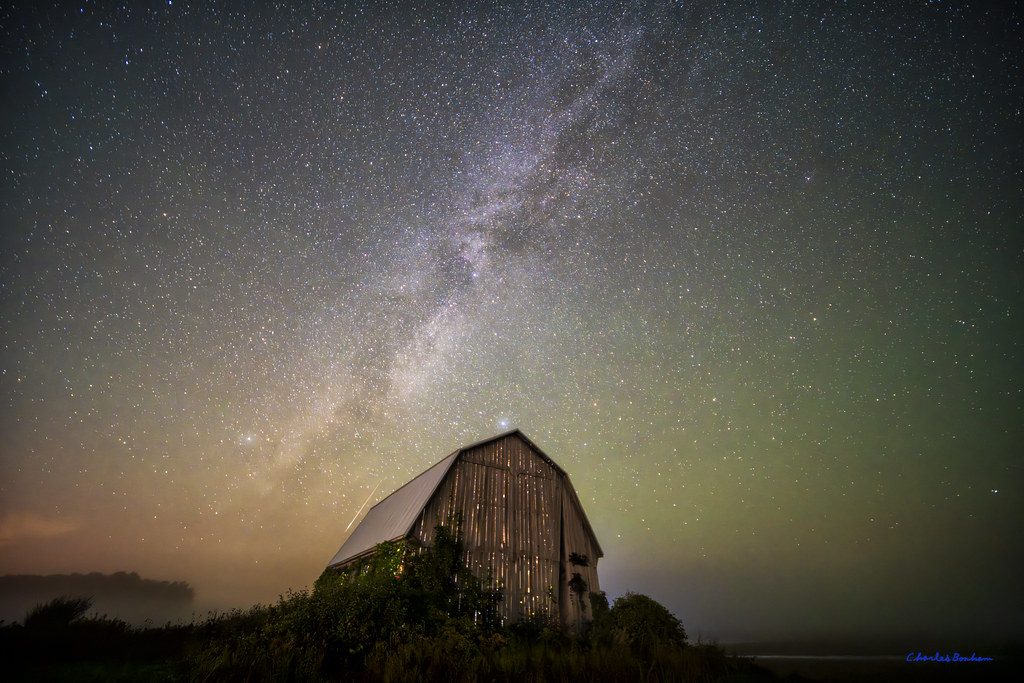
Charles shares that he found a Draconid meteor in this photo of a barn in Pinnebog from last October after reviewing many different frames. You can see it right next to the left side of barn roof along with a hint of Northern Lights on the right side! See more in his Barns gallery on Flickr including some truly spectacular ones of this barn under the aurora!

Support Michigan in Pictures with Patreon

Start looking for Perseid Meteors NOW!

The Milky Way and Perseid meteor shower in the same night by Joshua DuPois

The Milky Way and Perseid meteor shower in the same night by Joshua DuPois

The American Meteor Society’s Meteor Shower Calendar for 2025-2026 has this to say about the Perseid Meteor Shower:

The Perseids are the most popular meteor shower as they peak on warm August nights as seen from the northern hemisphere. The Perseids are active from July 14 to September 1. They reach a strong maximum on August 12 or 13, depending on the year. Normal rates seen from rural locations range from 50-75 shower members per hour at maximum. The Perseids are particles released from comet 109P/Swift-Tuttle during its numerous returns to the inner solar system. They are called Perseids since the radiant (the area of the sky where the meteors seem to originate) is located near the prominent constellation of Perseus the hero when at maximum activity. In 2025, the waning gibbous moon will severely compromise this shower at the time of maximum activity. Such conditions will reduce activity by at least 75 percent as only the brighter meteors will be visible.

So while the sheer number will peak in a couple weeks, you’re advised to start looking now! Head over to the AMS for more on the Perseids & other meteor showers including the currently active alpha Capricornids.

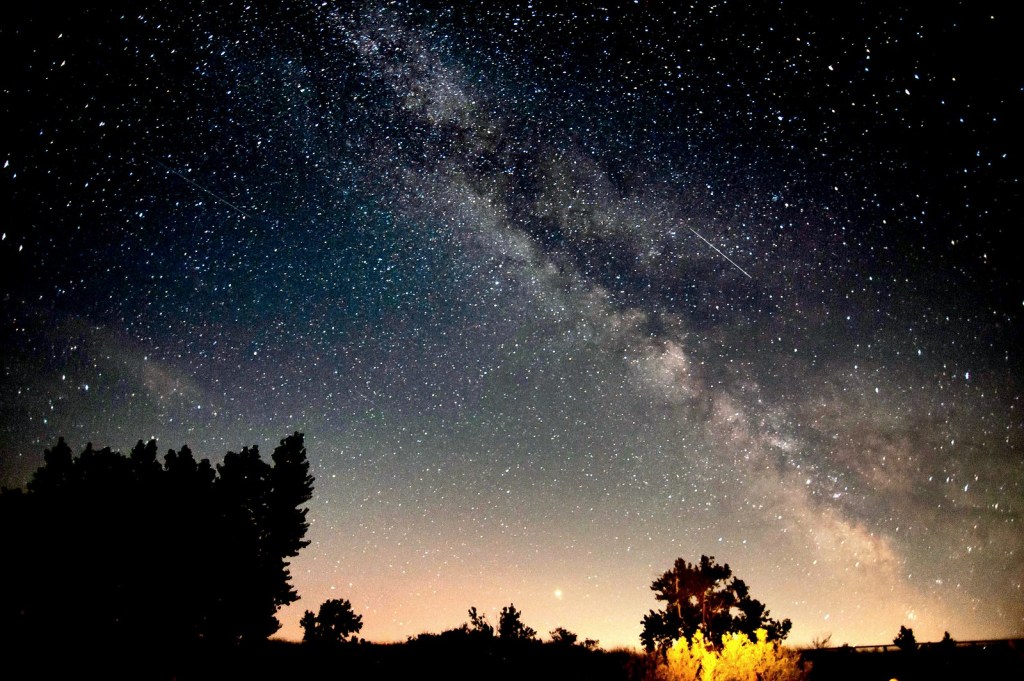
Joshua took this back in August of 2018. See the latest on his Flickr!

Support Michigan in Pictures with Patreon

Under the Sign of the Lion

Aurora Fireball by Ross Ellet

I featured this photo 8 years again, but with the incredible run of northern lights we’ve been having and the massive spike in interest in getting out under the night sky coupled with the rise of the Detroit Lions as an NFL superpower, it’s a great time to bring back this feature from Space.com on How to Watch the Leonids Meteor Shower:

The Leonid meteor shower will be active from Nov. 3 to Dec. 2 this year and will peak overnight from Nov. 17 to 18. The Leonids are produced when Earth passes through the debris left behind by comet 55P/Tempel-Tuttle during its highly elliptical orbit around the sun every 33 years. The Leonids are considered some of the fastest meteors, zipping through the sky at 44 miles (71 kilometers) per second, according to NASA. They can also result in impressive fireballs producing long, bright and colorful meteor streaks.

The Leonids’ radiant is located in the sickle-shaped head of the constellation Leo, the lion. Leonid meteor hunting can be incredible, or a total bust. It all depends on where its parent body, Comet 55P/Tempel-Tuttle, will be in its orbit and the kind of debris clumps that will be around when our planet passes through this comet’s orbit. The Leonids put on big shows in 1966, 1999 and 2001, according to AMS, when the comet was making its closest approach to the sun. It will be several years until observers get a big show from the Leonids.

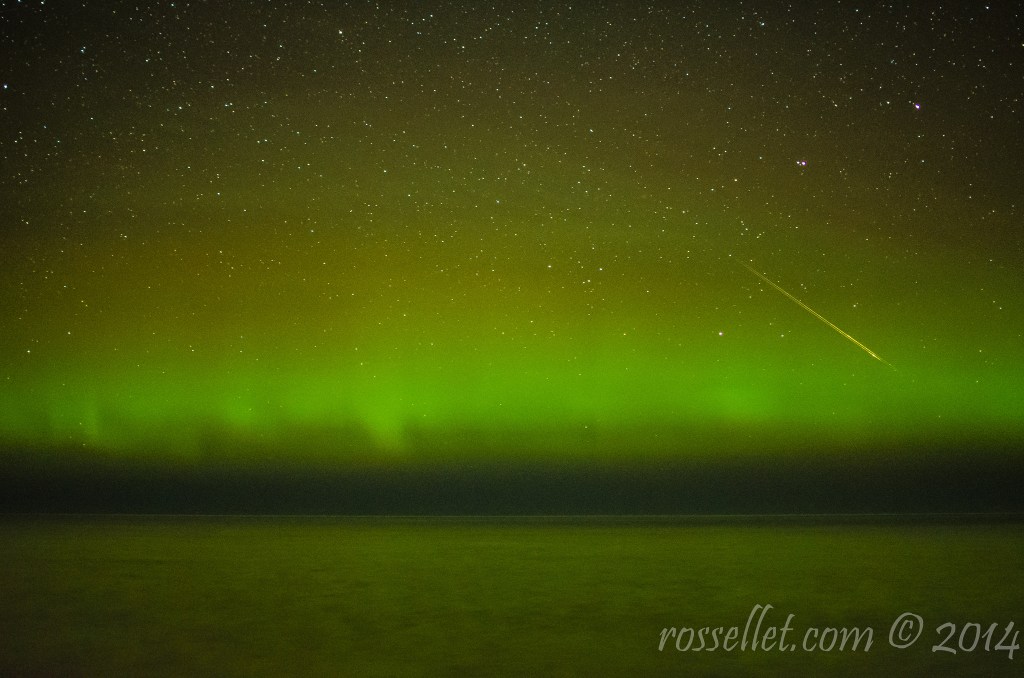
Ross took this photo ten years ago in late September of 2014 and shared:

The sky was cloudy most of the night, but at 3:30am there wasn’t a cloud in the sky. We made our way to the lakeshore and sure enough the northern lights were dim on the northern horizon. At one point you could hear the howl of a distant wolf pack while the northern lights were out. Then moments later a slow move fireball flashed across the sky. It lasted a couple seconds and the brightness pulsed as it moved through the atmosphere. After that the aurora faded, but several more meteors (some very bright) streaked above us.

Ssee more in his Porcupine Mtns gallery on Flickr, and definitely check out Ross Ellet’s Picturesque Adventures for much more!!

Support Michigan in Pictures with Patreon

Get ready for the 2024 Lyrid Meteor Shower!

Lyrid Meteor … sprinkle by Ken Scott Photography

Longtime skywatchers know that April’s Lyrid meteor shower is the kickoff to meteor season. Earthsky shares the best time to see the Lyrids:

Late evening April 21 until dawn April 22 is the shower’s likely peak. The predicted** peak is 9:23 UTC on April 22. The peak of the Lyrids is narrow (no weeks-long stretches of meteor-watching, as with some showers). And, in 2024, the full moon will fall at 23:49 UTC on April 23. So your Lyrid meteor watching will be in moonlight this year. Tip: Go to a country location where the skies are as dark and clear as possible. Observe under a wide-open sky. But try to place yourself in a moon shadow. If you can block out the sight of the moon, yet still have some sky left for seeing meteors, you might see some of the brightest Lyrids blaze past in the bright moonlight. Remember, even one bright meteor can make your night!

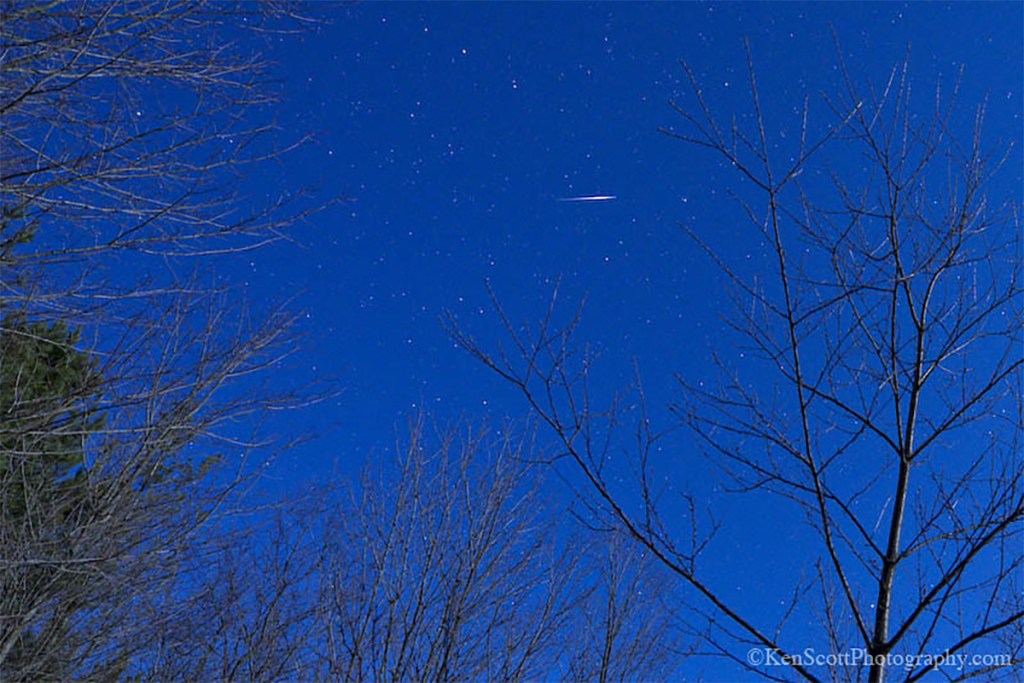
I’ve shared this photo that Ken shot back in April of 2016 before, and I’ll probably share it again! He shared that he shot over a 3 hour period in hopes to catch the meteor ‘shower’ and only caught this one streaker. See more in his Skies Above album on Flickr and for sure visit Ken Scott Photography to view & purchase his work!

Support Michigan in Pictures with Patreon!

2021 Geminid Meteor Shower on the way!

Milky Way over Au Sable Point Lighthouse by Michigan Nut Photography

Milky Way over Au Sable Point Lighthouse by Michigan Nut Photography

EarthSky says that the annual Geminid Meteor Shower that will peak next week is one of the year’s best:

The Geminids are a reliable shower for those who watch around 2 a.m. local time from a dark-sky location. We also often hear from those who see Geminid meteors in the late evening hours. This year, a waxing gibbous moon will be above the horizon during peak time for viewing. But it’ll set shortly afterwards, leaving the sky dark for watching meteors. Thus the best time to watch for Geminid meteors in 2021 is likely before dawn – say, from around 3 a.m. to dawn – on the morning of December 14.

It’s a somewhat narrow window for meteor-watching. But still worth a look!

On a dark night, near the peak of the shower, you can often catch 50 or more meteors per hour. On an optimum night for the Geminids, it’s possible to see 150 meteors per hour. A new moon on December 4 means that the peak of the shower coincides with a moon just a few days past first-quarter phase.

Click through for all the details but remember the key to success is finding dark skies!!

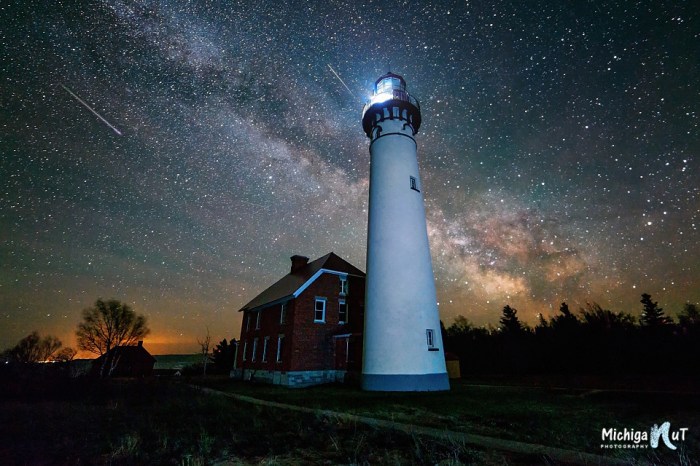
John took this back in May 2014 at the Au Sable Lighthouse in the Pictured Rocks National Lakeshore. See more in his Starry Nights gallery on Flickr & view and purchase prints & calendars on his website.

Support Michigan in Pictures with Patreon

Leonids + Lunar Eclipse = TONIGHT!

Lunar Eclipse by the Lighthouse by Sathya

Lunar Eclipse by the Lighthouse by Sathya

If the weather cooperates, tonight & early tomorrow morning hold a whole lot of skywatching potential for Michiganders! In addition to the peak of the Leonid meteor shower, NPR shares the details on tonight’s lunar eclipse:

West Coast night owls and East Coast early risers will have the best view of the upcoming lunar eclipse this Friday. Overnight, the moon will pass into the shadow of Earth cast by the sun, illuminating the gray orb with a red hue.

It will be the second and final eclipse of the year. NASA predicts the eclipse will last over 3 hours and 28 minutes. That would make it the longest partial lunar eclipse in 580 years, according to the Holcomb Observatory at Butler University.

…For U.S. viewers the peak of the eclipse — when the moon is the most covered by Earth’s shadow — will be at 4:03 a.m. ET.

But the moon will begin to pass into the Earth’s shadow much earlier, around 1:00 am ET. At 2:19 a.m. ET the moon will move into the umbra, the inner part of Earth’s shadow, and begin to look like a chunk is missing from it. It will turn red around 3:45 a.m. ET

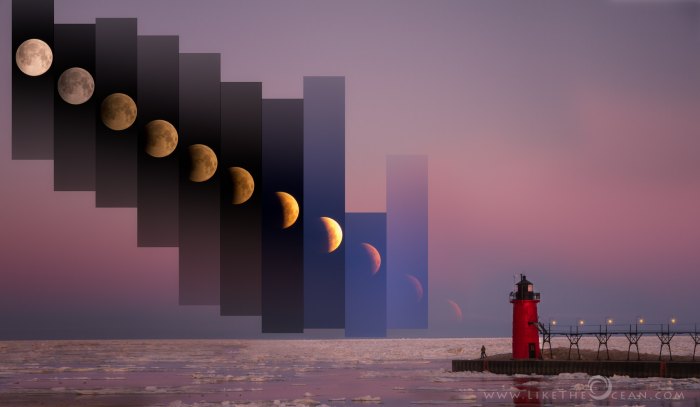
Sathya shares the story behind this photo from April 2015, saying in part, “Witnessing the lunar eclipse was magical. Planning and shooting the same was a lot of fun. Out here, in the north east of US, the lunar eclipse was not total, so missed out on the blood moon, but it was still a scintillating experience. As the moon was getting into total eclipse, it set over the horizon … This shot is a mix of landscape and time slice – in an attempt to highlight the lunar eclipse in the context of the surrounding landscape. This was a panorama made out of a composite. Though it does not look like a wide view, that is what helped capture the moon and the lighthouse in context.”

See more in his Showcase gallery on Flickr & on his website Like the Ocean.

Support Michigan in Pictures with Patreon

Under the Same (Shooting) Stars

Under the Same Stars by Fire Fighter's Wife

Under the Same Stars by Fire Fighter’s Wife

“When you fall asleep tonight just remember that we lay under the same stars.”
~Shawn Mendes

C-Net’s report on how to see the annual Orionid Meteor Shower says that:

The Orionids are considered a major meteor shower based on the amount of visible meteors that can be seen racing toward inevitable doom during its active period, which runs roughly from the first week of October to the first week of November.

The show is already active and the American Meteor Society forecasts that a handful of meteors per hour may be visible over the next several days, leading up to the peak on Oct. 20 and Oct. 21, when the number could increase to 20 per hour.

The Orionids are really just bits of dust and debris left behind from famed Comet Halley on its previous trips through the inner solar system. As our planet drifts through the cloud of comet detritus each year around this time, all that cosmic gravel and grime slams into our upper atmosphere and burns up in a display we see on the ground as shooting stars and even the occasional fireball.

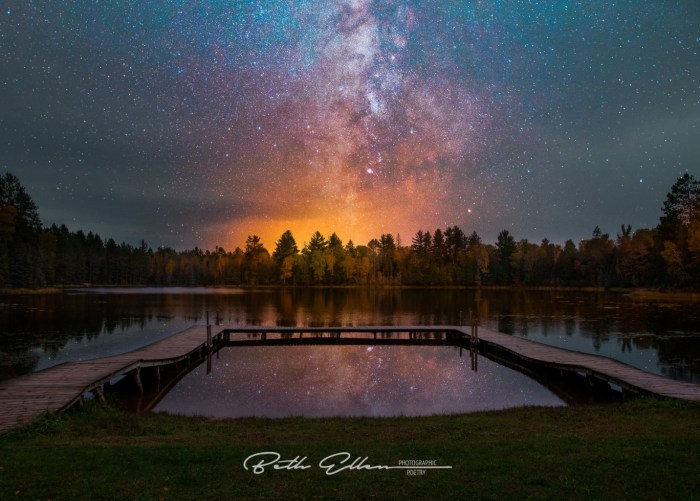
Here’s another gorgeous photo & thought from Beth. See more in her Explore gallery on Flickr!

Support Michigan in Pictures with Patreon

Chasing the 2020 Perseid Meteor Shower

Milky Way over Bond Falls with a dash of Perseids by Sathya

“I am beginning to love the stars too fondly to be fearful of the night.”
~Sathya R.

EarthSky explains that the annual Perseid meteor shower is one of the most beloved meteor showers of the year, especially in the Northern Hemisphere, where the shower peaks on warm summer nights:

No matter where you live worldwide, the 2020 Perseid meteor shower will probably produce the greatest number of meteors on the mornings of August 11, 12 and 13. On the peak mornings in 2020, the moon will be at or slightly past its last quarter phase, so moonlight will somewhat mar this year’s production. Still, there are some ways you can minimize the moon and optimize your chances for a good display of Perseids this year. Here are some thoughts:

The Perseids tend to be bright, and a good percentage of them should be able to overcome the moonlight. Who knows? You still might see up to 40 to 50 meteors per hour at the shower’s peak, even in the light of a bright moon. Will you see over 100 per hour, as in some years? Not likely. Still …

Try to watch after midnight but before moonrise. If fortune smiles upon you, the evening hours might offer you an earthgrazer – a looooong, slow, colorful meteor traveling horizontally across the evening sky. Earthgrazer meteors are rare but memorable. Perseid earthgrazers appear before midnight, when the radiant point of the shower is close to the horizon.

Watch in moonlight, but place yourself in the moon’s shadow.

Consider watching after the peak. People tend to focus on the peak mornings of meteor showers, and that’s entirely appropriate. But meteors in annual showers – which come from streams of debris left behind in space by comets – typically last weeks, not days. Perseid meteors have been streaking across our skies since around July 17. We’ll see Perseids for 10 days or so after the peak mornings on August 11, 12 and 13, though at considerably reduced numbers. Yet, each day as the moon wanes in the morning sky, less moonlight will obtrude on the show. Starting on or around August 17, moon-free skies reign all night long.

You can read about the taking of this photo & purchase a print from Sathya in Chasing the Perseids at his blog Like the Ocean & see more in his awesome Showcase album on Flickr.

There’s more Bond Falls & more Perseids at Michigan in Pictures.

Support Michigan in Pictures with Patreon