Winter’s smile

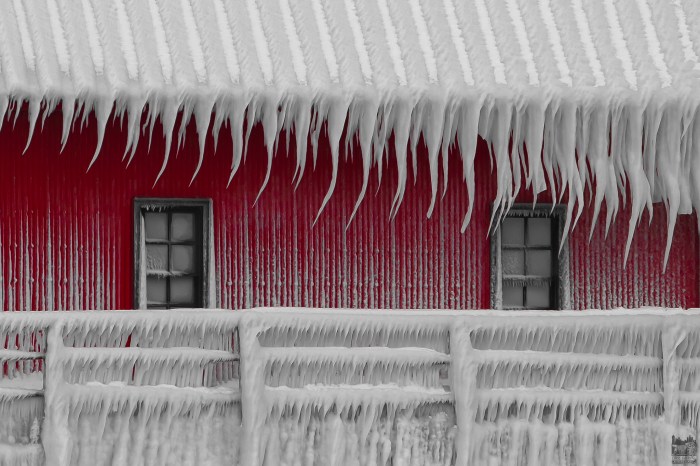
Grand Haven Lighthouse & Pier by Chris Ahern Photography

Grand Haven Lighthouse & Pier by Chris Ahern Photography

Chris’s photo of the Grand Haven Lighthouse from last weekend really shows the power of winds off the Great Lakes. You can click the pic to follow him on Facebook, and also see his pics on Instagram and view & purchase prints & calendars on his website.

Support Michigan in Pictures with Patreon

The Night Before Christmas at the Ludington Light

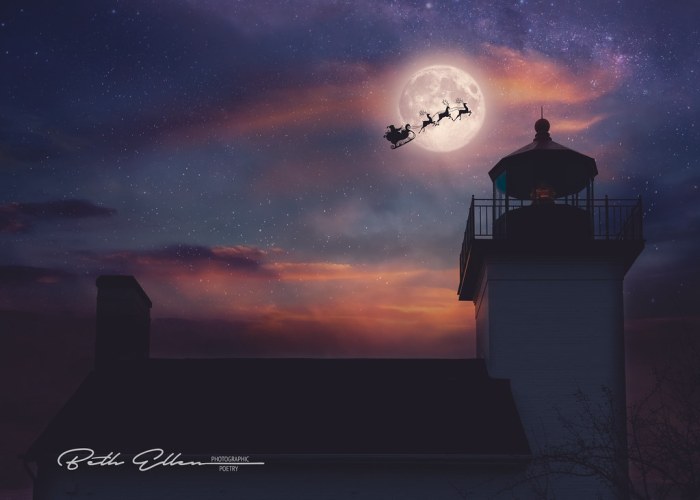
Watch the Skies on Christmas Eve by Fire Fighter's Wife

Watch the Skies on Christmas Eve by Fire Fighter’s Wife

Beth shares a great sentiment for the holidays or any season: May you never be too grown up to search the skies on Christmas Eve.

About this photo (which I’m still pretty sure is totally authentic) she writes: I wanted to do something I’ve never done and I couldn’t help myself. This year I was so inspired and thought it’d be great to bring out my Christmas album with a bang! This lead me to thinking, with a suggestion from a friend, to add a flying Santa sleigh to the moon. I debated back and forth but decided, it’s Christmas. Step out of the box and do something magical!

Indeed!! See more in her 25 Days of Christmas Gallery on Flickr & never grow up!!

Support Michigan in Pictures with Patreon

Into the Gale

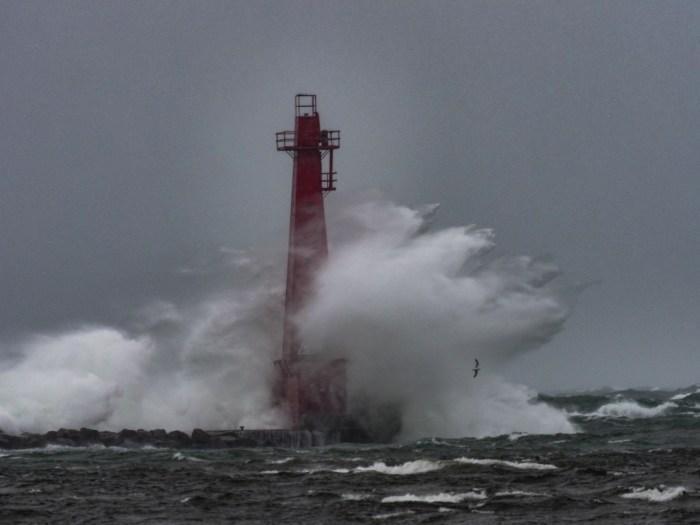
Muskegon South Pier leaning into the gale by Jerry Herrendeen

Muskegon South Pier leaning into the gale by Jerry Herrendeen

This past Sunday (Dec 11, 2021) was a very dark day in American meteorological history as tornados ravaged the middle south, killing at least 80 in Kentucky and visiting devastation on Arkansas, Illinois, Mississippi, Missouri and Tennessee in what has become since 2020 a new seasonal threat.

While the Great Lakes State was spared the worst, mLive shares that Michigan was buffeted by winds topping 60 mph with gusts as high as 72 recorded at the Saugatuck Pier. While there’s no wind reading from the South Breakwater Light, the Muskegon North Breakwater Light clocked a reading of 68 MPH. Waveheads in the audience who want to know just how big the wave in this photo can do a little visual math with the knowledge that the North Breakwater Light is 52′ tall!

Jerry’s The Moods of Lake Michigan gallery makes it clear he has no problem getting out there to get the shot & has a couple more photos from Sunday including this shot of a wave nearly topping the 48′ south pier light

Support Michigan in Pictures with Patreon

2021 Geminid Meteor Shower on the way!

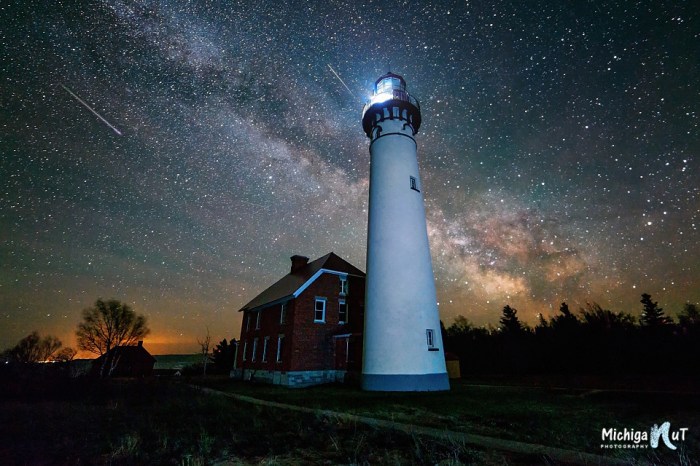
Milky Way over Au Sable Point Lighthouse by Michigan Nut Photography

Milky Way over Au Sable Point Lighthouse by Michigan Nut Photography

EarthSky says that the annual Geminid Meteor Shower that will peak next week is one of the year’s best:

The Geminids are a reliable shower for those who watch around 2 a.m. local time from a dark-sky location. We also often hear from those who see Geminid meteors in the late evening hours. This year, a waxing gibbous moon will be above the horizon during peak time for viewing. But it’ll set shortly afterwards, leaving the sky dark for watching meteors. Thus the best time to watch for Geminid meteors in 2021 is likely before dawn – say, from around 3 a.m. to dawn – on the morning of December 14.

It’s a somewhat narrow window for meteor-watching. But still worth a look!

On a dark night, near the peak of the shower, you can often catch 50 or more meteors per hour. On an optimum night for the Geminids, it’s possible to see 150 meteors per hour. A new moon on December 4 means that the peak of the shower coincides with a moon just a few days past first-quarter phase.

Click through for all the details but remember the key to success is finding dark skies!!

John took this back in May 2014 at the Au Sable Lighthouse in the Pictured Rocks National Lakeshore. See more in his Starry Nights gallery on Flickr & view and purchase prints & calendars on his website.

Support Michigan in Pictures with Patreon

Leonids + Lunar Eclipse = TONIGHT!

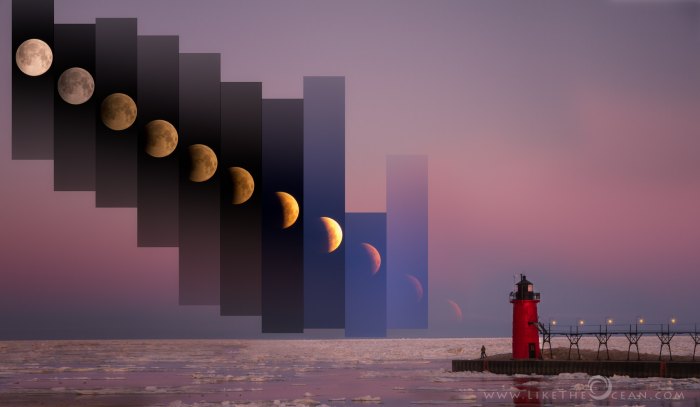
Lunar Eclipse by the Lighthouse by Sathya

Lunar Eclipse by the Lighthouse by Sathya

If the weather cooperates, tonight & early tomorrow morning hold a whole lot of skywatching potential for Michiganders! In addition to the peak of the Leonid meteor shower, NPR shares the details on tonight’s lunar eclipse:

West Coast night owls and East Coast early risers will have the best view of the upcoming lunar eclipse this Friday. Overnight, the moon will pass into the shadow of Earth cast by the sun, illuminating the gray orb with a red hue.

It will be the second and final eclipse of the year. NASA predicts the eclipse will last over 3 hours and 28 minutes. That would make it the longest partial lunar eclipse in 580 years, according to the Holcomb Observatory at Butler University.

…For U.S. viewers the peak of the eclipse — when the moon is the most covered by Earth’s shadow — will be at 4:03 a.m. ET.

But the moon will begin to pass into the Earth’s shadow much earlier, around 1:00 am ET. At 2:19 a.m. ET the moon will move into the umbra, the inner part of Earth’s shadow, and begin to look like a chunk is missing from it. It will turn red around 3:45 a.m. ET

Sathya shares the story behind this photo from April 2015, saying in part, “Witnessing the lunar eclipse was magical. Planning and shooting the same was a lot of fun. Out here, in the north east of US, the lunar eclipse was not total, so missed out on the blood moon, but it was still a scintillating experience. As the moon was getting into total eclipse, it set over the horizon … This shot is a mix of landscape and time slice – in an attempt to highlight the lunar eclipse in the context of the surrounding landscape. This was a panorama made out of a composite. Though it does not look like a wide view, that is what helped capture the moon and the lighthouse in context.”

See more in his Showcase gallery on Flickr & on his website Like the Ocean.

Support Michigan in Pictures with Patreon

Halloween’s Lantern

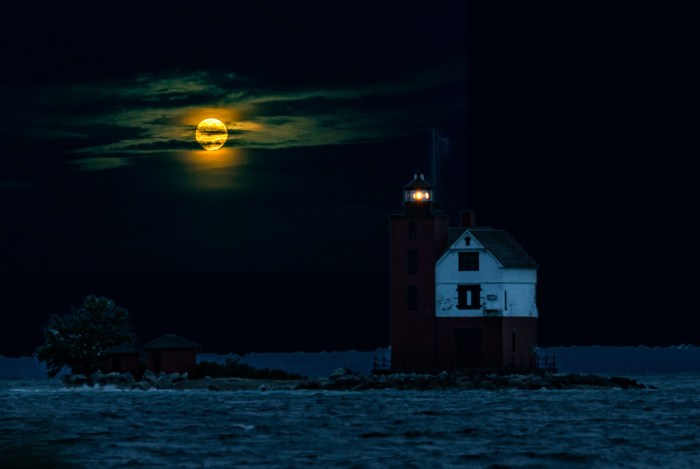
Round Island Light by Tom Clark

Round Island Light, with a  little moon added for effect by Tom Clark

Tom’s shot of Round Island Light off Mackinac Island just might be the most Michigan Halloween photo ever. See more in his Night scenes & after dark images gallery on Flickr & head over to Tom’s website to explore his photos.

If you want a spooky lighthouse, check out The Haunting of the White River Light on Michigan in Pictures & happy Halloween everyone!!

Support Michigan in Pictures with Patreon

The Magic Of That Day Was Written In The Sky

The Magic Of That Day Was Written In The Sky by David Hoffman

The Magic Of That Day Was Written In The Sky by David Hoffman

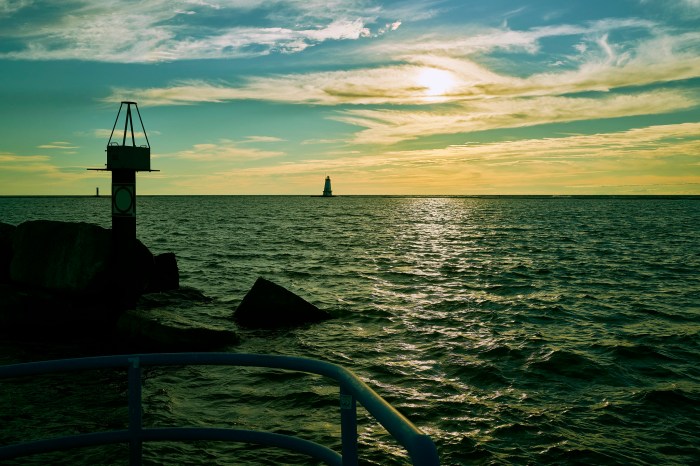
Sweet shot of the view of Lake Michigan from Ludington. See more in David’s Lighthouses gallery on Flickr

Have a great weekend everyone & see more lighthouses on Michigan in Pictures.  

Support Michigan in Pictures with Patreon

White Shoal Light & Terry Pepper

White Shoal Light by Joel Dinda

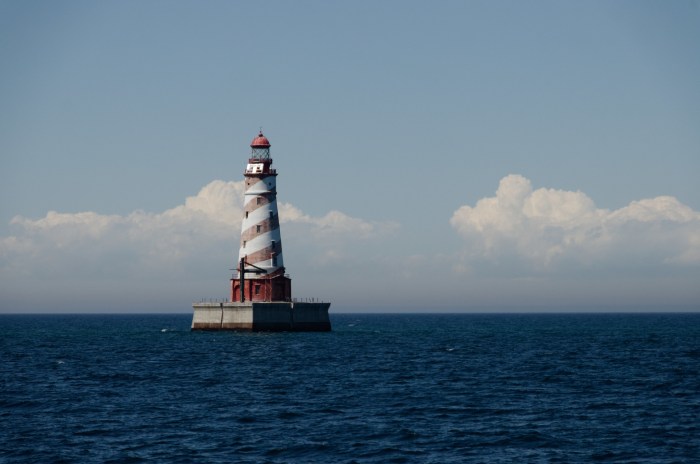
White Shoal Light by Joel Dinda

Terry Pepper was almost certainly the greatest champion ever for the lighthouses of the Great Lakes. Although he passed in 2019, his Seeing the Light website remains as a fantastic resource for the lighthouses of the western Great Lakes. The White Shoal Lighthouse entry says (in part, because these are VERY thorough):

Located approximately 20 miles east of Mackinac Point and 2.6 miles northwest of Waugoshance Island, the shallows around White Shoal had long presented a hazard for vessels entering the Straits from the either the North Shore or the Manitou Passage. Lying in an east/west orientation, and almost two miles long, the shoal was so shallow that its west end broke the water’s surface. With the dramatic increase in vessel traffic in the late 1880’s, the Lighthouse Board specifically identified White Shoal, Simmons Reef and Gray’s Reef as three Straits-area navigational hazards requiring immediate demarcation.

…Spring of 1908 saw work begin on the White Shoal light on two separate fronts. While a crew at the site leveled a one hundred and two-foot square area on the shoal through the addition and careful placement of loads of stone, a second crew worked on building a timber crib on shore at St. Ignace. Seventy-two feet square and eighteen and a half feet high, the huge crib contained 400,000 square feet of lumber, and on completion was slowly towed out to the shoal and centered over the leveled lake bottom. Once in location, the crib was filled with 4,000 tons of stone until it sank to a point at which its’ uppermost surface was level and two feet below the water’s surface.

…As work on the tower continued, the nine decks took shape within the tower. The first deck mechanical room housed the oil engine powered fog signal, heating plant, and storage for the station’s powerboat. The second deck housed a tool room, bathroom and food storage area. A kitchen, living room and one bedroom made up the third deck, with two more bedrooms and a toilet located on the fourth. A living area and another bedroom were found on the fifth deck, and the sixth and seventh contained a single open room on each. The service room made up the eighth level, and the watchroom topped the living quarters on the ninth.

Work at the station continued through the end of the shipping season in 1909, when once again the station was abandoned until work could resume with the receding ice in the spring of 1910.

Work crews returned to the station on the opening of the 1910 navigation season, and the the tower was capped with a circular watch room and lantern room, both of twelve and a half feet in diameter. The aluminum lantern featured helical astragals, which the Board had recently begun incorporating in new construction, since it was believed that they offered less light interference than the vertical astragals that had been prevalently used for the past sixty years. As construction of the tower wound to completion, the entire structure from the crib deck to lantern ventilator was given a coat of bright white paint, designed to improves the structure’s visibility during daylight hours.

More from Seeing the Light & definitely check out the tribute to Terry Pepper from the Great Lakes Shipwreck Museum

Joel took this photo from Shepler’s ferry Hope during a Great Lakes Lighthouse Keepers Association lighthouse cruise in June of 2014. See more in his Lighthouse Cruise 6/16/2014 gallery on Flickr.

Support Michigan in Pictures with Patreon

The Mouth of the Grand River

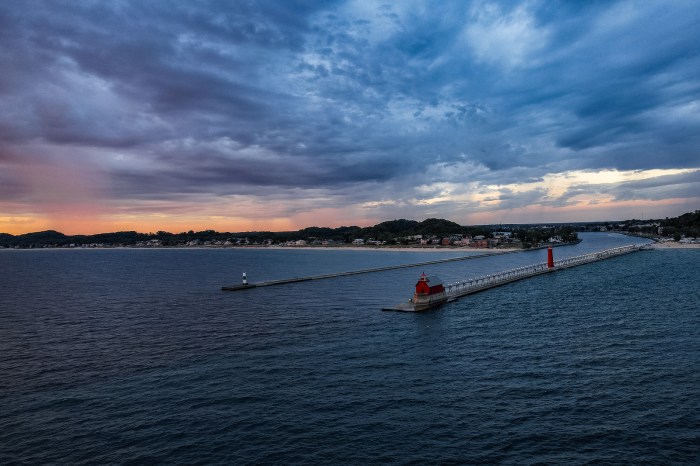
Mouth of the Grand River by Dan Gaken

Mouth of the Grand River by Dan Gaken

Cool shot of the Grand Haven Lighthouse at the mouth of the 252-mile long Grand River. See more shots from above in Dan’s Drone Photography gallery on Flickr.

Support Michigan in Pictures with Patreon

Petite Pointe Au Sable Lighthouse

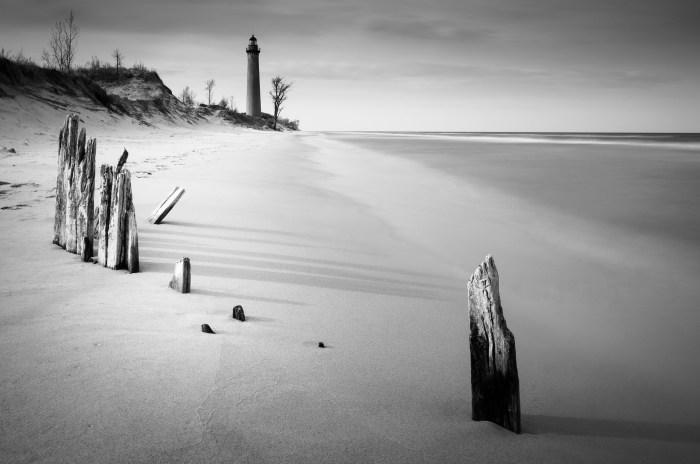
Little Sable Lighthouse 4 by kmoyerus

Little Sable Lighthouse 4 by kmoyerus

Visit Ludington explains that Little Sable Point Lighthouse was originally named Petite Pointe Au Sable:

Located in the Silver Lake State Park at the Silver Lake Sand Dunes, the Little Sable Point Lighthouse is a 107′ brick structure, constructed in 1874. This lighthouse is one of the tallest in the state of Michigan at over 100 feet and 130 steps to climb the tower. About 30 miles north, you can visit the other “Point” along Lake Michigan which is home to the Big Sable Point Lighthouse located within the Ludington State Park.

…it cost $35,000 to build and contained 3 rooms. The rare third order Fresnel lens emitted a constant white light, and flashed a brighter light at set intervals, visible 19 miles into Lake Michigan.

The early 1900s saw some changes to the lighthouse. In 1900 the tower was painted white, and an access road and storage building were added in 1902. The name was changed in 1910 to Little Sable Point Lighthouse, meaning “little point of sand,” representing its location which juts into Lake Michigan. In 1977, the tower paint was removed and the original brick exposed.

Over the years, the lighthouse has had 15 keepers; and for one month, a woman took over when the original keeper took a temporary leave. The Sable Point Lighthouse Keepers Association took over the maintenance of the lighthouse in 2005, and it is open to the public from late May to late September.

The Light probably looked much the same in the 1870s as it did when kmoyerus took the photo in early May. See more in their Oceana County gallery on Flickr.

Support Michigan in Pictures with Patreon