
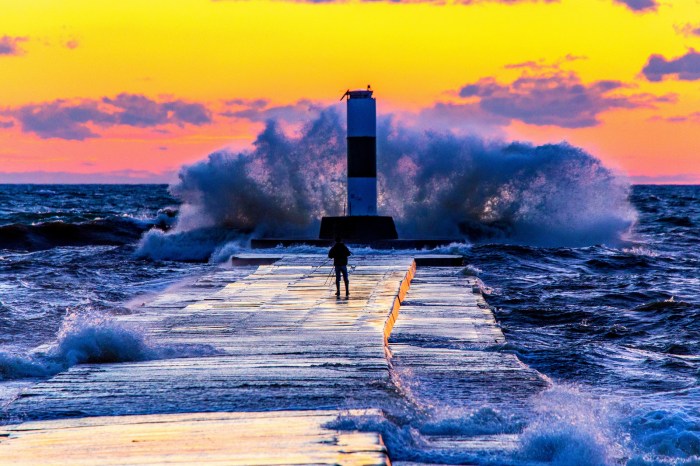
Spectacular Display, photo by Bob Gudas
Bob took this shot of a photographer on Grand Haven’s North Pier with more guts or maybe less sense than most. I bet his photo was pretty sweet though!
View it bigger and see more in his slideshow.
Spectacular Display, photo by Bob Gudas
Bob took this shot of a photographer on Grand Haven’s North Pier with more guts or maybe less sense than most. I bet his photo was pretty sweet though!
View it bigger and see more in his slideshow.

Untitled, photo by Todd Richter
Happy Leap Day everyone and here’s hoping that this quadrennial occurrence adds a little fun to your life! Borgna Brunner lays down Leap Year 101:
Leap years are added to the calendar to keep it working properly. The 365 days of the annual calendar are meant to match up with the solar year. A solar year is the time it takes the Earth to complete its orbit around the Sun — about one year. But the actual time it takes for the Earth to travel around the Sun is in fact a little longer than that—about 365 ¼ days (365 days, 5 hours, 48 minutes, and 46 seconds, to be precise). So the calendar and the solar year don’t completely match—the calendar year is a touch shorter than the solar year.
It may not seem like much of a difference, but after a few years those extra quarter days in the solar year begin to add up. After four years, for example, the four extra quarter days would make the calendar fall behind the solar year by about a day. Over the course of a century, the difference between the solar year and the calendar year would become 25 days! Instead of summer beginning in June, for example, it wouldn’t start until nearly a month later, in July. As every kid looking forward to summer vacation knows—calendar or no calendar—that’s way too late! So every four years a leap day is added to the calendar to allow it to catch up to the solar year.
Read on for more and enjoy your day.
Todd took this shot back in August of 2009 at one of my favorite spots for hiking (and jumping) – the Pyramid Point overlook in the Sleeping Bear Dunes National Lakeshore. Lake Michigan is hundreds of feet down a steep bluff from the point where she’s jumping, and many is the person who wished they didn’t run down that bluff after toiling up it!
View Todd’s photo background bigtacular and see more in his digital slideshow.
More dunes on Michigan in Pictures!
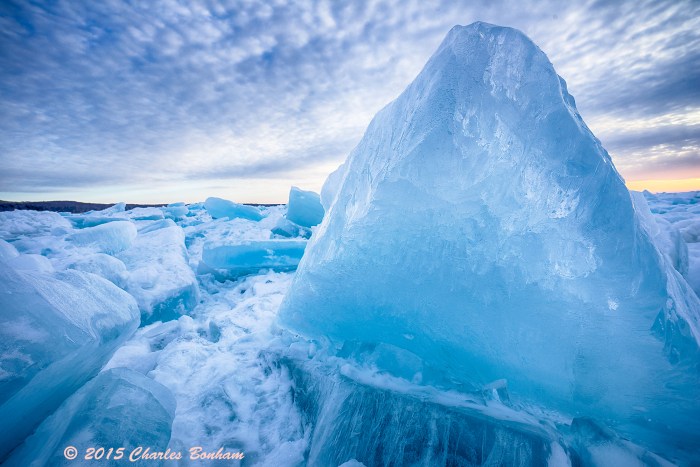
The Blue Ice, photo by Charles Bonham
The Causes of Color answers the question: What causes the blue color that sometimes appears in snow and ice?
As with water, this color is caused by the absorption of both red and yellow light (leaving light at the blue end of the visible light spectrum). The absorption spectrum of ice is similar to that of water, except that hydrogen bonding causes all peaks to shift to lower energy – making the color greener. This effect is augmented by scattering within snow, which causes the light to travel an indirect path, providing more opportunity for absorption. From the surface, snow and ice present a uniformly white face. This is because almost all of the visible light striking the snow or ice surface is reflected back, without any preference for a single color within the visible spectrum.
The situation is different for light that is not reflected, but penetrates or is transmitted into the snow. As this light travels into the snow or ice, the ice grains scatter a large amount of light. If the light is to travel over any distance it must survive many such scattering events. In other words, it must keep scattering and not be absorbed. We usually see the light coming back from the near surface layers (less than 1 cm) after it has been scattered or bounced off other snow grains only a few times, and it still appears white.
In simplest of terms, think of the ice or snow layer as a filter. If it is only a centimeter thick, all the light makes it through; if it is a meter thick, mostly blue light makes it through. This is similar to the way coffee often appears light when poured, but much darker when it is in a cup.
Click through for lots more about light & color!
Charles took this photo last March off Gills Pier on the Leelanau Peninsula when there was a whole lot more ice than there is this winter. View it background bigilicious and see more in his Leelanau Peninsula slideshow.
More winter wallpaper and more amazing ice on Michigan in Pictures.
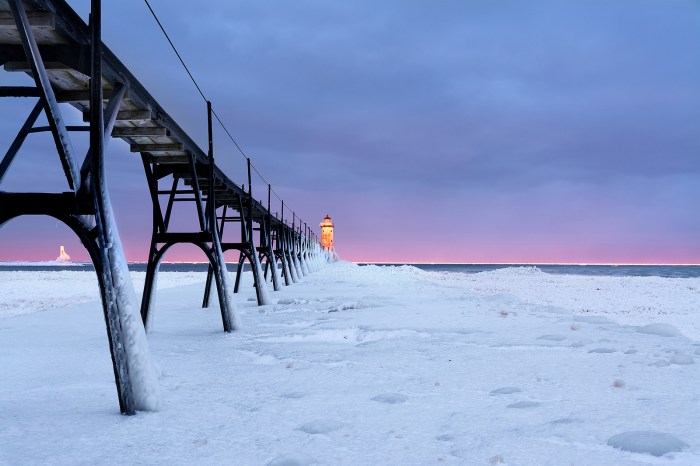
Manistee Morning Light, photo by Heather Higham
Terry Pepper’s Seeing the Light has an extensive entry on the history of the Manistee Pierhead Light with copious information and historical photos. Terry goes deep on Manistee’s history as a lumber port:
Although the first sawmill had been established on the banks of the Manistee in 1841, settlement in the area was not widespread until the Chippewa relinquished their reservation by treaty in 1849, and the federal government offered lands along the Manistee for public sale. It did not take lumber interests long to realize the incredible potential of the Manistee which snaked a hundred miles into the forests, and lumbermen soon began lobbying for federal funding to improve the harbor and to erect a lighthouse at the river mouth. With no appropriation forthcoming, the businessmen of Manistee took the matter into their own hands, erecting a pair of short stub piers at the river mouth in an attempt to stem the deposition of sand and silt.
In 1861, Congress instructed the Army Corps of Engineers to dispatch an Engineer Officer to Manistee to conduct a survey of the river entrance. Water depth in the opening between the piers was found to be from seven to eight feet, and a 250-foot long sand bar with a water depth of less than five feet above it was identified 600 feet off the end of the piers.
…To serve this burgeoning maritime commerce, the piers were extended an additional 150 feet in 1875, and the channel between them dredged to a minimum depth of ten feet. With the main light now standing a considerable distance to the rear of the pierheads, the decision was made to replace the shore light on the north bank with a pierhead beacon on the outer end of the longer south pier. Click to view enlarged image The new south pierhead light consisted of a timber-framed pyramidal beacon typical of the type being erected on pierheads throughout the Great Lakes. With its lower half open, the upper half immediately below the gallery was enclosed to provide a small service room for lamp maintenance. Equipped with windows, the service room also served as a sheltered area in which the keeper could stand watch during inclement weather. Standing 27 feet in height, the beacon was capped with a square gallery with iron handrails and an octagonal cast iron lantern installed at its center.
Read on for a whole lot more.
About the photo, Heather writes:
I still can’t believe I managed to drag myself out of bed this morning. There were 8 minutes of pink light – and a stunning sunrise to the east that I completely ignored – followed by about 90 minutes of interesting (if not sunrise) light.
View it bigger, see more in her Lighthouses slideshow and definitely add Snap Happy Gal Photography to your Facebook follows!
More Michigan Lighthouses and more sweet sunrises on Michigan in Pictures.
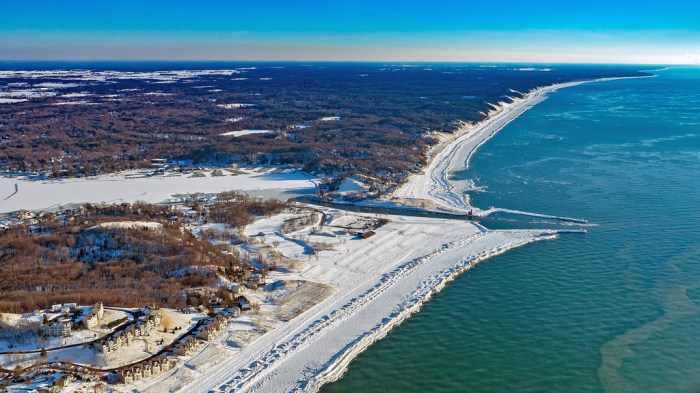
Looking Back at the Holland Channel, photo by Sandy Hansen Photography
February 9th is the 169th anniversary of the founding of Holland, Michigan. The History of Holland has some background about one of the prime factors for the city’s success, the Holland Channel:
From its very beginnings, Holland provided a refuge for those seeking freedom of expression and a more vibrant economy. Persuaded by religious oppression and economic depression, a group of 60 men, women, and children, led by Albertus C. VanRaalte, prepared for their 47-day trip from Rotterdam to New York. VanRaalte intended to purchase land in Wisconsin, but travel delays and an early winter caused the group to layover in Detroit. After hearing about available lands in west Michigan, VanRaalte decided to scout the territory. They reached their destination on February 9, 1847 on the banks of Black Lake—today’s Lake Macatawa.
The hundreds of Dutch immigrants that followed expected to find their promised land, but instead found a swamp and insect-infested forest. Although food was scarce, and the log sheds they built were unable to hold everyone, the settlers persevered. VanRaalte realized the practical and economic potential of the dense forest: trees could be felled to build homes and businesses, while the excess lumber could be sold to purchase farming supplies.
In the early years of Holland history, the settlers set out to conquer several projects. They knew that if Lake Michigan was to provide growth and development, it had to be made accessible by an adequate channel. After trying in vain to receive government aid, the determined Hollanders took up picks and shovels and went about digging the channel themselves. The immigrants also cleared a one-block square of land in the center of the colony—today’s Centennial Park—to serve as a market square.
Read on for more and click for a live webcam of the Holland Channel.
View Sandy’s photo bigger, see more in her Aerial slideshow, and follow her on Facebook too!
More aerial photos and more from Holland on Michigan in Pictures.
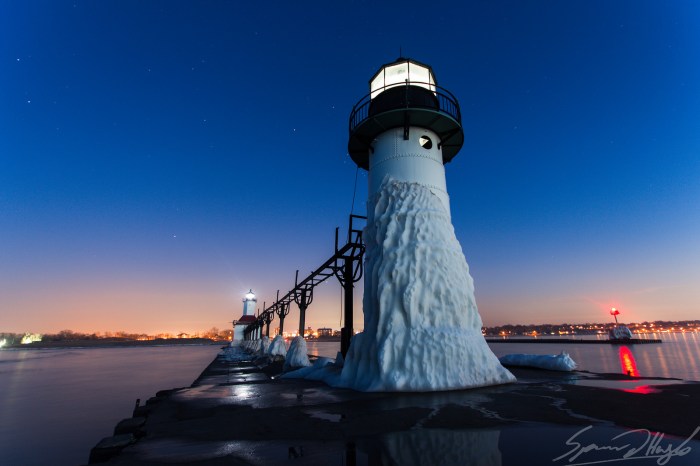
Untitled, photo by Spencer D Hughes
If you want to take a look at the Pier from the beach, check out the St Joseph webcam. Have a great weekend everyone!!
View Spencer’s photo bigger and see more of his awesome St Joseph photos. Some seriously cool ice shots in there.
PS: Here’s a link to more information and a photo of the St. Joseph North Pier Outer & Inner Lights from almost exactly a year ago – lots more ice.
PPS: I’d love it if you’d become a patron of Michigan in Pictures. Thanks to all who have so far – I really appreciate it!
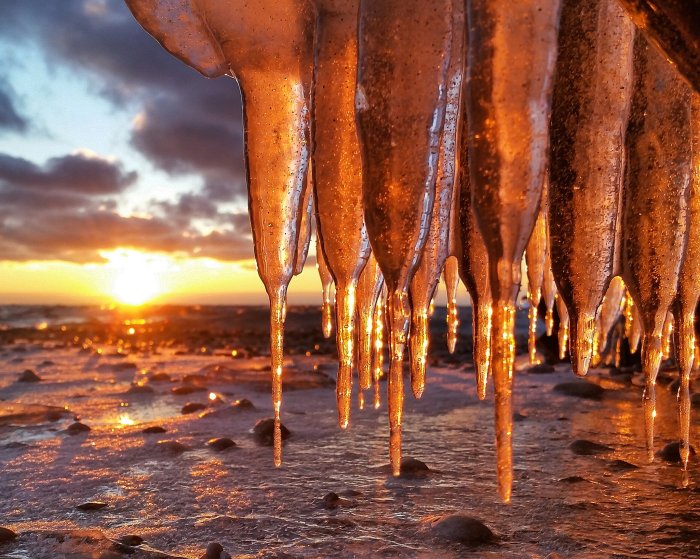
Niciclez, photo by Noah Soreson
Beautiful scene on the Lake Michigan shore. Here’s hoping you have a chance to get out there and have some fun this weekend!
View Noah’s photo background bigilicious, see more in his slideshow. and be sure to follow him on Instagram.
More winter wallpaper on Michigan in Pictures.
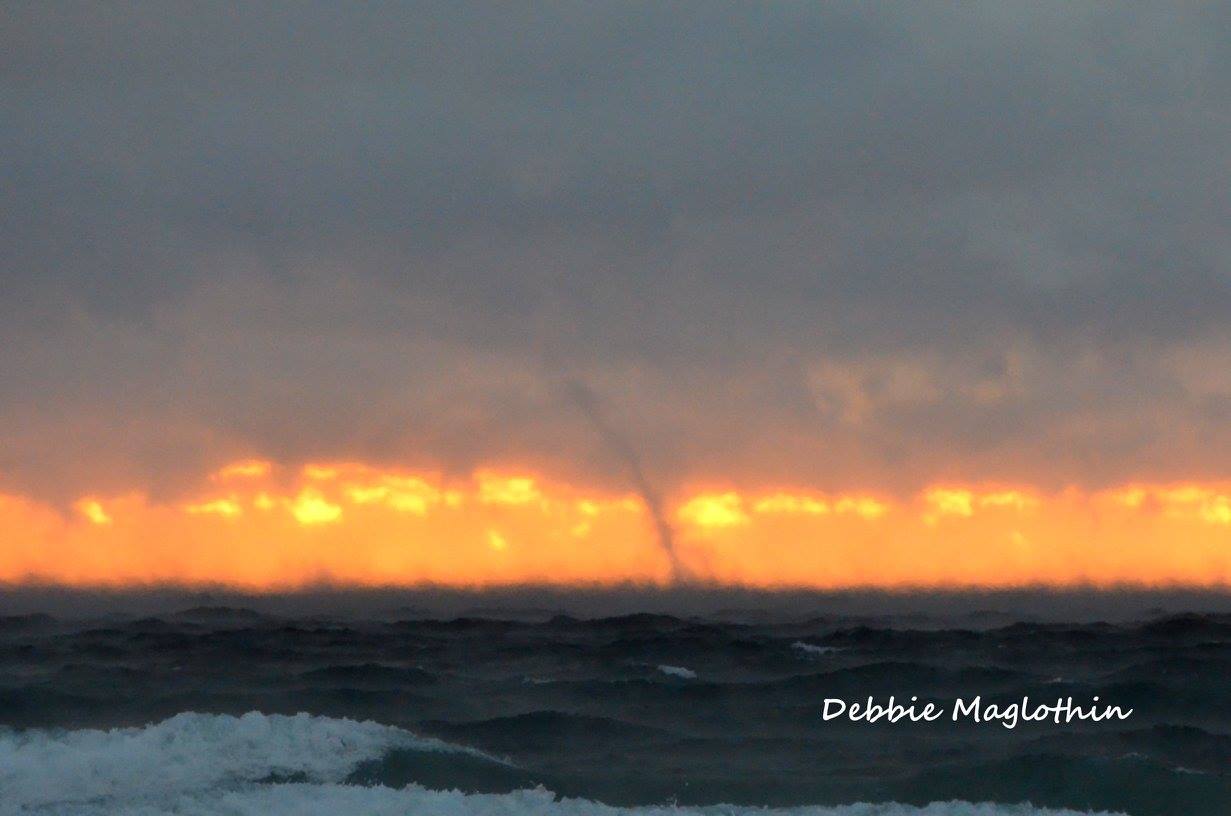
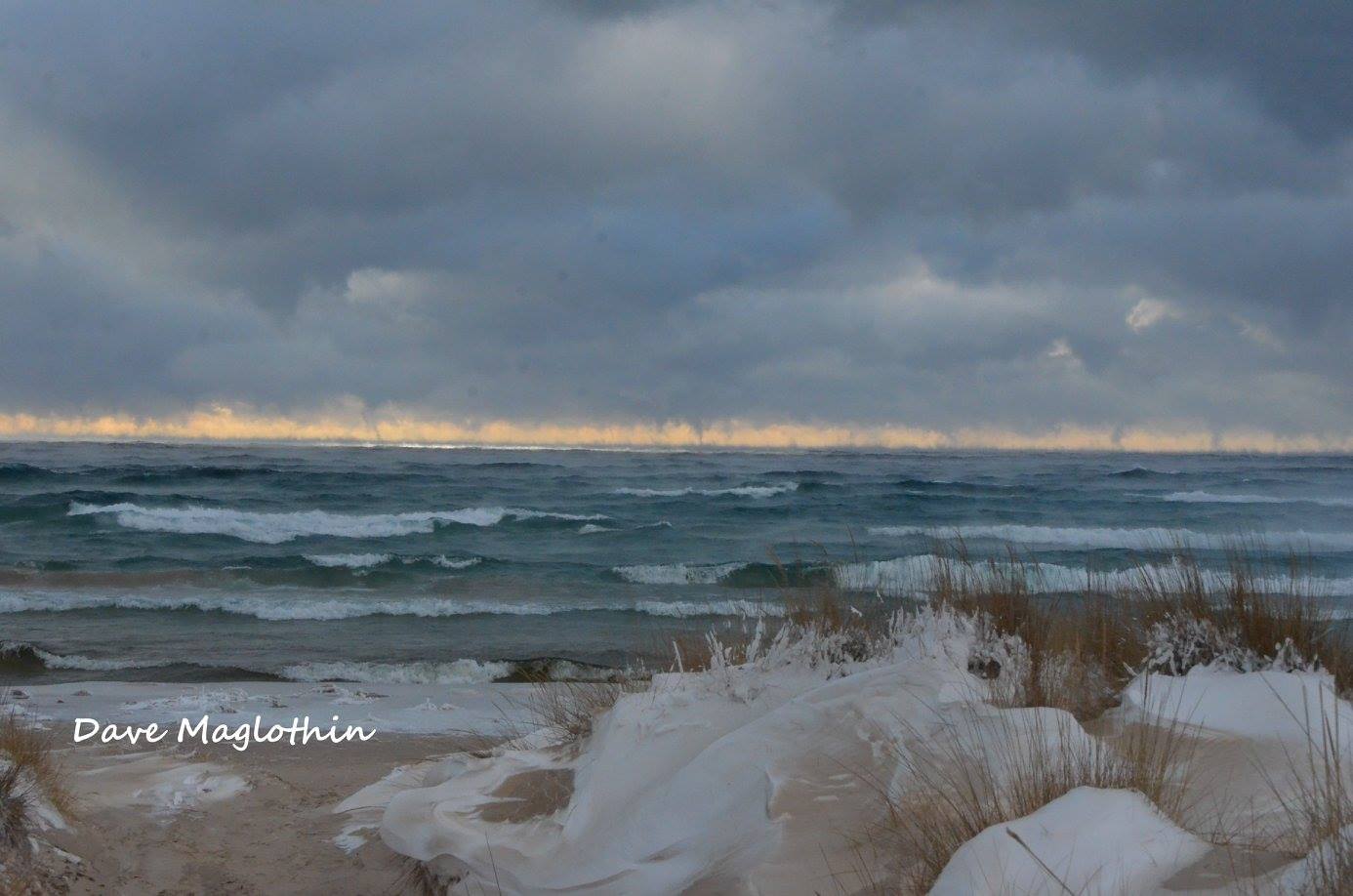
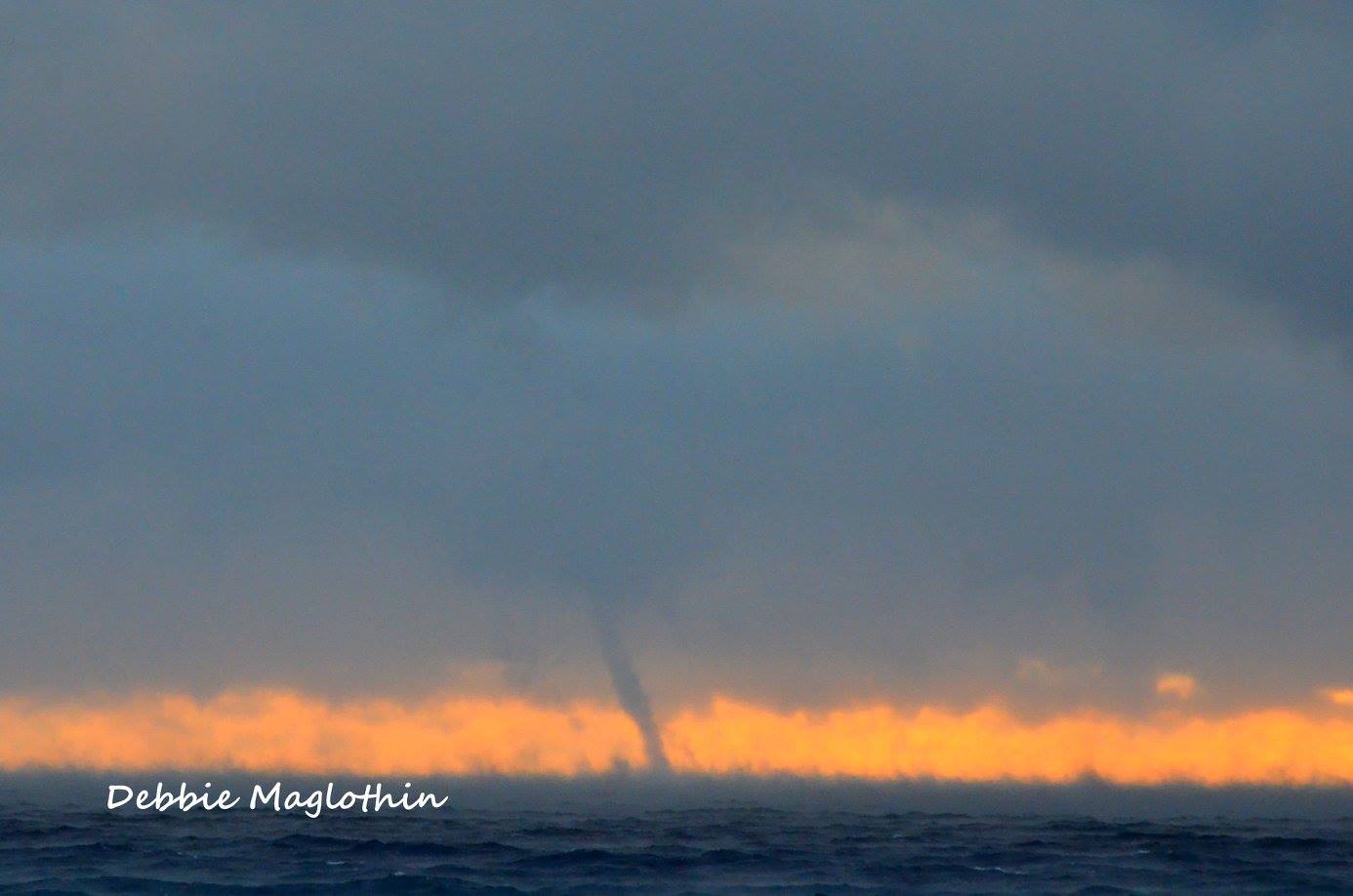
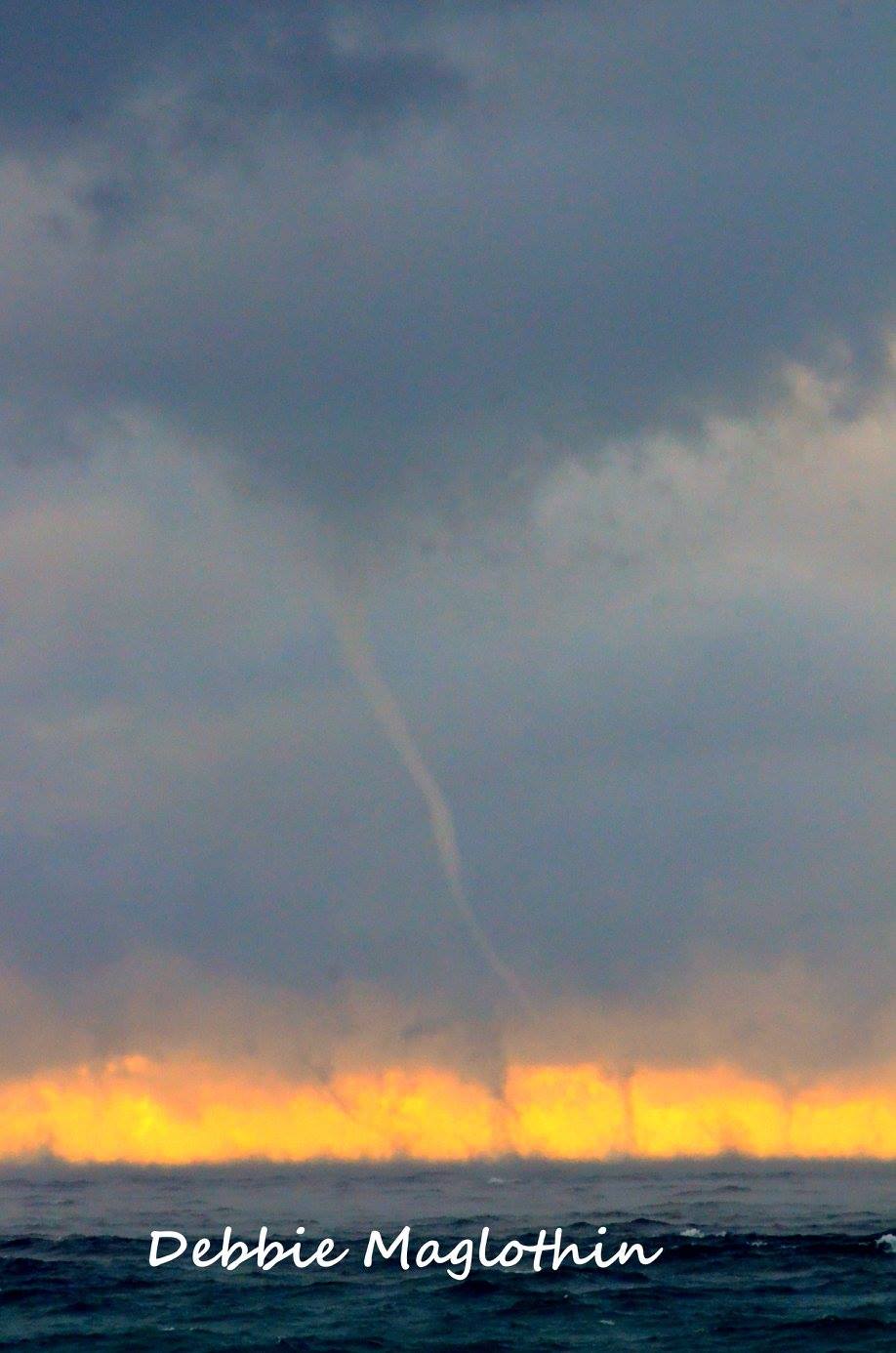
Cold Air Waterspouts, photos by Debbie Maglothin
If you live along the Great Lakes, chances are you’ve seen a waterspout from time to time. While waterspouts are typically formed when cold air moves over warm water in late summer or early fall, occasionally the reverse can happen.
Debbie Maglothin took several photos of cold air waterspouts over Lake Michigan off the Ludington State Park beach. WZZM 13 meteorologist Alana Nehring explains how they form:
A drastic temperature difference between the air an water is required. In the most recent event, water temperatures were near 32 degrees while air temperatures were closer to 10 degrees.
A steady breeze needs to be present to jump-start the process of evaporation.
In most cases, this is also how lake-effect snow is produced but in some unique situations, a slight twisting motion will occur in the steam above the water. If it is maintained long enough, eventually weak funnels will develop.
Click the pics to view them bigger and follow Debbie on Facebook at Cha Bella Photography.
More Michigan weather on Michigan in Pictures.
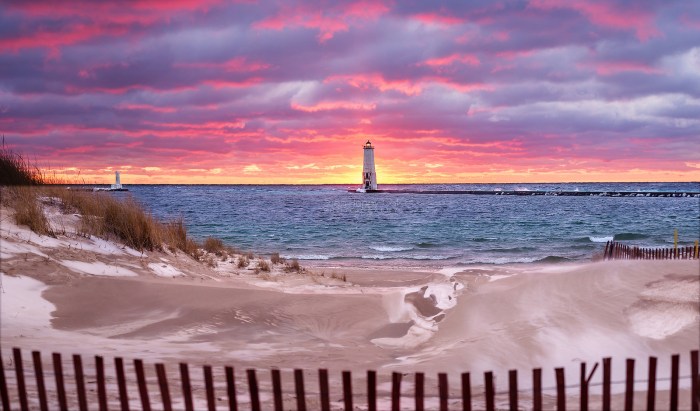
Promise Fulfilled, photo by Heather Higham
Although I just featured a sunset photo by Heather … Wow!
She took this last night and writes: A break at the horizon that spouted god rays all afternoon hinted a the potential for a lightshow at sundown. We were not disappointed, though we were very cold.
View the photo bigger, see more in her Sunsets slideshow, and follow Heather at Snap Happy Gal Photography on Facebook.
Click for more about the Frankfort Pier Lights and a super cool winter photo by Jason Lome.
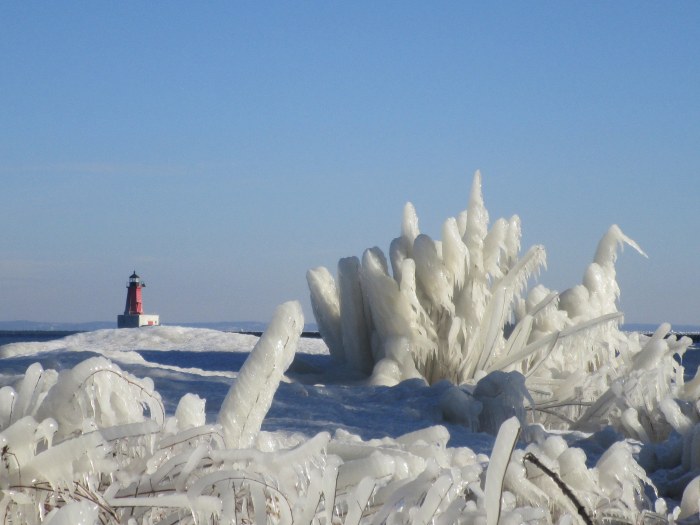
Ice is Nice, photo by cohodas208c
I’ll never miss a chance to tout Terry Pepper’s Seeing the Light as one of the premier resources for information about Michigan’s lighthouses, as well as others on the Great Lakes. He packs them full of the history including the political maneuverings and economic reasons for lighthouse development and closure and peppers in (sorry – couldn’t resist) historical photos and pictures from his own visits.
The entry on the Menominee North Pier Light details the lumber boom that led to the construction of the first lighthouse in 1877 and the development of the iron ore rich Menominee Range. He continues:
The town of Menominee continued to reap the benefits of the Range, and as a result significant harbor improvements were undertaken in the 1920’s, At their completion in 1927, a prefabricated octagonal cast iron tower was delivered by vessel, and lowered onto the pier.
The thirty-four foot tower was painted white, and integrated with an attached fog signal building. An elevated wooden catwalk stretched along the wooden pier to provide the keepers with safe access to the light during periods when waves crashed across the surface of the pier. The octagonal cast iron lantern room was outfitted with a Fourth Order Fresnel lens of unknown manufacture.
At some point thereafter, the wooden pier was replaced by a concrete structure with a forty-foot diameter circular crib at its offshore end. At this time, the fog signal was eliminated with the inclusion of an automated electrically operated signal in the tower. With automation of the light in 1972, the need for daily maintenance of the light was also eliminated, and the iron catwalk was removed from the pier.
The tower was painted bright red, and relocated to a white painted concrete platform in the center of the crib. Its elevated position on the pier provided a focal plane of forty-six feet.
While the catwalk no longer snakes its way along the pier, the iron tower still stands guard over the harbor entrance, its jewel-like Fresnel lens replaced by a stark modern 300mm plastic lens.
Read on for more at Seeing the Light.
View the photo background bigilicious and see more in cohodas208c’s Big City Breakout – Dec 2015 slideshow.
Lots more Michigan lighthouses and more winter wallpaper on Michigan in Pictures!
 Michigan in Pictures