Into the Icebox

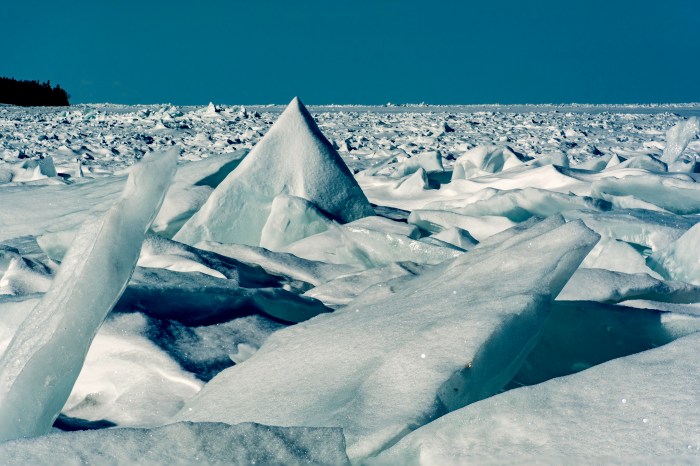
Broken ice on Lake Michigan shoreline by Tom Clark

Broken ice on Lake Michigan shoreline by Tom Clark

mLive shared yesterday that the coldest air of the season is blanketing Michigan right now, bringing icy temps & dangerously cold wind chills, according to the National Weather Service:

“The coldest air of the winter so far is surging into our area this evening,” according to the NWS meteorologists in the Grand Rapids office. “This is (going to) be the big story for the next 36 hours, how cold it will be. Wind chills will mostly be in the 0-degree to -10 degree range into Tuesday morning. Lows Sunday night will be (between) zero and 10 degrees, and tomorrow we have a secondary surge of even colder air coming in during the afternoon. That will limit our high temperature to the mid-teens.”

…Wind chills are expected to be especially brutal in the U.P. They could drop to 30 degrees below zero near the Wisconsin border tonight and into Monday, the NWS said.

This morning’s Michigan temperature map agrees with a toasty 18 degrees in Detroit dropping to 10 in Mt. Pleasant, 8 by the Mackinac Bridge, -9 in Marquette & all the way down to -15 in Ironwood at the western edge of the Upper Peninsula. Bundle up kids!! 

Tom took this back in February of 2018 near Mackinac City. See more in his Michigan Winter gallery on Flickr and view & purchase his work on his website.

Support Michigan in Pictures with Patreon

An Ode to the Winter Solstice

An Ode to the Winter Solstice by Cherie

An Ode to the Winter Solstice by Cherie

“Winter is not a season, it’s an occupation.” — Sinclair Lewis

Sorry Winter, that’s all I got for you today!! Here’s hoping everyone enjoys the shortest day of the year today. Cherie took this photo way back in 2008 but I still love it! More on her Flickr.

Support Michigan in Pictures with Patreon

Warm Wet Winter on tap for Michigan

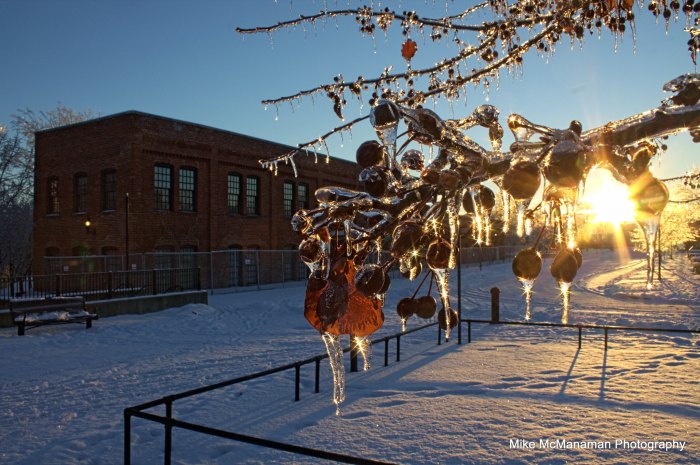
Water Street During an Ice Storm by Mike McManaman

Water Street During an Ice Storm by Mike McManaman

The National Oceanic & Atmospheric Administration (NOAA) has issued their 2021-2022 winter weather outlook for the US. The NOAA Winter Outlook covers December 2021 through February 2022 and notes that with the La Nina weather pattern, Michigan & the Great Lakes are expected to see warmer & wetter than average conditions. Head over to NOAA for more including weather maps.

Mike took this photo on Flint’s Water Street after an ice storm back on Christmas Eve 2014. See more in his Flint, Michigan gallery on Flickr. 

Support Michigan in Pictures with Patreon

Smooth

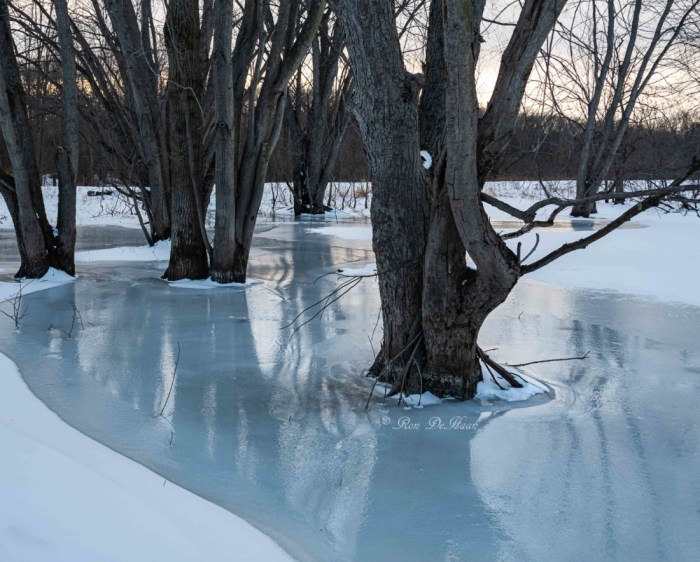
Smooth by Ron DeHaan

Smooth by Ron DeHaan

Ron says that the only way this ice could have been smoother is with a Zamboni! Head over to his Flickr for more!

Support Michigan in Pictures with Patreon

Frozen Lake Michigan & the Mighty Mac

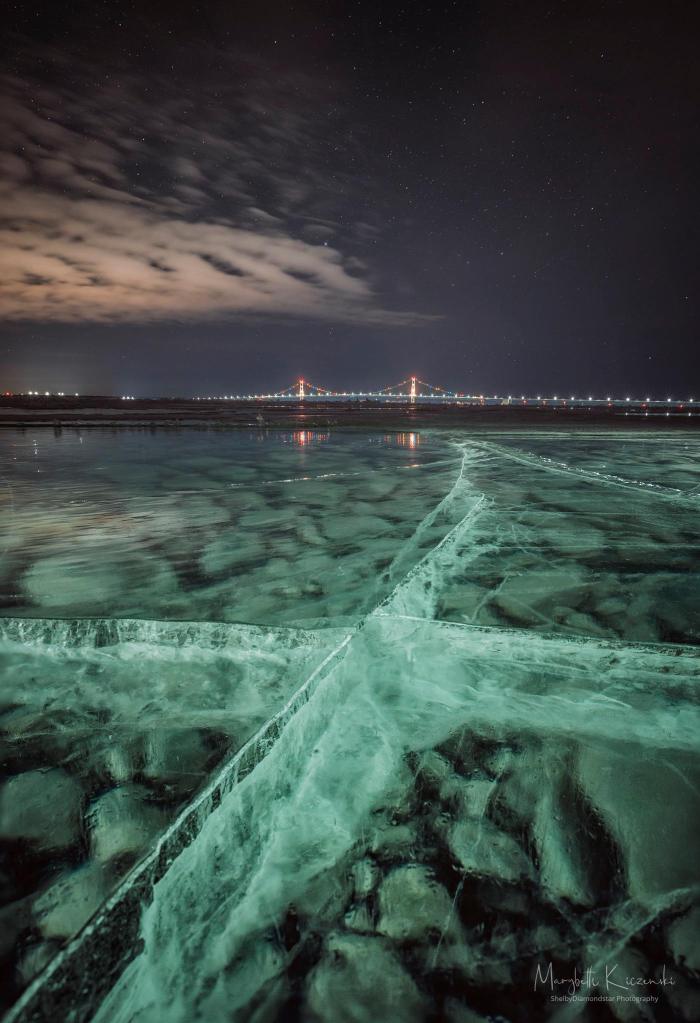
Frozen Lake Michigan & the Mighty Mac by Shelbydiamondstar Photography

Frozen Lake Michigan & the Mighty Mac by Shelbydiamondstar Photography

This will probably be my last pic for a little while from the Straits. Just couldn’t pass up Shelby’s shot! She writes: A frozen Lake Michigan provided the dramatic icy foreground for the Mighty Mac! I ‘m always in awe over the ever-changing and fascinating ways ice forms, cracks, and shifts. And when it is crystal clear like this – it just adds an entirely new dimension!

Head over to her Facebook page for more great shots!

Support Michigan in Pictures with Patreon

Blue Ice at the Mackinac Bridge

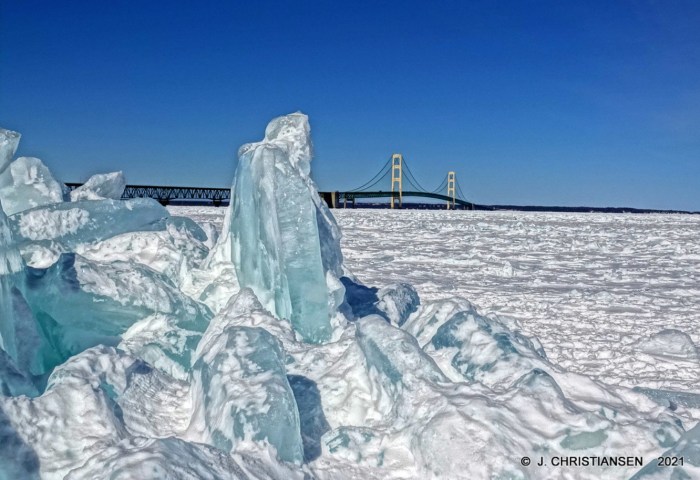
Blue Ice by Julie

Julie shares:

Rode up to Mackinaw yesterday and checked out the blue ice. Huge chunks and most phenomenal. The ice, however, is not actually turning blue. The color is a result of the way sunlight is bouncing off this particular ice.

Sometimes, weather conditions — such as a lack of high winds — allow water to freeze slowly and evenly, resulting in ice composed of large crystals (unlike snow, which is formed quickly and made up of small crystals).

When light hits these big ice crystals, it can travel deep into the structures (compare this to snow, wherein light hits a sharp edge and reflects off of it right away, resulting in blinding white). When the light travels deeper into slowly formed ice, some of the red wavelengths of sunlight — which is the longest wavelength of visible light — get absorbed into the ice structure.

The blue, which is the shortest wavelength of visible light, bounces back out, meet our eyes, and results in a deep aqua color.

See more in her Winter gallery on Flickr!

Support Michigan in Pictures with Patreon

Michigan Beach Fashion: February Edition

South Haven Area Fire-Rescue-EMS by William Dolak

South Haven Area Fire-Rescue-EMS by William Dolak

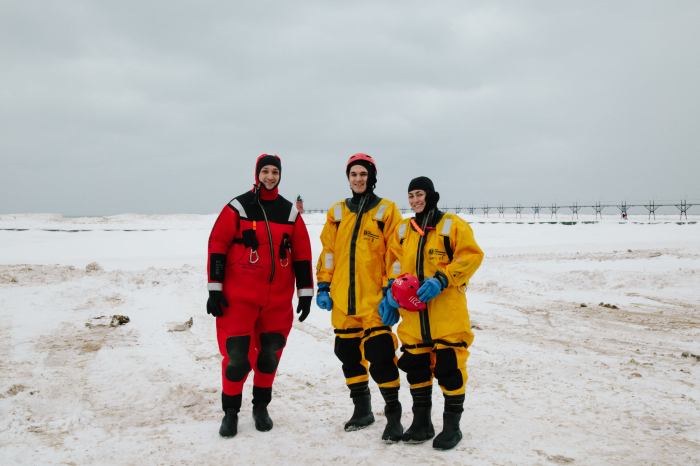
We’re getting to the portion of the winter where the ice begins to build out on the Great Lakes. As a person who grew up on Lake Michigan, I’ve enjoyed the ice safely for decades & will undoubtedly continue to do so and also to share photos of the incredible beauty of the frozen lakes. I want to make sure however that folks understand venturing on the ice in winter can be deadly, particularly if you don’t take precautions. Though EMT workers know this and train to help people in peril, if you fall into one of the Great Lakes, you will very probably die. You can read more of my thoughts on this post on Michigan in Pictures.

Bill took this last weekend in South Haven & writes:

It’s 16 degrees at the beach – this is what the cool kids are wearing on South Beach, South Haven. These three are with the South Haven Area Fire-Rescue-EMS and were out to practice a little cold-water rescue, ‘cuz, unfortunately, someone is gonna need it sooner or later.

See the photo bigger in our Michigan in Pictures Group on Facebook & for sure follow him on Flickr!

Support Michigan in Pictures with Patreon

Pancake Ice

Pancake Ice by Julie

Pancake Ice by Julie

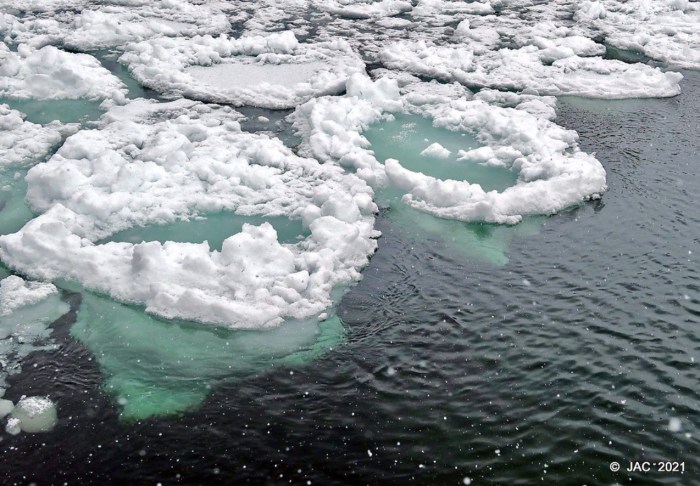
This is one of the best shots I’ve seen showing how the structure of pancake ice is basically “round iceberg”. The Weather Channel explains the science behind pancake ice:

The circular slabs you see can range anywhere from one to 10 feet in diameter and up to four inches thick, typically forming in areas with at least some wave action and air temperatures just below freezing.

Pancake ice can begin as a thin ice layer (known as grease ice) or slush on the water surface, which accumulates into quasi-circular disks. The “lily pad,” or raised-edge appearance of pancake ice, can form when each disk bumps up against one another, or when slush splashes onto and then freezes on the slab’s edge.

Julie caught this picture last week in Charlevoix’s channel to Lake Michigan. See more in her Coronavirus Times 2021 gallery on Flickr.

Support Michigan in Pictures with Patreon

Into the frosty past

Push Ice Lake Michigan by Charles Bonham

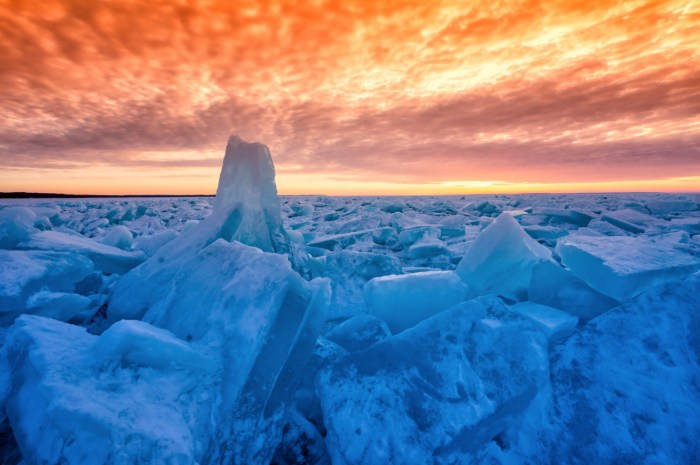
Push Ice, Lake Michigan by Charles Bonham

The Traverse City Ticker reports that with less than 2% ice coverage so far, the Great Lakes are experiencing record low ice cover this winter:

According to Dr. Jia Wang, a research ice climatologist and physical oceanographer with the National Oceanic and Atmospheric Administration’s Great Lakes Environmental Research Laboratory, the Great Lakes region is experiencing “warmer-than-usual weather” this season due to a combination of weather patterns including strong La Niña conditions. As a result, the maximum ice cover on the Great Lakes is only projected to reach 30 percent this year, Wang says – “way below” the average of 53 percent. Lake Michigan is expected to reach a maximum ice cover of just 23 percent, compared to an average 40 percent.

The Watershed Center Grand Traverse Bay has records for nearly two centuries on the freeze rate of West Grand Traverse Bay, including when it reaches the freeze point each year (if at all) and how many days it stays frozen over. While the Great Lakes often follow cyclical patterns, data shows that trends appear to be intensifying in recent years – a result many scientists attribute to climate change and include categories like water levels and ice cover. That trend can also be seen in Grand Traverse Bay freeze records, according to Watershed Center Executive Director Christine Crissman.

“If you look at the last 170 years overall, the bay definitely freezes over a majority of the time,” she says. “But if you start looking more closely at recent years, we are seeing a trend of less ice cover. From 1980 to present, the bay has only frozen over 38 percent of the time. Before 1980, it was 84 percent of the time. And even when it does freeze now, it doesn’t tend to freeze as long as it used to. It might be 20 to 40 days, where it used to be 70 days, 116 days.”

Charles took this photo back in 2015 off Gills Pier on the Leelanau Peninsula. Head over to his Flickr for more!

Support Michigan in Pictures with Patreon

Winter is beautiful at the Eben Ice Caves

Eben Ice cave in Michigan's Upper Peninsula by Tom Clark

Eben Ice cave in Michigan’s Upper Peninsula by Tom Clark

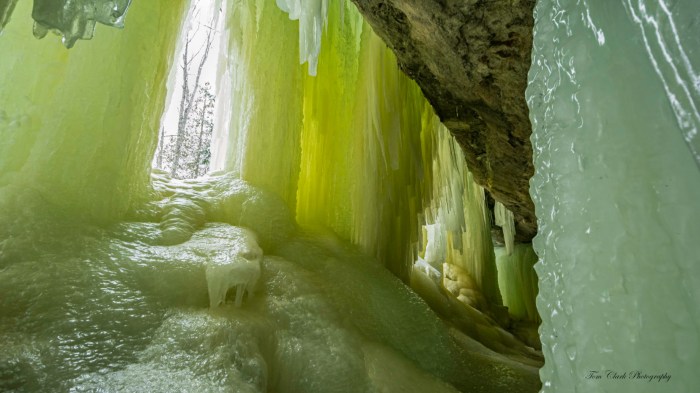
One of Michigan’s awesome winter features are the Eben Ice Caves in the Hiawatha National Forest. They explain that the Eben Ice Caves are located within the Rock River Canyon Wilderness (RRCW) which:

…includes approximately 4,700 acre (7.5 sq mile) and was designated in the Michigan Wilderness Act of 1987. During the mid- and late-winter months, many people visit RRCW to see the Eben Ice Caves.

…Although not “true” caves, they are made up of vertical walls of ice formed by water seeping through the sandstone bedrock cliff edge. As the temperature drops, these intermittent leaks create ice stalactites over the entrance to the bedrock undercuts. While ice caves are a phenomenon in the winter, the summer visitor would only see algae-covered rocks and dense foliage. The caves are within RRCW. Wilderness designation is the highest level of protection granted to federal lands.

You can read on for more & also be sure to check out the Eben Ice Caves Facebook page for tips & information on visiting.

Tom took this photo a couple of Januarys ago. Follow Tom on Facebook & at tom-clark.net. See more in his awesome U.P. Roadtrip to find ICE – 1/22/19 gallery on Flickr!

More pics from the Eben Ice Caves on Michigan in Pictures!

Support Michigan in Pictures with Patreon