The Moon and the Vortex

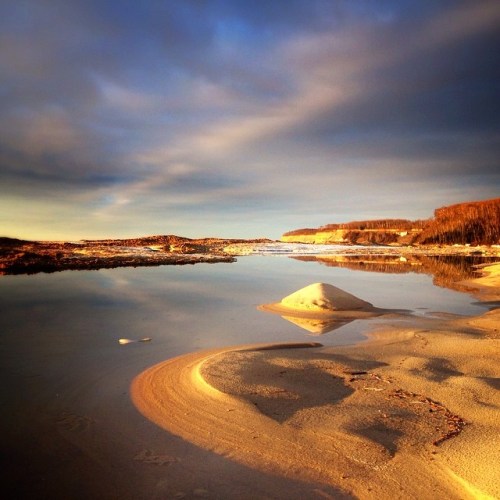
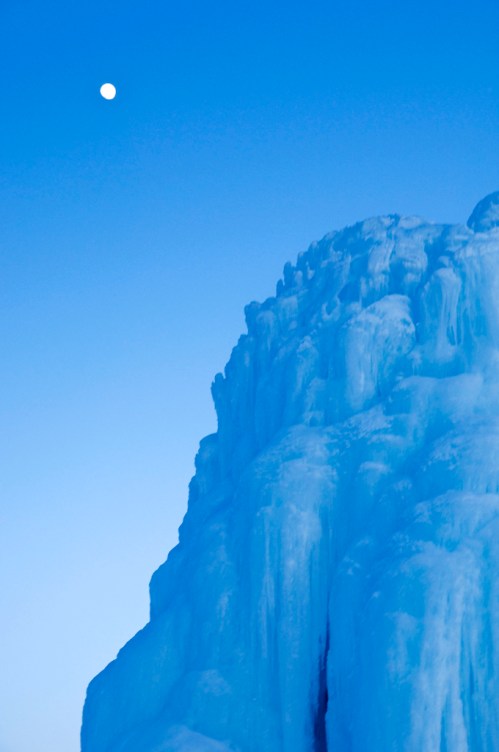
Moon and the Ice Blob

The Moon and the Ice Blob, photo by Cherie

One of the cool things about having a Michigan photo group with nearly 200,000 photos to draw from is that I can find a photo for pretty much any post. Thanks all of you who share in the Absolute Michigan photo group!

Bruce McClure and Deborah Byrd have a nice feature on one of my favorite blogs EarthSky titled What is a Supermoon? It begins:

We in astronomy used to call them perigean new moons or perigean full moons, that is, new or full moons closely coinciding with perigee – the moon’s closest point to Earth in its orbit. But, in accordance with the rapidly evolving skylore of the modern world, we now enjoy calling them supermoons. The name supermoon was coined by an astrologer, Richard Nolle, over 30 years ago. It was popularized and came to be the accepted term for most people only in the past few years.

Are supermoons hype? In our opinion … gosh, no, just modern folklore. And they can cause real physical effects, such as larger-than-usual tides. The year 2014 has a total of five supermoons. They are the two new moons of January, and the full moons of July, August and September. Next supermoon: July 12.

Read on for more about tonight’s supermoon and supermoons in general.

Of course, the supermoon isn’t the only natural phenomenon enjoying hype this weekend, because our old friend the Polar Vortex is returning for an encore. Or not, according to Dr Jeff Masters of Weather Underground in the Freep:

It is not, however, the second coming of a polar vortex, something the National Weather Service says it regrets tweeting earlier this week.

Weather Underground meteorology director Jeff Masters says the weather pattern is similar to those dreaded words, but the key difference is that the chilly air mass isn’t coming directly from the arctic.

Masters says that Typhoon Neoguri in Japan altered the path of the jet stream and allowed polar air to spill out of Canada. That means next week’s temperatures will be as much as 15 degrees cooler than normal in the Midwest and could reach 90 in the normally temperate Pacific Northwest.

More at the Freep and also check out mLive meteorologist Mark Torregrossa’s take on the battle between El Nino and the Polar Vortex. He talks about El Nino’s chances to push the jet stream northward. If it’s not strong enough, winter 2015 could be ruled by the polar vortex again. Go El Nino, Go El Nino!

Cherie took this photo in February of 2009 on Belle Isle. See it bigger on Flickr and see more in her Belle Isle Slideshow.

More supermoons and more polar vortex on Michigan in Pictures!
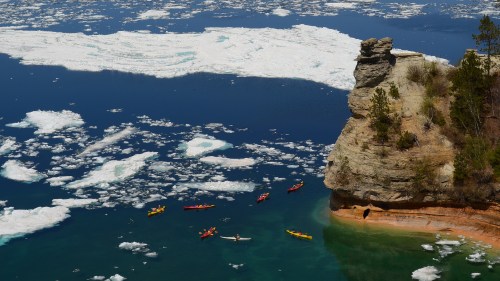
Miners Castle, with ice and kayaks

Miners Castle, with ice and kayaks

Miners Castle, with ice and kayaks, photo by Ann Fisher

The Washington Post has a feature on Lake Superior’s stubborn ice cover:

As of Memorial Day, ice covered 4.5 percent of Lake Superior according to NOAA, and 1.7 percent of the Great Lakes overall (though Superior is the only lake with remaining ice). The recent Great Lakes ice cover is unrivaled in records dating back to the early 1970s.

Ice cover the Great Lakes has been way above normal and, at times record-setting, for months.

In early March this year, the Great Lakes ice extent reached 94.19%, the second most on record for any month, dating back to 1973 in NOAA’s dataset, and most on record so late in the season. In late April, ice still covered nearly one-third of the Great Lakes, the most on record by a large margin so late into spring.

Click through for some photos of people enjoying the ice.

Ann took this last weekend at Miners Castle in the Pictured Rocks National Lakeshore. How cold is that water right now? Michigan Sea Grant’s Coastwatch for the central UP shore of Lake Superior recorded a balmy 36.7 degrees on May 25th!!

View Ann’s photo big as Lake Superior and see more in her 2014 U.P. slideshow.

There’s more Miners Castle and more Lake Superior wallpaper on Michigan in Pictures.

Meanwhile, on Miners Beach

Thankful for what we are blessed with here by oni_one

Thankful for what we are blessed with here…, photo by oni_one_

One of the neatest things for me about online photography and social media is how things come together in a synchronistic fashion sometimes. Yesterday, I posted a photo by Shawn Malone from above at Miners Castle of the frozen expanse of Lake Superior. For everyone who wondered what things were looking like at beach level, here you go!

Sarah took this pic yesterday at Miners Beach in the Pictured Rocks. View her photo bigger and see more on her Instagram.

Winter won’t leave Lake Superior

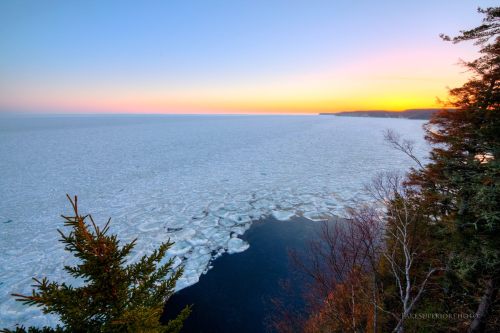
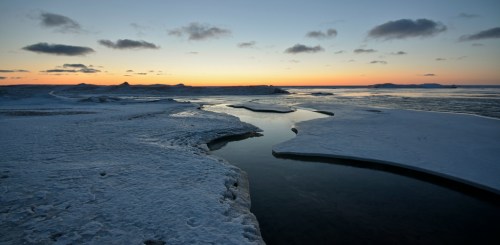
Wintry Sunrise from Pictured Rocks by Lake Superior Photo

Wintry Sunrise from Pictured Rocks, photo by Lake Superior Photo

Normally ice would be gone or nearly gone from Superior and the other Great Lakes, but as the Freep reported:

Heading into May, the Great Lakes combined remain 26% ice-covered, with Lake Superior still more than half-blanketed in ice. By comparison, at this time last spring the lakes were less than 2% covered with ice.

The remaining levels of ice cover are amazing, said Jia Wang, an ice climatologist at the National Oceanic and Atmospheric Administration’s Great Lakes Environmental Research Laboratory in Ann Arbor.

“This prolonged winter will affect summer temperatures. This summer will be cold, and then a cooler fall,” he said.

In addition to wreaking havoc on the Great Lakes shipping industry and impacting fish and other aquatic species, the miles of ice cover serve as a vast, white reflector.

“All that sunlight that would normally heat up the water is just bouncing back up into space,” said Jay Austin, an associate professor at the University of Minnesota-Duluth’s Large Lakes Observatory, who agrees with Wang about the ice cover’s impacts on this summer, but disagrees about its potential impacts on weather beyond that.

Read on for more. About the photo, Shawn of Lake Superior photo writes:

A wonderful wintry sunrise from Pictured Rocks this morning…. ok I’m going to go cry now

The lake was still (of course, with ice that’s feet thick as far as the eye can see..) but a new sound, you could hear the waterfalls, prob Miners Falls in the distance.. so cool

View Shawn’s photo big as our biggest lake on Facebook, see another shot of the wintry expanse from Miner’s Castle and definitely follow her photos as “spring” unfolds in the North Country at the Lake Superior Photo Facebook along with 30,000+ others and purchase photos at lakesuperiorphoto.com!

Thawing

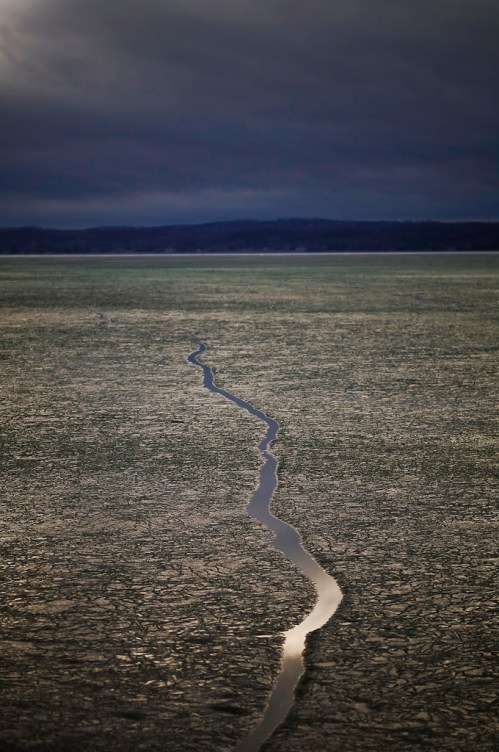
Thawing

Thawing, photo by Jennifer Bruce

A crack in the armor. Down with winter!

View Jennifer’s photo bigger and see more of her Torch Lake photos on Flickr.

Frozen Adventures in Pictured Rocks

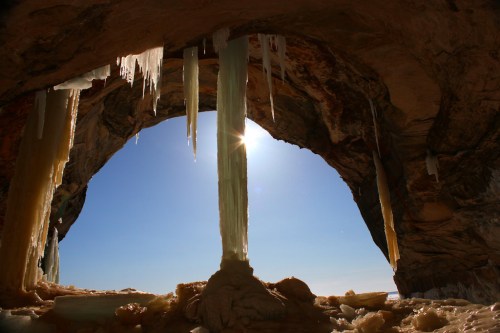
Ice Column / Pictured Rocks National Lakeshore.

Ice Column / Pictured Rocks National Lakeshore, photo by DIsnowshoe

Jay writes:

Many have cursed the cold of this winter that is almost over now though spring seems a long way off. It has caused hardships and pain but has also given rare opportunities to many who have been willing to bundle up and seek the wonders the cold has brought about.

A few weeks ago a friend asked me on somewhat short notice if I’d join him for a walk along the Pictured Rocks National Lakeshore. I’d walked the cliffs above the Lake before but the extreme cold of this wonderful winter granted us the opportunity to walk on even the Greatest of Lakes. We had two nights out with no fire to warm us but it was well worth it and a most amazing hike.

View his photo background bigtacular and definitely check out more stunning photos from his Pictured Rocks adventure.

Much more from the Pictured Rocks National Lakeshore and more winter wallpaper on Michigan in Pictures!

Running Out of Ice

Running Out of Ice

Running Out of Ice, photo by Aaron Springer

Probably wishful thinking, but I’m guessing that’s better than wishless thinking. Enjoy your weekend everyone!

View Aaron’s photo bigger and see more in his Northern Michigan slideshow.

Ice Everywhere: Great Freeze on the Great Lakes

Ice Everywhere

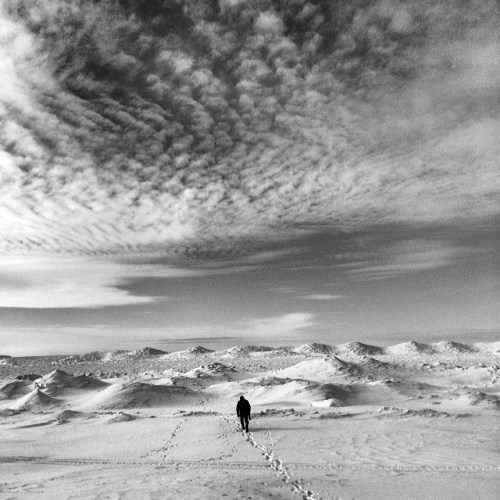
So much ice, everywhere, photo by caterleelanau

At night, as cold settles in, lake ice creaks and groans. It’s been excessively cold, and I camped exposed on the snow-swept surface. Other than the lack of vegetation and the sounds at night, you’d never know you were on a lake. It feels like an empty plain. In some places, you see pressure ridges where ice has pushed into itself, sticking up like clear blue stegosaurus plates.
~ Author Craig Childs on Lake Superior

From the latest satellite photo, it looks like Lake Huron is 100% frozen with Superior & Erie 95% and Michigan somewhere in the 85% area. Ontario is looking like the slacker right now, and you can follow along and see daily satellite shots from NOAA.

The NASA Goddard Space Flight Center provided the quotation above and reported on the Great Freeze Over the Great Lakes saying (in part):

Scientists say it’s understandable that the Great Lakes have had so much ice this year considering the cold temperatures in the region that persisted through the winter. Cold air temperatures remove heat from the water until it reaches the freezing point, at which point ice begins to form on the surface, explained Nathan Kurtz, cryospheric scientist NASA’s Goddard Space Flight Center in Greenbelt, Md.

“Persistently low temperatures across the Great Lakes region are responsible for the increased areal coverage of the ice,” Kurtz said. “Low temperatures are also the dominant mechanism for thickening the ice, while secondary factors like clouds, snow, and wind also play a role.”

The freeze this year has local implications, including possible changes to snowfall amounts in the Great Lakes area, explained Walt Meier, also a cryospheric scientist at NASA Goddard. When the lakes are primarily open water, cold air picks up moisture from the relatively warm and moist lake water, often resulting in lake effect snow on the lee side of the lakes, on the eastern and southern shores. When the lakes freeze, the lake effect generally shuts down. “Although this year, they’re still picking up a fair amount of snow,” Meier said.

Lake levels could also see an impact by summer, as winter ice cover generally reduces the amount of water available to evaporate during winter months. If that turns out to be the case, it would be “good news for local water supplies, as well as for shipping and recreational use,” Meier said.

A 2012 study in the Journal of Climate by scientists at NOAA’s Great Lakes lab, which included data from MODIS, found that winter season ice cover on Lake Superior has decreased 79 percent from 1973 to 2010. The study also showed that ice cover on the lakes is highly variable and difficult to predict.

Today’s photo was taken on frozen Lake Michigan off the Leelanau shore by my friend and neighbor Cammie, co-owner of Epicure Catering. You can follow her at caterleelanau on Instagram for lots of wintertime fun and summertime food!

More ice on Michigan in Pictures!

So cold the ice is blue

Blue Ice

Blue Ice, photo by HLHigham

You may have seen one or more of these incredible ice photos making the email round as Lake Michigan or Lake Huron ice. The Snopes.com article above says that they and many more were taken Antarctic base of Dumont D’Urville by Tony Travouillon in 2002. A shout-out to TC weatherman Joe Charlevoix who posted a story earlier in the week debunking the hoax!

While we don’t have that level of brilliant blue, our ice does get bluish. Via Shawn Malone at the Earth Science Picture of the Day, I found an informative article by Larry Gedney about blue ice & snow that says:

It is a common misconception that the blue color exhibited by glaciers, old sea ice, or even holes poked into a snow bank is due to the same phenomenon that makes the sky blue–light scattering. But nature has more than one recipe for producing the color blue. In frozen water and in the sky the processes are almost the reverse of each other.

A blue sky results when light bounces off molecules and small dust particles in the atmosphere. Because blue light scatters more than red does, the sky looks blue except in the direction of the sun (particularly when the sun is near the horizon and the blue light is scattered out of the sunlight, leaving the red color of sunrises and sunsets).

When light passes through ice, however, the red light is absorbed while the blue is transmitted. Were the operating process scattering as in the atmosphere, then the transmitted light would be red, not blue. However, because of the large size of snow grains and ice crystals, all wavelengths of visible light are scattered equally. Scattering therefore does not play an appreciable role in determining the color of the transmitted light.

It takes an appreciable thickness of pure ice to absorb enough red light so that only the blue is transmitted. You can see the effect in snow at fairly shallow depths because the light is bounced around repeatedly between ice grains, losing a little red at each bounce. You can even see a gradation of color within a hole poked in clean, deep snow. Near the opening, the transmitted light will be yellowish. As the depth increases, the corer will pass through yellowish-green, greenish-blue and finally vivid blue. If the hole is deep enough, the color and light disappear completely when all the light is absorbed.

The color of ice can be used to estimate its strength and even how long it has been frozen. Arctic Ocean ice is white during its first year because it is full of bubbles. Light will travel only a short distance before it is scattered by the bubbles and reflected back out. As a result, little absorption occurs, and the light leaves with the same color it had when it went in.

There’s more (lots more) on water, snow & ice from the University of Alaska, Fairbanks.

Heather took this photo at Point Betsie last weekend. View it bigger and see more in her Winter slideshow.

More science on Michigan in Pictures and speaking of ice, check out the ice caves off the Leelanau Peninsula in this mLive feature & video.

Great Lakes approaching record ice cover

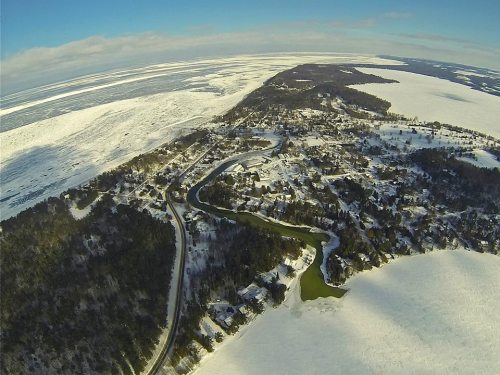
Leland & Lake Michigan by Elijah Allen

Drone over Leelanau (at Leland), photo by Elijah Allen

Mark Torregrossa writes at mLive that the Great Lakes are nearly 90% ice-covered:

The total ice cover on the Great Lakes continued to increase in the past seven days. At the rate the ice is growing, ice cover would reach record levels sometime next week.

We also had a mostly clear day Tuesday February 11, 2014. The high resolution satellite was able to generate some fascinating images.

The total ice cover on the entire Great Lakes system is reported at 87.3 percent today, according to the Great Lakes Environmental Research Laboratory(GLERL). The ice cover is up from 77 percent covered seven days ago.

The highest recorded total ice cover on the Great Lakes is 94.7 percent back on February 19, 1979. It should be emphasized that the most modern data set only goes back to 1973.

So the entire Great Lakes system has gone from 77 percent ice covered last week to 87 percent ice covered today. At that rate of increase, the Great Lakes would set a new modern day record for ice cover sometime next week.

Click through to mLive for a Lake by Lake report on ice cover and some sweet satellite shots.

My friend Elijah has been having entirely too much fun in and above the snow this winter. Lately he’s been flying a drone above the Leelanau Peninsula to see what he can see. View his photo bigger and (if you can) see more in his Drone over Leelanau Facebook gallery.

More aerial photography on Michigan in Pictures!