On the 8s

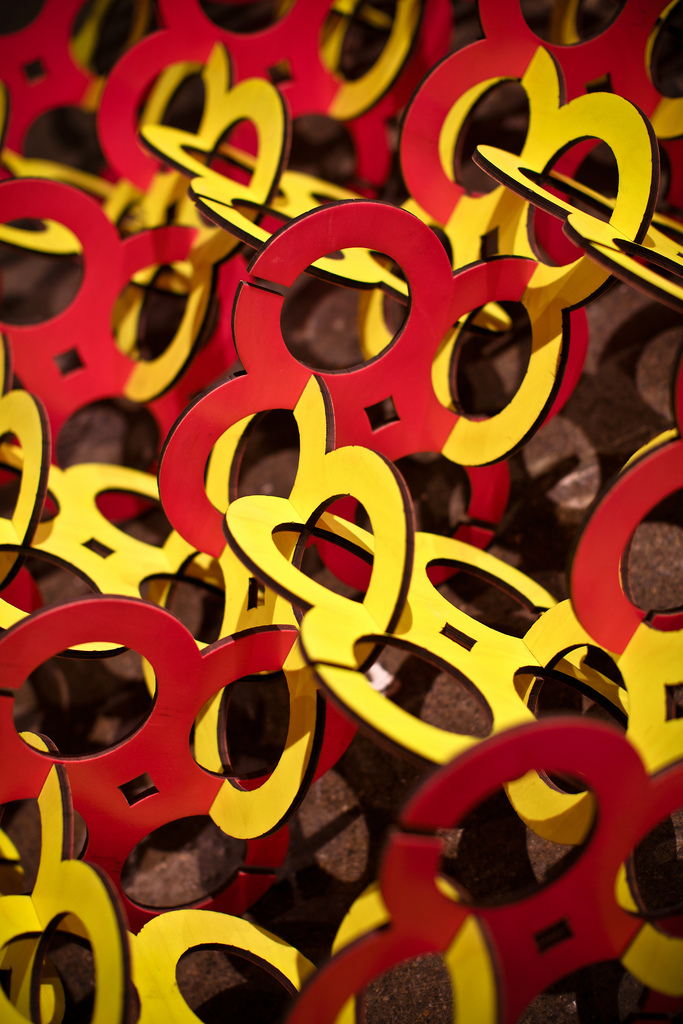
figure eights, photo by Terry Johnston

In the event that there aren’t enough 8s for you on this August 8th, here’s a whole bunch more from the Urban Institute for Contemporary Arts in Grand Rapids.

View the photo bigger and see more in Terry’s UICA slideshow.

The River Grand

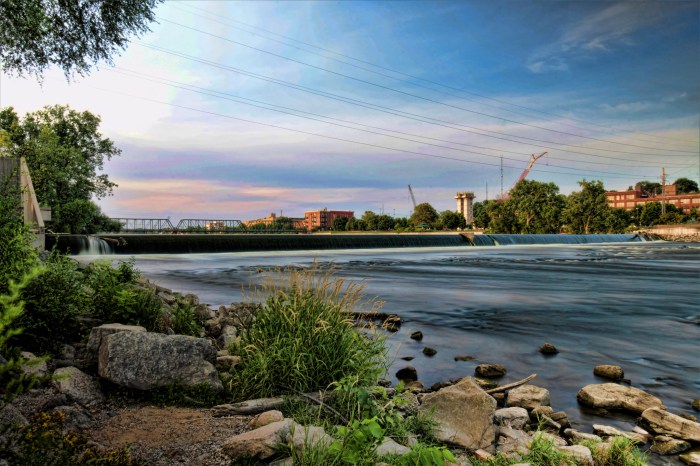
The River Grand, photo by John Rothwell

Wikipedia’s entry on the Grand River says in part:

The Grand River is the longest river in the U.S. state of Michigan. It runs 252 miles (406 km) through the cities of Jackson, Eaton Rapids, Lansing, Grand Ledge, Portland, Ionia, Lowell, Grand Rapids, and Grand Haven. Native Americans who lived along the river before the arrival of the French and British called the river O-wash-ta-nong, meaning Far-away-water, because of its length.

As the glacial ice receded from what is the central Lower Peninsula of Michigan around 11,000 years ago, the Maple River and lower Grand River served as a drainage channel for the meltwater. The channel ran east to west, emptying into proglacial Lake Chicago, the ancestor of Lake Michigan. Today the Grand River rises in Somerset Township in Hillsdale County and Liberty Township in Jackson County, and flows through Jackson, Ingham, Eaton, Clinton, Ionia, Kent, and Ottawa counties before emptying into Lake Michigan. Its watershed drains an area of 5,572 square miles (14,430 km2), including 18 counties and 158 townships. Tributaries of the river include (beginning near river source and travelling downstream): Portage River, Red Cedar River, Looking Glass River, Maple River, Bellamy Creek, Flat River, Thornapple River, Rogue River, Coldbrook Creek, Plaster Creek, Bass River, and Crockery Creek.

…Grand Rapids was built on the site of a mile long rapids on the Grand River, although these have disappeared after the installation of a run-of-river dam in 1866 and five low-rise dams during a river beautification project in 1927.

View the photo background bigtacular and see more in John’s slideshow.

More Michigan rivers on Michigan in Pictures.

Even Wally Pipp didn’t get Wally Pipped!

via “Everything You Know About Wally Pipp Is Wrong” on Absolute Michigan…

wally-pipps-final-resting-spot

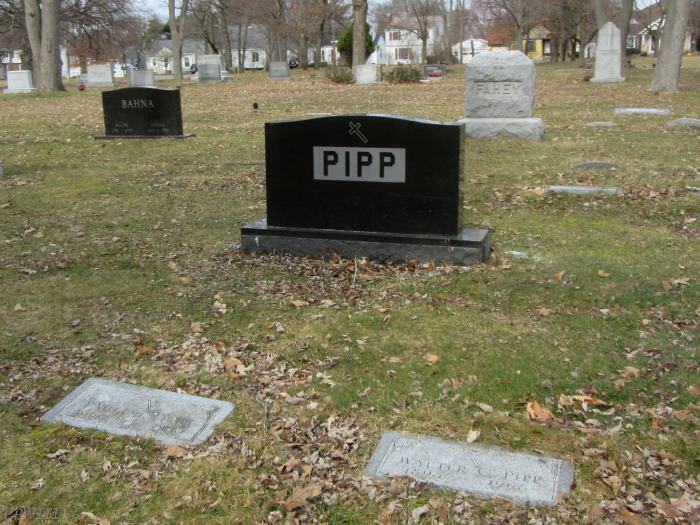
Wally Pipp’s Final Resting Spot, photo by PPWWIII

True confession: My father was a veritable baseball encyclopedia good enough for a scholarship at Yale whose love of the game kept him around baseball and me steeped in it. That said, though I learned the story of Wally Pipp at a young age, it was all wrong.

The name of Wally Pipp conjures visions of shirkers, slackers and layabouts and the stars who get a chance to shine when they take the inevitable day off. Most sports fans know the story of how on June 2, 1925 New York Yankee first baseman Wally Pipp was given the day off for a headache, and Lou Gherig played 1st for the next 2,130 consecutive games until “The Iron Horse” retired due to ALS (amyotrophic lateral sclerosis) also commonly known as “Lou Gehrig’s disease. Tom Brady “pipped” Drew Bledsoe years ago, and Dak Prescott did the same to Tony Romo last season.

I read a whole lot about this confusing tale, but the article Wally Pipp’s Career-Ending ‘Headache’ by Snopes founder David Mikkelson is quite simple a tour de force of the twists and turns in one of our biggest American sports legends that has been told and retold in print and screen. There’s a ton to read including the newspaper clippings and I recommend you do so, but let’s skip to Mikkelson’s conclusion:

After winning three straight American League pennants between 1921-23, the Yankees finished a couple of games off the pace in 1924 as the Washington Senators captured their first flag ever. New York expected to regain the top spot in 1925, but that was the year Babe Ruth’s excesses finally caught up with him.

…With Ruth either missing or too weak to play effectively, and some key players slumping … New York tumbled to a dismal seventh-place finish (in an eight-team league) in 1925. With his team already near the bottom of the standings and eleven games under the .500 mark at the beginning of June, manager Miller Huggins decided to shake up his line-up and replace some of his slumping veterans with younger players. Contemporaneous news accounts leave no doubt that Wally Pipp did not sit out the game on 2 June 1925 with a headache; he was deliberately benched by a manager who had charge of a team that was playing poorly and who opted to sit down some of his older players to give others a try.

In the case of Wally Pipp there was no inopportune headache, no “delightful and romantic story” — just a case of a slumping player who lost his job to an up-and-comer and never got it back. But his replacement was the stuff of legend (the indestructible ballplayer finally felled by a fatal disease), and so he became part of a legend that mixed fact and fiction and grew so large even some of the participants came to believe in its fictional aspects.

Via Mental FlossBleacher Report, and Wikipedia, I can report that Pipp was raised in Grand Rapids, was hit in the head with a hockey puck as a child that he attributed his headaches to, and played his first pro baseball for (seriously) the Kalamazoo Celery Champs. Pipp was one of the best first basemen of his era, hitting .281 with 90 HRs, 997 RBI and 1,941 hits. After retiring in 1928, Pipp played the market, wrote some radio scripts and books including as Babe Ruth’s ghostwriter, and did a pregame baseball show for the Detroit Tigers. He worked in a Michigan plant that made B-24 bombers during WWII and worked as a sales exec for the Rockford Screw Products Corporation. Mental floss concludes: Pipp went from playing first for the Yankees to peddling screws and bolts—and he loved it. Armed with the gift of gab and endless baseball stories, Pipp spent the rest of his life selling wares to Detroit’s auto hotshots. He passed away in 1965. (at the age of 71)

View the photo from Woodlawn Cemetery in Grand Rapids background big and see more in PPWWIII’s slideshow.

Alley Adventures, Grand Rapids Edition

alley-adventures-jerry-james

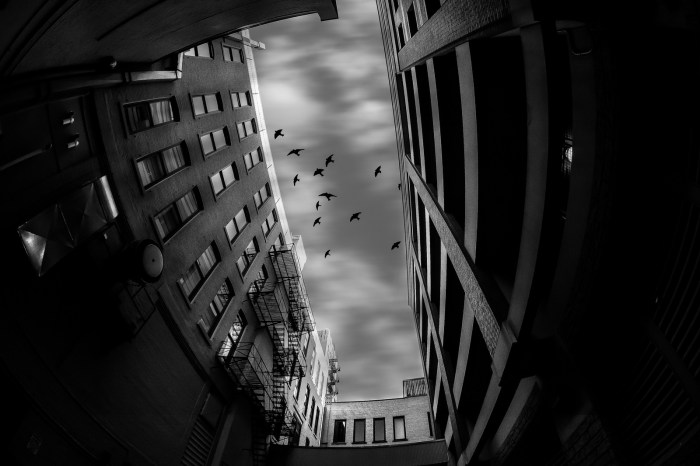
Alley Adventures, photo by Jerry James

Jerry writes Tonight’s image is brought to you by the darker side of reality. Things are not always sunsets and rainbows. Shot taken with the Olympus EM5 Mark II and the Rokinon 7.5mm fisheye in grand rapids, Michigan

View his photo bigger, view work and read his thoughts on his website, and definitely check out Jerry’s slideshow for more!

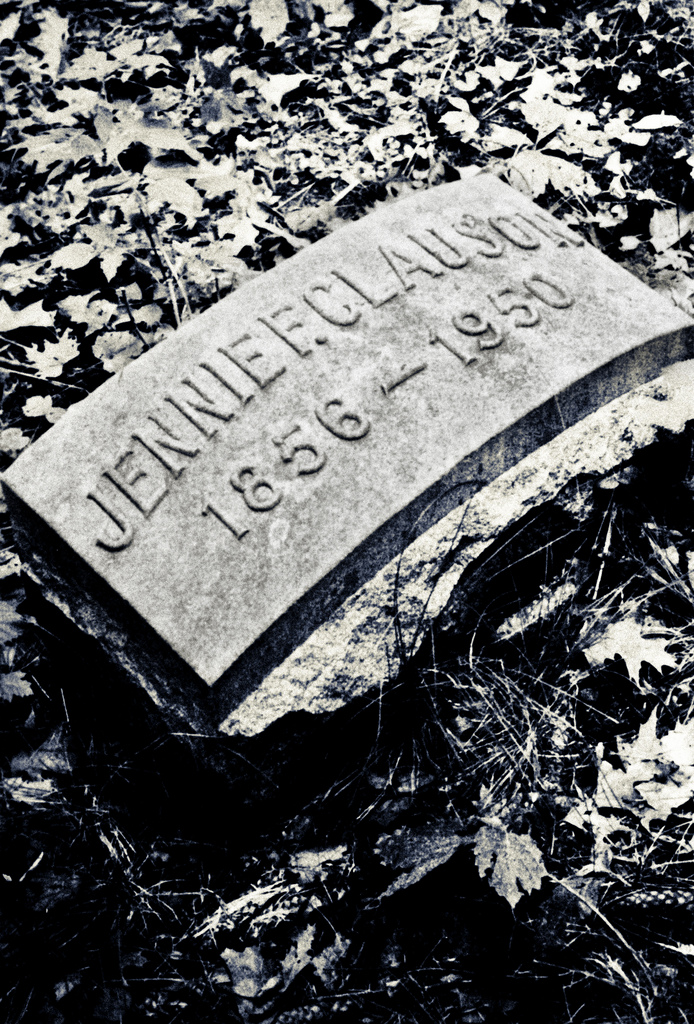
Jennie F. Clauson saw the world change

jennie-f-clauson-grand-rapids

Jennie F. Clausen, photo by Marty Hogan

View Marty’s photo background big and see more in his Michigan Burying Grounds slideshow.

The December 7th anniversary of Pearl Harbor is one of the sign posts in American history. Marty writes that in nearly a century, Jennie F. Clauson from Grand Rapids, Michigan saw a world change. Here’s the entirety of his post:

Continue reading Jennie F. Clauson saw the world change

A tragic reminder for drivers from Kalamazoo

I sincerely hope that everyone who reads today’s post remembers that three-quarters of all bicycle fatalities are caused by driver error. It’s your duty as a driver to PAY ATTENTION as you pilot a several thousand pound machine that can become a deadly weapon if you are not vigilant. I would also add that I am in no mood today to hear about the cases where cyclists violate the rules of the road. That does not happen in 3/4 of car/bike fatalities including this one…

Grand Rapids Ghost Bike

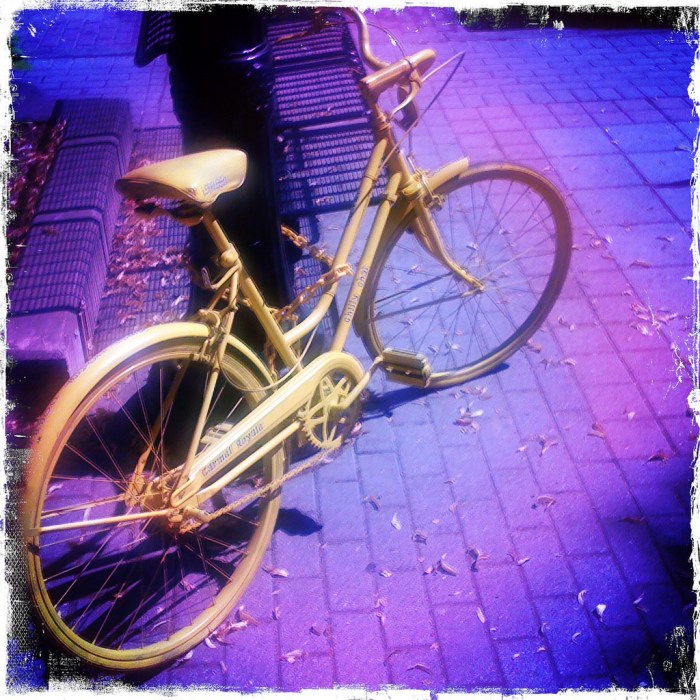
Ghost Bike, photo by Patrick Goff 

Today’s picture shows a ghost bike, a white-painted memorial for a bicyclists who was killed or struck while riding on the street. Accompanied by a small plaque, they serve as reminders of the tragedy that took place at their location and as enduring statements in support of cyclists’ right to safe travel.

The city of Kalamazoo now has need for a host of ghost bikes after the deadly bicycle crash on Tuesday, June 7, 2016 where five bicyclists died when a pickup truck hit them on Westnedge Avenue. Four more cyclists were seriously injured. That link has photos from last night’s Ride of Silence and also the horrible damage to the bikes.

Kalamazoo Strong is taking donations to help the victims and families of this tragedy.

View Patrick’s photo of a ghost bike from Grand Rapids bigger and see more in his slideshow.

Here’s a video from the Ride of Silence…

Grand Rapids skyline

Grand Rapids Skyline

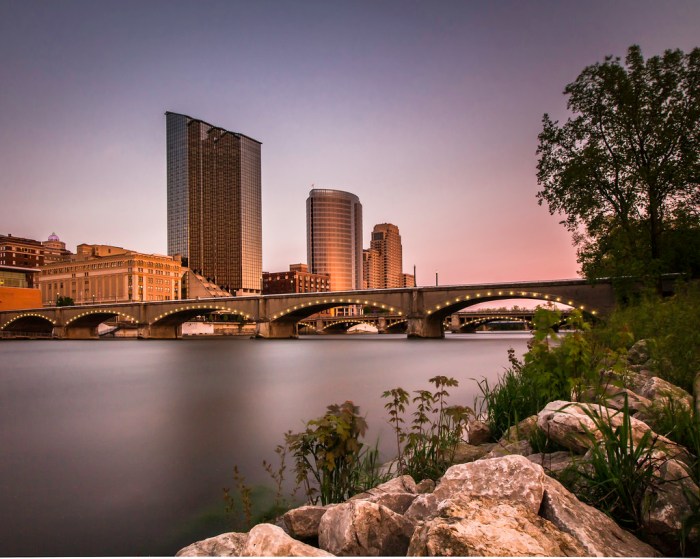
Grand Rapids skyline, photo by rdmegr

Rodney smoothed out the rapids of the Grand River with this eight minute exposure of the Grand Rapids skyline.

View it bigger, see more in his slideshow, and also check out his website.

More from Grand Rapids on Michigan in Pictures.

Sixth Street Bridge in Grand Rapids

Built for Horses Sixth Street Bridge Grand Rapids

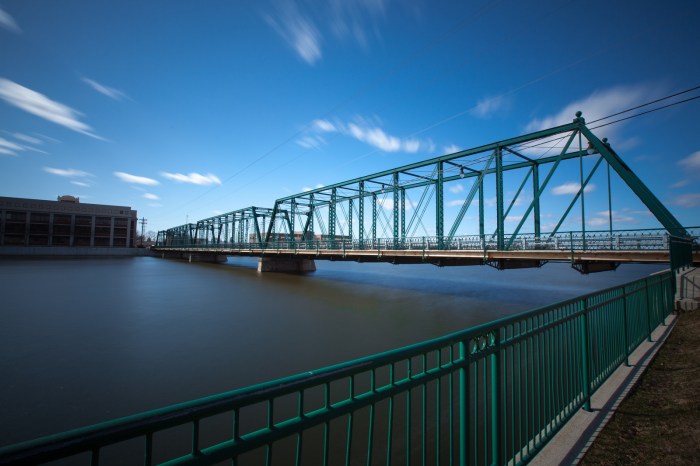
Built for Horses, photo by Rudy Malmquist

News that the Michigan Department of Transportation is testing drones for bridge inspection reminded me that I was asked to share more of were “bridges other than than the Mackinac Bridge.”

Historicbridges.org is an excellent resource, and their entry for the Sixth Street Bridge in Grand Rapids begins:

The Sixth Street Bridge, with its long 544 foot length excellent physical condition, is a fitting tribute to its builder, the Massillon Bridge Company of Massillon Ohio. Constructed in 1886, this bridge is made of wrought iron. This bridge is one of the most important historic bridges in the entire state of Michigan, since it is the longest pin-connected highway truss in the state. Also, Michigan only has a few truss bridges that are more than one span in length, and most of those are two spans. A four span bridge in Michigan is thus extremely rare for its unusually long length, for Michigan. The bridge is also significant for the length of its individual spans. The bridge has three spans that are 154 feet in length. This is a very long span length for a pin-connected Pratt truss, and is among the longest in Michigan.

…Construction of the bridge began in 1885, when the piers and abutments were constructed. These, with approaches, cost $11,084.95. The wrought iron truss superstructure was erected in 1886 by the Massillon Bridge Company of Massillon, Ohio, costing $20,281. This made the total cost of the bridge $31,365.95.

Read on for much more.

Rudy adds that this is the oldest metal bridge in Michigan. View his photo bigger and see more in his Neutral Density slideshow.

More bridges on Michigan in Pictures.

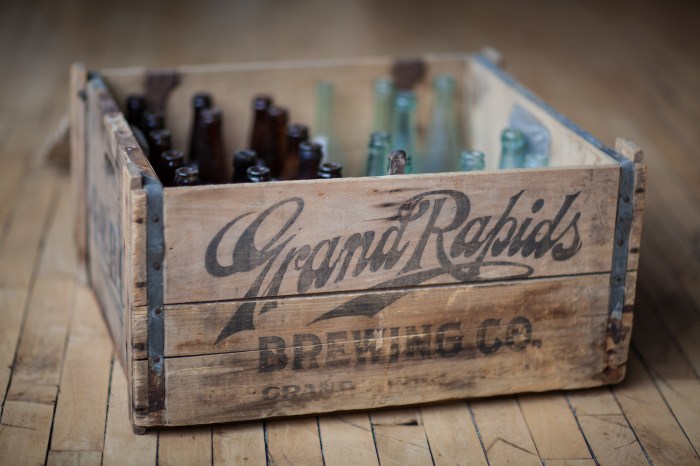
A toast to Beer City USA … and tourism in West Michigan

Grand Rapids Brewing Co

Beer City USA, photo by Rudy Malmquist

“Being Beer City USA has definitely helped out our business. We got a lot more tourist people than we did the first year. It’s unbelievable how many people you start talking to and they’re from out of town.
~Eric Karns, Elk Brewing

WZZM TV 13 reports that 2015 was “best year ever” for tourism in West Michigan, and folks are crediting local beer, the booming art scene, and the Pure Michigan campaign for the growth in tourism:

The year 2015 was a record-breaking year for tourism across West Michigan, which means more money into the local economy.

In 2014, 113 million visitors to Michigan generated $37.8 billion dollars — and tourism supported 326,000 jobs in the state. Now, newly released numbers show that 2015 was an even better year for attracting visitors to places like Grand Rapids and the Lakeshore.

Click for more about Grand Rapids’ Beer City nod along with information about GR Beer Week (February 17- 28) which includes the sure to sell out Grand Rapids Winter Beer Fest.

View Rudy’s photo background bigilicious and click for more of his beer photos.

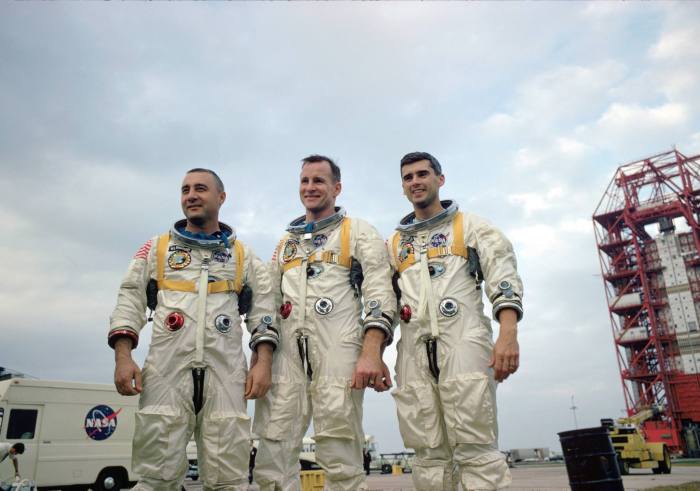
#TBT: Remembering the Crew of Apollo 1

Remembering the Crew of Apollo 1

Remembering the Crew of Apollo 1, photo by NASA

“You’ll be flying along some nights with a full moon. You’re up at 45,000 feet. Up there you can see it like you can’t see it down here. It’s just the big, bright, clear moon. You look up there and just say to yourself: I’ve got to get up there. I’ve just got to get one of those flights.”
-Roger Chaffee (The New York Times, January 29, 1967, p. 48.)

Thanks to longtime Michigan in Pictures contributor Rudy Malmquist for the find on this. By total coincidence, Rudy will be back tomorrow with a photo!!

The National Air & Space Museum at the Smithsonian shared this photo yesterday, saying:

Remembering the crew of Apollo 1. On January 27, 1967, astronauts Virgil I. “Gus” Grissom, Edward H. White II, and Roger B. Chaffee perished in a fire during a pre-launch test for what was to be the first crewed Apollo mission.

Rudy pointed out that Chaffee was from Grand Rapids, and you can read a very detailed biography on Roger B. Chaffee from NASA’s History Office.  Here’s a few choice bits about his early life … and here’s hoping that Michigan in Pictures readers can do their best to instill a love of service, science and following ones dreams in the young folk in their lives:

“On my honor, I will do my best…” are the first eight words of the Scout Oath for the Boy Scouts of America. Individually, the words are short and simple. Collectively, however, they speak volumes and serve to inspire millions of boys to strive for excellence. Lieutenant Commander Roger Bruce Chaffee was a Scout for whom the Oath was more than just mere words. He took the pledge to heart and accepted the challenge to fully live the words of the Oath. Whether he was meticulously hand crafting items from wood or training to be the youngest man ever to fly in space, Chaffee always did his best by putting one hundred percent of himself into the effort.

…Earlier in his career, Don Chaffee had been a barnstorming pilot who flew a Waco 10 biplane. He was a regular sight at fairgrounds and made a bit of extra money on the side by transporting passengers. He also piloted planes for parachute jumpers. Later, Don worked for Army Ordnance in Greenville and in 1942, he was transferred to the Doehler-Jarvis plant in Grand Rapids, Michigan where he served as Chief Inspector of Army Ordnance.

Don shared his love of flying with his son and at the age of seven, Roger enjoyed his first ride in an airplane when the family went on a short excursion over Lake Michigan. Although it was a relatively brief flight, Roger was absolutely thrilled. To satisfy his continued interested in planes, Don set up a card table in the living room where he and Roger would create model airplanes piece by piece. By the time he was nine, Roger would point to a plane flying overhead and predict, “I’ll be up there flying in one of those someday”.

…By the time Roger was fourteen, he had developed an interest in electronics engineering and tinkered with various radio projects in his spare time. In high school, he received excellent grades and maintained a 92 average. Vocational tests showed that Roger’s strongest abilities were in the area of science. He also scored high mechanically and artistically. Mathematics and science were his favorite subjects, with chemistry being particularly appealing. Once the family switched to a gas heating system, Roger transformed the outdated coal bin area into his own private workshop where he spent countless hours experimenting with his chemistry set. By the time he was a junior in high school, he was leaning toward a career as a nuclear physicist. As a senior, he established a lofty goal for himself: he wanted to someday have his name written in history books. Before the world’s super powers took their first halting steps into space, Roger Chaffee had shared his dream of being the first man on the moon with his closest friends.

Here’s an article about the fire, and if you’re in Grand Rapids, check out the Roger B Chaffee Planetarium at the Grand Rapids Museum.