Michigan Food to the Rescue

Food Rescue of Northwest Michigan

Food Rescue of Northwest Michigan

“In times like these, we have to look out to help one another. We have to have compassion for one another to see how can I help my brother.” – Reverend Aaron Hicks

Michigan Public shares that Michigan food pantries were swamped over the weekend with the news of SNAP benefits being cut. Bridge Michigan notes Governor Whitmer is sending $4.5 million in emergency funds to food banks & the Senate has passed a larger, $71 million dollar package.

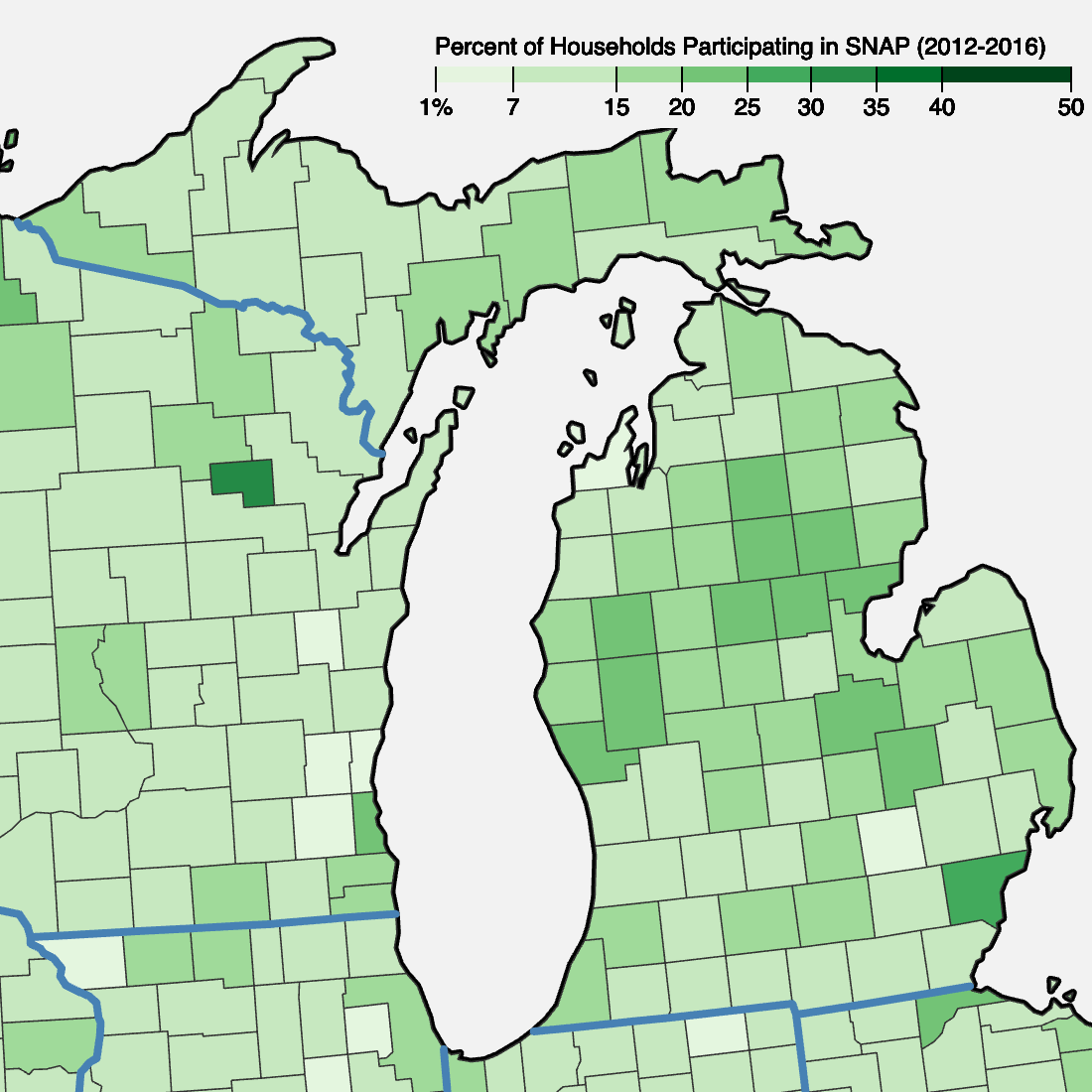
The National SNAP participation map breaks things down at the conty level. In Michigan average of 14.2% of small town households, 16.1% of urban households, and 16.8% of rural households receive SNAP benefits, and Michigan spends $3 billion a year on food assistance for our 1.4 million SNAP recipients.

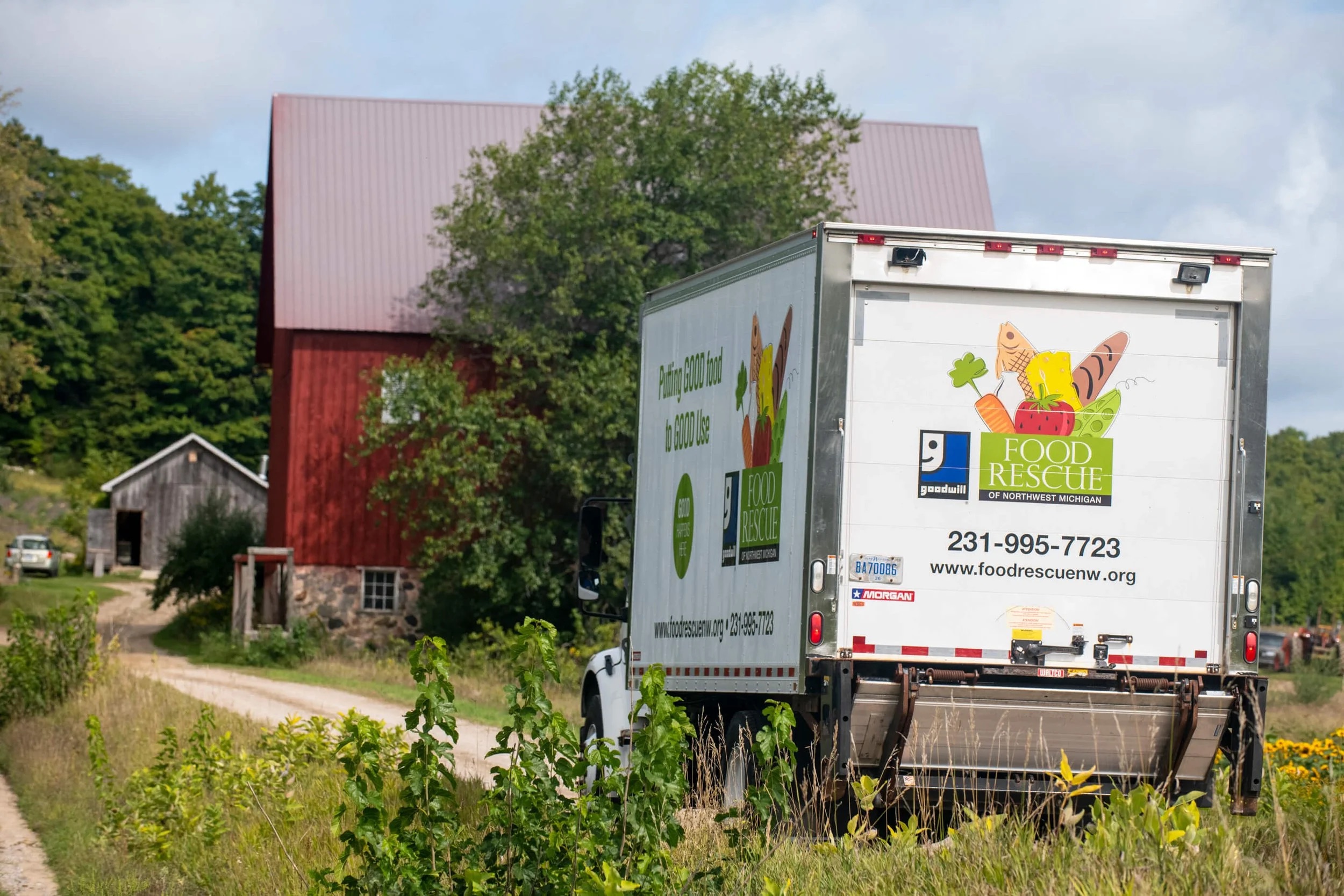
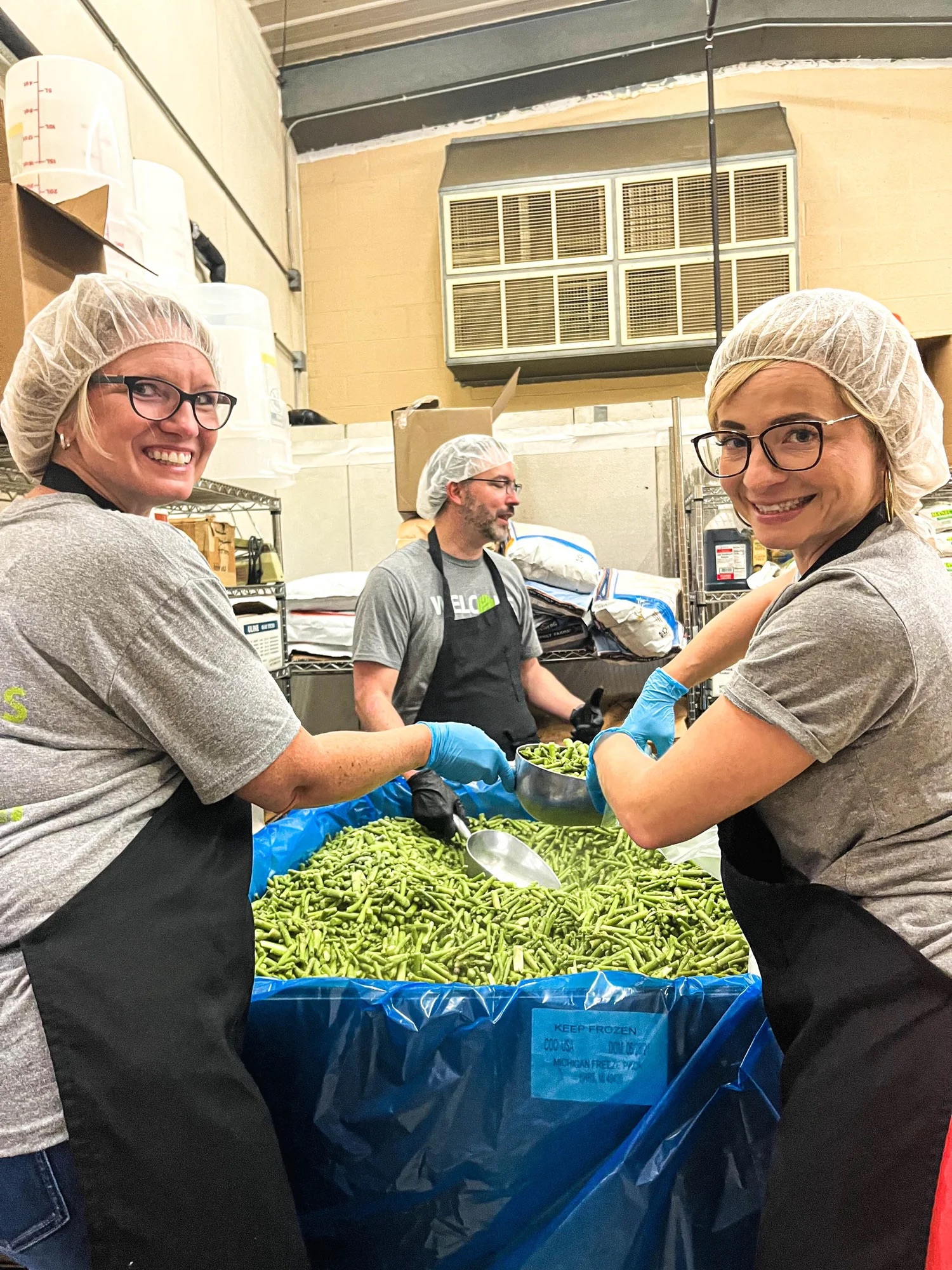
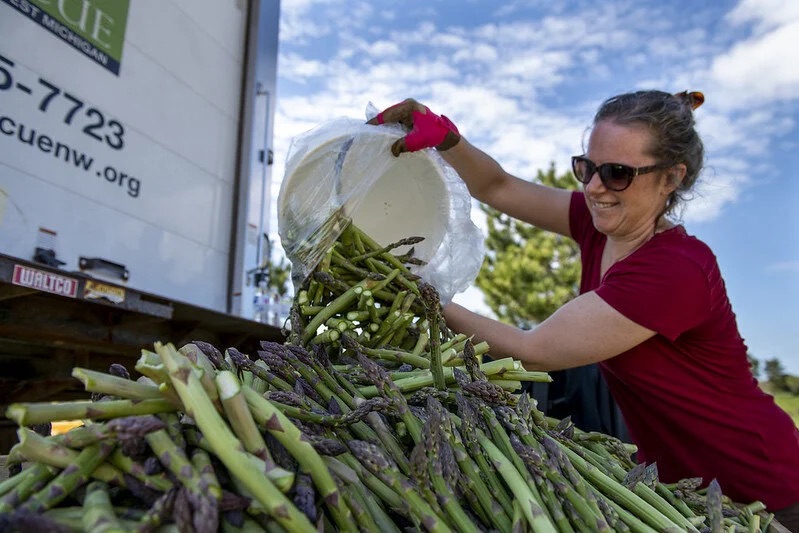
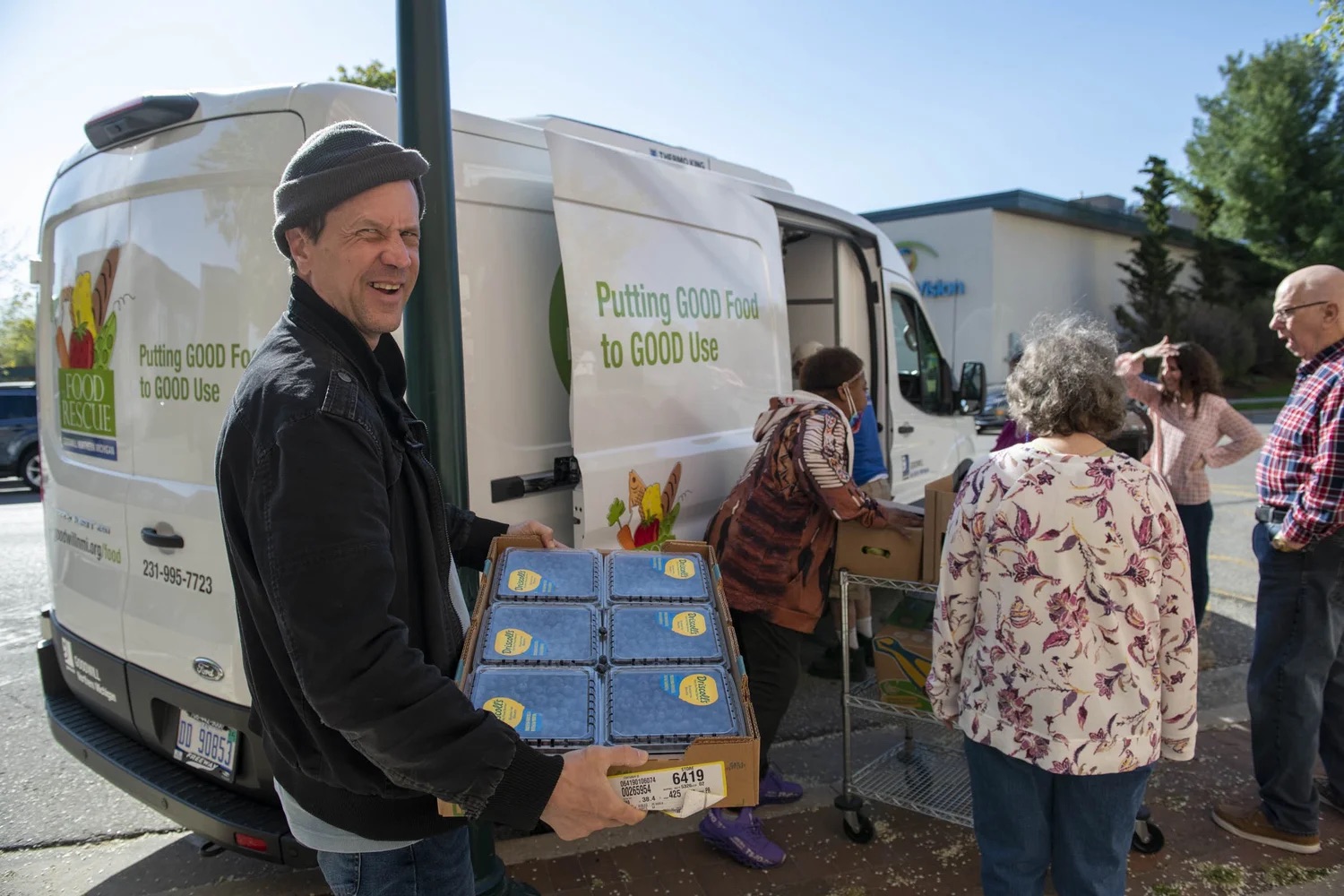
One of the many Michigan organizations working hard to keep food in the hands of hungry Michiganders is Food Rescue of Northwest Michigan who rescue, repack, and distribute over 2 million pounds of food every year to add to food pantry stores. Due to uncertainty with SNAP (food stamp) benefits, they are holding additional repacks – get all the details right here & feel welcome to share options you know of in the comments!!

Support Michigan in Pictures with Patreon

Return of the Turtle: Detroit Tigers Opening Day

Opening Day Flag Downtown Detroit Partnership

Opening Day Anthem by Downtown Detroit Partnership

For lo, the winter is past, the rain is over and gone, the flowers appear on the earth, the time of the singing of birds is come, and the voice of the turtle is heard in our land.

Friday, April 4th 2025 is the 124th Opening Day for the Detroit Tigers. As a resident of Midtown in Detroit, I can tell you that this is unquestionably one of the biggest holidays of the year for us. Already the streets are filling with cars as baseball fans from all over Michigan and the world get ready for Tiger Baseball to return to the Motor City!

I’ve rounded up some of the highlights with a laser focus on FREE including and Opening Day party at Grand Circus Park by the City of Detroit and a Wisconsin manufacturer of watery beer that features a LOT of great food trucks, DJ Invisible, and lots of video walls and screens. There’s another free party from noon – 6pm just across Woodward at one of my favorite venues, The Fillmore with giveaways, WRIF and the game on their MASSIVE screen (tell the security guys Andy sent you and they will laugh). Also on the free front are a party at Gilly’s with giveaways, raffle, face painting & DJ Ray Ya Dig (official DJ of the Lions) from 9 AM–4 PM. I think that the Opening Day Party with my friends The Honest to God Jug Band is free, but they’re so fun and Cliff’s Bells is SO cool that I think you won’t mind if there is a cover.

And everywhere there are giveaways, giveaways, giveaways including the House of Faygo Pop-up at Campus Martius this Friday – Sunday.

Here’s more information on the photos & happenings. Please add yours in the comments here or on our Facebook!

Support Michigan in Pictures with Patreon

(not) Feeding America

Not Today by Mark Smith

Not Today by Mark Smith

A lot of that food was really good food. It was protein.

-Ken Estelle, President & CEO of Feeding America West Michigan

Fox 17 West Michigan reported on Monday that Feeding America West Michigan has learned that the USDA has “paused” 32 truckloads of food scheduled to arrive from April to June.

The organization is now working to replace about 600,000 pounds of meat, cheeses and milk that would have come from these USDA shipments. “We’re looking at our current food suppliers, and donors, but we’re also looking at the fact that we’re going to have to purchase food in order to fill in some of the gaps,” Estelle explained.

A USDA grant allowing the food bank to purchase from Michigan farms was also initially suspended but has since been reinstated through October following meetings with elected officials. “We’re just getting into the Michigan growing season and we have made commitments to a lot of these smaller farms of what we would be able to purchase from them. So they were… the farms were also depending on us to be able to be one of their customers for their products,” said Estelle.

No word yet on if hungry folks in West Michigan will be able to “pause” their hunger, so consider a donation to Feeding America West Michigan or your local food bank. Big fan of Forgotten Harvest in Metro Detroit.

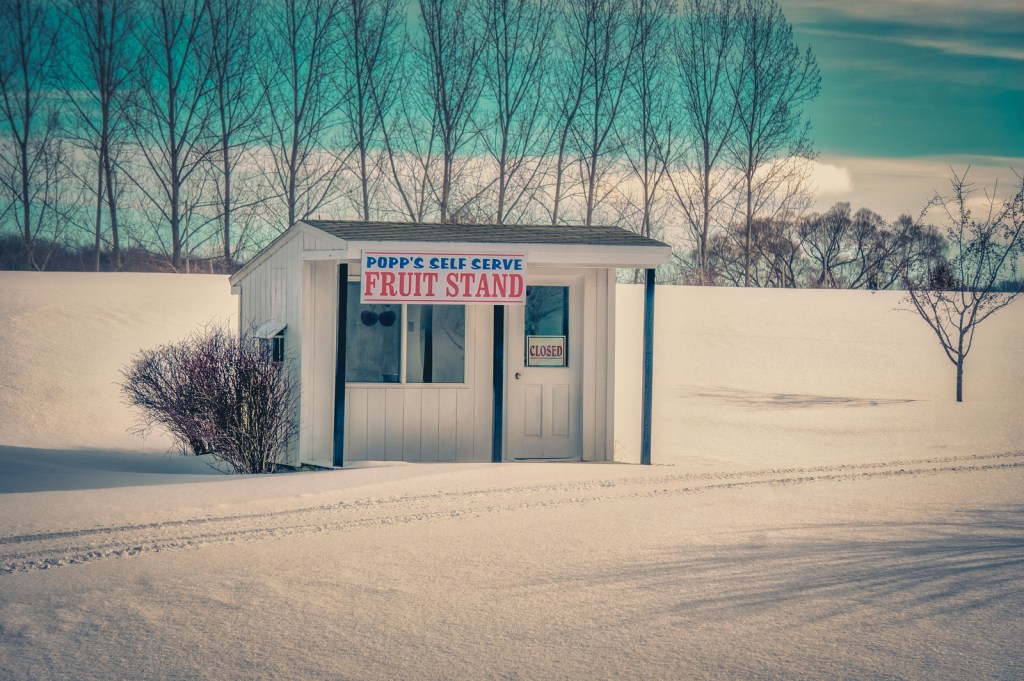
Mark took this photo back in March of 2017 when the Popp farmstand on the Leelanau Peninsula was closed as it normally is. See lots more from Northern Leelanau County in his East of Leland gallery on Flickr.

Support Michigan in Pictures with Patreon

Fighting for Food Security

Morning Sun by Richard Deming Photography

Morning Sun by Richard Deming Photography

TechCrunch has a feature on a new Google service to help the millions of Americans struggling with food insecurity:

Google today is launching a new suite of resources for people struggling with food insecurity across the U.S. The project includes the launch of a new website “Find Food Support” that connects people to food support resources, including hotlines, SNAP information, and a Google Maps locator tool that points people to their local food banks, food pantries and school meal program pickup locations, among other things.

In an announcement, Google explains how the COVID-19 pandemic fueled a worsening food crisis in the U.S., which led to some 45 million people — or 1 in 7 Americans — experiencing food insecurity at some point during 2020. That figure was up 30% over 2019, the company noted. And of those 45 million people, 15 million were children.

While the pandemic’s impacts are starting to subside as businesses are reopening and in-person activities are resuming, many children will still go hungry during the summer months when school lunch programs become unavailable.

Head over to Google to find food support & be sure to remember your neighbors struggling with food insecurity when you give charitably!

Richard took this photo back in 2010 at the Fulton Street Farm Market in Grand Rapids. See more in his Farmers Markets 2010 gallery on Flickr.

More delicious Michigan food on Michigan in Pictures!

Support Michigan in Pictures with Patreon

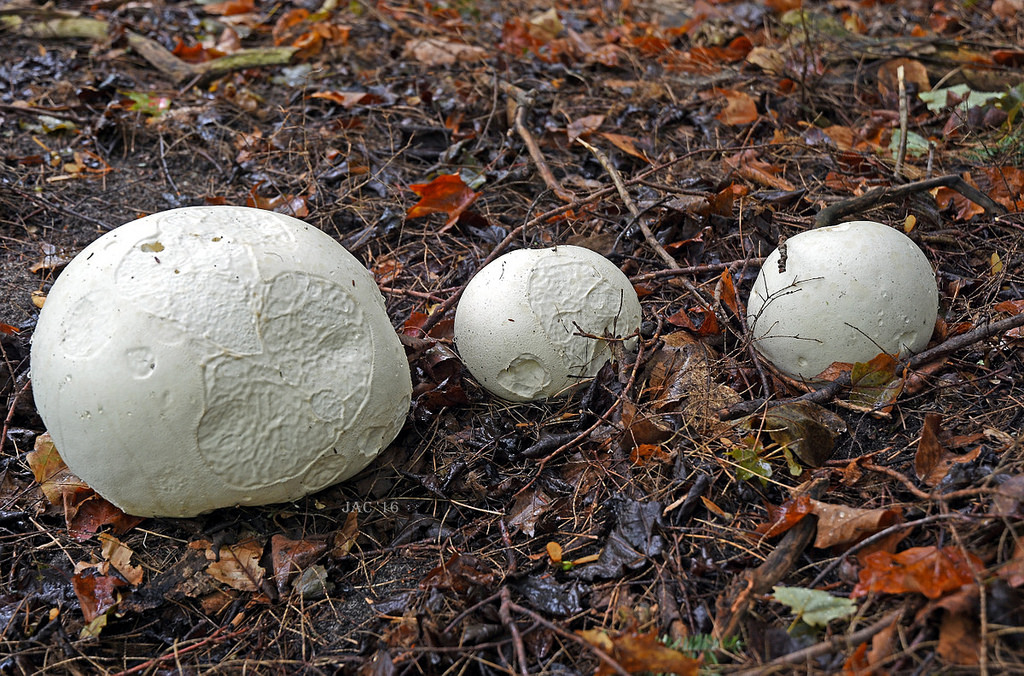
First Day of Fall Puffballs

first-day-of-fall-puffballs

Happy First Day of Autumn, photo by Julie

The spring, summer, is quite a hectic time for people in their lives, but then it comes to autumn, and to winter, and you can’t but help think back to the year that was, and then hopefully looking forward to the year that is approaching.
-Enya

Happy second day of fall everyone. I’m usually pretty good about marking that seasonal stuff, but in my defense, I DID eat some puffballs the day before yesterday and marked a few today.

In case you’re interested in exploring edible, wild mushrooms, the giant puffball is considered one of the “Foolproof Four” – widespread and easy to identify mushrooms. Mushroom Appreciation’s page on Giant Puffball mushrooms has lots of pictures, puffball facts, and identification tips and says (in part):

Giant puffballs are saprotrophs, meaning they feed on dead organic matter. They’re more likely found in meadows and grasslands than in the forest. They are always found growing on the ground rather than up in trees.

Giant puffballs are aptly named. They are usually quite large, reaching soccer ball size or bigger. They usually have a circumference (distance around) of 4 to 30 inches, although larger ones are not uncommon. There is no distinct cap and stem with these mushrooms; instead they exist as just large, white globes. They may not be perfectly round. Giant puffballs are white with firm white flesh inside. If they appear yellowish or brown is means that the mushroom is about to/has gone to spore, and is not edible anymore.

…Correct identification is crucial. If you think you’ve found a giant puffball the first thing to do is cut it open. It should have thick, hard, white flesh inside. Don’t eat anything with a brown, black, purple, or yellow interior. It may be an earthball (Scleroderma citrinum) or some other gastric distress inducing mushroom.

This white flesh should be solid with no gills. If you see any evidence of gills disregard immediately. Some species, including the deadly Amanita, have a “universal veil” of tissue that surrounds the mushroom when young. This can make it look like a puffball.

Inexperienced hunters should check with someone knowledgeable if they think they’ve found a giant puffball. An incorrect guess can kill if it turns out to be an Aminita! Please be careful.

Julie shared the Enya quote above, and she shares a ton of great photos in the Absolute Michigan pool. Check her photo out bigger and get yourself in the spirit of the season with her Fall slideshow!

If you do find a giant puffball, here’s a recipe from the Mycological Society of San Francisco’s excellent page on Puffballs from Hope Miller, coauthor of the book Mushrooms in Color.

  • 1 teaspoon salt
  • 1 cup flour
  • About 1 pound puffballs, peeled and cut into 1/2-inch slices
  • 1 egg, slightly beaten with 2 tablespoons water
  • 1 cup freshly grated Parmesan cheese
  • 4 tablespoons butter or more if needed
  • 2 tablespoons oil or more if needed

Mix the salt with the flour. Dip the mushroom slices in the flour, then in the egg, and last, in the cheese. Melt the butter and oil in a sauté pan or skillet and sauté the mushrooms slowly until golden brown. Drain on paper towels. Serve at once.

OK. I can do that.

Top Dog: Detroit Michigan’s Coney Island Hot Dog

On Any Given Night Lafayette Coney Island

On Any Given Night, photo by Derek Farr

When mLive writer Emily Bingham realized that Michigan didn’t have an official state food, she set out to determine what their readers thought. The winner was the coney island hot dog which squeaked by my personal favorite, the pasty. Share what you think Michigan’s signature food is in the comments!

The Encyclopedia of Detroit entry for the Coney Dog says:

Many people think that the Coney dog, also called the Coney Island hot dog, got its start on Coney Island, NY where the hot dog was created. In actuality, this popular food got its start in Michigan, although the exact location is still disputed. Three locations in Michigan all claim to be the birthplace of Coney dogs: American Coney Island in Detroit, Lafayette Coney Island in Detroit and Todoroff’s Original Coney Island in Jackson.

In 1917, Gust Keros opened American Coney Island. A few years later Keros’s brother opened Lafayette Coney Island next door. Both of these Detroit Coney Islands are incredibly popular to this day, where there is an on-going argument over which establishment serves the best Coney dog. The dispute has been featured on several food television shows, including Food Wars and Man v. Food.

A Coney dog is a beef hotdog, topped with an all meat, beanless chili, diced white onions, and yellow mustard. A true Coney dog uses made-in-Michigan products.

Lots more about the coney dog on Absolute Michigan.

View Derek’s photo bigger where you can also read about the history of friendly competitors Lafayette Coney Island & American Coney Island. See more in his massive Signs & Billboards slideshow.

Michigan food on Michigan in Pictures!

Farm Market Friday: Red Haven Peaches

Red Haven Peaches

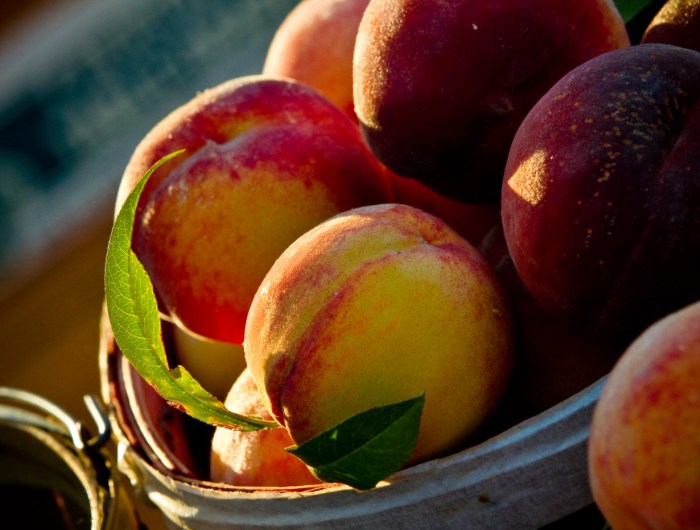
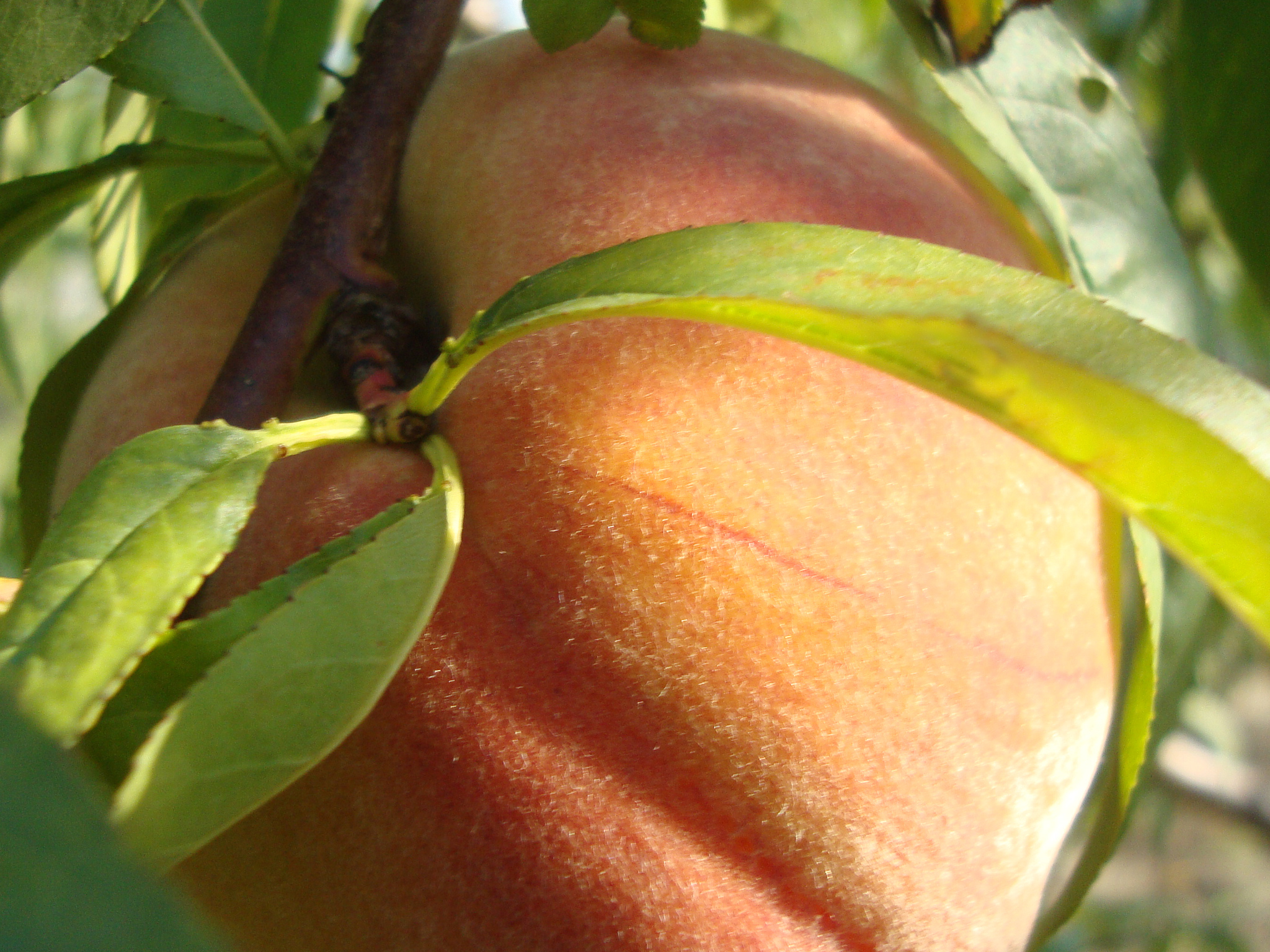
Peaches, photo by alyssa g

I’ve shared the story of the Redhaven peach before on Michigan in Pictures. Strangely enough, it featured a photo by a photographer named Alissa!

Peaches are rolling in at farm markets all across Michigan.  A favorite article that Michigan History Magazine shared on Absolute Michigan tells the story of A Peach of a Man:

Many people have contributed to Michigan’s fruit industry, but Stanley Johnston stands above the rest. Johnston not only developed a new peach that is the most widely grown peach in the world today. He also made Michigan the nation’s leading producer of blueberries.

Johnston was the superintendent of Michigan State University’s (MSU) experiment station in South Haven from 1920 to 1969. There, he developed a better peach. Johnston took peaches that had good features, like ones that ripened at different times or did not turn brown when canned or frozen. He took pollen from the male plant and joined it to the flower of the female plant. When the fruit grew, he collected seeds and started a new tree. When the tree produced fruit five years later, he could see if he made a better peach.

During his career, Johnston grew and studied more than 20,000 peach trees. Eight different types, called “havens” (for South Haven), were planted by farmers. Havens ripened earlier, so the peach-growing season was longer, which meant more peaches could be grown and sold. One of these peaches, named Redhaven for its nice red color, is the most popular peach in the world today.

Read on at Absolute Michigan and definitely get down to your local farmer’s market for some peachy goodness!

View Alyssa’s photo background bigalicious and see more in her Blake Farms slideshow.


Game on for Michigan’s Strawberry Season

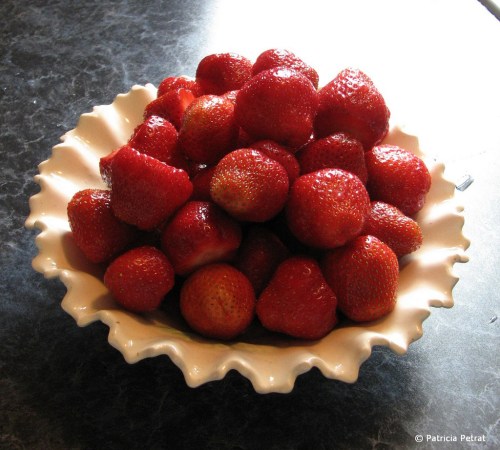
First Michigan Berries of the year. Early Glow variety. Yum!

First Michigan Berries of the year…, photo by Trish P.

Westview Orchards in Washington Township north of Detroit let me know yesterday that they’ll have strawberries to pick this weekend. Real Time Farms agrees strawberries are starting to roll into southern Michigan farm markets from farmers including Prochaska Farms of Tecumseh, who had some at the Saline Farmers Market last Saturday. If picking your own is more your speed, U-Pick Michigan has up-to-date reports.

I should add that we got some organic ones yesterday at the Sara Hardy Downtown Farmers Market in Traverse City​. I believe they came from Ware Farm​ of Bear Lake – you can see them right here!

The Michigan Ag Council’s page on strawberries says that:

Michigan’s strawberry season starts in early June and can extend into mid July. Look for Michigan strawberries in-store or find them where they’re largely produced, in Berrien, Leelanau and Van Buren counties.

Michigan Strawberry facts:

  • Michigan grows strawberries for both fresh and processed uses
  • In 2009, Michigan produced 43,000 tons of fresh strawberries and 3,000 tons of processed strawberries, generating $6.6 million
  • Most of the fresh Michigan strawberries were picked by consumers at “u-pick” operations around the state
  • Strawberries contain 80 percent of the recommended daily allowance of vitamin C
  • They are an excellent source of potassium, which can help control blood pressure and fight strokes
  • They are an excellent source of fiber, which help reduce total cholesterol levels

In kind of a neat little coincidence, my friend Trish snapped this photo five years ago on June 12, 2010! She’s got a great blog entry on making strawberry preserves, something that’s definitely a Michigan tradition.

View her photo of Early Glow strawberries from the Bardenhagen Berry Farm on the Leelanau Peninsula bigger and see more in her delicious Michigan harvest slideshow.

Ramps, Wild Leeks, Spring Onion, Allium tricoccum

Wild Leeks

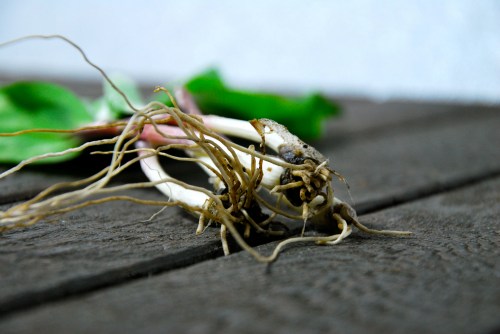
Wild Leeks, photo by CherryCapitalFoods

Here’s some of a Wild Food Wednesday on Wild Leeks I wrote for eatdrinkTC.com. You often find these oniony treasures when you’re morel hunting. Leeks are in the woodse now, and more than one little bird has told me of morels popping around the state as well! 

Whether you know them as ramps, wild leeks, spring onions or by their scientific name of Allium tricoccum, ramps are a wild onion with a delicious & pungent garlicky flavor. Wild leeks are found from as far south as Alabama all the way up into Canada. To the south, they are more commonly known as ramps while in the north, wild leek is more common. Wikipedia’s page on Allium tricoccum says that “ramps” comes from the English word ramson, a common name of the European bear leek (Allium ursinum) that is related to our American species.

Regarding harvesting, Ramp-age at the Earthy Delights blog says:

Good ramps or wild leeks should have two or three whole bright green leaves with the small white bulb attached by a purplish stem. The leaves are generally about 6 inches long, although ramps tend to be harvested at a somewhat earlier stage than are wild leeks. Depending on where you get them, ramps or wild leeks may be still muddy from the field or all cleaned and trimmed. The key is that they be fresh. Yellowing or withering in the leaves is a sign that they have gone too long.

A papery wrapper leaf (and some dirt) may surround the bulb and should be pulled off as you would with scallions. Trim away any roots along with their little button attachment. The entire plant is now ready for eating.

Once ramps / wild leeks have been cleaned, store them in the refrigerator tightly wrapped to keep them from drying out (and to protect the rest of the contents of the fridge from the heady aroma). They should keep for a week or more, but use them as soon as possible after harvest.

Some wild leek facts & lore:

  • Leeks were prized by the ancient Greeks and Romans and were especially revered for their beneficial effect upon the throat. The Greek philosopher Aristotle credited the clear voice of the partridge to a diet of leeks, while the Roman emperor Nero supposedly ate leeks everyday to make his voice stronger. (World’s Healthiest Foods)
  • The name of Chicago originates from “Checagou” (Chick-Ah-Goo-Ah)means “wild onions” in the Potawatomi language. The area was so named because of the smell of rotting marshland and wild leeks that covered it. (Earthy Delights)
  • Wild leeks are high in Vitamins C and A, and are full of healthful minerals. And they have the same cholesterol-reducing capacity found in garlic and other members of this family. (Earthy Delights)
  • The entire plant is edible and leaves, especially when young, are delicious when sauteed. (my kitchen)

View this photo background bigtacular and see more in Cherry Capital Foods’ Spring Hollow Farms slideshow.

I’m especially happy to feature today’s photo because we buy incredible lettuce, greens and duck & quail eggs from Richard & Diana of Spring Hollow Farms of Buckley. If you see them at the Traverse City Farmer’s Market, be sure to buy a bag or two of their spring mix!

More Michigan food and more spring wallpaper on Michigan in Pictures.

Michigan’s 2014 Morel Season has arrived!

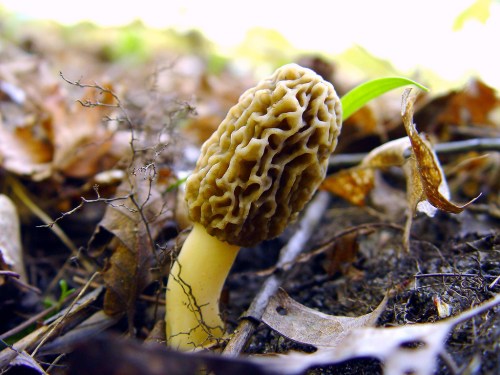
The White Morels are just starting. Taken in the City Limits of Boyne City, Michigan, along with some others I might add.

The White Morels are just starting. Taken in the City Limits of Boyne City, Michigan, along with some others I might add., photo by Rick Wolanin

I’ve started to get reports of morels trickling in from here in Traverse City and other locations in the state. While we’re a ways from full-on morel madness, it’s a good time to start getting excited about the return of this once-a-year woodland delicacy.

Over 7 years, Michigan in Pictures has accumulated a lot of morel features – here are some favorites along with a couple from other sites:

Rick lives in Boyne City, one of Michigan’s morel epicenters. View his photo bigger and check out more of his great morel photos!