How you can help bees in Michigan

Around the Bend by Daniel E. Johnson

Around the Bend by Daniel E. Johnson

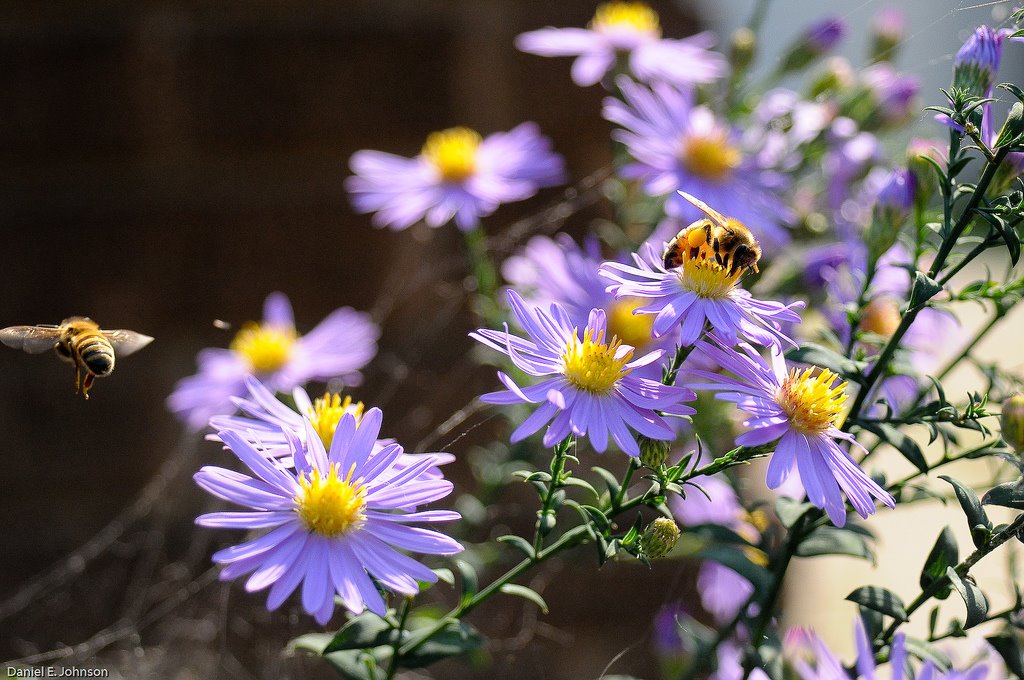
I shared this photo on August 7, 2017 with the good news that the number of Michigan honeybee colonies was on the rise, reversing steep declines due to colony collapse disorder. Michigan and the world are for sure not out of the woods with Colony Collapse Disorder (CCD) that causes the majority of worker bees in a colony disappear and leave behind a queen, food & a few nurse bees to care the queen & larvae. While reported cases of CCD have declined significantly, beekeepers nationwide reported losing HALF of their colonies in the year ending last April.

Because we still have work to do, I’m happy to share ways that we can help keep flowers blooming & crops growing right here in Michigan. MSU Extension answers the question Should Michiganders keep bees by saying that unless you have the resources to keep your hive healthy, it’s better to focus on helping bees by planting flowers and flowering trees that are good sources of nectar and pollen from the spring through the fall. I’m also really happy that St. Joseph has announced its commitment to become a Bee City USA!

Dig into Daniel’s photos on his Flickr!

Support Michigan in Pictures with Patreon

The Dwarf Lake Iris is a Great Lakes original!

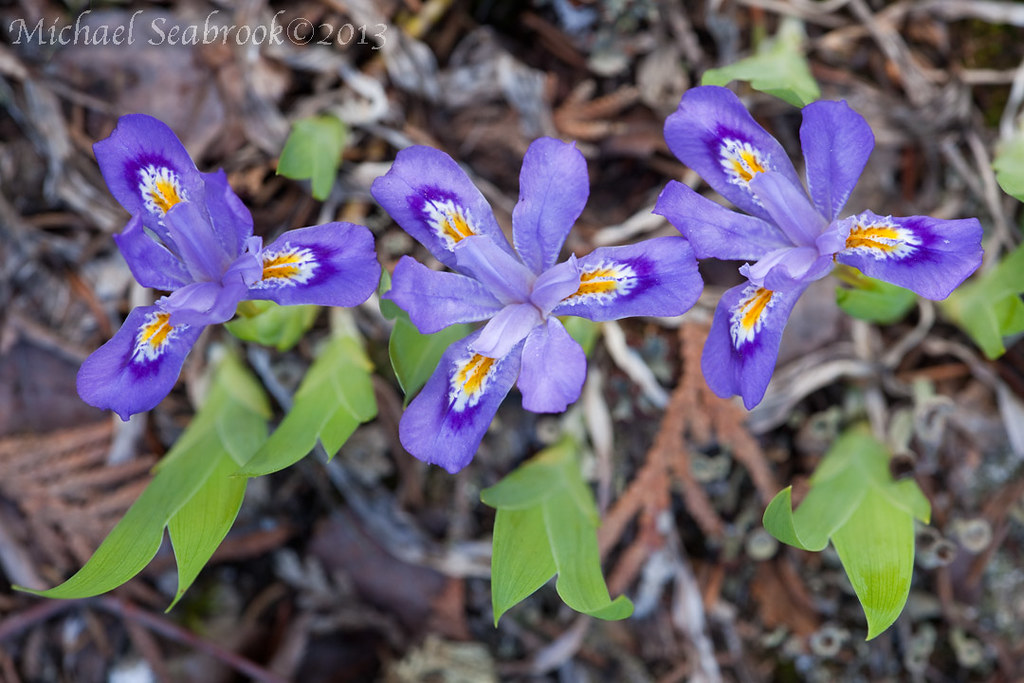
Sisters Three by Michael Seabrook

The National Forest Service shares that Michigan’s state wildflower, the Dwarf Lake Iris (Iris lacustris), grows nowhere else but in the Great Lakes region & mostly within Michigan:

The vivid blue, showy flowers (about two inches in height) of Dwarf lake iris are truly exquisite. This miniature iris, honored as the state flower of Michigan, blooms from mid May to early June.

Dwarf lake iris is called a Great Lakes endemic due to its very limited range. It inhabits the northern shores of Lakes Huron and Michigan within Michigan, Wisconsin (Door Co.), and Ontario, Canada (Manitoulin Island, and the Bruce Peninsula). Dwarf lake iris formerly ranged as far south as Milwaukee, Wisconsin, but has never collected on Lake Superior shoreline.

The Latin species name lacustris translates to “of lakes”, which does not speak to the immense size of these two huge inland “seas”. Confined almost exclusively to thin soil over limestone, rich gravel or bedrock, or moist sands and gravels, it can persist in full sunlight on moist sites. This miniature iris is most successful, however, under the light, dappled shade of white cedar. It flowers best in semi-open habitats such as the long and narrow strips of land bordering the high-water line, or large flat expanses behind open dunes. It may also inhabitant old beach ridges of the former shores of these two Great Lakes. The changing water levels of lakes Michigan and Huron serve to create new habitat.

Thomas Nuttall, renowned naturalist and explorer, first found this species in 1810. The type locality, or location where he first found Dwarf lake iris, was Mackinac Island in northern Lake Michigan.

Michael took this photo back in 2013. More in his Michigan Wildflowers gallery on Flickr!

Support Michigan in Pictures with Patreon

Michigan in Pictures: the Group

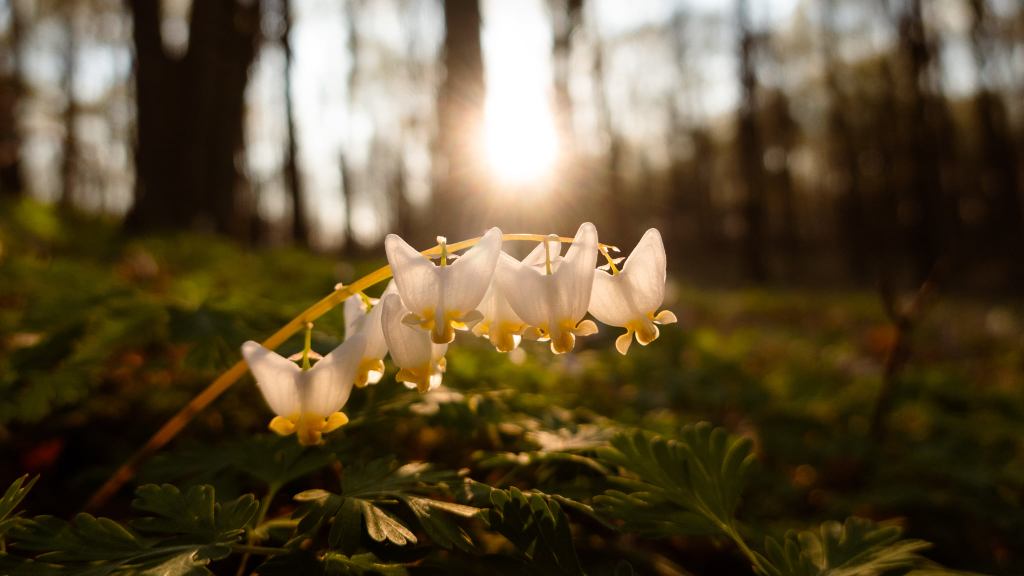
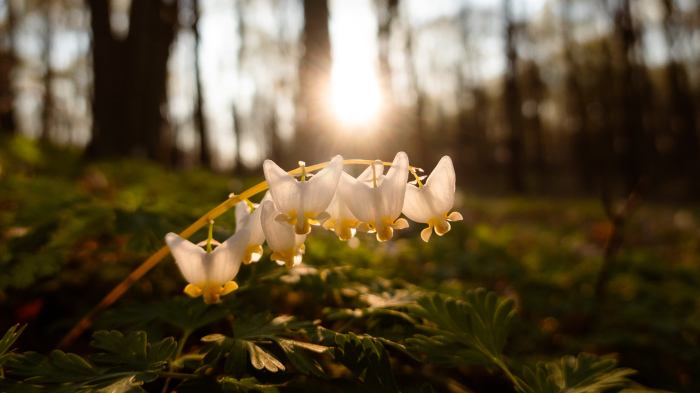
Dutchman’s breeches by William Dolak

William shared this pic to our Michigan in Pictures Group on Facebook back in April of 2021, writing Dicentra cucullaria, or Dutchman’s breeches, is a perennial herbaceous plant, native to rich woods of eastern North America, with a disjunct population in the Columbia Basin. The common name Dutchman’s breeches derives from their white flowers that look like white breeches.

He is one of the leading participants in the group, sharing great updates from Kalamazoo & southwest Michigan. He has also been featured lots through the years on Michigan in Pictures – check him out and for sure share your photos with us there or to the Michigan in Pictures Facebook (where we just added one of his new pics as the cover!)

Support Michigan in Pictures with Patreon

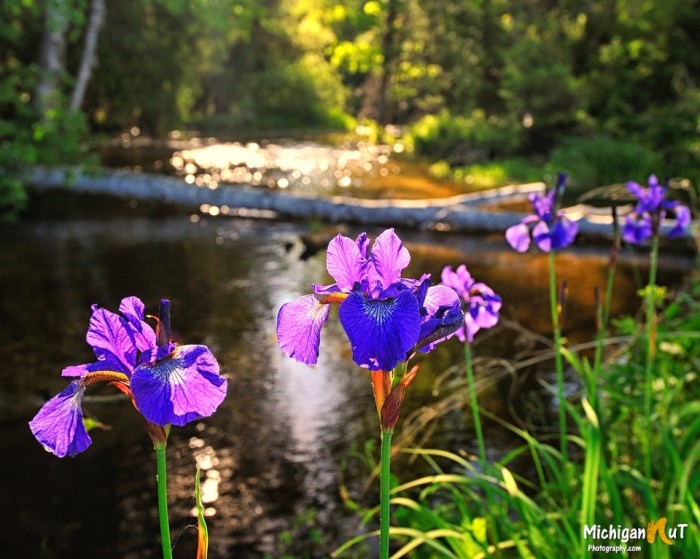
Shalda Creek Iris

via leelanau.com…Shalda Creek Iris by Michigan Nut Photography

Shalda Creek Iris by Michigan Nut Photography

John got this shot of wild Iris along the banks of Shalda Creek in the Sleeping Bear Dunes National Lakeshore.

See more on the Michigan Nut Facebook page and at michigannutphotography.com.

Support Michigan in Pictures with Patreon

Purple for June: Dwarf Lake Iris

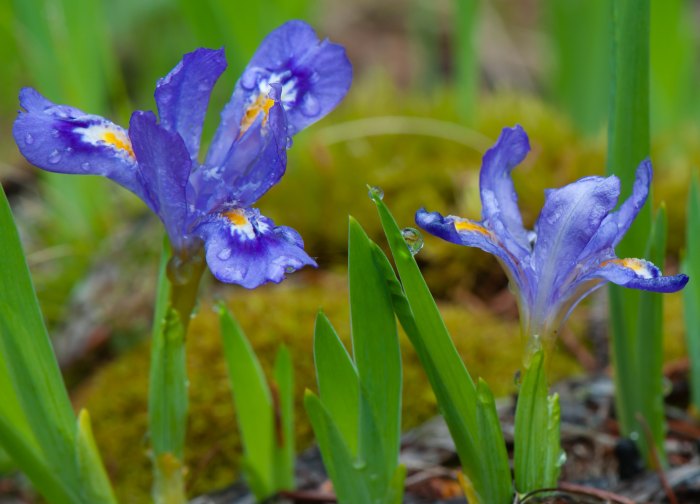
Iris lacustris by Bradford Slaughter

Iris lacustris by Bradford Slaughter

Some of you know that my mother Jill suffered for years from the terrifying effects of Alzheimers disease, ultimately passing last winter. June is Alzheimer’s & Brain Awareness Month, and the Alzheimer’s Association encourages us to wear purple (and of course donate) to raise awareness about a disease that afflicts tens of millions of Americans. 

June is also when you can see Michigan’s official State Wildflower, the Dwarf Lake Iris (Iris lacustris), in bloom:

The official wildflower of the Great Lakes State is right at home anywhere it can get its feet wet along the rocky coast of Northern Lake Huron, but those places are getting harder to come by.

This pint-sized perennial is known for its deep blue flowers that emerge mere inches above the ground for a fleeting few weeks in May and June—individual blossoms last just days. The rest of the time, its yellow-green leaves cling close to the ground, hiding in plain sight until springtime comes around again.

It’s a bit of a miracle this fragile flower exists at all: They grow in the thin, nutrient-poor soil that overlays limestone gravel and bedrock. The Northeast Michigan coast, rich with sand dunes and limestone deposits, creates the perfect habitat for the iris, found nowhere else outside the northern Great Lakes.

Along with a limited range that’s shrinking due to lakeshore development, the plant has been sought out by collectors who replant or sell it elsewhere. For these reasons, the dwarf lake iris was added in 1988 to the list of federally threatened species.

Read on for more at Huron Pines & for sure check out their Dwarf Lake Iris Best Practice Guide for tips on how to protect this flower!

Coincidentally, Bradford took this photo at Beavertail Point Nature Sanctuary on the northern coast of Lake Huron eight years ago on June 2nd, 2014 so I guess it’s a #TBT to boot! See more in his Iridaceae (Iris Family) gallery on Flickr 

Support Michigan in Pictures with Patreon

Eastern Market Flower Day returns

Eastern Market Flower Day

Eastern Market Flower Day by Eastern Market

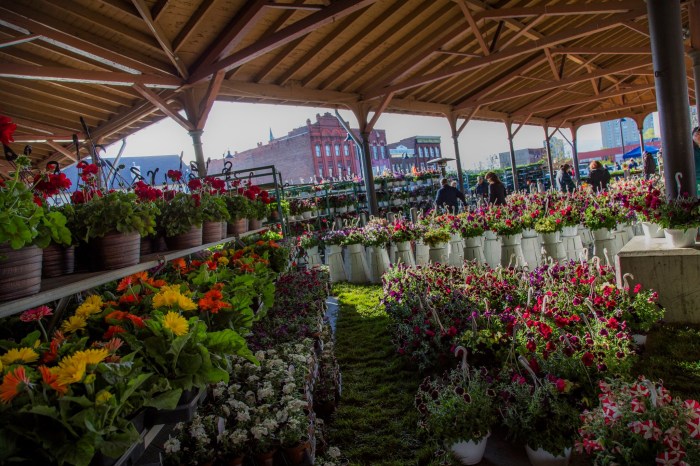
Detroit’s Eastern Market shares that their popular Flower Day will return in 2022 on Suday, May 15th:

Flower Day takes place every year on the Sunday after Mother’s Day and has been a time-honored tradition of Eastern Market since 1967. Growers offer a wide variety of flowers at a great value so we recommend you come early for the best selection!

This special day is made possible through our partnership with the Metropolitan Detroit Flower Growers Association. MDFGA members arrive every year from Michigan, Ontario, and neighboring states. They share 15 acres of the heartiest varieties of flowers for this region and they’re ready to share the best strategies of how to help their flora thrive.

We also offer free convenient parcel pickups so you can explore the market throughout the day without being attached to your flats of flowers.

More at Eastern Market. and also on their Eastern Market Flower Day Facebook event.

Eastern Market shared this pic back in 2020. Here’s a gallery from Flower Day 2019 on their Facebook page.

Support Michigan in Pictures with Patreon

The First Crocuses

The first crocuses I've seen this spring by Bill Dolak

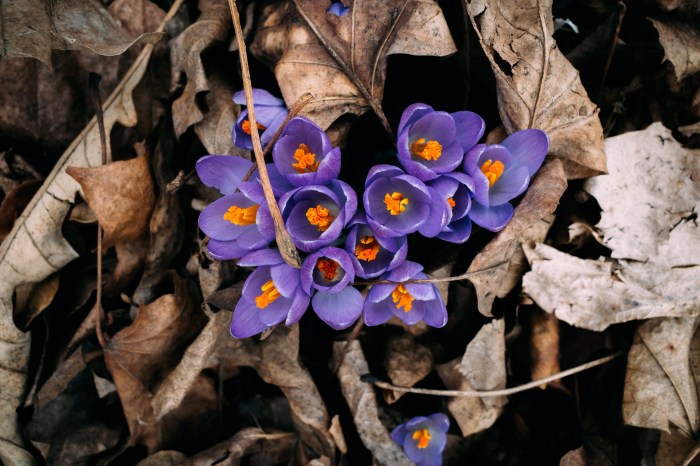
The first crocuses I’ve seen this spring by Bill Dolak

While I’m still waiting to see the first crocus here in Traverse City, Bill saw some on Friday in Kalamazoo. How about you – any crocuses or springy signs in your neck of Michigan?? 

Head over to Bill’s Flickr to see his latest & have an awesome week everyone!

Get your Spring on with Michigan in Pictures!

Support Michigan in Pictures with Patreon

Reaching for Summer’s Light

Reaching for the light by Mike Carey

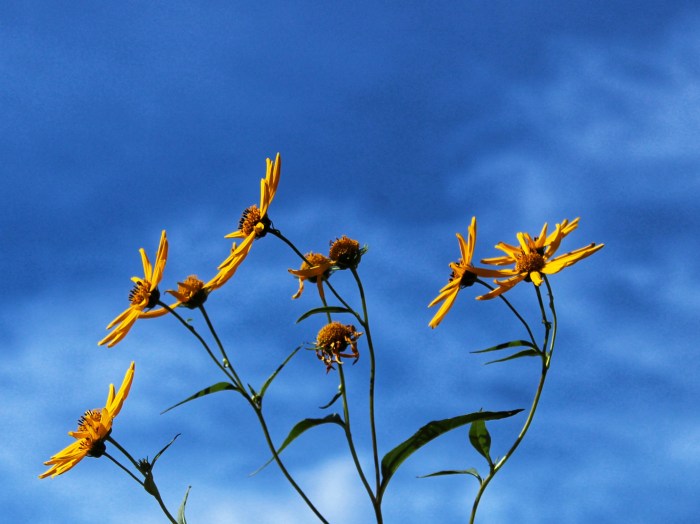
Reaching for the light by Mike Carey

In just over a day – 3:20 PM tomorrow at the vernal equinox to be precise – Summer 2021 will be in the books. Here’s hoping you get a little of that summer light before it’s all gone!

See more in Mike’s Lake Michigan 2021 gallery on Flickr

Support Michigan in Pictures with Patreon

An American Bug: The Eastern Tiger Swallowtail Butterfly

Eastern Tiger Swallowtail Butterfly by David Marvin

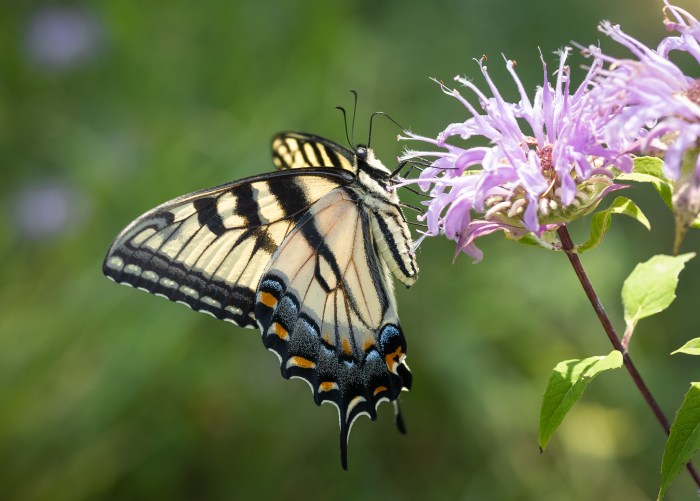
Eastern Tiger Swallowtail Butterfly by David Marvin

The University of Michigan Animal Diversity Web entry for the eastern tiger swallowtail butterfly (Papilio glaucus) says in part:

The eastern tiger swallowtail ranges from Alaska and the Hudsonian zone of Canada to the southern United States, east of the Rocky Mountains.

This species occurs in nearly every area where deciduous woods are present, including towns and cities. It is most numerous along streams and river, and in wooded swamps.

As with most butterflies, Eastern tiger swallowtails tend to be solitary. Males “patrol” for a mate, flying from place to place actively searching for females. “Patrolling” male tiger swallowtails can recognize areas of high moisture absorbtion by the sodium ion concentration of the area. It is believed that the moisture found by these males helps cool them by initiating an active-transport pump. Both male and female tiger swallowtails are known to be high fliers. Groups of fifty butterflies have been spotted in Maryland flying 50 meters high, around the tops of tulip trees.

The tiger swallowtail is thought of as the American insect, in much the same way as the Bald Eagle is thought of as the American bird. It was the first American insect pictured in Europe; a drawing was sent to England from Sir Walter Raleighs’ third expedition to Virginia.

You can read on for more including photos. I also found a page with a listing of Michigan butterflies and apparently we have eight species of swallowtail butterfly!

Beautiful capture by David. See more in his 2022 Calender gallery on Flickr! 

Support Michigan in Pictures with Patreon

Dutchman’s breeches

Dutchman's breeches by William Dolak

Dutchman’s breeches by William Dolak

Bill shared this photo last week in the Michigan in Pictures group on Facebook & writes:

Dicentra cucullaria, or Dutchman’s breeches, is a perennial herbaceous plant, native to rich woods of eastern North America, with a disjunct population in the Columbia Basin.

The common name Dutchman’s breeches derives from their white flowers that look like white breeches.

Click for a couple more shots from Bill.

Support Michigan in Pictures with Patreon